
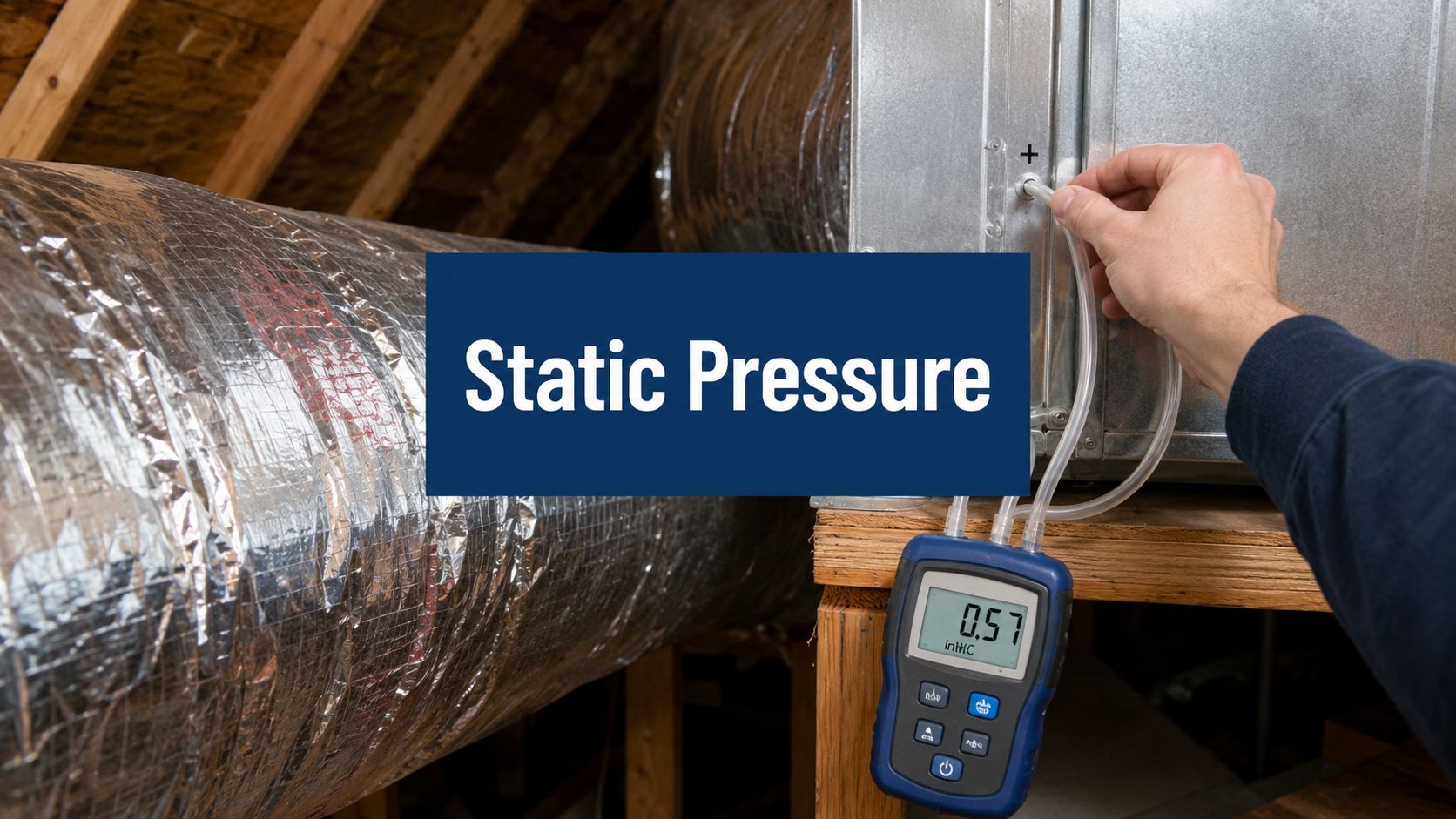
A Mesa homeowner can change the filter, lower the thermostat, and still sit in a warm back bedroom while the return grille roars. HVAC static pressure testing for Mesa homes helps explain why, by measuring the resistance the blower faces instead of judging the system only by supply-air temperature.
Why Mesa Homeowners Ask About Static Pressure in the First Place
In a Mesa summer, a thermostat set to 76 can say the home is cool while one bedroom remains uncomfortable. Ceiling registers may barely move a tissue, the return may whistle, and the electric bill may rise even after a fresh filter goes in. Those symptoms point toward an airflow problem that a visual inspection alone may miss.
Static pressure testing connects the complaint to the blower, filter, coil, return path, and ductwork. The test helps show whether resistance is concentrated before the blower, after it, or across the system as a whole. That distinction matters because a restricted return needs a different correction than a dirty evaporator coil or a crushed attic duct.
Mesa and East Valley systems often work through long, demanding cooling seasons. Dust can load a filter, attic duct connections can loosen, and older return layouts may struggle to supply the air volume a newer system expects. Leaky ducts also deserve attention. ENERGY STAR and U.S. Department of Energy guidance commonly cites roughly 20% to 30% of conditioned air lost through leaks, holes, and poor connections, which helps explain why a home can have a functioning air conditioner but weak room-level cooling.
Homeowners who want healthier home air in Mesa may also need duct and airflow diagnostics, because cleaning a grille won't correct a restrictive return or leaking supply run. Static pressure testing gives the technician a starting point for deciding whether cleaning, sealing, balancing, repair, or replacement makes sense.
What Static Pressure Actually Means Inside Your System
Static pressure is the resistance air encounters as the blower moves it through the filter, coil, ducts, dampers, and registers. A water-hose analogy makes the principle easier to understand. A pump can move water through an open hose smoothly, but a kink or pinched section restricts flow and changes the pressure at the nozzle. An HVAC blower faces a similar problem when air has to pass through an obstructed or undersized path.
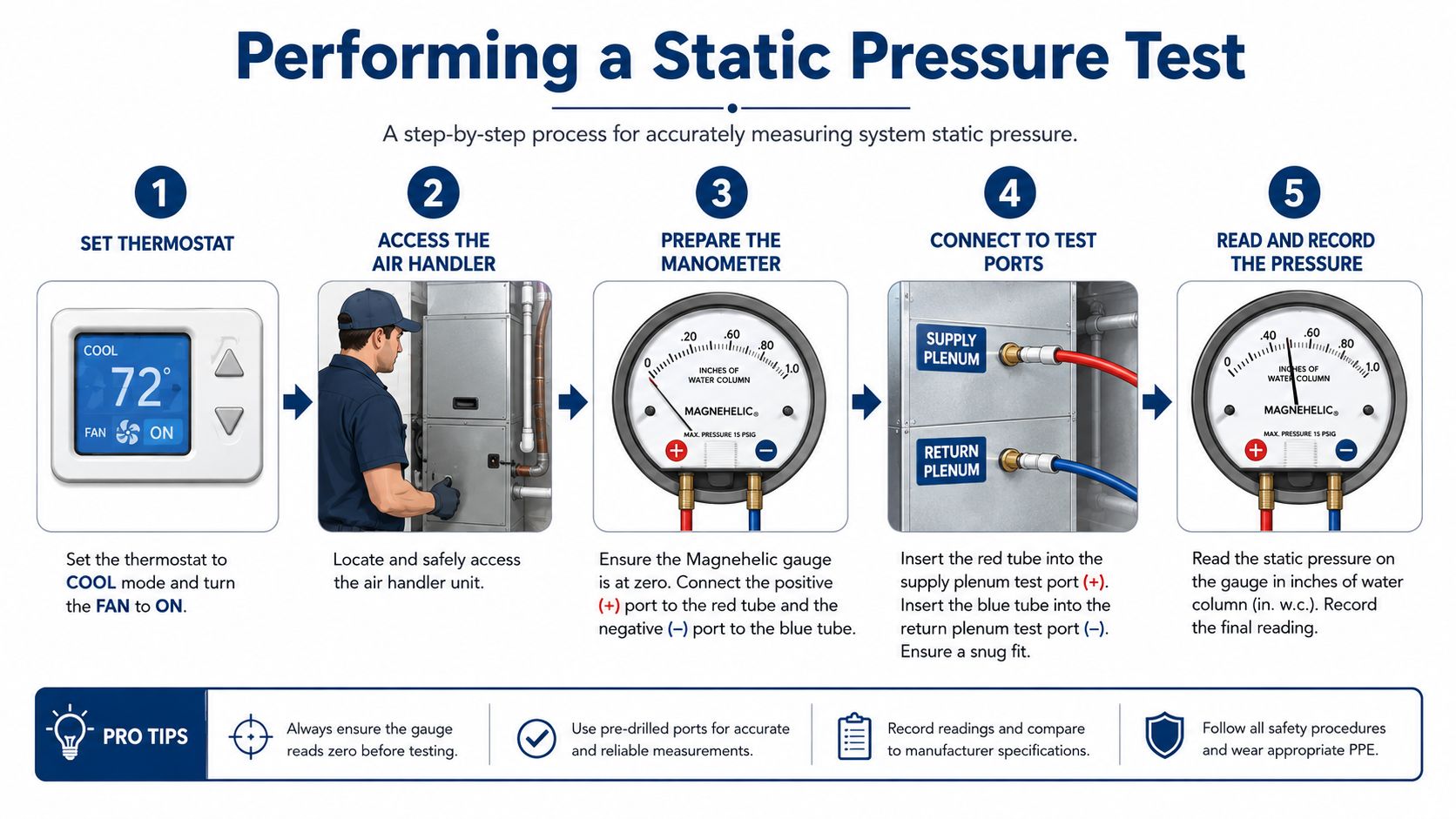
Technicians measure this resistance in inches of water column, written as in. w.c., with a manometer. The instrument connects to small test ports in the supply and return plenums. A reading by itself isn't enough, because the useful question is how the measured resistance compares with the equipment's rated limit.
The two sides of the measurement
The supply-side reading covers the path after the blower, including the coil, supply plenum, trunk ducts, branches, boots, registers, and dampers. The return-side reading covers the path bringing air back, including the return grille, return duct, filter, cabinet, and related transitions.
The technician adds the absolute values of those two readings to calculate total external static pressure, or TESP. Many residential systems are designed around about 0.5 in. w.c., while some manufacturer guidance places normal operation around 0.5 to 0.8 in. w.c. AAON's static pressure guidance explains why readings above the intended range can indicate restriction from filters, coils, duct design, or zoning dampers.
A reading under the nameplate limit suggests the blower has a reasonable path for its designed airflow. A reading above that limit indicates excess resistance, but it doesn't identify the failed component automatically. For a practical explanation of how duct dimensions affect airflow, the Comfort Experts duct sizing guide provides useful background.
How Mesa Heat, Dust, and Attic Ducts Drive the Numbers Up
Static pressure rises when something in the airstream makes the blower work against additional resistance. Mesa conditions can stack several restrictions together, especially in homes with attic ductwork, rooftop package units, garage air handlers, or older ducts that weren't designed around the current equipment.
Dust is one of the easiest causes to see. Fine desert particles can load a pleated filter, while dust and outdoor debris can accumulate on the evaporator coil. A fouled coil acts like another filter, reducing the open area available for air to pass through. Homeowners can learn more about how dust affects Mesa AC units before deciding whether a coil inspection belongs in the service visit.
Attic ductwork creates a different problem. Flex duct can sag, kink, or become compressed under stored items and surrounding insulation. Seams and connections can also leak, particularly where a trunk joins a plenum or a branch enters a ceiling boot. An undersized return path creates resistance before air reaches the blower, and a closed or poorly adjusted zoning damper can affect the system's operating balance.
Common contributors in East Valley homes
- Dust-loaded filters: The filter catches debris, but the increasing restriction can raise return-side resistance.
- Fouled coils: Dust and biological debris on the coil reduce the available air passage.
- Crushed flex duct: A narrowed section limits airflow even when the register appears open.
- Long or undersized runs: Extended attic routes and restrictive transitions can add supply-side resistance.
- Leaking connections: Conditioned air escapes before reaching occupied rooms, so the system works without delivering its intended airflow.
Homeowners comparing repair choices can use this pricing guide for ductwork as general planning context, but an inspection still has to determine whether the property needs sealing, redesign, or replacement. There isn't a defensible universal Mesa reading that every home should pass. The equipment nameplate and the measured supply and return split matter more than a generic target.
How a Technician Performs a Static Pressure Test
A useful test starts with normal operating conditions. The technician confirms that the system is cooling, sets the fan to the speed used during normal operation, and checks that registers, returns, doors, and dampers are positioned as they typically are. Testing with unusual settings can produce a number that doesn't represent the homeowner's actual complaint.
The technician locates the air handler, package unit, or rooftop unit and identifies the supply and return plenums. Existing factory ports may be available. Otherwise, the technician makes clean test taps and connects a digital manometer or magnehelic gauge using pressure tubing.
What gets recorded
The high-side connection measures pressure in the supply path, while the low-side connection measures the return-side pressure. The technician records both values, adds their absolute values, and compares the resulting TESP with the maximum listed on the equipment nameplate.
Many standard residential systems sit near 0.5 in. w.c. TESP, while variable-speed equipment may tolerate approximately 0.8 to 1.0 in. w.c. depending on manufacturer specifications. The National Comfort Institute measurement document emphasizes comparing measured TESP with the air handler's rated maximum rather than applying one universal housewide rule.
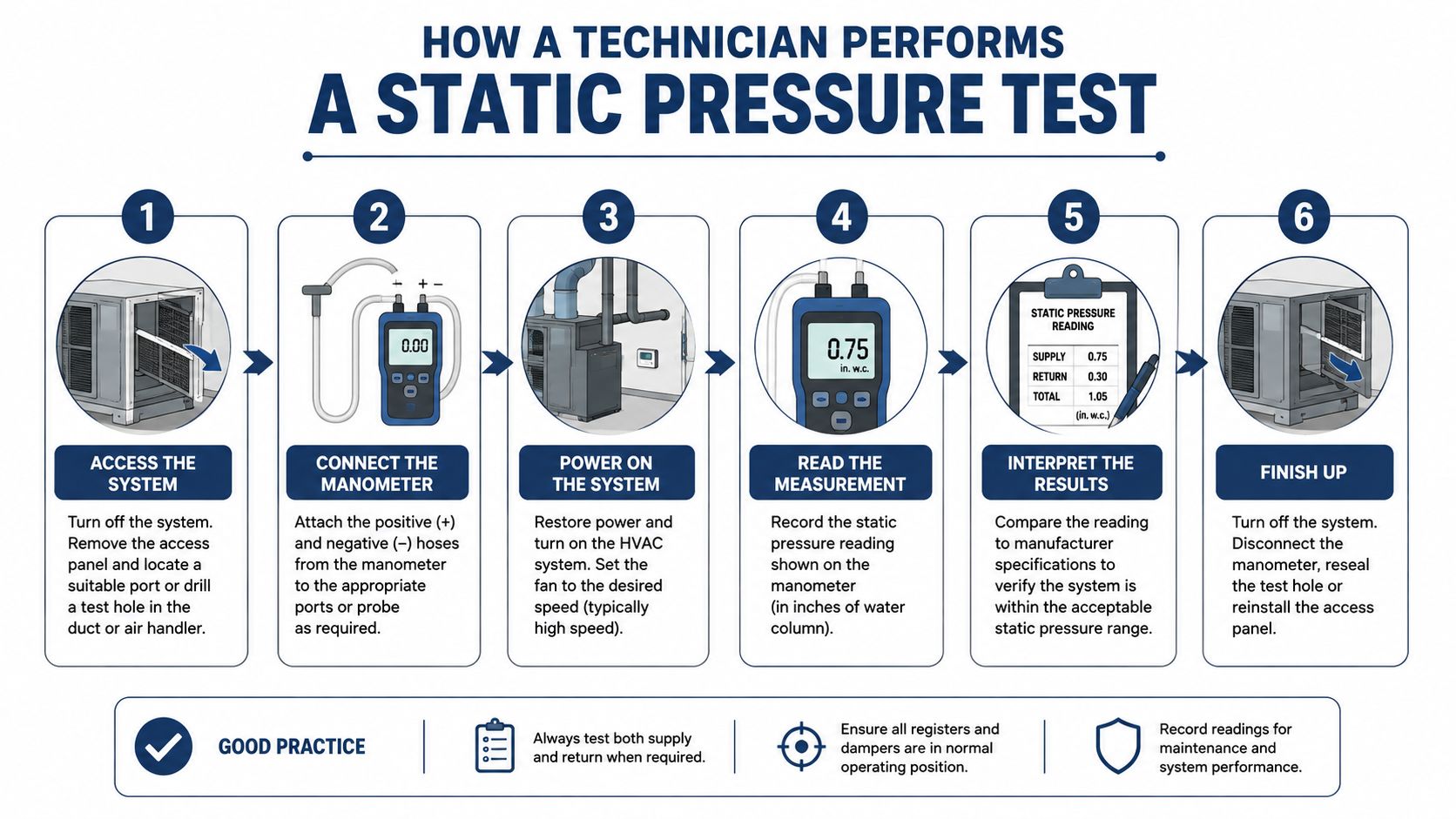
After the total is calculated, the technician checks component pressure drops across the filter and coil when needed. Accessible attic and garage ductwork, rectangular transitions, return drops, and dampers receive a visual review. The number tells the technician that resistance exists. Component checks help locate it. Homeowners who want a broader overview can review the Mesa AC diagnostic visit explained.
What the Readings Usually Reveal in Desert Homes
The total pressure matters, but the split usually points toward the restriction. High return-side pressure indicates resistance before the blower. High supply-side pressure indicates resistance after it. Similar totals can therefore lead to very different repairs.
| Reading Pattern | Most Likely Culprit | Quick Field Check |
|---|---|---|
| High return-side pressure | Restrictive filter, undersized return, crushed return flex, or blocked grille | Confirm the filter is clean, inspect visible return openings, and check whether furniture blocks a grille |
| High supply-side pressure | Fouled coil, restrictive supply duct, closed damper, or crushed branch run | Check register operation, damper position, and accessible duct sections |
| High pressure on both sides | Multiple restrictions, poor duct design, or equipment and duct mismatch | Compare individual filter and coil pressure drops with the nameplate rating |
| Uneven room airflow with abnormal resistance | Leaks, poor balancing, or inadequate return pathways | Inspect accessible seams, boots, branch connections, and room returns |
In a dusty Mesa home, a loaded filter can raise return resistance before the homeowner notices a problem. A dirty coil adds resistance on the supply side. Attic duct damage, compressed flex, blocked grilles, and long cooling seasons can compound those restrictions, leaving one room warm even when the thermostat reaches its setting.
A high reading does not automatically call for air-conditioner replacement. A dirty filter or blocked return may be straightforward to correct. A collapsed attic run or undersized return can require duct modification. The ACCA and Energy Star measurement guidance supports comparing measured resistance with the equipment limit rather than judging the system from one number.
A temperature split may look acceptable while room-level airflow remains poor. The technician should match the manometer readings with the homeowner's symptoms and inspect the components that create resistance. That approach separates a filter problem from a duct design problem and prevents a pressure reading from becoming an unsupported replacement recommendation.
Corrective Actions That Bring the Numbers Back Down
The correction should follow the location of the restriction. Changing a blower setting first can hide the underlying problem and may push the equipment beyond its intended operating range. The technician should identify the pressure drop, correct the cause, and then repeat the test.
Supply-side corrections
A dirty evaporator coil may need cleaning. A damaged or compressed flex run may need replacement or proper support. A supply trunk that was undersized for an addition may require redesign rather than another register adjustment. A filter with a higher MERV rating can improve particle capture, but only if the blower and duct system can handle its resistance. A more restrictive filter isn't automatically an upgrade for every system.
Return-side corrections
Return problems often respond to a correctly sized filter cabinet, a larger return grille, an added return pathway, or removal of a blocked opening. Closed interior doors can also change the way air returns from rooms without dedicated return grilles. The technician should check the whole path before recommending construction.
Leakage and balancing
Leaks need sealing, not balancing. Mastic-sealed joints, supported duct hangers, and professionally applied internal sealing can address leakage more reliably than temporary tape in harsh attic conditions. For homeowners evaluating this option, a duct sealing service can be considered after testing identifies leakage as a meaningful contributor.
Dampers can be adjusted after major restrictions are corrected. A blower tap or fan setting should change only when the equipment documentation and measured airflow support it. HVAC diagnostic guidance on static pressure testing recommends testing at full cooling airflow and pairing TESP with component pressure-drop checks. The final step is a repeat measurement, because a repair isn't verified until the system's resistance changes in the intended direction.
What to Expect During a Comfort Experts Service Visit
A Mesa static pressure appointment should begin with the complaint, not with a replacement recommendation. The technician can review the thermostat setting, recent runtime behavior, airflow symptoms, filter condition, and noise before testing the equipment. The air handler or package unit is then located, and the supply and return measurement points are identified.
The manometer records supply-side pressure, return-side pressure, and the calculated TESP in inches of water column. The reading is compared with the equipment nameplate maximum. Accessible ducts, plenums, transitions, dampers, coil surfaces, and return paths are reviewed to connect the number with a physical cause.
Questions worth asking before approving work
- What is the nameplate limit? The limit belongs to the equipment, so the homeowner should see how the measured value compares.
- Which side is restricted? Supply and return problems require different repair paths.
- Was the filter and coil pressure drop checked? A total reading alone may not locate the restriction.
- Will the test be repeated after repair? Verification helps distinguish a completed correction from a guess.
- Does repair still make sense? Severe duct limitations, repeated component failures, or a major equipment mismatch may justify discussing replacement, but the test should support that conversation.
A written summary can help a homeowner compare duct sealing, coil cleaning, balancing, duct replacement, or equipment replacement without relying on vague airflow language. Property managers and local businesses can use the same diagnostic mindset before authorizing rooftop or packaged-unit work. For commercial owners considering outreach alongside maintenance planning, Sendvo's HVAC direct mail playbook offers a separate marketing resource, not a substitute for equipment testing.
Comfort Experts is one local option for this type of evaluation, with HVAC diagnostic work that includes checking total external static pressure against the equipment's allowable range. The important service question remains the same regardless of contractor: will the technician measure both sides, explain the result, and identify the restriction before proposing a larger repair?
When to Call and What to Do Next
Weak ceiling-register airflow, a newly loud return, uneven rooms, rising summer utility costs, or repeated afternoon comfort problems all justify an airflow evaluation. A filter change and a clear return grille are reasonable homeowner checks. If the symptoms continue, guessing at the blower speed or buying an increasingly restrictive filter can make the system harder to diagnose.
The practical next step is a manometer-based diagnostic that compares supply and return resistance with the equipment nameplate. That information helps separate a manageable filter or coil issue from a duct repair, sealing project, balancing problem, or replacement discussion. It also gives Mesa homeowners a clearer basis for deciding whether the system is being pushed beyond its intended operating range.
Call Comfort Experts at 480-207-1239 to discuss static pressure testing for a Mesa or East Valley home, or schedule service and ask for airflow and manometer testing. A measured diagnosis is a more practical starting point than waiting for weak airflow to become a no-cooling failure.
Comfort Experts can evaluate supply and return static pressure, inspect filters, coils, ducts, dampers, and blower operation, then explain whether sealing, cleaning, balancing, repair, or replacement fits the evidence. Visit Comfort Experts to request help for a Mesa home with weak airflow, noisy returns, or uneven cooling.