
A Mesa homeowner sets the thermostat to 76°F, but the living room feels comfortable while an upstairs bedroom stays warm. The air conditioner keeps running through the afternoon, and the utility bill reflects the mismatch. Those are common thermostat placement problems, especially in East Valley homes exposed to intense sun, rooftop equipment, dust, and monsoon weather.
Introduction to Thermostat Placement Problems in Mesa Homes
A thermostat can be working correctly and still control the home poorly if it sits in the wrong spot. It measures the small pocket of air around its sensor, not the average temperature in every occupied room. A west-facing wall warmed by afternoon sun can make the thermostat call for more cooling, while a hallway near a draft can make it respond to air that doesn't represent the rest of the house.
Mesa homes face extra stress during long cooling periods. Rooftop and package units may serve several rooms with different sun exposure, older ductwork can deliver uneven airflow, and desert dust can collect around filters, grilles, and equipment. Monsoon conditions can also change how doors, windows, and exterior surfaces affect the air near the thermostat. In that setting, even a small sensing error can create noticeable comfort complaints and unnecessary runtime.
The practical question isn't, “Is the thermostat five feet high?” It's whether the thermostat location represents the zone it controls. The sections below explain the warning signs, a safe homeowner diagnostic process, better placement options, and when remote sensors, zoning, duct sealing, or professional relocation make more sense than a quick setting adjustment.
How Thermostats Read Temperature and Why Location Matters
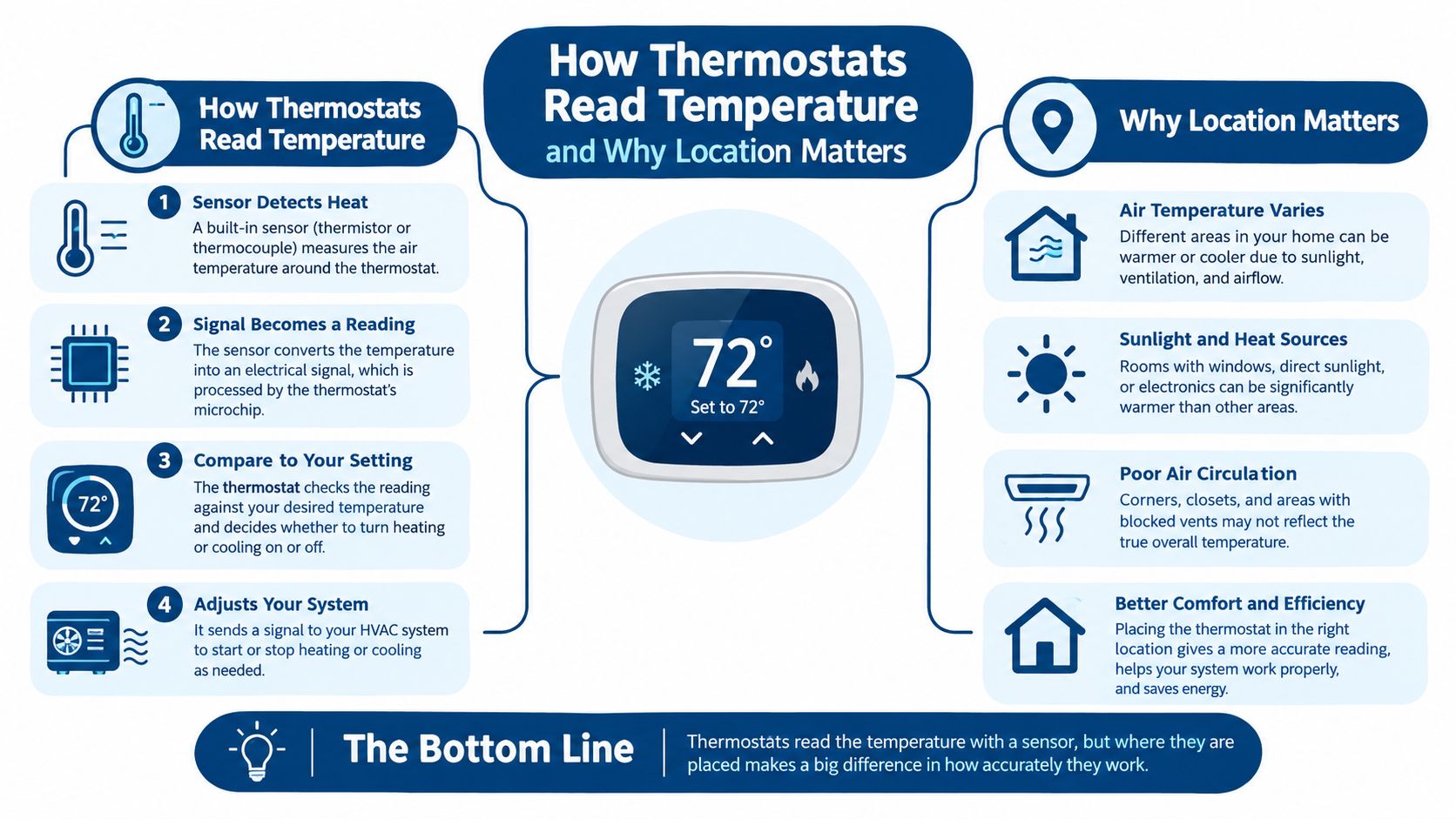
A thermostat is like a thermometer placed in one particular patch of air. A thermometer sitting in shade gives a different result from one sitting in direct sun, even when both are in the same room. The thermostat makes the same kind of localized measurement, then uses that reading to start or stop heating or cooling.
That creates a microclimate problem. Sunlight, a nearby supply register, an exterior wall, a doorway, or a kitchen appliance can make the air around the sensor warmer or cooler than the occupied area. Guidance from HVAC Laboratory's thermostat placement explanation recommends comparing the thermostat reading with a calibrated thermometer placed in the center of the room at seating height. A difference of more than 2°F indicates a placement problem, while 1 to 2°F is usually acceptable.
Reading error versus sensor failure
A misplaced thermostat isn't automatically a defective thermostat. If the sensor is exposed to a warm wall, direct sun, or a cool draft, it may accurately report the air at its location while misrepresenting the room. That distinction matters because replacing the device won't correct a bad sensing point.
A homeowner who wants more detail on unusual readings can review when your thermostat feels wrong, then compare the result with conditions around the wall-mounted device. A stable gap between the thermostat and a center-room thermometer points toward placement or airflow. A reading that changes erratically without a clear environmental cause may justify professional testing.
Common Thermostat Placement Problems and What They Cause
The same thermostat setting can produce very different results depending on the wall around it. These are the locations that most often distort the control signal in Mesa and older East Valley homes.
Direct sunlight
A thermostat on a west-facing wall or beside a bright window can absorb radiant heat during the afternoon. Manufacturer and HVAC guidance notes that a sunny thermostat may register warmer than the actual room, causing the system to overcool the house Delco HVAC explains how sunlight affects thermostat readings. The homeowner may notice long cooling cycles even though the main living area already feels cold.
Exterior walls and windows
Exterior walls respond more directly to outdoor heat. In Arizona, a wall exposed to late-day sun can become a poor reference point, while a window or door can introduce drafts and changing air temperatures. The thermostat may react to that surface or airflow instead of the room's average condition.
Kitchens and nearby heat sources
Cooking, lamps, televisions, and other equipment add heat around the sensor. A thermostat near a kitchen can call for cooling when the rest of the home is comfortable. A multizone HVAC study also highlights the broader issue: the sensing point must match the thermal behavior of the zone, not merely satisfy a generic wall checklist.
Doorways and drafts
A thermostat near an exterior door can react every time the door opens. In winter, that may create an unnecessary heating call. During a dusty monsoon storm, leakage around doors or windows can make the nearby reading especially unrepresentative.
Supply registers and nearby ducts
A supply register blows conditioned air directly into the room. If the thermostat sits above or beside it, the sensor can see supply-air temperature rather than ambient room temperature. Cooling may stop before distant rooms are comfortable, or the system may respond to a cold pocket that doesn't reflect the rest of the zone.
High ceilings and temperature stratification
Warm air rises and cooler air settles. A thermostat mounted too high can read a warmer layer, while one mounted too low can read cooler air near the floor. This is especially important in open-plan spaces and rooms with tall ceilings.
Hallways and stairwells
A hallway may look central but still be a poor reference point if bedroom doors stay closed or airflow is weak. Stairwells can exaggerate vertical temperature differences, causing an upstairs or downstairs area to remain uncomfortable while the thermostat reports satisfaction. Technical guidance on stratification recommends checking for a gap greater than 2°F between the thermostat and the center of the room, with relocation or a remote sensor considered when that gap persists the University of California eScholarship HVAC document discusses thermal differences and control locations.
Blocked airflow
Furniture, curtains, décor, or a tight wall enclosure can prevent room air from circulating around the sensor. The thermostat then responds to a stagnant pocket rather than mixed room air. In an older East Valley home with leaky ducts or restricted returns, this placement issue can combine with a system airflow problem and create hot and cold spots throughout the house.
How to Diagnose Thermostat Placement Problems at Home
A careful homeowner can gather useful information without opening the thermostat or changing low-voltage wiring. The purpose is to determine whether the reading is being distorted by the location, or whether the equipment and duct system need attention.
Use a controlled comparison
Start with a calibrated thermometer. Place it near the center of the occupied room at seating height, away from sunlight, supply air, windows, appliances, and exterior doors. Let the reading stabilize, then compare it with the thermostat. Repeat the comparison when the west wall is sunny and again when it is shaded.
Next, inspect the area around the thermostat. Look for warm sunlight on the casing, a cold exterior wall, air movement from a doorway, a nearby vent, kitchen heat, or furniture blocking circulation. Note the time of day and which rooms feel uncomfortable. These observations give a technician more useful information than reporting that the thermostat “seems wrong.”
| Test or Observation | What It Suggests | Next Step |
|---|---|---|
| Center-room thermometer differs from the thermostat by more than 2°F | Placement or localized airflow is likely distorting the reading | Document the readings and ask for relocation or sensor evaluation |
| Difference stays within 1 to 2°F, but one room remains hot | The thermostat may be reasonably representative while airflow or zoning is uneven | Check filters and registers, then request duct or airflow testing if the issue continues |
| Reading rises when sunlight reaches the wall | Radiant heat is affecting the sensor | Shade the area temporarily and plan a better location |
| Thermostat is beside a supply register | The sensor may be reading conditioned air directly | Keep the register clear and have the location evaluated |
| Comfort changes sharply when doors open or close | Drafts may be affecting the control point | Check door and wall proximity, then document the pattern |
| Every room feels warm and airflow is weak | The issue may involve equipment, ductwork, or restricted airflow | Stop relying on thermostat adjustments and schedule HVAC diagnostics |
| Thermostat reading changes erratically without an obvious cause | Sensor, wiring, or control trouble is possible | Don't remove the cover or alter wiring; call a qualified technician |
Best Placement Guidelines and Practical Fixes Without Moving Walls
The usual starting point is an interior wall in a central living area, approximately 48 to 60 inches above the finished floor. That height helps the sensor sample air in the occupied zone rather than the warmer layer near a ceiling or cooler air near the floor. Guidance from Meyer Depew's thermostat location guide also warns against direct sunlight, windows, exterior walls, supply registers, kitchen appliances, and fireplaces.
A good location should have normal room-air circulation and represent the people and rooms the system is meant to serve. That might be a central living area in a single-story home, but it may not be the best control point for a two-story house with a hot west-facing addition.
When a remote sensor is the better fix
A remote room sensor can help when moving the main thermostat would create a new problem or when one device cannot represent the whole zone. Manufacturer guidance commonly places room sensors at about 4 to 5 feet, away from windows, vents, and exterior walls. Lennox also emphasizes placing occupancy-aware sensors to maximize the room's detection area, rather than copying a wall-mount position without considering how people use the space Lennox explains effective room sensor placement.
Smart controls may allow temperature averaging, room prioritization, or occupancy-based control. Those features can improve decisions, but they don't repair a blocked return, a leaking duct, or an oversized system. A sensor placed in a sunny bedroom can create another false reading.
Practical temporary measures
For a control strategy suited to desert conditions, review desert climate thermostat setup and focus on the actual rooms that need priority rather than relying on a generic schedule.
Zoning Sensors and Arizona Specific Placement Challenges
A correctly mounted thermostat can still be the wrong control point for a large or divided home. A single device in a central hallway may represent the downstairs living area while bedrooms upstairs, a converted garage, or a west-facing addition follows a very different temperature pattern. Thermal stratification and strong supply-air jets can make the occupied zone differ from the thermostat even when the wall itself meets standard placement guidance.
Mesa and East Valley conditions amplify that mismatch. Afternoon solar gain can load one side of a home heavily, rooftop package units can serve long duct runs, and older ductwork may leak or deliver uneven airflow. Desert dust can restrict filters and grilles, while monsoon humidity changes how the home feels even when the displayed temperature looks acceptable. In those situations, moving one thermostat may treat the symptom without correcting the zone behavior.
A wider control decision
Remote sensors can identify which rooms matter most. Zoning can separate areas with different schedules or solar exposure. Duct sealing, return-air improvements, or system tuning may matter more when every room on one branch has the same complaint. Technical guidance on multilevel homes recommends checking the difference between the thermostat and occupied center-room air before deciding whether relocation or an added sensor is appropriate HVAC Laboratory explains placement effects on air-handler choices.
A home with one uncomfortable bedroom may need a sensor or airflow correction. A home with several predictable hot zones may need a zoning assessment. Property managers should also consider whether a rooftop unit's sensing point matches the area that the package system serves, rather than assuming the nearest hallway is representative.
Homeowners planning a room-by-room solution can compare duct zoning prices as part of the broader decision, while keeping in mind that system design, dampers, duct condition, and control compatibility all affect the result.
When to Call Comfort Experts for Relocation and System Tuning
A thermostat deserves professional attention when the center-room comparison shows a persistent gap greater than 2°F, when short cycling continues after obvious local influences are removed, or when several rooms remain uneven. Relocation may require new low-voltage wiring, code-aware installation, and a location that works with the existing equipment. Zoning also needs more than a second thermostat. The controls, dampers, ducts, and equipment capacity must work together.
Comfort Experts provides zoning and thermostat help for Mesa and East Valley homes, including thermostat installation, smart controls, and system evaluation. Homeowners can schedule service or call 480-207-1239 with the recorded readings and room-by-room symptoms.
For Mesa homeowners, the next step is straightforward: shield the thermostat from obvious heat and drafts, compare it with a center-room thermometer, and call for an evaluation if the mismatch persists or the comfort problem points beyond the wall location.
Comfort Experts can evaluate thermostat placement, airflow, duct conditions, zoning, and the connected cooling or heating equipment in Mesa and the East Valley. Visit Comfort Experts to request practical HVAC guidance before a misleading thermostat reading turns into another long Arizona cooling cycle.