
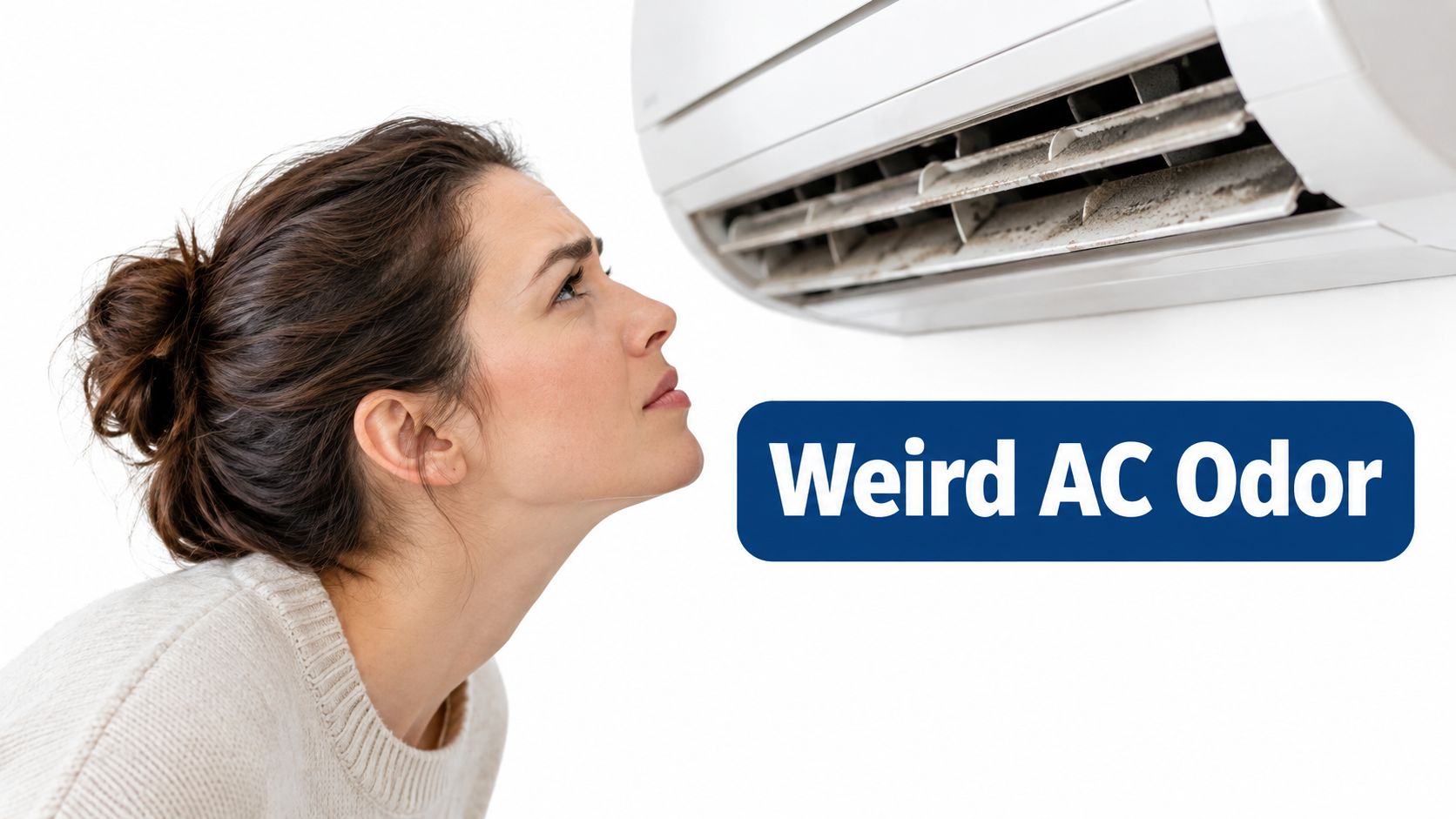
A Mesa homeowner turns on the air conditioner after a hot afternoon and notices it within seconds: damp soil, dirty socks, sharp chemicals, or something that smells like burning plastic. The right response depends less on how strong the odor is than on what it smells like, where it enters the home, and whether the system shows other warning signs.
Why Does My Air Conditioner Smell When It Turns On
The startup timing gives the first useful clue. If the odor appears as soon as air begins moving, the blower may be carrying a smell from the return, filter, indoor coil, drain pan, or nearby ductwork. If it develops only after the equipment has been running, the source may involve a component warming under load or an odor entering through outdoor-air pathways.

In Mesa and the East Valley, dust loading, long cooling seasons, monsoon moisture, and extended periods of equipment inactivity all affect the diagnosis. Dust can settle on filters and coils while an AC sits idle. When cooling starts, airflow can carry that residue into the rooms. Moisture is a separate concern. The CDC explains that indoor mold requires moisture and a carbon source, and identifies excess moisture as the major cause of indoor mold growth.
An AC naturally creates water when warm indoor air passes over the cold evaporator coil. That water should collect in a drain pan and leave through the condensate line. If the pan, coil, insulation, or drain stays damp, mold and bacteria can grow and produce odor-causing compounds.
A quick startup reading
- Earthy or musty: Usually points toward moisture on the coil, pan, filter, or duct surfaces.
- Burning, acrid, or burnt plastic: Treat as a possible equipment or electrical fault, not a cleaning problem.
- Sharp chemical: Needs a closer look at equipment components, cleaning residue, or an outside contaminant. It isn't proof of a refrigerant leak.
- Rotten egg or sulfur: May come from a dry condensate trap or drain connection allowing sewer gas into the air path.
- Stale or smoky: Could originate inside the home, in loaded filtration, or through outdoor-air intake during dust or wildfire-smoke conditions.
The smell itself doesn't provide a remote diagnosis. It does tell the homeowner which inspection path to follow and whether the system should keep running.
What Different Air Conditioner Smells Actually Mean
Odor categories are more useful than guessing at a single failed part. A musty smell and a burning smell don't belong in the same troubleshooting group, even when both begin at startup.
Musty and earthy odors
A damp-cloth, mildew, or earthy odor most often points toward moisture plus organic residue. EPA guidance identifies moisture and dirt as conditions that support mold and other biological contaminants, and notes that HVAC odor sources can include dirty or wet filters, stagnant water in drip pans, and uncontrolled moisture inside ducts. The odor doesn't identify a mold species or prove that mold is present, but it is a practical warning that a wet component deserves inspection.
The common locations are the indoor evaporator coil, condensate pan, filter, blower area, and adjacent duct surfaces. A clogged drain can leave water sitting in the pan. Dust on a chilled, wet coil can provide a place for biological growth to remain. Changing the filter may improve airflow, but it won't remove contamination embedded on a wet coil or pan.
Homeowners looking for broader prevention ideas can review this resource on prevent mold in AC vents. For a Mesa property with recurring stale air, the relevant home air quality question is whether the source is inside the HVAC equipment, in the duct system, or elsewhere in the building.
Burning and electrical odors
A hot-wire, melting-plastic, or acrid odor is a different category. Possible causes include an overheating connection, motor, relay, capacitor, or compressor-related component. A homeowner shouldn't remove access panels or inspect energized equipment. Burning odor means the system should be turned off, especially if there is smoke, a tripped breaker, unusual noise, or reduced airflow.
Chemical odors and refrigerant assumptions
A sharp chemical smell can come from degraded insulation, overheated components, cleaning residue, or an unrelated substance being drawn into the return. Refrigerant isn't a reliable explanation for every chemical odor. The smell profile and operating symptoms need to be checked by a technician rather than inferred from the odor alone.
Rotten egg or sulfur smells
A sulfur-like odor may indicate sewer gas entering through a dry condensate trap or drain connection. That isn't the same as a musty coil problem. If the smell is strong, spreads beyond the AC airflow, or remains when the system is off, the source may be outside the cooling equipment.
How to Locate Where the Odor Is Coming From
Before deciding whether the smell is an AC repair issue, map its location. The strongest point in the airflow often reveals whether the odor starts at the return, inside the indoor unit, in one branch of ductwork, or somewhere that only seems connected to the AC.
Source-location checklist
Return grille: Smell near the main return with the system off, then again as the blower starts. A noticeable odor at the return suggests the system may be pulling it from the room, filter area, return duct, or nearby materials.
One supply vent: If only one room smells, check that grille, the nearby ceiling or wall cavity, flooring, furniture, pet areas, and stored materials. One contaminated branch or local source is more likely than a whole-system issue.
All supply vents: If every supply carries the same odor, inspect the filter, indoor coil, drain pan, blower compartment, and central duct connection. The source is probably upstream of the supply branches.
Indoor unit: Look only at accessible areas with the system off. Standing water, slime, ceiling stains, damp insulation, or a condensate-pump fault support a moisture investigation.
Outdoor unit: Debris near the condenser can create an outdoor smell, but the outdoor cabinet isn't normally the first place to inspect for a musty indoor odor. Don't open panels or reach into the equipment.
Non-HVAC sources: Check potted-plant soil, trash containers, pet accidents, stored chemicals, damp cardboard, and nearby exterior materials. Return air can carry a nearby odor into the system.
ASHRAE identifies musty odors, visible mold, moisture, and water damage as indicators of indoor dampness. Its technical guidance also identifies coils, drain pans, filters, fans, and ductwork as possible contamination locations when surfaces become chilled and wet. A visual check should begin with the filter and accessible drain-pan area, without opening sealed or energized sections.
Homeowners who aren't sure where the filter is can use this guide to finding your AC filter. For rooftop and package units common around the Phoenix area, access may be less convenient, so the same location test can be done at returns and supplies while a technician handles the equipment inspection.
Wildfire smoke and dust can complicate the map. Outdoor pollutants may enter through ventilation pathways or be retained by filtration, so a smoky smell doesn't automatically mean microbial growth inside the AC.
Odor Urgency Matrix, Monitor, Schedule, or Shut Down Now
The decision should follow the odor and the accompanying symptoms. A mild musty smell with normal cooling is not handled like a burning odor with a tripped breaker.
| Odor Type | Urgency Tier | Recommended Action |
|---|---|---|
| Mild musty or dusty smell at seasonal startup, no water, smoke, noise, or airflow change | Monitor | Turn the system off before checking the accessible filter. Replace a visibly loaded filter with the correct size and type, then observe whether the odor returns. Persistent odor moves this into scheduled service. |
| Strong musty odor, visible water, slime, ceiling staining, recurring odor after filter replacement, or a clogged drain indication | Schedule service | Arrange an HVAC inspection of the pan, drain, coil, filter, insulation, blower area, and nearby ductwork. A filter replacement alone may not address the source. |
| Burning plastic, acrid electrical smell, smoke, tripped breaker, unusual noise, or loss of airflow | Shut down now | Turn off the AC and leave it off. Don't restart it to “test” the smell or open energized equipment. Professional attention is needed. |
| Pungent chemical smell that intensifies during operation | Schedule service or shut down | Stop operation if the odor is sharp, irritating, or accompanied by equipment symptoms. A technician should separate a mechanical fault from cleaning residue or an outside contaminant. |
| Rotten egg or sulfur smell that remains beyond the airflow | Schedule service, with immediate caution | Turn off cooling if the odor is strong or unexplained. The source may be a dry condensate trap or drain connection rather than the cooling coil. |
These distinctions follow the safety guidance summarized in the technical source on air-conditioner odor warning signs. Burning or acrid odors, smoke, tripped breakers, unusual noise, and lost airflow are shutdown conditions, not opportunities for household experimentation.
If the system has a dangerous odor and cooling is needed, a homeowner can search for emergency AC repair near me and explain the exact smell and shutdown symptoms. The call should include whether the odor began at startup, whether it continues when the system is off, and whether any breaker or airflow change occurred.
What HVAC Technicians Inspect When You Call About Smells
A useful diagnostic visit begins with the odor timeline and source map, then moves to the equipment. The technician should determine whether the smell is created by cooling, carried by airflow, or produced by a component under electrical or mechanical load.

Moisture and airflow inspection
The first path usually covers the filter, return, evaporator coil, drain pan, condensate line, pump if present, blower area, insulation, and accessible ductwork. The technician looks for standing water, slime, dust caking, damp materials, visible growth, restricted airflow, and evidence that condensate isn't leaving the pan continuously.
The condition of the drain matters more than a deodorizing spray. If water remains after a cooling cycle, cleaning the visible grille won't solve the source. The technician should also consider whether indoor humidity, poor airflow, short run times, or an unsuitable drain arrangement is allowing the odor to return.
Mechanical and electrical inspection
For burning or chemical smells, the inspection shifts toward wiring, terminals, relays, capacitors, motors, compressor-related components, insulation, and signs of heat damage. The equipment stays de-energized when conditions require it. A homeowner shouldn't open pressurized refrigerant circuits, and an odor alone isn't enough to declare a refrigerant leak.
A qualified technician can verify operating pressures and examine components when the symptom pattern supports that work. The point is to test the suspected cause rather than replace unrelated parts.
For additional background on what a visit may involve, this Arizona AC diagnostic visit explained resource outlines the process in homeowner-friendly language. Broader related indoor air quality content can also help property managers think about HVAC odors alongside other indoor sources.
Repair or indoor air quality service
Some odor problems need mechanical repair, such as a failed blower motor or damaged electrical component. Others need coil and pan cleaning, duct cleaning, duct sealing, filtration changes, humidity control, or source removal. A technician should explain which category applies before recommending an IAQ product.
A UV system, air scrubber, or upgraded filter may support a broader indoor-air plan, but none of these replaces correcting standing water or overheating equipment. The source has to be controlled first.
Safe DIY Fixes and Seasonal Maintenance for Arizona Homes
Homeowners can handle limited checks without opening energized, pressurized, or combustion equipment. The safe boundary is simple: inspect accessible items with the system off, replace the filter correctly, and stop when the problem requires tools or internal access.
Safe checks to make today
- Turn the thermostat off: Wait before inspecting the return grille or filter. Don't reach into a blower compartment or rooftop unit.
- Check the filter: Look for heavy dust, dampness, warping, or an incorrect fit. A replacement can improve airflow, but it won't remove growth on a wet coil or pan.
- Look for water: Inspect only visible areas near the indoor unit. Standing water, slime, ceiling stains, or damp insulation justify service.
- Record the timing: Note whether the smell appears at startup, after extended cooling, at shutdown, or while the system is off.
- Avoid masking products: Don't spray fragrance, bleach, or unapproved chemicals into vents, coils, or ducts. These products can damage equipment, create irritating vapors, or hide a fault.
EPA guidance recommends drying water-damaged materials promptly, generally within 24 to 48 hours when possible, and keeping humidity below 60%, with 30% to 50% identified as an ideal range in the cited guidance (EPA indoor-air guidance). A recurring odor after startup or shutdown deserves inspection of condensate management, coil surfaces, pans, filters, and duct interiors.
For homeowners comparing diagnostic approaches, these HomeProBadge AC diagnostic tips provide another general reference. The practical trade-off is that a filter check is low-risk and limited, while coil cleaning, drain clearing, electrical testing, and duct access require equipment-specific methods. Safe desert dust coil care is better handled without bending coil fins or forcing debris deeper into the equipment.
Arizona timing that makes sense
- Before summer cooling: Check the filter, confirm that the system starts without an unusual odor, and arrange maintenance before extreme heat exposes a drainage or airflow weakness.
- After monsoon humidity: Look for moisture clues around the indoor unit and monitor whether a previously mild smell becomes persistent.
- After dust or wildfire-smoke events: Replace a visibly loaded filter with the correctly sized mechanical option. A stronger filter isn't automatically safer if it creates excessive airflow resistance for the equipment.
- After winter idle periods: Start cooling while remaining alert for startup dust. A brief dusty odor that disappears may be observed, but burning or acrid smells require shutdown.
A persistent musty smell, visible water, or an odor that returns after the filter is changed should move from household observation to professional assessment. Burning, smoke, tripped breakers, unusual noise, or lost airflow means the system should remain off.
Comfort Experts serves Mesa and East Valley homeowners with AC diagnostics, repair, maintenance, indoor air quality evaluation, duct services, and related cooling solutions. For a musty odor that keeps returning or a warning smell that requires safe inspection, visit Comfort Experts, call 480-207-1239, or schedule service with the odor timing and visible symptoms ready.