
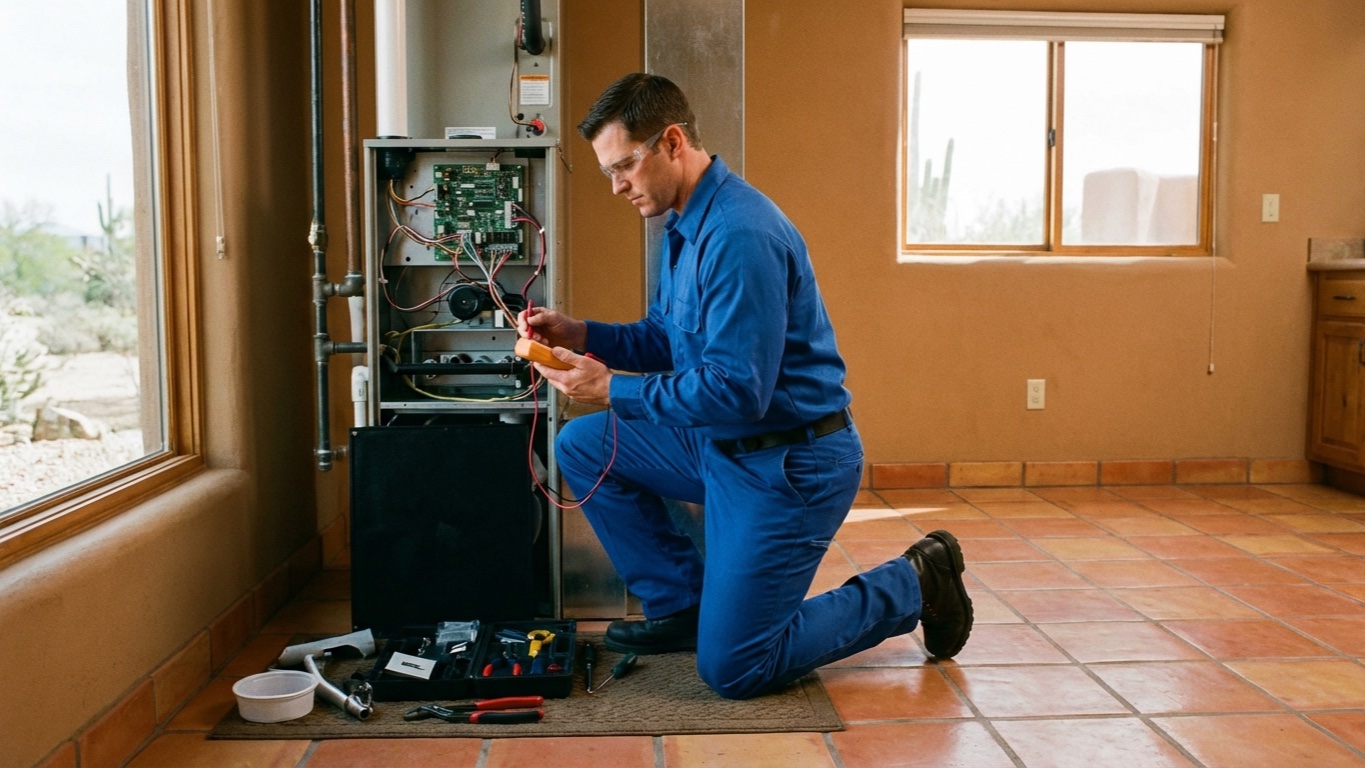
Heat Pump Repair in San Tan Valley should begin with the condition of the equipment and the result you need. Comfort Experts serves San Tan Valley from its Mesa home base and explains the findings before you choose the next step.
This page focuses on cycling and changing run times, a specific part of the larger heat-pump operating diagnosis decision. The goal is to help you capture useful details before testing and understand what the service visit should answer.
Start with the symptoms
Describe what the system does, when the behavior started, and whether the condition changes by time, operating mode, or room. Those details help separate a control issue from airflow, electrical, drainage, equipment, or installation conditions.
- The heat pump runs but does not provide expected cooling or heating
- The outdoor unit does not start, repeatedly stops, or stays in one operating mode
- Auxiliary heat runs unexpectedly or the thermostat reports a control problem
Cycling and changing run times
New short cycles, continuous operation, or frequent mode changes deserve a timeline. Controls, airflow, equipment capacity, and component performance can all affect the pattern.
These observations are useful before the appointment:
- Time complete cycles
- Record mode and setpoint
- Note whether comfort is maintained
- Describe changes from prior similar weather
Build a useful timeline for this condition
Use a simple sequence: time complete cycles; then record mode and setpoint; then note whether comfort is maintained. If the condition changes, note what the equipment was doing immediately before and after the change. That sequence gives the technician more useful evidence than a guess about which part failed.
A final useful note is to describe changes from prior similar weather. Taken together, these observations show whether the condition is steady, intermittent, tied to one operating stage, or affected by airflow and controls. They also help avoid replacing a part simply because it is commonly associated with the symptom.
What this means for the service plan
Cycle length changes with load, staging, thermostat settings, and equipment capacity. New short cycles, continuous operation without maintaining temperature, or repeated mode changes are more useful clues than run time alone.
Build a timeline with setpoint, indoor temperature, outdoor condition, mode, and the moment equipment starts or stops. The technician can compare that sequence with controls, airflow, electrical operation, and measured performance.
Questions the testing should answer
- Which measured finding confirms the concern described as cycling and changing run times?
- Which normal readings rule out other likely causes?
- Does the condition require repair now, further monitoring, or a separate system-planning conversation?
- What can the homeowner safely observe if the condition returns?
The final recommendation should connect cycling and changing run times to measured equipment behavior. It should identify the confirmed work, explain which alternatives were ruled out, and separate required work from optional maintenance or equipment improvements.
Keep equipment panels closed and stop operating the system when there is severe mechanical noise, water near electrical parts, repeated breaker trips, a fuel odor, or a safety alarm. Those conditions need safe handling rather than repeated resets.
What the service visit should answer
A useful visit tests the conditions that can produce the symptom and explains which finding supports the recommendation. Depending on the equipment and complaint, the review can include:
- Filter, blower, coils, airflow, and visible restrictions
- Refrigerant-side and reversing-valve checks when initial findings point there
- Operation in the relevant modes after the repair
Pricing, scheduling, and written scope
Same-day service may be available based on the schedule, parts, and work required. Scheduled calls use a four-hour arrival window. After-hours calls are handled as quickly as possible, but an immediate callback or arrival is not guaranteed.
Ask for the confirmed finding, included work, exclusions, and coverage in writing. The residential diagnostic fee is $69.99 and is waived when you proceed with the repair. The final repair price depends on the confirmed failure, parts, access, and whether more than one operating mode is affected.
Use the right page for the next decision
Return to the San Tan Valley HVAC service hub for the city's available service routes. Read the main heat pump repair page for broader service details. When you are ready, request service online or call 480-207-1239.
Questions about this service
What can cycling and changing run times reveal about the system?
New short cycles, continuous operation, or frequent mode changes deserve a timeline. Controls, airflow, equipment capacity, and component performance can all affect the pattern. The observation narrows the next test, but it does not prove which component or correction is required.
What should a technician check for this heat pump repair concern?
The visit should connect the symptom to measured operation. Relevant checks for this route include filter, blower, coils, airflow, and visible restrictions; refrigerant-side and reversing-valve checks when initial findings point there; operation in the relevant modes after the repair.
How is heat pump repair in San Tan Valley priced and scheduled?
The residential diagnostic fee is $69.99 and is waived when you proceed with the repair. The final repair price depends on the confirmed failure, parts, access, and whether more than one operating mode is affected. Sunday/holiday emergency: $150 in place of diagnostic; confirm availability. Same-day service may be available based on the schedule, parts, and work required. Scheduled calls use a four-hour arrival window.