
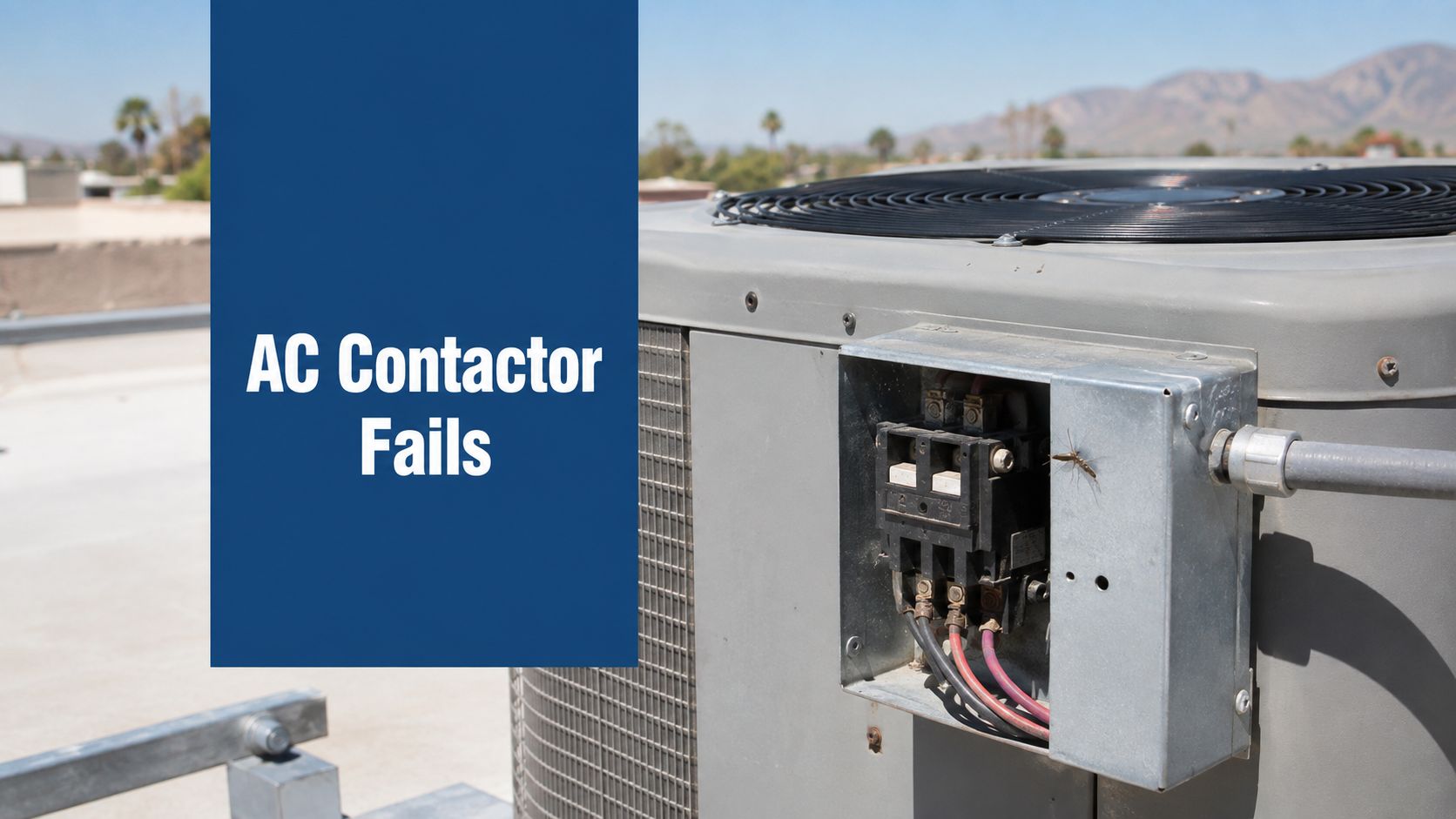
A Mesa AC that quits on a 115°F afternoon usually isn't failing because of one dramatic event. More often, the outdoor unit's contactor has been getting cooked, arced, chattered, and dirtied up for months until it finally won't pull in anymore. If the system is buzzing, clicking, or blowing warm air, the problem is often in that small switch inside the condenser, not the whole air conditioner.
For homeowners in Mesa and the East Valley, that matters because long summer run times punish electrical parts far more than milder weather does. If the outdoor unit is acting up, signs an AC capacitor is failing can look similar, which is why a real diagnosis matters before anyone starts guessing.
What Actually Breaks When Your AC Goes Dead on a Mesa Afternoon
A family in Mesa can go from normal cooling to warm air fast. The thermostat still says the house should be cooling, but the outdoor unit makes a buzz, clicks a few times, then goes quiet. On side-yard condensers and rooftop package units across the East Valley, that kind of failure usually points to the contactor before it points to anything larger.
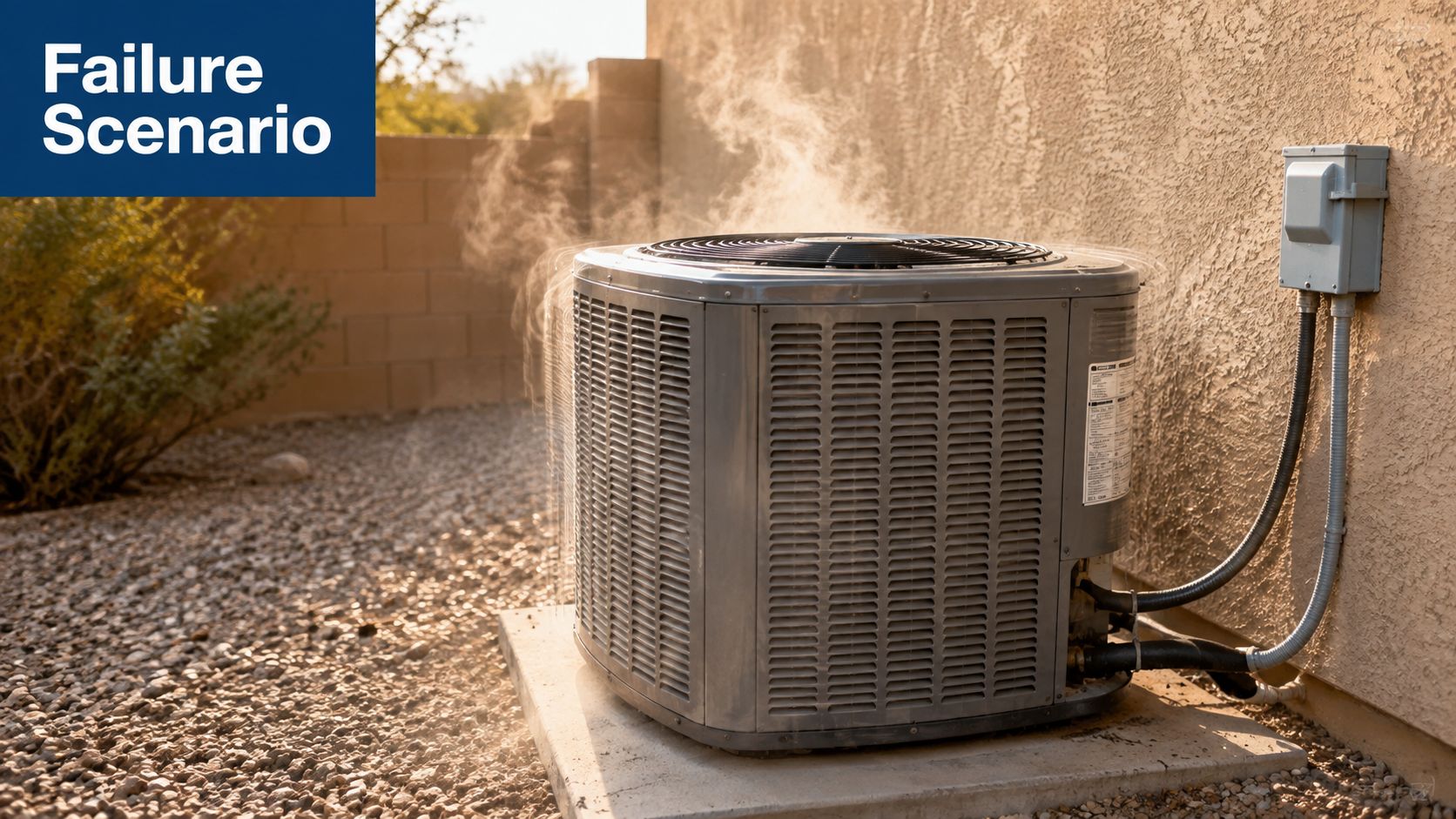
What fails first in the box
A contactor is the outdoor unit's switching point. It tells the compressor and condenser fan when to run, and in Arizona that little part gets hit with heat, arcing, and nonstop cycling.
A good local repair visit starts with the basics, then works outward. That's why technicians often check the outdoor electrical components first, then move to the rest of the system if the contactor isn't the whole story.
For Mesa homeowners, the hard part is that the failure can look like a full system outage even when the rest of the AC is still serviceable. If the contactor won't close, power never reaches the compressor or fan. That's why quick AC repair support in Mesa can save time before the problem snowballs.
Why the desert changes the pattern
Arizona doesn't usually kill the contactor in one hit. It shortens the part's life with repeated stress, especially when the outdoor unit sits in triple-digit ambient heat and keeps starting again and again through the afternoon. The next sections cover the cumulative wear pattern, the low-voltage coil problem, and the contamination issues that show up so often in Mesa and the East Valley.
What an AC Contactor Does and Why It Matters in the Desert
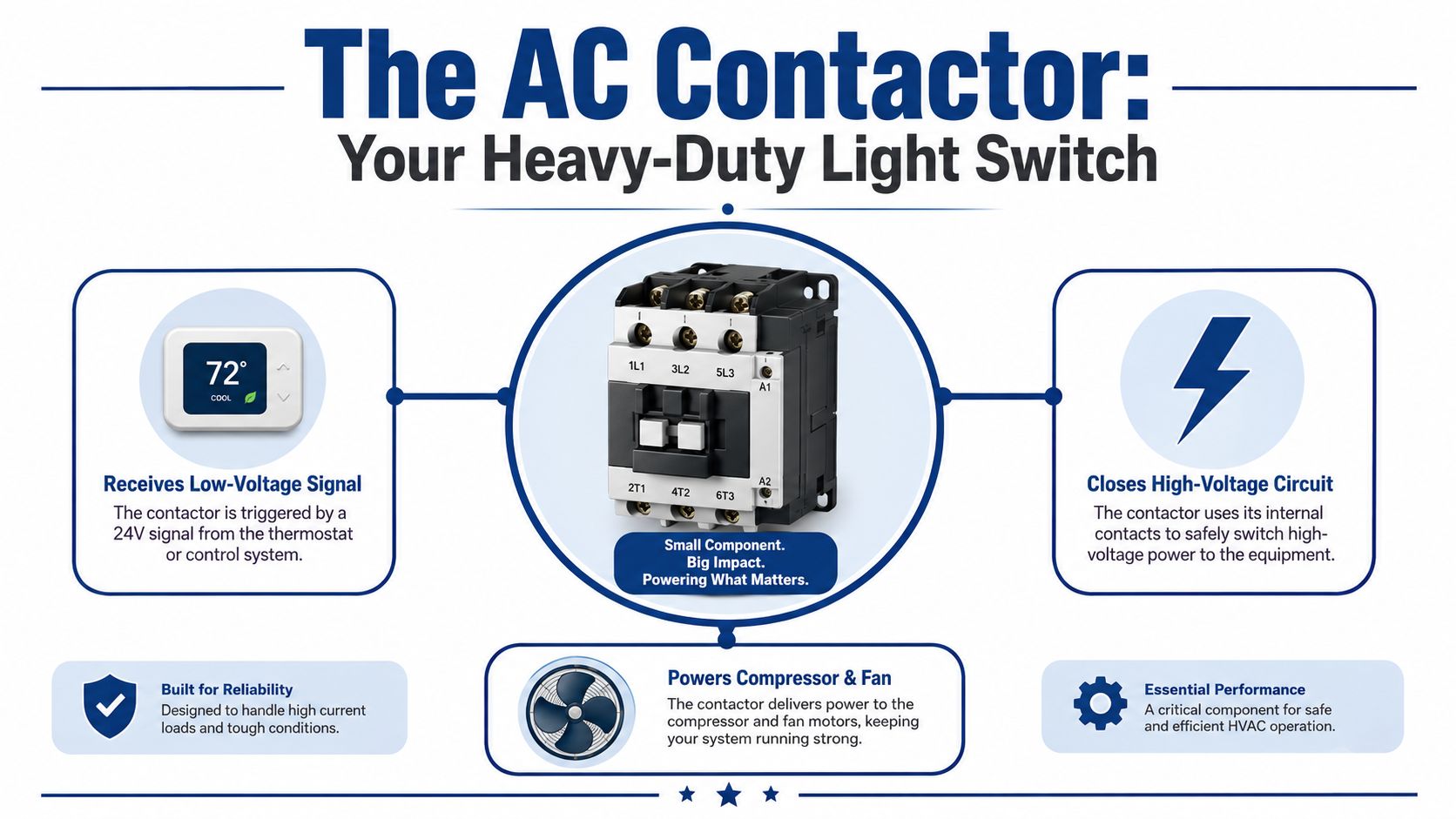
The easiest way to think about a contactor is as a heavy-duty light switch for the outdoor unit. The thermostat sends a low-voltage signal, usually around 24 to 27 VAC, and the contactor uses that signal to close a much larger circuit that powers the compressor and condenser fan, which run on high voltage. The two electrical paths are separate, and that's why one small failure can stop the whole cooling cycle.
Two jobs in one small part
The low-voltage side has to pull the coil in cleanly. The high-voltage side has to carry compressor and fan load without welding itself shut or burning away at the contacts. In Arizona, both sides get punished, but for different reasons.
The low-voltage control circuit can get weak over long wire runs, attic heat, and aging connections. The high-voltage side gets hit every time the compressor starts. That's when the electrical surge and inrush current stress the contact points.
Why homeowners confuse it with the capacitor
A lot of people mix up the contactor and the capacitor because both sit near the outdoor unit and both can stop cooling. They're not the same part. The capacitor helps start and run the motors, while the contactor is the gate that lets power reach those motors in the first place.
For readers comparing parts, understanding AC parts in Arizona heat helps separate the contactor from the capacitor before a service call. That distinction matters when a tech is explaining what failed and what didn't.
How Arizona Heat Wears Out a Contactor Over Time
The desert usually wins by attrition. Phoenix-area systems can cycle constantly through long cooling stretches, and each start creates an arc at the contact surfaces. Those tiny flashes pit and burn the metal a little more each time until the contactor stops closing reliably. When that happens, power never reaches the compressor or the condenser fan the way it should.
The wear starts before the part looks bad
Heat does more than make the outdoor unit feel hot to the touch. It raises the temperature inside the electrical compartment too, which cuts into the thermal margin for insulation and the metal parts inside the contactor. Repeated switching under that kind of load wears the part down slowly, not all at once.
A contactor can look fine from the outside and still be on its way out. The coil may still pull in, but the contacts can already be rough enough to create extra resistance and heat every time the system starts.
The failure modes that matter most
- Ambient heat soak: Triple-digit air around the condenser pushes the electrical box hotter than many homeowners expect. That extra heat ages insulation and narrows the part's working margin.
- Contact arcing and pitting: Every make-and-break cycle creates a small arc. Over time, the contact surfaces get rough, resistive, and unreliable.
- Low-voltage coil chatter: If the coil only gets a weak signal, it chatters instead of pulling in cleanly. That chatter creates more micro-arcing and more heat.
- Dust, insects, and corrosion: Desert debris and pest intrusion can keep the plunger from moving freely or leave residue that makes the contacts run hotter.
A contactor that is already hot and slightly worn can fail faster if ants, earwigs, or fine dust get inside the body. AC maintenance in Mesa helps reduce that buildup before the summer grind starts. A clean compartment also gives a technician a better chance to catch pitted contacts or a sticky plunger before they stop pulling in cleanly.
Why this failure is cumulative
The problem is not one bad afternoon. It is the repeated thermal and electrical stress that stacks up all season. Once the contact faces are pitted, resistance rises, heat rises again, and the next cycle hits harder. Low-voltage chatter makes that wear happen faster because the coil keeps trying to engage without pulling fully in, and each partial pull adds more arcing.
Pest intrusion adds another layer. In Mesa and the rest of the Valley, I find contactors that have been dusted with debris, packed with insect parts, or stained by corrosion long before the homeowner sees a hard failure. That is why a contactor often dies after a long stretch of weak starts, buzzing, and uneven cooling, not one dramatic event.
Warning Signs Homeowners Notice Before a Full Failure
The first clue is often noise. A condenser that hums or buzzes but won't start usually means the contactor is trying to pull in but isn't completing the job. A repeated clicking sound can point to the coil chattering, especially when the low-voltage signal is weak or the coil is already worn.
Signs that move from annoying to urgent
- Buzzing without fan movement: The outdoor unit is getting a call for cooling, but the contactor may not be seating fully.
- Repeated clicking: That often points to low control voltage or a failing coil that can't stay pulled in.
- No engagement at all: If the condenser stays silent, the system may not be sending the signal, or the contactor coil may be open.
- Intermittent cooling: The AC works, then quits, then works again as the heat changes through the day.
- Scorch marks or a melted smell: Those are signs the part has been overheating or arcing heavily.
Arizona homeowners also notice a strange pattern where the air runs for a few minutes, then shuts down right after the thermostat is raised or adjusted. That often means the system is right on the edge of failure and the contactor isn't closing cleanly every time.
For a quick triage read, AC repair help from Comfort Experts can help homeowners separate an outdoor electrical problem from a broader cooling issue before the heat gets worse.
What You Can Safely Check Yourself and When to Call a Pro
There are a few checks homeowners can do without opening equipment. Start with the outside unit. Look for obvious damage, insects around the cabinet, debris blocking airflow, or a burnt smell near the condenser. Then listen. A steady hum, repeated clicking, or complete silence each tells a different story.
Safe checks that don't involve live components
- Inspect the thermostat settings and batteries. A dead or mis-set thermostat can look like a contactor problem.
- Check the breaker. If it tripped, reset it once. If it trips again, leave it off and call.
- Watch the condenser from a distance. Fan not spinning, repeated clicks, or buzzing are all useful clues.
What's not safe is opening the contactor box, touching terminals, or measuring live 240-volt circuits. A running air conditioner can hold a dangerous charge even after it shuts off, and the compressor side isn't something to poke at. That's technician work.
A tech will usually test control voltage at the coil, inspect the contact faces for pitting, check the capacitor, and look for pest intrusion or loose connections. If voltage is present but the plunger won't pull in, the coil is likely done. If the contact faces are badly burned, the part may have been on borrowed time for a while.
For homeowners comparing how service lines handle urgent calls, compare HVAC call answering options can be useful for understanding why some companies respond faster after-hours than others. check your AC before calling is also a helpful mindset, but only up to the point where the homeowner stays out of the cabinet.
A Mesa-Specific Maintenance Plan to Make the Contactor Last
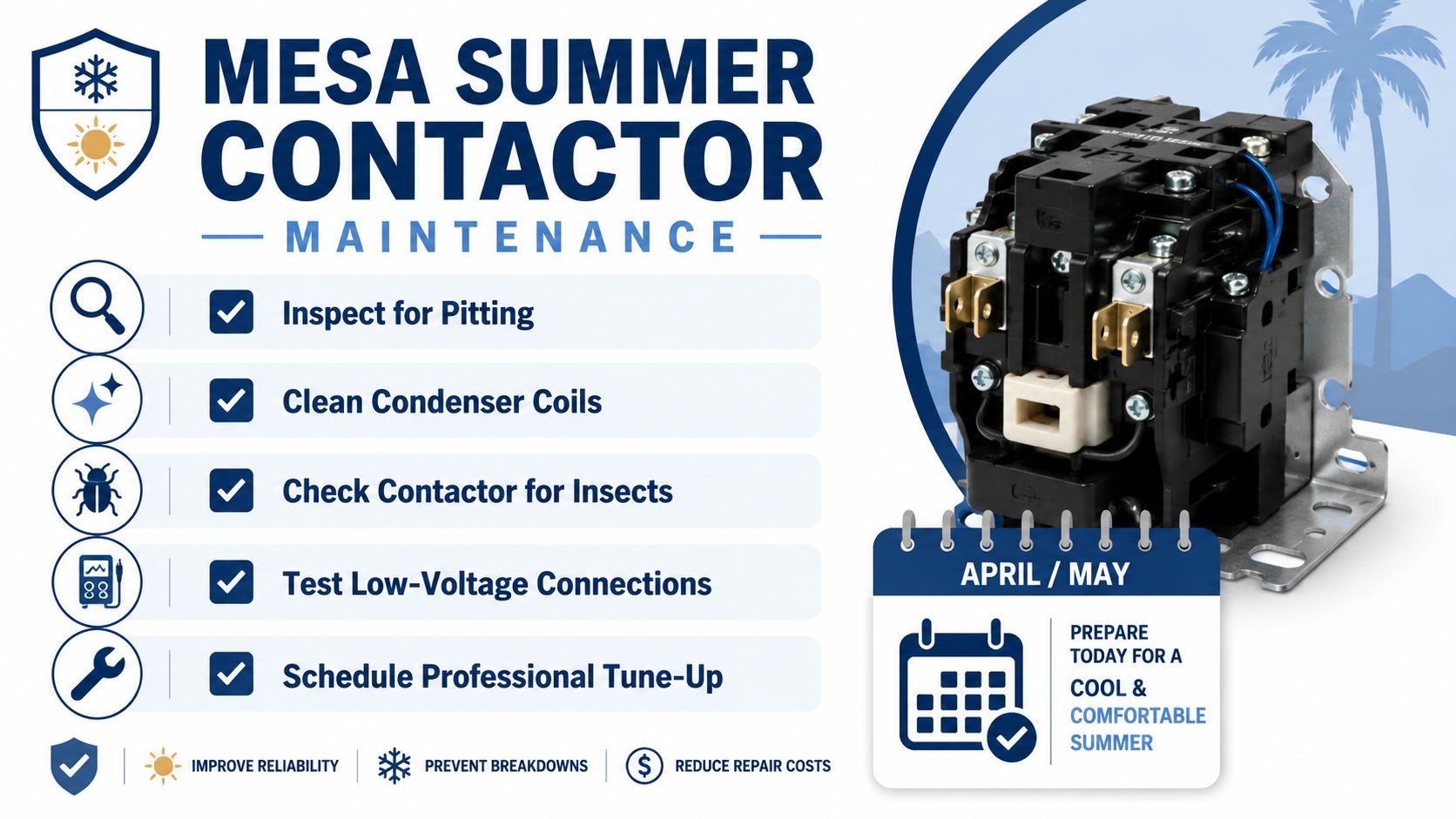
The best contactor repair is the one that gets delayed by good maintenance. In Mesa, that means planning before the heat lands, not after the first emergency call of July. A spring tune-up gives a technician time to inspect the contactor before the summer cycle count starts climbing.
What to put on the calendar
A pre-summer visit in April or May should include a coil cleaning, electrical connection check, contactor inspection for pitting, capacitor testing, and a control-voltage check. That's especially important for older homes with attic air handlers, where marginal voltage and heat-stressed wiring can shorten part life.
Mid-summer matters too, especially after monsoon dust or a rough haboob. Fine dust, leaves, and insects can get into side-yard condensers and rooftop units fast. A dirty cabinet won't always cause an immediate failure, but it raises the heat and contamination level around the contactor.
What homeowners can control around the unit
- Keep the area clear: Don't stack boxes, yard waste, or tools around the condenser.
- Watch the shade: A shaded side-yard unit stays under less heat stress than one baking in direct sun.
- Keep pests out: If ants and earwigs keep showing up at the cabinet, the unit needs a closer look.
- Don't block airflow: Anything that traps hot air around the condenser makes the electrical compartment work harder.
For homes that feel like the sun is beating down on the yard all day, Phoenix sun screen benefits are worth considering as part of the broader heat-control conversation around the home exterior. That doesn't replace HVAC service, but it can reduce some of the surface heat around living spaces and adjacent equipment areas.
Repair, Replace, or Schedule a Visit, Your Next Step
A contactor that fails on a younger system is usually a straightforward repair. Once the failure shows up with a tired capacitor, repeated short-cycling, or a compressor that sounds strained, the decision gets harder. In Mesa, the bigger question is how much desert wear the system has already taken. Contactors often wear out sooner in Arizona heat than they do in cooler climates, especially when the unit has been cycling hard through long summers.
| Factor | Repair usually makes sense | Replacement deserves a serious look |
|---|---|---|
| System age | The AC is still relatively young and otherwise dependable | The unit has already lived through a lot of desert heat stress |
| Failure pattern | One contactor issue, with no repeat breakdowns | Multiple electrical problems, noisy starts, or recurring shutdowns |
| Related parts | The main issue is the contactor, capacitor, or a loose connection | The contactor is failing along with compressor strain or other worn parts |
| Summer performance | The system cools normally after the fix | Cooling stays uneven even after repairs |
| Decision approach | Targeted repair gets the unit back online | Broader replacement can prevent more emergency calls |
A tech should look at the whole system, not just the burned part. That matters in Mesa because a hot-weather contactor failure can be the first clear sign that the unit is worn out in more than one place.
If the outdoor unit is buzzing, clicking, or refusing to start, Comfort Experts handles cooling diagnostics across Mesa and the East Valley with straightforward troubleshooting and practical repair recommendations. Call 480-207-1239 or schedule service if the system is acting up now, and get a real diagnosis before the next 115°F afternoon turns a small electrical failure into a full shutdown.