
A Mesa homeowner turns on heat on the first cold morning in months and hears a bang, squeal, or rattle from the closet, attic, or rooftop package unit. The immediate question, why is my furnace making noise, has two very different answers. Some sounds are normal metal expansion, and others mean the furnace should be shut off now.
Hearing a Furnace Noise in Your Mesa Home
East Valley furnaces sit idle through long cooling seasons, then start cold after months of dust accumulation. A brief tick as ducts warm is common. A repeated boom, grinding sound, burning odor, or cabinet vibration is not normal startup behavior.
The fastest triage uses timing, location, and repetition. Note whether the sound occurs before ignition, when burners light, when the blower starts, during steady heating, or after shutdown. A sound at one register points toward ducts or airflow. A sound at the cabinet points toward equipment.
Annual service matters because EPA guidance on annual inspection, cleaning, and tuning of central heating systems covers the furnace, flues, and chimneys, alongside routine filter changes. Homeowners should observe and record the noise, check only accessible items such as the filter and registers, and stop before opening burner or energized electrical compartments.
Common Furnace Noises and What They Usually Mean
Sound names alone don't diagnose a furnace. Timing narrows the subsystem. Ignition sounds happen before warm air arrives. Blower sounds track fan speed. Duct sounds often continue briefly after shutdown as metal cools.
Sound and Timing Matrix for Furnace Noises
| Sound | When it happens | Likely cause | Severity |
|---|---|---|---|
| Tick or pop | Startup and shutdown | Duct or heat exchanger expansion | Usually low |
| Boom or bang | Burner ignition | Delayed ignition or expanding duct | High if repeated |
| Rattle | Blower start or steady run | Loose panel, debris, blower imbalance | Moderate |
| Squeal | Blower or inducer start | Worn bearing, belt, restricted airflow | Service soon |
| Scrape or grind | Any fan movement | Wheel contact or failing bearing | Shut down |
| Click repeatedly | Before ignition | Ignition, pressure switch, relay, control issue | Service soon |
| Hum or buzz | Call for heat, no fan motion | Transformer, relay, capacitor, motor issue | Power down if loud |
| Whistle or hiss | Steady airflow | Filter restriction, closed registers, duct turbulence | Check filter first |
A single soft click before ignition can be a normal control sequence. Repeated clicking without burner operation isn't. Likewise, a whoosh at registers differs from a screech inside the cabinet.
Airflow complicates the picture. DOE analysis of blower speed, airflow, and external static pressure identifies those factors as primary determinants of fan performance, with measured equipment airflows of 540 to 1,877 CFM against recommended values of 520 to 1,650 CFM. Sound alone can't establish whether airflow matches a specific furnace.
Duct Expansion Versus Equipment Faults
Sheet metal expands when heated and contracts when it cools. In an East Valley attic, a cold duct can tick or pop during the first minutes of a cycle, then quiet down. That's usually harmless if heat and airflow stay normal.
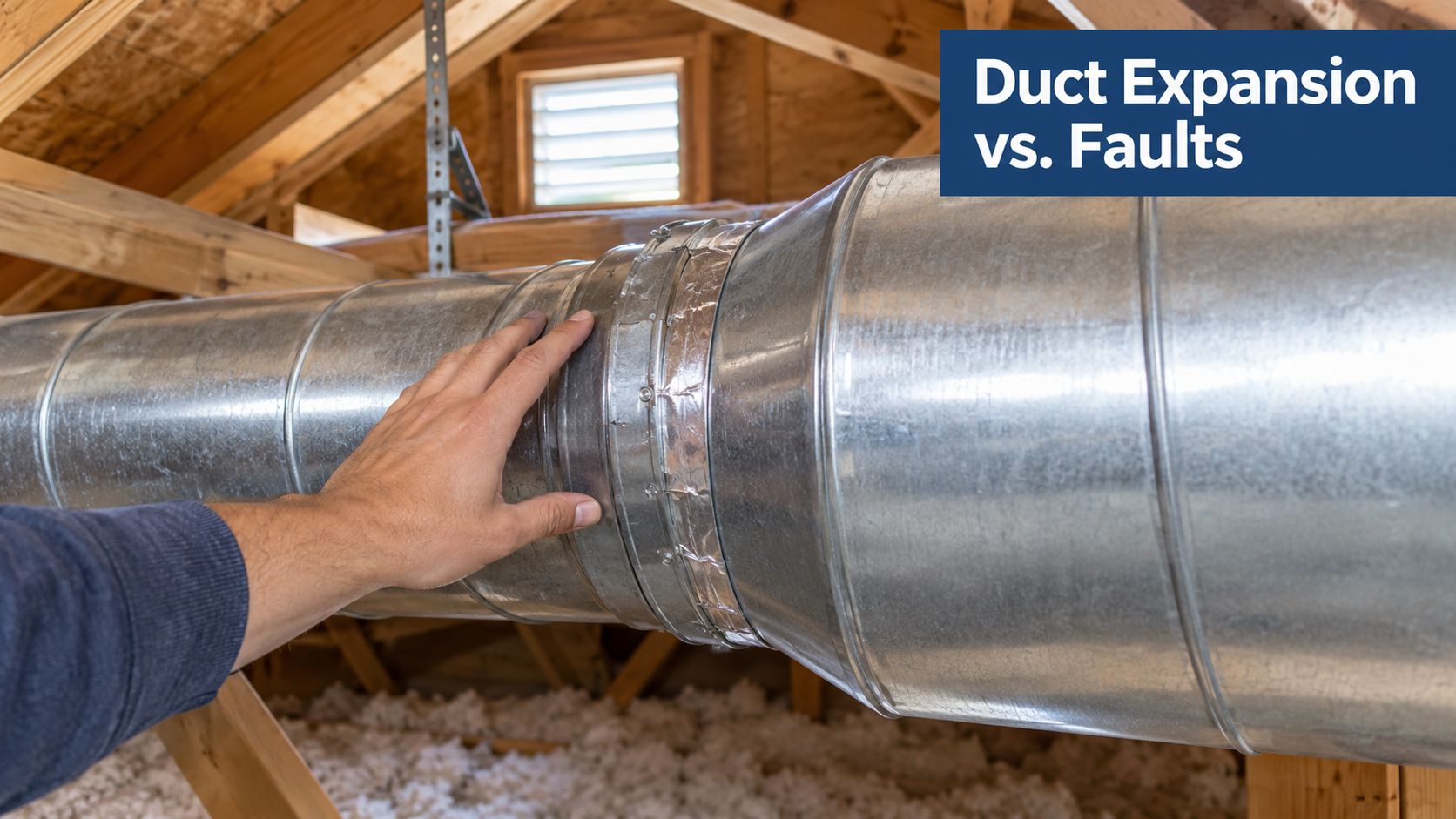
Location helps separate ducts from machinery. HVAC acoustic research distinguishing unit noise from duct airflow noise notes that perceived noise can originate in ducts rather than the equipment cabinet. A hiss at registers suggests restriction or turbulence. Vibration through a wall can reflect loose supports or poor isolation.
- Likely expansion: Brief ticks at startup or shutdown, no odor, no ignition delay, stable heating.
- Likely equipment fault: Repeated bang at the cabinet, grinding, cabinet shaking, failed starts, or worsening volume.
- Useful test observation: Note whether opening a closed register changes a whistle, but don't close many registers to mask airflow noise.
Accessible panel screws and loose vent covers can be secured with power off. Plenum connections, attic supply runs, and internal components belong with professional duct repair or furnace service.
Blower Motor and Bearing Clues
Blower noises usually begin when the circulation fan starts and change with fan speed. A squeal can point to worn motor bearings or, on older belt driven equipment, belt wear. Scraping suggests a loose or misaligned wheel contacting its housing. A rattle can come from debris, an unbalanced dusty wheel, or a loose motor mount.
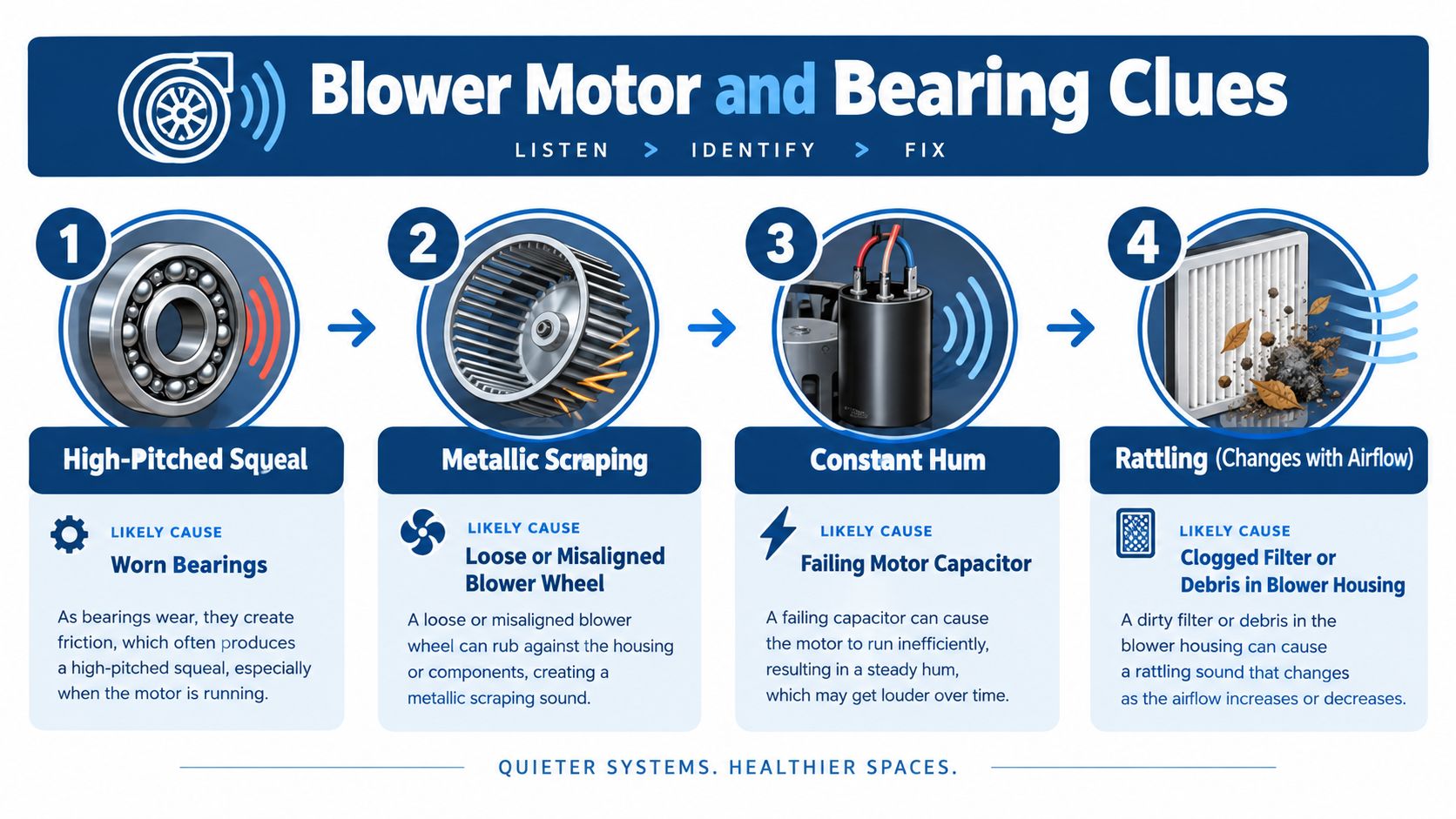
Restricted airflow raises the workload. Dirty filters, coils, ducts, and closed registers change external static pressure and can increase vibration, motor load, and bearing noise. EPA filtration guidance on typical MERV ratings and replacement intervals states that a typical 1 inch spun fiberglass filter is usually MERV 1 to 4, and manufacturers typically recommend replacement every 60 to 90 days, sooner under heavy dust loading. Mesa dust and monsoon debris can shorten that interval.
Filter replacement is a first check, not a complete diagnosis. Persistent noise warrants the measurements described in Comfort Experts blower wheel advice, along with wheel, mount, and motor inspection. For packaged terminal equipment in other settings, a deep cleaning guide for PTAC units illustrates why accumulated debris deserves attention, although furnace blower compartments shouldn't be opened for DIY cleaning.
Ignition and Combustion Concerns
Startup noises before the main blower runs often involve the ignition sequence. The inducer motor establishes draft through the heat exchanger and vent. A pressure switch then verifies draft before ignition is permitted. A whine, grind, or pulsating sound can come from an inducer bearing or wheel, restricted venting, condensate blockage, or damaged pressure tubing.
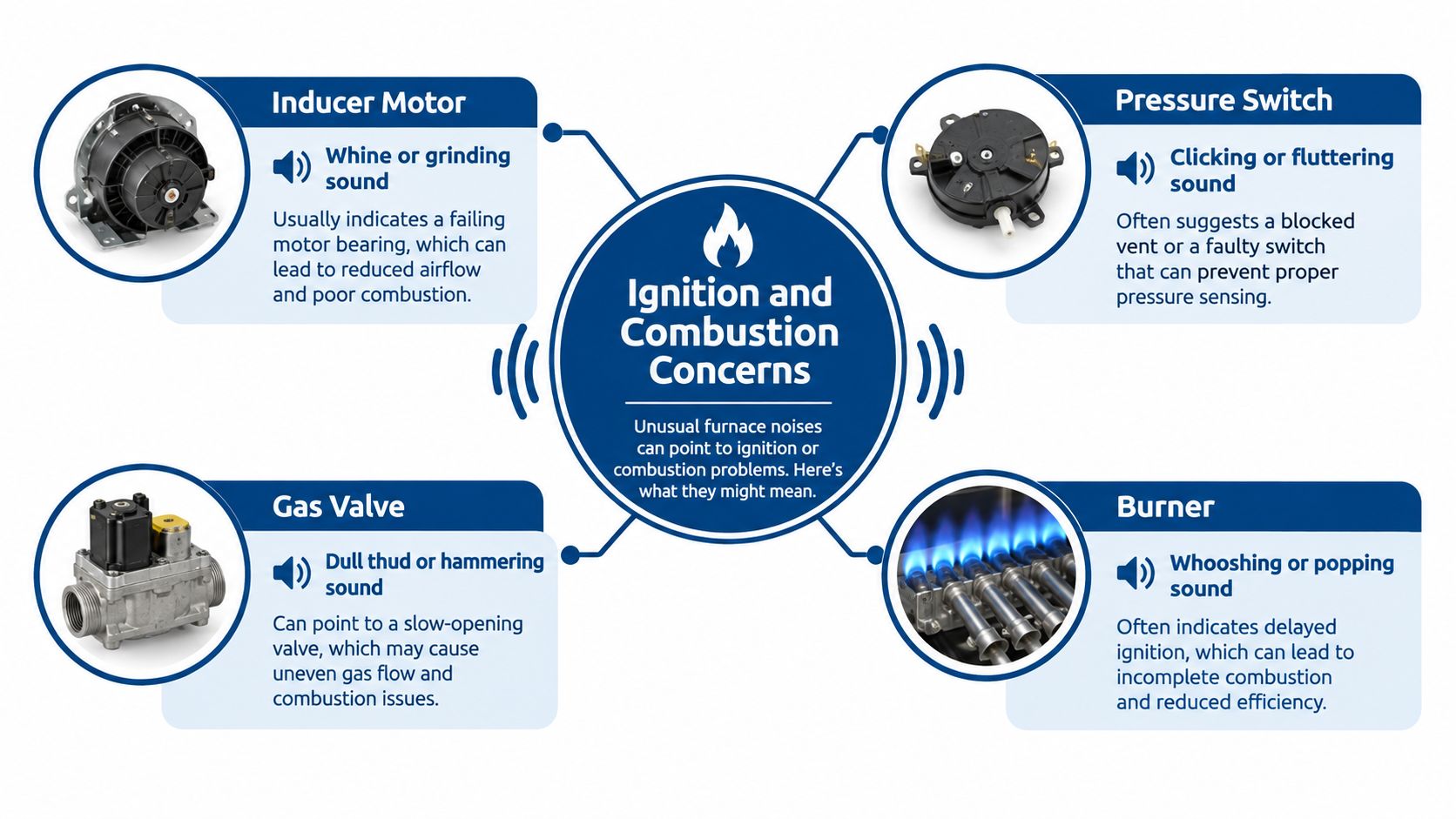
Delayed ignition is more serious. Gas reaches the burners but doesn't light promptly, then ignites with a boom. Dirty burners, ignition problems, vent restrictions, and pressure switch faults can interrupt the sequence. Repeated booms shouldn't be treated as duct expansion, especially when the sound comes directly from the cabinet.
Warning signs change the decision immediately:
- Soot or scorch marks: Shut the furnace down and arrange inspection.
- Yellow or unstable flame: Stop operation rather than repeatedly resetting the system.
- Exhaust odor, headache, dizziness, or nausea: Leave the building and seek emergency help.
- Carbon monoxide alarm: Leave first, then contact emergency services.
The stakes justify that response. CPSC carbon monoxide data and yearly heating inspection guidance reports more than 200 deaths each year from unintentional, non fire carbon monoxide poisoning associated with consumer products, with heating equipment among the leading contributors. Burner, flue, heat exchanger, and pressure switch diagnosis requires qualified service and draft measurement, not repeated thermostat resets.
Electrical Humming and When to Power Down
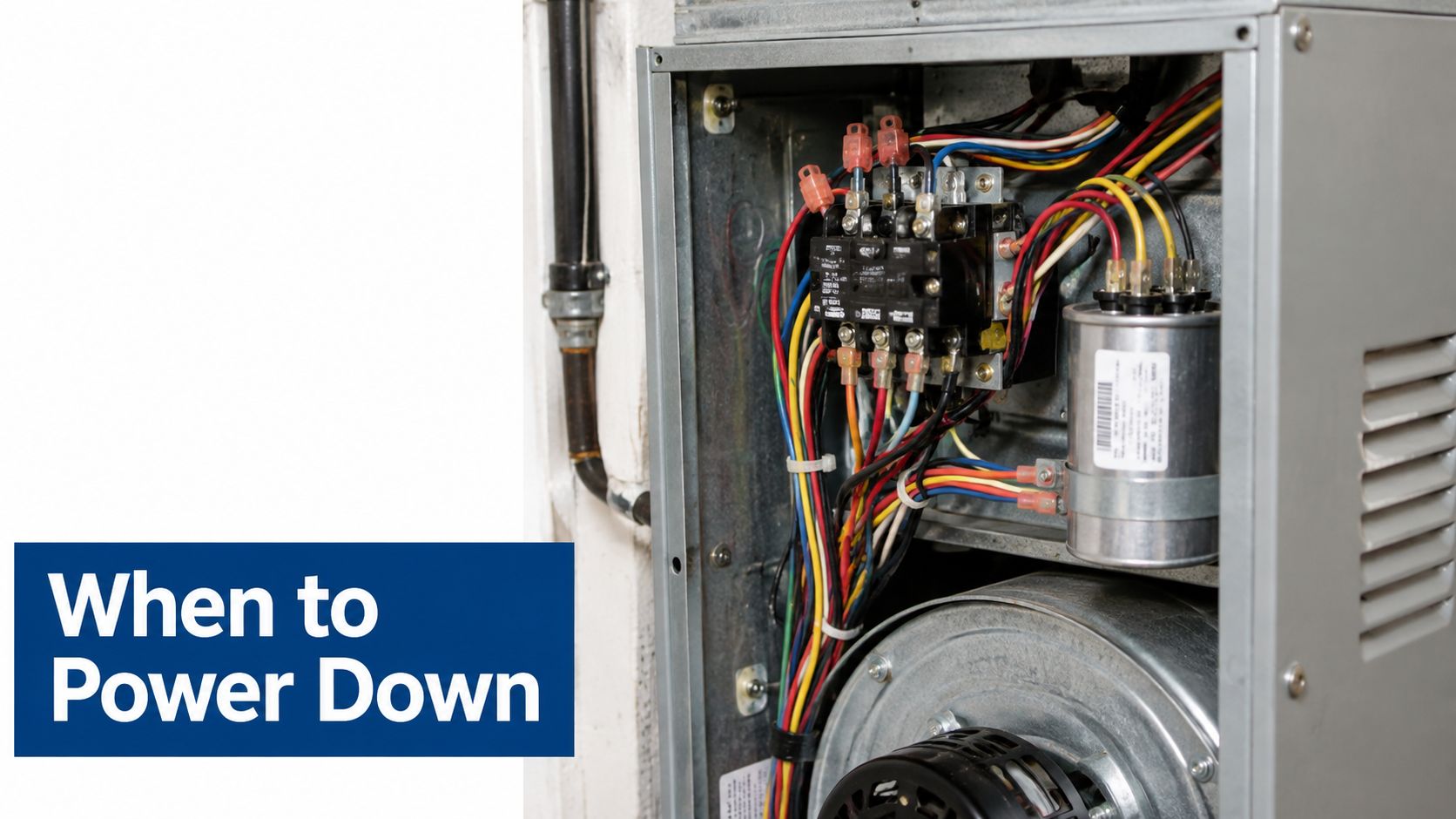
A soft transformer hum can be normal when a furnace receives a call for heat. Louder buzzing, relay chatter, or a hum with no blower movement is different. Possible sources include a failing transformer, relay, capacitor, control board, or a motor that cannot start. Exact identification requires electrical testing inside the cabinet, which homeowners shouldn't attempt.
Safe Shutdown Steps
- Thermostat off: End the heating call first.
- Breaker off: Switch off furnace power at the panel for grinding, electrical odor, loud buzzing, smoke, or repeated failed starts.
- Gas supply off only when safe: If a combustion problem or gas leak is suspected, leave and contact the gas utility or emergency services rather than spending time at the appliance.
- Do not open compartments: Don't test capacitors, pull blowers, bypass safety switches, or inspect energized wiring.
Breaker behavior adds context, and breaker humming normal or not helps distinguish panel noise from furnace controls. A breaker that trips again after reset, visible scorching, or an electrical burning smell calls for same day professional attention. Repeated resets can stress motors and controls.
Safety Triage Card
| Condition | Typical clues | Action |
|---|---|---|
| Nuisance duct noise | Brief tick or pop, normal heat, no odor | Keep watching |
| Maintenance item | Whistle, strained airflow, old filter | Replace filter, open registers |
| Equipment fault | Squeal, scrape, persistent rattle, repeated clicks | Shut down if metallic, call today |
| Electrical warning | Loud buzz, chatter, scorching, breaker trips | Power down, call today |
| Combustion or CO warning | Ignition boom, soot, unstable flame, alarm, illness | Leave if alarmed or ill, call emergency services |
Carbon monoxide can't be ruled out by smell. CPSC guidance on defective or blocked venting and monthly CO alarm testing connects the hazard to improper installation, poor maintenance, and faulty venting. East Valley furnaces run fewer months than cold climate systems, so ignition and venting faults often appear on the first demanding cycle. That first boom deserves respect.
What to Record Before the Technician Arrives
Good notes shorten diagnosis because furnace faults are sequence specific. A phone recording can help, but timing and operating details matter more than volume alone.
- Timing: Startup, burner operation, blower start, steady run, shutdown, or continuous.
- Pattern: Every cycle or only the first cycle, plus approximate duration.
- Location: Cabinet, return, one register, attic, wall, or rooftop unit.
- Performance changes: Weak airflow, short cycling, uneven heat, failed ignition, or thermostat error code.
- Filter history: Size, type if known, and installation date.
- Register effect: Whether reopening a closed supply register changes whistling.
- Safety signs: Soot, odors, flame appearance if visible without opening equipment, symptoms, and CO alarm test status.
During professional furnace repair in Mesa, a technician can inspect the filter and coil, measure total external static pressure, compare airflow with manufacturer data, and check blower and inducer amperage against nameplate values. Combustion service can include pressure switch and draft checks, vent and condensate inspection, burner flame evaluation, and heat exchanger assessment. Those measurements must occur in the home. A recording supports diagnosis, but it doesn't replace inspection.
Preventive Maintenance and When to Call Comfort Experts
Prevention is straightforward. Replace filters on the manufacturer schedule, keep supply and return registers unobstructed, maintain clear space around indoor equipment, and test carbon monoxide alarms monthly. Annual professional service should address burners, ignition, venting, blower condition, electrical connections, airflow, and safety controls before winter use.
The printable furnace maintenance tips provide a practical seasonal checklist for East Valley homes. Maintenance doesn't make every noise harmless. A repeated ignition bang, grinding, soot, unstable flame, exhaust odor, electrical burning smell, or CO alarm still means shutdown and professional inspection. A brief tick that fades as ducts warm usually means monitoring is enough.
For a noise that is new, repeated, metallic, or tied to failed heating, call 480-207-1239 or schedule service for an in person assessment. The next step is measurement, not guesswork.
Comfort Experts provides furnace diagnosis and repair for Mesa and East Valley homeowners dealing with banging, squealing, scraping, humming, or repeated ignition noises. A technician can identify whether the source is airflow, the blower, electrical controls, or combustion and explain the appropriate repair before work begins. Visit Comfort Experts to request an assessment and restore quiet, reliable heat.