
You're probably here because you heard a strange sound at the panel, maybe right when the AC kicked on during another brutal Phoenix afternoon. Circuit breaker humming can be harmless, but it can also be your home's way of warning you that something electrical needs attention.
Is a Humming Circuit Breaker Normal or a Nuisance
If the noise is faint, steady, and only noticeable when you're standing close to the electrical panel, that alone doesn't automatically mean trouble. In North America, power runs at 60 hertz, and that alternating current can create a low-level vibration, often called a mains hum, in electrical equipment. Schneider Electric notes that some operational humming comes from tiny internal movements and is not evidence of reduced service life in the breaker, as explained in Schneider Electric's breaker humming guidance.
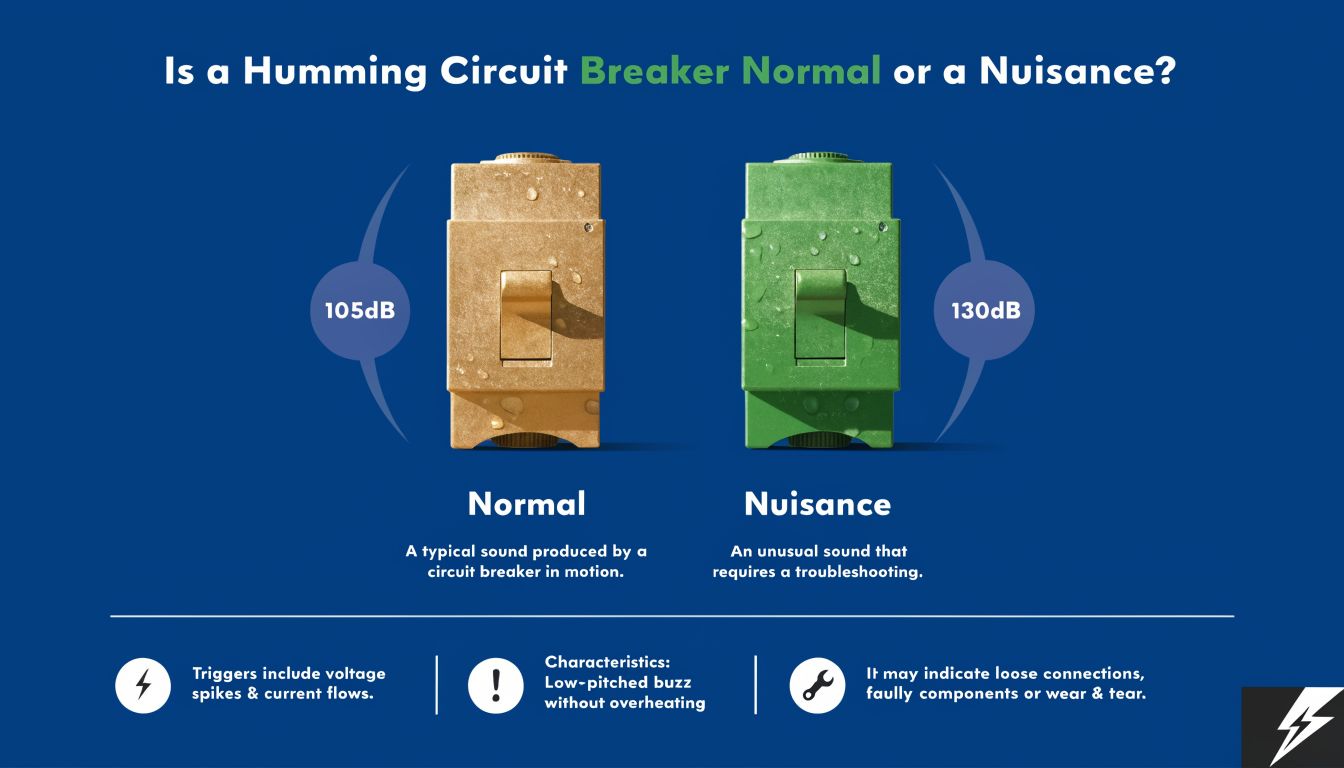
That's the reassuring part. A very light hum can be normal.
The part that matters is how the sound behaves. A nuisance or risky hum usually gets louder, changes pitch, starts when a heavy appliance turns on, or appears suddenly when the panel used to be quiet. In Phoenix homes, that often shows up during summer because the system is already working hard, and a high-load event makes the sound easier to notice.
What normal usually sounds like
A normal hum is usually:
- Soft and consistent. You hear it only near the panel.
- Stable in tone. It doesn't jump around or crackle.
- Not paired with other symptoms. No hot breaker, no burning odor, no flickering lights.
What should make you pause
A problematic hum tends to be different in ways homeowners can notice without opening the panel.
Watch for these clues:
- It gets louder at certain times. Especially when the AC starts, the oven runs, or the pool equipment is on.
- It changes suddenly. A panel that was quiet for years and now buzzes deserves a closer look.
- It comes with behavior changes. Lights dip, breakers trip, or one area of the house acts erratically.
Many homeowners don't need to become amateur electricians. They just need a clear baseline. If the hum is quiet and steady, don't panic. If it's loud, new, or changing, treat it like a symptom, not background noise.
Top 5 Causes of a Loud Circuit Breaker Hum
A loud hum usually means there's more going on than normal magnetic vibration. In Phoenix, heat adds its own pressure because major loads run longer and start harder, especially cooling equipment.
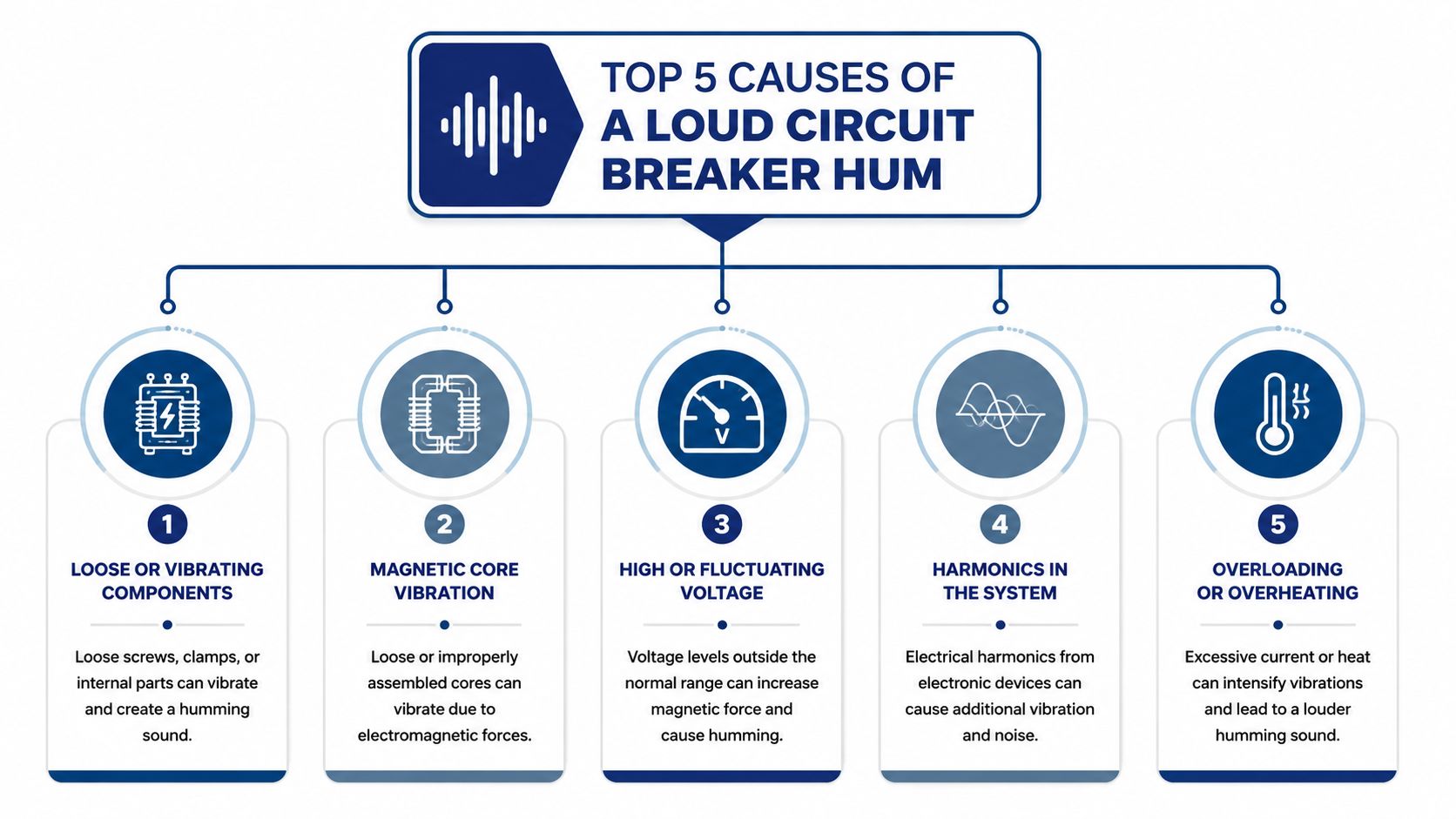
One useful real-world point is this. In hot-weather markets like Phoenix, a panel may hum more when large loads cycle on, and heavy compressor starts can aggravate an overloaded breaker and make it hum loudly, as noted by Energy Avenue's panel buzzing overview.
Heavy AC startup load
This is one of the most common Phoenix-specific patterns. Your AC compressor starts, the electrical demand jumps, and the breaker or panel suddenly gets noisier.
That doesn't always mean the breaker is bad. Sometimes the breaker is reacting to a demanding piece of equipment. If your hum appears right when cooling starts, the issue may be tied to the system load, compressor behavior, or wear in the AC itself. If that pattern sounds familiar, this guide to air conditioner compressor replacement can help you understand what the cooling side of the problem can look like.
Circuit overload
Think of an overloaded circuit like carrying too many grocery bags in one trip. You might make it to the door, but everything is under strain.
A Phoenix example is easy to picture. The AC is running hard, the pool pump is on, someone starts the dryer, and dinner is in the oven. If too much current is moving through one circuit or breaker for too long, the breaker may hum more noticeably.
Signs this is load-related include:
- The sound shows up during peak use
- It gets worse in late afternoon or early evening
- Turning off a large appliance changes the noise
Loose electrical connections
Loose connections create resistance. Resistance creates heat and vibration. That can lead to buzzing or humming that sounds rougher than a normal low-level hum.
This is one of the reasons a sound change matters so much. Electrical systems don't like loose hardware. A connection can start as “just a noise” and turn into overheating if ignored.
A failing breaker
Breakers wear out. Internal components can weaken, contacts can degrade, and the breaker may no longer behave cleanly under load.
When that happens, the sound is often more than a simple hum. It may become a sharper buzz, or it may appear under loads that never used to cause any issue. A failing breaker can also trip unpredictably, or not trip when it should.
Arcing or unstable electrical contact
This is the one homeowners should take seriously right away. Arcing doesn't always announce itself dramatically at first. It can begin as a harsher buzz or sizzling-type sound before it becomes obvious.
Here's a quick comparison:
| Cause | What it often sounds like | Why it matters |
|---|---|---|
| AC startup strain | Brief hum during cooling startup | May point to HVAC load or compressor stress |
| Overload | Hum gets louder during heavy use | Breaker may be carrying more than it should |
| Loose connection | Rough buzzing or changing hum | Heat can build at the connection point |
| Failing breaker | Persistent or worsening buzz | Protection may become unreliable |
| Arcing | Sharp buzz, crackle, or sizzle | Fire risk goes up fast |
Danger Signs That Require Immediate Attention
Some sounds can wait for a scheduled diagnosis. Some can't.
If the humming is loud and continuous, that can indicate a failing breaker, loose wiring, or an overloaded circuit that may not trip properly. Service guidance also warns that humming paired with flickering lights, overheating, or frequent trips should be evaluated promptly by a licensed electrician, as described in this electrical panel humming safety article.
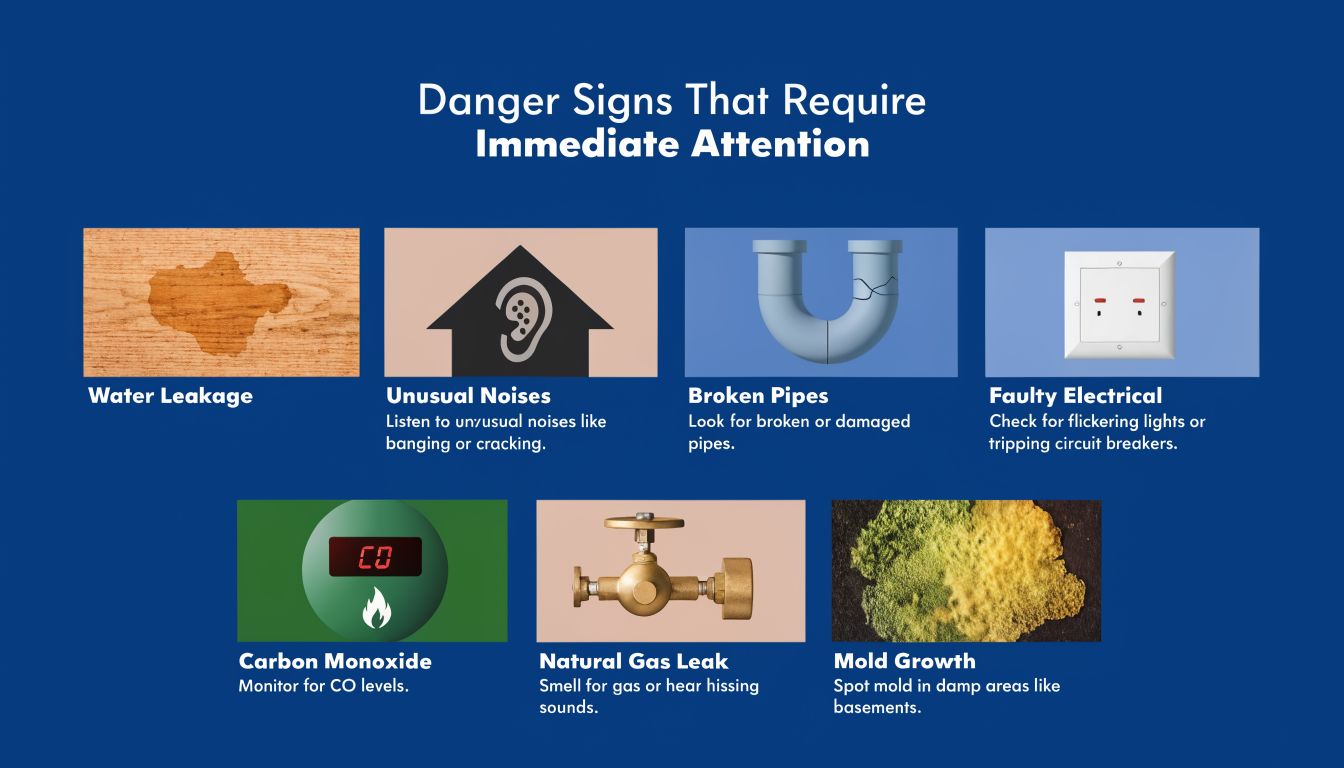
Stop and call for help if you notice any of these
- Burning odor. A smell like hot plastic, overheated insulation, or scorched metal should never be ignored.
- Heat at the panel. If the breaker door or surrounding area feels unusually warm, don't keep testing things.
- Scorch marks or discoloration. Brown, black, or melted-looking spots around breakers or panel openings suggest overheating.
- Crackling or sizzling. A hum that turns into a more aggressive sound points to a more serious electrical problem.
- Lights flickering with the noise. That link between sound and visible electrical instability matters.
- Frequent breaker trips. Repeated tripping means the system is trying to protect itself.
- Equipment cutting in and out. If cooling or heating drops out at the same time, this article on heater and AC not working may help you recognize the system-wide symptoms, but panel noise still needs direct attention.
Don't remove the panel cover. Don't tighten anything yourself inside the panel. Don't keep resetting a breaker that's making noise and heat.
Safe Troubleshooting You Can Do Yourself
There are a few things homeowners can do safely, and the keyword is safely. The goal isn't to repair the problem. It's to narrow down when the hum happens and what changes it.
Start with observation, not tools
Stand near the panel with the cover closed and listen. Then pay attention to what's turning on in the house at the same time.
Ask yourself:
- Does the hum start when the AC kicks on?
- Does it happen only in the afternoon?
- Does it fade when the pool pump, oven, or dryer shuts off?
That timing matters. In Phoenix homes, patterns often tell the story before any technician touches a meter.
Try a safe process of elimination
If the panel is not hot, there's no burning smell, and you're only dealing with a noise, you can reduce large electrical loads one at a time.
Try this in a calm, deliberate order:
- Turn the thermostat off briefly and listen for a change.
- Shut off other large appliances you can control normally, like the oven or dryer.
- Wait and listen after each change rather than flipping multiple things at once.
- Write down the pattern so you can report it clearly.
If the hum clearly tracks with cooling operation, that points you toward the HVAC side of the load. This practical guide on how to diagnose AC problems can help you connect the sound to system behavior without taking electrical risks.
Reset a tripped breaker the right way
If a breaker has tripped and later feels normal, you can reset it by moving it fully to OFF first, then back to ON. Do that once.
Do not keep repeating that process if it trips again or resumes humming loudly. A breaker that repeatedly trips or buzzes is reporting a problem. Resetting it over and over doesn't solve anything.
Monsoon season dust adds another wrinkle in the Valley. Dust and heat don't help electrical equipment stay cool, and they can make existing weaknesses show up sooner. If your humming started after a dust storm, heat wave, or a stretch of nonstop AC use, mention that when you call.
Who to Call and What to Expect for Costs
A lot of homeowners get stuck on one practical question. Is this an electrician problem or an HVAC problem?
The answer depends on what triggers the hum. If it's tied directly to cooling startup, an HVAC technician can evaluate whether the equipment is drawing abnormally, short-cycling, or putting unusual strain on the breaker. If the hum is constant, affects multiple circuits, or comes with heat or odor, start with an electrician.
For homeowners comparing providers, it also helps to understand how companies show up online and how local service businesses build trust in search. This overview of local SEO for home services gives useful background on why some firms are easier to vet than others.
Who to call and potential costs
| Symptom | Likely Professional to Call | Estimated Cost Range (2026) |
|---|---|---|
| Hum only when AC or heat pump starts | HVAC technician | Varies by diagnosis and repair scope |
| Constant panel hum even with major loads off | Electrician | Varies by diagnosis and repair scope |
| Burning smell, heat, scorch marks, or crackling | Electrician | Varies by urgency and repair scope |
| Breaker trips when cooling starts | HVAC technician first, electrician if panel issue is suspected | Varies by diagnosis and repair scope |
| Multiple circuits acting strangely | Electrician | Varies by diagnosis and repair scope |
| Unsure whether it's equipment or panel related | HVAC or electrical diagnostic visit | Varies by provider and findings |
No honest technician should quote a real repair cost without diagnosis. The final price depends on what's wrong, whether the issue is isolated to a breaker, tied to wiring, or coming from equipment load on the HVAC side. If you're trying to decide whether a cooling-related issue is likely involved, this page on AC repair service near me can help you understand what an HVAC diagnostic visit typically addresses.
A simple decision shortcut
- Call an electrician first if the sound is constant, unrelated to one appliance, or paired with heat, odor, or visible panel damage.
- Call an HVAC technician first if the panel hum appears right when the AC or heat pump starts and disappears when cooling stops.
- Call both if needed when one diagnosis points to the other side. That's common in real homes.
Comfort Experts handles HVAC diagnostics that can identify whether cooling equipment is putting unusual electrical strain on the system, which is useful when the hum seems directly connected to AC operation.
How to Prevent Electrical Issues in Your Phoenix Home
Prevention is less dramatic than troubleshooting, but it's what keeps small warning signs from turning into bigger repairs. In the Valley, electrical systems deal with long cooling seasons, frequent compressor cycling, dust, and major temperature swings.
A few habits go a long way:
- Schedule panel inspections. A licensed electrician can check for loose connections, heat damage, and aging breakers before noise becomes the symptom that gets your attention.
- Keep your HVAC system maintained. An AC that starts cleanly and runs correctly places less strain on electrical components. This HVAC preventive maintenance checklist is a good place to start.
- Pay attention to patterns. If the hum returns every hot afternoon, don't wait for it to become a louder problem.
- Mention recent events. Dust storms, repeated breaker trips, and recent equipment changes all help narrow down the cause.
Let me explain the bigger point. A humming breaker isn't always the problem itself. Sometimes it's the messenger telling you that the panel, the wiring, or the AC load needs attention.
If your panel hum seems tied to your cooling system, or you want a professional to sort out whether the issue is electrical, HVAC-related, or both, contact Comfort Experts by calling 480-207-1239 or use their schedule service form.