

Finding water around your indoor unit during a Mesa summer can make your stomach drop. An air conditioner condensation leak usually starts as a maintenance issue, but in Arizona it can turn into ceiling stains, mold, and a stressed-out AC fast.
That Puddle Under Your AC Isnt Normal
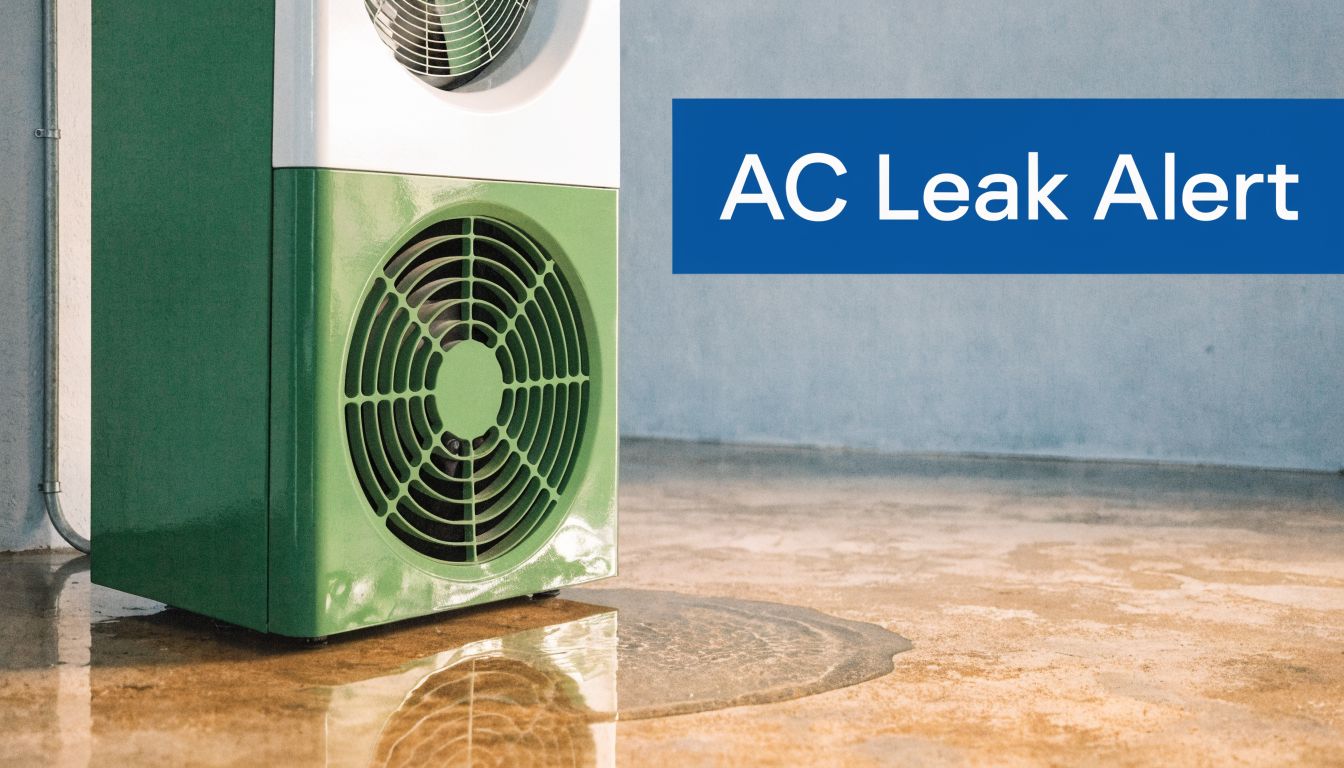
If you see water under the indoor air handler, don't brush it off as “just condensation.” Your air conditioner is supposed to make condensation, but it's also supposed to control it and carry it away.
Why your AC makes water in the first place
Think of your evaporator coil like a cold glass of iced tea on a warm day. Moisture in the air hits that cold surface and turns into water droplets. Inside your system, those droplets are supposed to fall into a drain pan, then move through a condensate drain line to the outside.
That means water around the unit isn't proof that the AC is doing its job. It's proof that the drainage path, the pan, or the cooling process itself isn't working the way it should.
In Arizona, homeowners sometimes underestimate this because the outdoor air is usually dry. But the AC still pulls moisture out of indoor air all day long, and monsoon humidity can make that load jump quickly.
The parts that matter most
A homeowner doesn't need to memorize the whole system. Focus on these three pieces:
- Evaporator coil: The cold indoor coil that removes heat and moisture from the air.
- Drain pan: The shallow tray under or near the coil that catches condensate.
- Drain line: The PVC line that carries that water out of the house.
If any one of those fails, water shows up where it shouldn't.
Why ignoring it gets expensive
Standing water is never harmless around HVAC equipment. It can soak drywall, ruin flooring, stain ceilings, and feed microbial growth in dark cabinet spaces.
When AC condensation leaks occur, standing water can foster mold and bacteria growth within 24-48 hours, and a 2023 EPA study found that 47% of indoor air quality complaints in southwestern U.S. homes stemmed from HVAC-related mold, with allergy sufferers experiencing a 30% higher rate of asthma issues during summer AC failures (why AC leaks can affect indoor air quality).
That's one reason small leaks often show up later as bigger house problems. If you're already seeing moisture spread above the unit, this guide on how to fix sweating ceilings can help you understand the building-side issue while you deal with the AC side.
How to Safely Find the Source of the Leak
Before you touch anything, shut the system down. Water and live electrical components are a bad mix, especially in cramped attic installs and closet air handlers.

Start with safety
Use this order:
- Turn the thermostat to off
- Switch the breaker off
- Wait a minute before opening any panel
- Use a flashlight, not your phone light if the space is tight
- Keep towels or a shallow container nearby
If you have to stand on a ladder in a hot attic, be honest with yourself. A quick look isn't worth a fall.
What to look for first
Start with the obvious signs close to the unit:
- Water in the primary pan: A little residual moisture is one thing. Standing water is another.
- Water in the secondary pan: If your system has one and it's wet, the main drainage path may already be failing.
- Rust trails or mineral marks: These show the path water has been taking for a while.
- Insulation that feels soggy: Wet insulation around the cabinet often points to an ongoing leak.
- Drips at the service panel seam: That can suggest overflow or ice melt.
If you don't know exactly where the coil sits in relation to the unit, this explanation of where the evaporator coils are located will help you identify the area safely.
Check the drain line like a detective
Most condensate drains are white PVC. You'll usually find a vertical cleanout tee near the indoor unit and a termination point outside.
Inspect both ends:
- Inside: Look for backed-up water near the cleanout opening.
- Outside: See whether the drain outlet looks slimy, blocked by dirt, or completely dry during heavy runtime.
- Around the pipe joints: Check for drips at glued fittings or signs that the line has shifted.
Here's the thing. In Mesa, dust gets everywhere. Add algae or sludge inside that pipe and the line can choke off without much warning.
Get a visual on the coil area
If there's an accessible service panel designed for inspection, remove it carefully and look for these clues:
- Ice on copper tubing or coil surfaces
- Heavy dirt buildup
- Water tracks below the coil
- A pan that looks tilted, cracked, or rusted
You're not doing a full diagnosis here. You're trying to answer a simple question: is this a drainage problem, a frozen coil problem, or visible physical damage?
Common Leak Causes and Safe DIY Solutions
Most homeowners want to know one thing. Can I fix this myself, or am I about to make it worse?
Many leaks come from a few predictable failures. The safe DIY work is basic, visual, and low-risk. If the fix starts involving refrigerant, rewiring, or moving the air handler, that's the line where you stop.
The drain line clog that causes most leaks
The most common cause is a blocked condensate drain. Clogged condensate drain lines are the primary culprit in over 60-70% of reported indoor AC water leakage incidents during peak summer seasons, and in humid conditions a typical 3-ton residential AC unit can generate 20-30 gallons of condensate per day, which can quickly overwhelm a blocked line (common drain line leak causes).
That's why a little sludge can create a surprisingly big puddle.
Safe fix for a clogged drain line
Try this method:
- Keep power off
- Locate the drain cleanout tee
- Remove the cap carefully
- Use a wet/dry vacuum at the outside drain termination
- Seal the hose to the pipe as best you can with your hand or tape
- Run the vacuum briefly
- Flush the line with distilled vinegar or water through the cleanout
- Confirm the water flows out freely outside
This works well for soft algae and dust clogs. It won't fix a collapsed line, bad slope, or a blockage buried deep in the run.
A damaged drain pan
Drain pans don't last forever. In older systems, I often see rust, hairline cracks, or pans that have shifted just enough to let water escape before it reaches the outlet.
A temporary homeowner response is limited:
- Dry the pan and inspect it with a flashlight
- Look for visible cracks or rust-through spots
- Clean out sludge and debris
- If the pan is obviously damaged, leave the unit off until it's repaired
Sealants can seem tempting, but they're a patch, not a dependable repair. If the pan is brittle or rusted, replacement is the right fix.
Frozen evaporator coils
A frozen coil often starts with poor airflow or low refrigerant. You may see ice, weak airflow, warmer supply air, or water surging after the ice melts.
If the issue is airflow-related, there is a safe first response. This guide on how to clean evaporator components safely can help you understand the basics before you open anything up.
What you can do safely
- Replace a dirty filter: Use the correct size and airflow rating for your system.
- Shut the AC off and let it thaw fully: Leave the fan on if your setup allows it.
- Check vents and returns: Make sure furniture, rugs, and closed interior doors aren't choking airflow.
- Look for obvious dust buildup: Light surface cleaning is one thing. Deep coil cleaning is another.
DIY AC Condensation Leak Troubleshooting
| Problem | DIY Difficulty | Estimated Time | Tools Needed |
|---|---|---|---|
| Clogged condensate drain line | Low | Short | Wet/dry vacuum, flashlight, vinegar, towels |
| Dirty filter causing freeze-up | Low | Short | Replacement filter, flashlight |
| Minor visible pan debris | Low | Short | Gloves, towels, flashlight |
| Cracked or rusted drain pan | Medium | Varies | Flashlight, towels |
| Frozen evaporator coil inspection and thaw | Low to Medium | Longer | Flashlight, replacement filter, towels |
What works best for homeowners is simple maintenance and careful observation. What usually doesn't work is guessing, restarting the unit too quickly, or trying three different “quick fixes” without confirming the actual cause.
Leaks That Signal a Deeper System Problem
Some leaks are warnings, not just messes. If water is showing up because the system is freezing, pumping poorly, or draining the wrong way from day one, you're no longer in basic DIY territory.
Low refrigerant is not a homeowner repair
Low refrigerant levels are implicated in 15-20% of AC condensation leaks, and an undercharged unit can freeze the coil. When that ice melts, it can produce up to 40 gallons of water daily in high-humidity conditions, enough to overwhelm the drain pan (how low refrigerant leads to water leaks).
Signs that point this direction include:
- Ice on the indoor coil or suction line
- Hissing sounds
- Cooling that fades even while the system keeps running
- Repeated freeze-thaw cycles after you already changed the filter
Refrigerant work requires licensed handling. If someone tells you to just “top it off,” that's not a real diagnosis.
Improper installation or poor pitch
A drain system depends on gravity. If the unit or drain line was installed with the wrong slope, the water never had a fair chance of leaving properly.
Look for clues such as:
- Leak problems that started soon after installation
- A pan that always holds water even when the line is clear
- Dripping from odd cabinet corners instead of the drain connection
This repair can mean repositioning the unit, rebuilding the drain, or correcting support issues. That's not a small adjustment in an attic or closet install.
Condensate pump failure
Some systems use a condensate pump to move water when gravity drainage isn't practical. When that pump quits, the AC may still run for a while, but the water has nowhere to go.
Plain signs include:
- A full pump reservoir
- No pump sound during operation
- Water near the pump or tubing
- Intermittent shutdowns tied to water backup
If the leak is tied to bigger mechanical trouble and your system is already struggling in other ways, this is also the point where homeowners sometimes discover a larger repair path, including compressor-related issues. If that concern is on your radar, this article on air conditioner compressor replacement gives helpful background.
Your Prevention Checklist for a Leak-Free Summer
Mesa air conditioners don't get much rest. Dust storms load filters. Monsoon humidity raises condensate volume. Long runtime exposes every little maintenance shortcut.
That's why prevention matters more here than in the average generic AC guide.
The habits that prevent most surprise leaks
Use a simple routine:
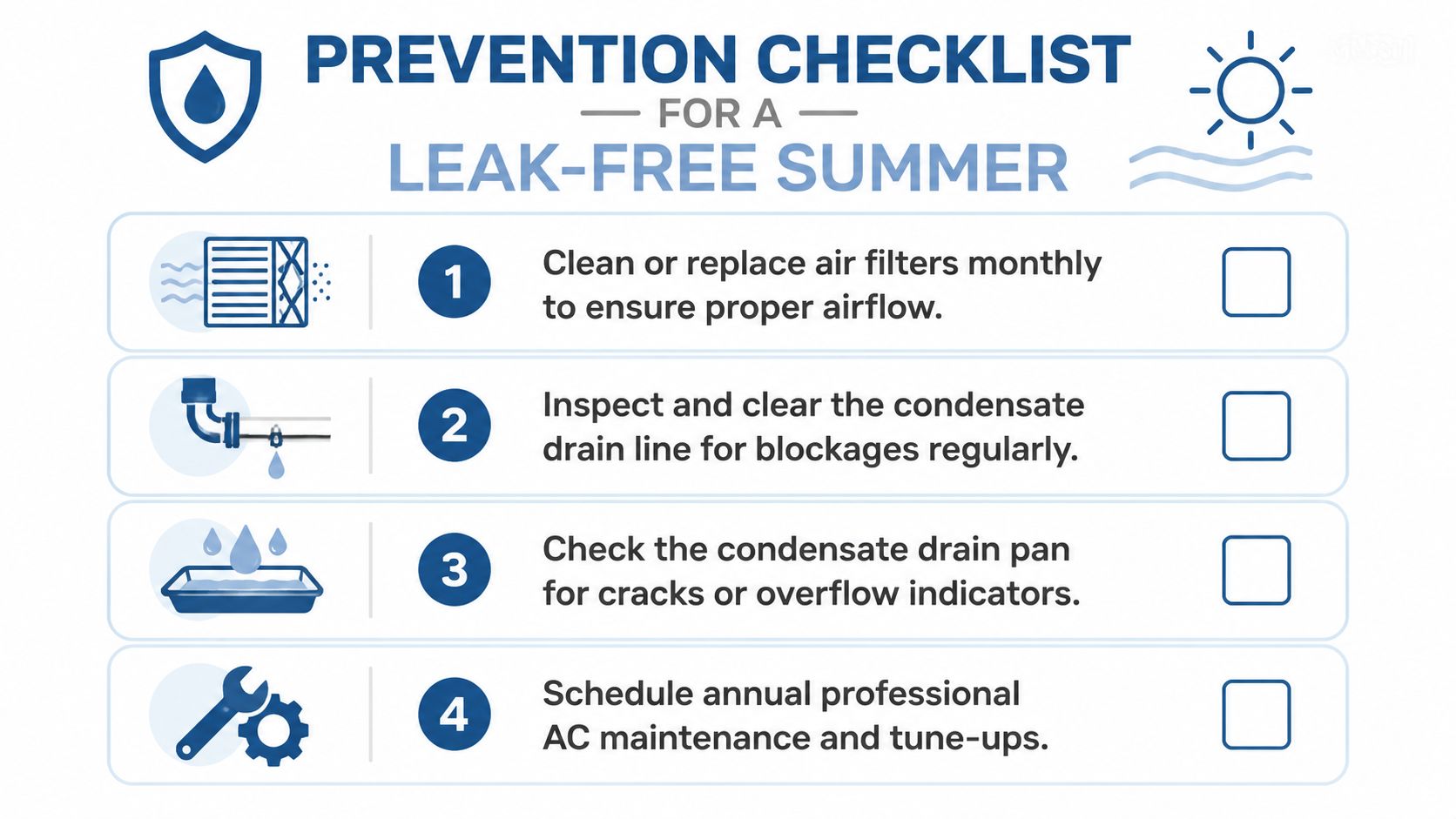
- Check the air filter often: In dusty periods, don't wait until it looks awful. Restricted airflow is one of the easiest ways to invite coil trouble.
- Inspect the drain line regularly: A quick look at the termination point outside can tell you a lot.
- Pour distilled vinegar into the cleanout from time to time: This can help limit buildup inside the line.
- Keep an eye on the drain pan: Any recurring standing water means something upstream needs attention.
- Notice changes in airflow: Weak airflow often shows up before water does.
If you want a broader seasonal maintenance routine, this HVAC preventive maintenance checklist is a solid reference for homeowners.
Arizona-specific issues homeowners miss
Dry climate doesn't mean dry equipment. Your AC is constantly removing indoor moisture, and when monsoon weather rolls in, that workload changes fast.
If your coil has been freezing from airflow issues, this walkthrough on why AC coils freeze and fixes gives useful background on the airflow side of the problem.
You also need to think about newer equipment. The May 2025 U.S. DOE mandates requiring minimum 15 SEER2 ratings in Arizona can increase leak proneness, because these units use tighter coil designs that can trap dust and algae 18% faster, according to a 2025 Trane field study, and they can produce 20-40% more condensate, potentially overwhelming older drain systems (SEER2 design changes and leak risks).
That doesn't mean high-efficiency equipment is bad. It means the drain setup and maintenance habits have to match the newer design.
A homeowner checklist you can actually follow
Use this as your working routine through cooling season:
- Monthly: Check or replace the filter.
- During heavy runtime: Look for water around the indoor unit.
- After dust storms: Recheck airflow and the filter.
- During monsoon humidity: Watch for signs of higher condensate output.
- At least seasonally: Inspect the drain line and pan.
- Before summer peaks: Have the system cleaned and inspected professionally.
What doesn't work is waiting for the first ceiling stain, then hoping the problem stays small.
Need Help Now? Call Your Local Mesa & Phoenix Experts
Some leaks are quick fixes. Others are the first visible sign that the system is freezing, draining wrong, or failing under Arizona heat. If you've shut the unit down, checked the basics, and the water keeps coming back, it's time for trained eyes on it.
Comfort Experts has served Mesa and the Phoenix Valley since 2011, and the team knows how extreme heat, dust, and monsoon moisture change the way condensation problems show up here. If you need local help, you can also learn more about AC repair service near you before making the call.
If your AC is leaking and you want it diagnosed the right way, contact Comfort Experts for fast local help. Call 480-207-1239 or schedule service online.