
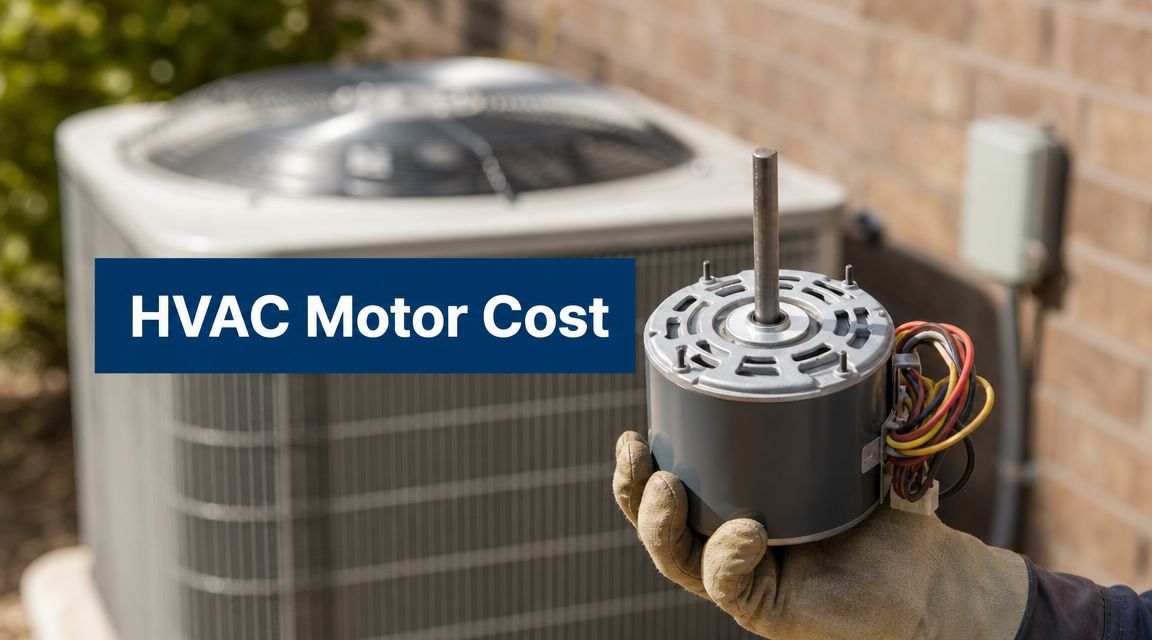
Most homeowners land somewhere around $500 to $700 for the cost to replace HVAC fan motor, with a broader typical range of $150 to $1,200, and some higher-end systems reaching about $2,400 based on motor type and labor involved (independent HVAC pricing guide). In Mesa and the Phoenix area, that spread feels even wider in real life because extreme heat, rooftop access, and system complexity can all push the final bill up fast.
If your AC just quit during an Arizona afternoon, you're probably not shopping for a fan motor out of curiosity. You're trying to figure out whether this is a manageable repair, whether you're being quoted fairly, and whether fixing it now makes more sense than risking a full system breakdown later.
The Real Cost to Replace an HVAC Fan Motor
If your AC fan motor quits in Mesa at 4 p.m. in July, this repair stops being a line item and starts feeling urgent. In our heat, a bad fan motor can push a system from struggling to completely down faster than many national cost guides suggest.
For many homeowners, the full replacement bill ends up in the mid-hundreds, but the final number depends less on the word "motor" and more on what kind of system you have, where the unit sits, and how much work it takes to confirm the motor is the true problem. A rooftop package unit in the Phoenix area usually costs more to handle than a ground-level condenser with easy access. Hot-weather service demand can also raise labor costs during peak season.
What you're paying for
The part is only one piece of the bill.
A proper replacement includes diagnosis, removal, matching the new motor to the equipment, installing it correctly, and testing the system under load. A technician also has to check the capacitor, verify blade fit, confirm rotation, inspect wiring, and make sure amperage is where it should be before calling the job done.
That matters because fan motor failures can look a lot like other problems. A weak capacitor, bad contactor, damaged wire, or failing relay can all create similar symptoms. Swapping parts without testing is how homeowners spend money twice.
Why online part prices mislead people
The situation often leads to significant frustration. Someone finds a motor online for a relatively low price and assumes the repair should cost about the same.
In the field, that number leaves out the labor, the trip charge, the diagnostic time, the correct capacitor if needed, and the risk of using a universal motor that doesn't match the system well. In Mesa and Phoenix, it also leaves out the reality of attic heat, rooftop exposure, and packed summer schedules that affect service pricing.
Here's what usually pushes the total up:
- Accurate diagnosis: The motor has to be confirmed as the failed component before any parts are ordered or installed.
- Correct matching: Voltage, horsepower, RPM, shaft length, frame size, and rotation all have to match the equipment.
- System testing after install: The job is not finished when the blade starts spinning.
- Access and working conditions: Roofs, tight closets, and superheated attics take more time and effort.
If you want to compare this repair with other common breakdown costs, this guide to the cost to fix AC issues in Arizona helps put the quote in context.
A failed fan motor is usually a repair to handle quickly. In desert heat, poor airflow can drive up operating stress on the rest of the system and turn one bad part into a bigger repair bill.
Key Factors That Influence Your Replacement Cost
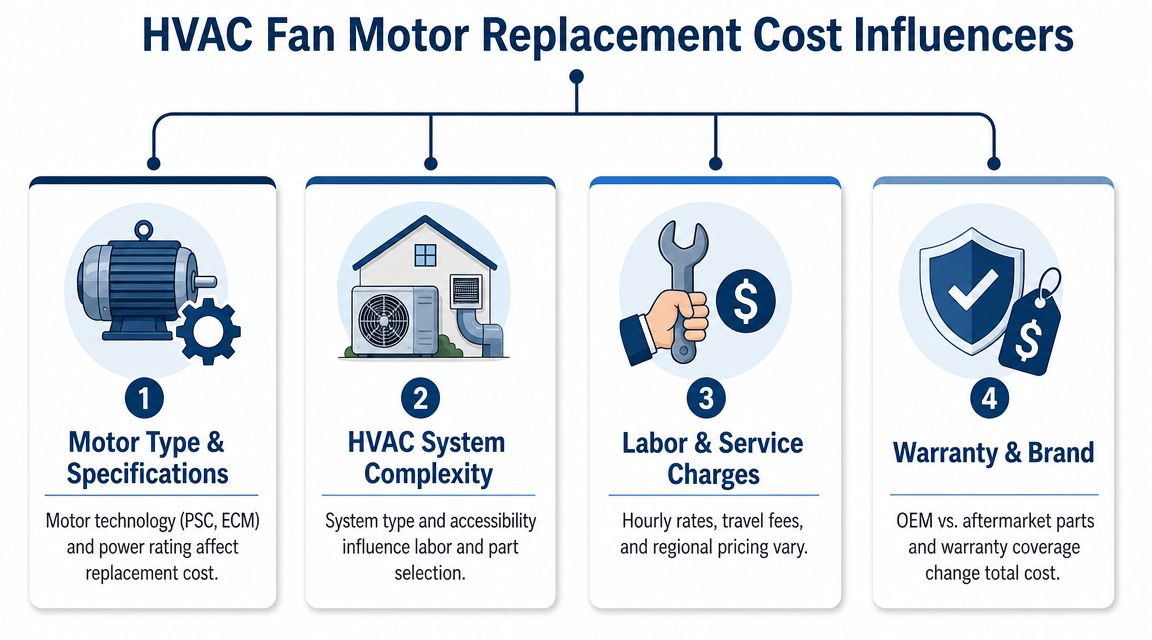
Two Mesa homeowners can both hear “bad fan motor” and still get very different quotes. The final price depends on the motor itself, how hard the unit is to access, and what Arizona heat has already done to the surrounding components.
Motor type changes the repair fast
A basic condenser fan motor can run $300 to $700 on average, while larger or more advanced HVAC motors can reach $1,200 or more, especially without warranty coverage, based on industry pricing summarized here.
That gap shows up all the time in Phoenix and Mesa. A standard outdoor condenser motor on a ground-level unit is usually a more straightforward repair. A variable-speed blower motor inside a newer system, or a motor in a rooftop package unit baking in direct desert sun, pushes the price up because the part costs more and the install leaves less room for mistakes.
Horsepower and exact specs matter
One estimate notes a 0.25-horsepower motor may cost around $70, while a 1-horsepower motor can reach $2,000 in some applications. That is a wide spread, and it explains why broad online averages often miss the mark.
Horsepower is only part of the match. Voltage, RPM, rotation, shaft size, frame, and capacitor requirements all have to line up. In older Phoenix-area systems, finding the right replacement can take more time because the original motor may be discontinued, sun-faded, or paired with equipment that has already had prior repairs.
System complexity drives labor
Labor changes more in Arizona than many homeowners expect. A fan motor swap on a backyard condenser is one thing. A blower motor in a tight attic in July, or a condenser fan motor on a rooftop package unit in Mesa, usually takes longer because the tech is handling heat, access, safety, and extra disassembly at the same time.
The same pricing source notes labor can add $100 to $500. On local jobs, the higher end usually shows up for practical reasons:
- Rooftop package units: More setup, ladder or roof access, and longer time working in direct sun.
- Attic air handlers: Tight space, poor airflow, and extreme attic temperatures that slow the job down.
- Older equipment: More time spent matching the motor and checking whether the capacitor, contactor, or fan blade was affected too.
- Crowded installations: Extra labor to remove panels, reach mounting hardware, and reassemble everything correctly.
Warranty and brand can swing the quote
Warranty status can change the bill in a hurry. If the motor is covered, you may still pay for diagnosis, labor, and any related parts, but the part cost itself may drop out. If the system is out of warranty, the full repair lands on the homeowner.
Brand matters too. Some manufacturers use motors that are easier to source. Others use proprietary parts that cost more and take longer to get, which is a bigger problem during a Phoenix heat wave when every day without cooling feels long.
A failing motor can also force a bigger decision on an older unit. If the system is already near the end of its life, compare the repair against the full cost to replace an AC unit in Arizona before approving the work. In Mesa, where AC systems run hard for months, that context matters.
Sample HVAC Fan Motor Price Scenarios in Arizona
A Mesa homeowner usually calls about this repair after the system quits on a brutal afternoon and the house starts climbing fast. At that point, the question is not just what a fan motor costs in general. It is what this repair is likely to cost here, in desert heat, on this specific system.
To keep this simple, the ranges below use one public benchmark for national pricing. HomeAdvisor notes condenser fan motor replacement often lands in a broad range depending on parts and labor time. Arizona totals often push toward the higher side because summer demand is intense, roof and attic work is rough in the heat, and local labor rates reflect that. For broader technical context on motor matching and performance, this overview of electric motors service and optimization is useful.
What these Arizona scenarios usually look like
| Scenario | Motor Part Cost | Estimated Labor | Estimated Total Cost |
|---|---|---|---|
| Ground-level outdoor condenser with straightforward access | $75 to $250 | $200 to $350 | $275 to $600 |
| Indoor blower motor in a tight attic or difficult closet access | $150 to $400 | $300 to $600 | $450 to $1,000 |
| Less common motor on an older or higher-end system, no warranty help | $300 to $900+ | $350 to $700 | $650 to $1,600+ |
Those are real-world planning numbers, not teaser prices.
The first row is the cleanest version of the job. A standard condenser fan motor, decent access, and no extra damage usually keep the bill in a more manageable range. Even then, Phoenix and Mesa homeowners can pay more in peak season than they would in a milder market.
The second row is common across the East Valley. Attic installs sound routine until a tech is working in extreme attic heat, tracing wiring on older equipment, and checking whether the capacitor or wheel was damaged too. That extra time shows up on the invoice.
The third row is where costs jump. This is the one that catches people off guard. If the motor is proprietary, the unit is older, or the replacement has to be specially matched, the repair can start getting close to the point where you should compare it against the age and condition of the whole system.
If your AC has stopped moving air at all, this guide on why your AC is not blowing air can help you understand whether the fan motor is the likely culprit or whether another failure is involved.
A good quote should explain why your home lands in one of these ranges. Ask what motor is being installed, how hard the unit is to access, and whether the tech tested related parts before giving a final number. That is how you separate a fair Mesa repair price from a vague estimate.
DIY Fan Motor Replacement Versus Professional Service
It's understandable to look at labor charges and think, “Can I just do this myself?” For some home repairs, that's a reasonable path. For an HVAC fan motor, it usually isn't.
Why DIY looks cheaper on paper
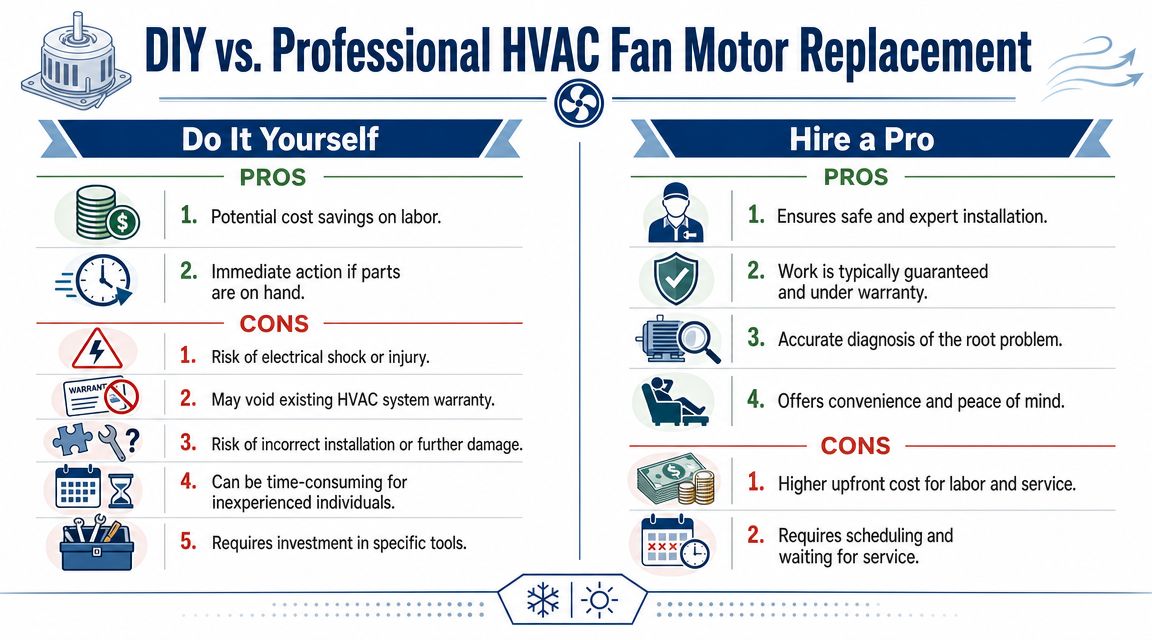
The attraction is obvious. If labor is a major share of the bill, removing that line item sounds like savings. If you can order a motor online and you're handy with tools, the repair may seem straightforward.
That's where many homeowners get trapped. The visible part is the motor. The risky part is everything around it.
For readers who want a broader technical look at industrial and applied motor support, this overview of electric motors service and optimization is useful context on how motor performance depends on proper diagnosis, matching, and service practices.
What goes wrong with DIY fan motor jobs
A fan motor replacement can involve high voltage, stored electrical energy, incorrect capacitor matching, wiring mistakes, and wrong rotation setup. A system can appear to run after installation and still be wired or configured incorrectly.
Here's what usually causes trouble:
- Electrical danger: Capacitors can hold a charge. That's not a beginner mistake you want to make in your own backyard or attic.
- Wrong diagnosis: The symptom may look like a failed motor when the underlying issue is elsewhere.
- Bad motor match: Similar-looking motors can have the wrong specs for the unit.
- Collateral damage: Incorrect installation can stress other components.
- Warranty trouble: Homeowners can accidentally create a paper trail problem if the equipment still has coverage.
Why professional service usually costs less in the long run
A trained technician doesn't just replace the part. They verify the motor failed, inspect related components, and confirm the system is operating correctly after the repair. That extra step is what keeps one repair from turning into two.
If your system is running but airflow is weak or missing, this guide on why an AC may not be blowing air helps explain why the motor isn't always the only suspect.
You know what? The expensive part of DIY usually isn't the first attempt. It's paying for the professional repair after the first attempt didn't solve the underlying problem.
Telltale Signs Your Fan Motor Is Failing
Not every no-cool call is a dead fan motor, but there are some patterns homeowners can watch for safely. If you know what the symptoms look and sound like, you can explain the problem better when you call for service.
Sounds that should get your attention
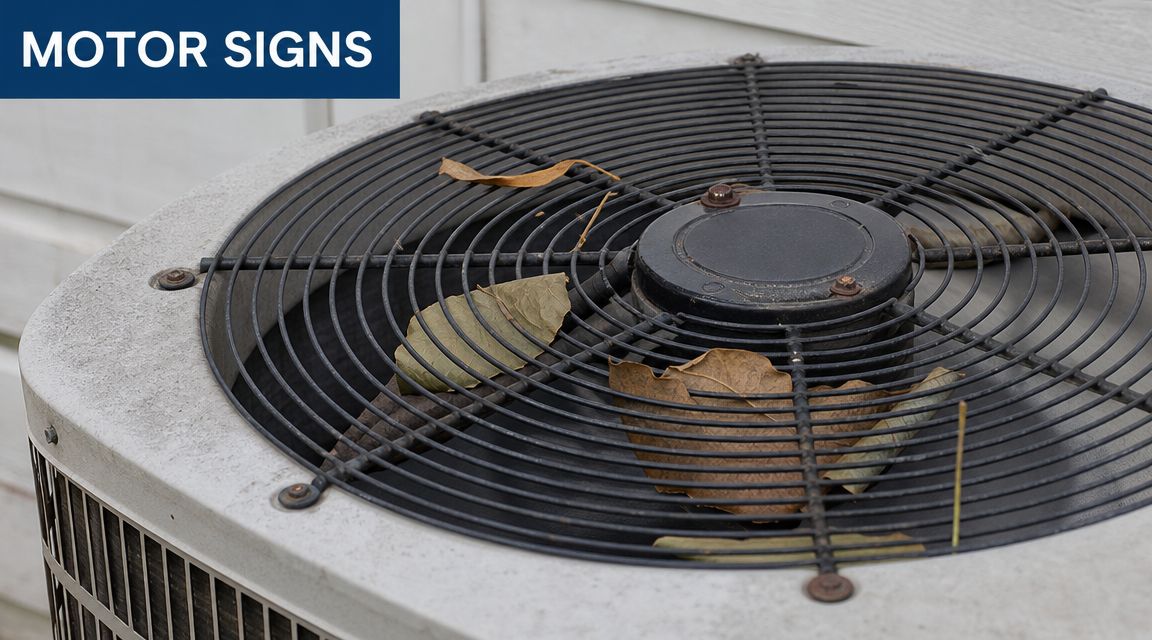
Does that screeching sound from your outdoor unit sound familiar? That kind of noise often points to bearing wear or a motor struggling to turn.
Other sounds that deserve a service call:
- Grinding noises: Internal wear can be getting worse.
- Squealing at startup: The motor may be binding or failing under load.
- Humming without proper fan movement: Power may be reaching the motor, but the motor may not be starting correctly.
- Intermittent stops and starts: The motor may be overheating and cutting out.
Performance clues inside the house
Sometimes the first symptom shows up at the vents, not at the unit.
Watch for these signs:
- Weak airflow: The system runs, but rooms don't cool the way they should.
- Warm air or no useful cooling: The outdoor or indoor fan problem disrupts normal operation.
- System shuts off unexpectedly: Overheating can trigger protective shutdowns.
- Longer run times: The unit may be struggling to move enough air.
What you can safely check yourself
Homeowners can do a basic visual check without opening equipment panels.
- Look at the outdoor fan: Is it spinning normally, starting slowly, or not spinning at all?
- Notice timing: Does the fan stall after the unit has been running for a bit?
- Check for repeated overheating behavior: If the system starts, strains, and shuts down, that's useful information to report.
- Listen before touching anything: Never reach into the unit or attempt to force a blade by hand.
If the outdoor fan isn't turning the way it should, this local guide on why your AC fan may not be spinning can help you narrow down whether the problem points toward the motor or another component.
Saving Money and Finding a Trusted Tech in Mesa
In Mesa, a fan motor problem gets expensive fast if the system quits on a 112-degree afternoon and every HVAC company in town is booked solid. The good news is you still have some control over the final bill, especially if you slow down enough to ask the right questions before approving the repair.
Start with the parts and warranty. If the system or replacement part is still covered, your out-of-pocket cost can drop a lot. Ask whether the quote includes an OEM motor or an approved universal replacement, because that choice affects price, fit, and sometimes long-term reliability in Arizona heat.
Labor matters here too. A condenser tucked into a tight side yard, an air handler in a brutal attic, or a roof-mounted package unit in the Phoenix area usually costs more to service than a simple ground-level setup. That is normal. What you want is a quote that explains why.
A few habits help keep the repair from growing into a bigger expense:
- Check warranty status before approving work: Parts coverage can change the whole quote.
- Ask exactly which motor is being installed: Cheap substitutions can create fit or performance problems later.
- Get labor broken out clearly: Access, location, and time should be listed, not rolled into a vague total.
- Act before the motor fully dies: Waiting can turn a manageable repair into an after-hours emergency call.
- Keep basic maintenance up: Dirty coils, clogged filters, and neglected service visits make motors work harder in desert conditions.
If you're comparing contractors, this local guide on how to choose the best HVAC company near you is a practical place to start.
A good Mesa HVAC company should do more than say "the motor is bad" and hand you a number. It should explain what failed, what testing confirmed it, whether the capacitor or contactor was also checked, and whether the repair still makes sense based on the age of the system. That conversation tells you a lot about who you're dealing with.
Look for a company that offers:
- Arizona licensing and insurance
- A diagnosis you can follow
- Clear pricing before the work starts
- Experience with Phoenix and Mesa cooling systems
- Reliable scheduling and communication
That last point matters more than homeowners expect. In summer, missed appointments can leave you scrambling while indoor temperatures climb. For homeowners who care about responsiveness, these FixyFlow insights on no-show percentages are worth reading.
Comfort Experts is one local provider in Mesa that can diagnose fan motor issues. Ultimately, the fastest way to get a clear answer is to have a qualified technician inspect the system in person.
If your AC has stopped moving air and you want an honest diagnosis before spending money, contact Comfort Experts by calling 480-207-1239 or use their schedule service form to book an appointment.