Let's get right to it: you want to understand the cost of furnace inspection and why it's a critical part of home maintenance. For most Phoenix-area homeowners, a standard professional inspection will land somewhere between $70 and $200, depending on your furnace type and the depth of the service. Think of this small cost as your first and best line of defense against expensive, middle-of-the-night repair calls and, more importantly, serious safety hazards.
Your Quick Guide to Furnace Inspection Costs
After sitting quiet through a blazing Arizona summer, your furnace has likely collected a good bit of dust and could be hiding other issues. You know what? A professional inspection isn't just a "nice-to-have"—it's a critical health check for one of your home's most essential systems, ensuring it's ready for those surprisingly chilly desert nights.
The price you pay covers a trained technician's time and expertise to spot problems that could lead to a sudden breakdown or, far worse, a serious safety risk like a gas leak. At Comfort Experts, we've built our reputation over years of providing Mesa and the surrounding Phoenix area with transparent, reliable HVAC services, and we believe an informed homeowner is a safe homeowner.
Average Furnace Inspection Costs in Phoenix
The biggest factor influencing your initial price is the type of furnace heating your home. To make it simple, we've laid out the typical costs you can expect to see in the Phoenix metro area based on our extensive experience in the field.
| Furnace Type | Average Inspection Cost Range | Key Considerations |
|---|---|---|
| Electric Furnace | $70 – $120 | Simpler mechanics, fewer combustion-related safety checks. |
| Gas Furnace | $80 – $150 | Requires detailed checks for gas leaks and carbon monoxide. |
| Oil Furnace | $100 – $200 | Needs more intensive cleaning and combustion analysis. |
As you can see, electric furnaces are usually the simplest and most affordable to inspect. On the other hand, gas and oil furnaces require more detailed safety checks, like looking for fuel leaks and analyzing combustion, which nudges the price up slightly due to the specialized tools and expertise required.
Breaking Down Costs by Furnace Type
Here’s a visual breakdown of how those costs compare.
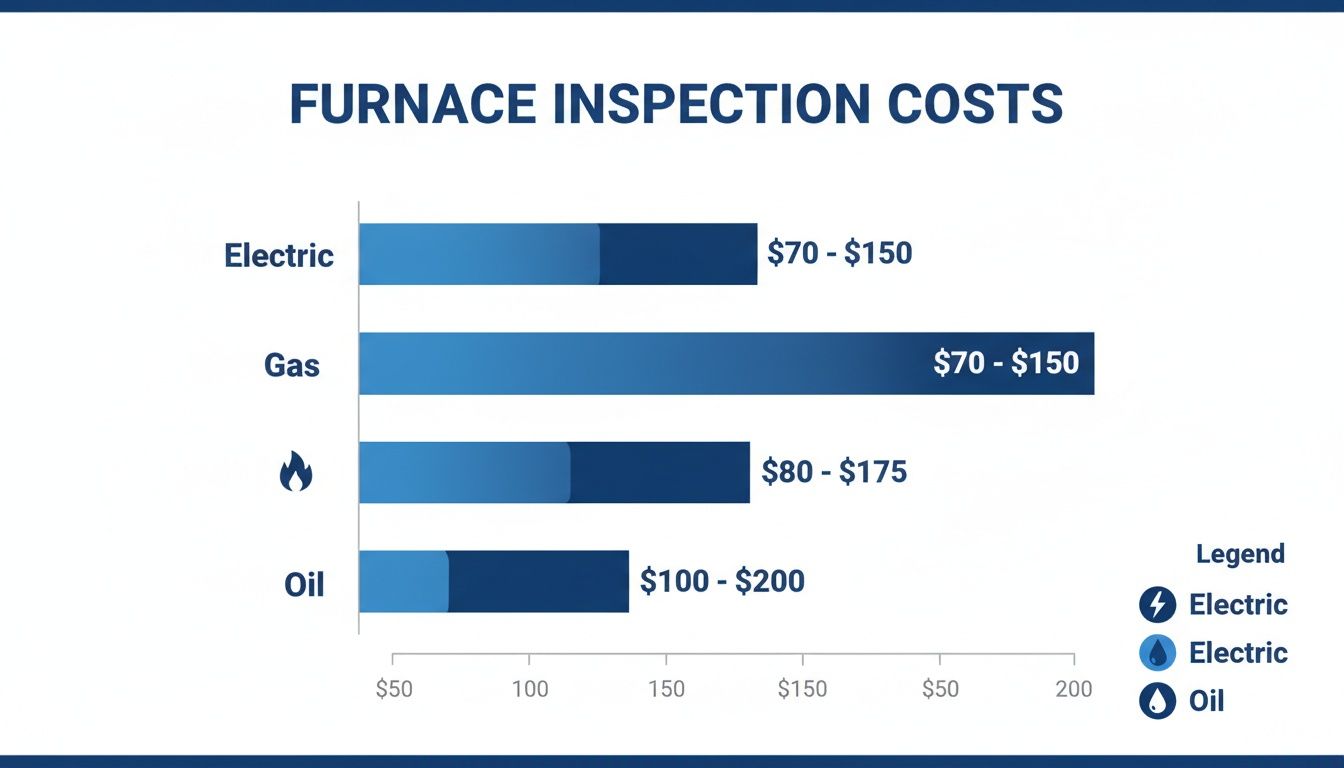
It’s pretty clear that oil furnaces sit at the top of the cost range, mostly because they need more intensive cleaning and maintenance to run safely and efficiently.
This whole approach is a lot like taking care of your air conditioner. In fact, you can see the parallels when you look at the costs associated with an AC tune-up. It all comes down to the same simple idea: invest a little bit now in preventative maintenance to keep your system efficient and avoid huge repair bills down the road.
What a Professional Furnace Inspection Actually Includes
So, what are you actually paying for when you book a furnace inspection? It's a fair question. This is way more than just a quick glance and a thumbs-up; from our professional experience, a proper inspection is a detailed safety and performance audit for the single most important appliance protecting your home from those surprisingly cold desert nights.
The real goal is to catch small issues before they become huge, expensive, middle-of-the-night breakdowns.
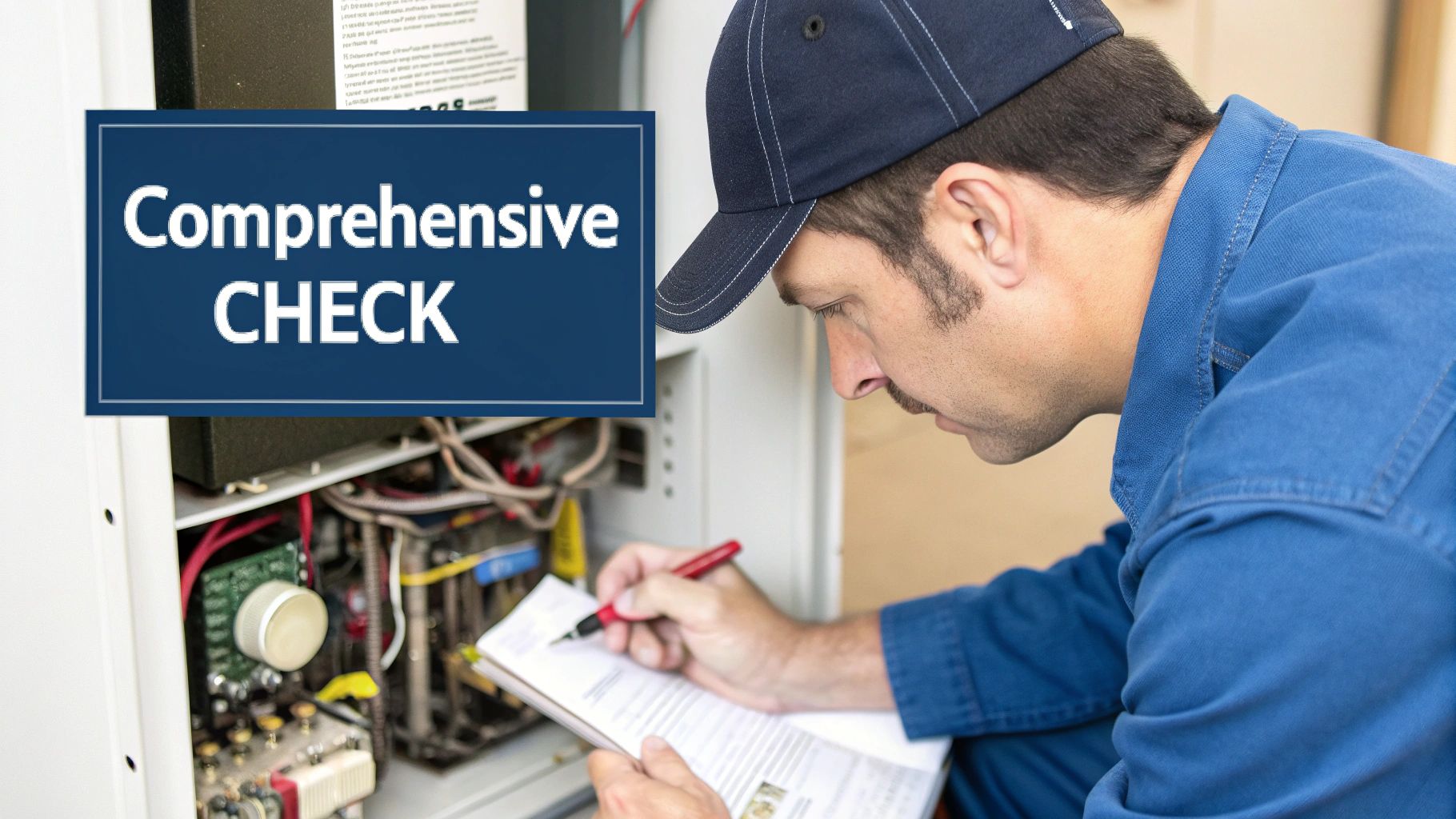
Here at Comfort Experts, our licensed technicians don’t just wing it. They follow a comprehensive checklist that covers every critical part of your heating system. It’s not just about keeping you warm—it's about demonstrating our expertise and earning your trust by keeping you safe.
The Safety and Mechanical Checklist
A huge chunk of any proper inspection is dedicated to the parts that, if they fail, could put your home and family at risk. We're looking for the silent problems that can turn into serious hazards if they're ignored.
Our technicians will meticulously check:
- Heat Exchanger Integrity: This is, without a doubt, the #1 most critical safety check. We inspect the heat exchanger for any cracks or weak spots. Why? A damaged heat exchanger can leak deadly, odorless carbon monoxide right into your home's air.
- Burner and Flame Sensor: For our many customers with gas furnaces, we make sure the burners are igniting cleanly and the flame sensor is doing its job. A dirty sensor or improper burn can waste fuel and produce excess carbon monoxide.
- Gas Pressure and Connections: We put a meter on the system to verify the gas pressure is dialed in exactly to the manufacturer's specs. Then we check every single connection for leaks. Your fuel source has to be secure.
- Safety Controls and Limits: Your furnace is built with several kill switches designed to shut the whole thing down if it overheats or malfunctions. We test each one to make sure those failsafes are ready to work.
"A furnace inspection is a proactive measure. It’s like an annual physical for your heating system, where the primary goal is to catch silent, potentially dangerous conditions before they develop."
The Performance and Efficiency Audit
Once we’ve confirmed the system is safe, we shift focus to making sure it runs as efficiently as possible. A well-tuned furnace doesn't have to struggle to heat your home, which means lower monthly energy bills for you.
This part of the service includes:
- Checking the Air Filter: You'd be amazed how many problems start here. A clogged filter is a top cause of furnace strain and premature failure. We’ll check yours and let you know if it's time for a new one.
- Inspecting the Blower Motor: We check the motor's electrical draw (amperage and voltage) to confirm it's operating in the sweet spot. This is key for good airflow and efficiency.
- Testing the Thermostat: We make sure your thermostat is calibrated correctly and talking to the furnace properly. This prevents the system from kicking on and off too often or failing to hit the right temperature.
This entire, detailed process is built into our standard heating maintenance in Mesa, AZ. It’s the best way to get a true picture of your system's health and the kind of value that comes with every professional service call.
Key Factors That Influence Your Final Price
Ever get a quote for a home service and wonder why it’s different from what your neighbor paid? The cost of a furnace inspection isn't some number pulled out of a hat. It’s a real-world calculation based on specific variables tied to your home's unique heating system. Understanding these factors helps you see exactly what you're paying for, so there are no surprises when the final bill arrives.
Here’s the thing: a simple, newer electric furnace in an easily accessible closet will almost always cost less to inspect than a complex, older gas furnace tucked away in a cramped, dusty attic. Time, complexity, and the level of service required are the core ingredients that shape your final price.
Your Furnace Type and Its Condition
The single biggest variable is the kind of furnace you have. Gas and oil furnaces involve more intricate safety protocols—like checking for tiny fuel leaks and analyzing combustion gases—than their simpler electric cousins. That extra expertise and specialized equipment naturally affect the cost.
Similarly, the age and overall condition of your unit play a huge part. An older, neglected furnace might require more time for the technician to clean caked-on grime and diagnose potential issues, which can add to the labor time. On the other hand, a well-maintained unit is usually a quicker, more straightforward job.
Your furnace's history matters. A system that has seen regular professional attention is often far less complex to inspect than one that has been ignored for years, directly impacting the technician's time on-site.
The Scope of the Service
Not all inspections are created equal. The depth of the service you choose will directly influence the price. Think of it like a car service: you can get a basic oil change, or you can opt for a full diagnostic tune-up.
- Basic Safety Check: This is the most affordable option, focused purely on critical safety functions like checking the heat exchanger for cracks and verifying there are no gas leaks.
- Comprehensive Tune-Up: This service costs more but includes the safety check plus a thorough cleaning of key components, calibrating the system for peak efficiency, and making minor adjustments. This is almost always the best value for preventing future headaches.
To help you see how different factors can nudge the price up or down, here’s a quick breakdown.
What Affects Your Furnace Inspection Cost
| Factor | Impact on Cost | Reasoning |
|---|---|---|
| Furnace Type | Moderate to High | Gas/oil furnaces require more safety checks (leaks, combustion) than simpler electric units. |
| System Age & Condition | Moderate | Older, neglected systems often need more cleaning and diagnostic time, increasing labor costs. |
| Service Scope | High | A basic safety check is cheaper than a full tune-up with cleaning and calibration. |
| Accessibility | Low to Moderate | Furnaces in attics or crawlspaces take more time to access than those in a garage or closet. |
| HVAC Company | Varies | Pricing reflects a company's overhead, technician training, and included service guarantees. |
Ultimately, a professional inspection is about catching small problems before they become big, expensive ones. Even with the best maintenance, parts can eventually wear out. If an inspection does uncover a more significant issue, understanding the potential costs of furnace repair in Mesa can help you prepare for the next steps.
For another perspective on how various elements contribute to the overall bill for home services, you might find this helpful: a homeowner's guide to understanding professional service pricing.
Why an Annual Furnace Inspection Is a Smart Financial Move
Let’s be honest—spending money on something that seems to be working just fine can feel a little backwards. We get it. But when it comes to your furnace, that annual inspection fee is genuinely one of the smartest financial moves you can make for your home.
This isn't just about paying for a service. Think of it as making a small, predictable investment to dodge huge, unexpected repair bills down the road. It’s the difference between a minor tune-up and a major financial headache.
A small issue, like a dirty flame sensor or a sticky pressure switch, is a quick and pretty cheap fix during a routine check. But if you let that same little problem fester, it can trigger a chain reaction that leads to a catastrophic system failure—usually on the coldest night of the year when you need your heat the most.
From Minor Tweak to Major Overhaul
The real power of a professional inspection is prevention. By catching those small issues early, you stop them from spiraling into eye-watering, emergency breakdowns.
A furnace doesn't usually fail all at once. It fails in stages, starting with small, often silent, component wear. An annual inspection is your chance to intervene before the problem gets loud and expensive.
Here’s a real-world example of how this plays out. Yearly professional checks can prevent minor glitches from ballooning into $300-$900 blower motor fixes or even $1,000-$3,000 heat exchanger replacements. The gap between a simple pressure switch adjustment at $150-$350 versus a full inducer motor overhaul at $400-$1,100 shows just how quickly early detection pays for itself. You can learn more about how preventative checks save money and protect your system.
Protecting Your System's Lifespan and Efficiency
Beyond dodging emergency repairs, regular maintenance is the key to your furnace's longevity and efficiency. When all the components are clean and properly calibrated, the entire system operates with less strain. This pays off in two big ways:
- Improved Energy Efficiency: A well-maintained furnace doesn't have to fight itself to heat your home, which means it burns less fuel. That translates directly into lower monthly utility bills all winter.
- Longer Equipment Lifespan: It's just like a car that gets regular oil changes. A furnace that receives annual service will simply last longer. By cutting down on the wear and tear on critical parts, you can often delay a full system replacement by several years, saving you thousands.
This proactive approach is the core idea behind our Comfort Experts maintenance plan. We designed it to make this essential service both affordable and easy to remember, so your system gets the professional attention it needs to run reliably and efficiently for years to come.
The Hidden Dangers of Skipping Your Furnace Checkup
Honestly, when you think about skipping your annual furnace checkup, you’re probably thinking about the money. But what if I told you the real consequences go way beyond your wallet? While avoiding a surprise breakdown is a nice perk, the most important reason for an inspection is much more serious—it's about protecting your home and family.
This is especially true for the gas furnaces that heat so many homes across the Valley. A neglected system can quietly develop some truly dangerous problems that you won't see or smell until it's far too late. Think of that small inspection fee as an investment in a safe, healthy home.
The Silent Threat of Carbon Monoxide
If there's one single reason to get your furnace checked, it’s carbon monoxide (CO). This colorless, odorless gas is a genuine silent killer, and a cracked heat exchanger is one of the most common culprits. Year after year, the metal walls of this crucial component expand and contract with the heat. Eventually, that stress can cause tiny, hairline fractures to form.
When that happens, deadly CO gas can seep out and mix with the warm air your furnace blows through the vents, silently filling your home. This isn't just a theoretical problem; it’s a known risk that our technicians at Comfort Experts are specifically trained to hunt for with professional tools and years of first-hand experience.
"A furnace's heat exchanger is the only thing standing between toxic combustion gases and the air your family breathes. An annual inspection is the only reliable way to know for sure that this critical barrier is still doing its job."
Fire Hazards from Neglected Systems
Beyond CO poisoning, a poorly maintained furnace is a major fire hazard. Over time, electrical connections can loosen, wires can fray, and safety controls can fail. All it takes is one spark at the wrong time.
In fact, one of the most critical hidden dangers of skipping your furnace checkup is the increased risk of a blaze; learning how to prevent house fires is something every homeowner should take seriously. A professional inspection hits these risks head-on. Let me explain. A good tech will:
- Test safety switches: We make sure the automatic shut-off controls are working perfectly to stop the system from dangerously overheating.
- Check electrical connections: Our team looks for and tightens any loose wiring that could arc and ignite dust or other nearby materials.
- Ensure proper ventilation: A clogged flue or exhaust vent can trap superheated gases, creating a serious fire risk inside your walls or attic.
When you weigh it against the devastating potential of a house fire or a carbon monoxide incident, the cost of a furnace inspection is tiny. It’s a small price to pay for real peace of mind.
Got Questions About Furnace Inspections? We Have Answers.
You've got questions, and that's a good thing. Deciding on any home maintenance service means you want to know you're making a smart call. We hear a lot of the same queries from homeowners across the Valley, so we've put together some straight-up answers for you based on our years of experience in the field.
How Often Should I Get My Furnace Inspected in Arizona?
Even with our mild winters, an annual furnace inspection is the gold standard. The best time to get it on the calendar is in the fall, long before that first surprise chilly night has you reaching for the thermostat.
An annual checkup isn't just about making sure it turns on. It’s about cleaning out all the dust that’s settled inside during our long, hot off-season and making sure every part is working safely and efficiently.
Can I Do a Furnace Inspection Myself?
While we absolutely encourage homeowners to handle basic stuff like changing the air filter every month, a full furnace inspection is a job for a licensed pro. Why is that, you ask? It comes down to safety and having the right tools for the job.
A technician isn't just looking around with a flashlight. They're using calibrated instruments to hunt for gas leaks, test sensitive electronics, and inspect the heat exchanger for tiny, invisible cracks that could leak carbon monoxide into your home. Those are critical tasks that demand real training and expertise to get right.
A professional inspection is more than a visual once-over. It’s about using diagnostic tools and a deep understanding of combustion science to prove the system is running safely, not just running.
Does a Furnace Inspection Actually Improve Energy Efficiency?
It sure does. When an inspection includes a proper tune-up, the technician cleans key parts like the burners and the blower motor, then calibrates the whole system to run exactly as the manufacturer intended.
These tweaks make a real difference, letting the furnace heat your home using less energy. That efficiency boost often shows up as real savings on your monthly utility bills.
What Happens If a Problem Is Found During the Inspection?
If a technician from a reputable crew like Comfort Experts finds an issue, their first job is to talk to you. They'll explain exactly what they found—and show you the problem whenever possible—then give you a clear, upfront quote for any repair.
You'll have all the facts you need to approve the work before anything starts. There are no surprises. Our goal is to catch small problems before they become big, expensive ones, never to pressure you into a repair you don't need. Our authority and trustworthiness are built on transparency.
When you're ready for professional, honest service that puts your family's safety first, the team at Comfort Experts is here for you. To make sure your furnace is safe and ready for the cooler months ahead, give our friendly team a call at 480-207-1239 or schedule service online today.