Let's be honest—most of us don't give our outdoor AC unit a second thought until it quits on a blistering summer afternoon. But grabbing a quality condensing coil cleaner and spending a little time on preventative maintenance can save you a world of money and frustration. It's a straightforward task that makes a huge difference in how well your system can dump heat outside, which is exactly what keeps you cool indoors.
Why Your AC’s Condenser Coil Needs Attention
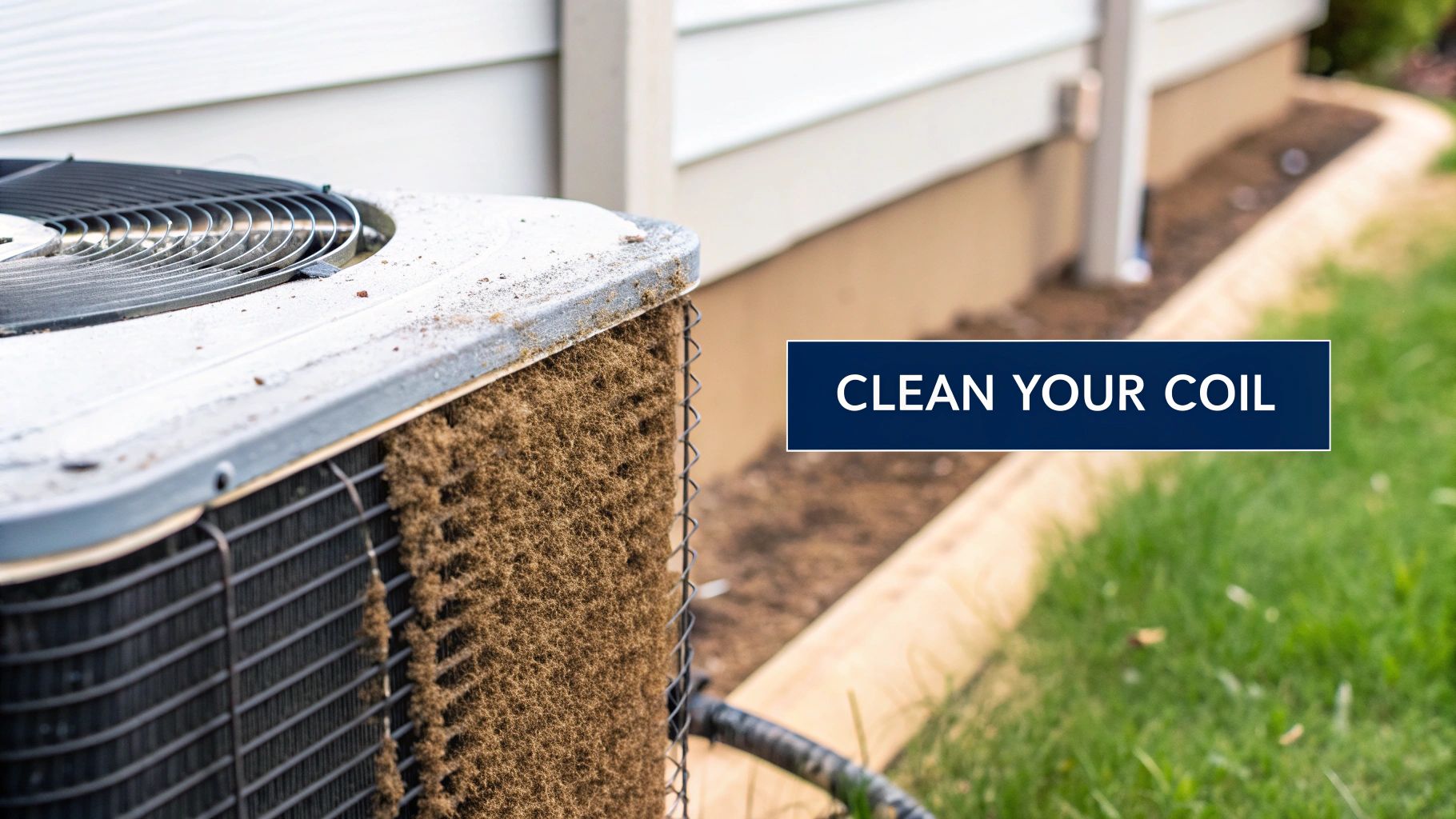
So, what’s actually happening out there in your yard? Your condenser coil is the AC's heat exchanger. It’s built with tons of thin metal fins designed to maximize the surface area and get rid of the heat your system pulled out of your house. When those fins get clogged with dirt and debris, it simply can’t breathe.
Think of it like trying to run a marathon in a winter coat during a Mesa summer. It won’t go well. Your system is going to overheat, strain itself, and wear out way faster than it should.
The Real-World Impact of a Dirty Coil
Here in Arizona, our outdoor units are in a constant fight with dust, pollen, cottonwood fluff, and whatever else the wind blows in. All that grime builds up and acts like an insulating blanket over the coils.
This forces the compressor—the heart of your entire AC system—to work much, much harder and run longer just to keep your home cool.
That extra strain doesn’t just shorten the life of your equipment; it’s a direct hit to your wallet. We once visited a homeowner in Mesa who couldn’t understand why his electricity bill had suddenly shot through the roof. A quick look outside told the whole story: his condenser coil was so caked with grime it was almost completely blocked, forcing his AC into overdrive.
"A dirty condenser coil isn't just a maintenance chore; it's a financial drain. It makes your system work harder, burn more energy, and ultimately fail sooner. Cleaning it is one of the smartest, simplest investments you can make in your AC."
Efficiency Loss by the Numbers
The performance drop from a dirty coil is genuinely shocking. With Arizona summers routinely hitting 110°F, keeping that coil clean isn't just a good idea—it's critical for your budget.
Industry data shows that dirty condenser coils can slash an air conditioner's efficiency by up to 30%. That forces your unit to guzzle 25-40% more electricity just to deliver the same amount of cooling you’re used to.
This isn't a minor chore; it’s a major financial decision. By keeping your coils clean, you’re making sure your system runs the way the manufacturer designed it to, saving you from sky-high utility bills when you need your AC the most. For more ways to keep your system in top shape, check out our guide covering AC maintenance tips for Arizona residents.
Choosing the Right Cleaner and Tools for the Job
Before you even think about touching your AC unit, the first real step is gathering your supplies. You know what? Having the right gear on hand is what separates a frustrating afternoon from a quick, successful cleaning. This isn't just about getting the gunk off; it's about protecting yourself and the delicate parts of your air conditioner.
Let's start with safety, because it’s non-negotiable. At the bare minimum, you need safety glasses. You'll be spraying cleaner and water, and you don’t want chemical splashes or flying debris anywhere near your eyes. Also, grab a good pair of sturdy, waterproof gloves. Those metal fins on the coil are sharper than they look, and you definitely want a barrier between your skin and the cleaning chemicals.
Assembling Your Cleaning Toolkit
Once your safety gear is sorted, let's round up the tools. You probably have most of this stuff sitting in your garage already.
- Garden Hose with a Spray Nozzle: This is your workhorse for pre-rinsing and the final flush. The key is a nozzle that lets you control the pressure—you want a gentle shower, not a power wash.
- Soft-Bristle Brush: Find a brush with soft bristles. It’s perfect for gently working on stubborn grime without mashing up those fragile aluminum fins.
- Fin Comb: This little tool is cheap but worth its weight in gold. If you spot any bent or flattened fins on the coil, a fin comb lets you gently straighten them out, which is critical for restoring proper airflow.
With your basic tools ready, the most important decision is picking the right condensing coil cleaner. Walking down the aisle at the hardware store can be a little overwhelming, but the choice really boils down to safety and what the cleaner is made of.
You’ll find acid-based cleaners on the shelf, and while they're incredibly powerful, they're also highly corrosive. For any DIY project, we at Comfort Experts strongly recommend you stay away from these. They can easily damage the coils, kill surrounding plants, and are a serious safety risk if you're not a trained pro.
The much safer and smarter choice for homeowners is an alkaline or pH-neutral cleaner. These products are specifically designed to dissolve dirt, grease, and all the gunk that builds up on coils without eating away at the aluminum and copper parts of your AC unit. A lot of them are also biodegradable, which is a nice bonus for your lawn and the environment.
A quick trip to the hardware store will show you plenty of options for safe, effective coil cleaners. Here’s a simple breakdown to help you choose the right one for your unit.
Condensing Coil Cleaner Comparison
| Cleaner Type | Best For | Safety Level (DIY) | Environmental Impact |
|---|---|---|---|
| Alkaline (Foaming) | Heavy grime, grease, and organic buildup like cottonwood seeds. | Excellent. Safe for DIY use with standard PPE. | Generally low to moderate. Look for biodegradable formulas. |
| pH-Neutral / Detergent-Based | Light dust, dirt, and routine annual maintenance. | Excellent. The safest option available for homeowners. | Very low. Often the most environmentally friendly choice. |
| Solvent-Based | Extremely greasy or oily coils (less common in residential). | Moderate. Requires good ventilation; can be harsh. | Moderate to high. Can contain volatile organic compounds (VOCs). |
| Acid-Based | Heavy oxidation and mineral scale (professional use only). | Poor. Highly corrosive and poses significant safety risks. | High. Can harm plants, concrete, and local water sources. |
For most homeowners in Arizona dealing with typical dust and grime, a foaming alkaline cleaner gives you the best mix of cleaning muscle and safety.
Foaming vs Non-Foaming Cleaners
You’ll also see "foaming" and "non-foaming" options. What's the difference? Foaming cleaners expand when you spray them on, letting them cling to the coil fins and really penetrate deep to break down dirt over a few minutes. Non-foaming cleaners work too, but they're often a bit easier to rinse away completely.
For most DIY cleanings, a good foaming alkaline cleaner hits the sweet spot. It provides the power needed to lift away a season's worth of Arizona dust without being overkill. The industry trend is clear, too—safer products are taking over. In major markets like North America, non-acid and self-rinsing cleaners now hold over 60% market share thanks to their safety profile and environmental benefits.
Getting this gunk off your coils is a huge step toward a more efficient system. For even more strategies, check out our guide on how to reduce cooling costs during an Arizona summer.
The Safe And Effective Coil Cleaning Process
Alright, you've got your tools and the right condensing coil cleaner. Let's get to work. Getting this part right is what makes all the difference—doing it safely, effectively, and without accidentally causing any damage. Let me explain the whole thing, from killing the power to firing it back up.
Safety First: Powering Down The Unit
Before a single drop of water hits that unit, you have to cut the power. This isn’t optional; it’s the most important step for avoiding a nasty electrical shock. You have two kill switches to hit.
First, walk over to your thermostat inside and turn the entire system off. This prevents it from trying to kick on while you’re elbow-deep in its wiring.
Next, go outside to the condenser. You're looking for a small metal box on the wall right next to it—that's the exterior disconnect box. Open it. You’ll see either a pull-out handle or a simple breaker switch. Yank the handle straight out or flip the breaker to the "off" position. Now the unit is completely dead, and it's safe to proceed.
Preparing The Area And Applying The Cleaner
With the power safely off, your first move is to clear out all the loose junk. Get rid of the leaves, twigs, grass clippings, and whatever else has piled up around the base and on top of the unit. A quick sweep with a brush or your gloved hand will do the trick.
Now grab your garden hose. Give the coils a gentle pre-rinse from the outside. You’re not trying to blast anything off here—just a light spray to knock off the surface dust. This simple step helps the condensing coil cleaner get straight to work on the stubborn, baked-on grime underneath.
Time for the cleaner. Follow the directions on the bottle, as each product is a little different. Usually, you’ll just spray it generously all over the coil fins, making sure to get complete coverage from top to bottom. If you're using a foaming cleaner, you'll see the magic happen as it expands and burrows deep into the fins, lifting dirt and gunk to the surface. Let it sit and do its job for about 5-10 minutes.
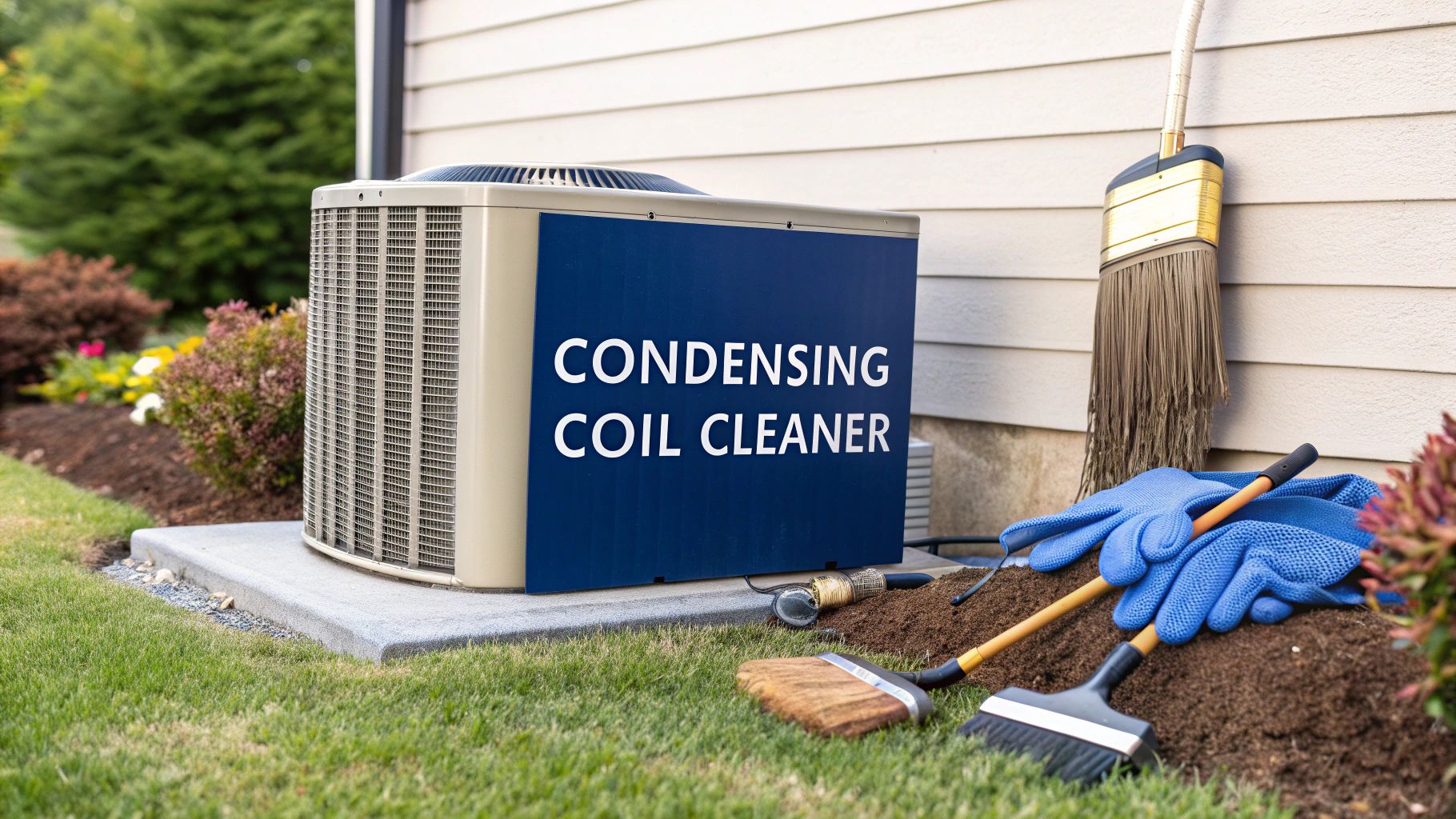
This quick visual guide shows the essential gear you'll need for a safe and effective cleaning job.
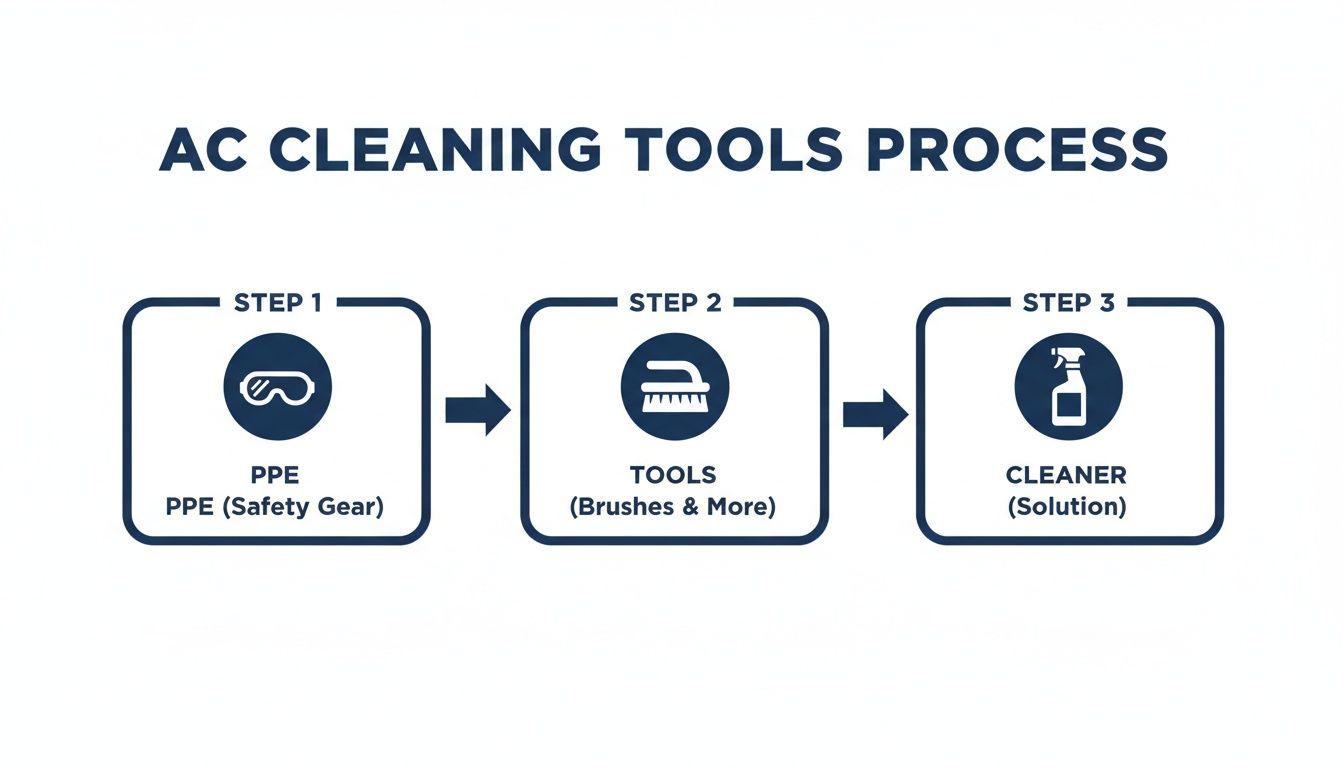
Having your PPE, tools, and cleaner laid out before you start makes the whole process go much more smoothly.
The Most Important Step: The Final Rinse
Listen up, because this is where a lot of DIY attempts go wrong. How you rinse the coils is just as critical as how you apply the cleaner. Do it incorrectly, and you'll either bend the delicate fins or, worse, just push all that dirt deeper into the unit.
The trick is to rinse the coils from the inside out.
To do this, you’ll likely need to take off the top protective grille and fan assembly. (Your owner’s manual should show you how.) With the top off, you can get your garden hose inside the unit. Spray the water through the coils from the inside, forcing all the cleaner and loosened grime outwards, away from the unit.
Keep the nozzle at a 45-degree downward angle. This prevents the water pressure from flattening those fragile aluminum fins. This technique is non-negotiable—it’s the only way to flush the debris completely clear instead of trapping it. Keep rinsing until the water running off the coils is crystal clear.
It’s always a good idea to be mindful of safety when working with any kind of chemical cleaner. A great resource on chemical safety in the workplace has some solid principles that apply just as well to projects around the house.
Never, ever use a pressure washer for this job. The high-pressure stream will pancake the aluminum fins in seconds. That mistake will choke off your system's airflow and could easily lead to thousands of dollars in damage. A regular garden hose is all you need.
Once the coils are gleaming, it's time to put everything back together. Carefully re-attach the top grille and fan, making sure every screw is snug. Give the unit a good hour to air dry.
Finally, you can restore power. Put the disconnect handle back in or flip the breaker on. Then head inside and set your thermostat back to cool. This entire cleaning process is a core part of our professional AC maintenance tune-ups, and it’s one of the best things you can do to get your system ready for a brutal summer.
Common DIY Mistakes and Pro Tips for Better Results
Even when you follow the steps perfectly, it’s surprisingly easy to make a small mistake that ends up causing a big headache. Honestly, we see it all the time. Let me walk you through some of the most common pitfalls we see homeowners run into and share a few pro tips right from our technicians to help you get a better, safer result.
The single biggest mistake? Grabbing a pressure washer. I get it—it seems like a fast way to blast away all that gunk. But that high-pressure stream will flatten those delicate aluminum fins in seconds, completely choking off airflow. That one mistake can easily cost you a professional repair bill or, in a worst-case scenario, a whole new unit.
Another critical error is forgetting to kill the power at the exterior disconnect box. Spraying water near live electrical components, even from a regular garden hose, is incredibly dangerous. Always, always double-check that the power is completely off before you start.
Avoiding Damage and Maximizing Airflow
Choosing the wrong condensing coil cleaner can also cause some serious, long-term issues. Aggressive, acid-based cleaners might look like they're working fast, but they can eat away at the aluminum and copper parts of your unit. This corrosion leads to premature failure and can even cause refrigerant leaks down the road. Stick to a pH-neutral or alkaline cleaner specifically made for residential AC units.
Here are a few other common missteps we see all the time:
- Rinsing the Wrong Way: Always spray water from the inside of the unit out. If you rinse from the outside, you’re just pushing all that dirt, grass, and debris deeper into the coil fins.
- Forgetting to Let It Dry: Don't be in a rush to flip the power back on. Give the unit at least an hour to air dry completely. This simple bit of patience prevents potential electrical shorts.
- Panicking Prematurely: You've finished the job, turned the power back on, and… nothing happens. Before you panic, take a breath. Did you remember to turn the system back on at the indoor thermostat? It’s a simple step that’s incredibly easy to forget.
Pro-Tip: Your safety comes first. Always wear safety glasses and waterproof gloves. Those fins are deceptively sharp, and you absolutely do not want chemical cleaner splashing into your eyes. This simple precaution prevents the most common DIY injuries we hear about.
Fine-Tuning Your AC's Performance
Once the coil is sparkling clean, take a moment for a final inspection. Look closely at the fins. Do you see any that are bent or flattened? This is extremely common and can restrict airflow just as much as a layer of dirt can.
This is where a fin comb comes in handy. This inexpensive little tool is designed to slide gently between the fins, allowing you to carefully straighten them back into place. Restoring that perfect alignment is a small detail that makes a huge difference in your system's efficiency.
It’s just like how routinely changing your air filters is crucial for indoor performance—straightening the fins is essential for outdoor airflow. In fact, you can learn more about how often you should change your air filters in our related guide. Taking a few extra minutes for these finishing touches will ensure you get the absolute maximum benefit from your cleaning efforts.
Knowing When to Call a Professional
There's a real satisfaction in handling your own home maintenance. Cleaning your AC coils is a perfect example—a straightforward job that can save you a service call fee and genuinely improve your system's performance.
But knowing your limits is just as important as knowing how to use a fin comb. Some jobs simply aren't meant for a DIY approach, and pushing ahead when you're in over your head can turn a simple cleaning into an expensive repair. It's all about recognizing the signs that a problem is more than just surface-level dirt.
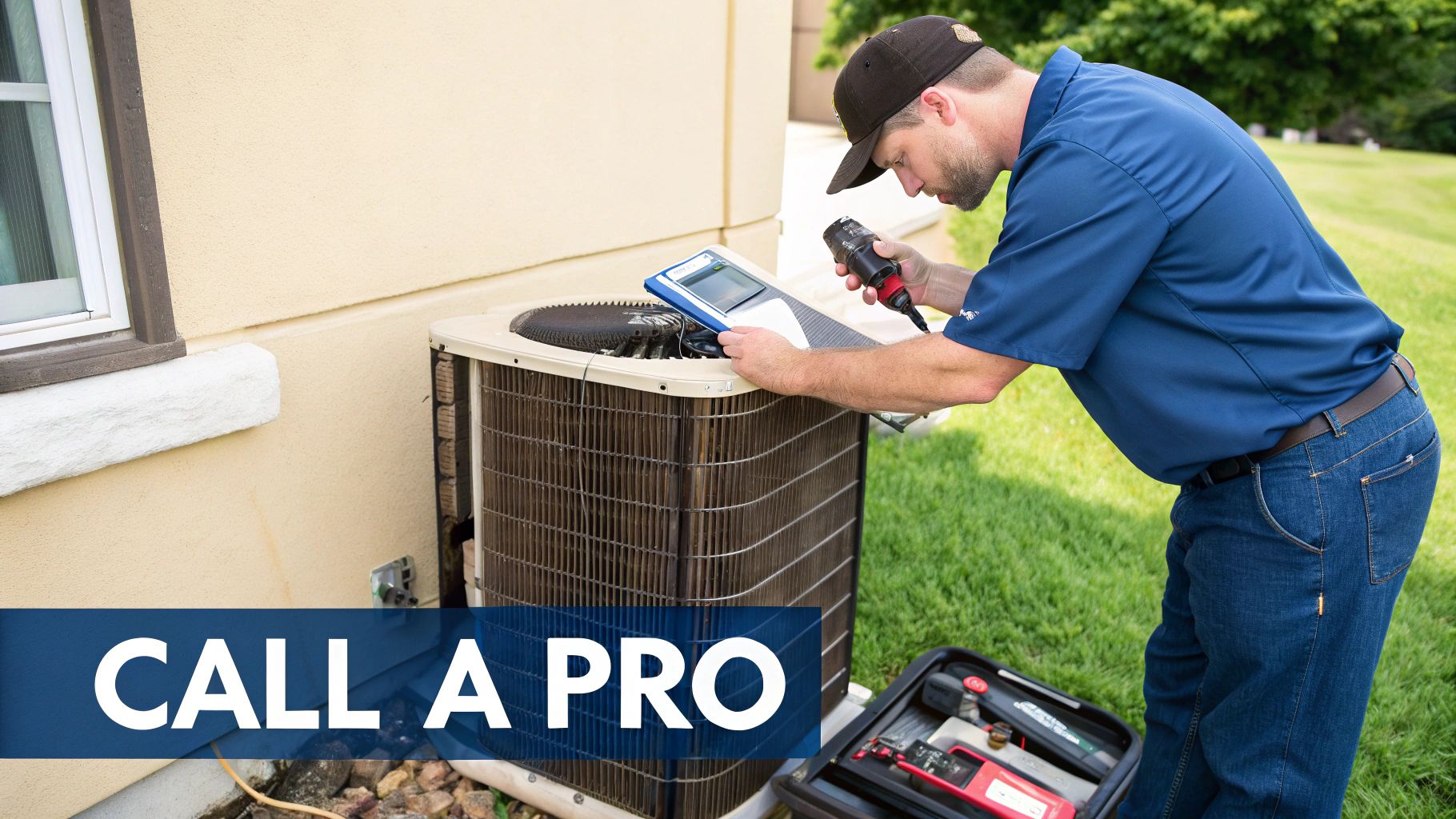
Signs You Need an HVAC Technician
If you run into any of these situations, it’s time to put the tools down and pick up the phone. These are tell-tale signs of deeper issues that a can of condensing coil cleaner just can't resolve.
- Heavily Impacted Coils: In our dusty Arizona climate, it’s not uncommon for dirt, pollen, and debris to get so matted into the fins that it feels like concrete. If a gentle spray and standard cleaner barely make a dent, you need professional-grade solutions to break it down.
- Oily or Greasy Residue: Stop immediately if you see an oily film on the coils. This is the classic signature of a refrigerant leak—a serious problem that requires a licensed technician to find and repair safely.
- Significant Fin Damage: Are a lot of the fins crushed flat? A fin comb is great for minor touch-ups, but if a large section is bent over, airflow is seriously restricted. A pro can properly assess the damage and determine if it can be fixed or if it's more serious.
- Ice Buildup on the Coils: While a thick blanket of dirt can cause icing, it often points to other problems like low refrigerant or an airflow blockage inside your home. This needs an expert diagnosis.
There’s a reason the professional coil cleaning market has grown into a $1.4 billion global industry in 2024. With energy prices climbing an average of 15% since 2020, homeowners are realizing that a truly deep, professional cleaning is an investment, not just an expense.
"A professional technician doesn't just clean; they diagnose. While they're performing routine maintenance, they can spot the early signs of a refrigerant leak or a failing capacitor, saving you from a much bigger headache down the line."
The Comfort Experts Advantage
This is where we come in. At Comfort Experts, we don’t use the same stuff you find at the hardware store. We use more potent, professional-grade cleaners and specialized tools that let us safely power through the worst grime without damaging the delicate aluminum fins.
More importantly, our technicians are trained to spot those underlying issues that go beyond a simple cleaning.
If you suspect you're dealing with something more complex, like widespread fin damage, it helps to understand the potential costs. We break it down in our article about the cost to replace a condenser coil.
If you’ve taken the cover off your unit and feel that sinking feeling of being in over your head, don’t risk it. Our team has been serving the Phoenix Valley with honest, thorough work since 2011. We’re here to handle the jobs that need a professional touch, ensuring your AC runs safely and efficiently all summer long.
Questions We Hear All the Time About Coil Cleaning
Even with a step-by-step guide, it’s normal to have a few questions pop up. This is one of those home maintenance jobs where getting the details right really matters for your AC's health. We’ve pulled together the most common questions our technicians hear from homeowners right here in the Phoenix Valley to give you some quick, straight-to-the-point answers.
How Often Should I Clean My Condenser Coils in Arizona?
For our unique climate here in Arizona, we strongly recommend cleaning your condenser coils twice a year. It might sound like a lot, but our weather is tough on these units.
The perfect schedule is once in the spring before the summer heat really settles in, and then again in the fall right after monsoon season wraps up. That first cleaning gets rid of all the fine desert dust from the dry months. The second one washes away the caked-on mud and heavier gunk stirred up by the summer storms. Hitting it twice a year ensures your AC is breathing easy and running at its best right when you need it most.
Can I Just Use Simple Green or Dish Soap?
It’s tempting to grab whatever cleaner is under the sink, but we really advise against using general-purpose products like Simple Green or dish soap. They just aren't designed for the specific kind of grime that gets baked onto AC coils in 110-degree heat.
The biggest problem is that these cleaners can leave behind a sticky film. Instead of helping, that residue actually attracts more dust, pollen, and dirt over time. You’ll end up with clogged coils again much faster than before. Always stick with a dedicated, non-acidic condensing coil cleaner for a safe and truly effective clean.
What Are the Signs My Coil Is Dirty?
Your air conditioner will usually give you some pretty clear hints that it’s struggling to breathe. If you notice any of these red flags, a dirty coil is a very likely culprit:
- Weak Cooling: The air blowing from your vents just doesn't feel as crisp and cold as it used to.
- Running Constantly: Your AC seems to run forever without ever cycling off and taking a break.
- Spiking Power Bills: A sudden, unexplained jump in your monthly electricity costs is a huge indicator of an overworked system.
- You Can See It: A quick look at the outdoor unit reveals a thick blanket of dust, cottonwood fluff, or grime clogging the metal fins.
- Poor Airflow Outside: The fan on top is spinning, but the air it’s pushing out feels weak or restricted.
Does Cleaning My Outdoor Unit Help My Indoor Air Quality?
Indirectly, yes. While the outdoor condenser coil isn't in the direct path of the air circulating inside your home, a clean one makes the entire system work better.
A clean, efficient AC unit does a much better job of dehumidifying the air as it cools. Pulling that sticky moisture out is a huge part of feeling comfortable indoors, and lower humidity can also help discourage mold growth. But for a direct impact on your indoor air quality, you’d want to look at services like duct cleaning or installing a whole-home air purifier.
When a DIY washdown doesn't do the trick or you've spotted signs of a bigger issue, don't hesitate to get a professional opinion. The team at Comfort Experts has the right tools and deep experience to tackle even the most neglected coils safely and effectively.
Give us a call at 480-207-1239 or schedule service online to get your AC running like it just came out of the box.