It might seem counterintuitive in Arizona, but a reliable furnace is crucial for those chilly desert nights and ensuring your family's comfort and safety. That's why having a thorough furnace maintenance checklist is not just a good idea—it's an essential part of responsible homeownership. This guide breaks down everything you need to know, from simple DIY tasks to critical safety checks that require a professional eye.
This comprehensive checklist is designed specifically for homeowners in Phoenix, Mesa, and the surrounding Valley, addressing the unique needs of our climate. We'll cover everything from monthly filter replacements to annual professional inspections of critical components like the heat exchanger and gas connections. Let me explain: neglecting your furnace doesn't just risk a breakdown on a cold night; it can lead to higher energy bills, poor indoor air quality, and even serious safety hazards like carbon monoxide leaks.
We’ve structured this guide to be your go-to resource for year-round furnace care. You'll find actionable steps for inspecting the blower motor, calibrating your thermostat, and verifying proper ventilation. Think of this as more than just a list; it’s a proactive strategy for maintaining efficiency and peace of mind. To ensure comprehensive home preparedness for the colder months and beyond, you can also explore an ultimate seasonal home maintenance checklist specific to Arizona's climate. By following these steps, you’ll not only extend the life of your heating system but also ensure it operates safely and efficiently when you need it most.
1. Monthly Filter Inspection and Replacement
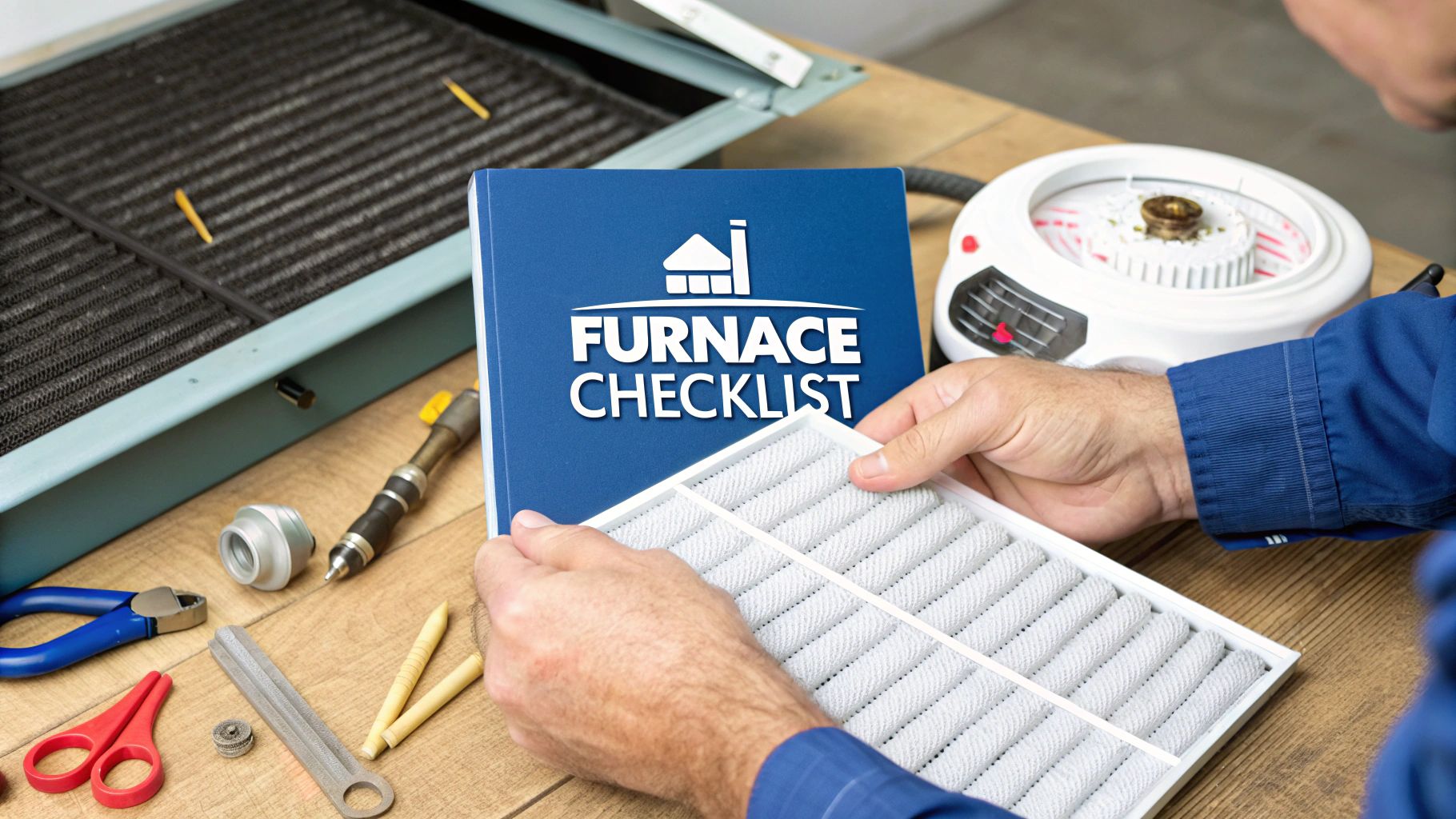
The single most impactful task on any furnace maintenance checklist is inspecting and replacing the air filter. This simple component is your HVAC system's first line of defense, trapping dust, pollen, pet dander, and other airborne particles before they can enter the sensitive inner workings of your furnace or circulate back into your home's air. You know what? A clogged filter acts like a roadblock for air, forcing your furnace's blower motor to work much harder to pull air through. This strain leads directly to higher energy bills, reduced heating performance, and can even cause the system to overheat and shut down completely. Over time, this unnecessary stress can lead to premature component failure and costly repairs. Consistent filter changes are essential for maintaining optimal airflow, ensuring energy efficiency, and significantly extending the lifespan of your equipment.
Why It's a Top Priority
Neglecting the filter can have a cascading effect on your entire system. For instance, a severely clogged filter in a Phoenix Valley home during our dusty monsoon season can quickly become overwhelmed. This not only diminishes indoor air quality but can cause the indoor evaporator coil to freeze up when the AC is running, leading to water damage and a system that won't cool. For a commercial property manager in Mesa, a dirty filter can mean decreased comfort for employees and customers, not to mention higher operational costs. Honestly, is that a risk worth taking for a component that costs less than a pizza?
Expert Insight: Think of your furnace filter like the lint trap in your clothes dryer. If it's full, the dryer can't work efficiently and can even become a fire hazard. Your furnace filter is no different; keeping it clean is fundamental to both performance and safety.
Actionable Tips for Filter Maintenance
- Set a Schedule: Use your phone's calendar or a smart home app to set a recurring reminder every 30-90 days, depending on your filter type. A basic one-inch fiberglass filter may need changing monthly, while a four-inch pleated media filter might last up to three months.
- Know Your Size: Write the filter dimensions (e.g., 16x25x1) in permanent marker on the furnace cabinet or air handler door. This simple trick saves you from having to measure it every time you buy a replacement.
- Stock Up: Purchase filters in multi-packs to have them readily available. This makes it easier to stick to your schedule and avoid last-minute trips to the store.
- Consider Upgrading: If you have family members with allergies or respiratory issues, consider upgrading to a higher MERV (Minimum Efficiency Reporting Value) filter, like a MERV 11 or 13, to capture smaller airborne contaminants more effectively. If you're wondering how often you should be swapping them out, you can learn more about air filter replacement schedules here.
2. Annual Professional Furnace Inspection and Tune-Up
While DIY tasks are crucial, they can't replace the comprehensive analysis performed by a licensed HVAC technician. An annual professional tune-up is a thorough, multi-point inspection that goes far beyond what a homeowner can safely or effectively accomplish. This service involves cleaning, testing, lubricating, and calibrating the intricate components of your furnace, from the burners and pilot assembly to the safety controls and electrical connections. It's a preventive measure designed to ensure safe operation, maximize efficiency, and catch minor issues before they escalate into major, costly breakdowns.
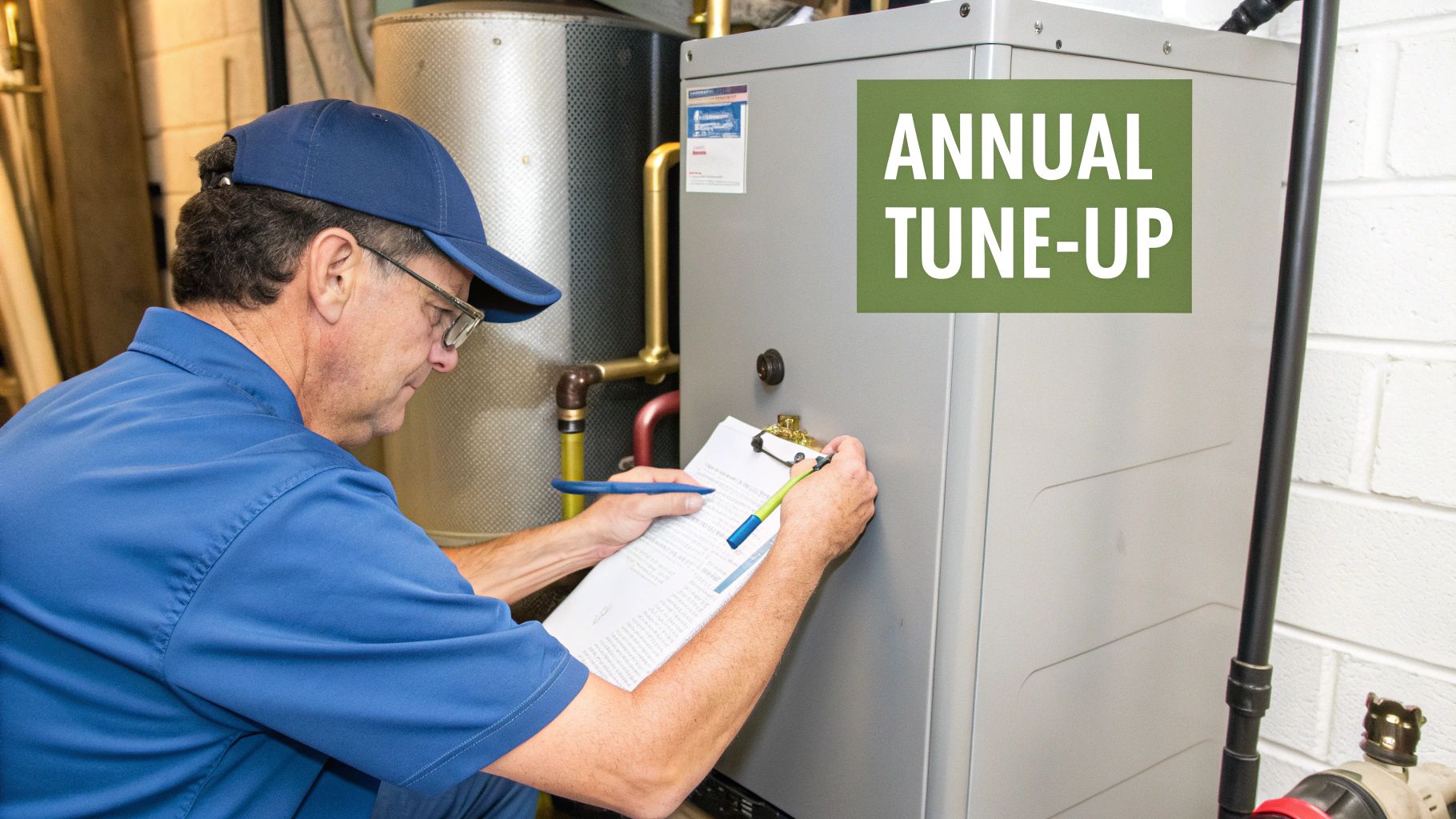
Think of it as an annual physical for your heating system. A trained professional can spot subtle signs of wear and tear, like a corroded wire or a weak capacitor, that could otherwise go unnoticed until the system fails on a cold night. This preventative care is a cornerstone of any effective furnace maintenance checklist, ensuring your system runs reliably all season long. Here at Comfort Experts, our NATE-certified technicians have seen firsthand how a simple tune-up can prevent a no-heat emergency.
Why It's a Top Priority
Neglecting a professional inspection is a gamble with both your comfort and your safety. For a Mesa homeowner, a routine fall inspection can uncover a cracked heat exchanger, a potentially deadly issue that can leak carbon monoxide into the home. For a commercial property manager in the Phoenix Valley, a professional maintenance agreement can be the key to maintaining 99% uptime, preventing disruptions and ensuring a comfortable environment for tenants and customers. This annual check-up isn't just a recommendation; it's a critical safety and performance investment.
Expert Insight: Many furnace manufacturer warranties explicitly require documented annual maintenance by a certified professional to remain valid. Skipping a tune-up could mean you're on the hook for the full cost of a major component failure that would have otherwise been covered.
Actionable Tips for Professional Tune-Ups
- Schedule Pre-Season: Book your annual inspection in the early fall (August-September) before the heating season begins. This helps you avoid the rush and ensures your system is ready when you need it.
- Request Documentation: Ask the technician to provide a detailed report of their findings, including photos of any problem areas. This creates a valuable service history for your equipment.
- Consider a Maintenance Plan: Enrolling in an annual maintenance agreement often includes discounted service, priority scheduling, and other perks that make staying on schedule easier and more affordable. To understand what's included in a professional service, you can explore our comprehensive heating tune-up services.
- Keep Detailed Records: File all inspection reports with your home's important documents. This is invaluable for warranty claims and can be a significant selling point if you ever move.
- Enhance System Cleanliness: In addition to the tune-up, a professional HVAC system cleaning can further improve performance by removing deep-seated debris from your ductwork and internal components.
3. Heat Exchanger Inspection and Crack Detection
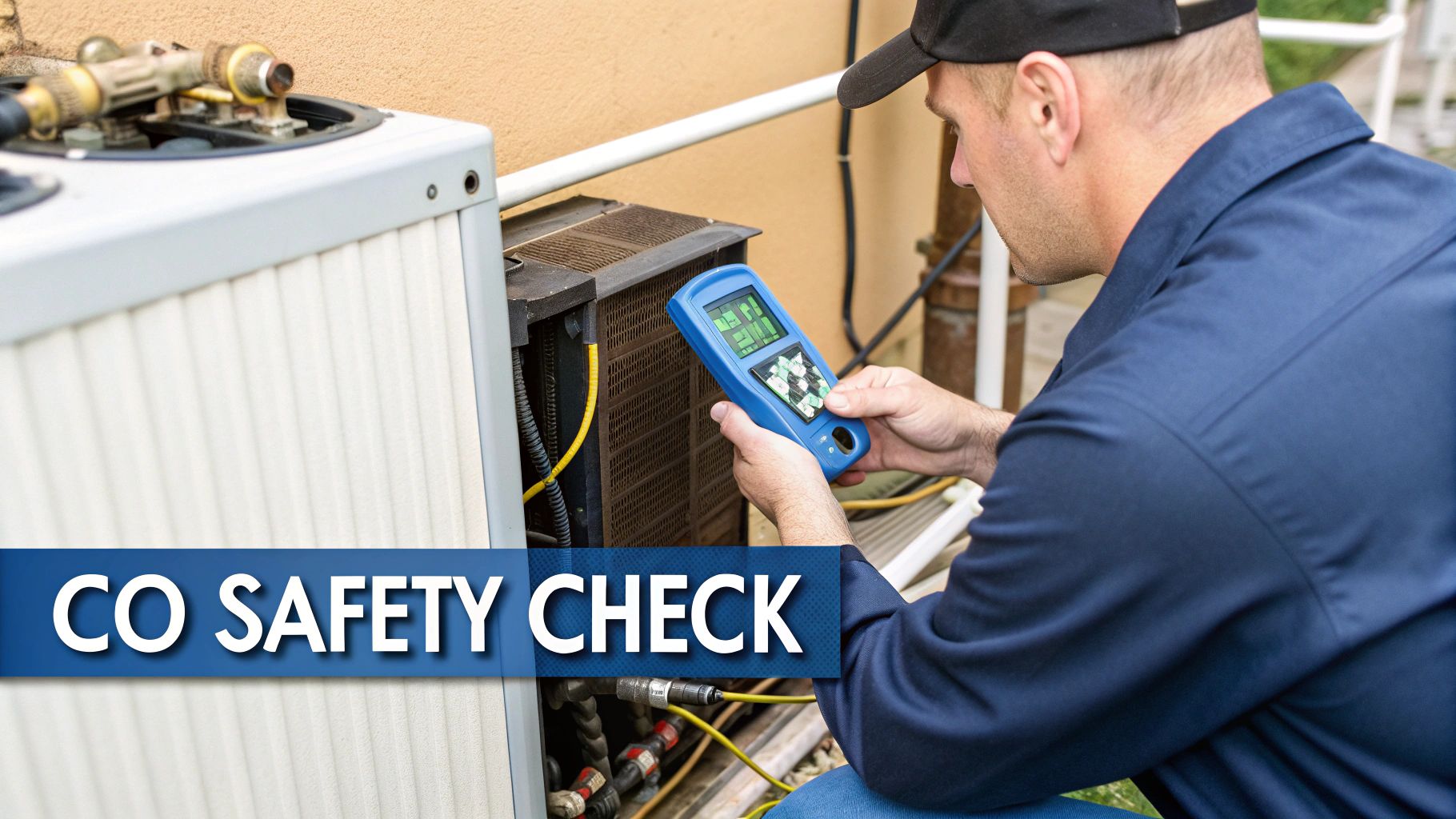
The heat exchanger is the heart of your gas furnace, a chamber where the combustion that generates heat occurs. Its sole purpose is to safely transfer this heat to the air that circulates through your home, while keeping the toxic combustion byproducts, like carbon monoxide (CO), completely separate. An inspection of this component is one of the most critical safety procedures on any furnace maintenance checklist, as even a small crack or fissure can have dangerous consequences.
A compromised heat exchanger allows combustion gases to mix with your breathable indoor air. This is a non-negotiable safety hazard that requires immediate professional attention. For this reason, visual inspection and CO testing are not just recommended, they are essential for protecting your family's health and safety, especially as your furnace ages.
Why It's a Top Priority
A cracked heat exchanger is a silent threat. Carbon monoxide is odorless and colorless, making it impossible to detect without a specialized sensor. In Mesa, many homes built in the 1990s and early 2000s are now reaching an age where their original furnaces are showing age-related corrosion and stress, making this inspection vital. For a commercial property in Phoenix, passing an annual safety inspection often hinges on documented CO testing, ensuring the well-being of employees and customers. Ignoring this check could lead to a severe health crisis.
Expert Insight: Think of a heat exchanger like the exhaust manifold on your car. You would never want those fumes piped directly into your car's cabin. A cracked heat exchanger does exactly that, but inside your home. This is why it’s one of the few furnace components that, when it fails, almost always necessitates a complete system replacement.
Actionable Tips for Heat Exchanger Safety
- Install CO Detectors: Every home with a gas furnace must have working carbon monoxide detectors installed near bedrooms and on each level of the house. Test them monthly.
- Watch for Warning Signs: Be alert for unusual smells near the furnace, visible rust or soot stains on the furnace cabinet, or a flickering, yellow pilot light flame instead of a steady blue one.
- Know Your Furnace's Age: The average lifespan of a furnace is 15-20 years. If your system is approaching this age, the risk of a crack increases significantly.
- Insist on CO Testing: When you schedule your annual professional tune-up, specifically request that the technician performs a combustion analysis and CO test. If a serious issue is found, a professional can walk you through the necessary steps for a safe furnace repair or replacement in Mesa, AZ.
4. Blower Motor and Fan Blade Cleaning
Deep inside your furnace, the blower motor and its fan are the powerful heart of your home's forced-air system. This component is responsible for pushing the heated air through your ductwork and into every room. Over a single heating season, its fan blades can accumulate a thick blanket of dust, pet dander, and debris, especially in the dusty Phoenix Valley environment.
This buildup is more than just an aesthetic issue; it unbalances the fan blades and significantly restricts airflow. Your motor must then work harder, spin faster, and consume more electricity to move the same amount of air. This excessive strain not only inflates your energy bills but also generates excess heat within the motor itself, drastically shortening its operational lifespan and leading to premature, often expensive, failures. A clean blower assembly ensures your system moves air freely and efficiently.
Why It's a Top Priority
Neglecting the blower assembly directly impacts both comfort and cost. For example, a Mesa home with multiple pets could see its blower efficiency drop by as much as 30% in just one year due to accumulated fur and dander. This means paying more for less heat. Once cleaned, that same system can restore up to 95% of its original efficiency. For a commercial property manager in Phoenix, a clean, quiet blower means improved tenant comfort, fewer noise complaints, and lower common area utility costs.
Expert Insight: Think of your furnace blower fan like a ceiling fan. When the blades get caked in dust, they wobble, make more noise, and move less air. Your furnace blower is the same; a layer of grime forces it to work harder for worse results, eventually leading to a breakdown.
Actionable Tips for Blower Maintenance
- Schedule a Professional Cleaning: Cleaning the blower is an intricate task best left to professionals. Request a blower wheel and motor cleaning as part of your annual fall tune-up to ensure it's done safely and thoroughly.
- Request Before and After Photos: Ask your technician to show you the condition of the blower before and after the service. This visual confirmation is a great way to see the value of the cleaning and understand its impact.
- Assess Your Home’s Needs: If you have pets, live near a dusty area, or have recently completed a renovation, your blower will need more frequent attention. Discuss a tailored cleaning schedule with your HVAC technician.
- Listen for Warning Signs: Pay attention to new or unusual noises. A grinding, squealing, or loud humming sound coming from your furnace often points to a struggling blower motor that needs immediate inspection to prevent complete failure.
5. Thermostat Calibration and Smart Upgrade Assessment
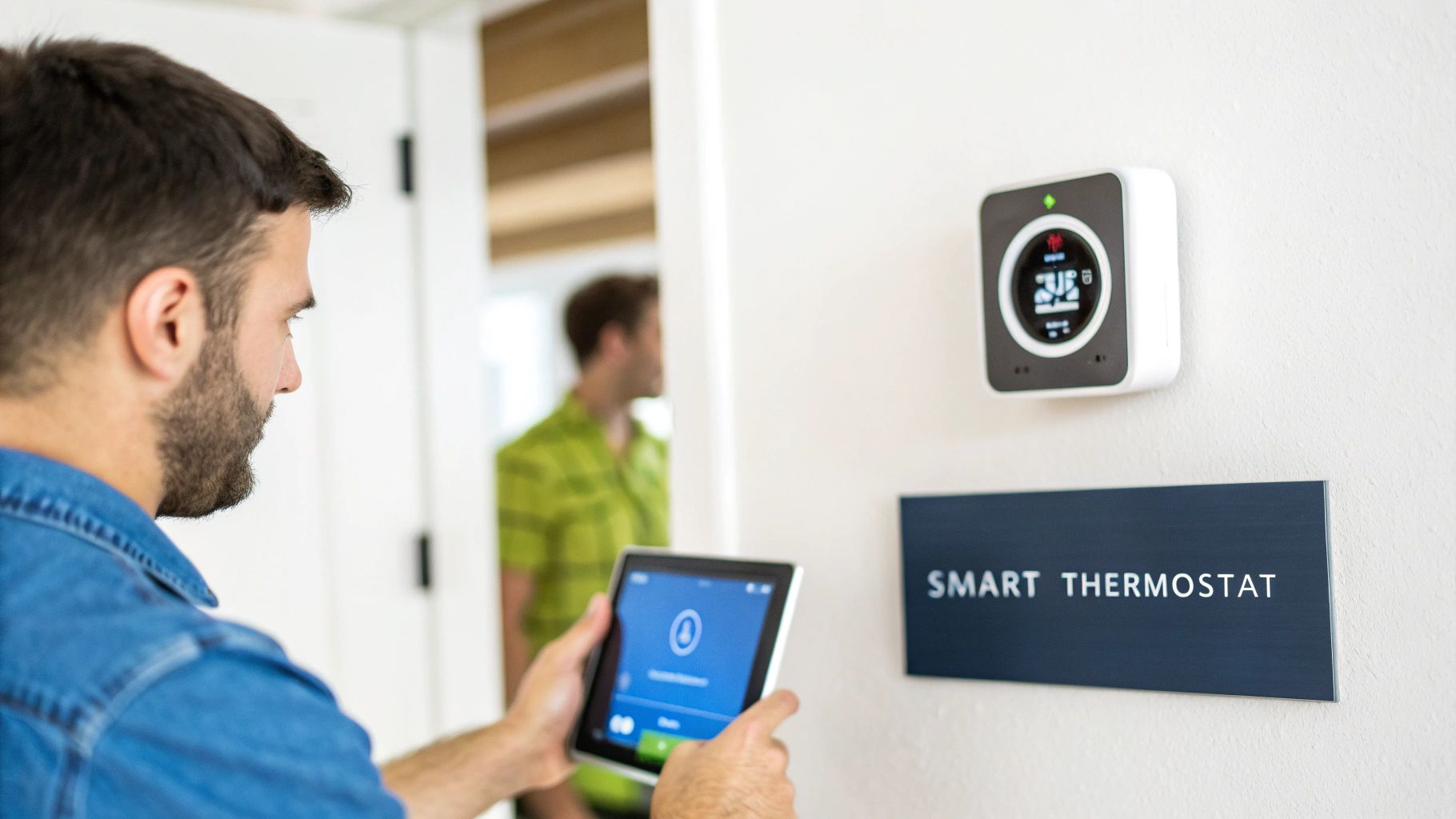
Your thermostat is the command center of your entire HVAC system, yet its accuracy and efficiency are often overlooked. This crucial component tells your furnace when to turn on, how hard to work, and when to shut off. If it isn't calibrated correctly, it can lead to wasted energy, inconsistent temperatures, and unnecessary strain on your heating equipment. Regularly testing your thermostat's responsiveness and assessing opportunities to upgrade to a modern smart model is a key part of any thorough furnace maintenance checklist.
An improperly calibrated thermostat might read the room temperature as several degrees warmer or cooler than it actually is. This seemingly small error forces your furnace to run longer or cycle more frequently than needed, directly impacting your utility bills and comfort. Assessing its performance ensures your system operates based on accurate data, maximizing both efficiency and your home's coziness.
Why It's a Top Priority
A malfunctioning or outdated thermostat can silently sabotage your furnace's performance. For instance, Mesa homeowners who upgrade from a basic mercury-switch model to a programmable one can reduce their heating bills by creating custom schedules that lower the temperature while they're away or asleep. For a commercial property in the Phoenix Valley, a smart thermostat with multi-zone management can provide precise temperature control across different offices, preventing energy waste in unoccupied areas. An inaccurate thermostat can also cause short-cycling, where the furnace turns on and off too quickly, accelerating wear and tear on critical components like the ignitor and blower motor.
Expert Insight: Think of your thermostat as the brain of your HVAC system. If the brain is receiving bad information or can't communicate its instructions effectively, the whole body suffers. Ensuring your thermostat is accurate and modern is like giving your system a much-needed intelligence boost.
Actionable Tips for Thermostat Maintenance
- Test for Accuracy: Place a reliable glass bulb thermometer next to your thermostat. After about 15 minutes, compare the readings. If they are off by more than two or three degrees, your thermostat may need professional calibration or replacement.
- Assess for Upgrades: If your thermostat is over 10 years old, lacks programmable features, or is a mechanical model, consider an upgrade. Modern smart thermostats from brands like Ecobee or Trane offer WiFi connectivity, learning algorithms, and detailed energy reports.
- Use Smart Features: Take full advantage of your smart thermostat. Set schedules that align with your family's routine, use the "vacation" or "away" mode when traveling, and analyze energy usage reports to identify opportunities for further savings.
- Ensure Proper Placement: Your thermostat should be on an interior wall, away from direct sunlight, drafts, doorways, and heat sources like lamps or televisions, all of which can cause false readings. If you're ready to improve your system's brain, you can get more information about professional thermostat installation in Mesa, AZ.
6. Gas Connection and Leak Detection
For homes with natural gas furnaces, inspecting the gas line and connections is a non-negotiable safety protocol. This critical step on any professional furnace maintenance checklist involves a licensed technician examining the gas piping, valves, and connections leading to your furnace. They use specialized tools, including electronic leak detectors, to identify even minuscule natural gas leaks that are unnoticeable to the human nose but pose a significant risk of fire, explosion, or carbon monoxide poisoning.
A loose fitting or a corroded gas line can create an incredibly dangerous situation. The pressurized gas can escape silently, accumulating in enclosed spaces until it finds an ignition source. Here's the thing: this is why professional verification of gas pressure and a thorough leak test are not just about performance; they are fundamental safety measures that protect your property and, more importantly, your family. Proper gas line integrity ensures your furnace combusts fuel safely and efficiently, preventing hazardous conditions.
Why It's a Top Priority
Neglecting a potential gas leak is one of the most serious risks a homeowner can take. In the Phoenix Valley, many homes have gas furnaces located in utility closets, garages, or attics where a slow leak might go undetected for a long time. For commercial property managers in Mesa, a documented annual gas leak test is often essential for passing safety inspections and ensuring a safe environment for employees and customers. Identifying a minor leak at a furnace connection early can prevent a catastrophic emergency down the line.
Expert Insight: Think of your home’s natural gas line like its circulatory system for fuel. Even a tiny pinhole leak can lead to a major health crisis. You wouldn't ignore a strange symptom in your body, and you should never ignore the possibility of a gas leak. It's a silent threat that only professional equipment can reliably detect.
Actionable Tips for Gas Safety
- Schedule Professional Testing: Make sure that gas pressure testing and electronic leak detection are explicitly included in your annual professional furnace tune-up. This is not a DIY task.
- Locate Your Shutoff Valve: Every homeowner should know the location of the main gas shutoff valve for their property. In an emergency, being able to turn it off quickly is vital while you wait for professionals to arrive.
- Install Gas Detectors: If your furnace is in a basement or an enclosed utility closet near living spaces, install a natural gas or explosive gas detector as an added layer of safety, similar to a smoke alarm.
- Never Ignore the Smell: If you ever smell a strong "rotten egg" odor (the additive in natural gas), do not turn on lights or appliances. Evacuate the building immediately, and then call your gas utility company or 911 from a safe distance.
7. Electrical Connections and Control Board Inspection
Beyond the moving parts and airflow, your furnace relies on a complex network of electrical components to operate safely and effectively. This part of your furnace maintenance checklist involves inspecting all the wiring, connections, capacitors, and the central control board. These components are the furnace's nervous system, and any fault can lead to intermittent problems or a complete system failure.
A professional inspection looks for loose wires, corroded terminals, and signs of overheating like burnt plastic or discoloration. A loose connection can arc, creating a fire hazard, while corrosion can interrupt critical signals between the thermostat and the furnace. Capacitors, which help start the motors, can also degrade over time, causing motors to struggle or fail to start. Checking these electrical systems is a non-negotiable safety and reliability measure.
Why It's a Top Priority
Faulty electrical connections are a leading cause of heating system breakdowns and pose significant safety risks. For instance, in a Mesa home, the high mineral content in our water can contribute to accelerated corrosion on electrical terminals if there's any moisture present. We've seen furnaces that stopped working simply because a safety switch connection was too corroded to send a signal. For a commercial property in the Phoenix Valley, a failed control board can mean shutting down business operations until a replacement is sourced and installed, an easily avoidable interruption with preventive maintenance.
Expert Insight: Think of your furnace's control board as its brain. If the connections leading to it are frayed or loose, it's like having a pinched nerve. The brain can't properly tell the body what to do, leading to erratic behavior or complete shutdown. A thorough electrical checkup ensures all these communication lines are clear and secure.
Actionable Tips for Electrical System Maintenance
- Schedule Annual Tune-Ups: Electrical inspection is a core component of a professional tune-up. Due to the high-voltage risks, this is not a DIY task. Always have a qualified technician perform this check.
- Ask for a Show-and-Tell: When your technician is on-site, ask them to point out any signs of corrosion or loose connections they find. Understanding the condition of your system helps you make informed decisions about repairs.
- Check Capacitors: Specifically request that the technician tests the furnace capacitors. If a capacitor shows signs of bulging, leaking, or has a weak reading, it's best to replace it proactively before it fails on a cold night.
- Document and Track: Keep all service reports that detail the condition of your furnace's electrical system. This documentation is valuable for tracking the unit's health over time and can be important for any potential warranty claims.
8. Combustion Air Intake and Ventilation Verification
Modern high-efficiency gas furnaces require a precise mixture of fuel and air for clean, efficient combustion. This process involves pulling fresh air in through an intake vent and expelling exhaust gases, like carbon monoxide, through a separate flue pipe. Verifying these pathways are clear is a critical safety step in any furnace maintenance checklist, ensuring your system can "breathe" properly and operate safely.
A blocked intake or exhaust vent forces the furnace to operate in a "starved" state, leading to incomplete combustion. This not only dramatically reduces efficiency but, more importantly, can cause the production of deadly, odorless carbon monoxide (CO) gas. Obstructions from debris, animal nests, or even landscaping can create a hazardous situation where these harmful byproducts backdraft into your home instead of being safely vented outside.
Why It's a Top Priority
Neglecting ventilation is not just an efficiency issue; it's a serious safety risk. For example, a home in Mesa with an intake screen clogged by monsoon dust and debris might experience frequent furnace shutdowns or a "rollout" of the flame from the burner chamber, creating a fire hazard. Similarly, a Phoenix family might not realize a bird has built a nest in their rooftop exhaust vent until a CO detector alerts them to a life-threatening buildup of gas inside the home. Ensuring these vents are clear is fundamental to safe operation.
Expert Insight: Think of your furnace's ventilation like your own respiratory system. If you can't inhale fresh air or exhale properly, you can't function. Your furnace is the same; a clear intake and exhaust are non-negotiable for its health and your family's safety.
Actionable Tips for Ventilation Maintenance
- Locate and Inspect Vents: Find where your furnace intake and exhaust pipes terminate outside your home (usually on the side or roof). Visually inspect them for blockages like leaves, dirt, snow, or animal nests. Ensure vent caps and screens are intact and clear.
- Check the Furnace Room: The area immediately surrounding your furnace also needs adequate airflow. Avoid storing items directly against the unit and ensure the room is not sealed off so tightly that it can't draw sufficient combustion air.
- Clear Landscaping: Trim back any bushes, shrubs, or weeds that have grown around your exterior vents. Maintain at least two to three feet of clearance to prevent recurring blockages.
- Schedule a Professional Check: During an annual tune-up, a technician can perform a combustion analysis and use specialized tools to verify proper drafting. This confirms that exhaust gases are being vented effectively and that no dangerous backdrafting is occurring.
9. System Efficiency Testing and Energy Consumption Analysis
While DIY inspections are crucial, a professional efficiency test provides a data-driven "health report" for your furnace. This diagnostic process goes beyond a simple visual check, using specialized tools to measure exactly how well your system converts fuel into heat. Technicians perform tests like flue gas analysis and heat output measurement to quantify performance and pinpoint hidden issues before they lead to a breakdown.
An efficiency test reveals your furnace's true operating condition, similar to how a diagnostic scan reveals a car engine's performance. The results show whether you are getting the full heating value from the fuel you are paying for, or if energy is being wasted due to combustion problems, poor airflow, or component degradation. This analysis is a key part of any comprehensive furnace maintenance checklist, providing the hard numbers needed to make smart decisions about repairs versus replacement.
Why It's a Top Priority
Understanding your furnace's efficiency rating is critical for managing household expenses. For example, a Mesa homeowner might be unaware their 20-year-old furnace is only operating at 68% efficiency. An analysis would reveal this, showing that upgrading to a 96% AFUE unit could save them over $40 a month during the heating season. For commercial properties in the Phoenix Valley, identifying and replacing inefficient systems can lead to energy cost reductions of 25-30%, a significant operational saving.
Expert Insight: Think of an efficiency test as a financial audit for your furnace. It tells you precisely where your energy dollars are going. An underperforming unit is like an employee who isn't doing their job; it costs you money without delivering the expected results.
Actionable Tips for Efficiency Analysis
- Establish a Baseline: Request an efficiency test during your next professional tune-up. This creates a benchmark you can compare against in future years to track performance degradation over time.
- Understand AFUE: Get familiar with the Annual Fuel Utilization Efficiency (AFUE) rating. An 80% AFUE is the modern minimum, while ratings of 90% or higher are considered high-efficiency. Ask your technician to explain where your unit falls on this scale.
- Request Written Results: Ask the technician to provide the combustion analysis results in writing. This document gives you tangible data to use when calculating the potential return on investment for a new, more efficient system.
- Calculate Your ROI: Use the efficiency data to compare the long-term fuel savings of a new furnace against the cost of continuing to operate your older, less efficient unit. This helps you determine if a proactive replacement is the most cost-effective option. You can learn more about furnace installation and replacement options here.
9-Point Furnace Maintenance Comparison
| Item | Implementation complexity | Resource requirements | Expected outcomes | Ideal use cases | Key advantages |
|---|---|---|---|---|---|
| Monthly Filter Inspection and Replacement | Low — DIY-friendly | Replacement filters (MERV 8–13), $15–40 per filter, reminder system | Improved airflow & IAQ, lower energy use, fewer clogs/shutdowns | Routine home maintenance, allergy sufferers, dusty climates | Inexpensive, immediate impact, easy to perform |
| Annual Professional Furnace Inspection and Tune-Up | Medium — licensed technician required | Technician time, diagnostic tools, $150–300 per visit | Safety hazard detection, +5–15% efficiency, warranty compliance, documentation | Pre‑season tune-up, aging systems, warranty/insurance needs | Comprehensive safety check, preventive problem detection |
| Heat Exchanger Inspection and Crack Detection | High — specialized testing & certification | Combustion analyzer, CO detectors, thermal imaging, certified tech | Detects CO leaks, safety assurance; often leads to replacement planning | Suspected CO issues, older furnaces, pre-sale inspections | Life‑safety verification, prevents CO incidents |
| Blower Motor and Fan Blade Cleaning | Medium — requires disassembly, pro recommended | Technician time, cleaning/lubrication tools, $100–200 | Restored airflow, reduced noise, extended motor life (+10–15% efficiency) | Homes with pets/dust, noisy or underperforming blowers | Restores performance, moderate cost, reduces vibration/noise |
| Thermostat Calibration and Smart Upgrade Assessment | Low–Medium — simple calibration to install smart devices | Calibrated thermometer, possible smart thermostat $200–400, WiFi | More accurate temperature control, ~$10–15/month energy savings, remote control | Old thermostats, tech‑enabled households, multi‑zone systems | Energy savings, convenience, improved comfort and control |
| Gas Connection and Leak Detection | High — licensed technician & safety protocols | Electronic leak detectors, pressure test gear, licensed personnel | Identifies/prevents gas leaks, ensures code compliance, immediate safety | Suspected leaks, new installations, safety audits | Prevents explosions/poisoning, regulatory compliance, quick assessment |
| Electrical Connections and Control Board Inspection | High — certified electrical expertise required | Multimeter, continuity testers, replacement parts, technician time | Prevents electrical failures, identifies fire hazards, ensures reliable ignition | Older furnaces, intermittent electrical faults, pre‑winter checks | Avoids mid‑season failures, improves safety and reliability |
| Combustion Air Intake and Ventilation Verification | Medium — inspection plus possible exterior access | Inspection tools, ladders/roof access, cleaning supplies | Ensures adequate combustion air, prevents CO buildup, +5–10% efficiency | After storms, animal/debris issues, sealed or tight homes | Simple fixes with high safety impact, inexpensive if caught early |
| System Efficiency Testing and Energy Consumption Analysis | High — specialized instruments & analysis | Combustion analyzer, data logging tools, technician time | Quantified AFUE, identifies degradation, justifies replacement or upgrades | High bills, very old systems, evaluating replacement ROI | Data‑driven decisions, quantifies savings and supports upgrades |
Take Control of Your Home Comfort Today
We've covered a significant amount of ground, transforming what might seem like a daunting list of chores into a clear, actionable furnace maintenance checklist. From the simple yet critical monthly filter swap to the nuanced inspection of the heat exchanger and gas connections, each step plays a vital role in the larger ecosystem of your home's comfort and safety. Think of this checklist not as a burden, but as your roadmap to reliability, efficiency, and ultimate peace of mind.
You now understand that furnace maintenance is a two-part harmony. Your role as the diligent homeowner, handling tasks like filter changes and visual inspections, is the steady rhythm. The professional technician’s annual tune-up is the expert melody, addressing the complex components like blower motors, electrical connections, and combustion analysis that ensure the entire system performs flawlessly and safely.
Your Key Takeaways for Lasting Comfort
Let’s distill this down to the most crucial points. Mastering this furnace maintenance checklist delivers tangible benefits that extend far beyond simply having heat when you need it.
- Safety is Non-Negotiable: Regular checks on the heat exchanger for cracks and verifying gas connections prevent life-threatening risks like carbon monoxide leaks. This is the single most important reason to stay proactive.
- Efficiency Equals Savings: A clean, well-calibrated system doesn't have to work as hard. By cleaning fan blades, ensuring proper airflow, and having a professional test system efficiency, you are directly lowering your monthly utility bills.
- Longevity Protects Your Investment: A furnace is a major home appliance. Just like changing the oil in your car, consistent maintenance prevents premature wear and tear, pushing major replacement costs further down the road.
- Knowledge is Power: By understanding the basics of how your furnace operates, you can better identify minor issues before they escalate into costly emergency repairs. You’ll know when a simple DIY fix is appropriate and, more importantly, when to call for professional help.
Turning Your Checklist into Action
So, what are your next steps? Don't let this newfound knowledge sit idle. The path forward is straightforward. Start by integrating the monthly tasks into your home's routine. Set a recurring calendar reminder to check your air filter; it’s a five-minute task with a huge impact. Walk around your unit and listen for unusual noises or check for obstructions around vents.
The most critical action item, however, is scheduling your annual professional tune-up. This isn’t just a recommendation; it’s the cornerstone of any effective furnace maintenance plan. A certified technician possesses the specialized tools and diagnostic expertise to uncover hidden problems that even the most thorough DIY inspection would miss. They are your ultimate partner in ensuring your heating system is prepared to perform safely and efficiently, especially here in the Phoenix and Mesa area where a malfunctioning system can be a safety hazard, even if it runs infrequently.
Ultimately, by embracing this comprehensive furnace maintenance checklist, you are taking direct control over your home's environment. You're no longer a passive bystander but an active participant in maintaining your family's comfort, ensuring their safety, and wisely managing your household budget. It's an empowering position to be in, and it all starts with these simple, consistent steps.
Ready to ensure your furnace is operating at peak safety and efficiency? The certified professionals at Comfort Experts specialize in comprehensive tune-ups that cover every item on this checklist and more, providing Mesa and Phoenix Valley homeowners with unparalleled peace of mind. Give our team a call at 480-207-1239 or schedule service online to get your furnace in top condition before you need it most.