
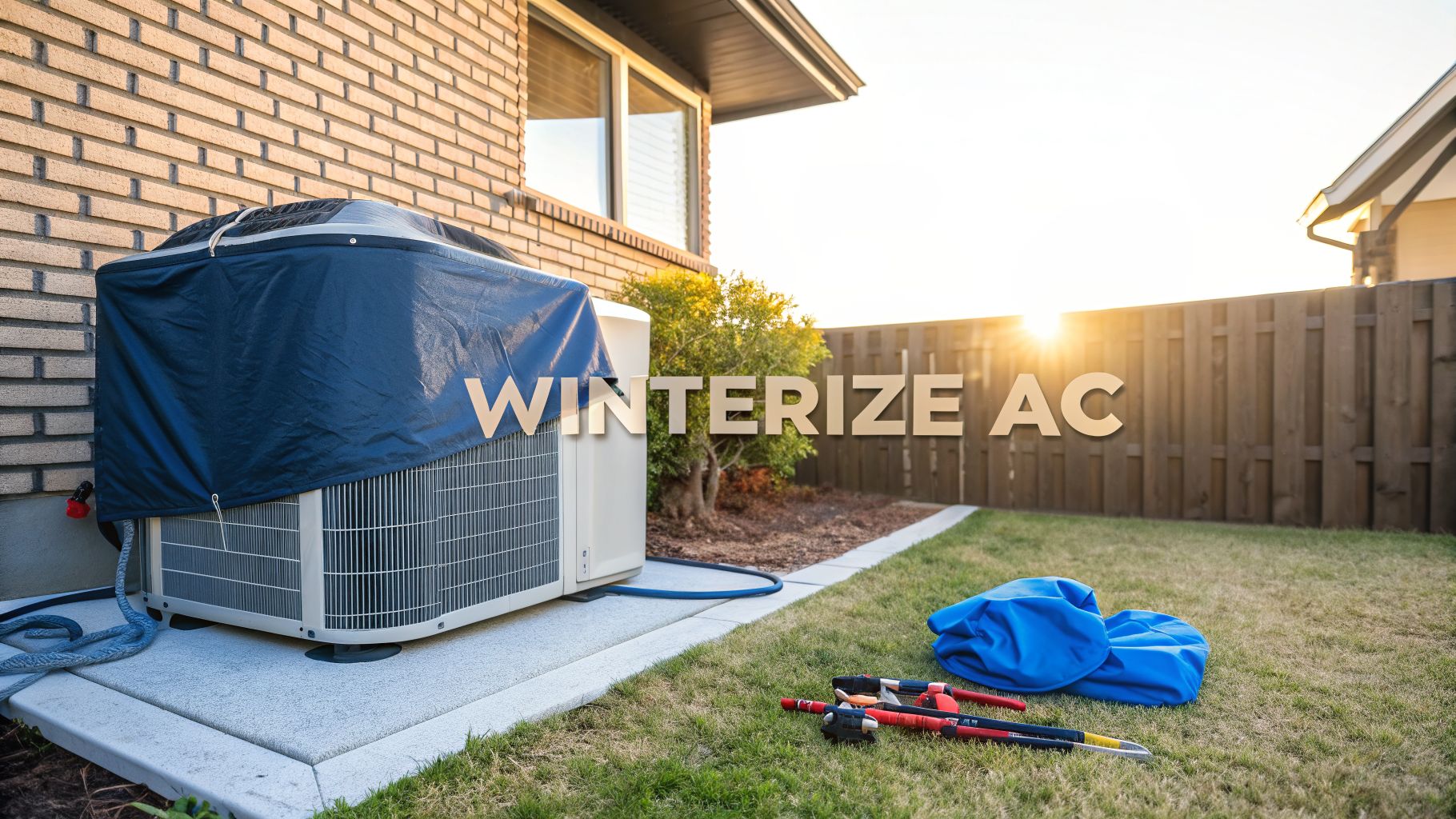
As the seasons change, Phoenix homeowners usually breathe a sigh of relief and switch their focus from cooling to heating, but there's a crucial step in between that far too many people skip. Knowing how to winterize air conditioner units, even in our mild climate, is one of the smartest things you can do to protect your investment from dust, rain, and pests. This simple bit of maintenance can save you from a world of expensive springtime repairs and make sure your system is ready to roll for the next heatwave.
Why Winterizing Your AC in Phoenix Is a Smart Move

It’s a common belief around here: since Phoenix winters are so mild, our air conditioners get a free pass. You know what? That assumption can lead to some surprisingly expensive headaches come April. While we don't deal with blizzards, our unique desert climate throws its own set of challenges at an idle AC unit.
The end of monsoon season often leaves behind lingering moisture that can settle deep inside your outdoor unit. When you combine that with our notorious dusty winds that kick up dirt and debris all fall and winter, you’ve got a perfect recipe for corrosion and component damage. Isn't it wild to think that our "easy" winters can still be so tough on our most expensive appliances?
The Hidden Risks of an Unprotected AC
Ignoring your air conditioner during its downtime isn't just a missed opportunity for a little TLC; it's an open invitation for problems to develop silently. Here’s what you’re really up against:
- Debris Buildup: Winter winds are great at packing leaves, dirt, and fine dust into your condenser coil's delicate fins. This chokes off airflow and can kill your system's efficiency next summer.
- Pest Infestations: To rodents and insects, a sheltered, unused AC unit looks like a five-star hotel for building a winter nest. Their tenancy can lead to chewed wires and clogged components, causing electrical shorts and total system failure.
- Moisture and Corrosion: Trapped moisture from our occasional winter rains or just lingering humidity can cause rust on coils, fan motors, and electrical connections. It's a slow-moving killer for your system's integrity.
Just like it’s smart to learn how to winterize your yard to protect your landscaping, giving your AC unit the same attention prevents damage and helps it last longer. Skipping this step means you might be facing a dead system on the first 100-degree day—a frustrating and totally avoidable emergency.
By taking a few simple steps to winterize, you’re not just doing a chore. You’re making a small investment that pays off in lower energy bills, fewer repair calls, and a longer lifespan for one of your home’s most expensive appliances.
Gathering Your Tools and Safety Essentials
Before you touch a single screw or hose down your AC unit, a little prep work is non-negotiable. From our experience at Comfort Experts, the jobs that go wrong are the ones where people skip the safety check or spend half the time hunting for the right tool. Let's get you set up for a smooth, safe process.
Your absolute first move is to kill all power to the outdoor unit. This isn't just a suggestion; it's a critical safety step to prevent any risk of electric shock.
Start by finding your main electrical panel and flipping the breaker labeled for your air conditioner to the "OFF" position. But don't stop there. Head outside to the disconnect switch—it's a metal box usually mounted on the wall near the condenser—and shut that off, too. This double-kill switch method guarantees there's no power reaching the unit while you work.
Your AC Winterizing Toolkit
With the power confirmed off, it’s time to round up your supplies. Having everything within arm's reach makes the job much quicker and a lot less frustrating. For a good overview of what every homeowner should probably have on hand, this guide on essential tools for homeowners is a great resource.
Here’s the specific kit we recommend for this job:
- Work Gloves: Protects your hands from dirt and the surprisingly sharp metal fins on the condenser coils.
- Hose with a spray nozzle: You'll use this to gently rinse away months of dust and grime from the coils.
- Coil Fin Comb: This little tool is a lifesaver for straightening out bent aluminum fins. Straight fins are essential for good airflow and efficiency.
- Soft Brush or Shop Vacuum: Perfect for clearing out loose leaves, stubborn cobwebs, and debris from inside the unit's cabinet.
- Screwdriver or Nut Driver: You might need one to remove the top protective grille to get better cleaning access.
- A Breathable, Waterproof AC Cover: This is your unit's winter jacket. It keeps debris out but lets moisture escape, which prevents the rust and corrosion that a simple plastic tarp can cause.
And since you’re already in a maintenance mindset, this is a great time to think about the part of your system working inside the house. You can find out how to locate and swap out that crucial component in our guide on where your air conditioner filter is located.
Step-by-Step: Winterizing Your Central Air Conditioning Unit
Alright, with your safety prep done and your tools handy, it's time to get to the main event. For most folks here in Phoenix, that means winterizing a central split-system air conditioner. This is the hands-on part, but don't sweat it—we've broken it down into a few simple, manageable jobs based on our decades of field experience.
Let's start with the single most important thing you can do for next summer's efficiency: cleaning the outdoor condenser unit. That's the big metal box in your yard that does all the heavy lifting, and after a long cooling season, it's probably caked in dust, leaves, and who-knows-what-else.
Thoroughly Clean the Condenser Unit
First things first, clear away all the obvious junk. Pull out any leaves, grass clippings, twigs, and stray garbage that have piled up around the base and on top of the unit. You need a good two feet of clear space on all sides for it to breathe properly, so don't be shy about trimming back any bushes or tree branches that are getting too close.
Once the big stuff is gone, it's time to deal with the delicate fins. Grab a soft brush or the brush attachment on your shop vac and gently wipe down the exterior fins to get rid of caked-on dust and cobwebs. Whatever you do, never use a wire brush—it will mangle the soft aluminum in a second.
Next up is a gentle rinse. Using your garden hose on a low-pressure setting, spray the fins down. If you can safely remove the top fan grille to get inside, wash from the inside out. If not, spraying from the outside is fine; just aim the water at a slight angle to avoid bending the fins. Your goal is to flush the dirt out, not push it deeper in. Honestly, this is one of those times where being gentle is far more effective than being aggressive.
If your coils are looking particularly grimy from years of dust storms, our guide on how to use a condensing coil cleaner offers some extra tips for tackling the tough stuff.
Perform a Visual Inspection
With the unit now sparkling clean, it’s the perfect time to give it a quick visual once-over. You’re just looking for any red flags that might point to a bigger problem brewing.
Keep an eye out for these things:
- Refrigerant Lines: Check the insulated copper pipes running from the unit to your house. The foam insulation should be fully intact. If you see it cracking, peeling, or missing chunks, it needs to be replaced to keep your system efficient.
- Electrical Wiring: Scan any visible wiring for fraying, cracks, or signs that rodents have been chewing on it. Damaged wiring is a major fire hazard and needs to be handled by a professional right away.
- Condenser Pad: Make sure the concrete slab your AC sits on is still level. If it’s cracking or sinking, it’s putting a lot of strain on the internal components and shortening the unit's life.
Catching these small issues now can save you from a major breakdown when the heat returns in the spring.
Cover the Unit the Right Way
The last step is to cover your clean, inspected AC unit. Let me explain: in a place like Phoenix, the type of cover you use is critical. Tossing a plastic tarp over it is one of the worst things you can do. It traps moisture from winter rain and daily condensation, creating a perfect humid environment for rust and corrosion to eat away at your system.
Believe it or not, taking a few minutes to winterize your air conditioner can extend its lifespan by up to 25-30%. Neglecting it, especially in our dusty climate, lets debris and moisture wreak havoc, which can slash its efficiency by 10-15% every year. When you consider that a typical AC lasts about 8-12 years and the global air conditioning systems market is projected to hit USD 146.5 billion in 2026, maximizing that lifespan can save you thousands.
This simple infographic shows you the safety flow before you even touch the unit.
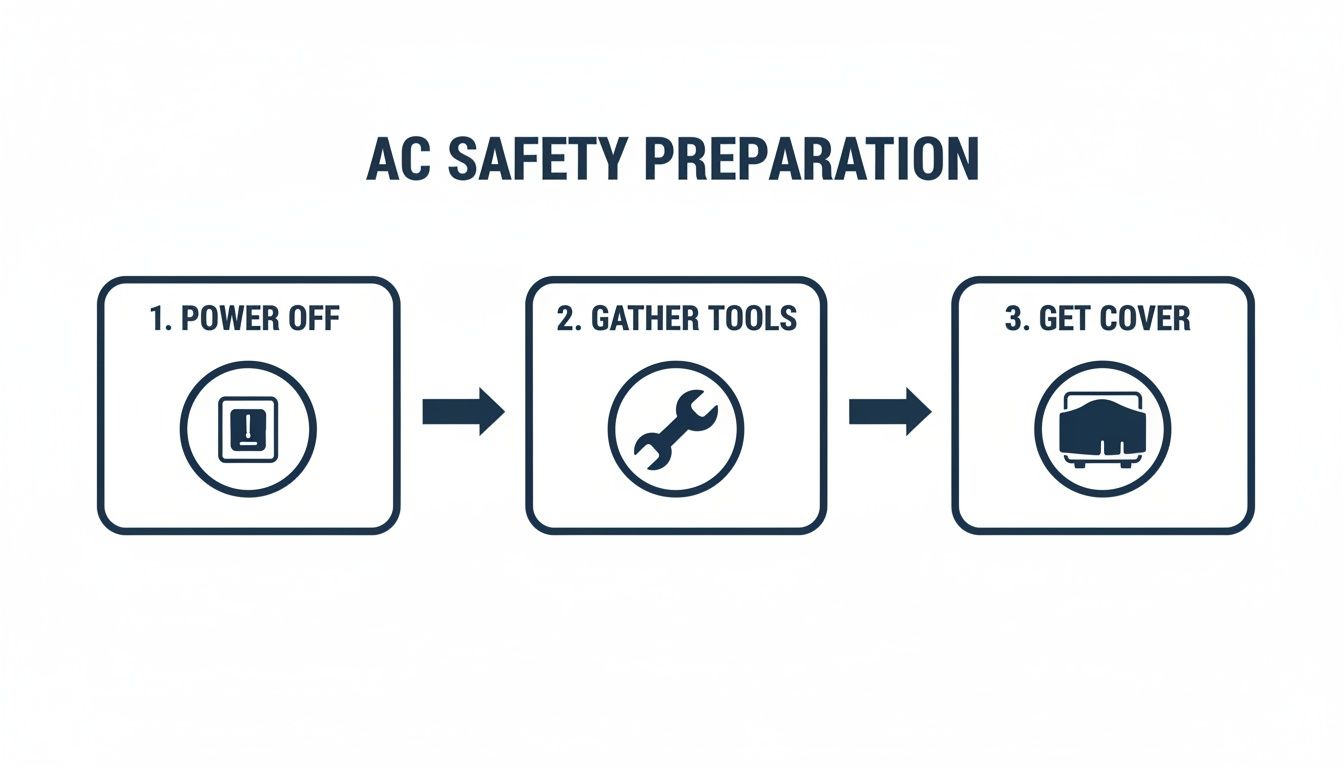
This quick prep ensures you're working safely by cutting the power, getting your gear together, and having the right cover ready to go.
To help you pick the right one, we put together this quick comparison table.
Choosing the Right AC Cover for Arizona Winters
This responsive table breaks down the common AC cover types to help you protect your unit from debris without accidentally causing moisture damage.
| Cover Type | Pros | Cons | Best For |
|---|---|---|---|
| Breathable Fabric Cover | Allows moisture to escape; prevents rust and mold; blocks debris, dust, and UV rays. | Higher initial cost than plastic tarps. | Arizona's climate, where moisture and dust are both concerns. |
| Mesh AC Cover | Excellent ventilation; keeps out large debris like leaves and twigs. | Does not block fine dust, sand, or rain. | Areas with less dust but lots of falling leaves. |
| Hard Top Cover | Protects only the top fan area from falling debris and ice. | Offers no protection for the side coils from dust or pests. | Homeowners who only want to protect the fan motor. |
| Plastic Tarp | Inexpensive and widely available. | Traps moisture, leading to significant rust, corrosion, and electrical damage. | Not recommended for any climate, especially not in Arizona. |
As you can see, a breathable cover is really the only smart choice for our climate. It gives you the best of both worlds—protection from the elements and the airflow needed to prevent a rusty, corroded mess.
Handling Ductless Mini-Splits and Window Units
Central air isn't the only game in town, and plenty of Phoenix homes rely on ductless mini-splits or window ACs to stay comfortable. If that’s you, your winter shutdown routine will look a little different from your neighbor's with a traditional split system. The steps are different, but the mission is the same: protect your equipment from our winter dust and occasional rain so it’s ready to go when the heat returns.
Winterizing Your Ductless Mini-Split System
Ductless systems are everywhere these days, with their slick indoor units and compact outdoor condensers. They're a fantastic solution for many homes, and you can see exactly how a ductless mini-split compares to central air if you're curious about the technology.
When it's time to put your ductless system to bed for the winter, you’ve got to tackle both the inside and outside components.
Just like a central unit, start by flipping the dedicated breaker in your electrical panel. This cuts all power and is the most important safety step. Next, head outside to the condenser.
- Clean the Outdoor Unit: Use a brush or your hands to clear away any leaves, twigs, or debris that have piled up around the condenser. A gentle spray from your garden hose is perfect for washing away the fine dust that builds up over a long cooling season.
- Cover the Condenser: Grab a breathable, waterproof cover made specifically for mini-split condensers. A proper cover keeps rain and dirt out but allows air to circulate, which is key to stopping moisture from getting trapped inside and causing corrosion.
Inside, the job is even easier. Pop open the front panel on each wall unit and pull out the filters. A quick wash with warm, soapy water is all they need. Let them air dry completely before putting them back in. This simple step keeps a winter's worth of dust and allergens from settling in your system. Lastly, just make sure the unit is turned off with its remote.
Properly Storing a Window AC Unit
Here's the thing: the absolute best thing you can do for a window air conditioner is to take it out for the winter. Leaving it installed is like having an open door for cold air. It creates a massive draft, lets in rain, and can even become a doorway for pests, all while making your heater work overtime.
Removing the unit not only seals up a significant air leak in your home but also gives you the best opportunity to clean and store it properly, which can dramatically extend its lifespan. It's an extra bit of effort that pays off all winter long.
To get it done right, unplug the unit first. Then, get a helper—these things are always heavier and more awkward than they look—and carefully lift it out of the window frame.
Once it’s out, give it a good cleaning. Wipe the case, vacuum the coils, and wash the filter. Store it upright in a dry spot like your garage or a closet, and throw its original box or a simple cloth over it to keep it from becoming a dust magnet.
When You Cannot Remove a Window Unit
Sometimes, getting that heavy window unit out just isn't in the cards. If it has to stay put, your goal shifts to sealing it off from the elements as thoroughly as possible from both the inside and the outside.
Your first line of defense is a fitted exterior cover. These are designed to wrap snugly around the outdoor portion of the AC, shielding it from wind, rain, and blowing debris.
Then, head inside and use a padded interior cover or some weather-stripping foam to block every single gap around the unit's frame. This two-part strategy will minimize drafts and protect the unit’s components until you need it to start cooling again next spring.
Common Winterizing Mistakes Phoenix Homeowners Make
You’d be surprised what we see out in the field. After years of service calls across Phoenix, our Comfort Experts technicians have found that most AC damage doesn't come from bad luck—it comes from a few common, well-intentioned mistakes. It’s frustrating to think you’re protecting your AC, only to find out you’ve accidentally set it up for a failure next summer.
Avoiding a few simple mistakes is just as important as getting the steps right. Let's walk through the slip-ups we see most often so you can sidestep them completely.
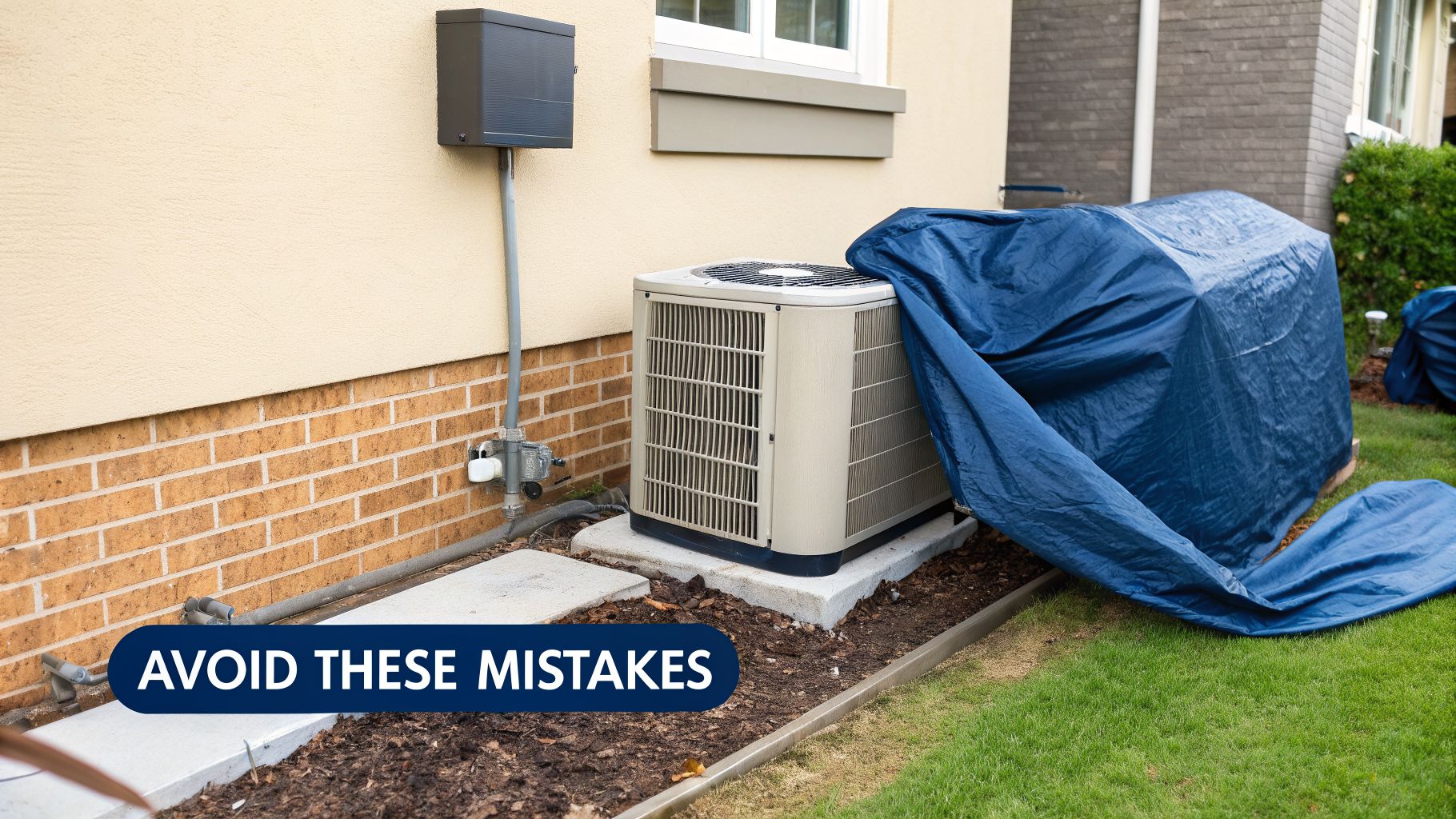
Using the Wrong Cover—Or No Cover at All
This is, without a doubt, the number one mistake we run into. A lot of homeowners either leave their unit completely exposed or, almost as bad, throw a big plastic tarp over it and call it a day. An uncovered unit is just a big open invitation for dust, leaves, and monsoon moisture. That debris mixes into a corrosive sludge that eats away at your coils all winter long.
But a plastic tarp is a moisture trap. It seals humidity in, creating a personal rainforest for your AC. This is a fast track to rusted components and fried electrical connections. The right move is a breathable fabric cover. They block 90% of debris while letting condensation escape, preventing the kind of corrosion we see under tarps all the time.
Forgetting the Power Disconnect
We can’t say this enough: you have to shut off the power at both the circuit breaker and the outdoor disconnect box. It's a critical safety step people often skip. Even with your thermostat off, the unit can still have live power running to it. That’s a serious risk of electric shock, especially when you’re cleaning with a hose or touching anything inside the unit. It’s a five-second step that guarantees your safety.
Cleaning Coils with a Pressure Washer
It’s so tempting to blast a season’s worth of dust off with a pressure washer, but this is one of the most damaging things you can do to your AC. The high-pressure stream will instantly flatten the delicate aluminum fins on your condenser coil. Bent fins choke off airflow. Your AC has to work much harder to cool your home, which means higher power bills and a much shorter lifespan for the whole system.
"The single most damaging mistake I see is when homeowners use a pressure washer on the condenser fins. Those thin aluminum sheets bend with the slightest force. Once flattened, they block airflow, forcing the compressor to work harder and hotter, which can lead to a complete system failure. A gentle spray from a garden hose is all you ever need." — A Comfort Experts Field Technician
Proper winter care isn't just about avoiding damage; it's a smart investment. We see 35-40% fewer repair calls the following season for systems that were properly shut down. Considering winter exposure can speed up component wear by 20-25%, this is a huge deal in places like the U.S., where units are often replaced every 8-12 years. You can get more insights into the air conditioner market trends to see just how much our climate puts these machines to the test.
When to Call a Professional for Your HVAC System
Knowing how to winterize air conditioner systems is a fantastic skill for any homeowner, but there are times when a DIY approach just won’t cut it. Even a system that seems to be running fine can have underlying issues that only a trained eye will catch. Learning to spot the difference between a simple tune-up and a real problem can save you from a much bigger, more expensive headache down the road.
Your AC will often give you hints that something’s wrong. It’s on you to listen. If you start hearing any new or unusual noises—think grinding, squealing, or a loud bang when the unit shuts off—that’s a major red flag. The same goes for any visible fluid pooling around the outdoor condenser or signs of electrical trouble, like frayed or burnt-looking wires. These are not issues to tackle on your own.
The Value of a Professional Tune-Up
DIY winterizing is like brushing your teeth—it’s crucial daily maintenance. A professional tune-up, on the other hand, is like going to the dentist for a full cleaning and check-up. It's a deep-dive health assessment for one of your home’s most vital and expensive appliances.
A maintenance visit from a Comfort Experts technician goes way beyond what a homeowner can do with a garden hose and a cover. We run a complete system diagnostic that covers tasks homeowners simply can’t, like:
- Checking Refrigerant Levels: Low refrigerant—often called Freon—is almost always a sign of a leak. This not only cripples your cooling efficiency but can destroy the compressor over time.
- Securing All Electrical Connections: Loose electrical connections are a serious fire hazard and a common cause of system failure. We go through and tighten every single one.
- Lubricating Moving Parts: Properly lubricated fan motors and other components reduce friction, which means less energy use and a longer lifespan for those parts.
- Testing System Controls: We make sure your thermostat, safety switches, and system controls are all communicating correctly to prevent short-cycling and other damaging operational glitches.
Understanding the right service frequency is also key to preventing major problems. Our guide on how often your HVAC system should be serviced lays out a clear timeline for keeping your system healthy year-round. While DIY care is a fantastic habit, it’s not a substitute for the deep diagnostics and preventative care a trained technician provides. It’s not an upsell; it’s a complete health strategy for your HVAC investment.
If you've noticed any of the warning signs we mentioned or just want the peace of mind that comes from a professional inspection, don't hesitate. You can give Comfort Experts a call at 480-207-1239 or schedule service online today to ensure your system is truly ready for the seasons ahead.