That musty smell coming from your vents isn't just an annoyance; it’s your AC’s way of signaling that something is wrong, and it's usually a sign that it's time to learn how to clean mold out of an AC unit. An air conditioner’s dark, damp interior is the perfect environment for mold to thrive, especially here in Arizona, and if ignored, your system will just keep circulating those spores through your home, creating real risks for your family's health.
The Unseen Dangers of AC Mold Growth
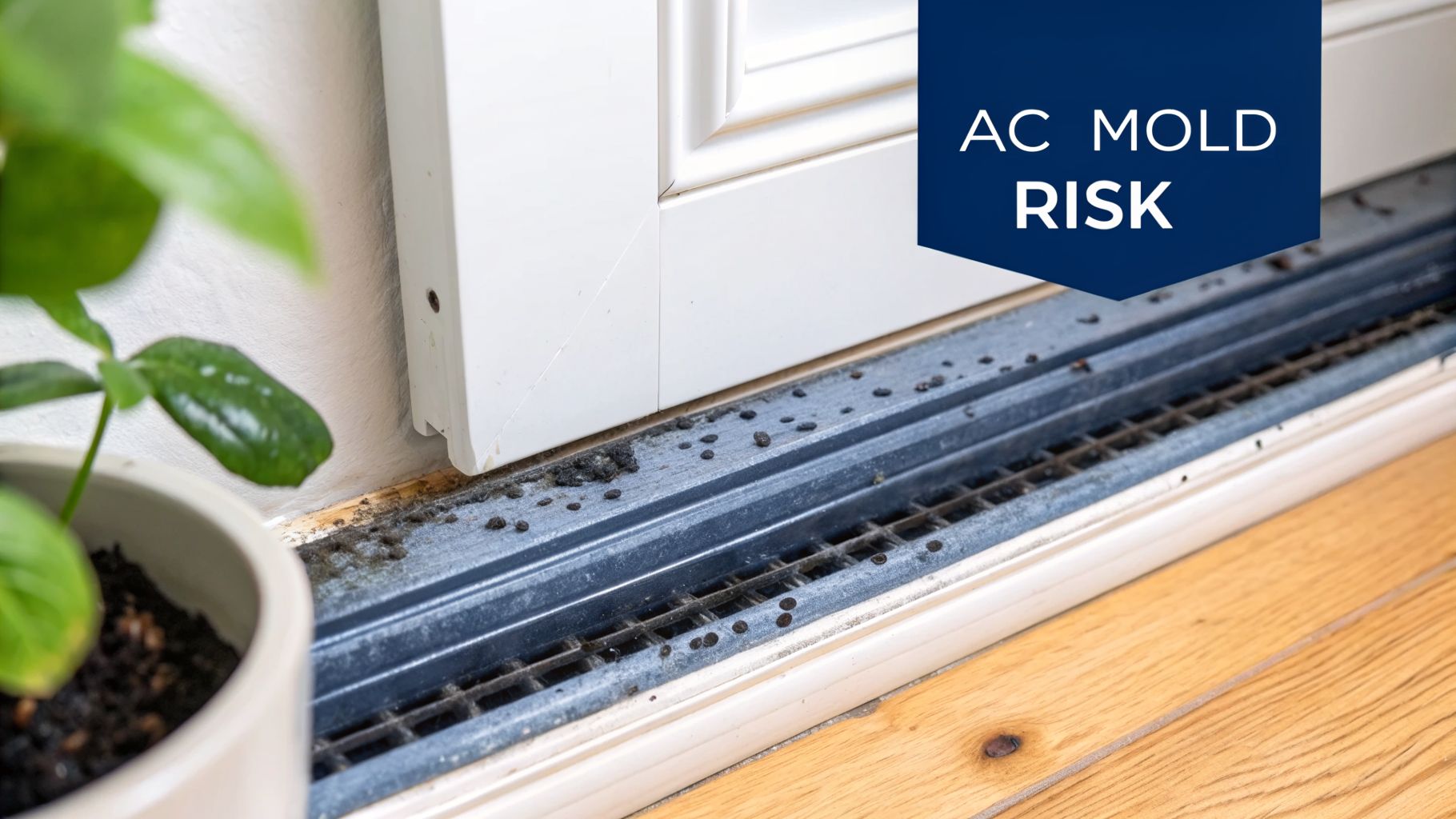
Have you ever stopped to think about what’s actually happening inside your air conditioner? Your AC unit is a perfect recipe for mold growth by combining three key ingredients: warmth, darkness, and moisture. During Phoenix’s relentless summer heat and humid monsoon season, your AC is running almost nonstop. This constant cooling process naturally creates a ton of condensation on the evaporator coils and in the drain pan.
Honestly, that constant moisture is the real culprit. If your system can't drain it away properly because of a clog or some other issue, you end up with standing water. It only takes 24-48 hours for that damp, dark environment to start growing mold.
Why AC Mold Is a Health Concern
Finding mold in your HVAC system is a serious problem. As air blows over those moldy parts, it picks up microscopic spores and blasts them into every single room in your house. As an established HVAC company serving the Phoenix area for years, we at Comfort Experts have seen firsthand how this impacts families. Both the EPA and CDC have issued clear warnings about the health risks tied to indoor mold exposure, confirming what we see in the field.
These airborne spores can trigger or worsen a whole host of health issues, including:
- Persistent coughing and wheezing
- Nasal congestion and sinus infections
- Asthma attacks and allergic reactions
- Skin irritation and rashes
Some of the most common molds we find in HVAC systems include allergenic types like Aspergillus and the notorious toxic black mold, Stachybotrys chartarum. Even a small patch you can't see can ruin your home’s air quality. If you're already worried about how allergens affect your family, learning about the best air purifiers for allergies can offer another layer of protection.
According to the U.S. EPA, you should routinely inspect your HVAC systems, not just for mold, but for moisture. Look at the drain and condensate pans to ensure they are draining properly. If they are clogged, the accumulating moisture will become a mold factory.
Safety and Supplies for AC Mold Cleaning
Before you touch a single part of your AC unit to clean out mold, we need to talk about safety. Seriously. This isn't like wiping down a dusty shelf; you're dealing with live electrical components and nasty mold spores that you don't want floating around your house.
Your absolute first move, no exceptions: kill the power to your HVAC system. Head straight to your home's main circuit breaker and flip the switch for your AC. This isn't a suggestion—it’s the only way to eliminate the risk of a serious electrical shock, a protocol we follow on every single service call.
With the power safely off, the next step is to protect yourself. The moment you start scrubbing, mold spores will go airborne. You can't see them, but you definitely don’t want to be breathing them in.
This is the bare minimum Personal Protective Equipment (PPE) we tell our own techs to use:
- N95 Respirator Mask: A simple paper dust mask won't cut it. An N95 is designed to filter out the microscopic spores you’re about to stir up.
- Safety Goggles: You need to protect your eyes from both airborne mold and any cleaning solutions that might splash back.
- Waterproof Gloves: A good pair of rubber or nitrile gloves will keep the gunk and chemicals off your skin.
Assembling Your Cleaning Tools
Once you're geared up, it's time to gather your supplies. Having everything within arm's reach makes the job go a whole lot faster.
For the cleaning solution itself, you have a couple of solid options. For very light, surface-level mold, a simple 50/50 mix of white vinegar and water in a spray bottle can work. For anything more significant, we strongly recommend an EPA-approved commercial cleaner made specifically for HVAC systems. You can also check out our guide on choosing a good condensing coil cleaner for more professional-grade choices.
Understanding the right way to handle mold is key, no matter where you find it. This excellent guide on how to remove mold from siding offers some great general safety tips and methods that apply here, too.
It's easy to forget that mold in your AC is more than just a gross sight—it's a real health risk. Here in the Phoenix Valley, where ACs run almost nonstop, this problem is incredibly common. In fact, some studies show that up to 70% of HVAC systems in humid climates can develop mold without regular maintenance. That's a staggering number, and you can see more in this helpful resource about AC mold and mildew.
Cleaning Accessible AC Components Yourself
Alright, let's get our hands dirty. Once you’ve cut the power to your AC and have your safety gear ready, you can start tackling the most common places mold likes to hide. A little proactive cleaning in these easy-to-reach spots can make a huge difference in your home's air quality and stop a small problem from turning into a full-blown infestation.
Before you even think about grabbing a brush, though, let’s be crystal clear on the safety protocol. This isn't a step you can afford to skip.
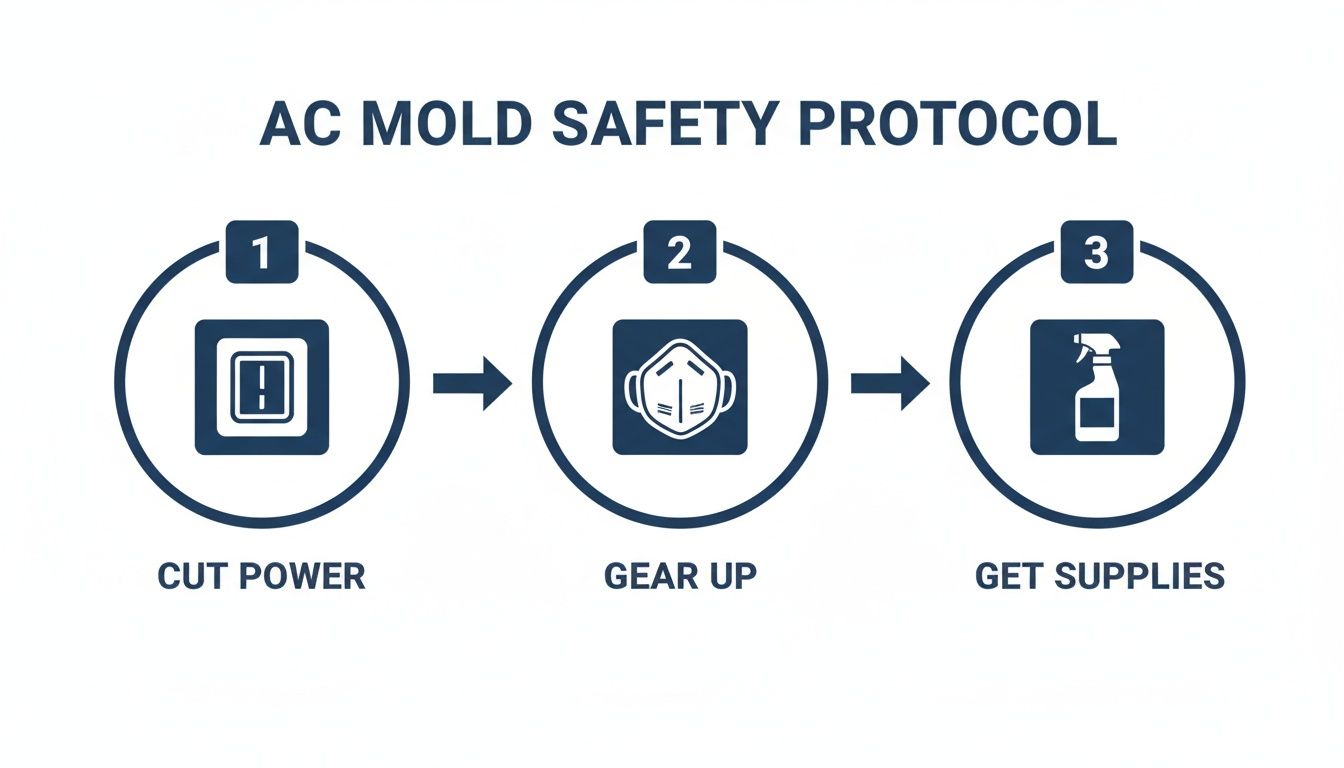
Think of it this way: safety isn't an afterthought, it's step zero. Power off, mask on, and supplies at the ready. Only then are you ready to get to work.
To keep things straightforward, here's a quick plan of attack for the key areas you'll be cleaning.
DIY Mold Cleaning Action Plan
This table breaks down where to focus your efforts, what to do, and a key tip from our team of experienced technicians for getting it right.
| Component | Action Required | Expert Tip |
|---|---|---|
| Condensate Drain Pan | Soak up any standing water with towels or a wet/dry vac. Scrub the pan clean with an approved cleaner. | Standing water is your #1 red flag. A dry pan is a healthy pan. We see this daily. |
| Condensate Drain Line | Use a wet/dry vac on the exterior drain outlet to suck out clogs of algae and gunk. | After clearing, pour 1 cup of distilled vinegar down the line to kill residual gunk. |
| AC Filter | Replace disposable filters if moldy. Wash reusable ones outside with mild soap and water. | Never try to clean a moldy disposable filter. Just bag it and toss it immediately. |
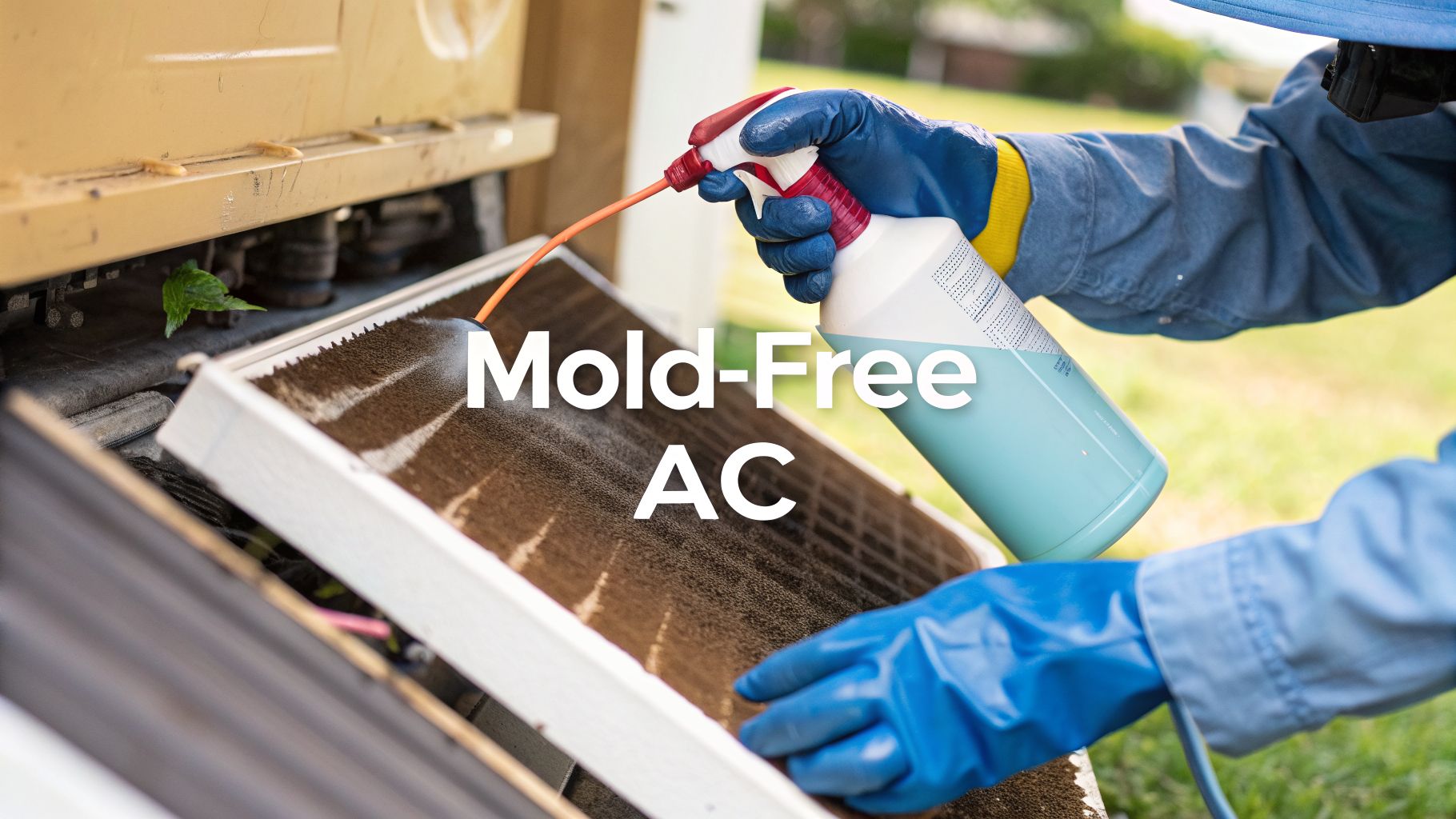
| Evaporator Coils | Lightly spray with an EPA-approved, no-rinse coil cleaner. Let it foam and drip clean. | Less is more. Don’t drench the coils; a light, even coat is all you need to avoid damage. |
With this game plan, you can tackle each area methodically and make sure you don't miss a thing.
Tackling The Condensate Drain Line And Pan
Your condensate drain system is basically ground zero for mold. Its job is to move moisture out, but the moment it gets clogged, water backs up and creates a swampy breeding ground. It's the first place we always check on a service call.
Start by finding the drain pan—it's that shallow tray right under your indoor air handler. See any standing water? That’s your sign of a clog. The first job is to get that stagnant water out of there using old towels or, even better, a wet/dry shop vacuum.
Next up is the PVC drain line that leads away from the pan. The best trick we know for clearing this is to take your wet/dry vac outside to where the pipe exits your home. Create a good seal around the pipe with your hand or a rag and turn the vacuum on. Let it run for a minute or two. The suction is usually powerful enough to pull even a stubborn, gunky clog right out.
Expert Tip: After clearing the line, pour a cup of distilled white vinegar down the pipe from the indoor unit side. This helps kill any lingering mold or algae and keeps the line clear for longer.
Cleaning Your AC Filter And Evaporator Coils
While a dirty filter doesn't directly grow mold, it chokes off airflow, which can make condensation problems worse. If your disposable filter has any mold on it, don't even try to clean it. Double-bag it, seal it, and get it in the trash. If you have a washable filter, take it outside and give it a good cleaning with a gentle detergent and water, then let it dry completely before putting it back.
The evaporator coils are probably the most delicate part you'll clean. Mold can hide in all sorts of nooks and crannies, and the principles for cleaning it are similar whether it's in your AC or you're finding, removing, and preventing mold behind baseboards.
Using your EPA-approved coil cleaner, give the coils a light spray—you want to coat them, not soak them. The foam will expand, lifting off dirt and mold, which then drips down into your freshly cleaned drain pan to be flushed away. If you're not sure where your coils are, our guide on locating the evaporator coils can help you find them.
Once everything is clean, the absolute most critical step is to let everything dry completely. If you put your unit back together while it's still damp, you're just rolling out the welcome mat for mold to return. Be patient here; it ensures all your hard work actually pays off.
When to Call a Professional HVAC Technician
DIY cleaning is great for tackling a little surface mold you might spot on the drain pan or a dirty filter. But knowing where that DIY job ends and a professional one begins is absolutely critical—both for your family’s health and the life of your HVAC system.
Here’s the thing: trying to attack a deep-seated mold problem without the right training or equipment can backfire spectacularly. Improperly cleaning a serious infestation can disturb and aerosolize a massive cloud of mold spores, blasting them straight into your home’s air supply. You can easily make the air quality exponentially worse than it was before you started.
Red Flags That Signal a Professional Is Needed
There are clear signs when a mold issue has moved beyond a simple weekend fix. If you run into any of these situations, it’s time to put down the cleaning spray and pick up the phone.
- A Persistent Musty Odor: You've cleaned all the accessible parts, but that damp, "basement" smell still hits you every time the AC kicks on. This is a classic sign the mold is hidden deep inside the system where you can't reach.
- Visible Mold on Internal Components: Spotting a little mold on a vent is one thing. But if you peek inside your air handler and see fuzzy growth on the blower fan or deep between the fins of the evaporator coil, that’s a job for a pro.
- Widespread Mold Growth: If you see mold spreading beyond a small, isolated patch and starting to cover large surfaces inside your unit, the infestation is too advanced for DIY methods.
- Family Members with Worsening Symptoms: Are allergy or asthma symptoms suddenly getting worse at home? This can be a direct result of mold spores being circulated by your AC, which points to a significant problem that needs to be handled correctly by certified experts.
Trying to clean these areas yourself is a risk that just isn't worth taking. Professional HVAC technicians, like our team at Comfort Experts, have specialized equipment designed for safe and total mold removal.
The EPA specifically warns against homeowners disturbing significant mold growth in HVAC systems. Without proper containment procedures, you risk cross-contaminating your entire home, turning a localized problem into a widespread health hazard that is much more difficult and expensive to resolve.
The Professional Advantage
Calling a certified technician isn't giving up; it's the smartest, safest move you can make when dealing with serious mold. We show up with tools and expertise that simply aren’t available to the average homeowner.
A professional cleaning is a world apart from a DIY attempt. It’s unsettling to think about, but turning on the AC and breathing in musty, mold-filled air is more common than you’d think—it strikes an estimated 40% of U.S. homes with central air. The difference in results is stark: HVAC technicians using specialized tools can remove up to 99% of contaminants, a huge leap from the 40-50% removal rate you might get with DIY methods, as highlighted in these insights on mold in air conditioners.
We use gear like:
- Borescopes: Tiny cameras that let us inspect deep inside your ductwork and internal components, finding every last bit of hidden mold.
- HEPA Vacuums: These are high-powered, sealed vacuums that capture microscopic spores, ensuring they are removed from your home for good, not just stirred up.
- EPA-Registered Antimicrobial Treatments: We use professional-grade solutions that kill mold at the source and inhibit future growth—far more powerful than anything you can buy at the store.
If you're looking at a mold situation that feels out of your depth, it probably is. You can learn more about what a professional visit entails in our guide on what to expect from an AC repair service.
Preventing Future AC Mold Growth
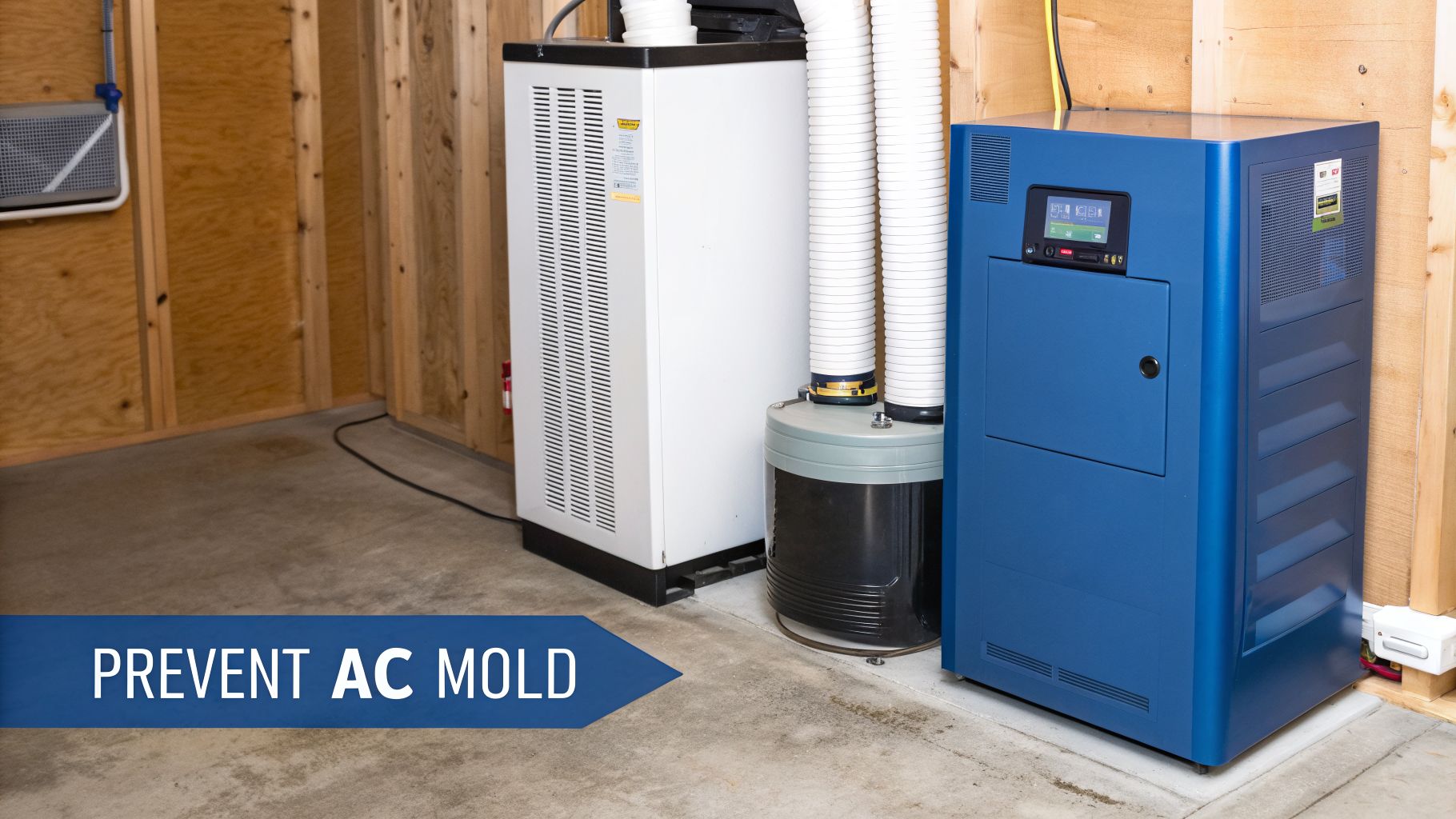
Getting all the visible mold out of your AC unit is a great first step, but the job isn't done. The real win is making sure you never have to do it again. You know what? Switching from a reactive "clean-it-when-I-see-it" mindset to a proactive one is the only way to break the cycle for good.
This means you stop giving mold what it needs to survive in the first place: moisture and food. By controlling the conditions inside your HVAC system, you can turn it from a perfect breeding ground into a place where spores simply can't take hold.
Control Moisture and Humidity
Moisture is the number one thing mold needs to grow. Here in the Phoenix Valley, summer humidity spikes during monsoon season, turning your hardworking AC into a damp, cool environment—exactly what mold loves. Keeping your system and your home dry is your best defense.
Here are a few strategies that actually work:
- Keep Your Condensate Line Clear: Check your drain line regularly to make sure it isn't clogged. An easy trick is to pour a cup of distilled white vinegar down the line every month or two. This helps break up any sludge or algae before it creates a backup.
- Consider a Whole-Home Dehumidifier: These systems are a game-changer. They tie directly into your HVAC system to automatically pull excess moisture out of the air, keeping your home’s humidity below the 50% threshold mold needs to thrive.
- Ventilate, Ventilate, Ventilate: Always use the exhaust fans in your kitchen and bathrooms when cooking or showering. This sends all that steamy air straight outside instead of letting it get sucked back into your AC system to cause problems.
Invest in Advanced Air Quality Solutions
Beyond just managing moisture, modern Indoor Air Quality (IAQ) technology gives you a powerful, active defense. These systems are installed right inside your HVAC unit to continuously sanitize the internal components and the air passing through them.
Don't forget, this isn't just about health—it's about your wallet. A 2026 Trane study showed that mold can cut an HVAC system's efficiency by up to 25%. For a typical Phoenix home, that could mean an extra $200-$500 on your yearly power bills.
Let's look at the two most effective IAQ solutions we install for our customers.
High-MERV Filtration
Your standard, cheap fiberglass filter is only meant to catch large dust bunnies. It does almost nothing to stop microscopic mold spores. Upgrading to a filter with a higher MERV (Minimum Efficiency Reporting Value) rating makes a huge difference.
- MERV 8-10: A good upgrade that will trap dust, pollen, and some of the larger mold spores.
- MERV 11-13: An excellent choice for most homes. These filters are fine enough to capture smaller particles like pet dander, bacteria, and the vast majority of mold spores.
Of course, a better filter only works if you change it. Checking your filter monthly is a non-negotiable habit. If you're not sure how, our guide on where your air conditioner filter is located can help you find it in a few minutes.
UV Light Purifiers
UV-C light is one of the most powerful tools we have for preventing mold. We install these special lamps right inside your air handler, where they shine germicidal ultraviolet light directly onto the evaporator coil and drain pan.
Think of a UV light as a 24/7 security guard posted at the wettest, darkest parts of your AC. It destroys mold, bacteria, and viruses the moment they try to settle, stopping growth before it ever has a chance to start. This technology keeps the inside of your system sterile.
At the end of the day, preventing mold is far easier and cheaper than cleaning up another major infestation. When you combine simple moisture control with better filtration and a UV purifier, you create multiple layers of defense that keep your system clean, your air healthy, and your family safe.
Frequently Asked Questions About AC Mold
Once you've tackled a DIY AC cleaning, a few questions almost always pop up. It’s one thing to follow the steps, but another to feel truly confident you’ve solved the problem for good.
Here are the most common things Phoenix homeowners ask our team at Comfort Experts after they’ve dealt with AC mold.
Can I Just Spray Bleach on AC Mold?
This is the number one question we get, and the answer is a hard no. We see the logic—bleach kills germs, right? But it’s the absolute wrong tool for an HVAC system. Let me explain.
For one, bleach is highly corrosive. It can eat away at the delicate aluminum fins on your evaporator coils and damage other sensitive metal parts. Even worse, bleach is mostly water. If you don't get it perfectly dry, you’re just leaving behind moisture that will kickstart a new round of mold growth, sometimes worse than the first.
The bottom line is that bleach is not a permanent solution. It can cause corrosion on metal AC parts and its high water content can ironically become a source of moisture for future mold growth if not completely dried.
Our technicians use EPA-registered antimicrobial treatments made specifically for HVAC systems. They are far safer for the equipment and much more effective at eliminating mold at its source.
How Often Should My AC Be Checked for Mold in Phoenix?
Here in the Phoenix area, our air conditioners run under incredible stress for months on end. That kind of workload makes a proactive schedule essential.
We recommend a professional HVAC inspection twice a year. The first should be in the spring, right before the summer heat arrives, and the second in the fall after your system has just finished a long, hard season.
This biannual schedule gives a trained technician the chance to spot small issues—like a slowly draining condensate line or early signs of moisture—before they explode into a major mold problem.
Will a New Air Filter Fix My Mold Problem?
No, a new filter alone won't get rid of an existing mold infestation. It’s better to think of your air filter as playing defense, not offense.
A clean, high-MERV filter is fantastic at preventing new mold spores, dust, and other junk from getting into your system in the first place. But if mold has already set up a colony on your coils, in the drain pan, or inside your ductwork, a filter can’t do anything to remove it.
You have to completely eliminate the existing mold first. Then, a fresh, high-quality filter will be your best friend in helping to keep the system clean going forward.
Don't let mold compromise your home's air quality or your peace of mind. If you’re seeing signs of mold or just want the assurance that your system is clean and safe, the team at Comfort Experts is here to help. Give our local team a call at 480-207-1239 or schedule service online to get professional help today.