When the Phoenix heat is relentless, your air conditioner isn't just a luxury—it's an absolute necessity. So, when you're told you might need an air conditioner compressor replacement, it can feel pretty overwhelming. Understanding what this part actually does is the first step to getting things back on track and making a smart, confident decision for your home.
The Role of Your AC Compressor

Think of the compressor as the powerful heart of your cooling system. Its one and only job is to pump refrigerant—the lifeblood of your AC—through the system to move heat from inside your home to the outside. Without that pumping action, the cooling cycle simply can't happen, and your entire system grinds to a halt.
Let me explain: this whole process is about pressure and temperature. The compressor pulls in low-pressure, cool refrigerant gas from your indoor unit (the evaporator coil) and, just as its name implies, squeezes it hard. This action dramatically jacks up the gas's pressure and temperature, turning it into a very hot, high-pressure gas ready to do its job.
The compressor doesn't create cold air. It just creates the right conditions for the refrigerant to absorb and release heat, which is the magic behind how air conditioning really works.
From Hot Gas to Cool Air
Once that hot gas leaves the compressor, it travels to the condenser coils in your outdoor unit. The big fan on top blows air across those coils, pulling heat away from the superheated refrigerant. As it cools down, the refrigerant condenses into a high-pressure liquid.
This liquid then flows through a tiny device called an expansion valve, which causes a rapid drop in pressure and temperature, flashing it into a cold, low-pressure mist. Finally, this frigid refrigerant enters the indoor evaporator coil. It’s here that it soaks up the heat from your home's air, giving you that cool, refreshing relief you feel. Then the cycle starts all over again.
If you want to get a bit deeper into the substance that makes this all possible, you might find our guide on what Freon is and how it works helpful.
Why This Matters in a Fast-Moving Market
This critical component is at the center of a huge, growing industry. New energy efficiency standards are pushing for major advancements, and the global HVAC compressor market is expected to jump from USD 22.8 billion in 2025 to USD 34.64 billion by 2034.
Here in Phoenix, where nearly 90% of homes depend on central air, these upgrades make a real difference. For example, replacing a 10-year-old compressor with a modern, efficient one can slash annual cooling bills by $300-$500. You can find more details about these trends in this HVAC compressor market analysis.
Recognizing the Signs of Compressor Failure

Your air conditioner rarely just dies without a fight. Long before it gives up completely, it sends out distress signals—subtle changes, weird noises, and other clues that something is seriously wrong. Learning to spot these warning signs is the key to avoiding a total meltdown during a brutal Phoenix summer.
Honestly, catching these issues early can be the difference between a manageable repair and a far more expensive air conditioner compressor replacement. When the heart of your AC is struggling, it will let you know. The trick is to listen closely and act fast.
Strange Noises From the Outdoor Unit
One of the most obvious red flags is the sound your system makes. You’re probably used to the gentle hum of your outdoor unit kicking on. Any new, alarming sounds are a clear sign that the compressor is in trouble.
- Loud Banging or Clanking: This isn't just a rattle. A loud metallic bang often means internal parts, like a piston or connecting rod, have broken loose. This is a critical mechanical failure, and you should shut off your AC immediately to prevent the unit from tearing itself apart.
- Hissing or Screeching: A piercing, high-pitched screech can signal a dangerous refrigerant leak. The compressor operates under extreme pressure, and a leak can cause it to fail catastrophically. Don't ignore this sound.
- Rumbling or Grinding: This is the sound of metal-on-metal friction, suggesting the motor's bearings are shot. Without proper lubrication, the bearings will cause the compressor to overheat and seize up for good.
These noises aren't just minor annoyances; they're urgent warnings. If you notice these kinds of changes, it might be time to think about more than a quick fix. Our guide on the signs you need to replace your air conditioner can help you decide if it's a bigger problem.
Performance Problems You Can Feel
Sometimes the signs are less about what you hear and more about what you feel—or, more accurately, don't feel. A failing compressor directly sabotages your AC's ability to cool your home, leading to some pretty obvious performance issues.
The classic symptom is warm air blowing from your vents. If the compressor isn't pressurizing the refrigerant, the entire cooling cycle is broken. Your system is basically just an expensive fan, circulating stale, room-temperature air.
Another dead giveaway is frequent circuit breaker trips. The compressor is a power-hungry component. As it starts to fail, it works harder and draws even more electricity, overloading the circuit and tripping the breaker as a safety measure.
If you have to reset your AC’s breaker more than once, it’s not a fluke. It's a clear sign of a serious electrical problem inside the unit, and it often points directly to a struggling compressor motor.
Finally, you might just notice reduced airflow or weaker cooling in general. A dying compressor simply can't keep up, especially when it’s trying to battle Arizona's relentless heat.
To help you connect the dots, we've put together a quick reference table. This can help you describe the problem when you call a technician.
Common AC Compressor Failure Symptoms and What They Mean
| Symptom You Notice | What It Could Mean for Your Compressor | Level of Urgency |
|---|---|---|
| Loud Banging/Clanking | Loose or broken internal components (e.g., piston, crankshaft). | High – Shut down the system immediately. |
| Warm Air from Vents | The compressor is not pumping refrigerant correctly or has failed. | High – Your AC is non-functional. |
| Constant Breaker Trips | Electrical overload; the compressor motor is overheating or has a short. | High – Poses an electrical fire risk. |
| Screeching or Hissing | High-pressure refrigerant leak, potentially dangerous. | High – Turn off the unit and call for service. |
| Reduced Airflow | The system is struggling to complete the cooling cycle. | Medium – Indicates developing problems. |
Recognizing these symptoms gives you a head start. Instead of waiting for a complete breakdown, you can get a professional diagnosis and make an informed decision before the situation gets worse.
Why AC Compressors Fail in Arizona
If you want to understand what kills an AC compressor, just look outside. The mix of relentless Phoenix heat and fine desert dust creates a uniquely brutal environment for HVAC equipment, pushing it to the absolute limit day after day.
A compressor doesn't just spontaneously decide to quit. Its failure is almost always the last step in a long, slow battle against heat, friction, and electrical stress. Let's walk through the common culprits we see causing trouble in Arizona homes.
The Problem of Refrigerant Leaks
Think of refrigerant as the lifeblood of your air conditioner. It’s a special fluid that not only carries heat out of your house but also circulates oil to lubricate the compressor's moving parts. When a leak develops and the refrigerant level drops, the compressor is essentially starved.
Forced to run with low refrigerant, the compressor has to work much harder to even try to cool your home, causing it to overheat. It's like making an engine run without enough oil. The friction and heat build-up inside until the mechanical parts eventually grind to a halt and seize completely. This is one of the most destructive—and most common—causes of compressor death we encounter.
The single most important takeaway for any Phoenix homeowner is that regular maintenance is not optional—it's essential for survival. An annual check-up allows a technician to spot and fix small refrigerant leaks before they have a chance to destroy your compressor.
For more on this, take a look at our guide on AC maintenance tips specifically for Arizona residents.
Overheating and Electrical Failures
Your AC’s electrical system is like its nervous system, and it takes a real beating in our climate. The compressor motor needs a clean, steady supply of power to do its job, but a few common issues can disrupt that flow and lead to a total burnout.
- Power Surges: Our summer monsoon storms are notorious for causing power surges. These sudden jolts of electricity can fry the delicate copper windings inside the compressor motor in an instant.
- Worn-Out Components: Parts like capacitors and contactors, which give the compressor the electrical "kick" it needs to start and run, wear out over time. When a start capacitor fails, the compressor might hum and struggle to turn on, overheating as it repeatedly tries and fails.
- Dirty Condenser Coils: The big outdoor unit is designed to dump all the heat from your home into the outside air. If those coils are caked in dust and debris (a constant battle here), the heat gets trapped. This forces the compressor to run hotter and longer than it was ever meant to, leading straight to electrical failure.
An air conditioner compressor replacement is more than just a repair; it’s a significant investment in your home’s comfort and efficiency. This is especially true in a rapidly growing service market where component quality and proper installation are paramount. The global market for compressor services is projected to reach USD 513.3 million by 2032, driven by the harsh conditions in places like the US Southwest that accelerate wear. For Phoenix homeowners, a new high-SEER compressor can cut cooling costs by up to 25%—a huge relief when our energy demand peaks. You can discover more insights about these compressor service market trends and their impact on homeowners.
Contaminants in the System
Your AC is a closed-loop system. Nothing should be in those copper lines except for clean refrigerant and specialized oil. If anything else gets in—moisture, air, dirt, or even acid that forms when moisture mixes with refrigerant—it’s bad news.
These contaminants act like plaque building up in an artery. They clog up tiny passageways and corrode internal parts, forcing the compressor to work under extreme pressure to push refrigerant through the restricted system. Over time, that constant stress causes a burnout, turning a simple contamination problem into a major component failure.
Making The Call: Repair Or Replace Your AC Unit
When your AC compressor dies, you’re hit with a tough, and usually expensive, choice. Do you sink money into a major repair just to get the system running again, or is this the moment you finally replace the entire air conditioner? Let’s walk through how to make a smart decision that looks beyond the immediate price tag.
This is probably the most critical crossroads you'll face with your home's comfort system. The right call can save you a ton of money and headaches for years to come. The wrong one? Well, that often feels like throwing good money after bad. We'll look at the whole picture to help you decide.
This decision tree gives you a peek into how a technician starts the diagnostic process, connecting what you're hearing and feeling to what might be going on inside the unit.

As you can see, symptoms like a loud racket or weak airflow can point to a few different problems. A pro uses this logic to zero in on whether the compressor is the true culprit or if another component is to blame.
Key Factors In Your Decision
A few critical factors will steer you toward the right answer. Any good technician can walk you through them, but understanding these points yourself empowers you to ask the right questions and feel confident in your choice.
- Age of Your AC Unit: This is the big one. Here in Arizona, most air conditioners have a realistic lifespan of about 10-14 years. If your unit is already in that ballpark or older, investing a couple of thousand dollars in a new compressor is often a bad bet. The other components are likely on their last legs, too.
- Type of Refrigerant: Is your system still running on R-22 refrigerant (also known as Freon)? The EPA officially phased out R-22 back in 2020 because of its environmental impact. While some recycled stock is still available, it's incredibly expensive and getting harder to find. Putting a new compressor in an old R-22 system is like dropping a brand-new engine into a classic car that runs on leaded gasoline—it just doesn’t make sense for the long haul.
- Warranty Status: It’s time to dig out that paperwork. If the compressor is still covered under the manufacturer's parts warranty (typically 5 or 10 years), the decision gets a lot simpler. A warranty can cover the cost of the part itself, meaning you only pay for labor and refrigerant. That makes a repair much more appealing.
For a deeper look at other problems that can plague an aging system, our article on common AC repairs in Arizona offers some useful context.
The Financial Breakdown
Let's talk numbers. The cost of an air conditioner compressor replacement is a serious expense. It’s the single most expensive part in your AC, and the labor to install it is intense. You’re often looking at a repair bill that rings up to 40-60% of what a brand-new, high-efficiency system would cost.
When a major repair costs more than half the price of a full replacement, the rule of thumb in our industry is to lean toward replacement. It protects you from the very real risk of another expensive part failing just a few months down the road.
A new system isn't just about dodging future repairs; it's an upgrade to your home's efficiency. Modern units have much higher SEER (Seasonal Energy Efficiency Ratio) ratings, which translates directly into lower monthly power bills. Those long-term energy savings can go a long way toward offsetting the initial investment.
Comparing Your Options
Sometimes, seeing the trade-offs side-by-side makes the choice crystal clear. Here’s a simple table to help you weigh your options.
Repairing Compressor vs. Replacing Entire AC Unit
| Consideration | Repairing the Compressor | Replacing the Entire AC Unit |
|---|---|---|
| Upfront Cost | Lower initial investment, which can feel much more manageable in a pinch. | Higher initial investment, often requiring a larger budget or financing. |
| Long-Term Cost | Risky. Other old parts could fail soon, leading to another big repair bill. | Predictable. You get a fresh warranty and lower energy bills that save money over time. |
| Energy Efficiency | Your efficiency stays the same—which is likely low by today's standards. | A huge improvement. A new high-SEER unit can cut cooling costs by 20-40%. |
| Reliability | Uncertain. You've fixed one major part, but the rest of the system is still old. | High. A brand-new system comes with years of expected trouble-free operation. |
| Warranty | You'll typically get a 1-year warranty on the new compressor part and the labor. | You get a comprehensive manufacturer's warranty, often 10 years on parts. |
At the end of the day, the choice is yours. If your unit is only a few years old and the repair is manageable, it can be a perfectly logical move. But for an older system facing a four-figure repair bill, a full replacement is almost always the smarter, more reliable investment for the future.
Breaking Down Air Conditioner Compressor Replacement Costs

When an HVAC technician tells you the compressor has failed, the next question is always the same: "Okay, so how much is this going to set me back?" It’s a completely fair question, but the answer is rarely a simple one. We believe homeowners deserve a clear, honest breakdown of what actually goes into the final bill for an air conditioner compressor replacement.
There’s no getting around it—the compressor is the single most expensive component in your entire air conditioning system. This is exactly why its failure often kicks off that “repair versus replace” debate we talked about earlier.
The price tag isn't just for the part itself. It’s a mix of several key factors that change from one job to the next. Understanding what they are will help you see why a precise quote is impossible without a technician looking at your specific system.
Key Factors Influencing Your Final Cost
Several variables swing the final cost of a compressor replacement one way or another. It’s never a one-size-fits-all situation, especially here in the Phoenix area where our ACs are pushed to their limits.
- Unit Size (Tonnage): Bigger homes need more powerful air conditioners, and those systems have bigger, more expensive compressors. The compressor for a 5-ton unit will cost significantly more than one for a smaller 2-ton system.
- Brand and Model: Just like with cars, some HVAC brands use premium parts that come with a higher price tag. Your unit's specific model also plays a role, as some compressors are more complex or just harder to get our hands on.
- Warranty Coverage: This is a huge one. If your compressor is still under the manufacturer's parts warranty (usually 5-10 years), you’ll only be responsible for labor and refrigerant costs. If it's out of warranty, you're on the hook for the expensive part itself, too.
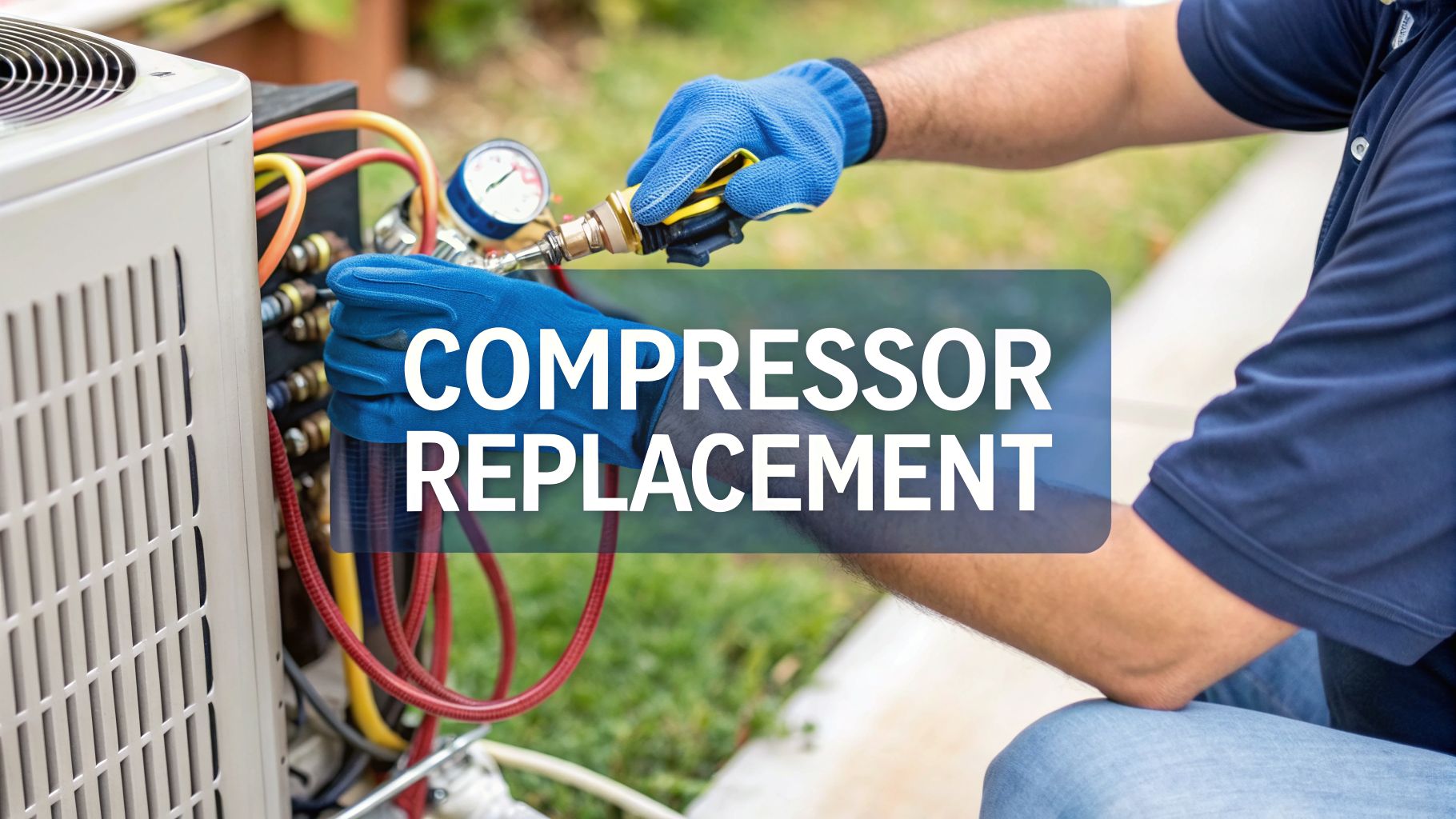
- Labor Rates: The work involved is pretty intensive. A technician has to safely recover all the old refrigerant, cut out the failed compressor, braze in the new one with perfect seals, and then recharge the system with a precise amount of new refrigerant. This is skilled work that takes time.
While it’s tempting to shop around for the absolute lowest price, remember that the quality of the installation is just as critical as the part itself. A sloppy installation can cause the new compressor to fail in just a few months.
A Look at the Bigger Picture
It also helps to understand what’s happening in the wider market. The global air conditioning compressor market is growing fast, projected to jump from US$28.8 billion in 2025 to US$41.1 billion by 2032, thanks to rising temperatures and new energy standards.
For homeowners here in Arizona, that trend hits close to home. A new compressor isn't just a repair; it can be a serious efficiency upgrade. Swapping a failed compressor in an older system can often slash your summer electricity bills by 20-40%, helping the repair pay for itself in just a few years. When you consider that around 70% of AC service calls for units over 12 years old are related to the compressor, making a smart investment becomes critical. You can dig deeper into these air conditioning compressor market dynamics and see what they mean for you as a consumer.
For a more detailed look at what your neighbors are paying, check out our guide on AC replacement costs in Arizona. It provides a lot of local context that can help you weigh your options.
Finding a Trustworthy HVAC Contractor in Phoenix
Choosing the right technician for your air conditioner compressor replacement is every bit as important as the repair itself. In a place like Phoenix, where every contractor claims to be the best, finding a company you can genuinely trust can feel like a serious chore. This decision goes way beyond the immediate fix—it affects the long-term health of your entire HVAC system.
You know what? You need a partner who gets our climate, gives you straight answers on pricing, and stands behind their work. The wrong choice can lead to a sloppy installation, causing your brand-new compressor to fail prematurely and putting you right back at square one.
Your Checklist for Vetting Phoenix HVAC Companies
To protect your home and your wallet, you have to ask the right questions upfront. Don't feel bad about digging into a company’s credentials; any reputable contractor will be happy to give you the answers you need to feel confident.
Here’s what to look for:
- License, Bonding, and Insurance: This is absolutely non-negotiable. Always confirm the contractor is licensed with the Arizona Registrar of Contractors (ROC). For example, Comfort Experts proudly displays our license right on our site: ROC #275914. This proves they meet state standards, carry insurance for accidents, and are bonded to protect you from financial loss.
- Written Estimates: Never, ever accept a quote over the phone. A true professional will provide a detailed, written estimate that clearly breaks down the costs for parts, labor, and anything else involved. This is your best defense against surprise fees on the final bill.
- Warranties on Parts and Labor: Ask specifically what’s covered. A quality contractor won't just offer a manufacturer's warranty on the compressor—they'll also guarantee the labor to install it. It's a simple sign that they stand behind their work.
How do you spot a reliable local business? It often comes down to their reputation and how they show up in the community. When you're searching, think about how companies connect with homeowners. A strong, visible presence built through strategies like Local SEO for Home Services often signals a company that’s serious about its local customers and isn't just passing through.
The Value of Local Expertise
Here’s the thing: an HVAC company from out of state just doesn't get it. A local Phoenix-area contractor brings real-world experience with our unique problems—from the way monsoon dust clogs condenser coils to the sheer, grinding strain our summer heat puts on every single component.
They know which brands and models actually hold up in our environment and, just as importantly, they have the right parts on their trucks to get the job done fast. When your AC dies in the middle of a July heatwave, you don’t want to be told a technician is driving in from two hours away. Choosing local means choosing a team that’s invested in the same community you are.
Answering Your AC Compressor Questions
Even with all the numbers laid out, it's natural to have a few more questions rattling around. When homeowners are looking at an air conditioner compressor replacement, a lot of the same worries pop up, especially with the unique stress our Phoenix climate puts on equipment. Here are some straight answers to the questions we hear most often at Comfort Experts.
How Long Should an AC Compressor Last in Arizona?
That's the million-dollar question, isn't it? In a place with mild summers, a compressor might chug along for 15 years, maybe more. But here in Arizona, the story is different. The relentless, brutal heat makes our air conditioners work harder and for much longer stretches.
A realistic lifespan for a well-maintained AC compressor in the Phoenix area is somewhere in the 10 to 12-year range. The single biggest factor in hitting—or beating—that number is consistent, professional maintenance. Skipping those annual tune-ups can easily shave a few years off its life.
Does a Noisy AC Unit Always Mean the Compressor Is Failing?
Not always, but it’s definitely a major red flag that you can't ignore. A failing compressor is a very common culprit behind loud banging, screeching, or grinding sounds, but other problems can make a racket, too. It could be a worn-out fan motor, some loose parts rattling around, or even just debris stuck in the outdoor unit.
The only way to know for sure is to have a pro diagnose it. A technician can pinpoint where the sound is coming from and tell you if it's the compressor or another, hopefully less expensive, part.
Can I Replace a Compressor in an Old R-22 System?
You can, but it’s almost always a terrible financial move. R-22 refrigerant was officially phased out by the EPA back in 2020. The supply that’s left is incredibly scarce and shockingly expensive. Pouring good money into a new compressor for a system that runs on obsolete, high-priced refrigerant is like putting a brand-new engine in a car with a rusted-out frame.
Besides that, you’re putting one shiny new part into a system where everything else is old and tired. It's a huge gamble. You’re just setting yourself up for another major failure down the road. Any honest expert, including our team, will strongly advise you to put that money toward a new, high-efficiency system instead.
Time to Make a Call and Get Your Comfort Back
Dealing with a dead AC compressor is never fun, especially in the middle of a Phoenix summer. But now you know what you’re up against. You can spot the warning signs, you understand why these parts fail, and you have a solid framework for deciding whether to repair the compressor or replace the whole unit.
The next move is simple: get a professional diagnosis from a team you can trust. You need someone on-site to test the system and give you clear, honest options based on what they find. Here in Mesa and across the Valley, homeowners trust us to do just that—no guesswork, no upselling, just straight answers to get your home cool again. Don't let a struggling AC ruin your day. Call Comfort Experts at 480-207-1239 or schedule service online for a fast, professional inspection that puts you back in control.