It’s a sight that makes any Phoenix homeowner’s heart sink: a puddle of water growing under the AC unit. An air conditioner dripping water inside probably makes your mind jump straight to imagining a massive repair bill and a week of misery in a sweltering house. Before you panic, take a breath, because it's rarely a sign that the whole system is shot.
So, Why Does Your AC Make Water in the First Place?
Think about a glass of ice water on a humid summer day here in Arizona. Almost instantly, "sweat" forms on the outside. Your air conditioner does the exact same thing, just on a much larger scale. This "sweat" is just condensation, and it's a totally normal part of the cooling process.
Your AC pulls in warm, humid air from your home and passes it over a frigid set of pipes called the evaporator coil. As the air cools down, the moisture it was holding condenses into water droplets right on that coil. This process is fundamental to how your air conditioner not only cools the air but also dehumidifies your home, making it feel more comfortable.
How It's Supposed to Work
When everything is running smoothly, that water has a clear, safe path out of your home. It drips off the coil and into a drain pan situated directly underneath. From there, it flows into a PVC pipe—the condensate drain line—which channels the water safely outside.
You’re never even supposed to notice this happening. The leak you're seeing is a big red flag that something has gone wrong and that carefully designed drainage system is failing somewhere.
By far, the most common reason we see for an air conditioner dripping water is a simple clog in the condensate drain line. Over time, dust, algae, and other gunk can build up and create a blockage, causing water to back up and spill right out of the drain pan.
Common Causes at a Glance
Before we get into troubleshooting, here's a quick look at the usual suspects. This table breaks down the most frequent reasons your AC is leaking water, helping you figure out if this is a simple weekend fix or a job for a professional.
| Cause of Leak | What It Means | DIY Fix or Pro Call? |
|---|---|---|
| Clogged Drain Line | Debris is blocking water from draining outside, causing a backup. | Often a DIY fix |
| Frozen Evaporator Coil | Restricted airflow or low refrigerant has turned the coil into a block of ice. | Check filter first, then Pro |
| Damaged Drain Pan | The pan that catches water is cracked, rusted, or broken. | Professional Call |
| Improper Installation | The unit isn't level, causing water to spill instead of drain properly. | Professional Call |
Understanding these possibilities is the first step. Next, we’ll walk through how you can safely diagnose the problem yourself.
The Most Common Culprit: A Clogged Drain Line
Honestly, if your AC is leaking water inside, this is the first place I’d tell you to look. Based on our experience at Comfort Experts, it’s the cause of the problem a solid 8 times out of 10.
Your air conditioner’s job is to pull humidity out of the air, and all that collected water—the condensate—has to drain somewhere. That "somewhere" is a simple PVC pipe called the condensate drain line. But over time, that pipe becomes a magnet for dust, algae, and slimy gunk. Here in the Phoenix area, that fine desert dust makes the problem even worse, creating a stubborn clog that sends water backing up right into your house.
Why This Clog Happens So Often
You know what? It makes sense when you think about it: the inside of your drain line is dark, damp, and constantly fed a stream of airborne particles that your system pulls in. It's the perfect breeding ground for algae and mold to form a nasty biofilm that just keeps trapping more and more debris.
This isn't a rare fluke; it's practically guaranteed to happen eventually. A clogged condensate drain line is the single most frequent reason we get calls for leaking AC units. The blockage forces water to back up into the drain pan, which can only hold so much before it overflows, spilling out and damaging your ceilings, floors, and drywall.
How to Find and Identify Your Drain Line
Before you can do anything, you need to know what you're looking for. The condensate drain line is usually a white or grey PVC pipe, about ¾ to 1 inch thick.
- Find Your Indoor Unit: First, locate your indoor air handler. It's typically tucked away in a closet, the attic, or out in the garage.
- Spot the Pipe: Look for the PVC pipe coming out from the bottom of the unit. You'll probably see it running toward an outside wall.
- Check Outside: Now, head outside and find where that pipe ends. It’s usually a small, L-shaped pipe sticking out of the wall near your big outdoor condenser unit.
When your AC is running, you should see a slow, steady drip of water coming out of that pipe. If you don't see any water on a hot day, that's a big red flag that you've got a clog.
Pro Tip: Another dead giveaway is seeing water in the secondary drain pan (a metal or plastic pan under the indoor unit) or water stains on the ceiling below it. Many systems also have a safety float switch that will shut your entire AC off if it detects a backup, which is a great feature to prevent a catastrophic flood.
Safely Clearing the Blockage Yourself
If you're pretty sure the line is clogged, you can often clear it yourself with a wet/dry shop vac. It's a simple trick that can save you the cost of a service call.
First things first: turn off the power to your AC unit. Do this at both the thermostat and the circuit breaker. Safety is everything here.
Next, go to where the drain line terminates outside. Get your shop vac hose and hold it firmly over the end of the PVC pipe. Use your hand or a rag to create the tightest seal you can.
Now, turn the vacuum on and let it run for a minute or two. The powerful suction is usually enough to pull the entire clog right out. You might hear a "thump" or see a nasty gush of sludge and dirty water shoot into the vacuum canister. That's a good sign!
Once it's clear, the best way to keep it that way is with routine care. Our professional AC maintenance tune-ups include clearing the drain line to help you avoid this exact problem down the road.
Troubleshooting Beyond a Simple Clog
So, you went through the trouble of checking the condensate drain line, maybe even hooked up a shop vac, but the drip persists. It’s frustrating when the most common fix doesn’t solve your problem, isn't it? Let me explain what to look at next, because an air conditioner dripping water can point to a few other culprits besides a simple clog.
Don't get overwhelmed. These next steps are mostly for diagnosis. We'll methodically check off a few more possibilities, and often, the real issue becomes clear pretty quickly. Most of the time, the problem is still tied to the core components of condensation and airflow.
This simple flowchart can help you visualize the process for checking that drain line, just to be sure you've covered all the bases before moving on.
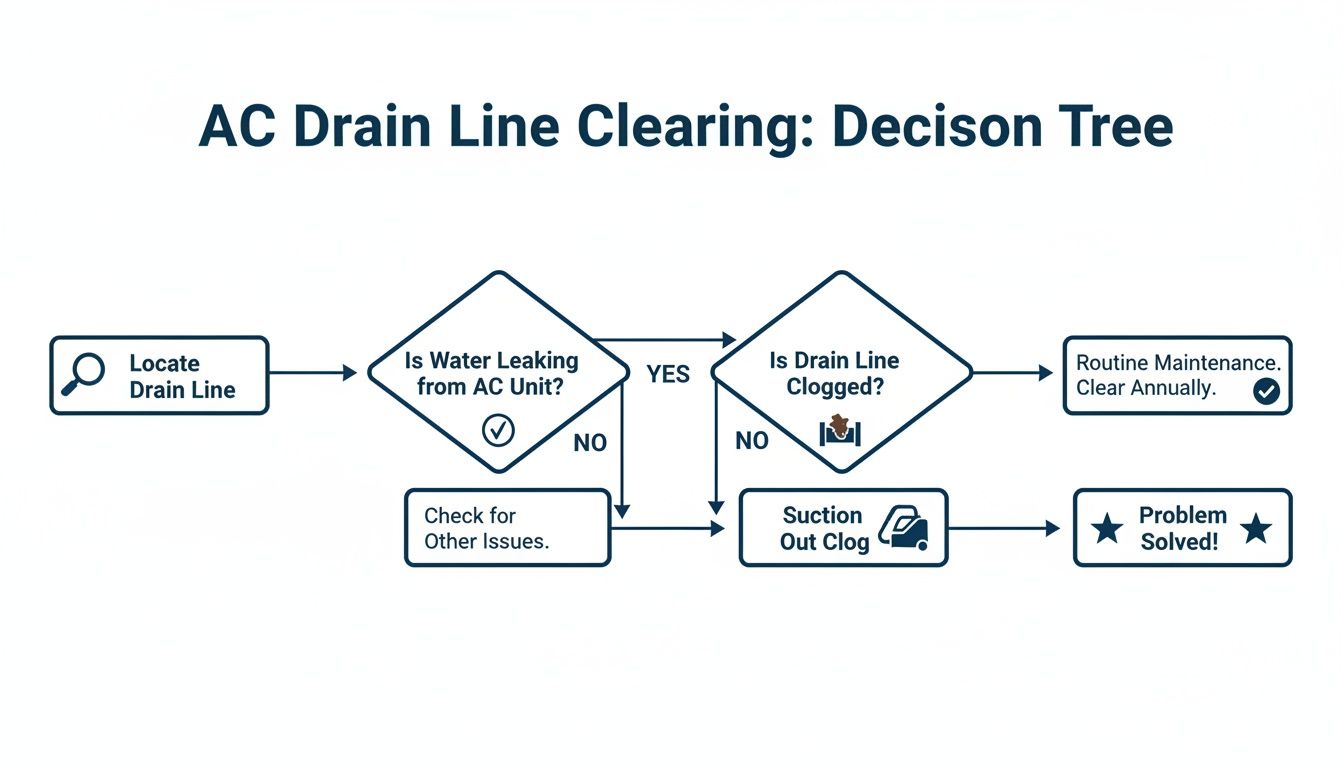
As the visual guide shows, it's a straightforward path: find the line, check for a blockage, and use suction to clear it. That's the primary fix in most leak situations. But if that didn't work, let's keep digging.
A Frozen Evaporator Coil
One of the most dramatic causes of a water leak is a frozen evaporator coil. If you open up your indoor air handler and see a solid block of ice encasing the coils, you’ve found a major clue.
This happens for one main reason: restricted airflow. When your system can’t pull enough warm air across the coils, they get too cold, and the condensation on them freezes solid. The single most common cause of this airflow restriction is a filthy, clogged air filter.
When the AC finally cycles off, that entire block of ice begins to melt. Your drain pan is designed to handle a steady drip, not a sudden flash flood of melting ice. It quickly overflows, sending water cascading wherever it can find a path.
Before you do anything else, check your air filter. If it’s grey and caked with dust, replace it immediately. Our guide on why your AC might be frozen dives deeper into this specific issue.
Important Note: A frozen coil can also be a symptom of low refrigerant, which is a much more serious problem. If a new filter doesn't stop the freezing, it's a clear signal that you need a professional diagnosis.
Inspecting the Drain Pan
If your AC unit has been around for a while—say, 10 years or more—the problem might be the drain pan itself. After many years of constant exposure to water, metal pans can rust through and develop cracks or holes. Plastic pans can become brittle and crack with age.
Take a good look at the pan located directly under your indoor unit's evaporator coils. Is it holding standing water even when the unit is off? Do you see obvious rust spots, corrosion, or visible cracks? If so, the pan has failed and can no longer do its job of channeling water to the drain line. A damaged pan isn't a DIY fix; it needs to be replaced by a technician.
The Problem of Improper Installation
This is a tough one to swallow, but sometimes the leak has been a problem from day one. If an air conditioner isn't installed perfectly level, the drain pan won't tilt correctly toward the drain opening. This can cause water to pool and spill over the edge of the pan instead of draining away as designed.
It's a similar story if the drain lines themselves were not connected with a proper downward slope—water can just sit in the lines instead of flowing out. If your system is relatively new and has always had a minor leaking issue, a poor installation is a very likely suspect. This definitely requires a professional to come out, assess the unit's position, and make the necessary corrections.
When A Drip Signals A Deeper System Problem
Not all water drips are simple plumbing clogs. Sometimes, an air conditioner dripping water is actually a red flag for a much more serious problem brewing inside your AC’s sealed refrigerant system. This isn't about a blocked pipe; it's about the very lifeblood of your entire cooling system.
When your system gets low on refrigerant—almost always because of a leak—it throws the pressure inside the coils way off. This makes the evaporator coils get unnaturally cold, far colder than they're designed to be. The result? You get that same massive ice buildup we talked about earlier, which eventually melts and completely overwhelms your drain pan.
The Connection Between Refrigerant and Water Leaks
So, how does a gas leak cause a water leak? It’s a chain reaction. Refrigerant is the stuff that actually absorbs heat from your home's air. When the charge is low, the system can't pull heat efficiently. This super-cools the coils, causing them to freeze over, and when the AC finally cycles off, you’re left with a huge puddle.
A refrigerant leak is not a DIY job. Handling refrigerant requires an EPA-certified technician who has the right tools to find the leak, make the repair, and safely recharge the system to the manufacturer’s exact specs. Just "topping it off" without fixing the leak is like putting air in a tire with a nail in it—it doesn’t solve the real problem and will only lead to more damage.
Spotting the signs of a refrigerant issue early on is your best defense against a catastrophic system failure.
Tell-Tale Signs of a Refrigerant Issue
How can you tell if the water is from a simple clog or something more sinister like a refrigerant leak? You need to look for other clues that point to a system-wide problem, not just a simple drainage backup.
- Warm Air: Is your AC running all the time but only blowing cool—not cold—air from the vents? That’s a classic symptom of low refrigerant.
- Hissing or Bubbling Noises: Do you hear a distinct hissing sound coming from the indoor or outdoor unit? That could be the sound of refrigerant escaping from a crack or a bad joint.
- Higher Energy Bills: If your utility bills have suddenly shot up without a change in your habits, it could be your AC working overtime just to keep up.
A persistent drip can quickly spiral into bigger problems like mold. It’s important to understand how long it takes mold to grow after a water leak and act fast. Ignoring these signs doesn't just risk water damage; it puts a huge amount of strain on the compressor, which is the most expensive part of your air conditioner.
Why Leaks Happen and Why They Matter
Refrigerant leaks are a major headache. While a well-maintained system might lose a tiny, insignificant amount over many years, a poorly installed one can be a disaster waiting to happen. We often see leaks at valves, joints, and connection points caused by substandard installation work, leading a system to lose most of its charge in the first year alone.
Letting a leak go means your AC will struggle to cool, your energy costs will skyrocket, and you'll eventually be staring at a much, much bigger repair bill. For a deeper look into the typical system failures we see here in Arizona, check out our guide on common AC repairs.
If you notice any of these signs, don't wait. It’s time to call in a professional.
Practical Ways to Prevent Future AC Water Leaks
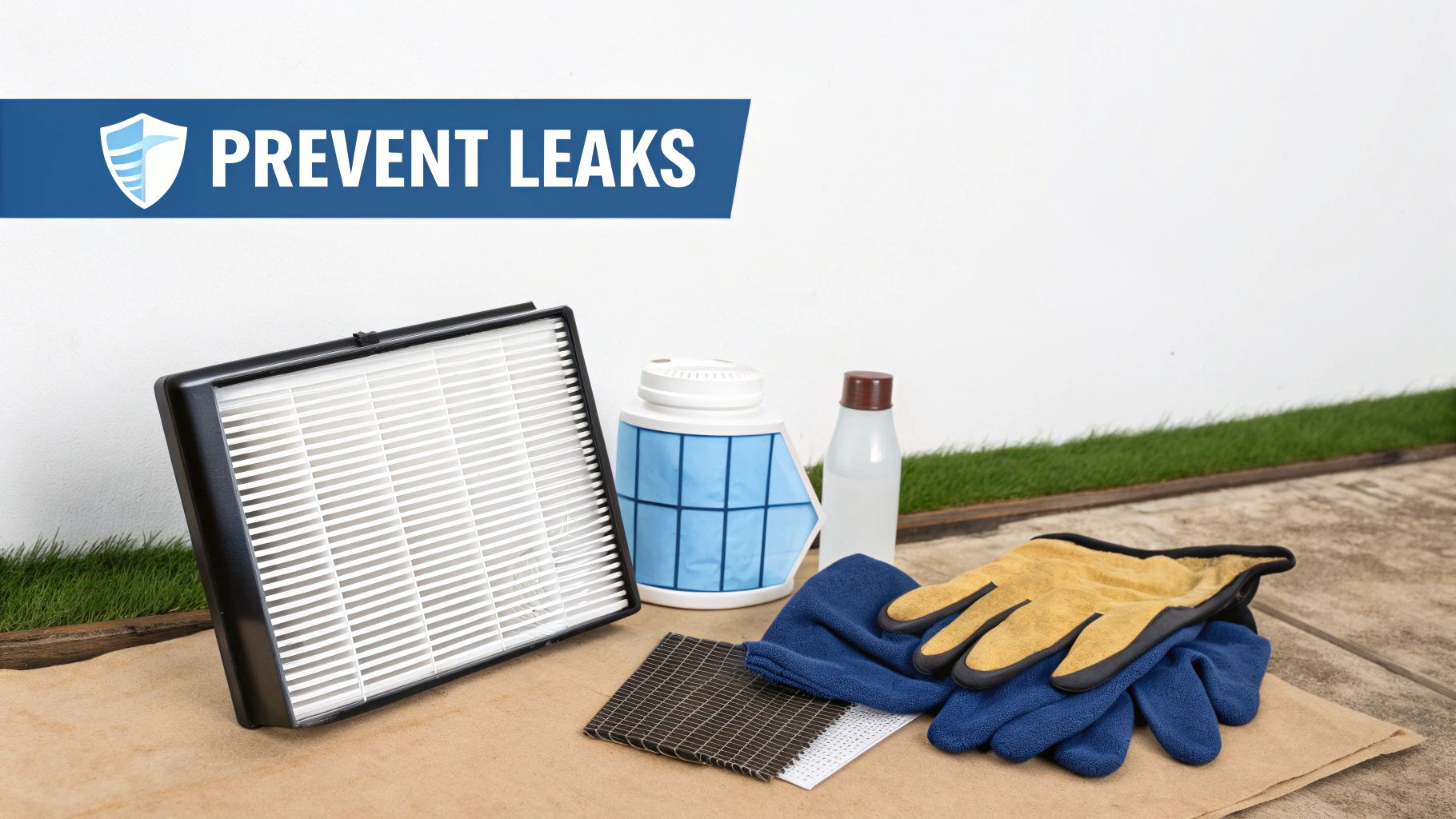
Fixing a leak you already have is a relief, but preventing the next one is where you save real time, money, and stress. Here in Mesa and the greater Phoenix area, our AC units work overtime. Proactive maintenance isn’t just a nice idea—it’s essential for avoiding an unexpected air conditioner dripping water situation.
Here's the thing: a little regular care makes all the difference between a smooth summer and a water damage nightmare. Most major AC leaks don't just happen overnight; they’re the result of small, neglected issues that gradually snowball. By staying ahead of them with a few simple habits, you can keep your system’s drainage flowing freely and its parts in top shape.
Your Simple Maintenance Checklist
Think of this as a small monthly investment in your home's health. These tasks are simple, take very little time, and directly target the most common culprits behind water leaks.
- Change Your Air Filter Monthly: This is the single most important thing you can do. A clogged filter chokes your system's airflow, which can easily lead to a frozen evaporator coil and a massive puddle when it thaws. In dusty Arizona, a monthly swap is non-negotiable.
- Flush the Condensate Line: You don’t have to wait for a clog to form. Every few months, just pour about a cup of distilled white vinegar down your condensate drain line’s access port. This little trick helps dissolve the algae and sludge that cause frustrating backups.
- Keep the Outdoor Unit Clear: Your outdoor condenser needs to breathe to do its job. Make sure you maintain at least two feet of clear space around it, free of bushes, weeds, and yard debris. This simple step ensures proper heat exchange and keeps the system from overworking itself.
The whole point of preventative maintenance is to stop problems before they start. A clean filter and a clear drain line are your best defense against the two biggest causes of AC water leaks, saving you from the headache of cleanup and repairs.
And it’s not just about your AC. Adopting smart strategies to protect your home from all sources of leaks is just plain smart. Learning about the top 5 causes of water damage and how to prevent them can give you a more complete game plan for keeping your home dry and safe.
The Undeniable Value of a Professional Tune-Up
While these DIY steps are crucial, they can't replace the expert eye of a certified technician. An annual professional tune-up is a deep dive into your system’s health that goes far beyond the basics.
Our technicians at Comfort Experts don't just flush the drain line; we check refrigerant pressures, inspect electrical connections, test capacitors, and calibrate your thermostat. These are critical checks that require specialized tools and training.
Catching a slight refrigerant undercharge or a weakening electrical component today prevents a full-blown system failure—and a potential flood—tomorrow. You can see more about what's included in our guide to AC maintenance tips for Arizona residents. This proactive approach is hands-down the best way to ensure your AC runs efficiently and reliably all summer long.
Knowing When to Call in the Experts
Knowing your limits is the key to keeping a small AC hiccup from turning into an expensive disaster. While some of the reasons an air conditioner is dripping water are simple enough to handle yourself, others are red flags for a much more serious problem that needs a trained professional.
Let's be clear: it's always better to be safe than sorry. Certain repairs involve high-voltage electricity and pressurized refrigerants—a combination that creates very real safety risks for an untrained homeowner. Trying to tackle these yourself not only puts you in danger but can also void your system's warranty, turning a manageable repair into a costly full replacement.
Clear Signs It’s Time for a Pro
If you run into any of these issues, your next move should be to call for a professional diagnosis. These symptoms point to problems that require specialized equipment and certified expertise to fix safely and correctly.
- You Suspect a Refrigerant Leak: Is your AC blowing warm air? Do you hear a faint hissing sound? Is there ice on the coils that a clean filter and good airflow didn't solve? These are classic signs of a refrigerant leak.
- Electrical Problems: Don't mess with this stuff. Flickering lights when the AC kicks on, strange buzzing from the unit, or a circuit breaker that keeps tripping are all serious warnings.
- Significant Water Damage: If the leak has already left noticeable stains on your ceiling or walls, you need an expert. They won't just fix the AC; they'll help make sure there isn't hidden moisture damage that could lead to bigger problems later.
- The Problem Just Won't Quit: You’ve done your part. You cleared the drain line, you changed the filter, but the dripping continues. This means the root cause is something less obvious and needs an experienced eye.
The Complexity of Modern Systems
Refrigerant leaks, in particular, are not a DIY job. It’s not just a safety issue; it’s an environmental one, too. Newer systems have complex networks of piping with many connection points, making them more prone to tiny, hard-to-find leaks.
When you call a professional, you're not just paying for a repair; you're paying for peace of mind. A certified technician can accurately diagnose the problem, perform the repair safely, and guarantee their work, protecting your investment and your family's comfort.
Choosing the right company is crucial for getting an honest diagnosis and a lasting fix. For some tips on what to look for, check out our guide on how to choose the right HVAC company.
If you've tried the simple fixes or just feel like the problem is beyond your scope, our team is ready to help. At Comfort Experts, we deliver fast, honest solutions to get your home back to normal. If your air conditioner is dripping water and you need a trusted diagnosis, give us a call at 480-207-1239 or schedule service online today.