Let's be honest, when your AC is humming along, its inner workings are probably the last thing on your mind. But here in the Phoenix Valley, ignoring certain parts of your system is a costly mistake. That's where air handler coil cleaning comes in—it's not just a "nice-to-have," it's a non-negotiable part of keeping your system healthy and your energy bills from skyrocketing.
Why Coil Cleaning Is a Non-Negotiable Task
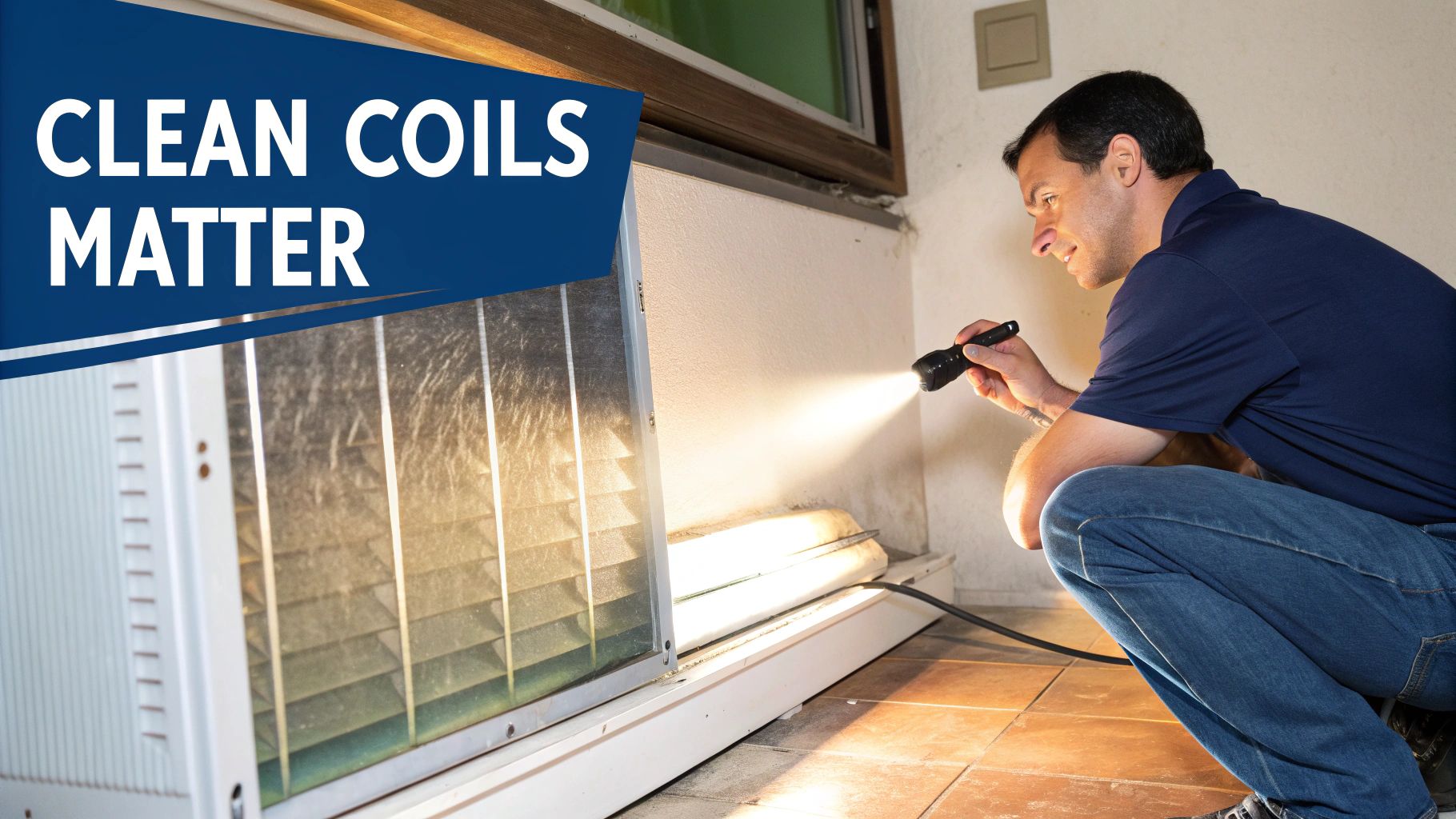
Your air conditioner isn't just a box that makes cold air. It's a surprisingly sophisticated heat-exchange machine. At the very heart of that process are two key parts: the evaporator coil (inside your home) and the condenser coil (in the outdoor unit).
Think of them as the lungs of your HVAC system. The evaporator coil grabs heat from your indoor air, and the condenser coil pushes that heat outside. This simple, constant exchange is what actually cools your home.
The Grime Factor: An Insulator in Disguise
Imagine trying to run a marathon in July while wearing a heavy winter coat. Sounds miserable, right? That’s pretty much what your AC system is doing when its coils are caked in dust, pet dander, and grime. All that gunk acts as an insulator, trapping heat and making it impossible for the coils to do their job.
It’s just like a car’s radiator getting clogged with mud. The engine can’t cool itself, so it overheats and works way harder than it should. The exact same thing happens with your air handler coils. When they're dirty, your entire system is forced into overdrive just to keep up.
This extra strain doesn't just waste a ton of energy; it also accelerates wear and tear on expensive parts like the compressor, setting you up for a premature—and expensive—breakdown.
A dirty coil forces your AC to work harder, burn more energy, and ultimately fail sooner. It transforms a simple maintenance task into a potential system-wide failure if neglected for too long.
Arizona’s Unique Challenges
Here in the Phoenix Valley, our environment throws a unique set of challenges at our HVAC systems. The fine desert dust, debris from monsoon storms, and seasonal pollen create a perfect storm for clogged coils. Honestly, this isn't just some minor annoyance; it's a constant battle that makes regular air handler coil cleaning far more critical than in other parts of the country.
And the buildup affects more than just your comfort. A dirty indoor evaporator coil can become a breeding ground for mold and bacteria, which then get blown all through your house. The impact of indoor air quality on HVAC service is huge, and clean coils are your first line of defense against circulating airborne contaminants.
Ultimately, thinking of coil cleaning as a chore is a mistake. It’s a smart investment in:
- Your Budget: Lowering your monthly SRP or APS bill by making your system more efficient.
- Your Comfort: Getting consistent, powerful cooling when those brutal summer temperatures hit.
- Your Health: Reducing the amount of allergens and potential mold circulating in your home's air.
Once you understand what your coils do and the threats they face out here, keeping them clean just makes sense. For more local advice, check out our essential AC maintenance tips for Arizona residents to keep your entire system in top shape.
The Real Cost of Neglecting Your AC Coils

It’s easy to think of a dirty AC coil as a minor chore you can put off. But from my experience as an HVAC professional, that thin layer of dust, pet dander, and grime is a direct hit to both your wallet and your home's air quality.
That buildup acts like an insulator, forcing your entire HVAC system to work much harder just to cool your home. We're not talking about a small dip in performance, either—it's a major drag on your system's efficiency. When the coils can't transfer heat properly, the AC has to run longer and more often to hit the temperature you set on the thermostat.
Skyrocketing Energy Bills
You know what? That extra runtime means higher electricity bills. Over a single scorching Arizona summer, that wasted energy can easily add up to hundreds of dollars. It’s a frustrating cycle: you’re paying more money for less comfort as your AC struggles to keep up.
This isn't just a theory. Dirty HVAC coils can spike energy use by up to 30%. That’s a staggering number that really drives home why keeping them clean is so important. As that gunk builds up, the system has to fight to move air and transfer heat, which drives up your bills.
This constant overwork also puts a ton of strain on expensive parts like the compressor and fan motors. All that extra stress shortens their lifespan, pushing you much closer to a big system failure and an expensive repair bill that could have been avoided. If you want to get a sense of those costs, you can learn more about the cost to replace a condenser coil in our detailed guide.
The Hidden Health Consequences
Beyond the money, there are serious health issues to think about. The dark, damp environment of a dirty evaporator coil is the perfect breeding ground for mold, mildew, and bacteria.
Every time your AC kicks on, it starts circulating those contaminants all through your house. You and your family end up breathing them in. This is especially risky if you have young children, elderly family members, or anyone with asthma and allergies.
A neglected evaporator coil doesn't just hurt your wallet; it can turn your HVAC system into a delivery mechanism for allergens and mold spores, directly impacting your family's respiratory health and overall well-being.
The link between dirty coils and poor indoor air quality is undeniable. Have you noticed allergy symptoms getting worse or a stubborn musty smell when the AC is running? Your coils could easily be the culprit. Ignoring it can contribute to what's known as Sick Building Syndrome, where people experience health issues directly tied to the time they spend inside.
Financial and Health Costs Compared
Let's put it all in perspective and break down the real costs of putting off this simple maintenance task.
| Consequence of Neglect | Financial Impact | Health & Comfort Impact |
|---|---|---|
| Reduced Efficiency | Higher monthly energy bills, potentially adding up to hundreds of dollars per year. | The system runs longer but cools less effectively, leaving hot spots in your home. |
| Increased Wear & Tear | Accelerated breakdown of key components like the compressor, leading to costly repairs. | Increased risk of a complete system failure during peak summer heat. |
| Poor Air Quality | No direct cost, but a potential source of long-term health issues requiring medical attention. | Circulation of mold, bacteria, and allergens, triggering respiratory problems and odors. |
The evidence is clear. The cost of a professional air handler coil cleaning is tiny compared to the compounding expenses of higher energy bills, a premature system failure, and potential health problems. It’s a smart investment in your AC's efficiency, longevity, and a healthier home.
A Practical Guide to Cleaning Your Evaporator Coils
Feeling ready to get your hands a little dirty and save some money? This section is your detailed, actionable guide for tackling your indoor evaporator coils. It’s a totally manageable job for a handy homeowner, but doing it right is critical for your system’s health.
Before you even think about touching your air handler, we have to talk about safety. This is the single most important part of the entire process, and it's absolutely non-negotiable.
Safety First Always
Your HVAC system is a serious piece of machinery connected to high-voltage electricity. To avoid any risk of injury, you must completely cut all power to the unit.
- At the Thermostat: First, switch your thermostat to the "Off" position. This stops it from trying to call for cooling while you're working on it.
- At the Breaker Box: Next, head to your home's main electrical panel. Find the breakers that control your HVAC system—you will likely have two. One is for the indoor air handler/furnace, and the other is for the outdoor AC unit. Flip both of them to the "Off" position.
Seriously, don't skip this. Just turning off the thermostat isn't enough. You have to de-energize the entire system at the source to guarantee it can't accidentally kick on.
Gathering Your Tools and Materials
Having everything you need on hand before you start will make the job go much smoother. You won’t need an entire workshop, but a few specific items are essential for getting this done right.
Here’s a quick checklist of what to grab:
- Screwdriver or Nut Driver: You’ll need this to remove the access panel covering the evaporator coil. A 1/4” or 5/16” hex-head driver is very common for this.
- Soft-Bristled Brush: A brush with soft bristles is perfect for gently removing the loose layer of dust and pet hair without damaging the delicate aluminum fins. An old paintbrush works great for this.
- No-Rinse Foaming Coil Cleaner: This is a specialized product you can find at any major home improvement store. It’s designed to foam up, break down grime, and then rinse away with the normal condensation your AC creates.
- Shop-Vac (Optional): A vacuum with a brush attachment can be really helpful for sucking up loose debris before you apply the spray cleaner.
- Gloves and Safety Glasses: Always protect your hands from the cleaner and your eyes from any falling dust or drips.
Remember, the goal is to clean, not to damage. The aluminum fins on the coil are incredibly delicate and can be bent or crushed with very little pressure. A gentle touch is key throughout this entire process.
Accessing and Pre-Cleaning the Coil
Okay, power's off and your tools are ready. Now it's time to get to the coil itself. Your evaporator coil is located inside your indoor air handler, which you'll usually find in a closet, the attic, or the garage.
Look for a metal access panel, often shaped like a triangle or rectangle, and carefully remove the screws holding it in place. Set that panel and its screws aside somewhere safe so you don't lose them.
Once inside, you'll see the A-shaped evaporator coil. If it's been a while, you'll probably see a blanket of dust, lint, and maybe even pet hair clinging to the surface. Your first job, before you spray anything, is to remove this loose layer.
Use your soft-bristled brush to gently sweep the debris off the fins. Always brush in the same direction as the fins—up and down—not across them. If you have a shop vac, use the brush attachment to carefully vacuum this debris away.
This pre-cleaning step is vital. It allows the foaming cleaner to work on the deeply embedded grime rather than just getting stuck on the surface dust. A clean air filter is your best defense against this kind of buildup in the first place. You can learn more about how often you should change your air filters to keep this gunk from ever reaching the coils.
Applying Cleaner and Checking the Drain
With the loose stuff gone, you're ready to apply the foaming cleaner. Shake the can well and, holding it a few inches away, spray the cleaner evenly across the entire surface of the coil. I like to start at the top and work my way down, making sure to cover all the fins. The foam will expand, pushing its way deep into the coil to break down all that hidden dirt.
So what happens next? The "no-rinse" part of the cleaner works with your AC's natural process. When you eventually turn the system back on, moisture will form on the cold coils, rinsing the cleaner and all the dissolved dirt down into the condensate drain pan below.
This brings up a final, crucial check: the condensate drain line. This is the PVC pipe that carries water away from your air handler. You need to make sure it isn’t clogged with algae or sludge, which can cause water to back up and potentially flood your ceiling or closet. A clear drain line is essential for the cleaning process to complete itself properly.
Once the foam has had time to do its thing (check the product's instructions for timing), you can carefully replace the access panel, turn the breakers back on, and restore power at your thermostat. Your air handler coil cleaning is officially done.
DIY Evaporator Coil Cleaning Checklist
To keep things simple, here’s a quick checklist you can follow. It covers the key safety and cleaning steps to make sure you get a great result without any headaches.
| Step | Action | Key Tip |
|---|---|---|
| 1. Safety First | Turn the thermostat to OFF, then switch OFF the HVAC breakers at the electrical panel. | Double-check that all power is cut. Don't rely on the thermostat alone. |
| 2. Gather Tools | Collect your nut driver, soft brush, foaming cleaner, shop vac, and safety gear. | Having everything in one place avoids trips back and forth from the garage. |
| 3. Access the Coil | Carefully remove the access panel screws on your indoor air handler unit. | Put the screws in a magnetic tray or a cup so they don't get lost. |
| 4. Pre-Clean | Gently brush or vacuum all loose dust and debris from the coil fins. | Always brush with the direction of the fins (vertically) to avoid bending them. |
| 5. Apply Cleaner | Spray the no-rinse foaming cleaner evenly over the entire coil surface. | Start at the top and work down to ensure complete coverage. |
| 6. Check Drain Line | Visually inspect the condensate drain line opening to ensure it’s clear of clogs. | A clogged drain can cause water damage, defeating the purpose of your hard work. |
| 7. Reassemble | Securely replace the access panel and its screws. | Make sure the panel is sealed properly to prevent air leaks. |
| 8. Restore Power | Turn the HVAC breakers back ON, then set your thermostat back to its normal setting. | The AC's natural condensation will now rinse the cleaner and dirt away. |
Following these steps will not only help your AC run more efficiently but also give you the satisfaction of a job well done. Just take your time, be gentle, and always prioritize safety.
How to Clean Your Outdoor Condenser Coils
While your indoor evaporator coil is busy fighting off dust and pet dander, your outdoor condenser unit is in a constant battle with the elements. Here in Arizona, it’s getting blasted by fine dust, leaves, grass clippings, and all the debris our monsoon storms can throw at it.
Cleaning these outdoor coils is a totally different job than cleaning the indoor ones, but it’s just as critical for keeping your AC running strong.
Always Disconnect the Power First
Before you even think about picking up a hose, you have to cut the power. This isn't optional—it's the most important step for your safety. You'll need to turn off the power in two separate spots.
- At the Breaker Panel: Head to your main electrical panel and find the breaker labeled for your outdoor AC unit. Flip it to the "Off" position.
- At the Outdoor Disconnect: Look for a small electrical box mounted on the side of your house near the condenser unit. Open it up. Inside, you'll either find a pull-out block you can remove or a switch to flip to "Off."
Only after you've cut the power at both locations is it safe to start working.
Removing the Grille and Clearing Debris
With the unit safely de-energized, you can get inside. The top of your condenser is protected by a metal grille that also holds the fan. You'll need to carefully remove the screws holding it down.
As you lift the grille, be gentle. The fan is connected by electrical wires that are often pretty short, so you don't want to yank them. Tilt the entire fan assembly carefully to the side and prop it against the unit, making sure there's no tension on the wiring.
Now, peer down inside. It’s probably full of leaves, twigs, and other yard gunk. Reach in and clear out all the big stuff by hand. A shop vac is your best friend here for sucking up all the smaller dirt and particles from the bottom.
The Right Way to Rinse the Coils
Here's the thing: the whole point is to wash the dirt out of the coil fins, not push it deeper in.
Never, ever use a pressure washer on your condenser coils. The intense spray will instantly bend the delicate aluminum fins, choking off airflow and potentially wrecking your AC unit. All you need is a regular garden hose.
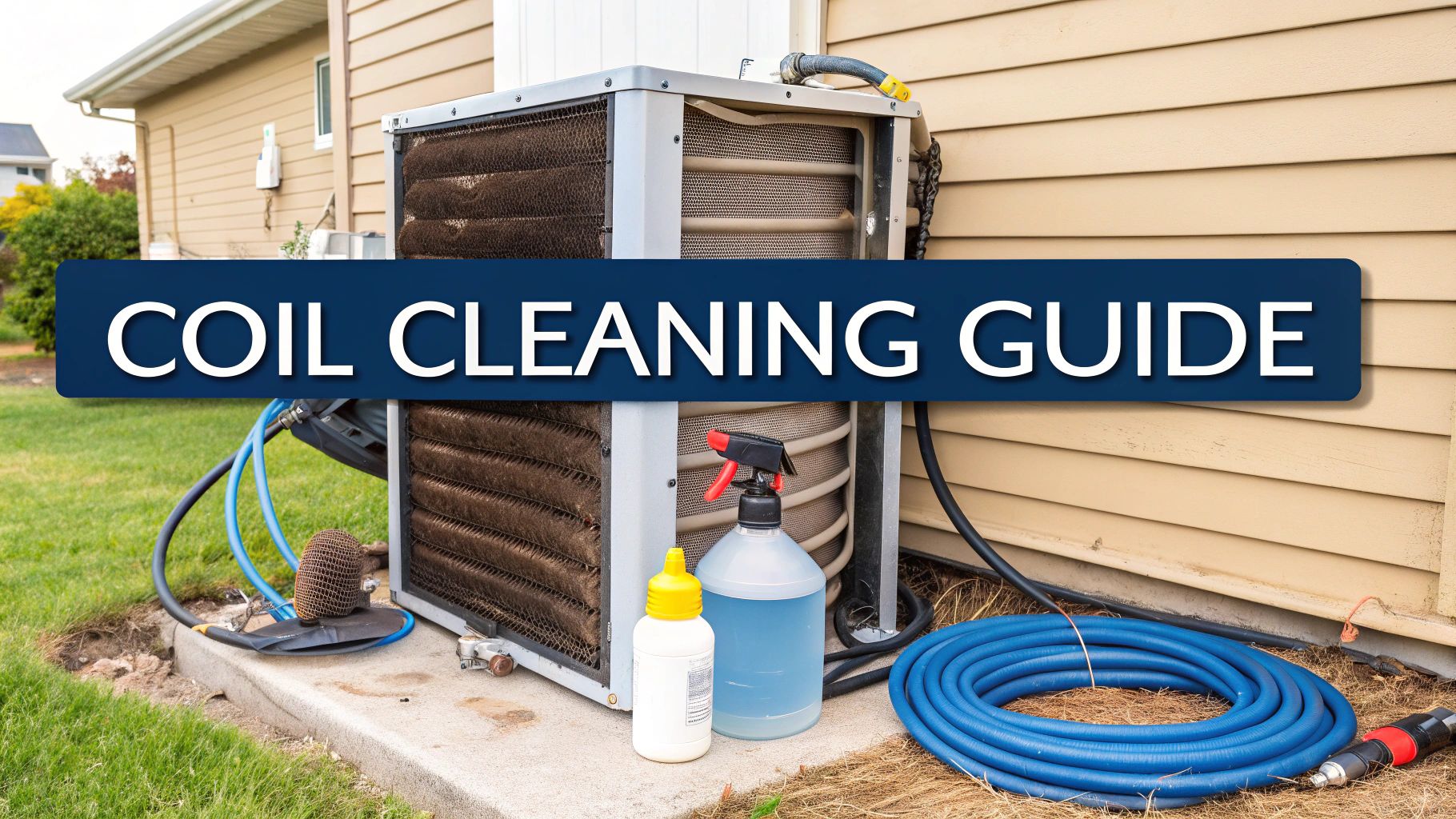
Put a simple spray nozzle on your garden hose. Standing over the unit, spray from the inside out, pushing water through the fins toward the exterior. Work your way around the entire unit from top to bottom. You’ll see a satisfying stream of mud, dust, and grime flowing out. This inside-out method is the only way to get them properly clean.
This simple process is key to keeping your AC healthy and efficient.
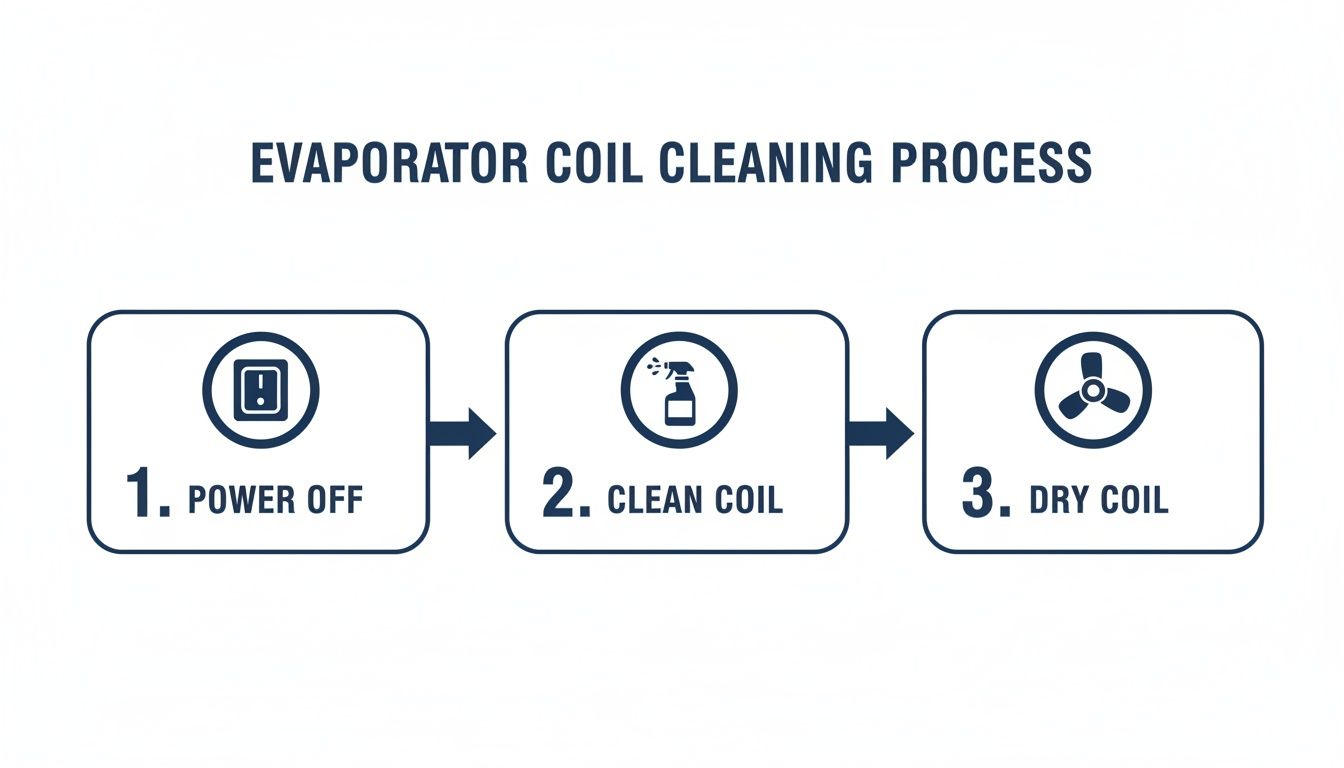
This flowchart breaks down any coil cleaning job to its core: shut off the power for safety, do the cleaning, and let everything dry before you fire it back up.
Straightening Bent Fins for Peak Performance
Once the coils are clean, take a minute to inspect the fins around the outside. It's really common to see bent sections from hail, a stray rock from the lawnmower, or even just years of debris hitting them. Bent fins are bad news because they block airflow and hurt your AC's efficiency.
You can fix this with a cheap tool called a fin comb from any home improvement store. Gently slide the comb into the fins and carefully pull it through the bent areas to straighten them out. Go slow and be patient—if you force it, you can make things worse.
Restoring proper airflow makes a huge difference in an air handler coil cleaning. It’s not just a guess, either. A 2016 case study on commercial air handlers found that after a thorough coil cleaning, the pressure drop across the coils fell by an average of 33%, and total airflow shot up by 3.7%. This allowed the system's fans to run slower, saving a significant amount of energy. You can read more about these performance findings in the full study.
After the coils are clean and the fins are straight, you can put the top grille and fan back on, tighten the screws, and restore power at the disconnect box and the breaker. Now you can enjoy a more efficient—and happier—air conditioner.
Knowing When to Call a Professional
DIY projects can feel great. There's a real sense of accomplishment in fixing things yourself, not to mention saving a few bucks. But when you’re dealing with a complex machine like your HVAC system, knowing your limits is the key to preventing a simple cleaning from turning into an expensive, damaging mistake.
Let's be honest: some jobs are just best left to the pros who handle this stuff every single day. The trick is learning to spot the difference between routine upkeep and a serious problem that needs a trained eye.
Red Flags That Demand an Expert Eye
If you pop open your air handler panel and see any of the following, it’s time to put the tools down and pick up the phone. Trying to muscle through these issues on your own can lead to permanent system damage or, at best, an incomplete cleaning that doesn't solve the real problem.
Here are the most common signs you need a professional for your air handler coil cleaning:
- Thick, Matted Grime: A thin layer of dust is one thing. A thick, wet, matted blanket of grime that’s been building for years is a whole different beast. This level of buildup often laughs at store-bought cleaners and needs professional-grade chemicals and tools to safely break it down.
- Visible Mold or Mildew: Spotting anything that looks like mold on your evaporator coil is a major warning sign. This isn't just a cleaning job; it requires specialized antimicrobial treatments to kill the spores and stop them from getting blown through your home's air.
- Significant Corrosion: A little surface rust might not be a big deal. But if you see serious corrosion or deterioration on the coils or the delicate fins, it could signal a long-term moisture problem or even a refrigerant leak. A technician needs to find the root cause.
- An Iced-Over Evaporator Coil: This is one of the biggest red flags. A frozen coil almost never happens just because it's dirty. It usually points to a much more serious issue like low refrigerant or severely restricted airflow—problems only a pro can diagnose and fix.
Attempting to clean a heavily compromised coil without addressing the root cause is like patching a crack in a dam with duct tape. It might seem to help for a moment, but it ignores the dangerous pressure building up behind the scenes.
The Professional Advantage
Certified HVAC technicians bring more than just experience; they have specialized equipment and knowledge that a homeowner simply doesn't. They use commercial-grade, high-potency cleaners that are worlds more effective than anything you can buy at a retail store. If you're curious how these local service businesses get found, this comprehensive guide to local SEO for home services offers some interesting insights.
The industry is always improving, too. The Commercial HVAC Coil Cleaning market, valued at USD 520 million in 2023, is growing thanks to innovations like eco-friendly foaming agents and low-pressure rinsing (under 125 psi) that protect delicate coil fins from damage. Professionals use these advanced techniques to ensure a deep clean without taking any risks.
Of course, choosing the right technician is just as important as deciding to call one in the first place. You need a company with a proven track record of reliability and expertise. If you're not sure what to look for, our guide on how to choose the right HVAC company can help you make a smart decision.
Common Questions About Air Handler Coil Cleaning
Even with a good guide, it's normal to have a few more questions pop up. When it comes to something as critical as your home's HVAC system, you want to get it right. Here are some of the most common things our technicians at Comfort Experts get asked about air handler coil cleaning.
How Often Should I Clean My AC Coils in Arizona?
This is easily the number one question we hear, and for a good reason. Arizona’s uniquely dusty environment means the standard “once a year” advice doesn’t always hold up.
For most homes across the Phoenix Valley, a professional cleaning once per year is the right baseline. The best time to do it is in the spring, right before you start depending on that AC to survive the summer. This gets your system running at peak performance just when you need it most.
That said, you should get into the habit of peeking at your coils every few months. A big dust storm or the heavy winds during monsoon season can cake them in debris surprisingly fast. If you see a visible layer of dirt, a quick DIY cleaning is a smart move to keep a small issue from turning into a major one.
Can I Use a Pressure Washer on My Condenser Coils?
Please don't. While it might seem like a quick way to blast the dirt off, it's a common mistake that can cause permanent damage to your air conditioner.
Let me explain. The thin aluminum fins on your condenser coils are incredibly fragile. A high-powered jet of water from a pressure washer will bend, flatten, and crush them in seconds. This damage essentially suffocates your unit, blocking airflow and making it impossible for the system to push heat outside.
Using a pressure washer on AC coils is one of the fastest ways to turn a simple cleaning job into an expensive repair. The damage chokes off airflow, tanks your system's efficiency, and can lead to a complete compressor failure.
Instead, always use a standard garden hose with a gentle spray nozzle. Like we talked about earlier, spraying from the inside out provides all the force you need to flush out dirt and grime without harming those delicate fins.
What Are the Telltale Signs of Dirty HVAC Coils?
Your HVAC system is pretty good at letting you know when something’s off—you just have to know what to look for. If you’ve noticed any of these symptoms, dirty coils are a very likely culprit.
- Your AC Runs Constantly: The system seems to be working overtime but can’t quite get your home down to the temperature you set on the thermostat.
- Your Electricity Bills Have Spiked: A sudden, unexplained jump in your monthly energy costs is a classic sign of an inefficient system working way harder than it should.
- Weak Airflow from Vents: If the air trickling out of your vents feels weaker than it used to, it’s often because airflow is being choked off somewhere—and clogged coils are a prime suspect.
- A Musty, Unpleasant Odor: Do you get a whiff of a musty, "dirty sock" smell when the AC first kicks on? That can be a sign of mold or bacteria growing on a dirty, damp evaporator coil.
These are all strong signals that your coils need immediate attention. If you have other questions about how your system is behaving, you can find more answers on our company's FAQ page.
When a DIY cleaning isn't cutting it or you're facing a more serious issue, don't hesitate to call in the pros. The team at Comfort Experts has the right tools, experience, and professional-grade solutions to get your system’s performance back to where it should be, safely and effectively. To make sure your AC is ready for the Arizona heat, give us a call at 480-207-1239 or schedule service online today.