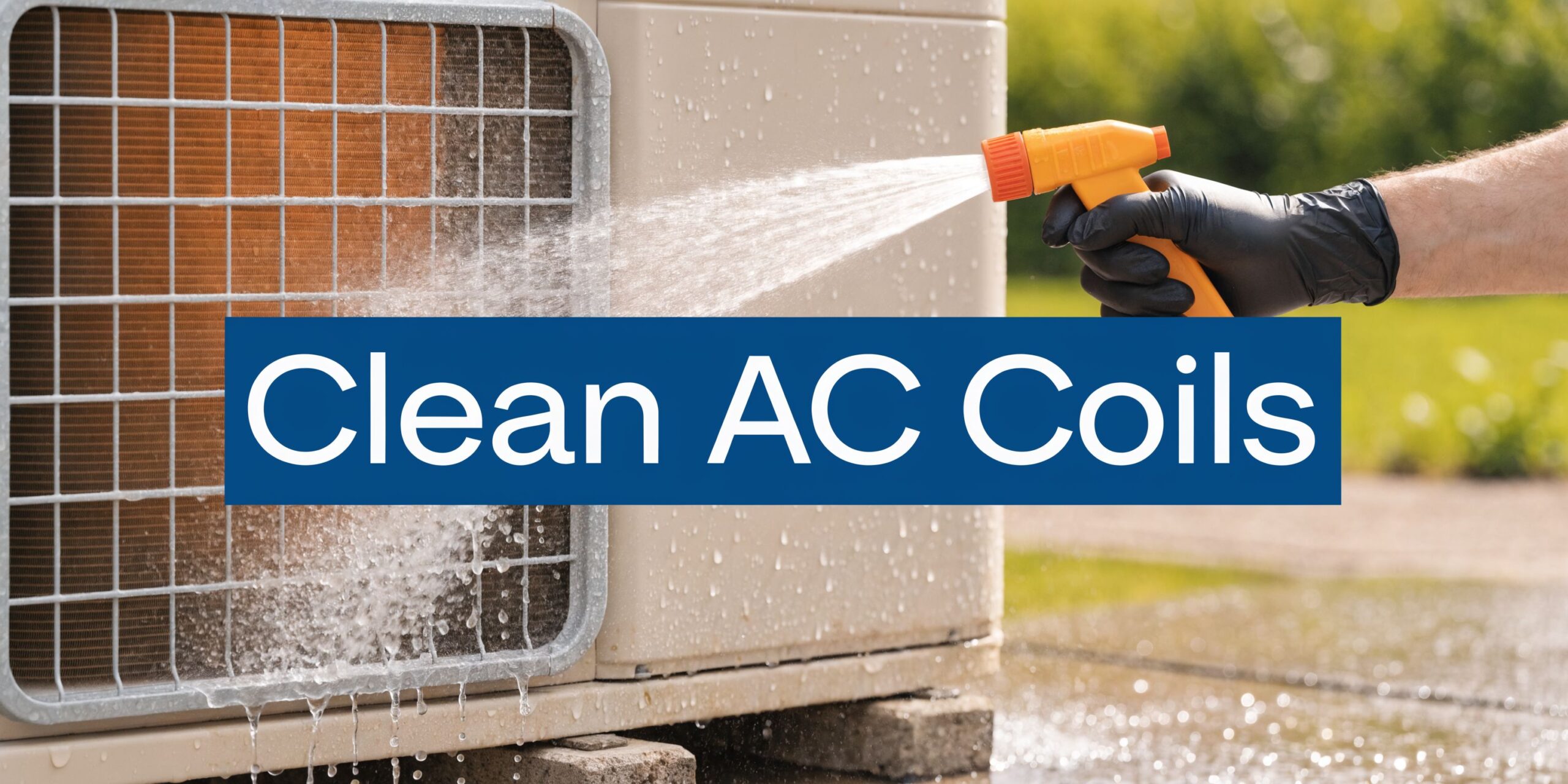
When your AC is running all day and the house still doesn’t feel quite right, dirty coils are often part of the problem. In the Phoenix Valley, clean air conditioner coils aren’t just a maintenance detail. They’re one of the simplest ways to protect comfort, efficiency, and your system during brutal summer heat.
Why Clean Coils Are a Non-Negotiable in Arizona
Phoenix summers punish neglected equipment. A little dust on an outdoor unit might not look serious, but in triple-digit heat, that layer can be the difference between a home that cools normally and a system that never catches up.
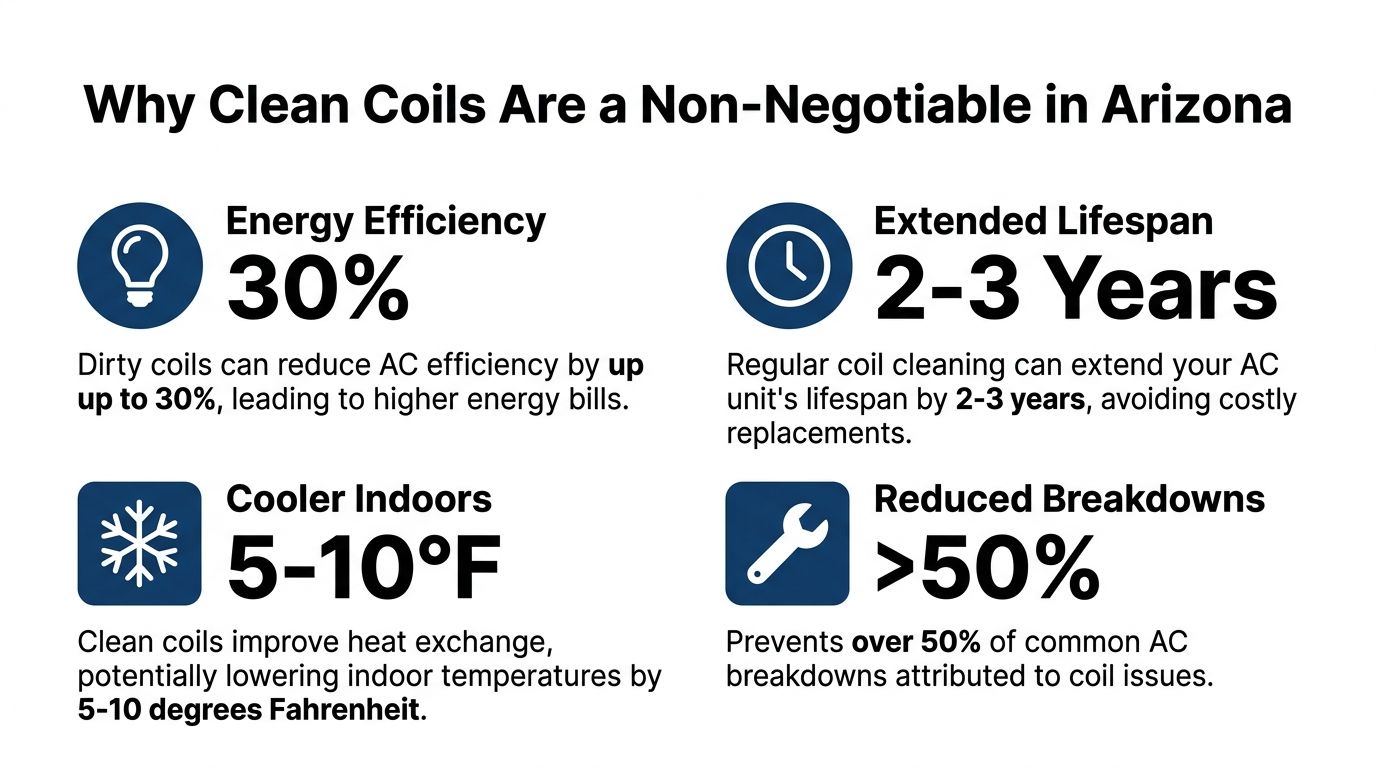
Dirty coils directly interfere with heat transfer. When condenser and evaporator coils are coated with grime, the system has to run longer to do the same job. According to Parker & Sons’ coil maintenance guidance, dirty air conditioner coils can increase power consumption by 10-30%. The same source notes that even moderate buildup can reduce cooling capacity by about 7% while causing energy use to rise by 10%.
What that means in a Phoenix summer
If you live in Mesa, Gilbert, Chandler, Tempe, or anywhere across the Valley, you already know your AC doesn’t get many breaks. Dust storms, dry landscaping, pet hair, pollen, and nonstop runtime all stack the odds against clean coils.
A neglected coil doesn’t fail all at once. It slowly robs the system of performance.
- Higher utility bills: Your AC runs longer and pulls more power to move the same amount of heat.
- Weaker cooling: Rooms may feel warmer in late afternoon, even though the thermostat says the system is working.
- Added compressor strain: The compressor works harder when the system can’t reject heat efficiently.
- Less margin during heat waves: When outdoor temperatures spike, a dirty system has less capacity in reserve.
Practical rule: In Arizona, poor coil condition usually shows up first as longer runtimes, not a sudden breakdown.
That’s why coil cleaning belongs on the same level as filter changes and seasonal tune-ups. It’s not cosmetic. It affects how the whole system breathes and how well it moves heat.
Arizona dust makes ordinary neglect more expensive
National advice often says to clean coils yearly, and that’s a good baseline. Arizona homes often need a more watchful approach because the environment is harsher on HVAC equipment.
Outdoor condensers collect fine dust and yard debris fast. Indoor evaporator coils pick up what slips past filters. If airflow drops or heat exchange gets restricted, your AC has to work overtime at exactly the worst time of year.
If you’re trying to build a full seasonal routine, this annual home maintenance checklist for Phoenix is a useful companion resource because it places HVAC upkeep in the broader context of desert-home maintenance. For more ways to reduce cooling waste, our own guide to HVAC energy-saving tips also helps homeowners connect maintenance decisions to day-to-day efficiency.
Spotting the Signs Your AC Coils Need Help
Most systems give warnings before they stop cooling well. The trick is noticing the pattern early enough to act before a hot weekend turns into an emergency call.
Look for performance drift, not just failure
A lot of homeowners wait for a total breakdown. That’s understandable, but dirty coils usually create smaller clues first.
Watch for these signs:
- Longer cooling cycles: The system runs and runs, especially in the afternoon, but the house doesn’t cool as quickly as it used to.
- Rising power bills: If your usage habits haven’t changed much but the bill has, coil fouling is one possible reason.
- Warmer supply air: The air coming from vents may feel less crisp than normal.
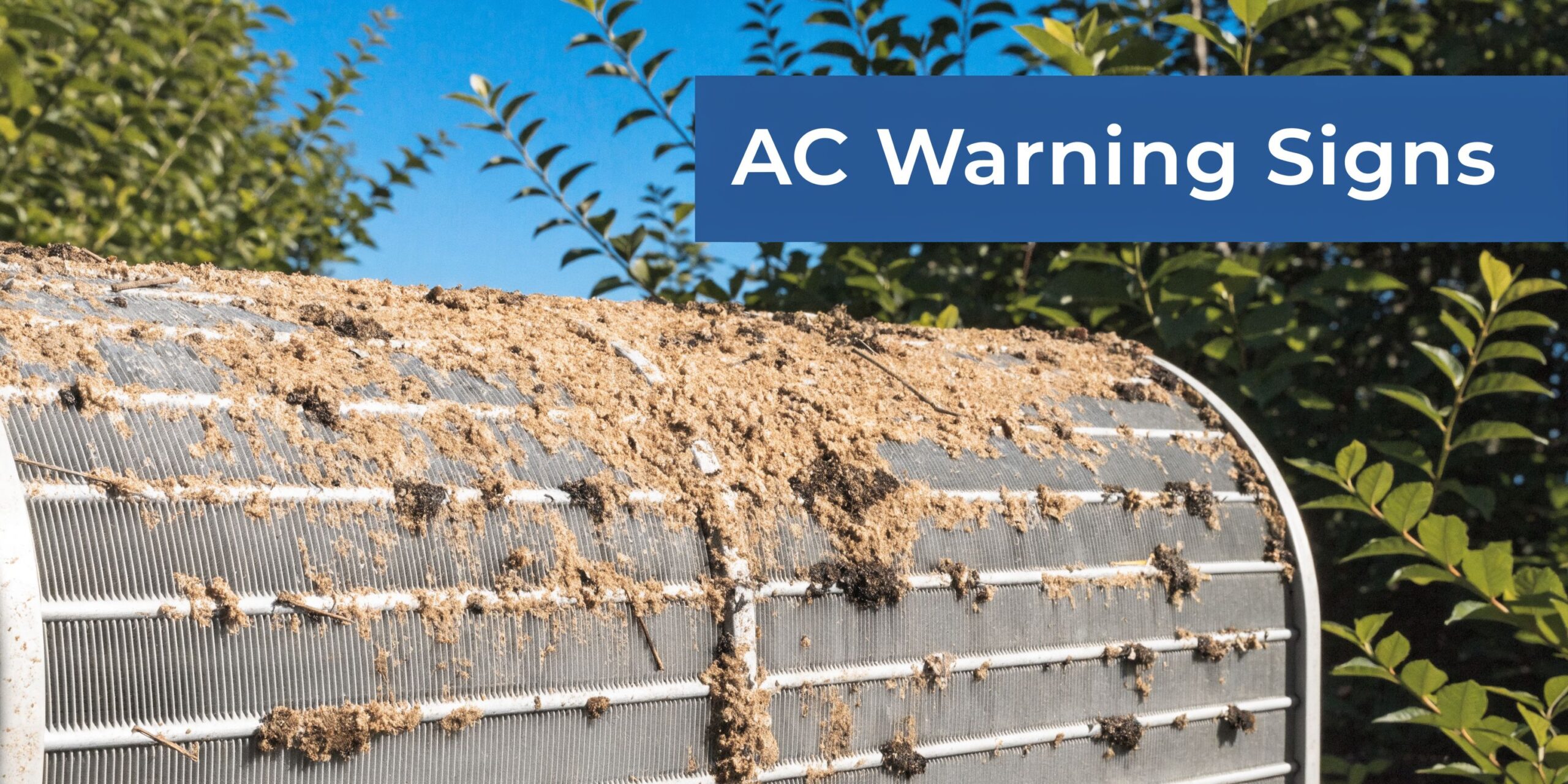
- Outdoor unit looks packed with debris: Cottonwood, dust, leaves, and grass clippings around the condenser are obvious red flags.
- Musty odor indoors: Indoor coil buildup can contribute to stale or damp smells when the blower starts.
- Ice on refrigerant lines or near the indoor coil: Restricted airflow and coil problems can contribute to icing conditions.
One clue by itself doesn’t confirm dirty coils. A cluster of them usually means it’s time for a closer look.
Frequency matters more in the Valley
A clean system in a mild climate can often go longer between service visits. That’s not always realistic here. Total Comfort Cooling’s guidance states that industry consensus recommends cleaning AC coils at least once per year, but homes in Arizona’s dusty Phoenix Valley may need coil cleaning every 3-6 months, especially with pets or during high-pollen periods.
That lines up with what we see locally. Homes near open desert, active construction, or heavy traffic corridors usually load up faster.
If your AC used to cool the house by evening and now struggles until after sunset, don’t ignore it. That change often points to airflow or coil condition.
A simple homeowner check
You don’t need gauges or advanced tools to do a basic first pass. Start with observation.
- Stand by the outdoor unit when it’s off and look through the grille. If the coil surface looks matted with dust, it needs attention.
- Check the indoor filter. A severely dirty filter often means the indoor coil has also been exposed to extra debris.
- Notice odors at startup. A musty smell can point to buildup on the evaporator side.
- Watch for icing on the copper line or around the air handler.
If the system is cooling poorly and you’re seeing those symptoms together, it’s time to investigate further. If your issue includes weak airflow or no meaningful cooling at the vents, our guide on why an AC is not blowing properly can help you narrow down whether the problem is coil-related or part of a bigger airflow issue.
Your Coil Cleaning Toolkit and Safety Checklist
A decent result starts before any cleaner hits the coil. The wrong tools make a simple cleaning harder, and in some cases they create damage that’s worse than the dirt.

Start with safety, every time
Before touching the outdoor condenser or opening the indoor air handler, shut off power completely. That means the thermostat alone isn’t enough. Use the breaker and the disconnect for the outdoor unit.
Wear gloves and eye protection if you’re using any coil cleaner. Even mild products can irritate skin and eyes, and outdoor compartments often hide sharp sheet metal edges.
Shut the system down fully before you put a screwdriver on a panel. That’s the first step, not the fifth.
Essential Coil Cleaning Supplies
| Item | Purpose | Pro-Tip |
|---|---|---|
| Screwdriver or nut driver | Remove access panels and condenser top grille | Keep screws in a small container so nothing falls into the unit |
| Work gloves | Protect hands from fins and sharp cabinet edges | Thin gloves improve grip better than bulky yard gloves |
| Safety glasses | Protect eyes from cleaner splash and debris | Wear them even for a simple rinse |
| Soft brush or nylon coil brush | Loosen surface debris gently | Don’t use a stiff wire brush on aluminum fins |
| Shop vacuum with soft brush attachment | Remove loose dirt from accessible areas | Use light pressure so you don’t crush fins |
| Fin comb | Straighten bent fins to restore airflow | Match the comb to the fin spacing if possible |
| Pump sprayer or spray bottle | Apply cleaner evenly | A spray bottle is especially useful indoors |
| Coil cleaner labeled for HVAC use | Break down dirt and film on coil surfaces | Use a non-acidic option indoors |
| Garden hose with gentle spray | Rinse outdoor condenser coils | Choose low pressure, not a jet stream |
| Plastic sheeting or bag | Protect electrical sections during outdoor cleaning | Cover controls before spraying nearby |
| Flashlight | Inspect hidden coil surfaces and drain areas | Side lighting makes buildup easier to see |
What to avoid
Some mistakes happen before cleaning even begins.
- Pressure washers: They’re too aggressive for delicate fins.
- Household degreasers: If they aren’t labeled for HVAC coils, don’t assume they’re safe.
- Metal picks or stiff brushes: They can shred fins and restrict airflow.
- Too much water indoors: Evaporator sections need a light touch, not a soaking.
Foaming cleaners can work well outdoors when applied carefully. Indoors, many homeowners do better with a gentler product and much more control over moisture. The goal isn’t to blast the coil. It’s to remove buildup without damaging the equipment around it.
Cleaning Your Outdoor Condenser Coils Like a Pro
The outdoor condenser does the hardest visible work in a Phoenix cooling system. It sits in direct sun, inhales desert dust, and catches whatever the yard and monsoon season throw at it.
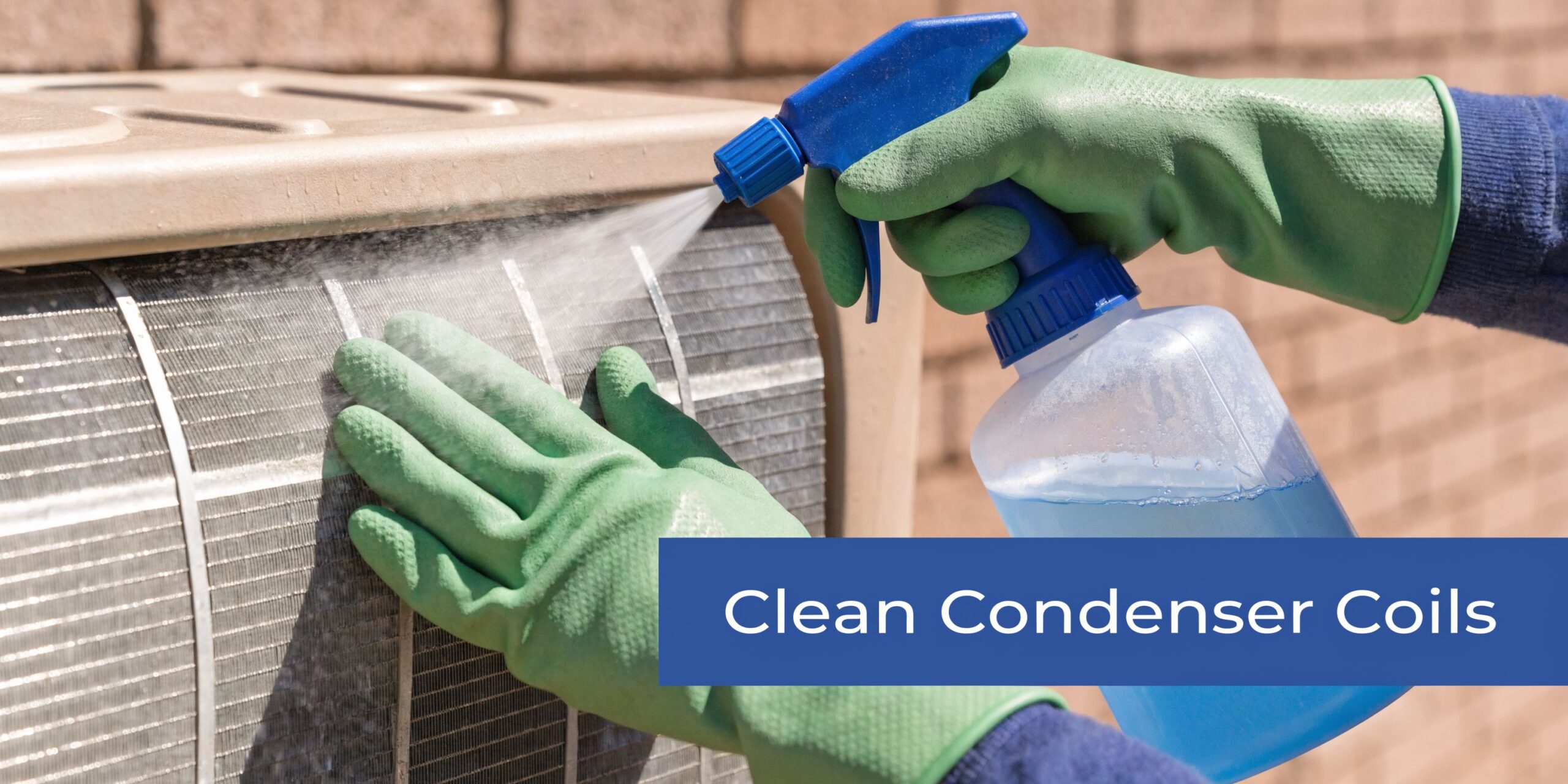
Step one is access and inspection
Turn off power at the breaker and disconnect. Verify the fan won’t start.
Remove the top grille or fan assembly carefully if your unit design allows it. Support the fan so you don’t strain wiring. Clear leaves, seed pods, and dirt from the base pan, and make sure drain openings aren’t blocked.
Look closely at the coil face. If debris is mostly on the outer surface, a careful rinse may be enough. If dirt is packed through the fins, you’ll need a more thorough cleaning approach.
The rinse direction matters
The rinse direction matters, a common mistake in many DIY jobs. CRC Industries’ coil cleaning guidance warns that a common mistake is using a high-pressure washer, which can bend aluminum fins that are only 0.004-0.006 inches thick and reduce airflow by 20-50%. The same source says the right method is a low-pressure rinse from the inside out.
That inside-out direction is critical. It pushes debris back out the way it came in, instead of packing it deeper into the coil.
Outdoor cleaning sequence
Remove loose debris first
Use your hand, a vacuum, or a soft brush to clear the base and accessible coil surface.Protect electrical components
Cover exposed control sections with plastic if rinse water could reach them.Pre-rinse from the inside out
Use a gentle stream. Slow and even beats forceful and fast.Apply foaming coil cleaner
Follow the product label. Coat the dirty surfaces evenly.Let it dwell
Give the cleaner time to loosen stuck grime. Don’t rush this part.Rinse again from inside out
Flush until the runoff looks cleaner and the fins look open.Inspect fin condition
Straighten bent spots carefully with a fin comb if needed.Reassemble and allow drying
Reinstall panels properly before restoring power.
What works and what doesn’t
A successful outdoor coil cleaning is more about control than force.
| Method | Works well | Usually causes problems |
|---|---|---|
| Low-pressure hose rinse | Flushing loose dust and cleaner from fins | Not ideal if buildup is hardened and neglected |
| Foaming condenser cleaner | Breaking down oily film and embedded dirt | Can disappoint if you skip dwell time |
| Soft brush on accessible surfaces | Removing surface debris gently | Too much pressure can fold fins |
| Pressure washer | Rarely appropriate for residential coil fins | Can flatten fins and reduce airflow |
| Spraying from the outside inward | May remove a little surface dirt | Often drives debris deeper into the coil |
A few field-tested cautions
Phoenix equipment often has more than simple dust on it. We see units with matted lint, yard residue, and baked-on grime after long summers.
If the coil is visibly crushed, heavily impacted, or still clogged after a careful rinse, stop there. A deeper cleaning may require more disassembly and more experienced handling. If you want more detail on products and methods for condenser maintenance, this guide to condensing coil cleaner is worth reviewing before you start.
Tackling the Indoor Evaporator Coils Safely
Indoor evaporator coils are less forgiving than outdoor condensers. They’re tucked inside the air handler or furnace cabinet, they sit near insulation and electrical components, and too much moisture in the wrong place can create a second problem while you’re trying to solve the first.
Why the indoor side needs a lighter hand
The evaporator coil handles indoor heat absorption, so dirt on that surface affects airflow and cooling quality quickly. If it gets coated with dust or film, the system can struggle to cool evenly, and you may notice odor issues when the blower starts.
The cleaning approach should be gentle. QuitCarbon’s evaporator coil guide notes that over-wetting the indoor unit is a primary cause of callbacks because it can lead to musty smells from mold growth. The same source warns that 10% fin damage can cut cooling capacity by 15%, which is why a fin comb matters.
Indoor coil cleaning is not a hose-it-down job. Light moisture, controlled cleaner use, and careful drying matter more than speed.
A careful indoor process
Start by shutting off power at the breaker. Remove the access panel and expose the A-coil if your system design allows reasonable access.
Take a quick photo before disconnecting or moving anything removable. That helps with panel placement and reassembly later.
Then work in this order:
- Dry debris removal first: Use a soft brush or vacuum with a brush attachment to lift loose dust.
- Check the fins: If sections are bent, use a fin comb carefully instead of forcing airflow through crushed metal.
- Apply coil-safe cleaner lightly: A non-acidic evaporator cleaner is the safer choice for most indoor applications.
- Allow dwell time: Let the cleaner loosen film and residue.
- Use minimal rinse moisture if needed: A spray bottle gives better control than pouring or spraying large amounts of water.
- Inspect the drain path: Make sure the condensate pan and drain line can carry away moisture.
- Dry before restoring power: Air movement and patience help prevent odor and moisture problems.
Common indoor mistakes
These are the errors that create more trouble than they solve:
- Soaking the coil cabinet: Excess moisture can linger, smell, and affect nearby components.
- Using the wrong brush: Stiff bristles can flatten fins quickly.
- Ignoring the filter: A fresh coil won’t stay clean if a dirty filter keeps feeding it dust.
- Skipping the drain check: Even a careful cleaning can create overflow trouble if the drain is already restricted.
When access itself is the problem
Some indoor coils are easy to inspect. Others are buried in tight cabinets, sealed compartments, or awkward attic installations.
If you open the panel and can’t clearly reach the coil face without forcing parts, don’t press on. Limited access is one reason homeowners damage fins, disturb insulation, or reassemble panels poorly. If you need help identifying what you’re looking at, this explanation of where evaporator coils are located can help you understand the layout before deciding whether to proceed.
The Verdict DIY vs Calling Comfort Experts in Phoenix
It is 6 p.m. in Phoenix, the house is still warm, and the AC has been running for hours. In that situation, coil cleaning is no longer a weekend experiment. The question is whether a light cleanup will help, or whether the system needs a technician who knows what desert dust, hard water, and long run times do to coils here.
A careful homeowner can handle a basic outdoor coil rinse if the buildup is light and access is clear. Phoenix systems often need more than that. Fine dust packs deep into condenser fins, irrigation overspray leaves mineral scale, and months of extreme heat bake that residue onto the metal. We see plenty of units where a hose and store-bought cleaner only remove the loose surface layer.
When DIY makes sense
DIY is a reasonable choice under a narrow set of conditions:
- The outdoor coil has light surface dust only: You can still see through the fins in most areas.
- Power can be shut off and verified safely: No guessing at the disconnect or breaker.
- You have the right supplies: Low-pressure water, coil-safe cleaner, gloves, eye protection, and a fin comb for minor touch-up.
- You are limiting the job to accessible outdoor cleaning: No electrical repairs, refrigerant work, or sealed cabinet disassembly.
That kind of cleanup can help airflow and heat rejection. It also keeps a minor dirt problem from turning into a summer breakdown.
When calling Comfort Experts makes more sense
Professional service is the better call when the system shows signs of heavier restriction or anything beyond simple dirt removal:
- Desert grime is stuck deep in the coil or mixed with hard-water deposits
- Fins are crushed or folded across larger sections
- The indoor coil is hard to reach, especially in a tight attic or enclosed cabinet
- Cooling problems continue after basic maintenance, including icing, odor, or weak airflow
- You are not fully confident around high voltage, moving parts, or overall system condition
The trade-off is simple. DIY saves money on a light cleaning. A deeper coil problem can cost more if the wrong method drives debris farther into the coil, leaves scale behind, or damages fins that were still doing their job.
That same homeowner-versus-specialist decision shows up in other parts of home care. The article on understanding local professional cleaning services in Phoenix makes a similar point. Local conditions change the line between routine upkeep and work that needs trained hands.
If your unit is already struggling in the heat, guesswork usually gets expensive fast. Our guide to AC repair service near me can help you tell the difference between a maintenance issue and a repair call.
If the system is not keeping up, we can inspect the coils, confirm whether dirt is really the problem, and clean the unit the right way for Phoenix conditions. Call 480-207-1239 or schedule service with Comfort Experts online.