Maintaining a commercial HVAC system in the Phoenix Valley isn't just about comfort; it's the lifeblood of your operation, ensuring productivity and protecting your bottom line. An effective, proactive strategy starts with a detailed commercial hvac maintenance checklist to prevent surprise breakdowns, high energy bills, and costly disruptions. This guide provides a comprehensive roadmap for safeguarding your investment and ensuring your system runs at peak performance all year long.
1. Air Filter Inspection and Replacement
The single most impactful task on any commercial HVAC maintenance checklist is the regular inspection and replacement of air filters. This isn't just about changing a filter; it’s the foundational step that directly influences system efficiency, component longevity, and the health of your building’s occupants. Commercial filters are designed to capture a high volume of airborne particles, from common dust and pollen to finer contaminants, protecting both the sensitive internal components of the HVAC unit and your indoor air quality.
When a filter becomes clogged with debris, it severely restricts airflow. This forces the system's fan motor to work overtime, drawing significantly more electricity just to circulate air. This strain not only inflates your utility bills but also accelerates wear and tear, leading to premature and costly equipment failures. As emphasized by ENERGY STAR and leading manufacturers like Trane, consistent filter maintenance is non-negotiable for peak performance. You know what? It's the simplest step that yields the most significant return.
Implementation in the Phoenix Valley
A proactive filter strategy pays measurable dividends. For instance, several Mesa office buildings that switched from a reactive to a strict monthly filter replacement schedule reported a 15-20% reduction in their HVAC-related energy costs. Similarly, manufacturing facilities throughout the Phoenix Valley, which require pristine air for production, rely on high-MERV or HEPA filters changed on an even more frequent basis to prevent product contamination and protect employee health. For multi-tenant commercial properties, a consistent quarterly replacement schedule is often the standard to ensure uniform performance across all units.
Actionable Tips for Filter Maintenance
To effectively manage this critical task, implement the following best practices:
- Select the Correct MERV Rating: Always use the filter rating specified by your HVAC unit's manufacturer. Using a filter that is too restrictive can damage the system just as much as a clogged one.
- Automate Reminders: Use a digital calendar or building management system to set recurring reminders for filter inspections and replacements. Don't leave it to memory.
- Stock Up: Maintain a supply of backup filters on-site. This prevents downtime if a filter is found to be unexpectedly dirty or damaged during an inspection.
- Document Everything: Keep a detailed log of every filter change, including the date, the unit number, and the type of filter installed. This data is invaluable for tracking performance and diagnosing potential issues.
- Know Your Schedule: The frequency of changes can vary significantly. While a standard office might need quarterly changes, a restaurant or workshop in a dusty area may need monthly attention. For a deeper dive into creating the right schedule for your specific environment, you can learn more about how often to change your air filters and adapt the principles for your commercial needs.
2. Refrigerant Level Checks, Performance Testing, and Capacity Verification
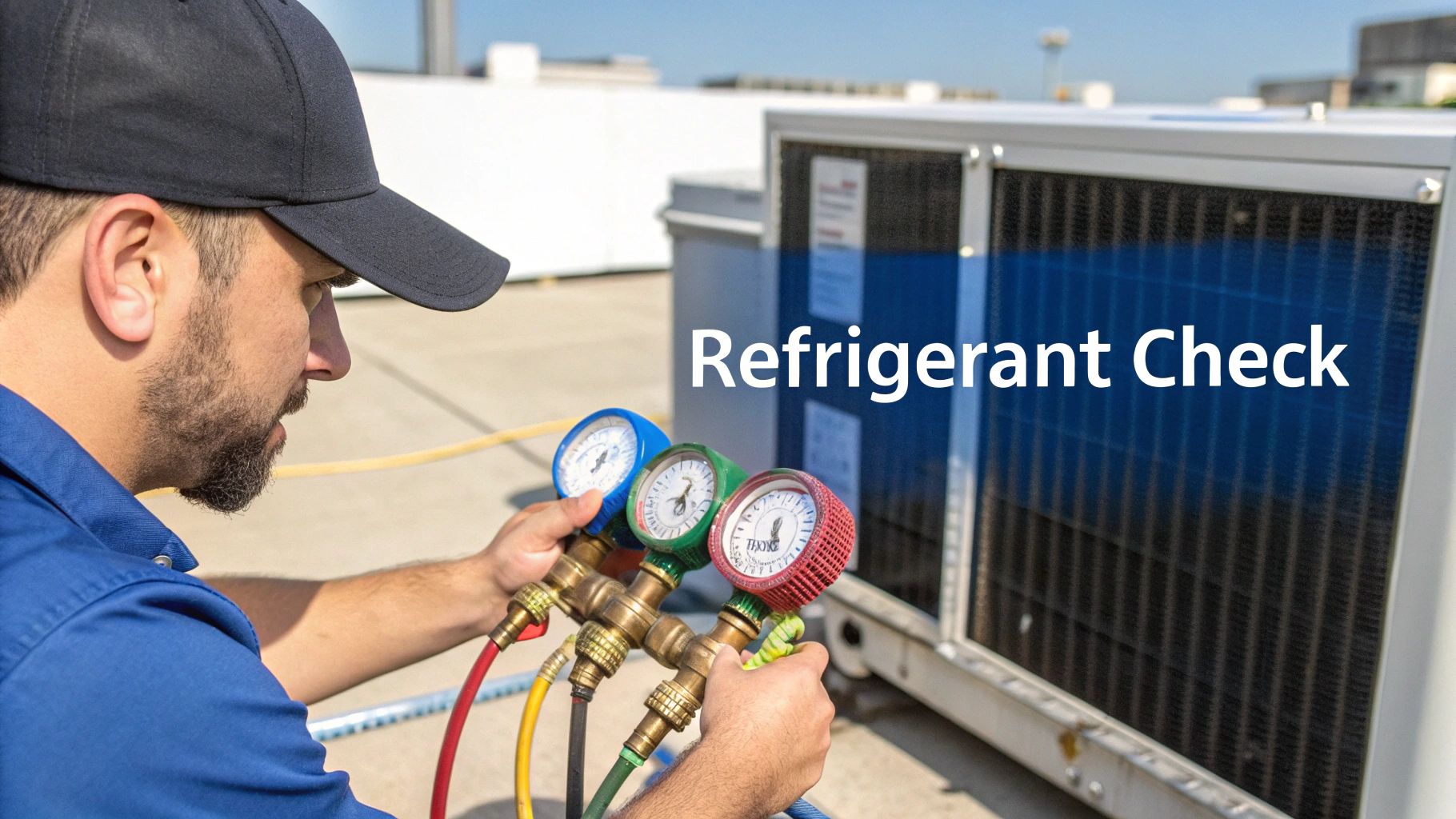
Refrigerant is the vital fluid that allows your air conditioning system to transfer heat, making it the lifeblood of your commercial cooling equipment. An essential part of any commercial HVAC maintenance checklist involves verifying that these refrigerant levels are precise. An incorrect charge, whether too low or too high, drastically reduces efficiency, compromises cooling capacity, and can cause catastrophic damage to the compressor, the system's most expensive component.
This process goes beyond a simple top-off. True professional service, as outlined by ASHRAE and leading manufacturers, includes comprehensive performance testing to confirm the unit is operating within its design specifications. Low refrigerant is always a symptom of a leak, which must be located and repaired to ensure long-term reliability and compliance with EPA regulations. Simply adding refrigerant is a costly temporary fix that ignores the underlying problem.
Implementation in the Phoenix Valley
Here’s the thing, proper refrigerant management is a financial and operational imperative in Arizona's extreme heat. For example, a multi-story building in Mesa recently identified a series of microfracture leaks in their system through proactive annual checks, preventing a massive system failure during peak summer temperatures. Similarly, a Phoenix-area commercial complex with R-410A systems identified a 30% loss in cooling capacity during performance testing, which pointed to an impending compressor failure, allowing for a planned replacement instead of an emergency shutdown. This level of verification is critical for any business that cannot afford downtime.
Actionable Tips for Refrigerant Management
To ensure your system’s performance and longevity, integrate these professional practices:
- Schedule Annually: Book refrigerant checks with a certified professional before the cooling season begins to catch issues early.
- Verify Certification: Always work with EPA-certified technicians. Ask to see their Section 608 certification, as this is legally required for anyone handling refrigerants.
- Document Everything: Maintain meticulous records of refrigerant types, amounts added, and leak repair locations for compliance and performance tracking.
- Fix Leaks Immediately: Never accept "topping off" the refrigerant as a solution. A proper repair is the only way to restore efficiency and prevent future damage.
- Plan for R-22 Phase-Out: If your system still uses R-22, begin planning for an upgrade now. The availability of this refrigerant is dwindling, and prices are soaring. Understanding the role of different refrigerants is key; you can learn more about refrigerant types and their history to make an informed decision.
- Establish a Baseline: When a system is new or recently serviced, have a technician document its baseline performance measurements (e.g., system pressures, Delta T). Comparing future readings to this baseline is the best way to identify performance degradation over time.
3. Condenser and Evaporator Coil Cleaning
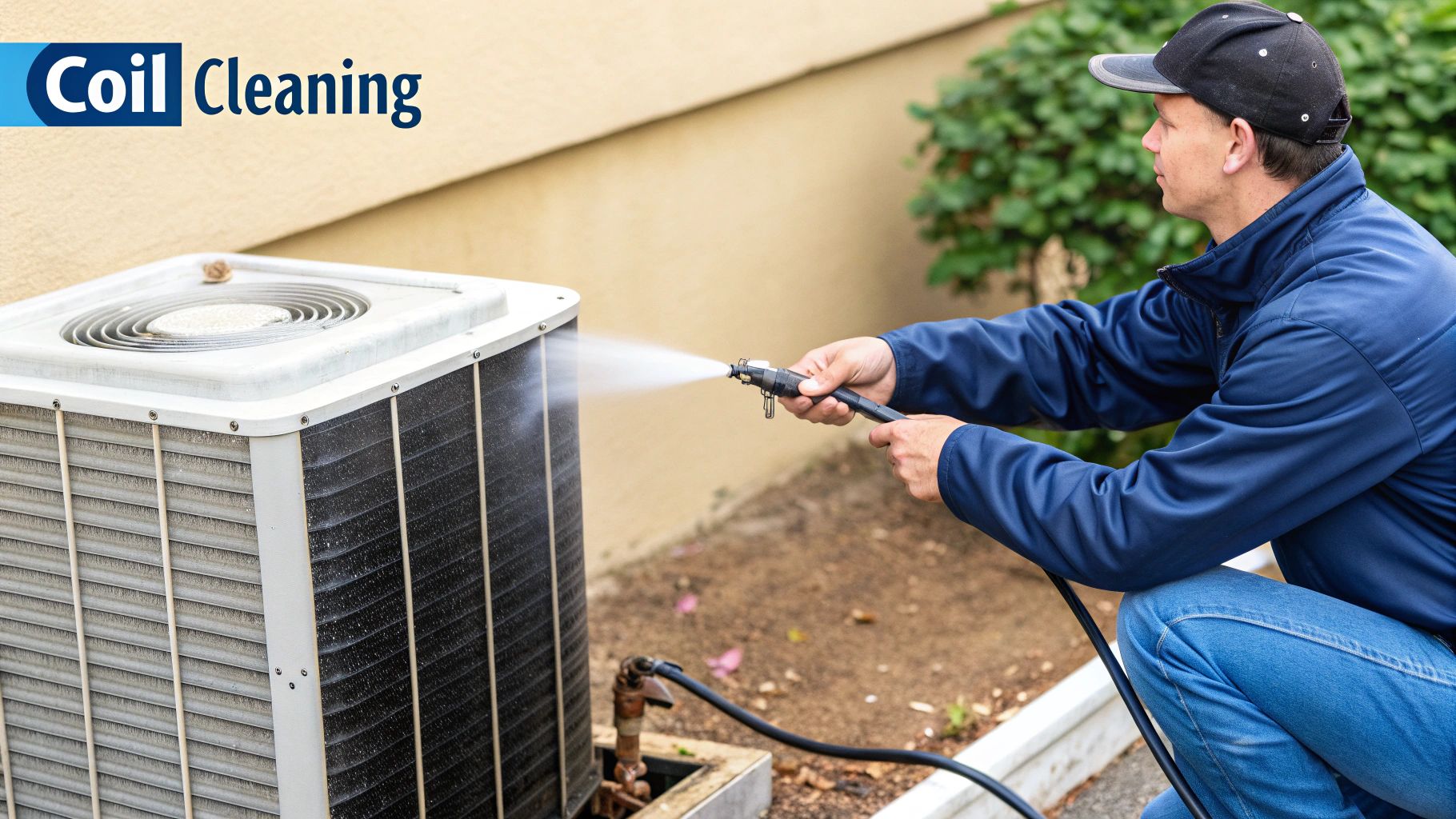
Beyond filters, the cleanliness of your system's heat exchanger coils is paramount for efficient operation. These coils, the condenser coil located in the outdoor unit and the evaporator coil in the indoor unit, are where the critical heat exchange process happens. Dirty coils act like an insulating blanket, severely hindering their ability to absorb and release heat, which is the core function of your HVAC system. This forces the compressor and fans to run longer and harder to achieve the desired temperature, drastically increasing energy consumption and causing premature component failure.
This task is a non-negotiable part of any comprehensive commercial HVAC maintenance checklist. According to guidelines from the EPA's ENERGY STAR program, cleaning dirty condenser and evaporator coils can restore lost efficiency by 10% to 30% or more. The system essentially has to work against a layer of grime, pollen, and dust, leading to higher operating pressures, increased wear, and ultimately, a shorter equipment lifespan. Neglecting this step is one of the fastest ways to turn a minor maintenance task into a major repair bill.
Implementation in the Phoenix Valley
The dusty, pollen-heavy environment of the Phoenix Valley makes this task even more critical. For example, rooftop units on commercial buildings in Phoenix often require semi-annual condenser coil cleaning just to combat the constant buildup of desert dust that cakes onto the fins. In Mesa, some office buildings are opting for advanced coil cleaning methods to remove deep-set biological growth and contamination from indoor evaporator coils, improving both efficiency and air quality. Furthermore, commercial kitchens face an even greater challenge, often needing monthly evaporator coil cleaning to remove grease-laden vapor before it solidifies and completely blocks airflow.
Actionable Tips for Coil Maintenance
To ensure your system's coils are performing at their peak, integrate these practices into your maintenance routine:
- Proactive Scheduling: Clean the outdoor condenser coils before the peak cooling season begins to ensure maximum efficiency when you need it most.
- Use Proper Cleaners: Insist that technicians use professional-grade, non-acidic coil cleaners. Harsh chemicals can corrode the delicate aluminum fins, causing permanent damage.
- Maintain Clearance: Ensure a minimum of 2-3 feet of clear space around all sides of your outdoor condenser units to allow for proper airflow and prevent debris from being pulled into the coils.
- Combat Biological Growth: For indoor evaporator coils, address any signs of mold or algae promptly with enzyme-based treatments that safely break down organic matter without damaging the coil.
- Keep Detailed Records: Document every coil cleaning in your maintenance log. This information is vital for tracking system performance and can be required to maintain your manufacturer's warranty.
4. Thermostat Calibration and Control System Testing
The thermostat and its associated control system serve as the brain of your commercial HVAC operation. An inaccurate thermostat can quietly sabotage your energy budget, causing the system to run excessively or fail to maintain comfortable conditions, directly impacting both operational costs and employee productivity. This vital step in a commercial HVAC maintenance checklist involves ensuring that what the thermostat reads is accurate and that the entire control system responds correctly to its commands. From simple programmable units to sophisticated Building Automation Systems (BAS), regular testing is essential for efficiency.
When a thermostat is out of calibration, even by a few degrees, it triggers significant waste. A thermostat that reads colder than the actual room temperature will run the air conditioner longer than needed, while one that reads warmer can lead to uncomfortable conditions and system short-cycling. As outlined in ASHRAE guidelines, proper control system function is a cornerstone of energy management, ensuring that heating and cooling are delivered precisely when and where they are needed, not just based on a faulty reading.
Implementation in the Phoenix Valley
Let me explain how this plays out locally. Several Mesa office complexes have seen energy savings of 15-20% simply by upgrading to modern Trane smart thermostats and implementing an annual calibration schedule. For multi-tenant buildings across Phoenix, advanced zone control systems are crucial for providing tenant-specific comfort and billing, but they are only effective if the underlying sensors are accurate. Furthermore, many facilities now integrate occupancy sensors that automatically adjust or disable cooling in unoccupied areas after hours, a strategy that relies entirely on a well-maintained and responsive control system.
Actionable Tips for Thermostat & Control Maintenance
To ensure your HVAC system's "brain" is functioning optimally, follow these best practices:
- Calibrate Annually: Use a high-quality, reliable reference thermometer to check your thermostat's reading at least once a year. Adjust or replace the unit if there is a consistent discrepancy.
- Test System Response: Verify that the HVAC unit turns on and off correctly when you adjust the setpoints for both heating and cooling modes.
- Optimize Schedules: Program setbacks based on actual occupancy patterns. Setting the temperature 2-3°F warmer during unoccupied summer hours can yield substantial savings without compromising equipment.
- Proper Placement: Ensure thermostats are not located in direct sunlight, near exterior doors, or directly in the path of supply air vents, as these factors will cause inaccurate readings.
- Monitor Energy Data: Modern control systems provide valuable data. Regularly review energy reports to spot unusual spikes in usage that could indicate a control system malfunction.
- Consider Upgrades: If your system relies on older, manual thermostats, exploring a professional thermostat installation in Mesa, AZ can provide a significant return on investment through enhanced control and efficiency.
5. Ductwork Inspection, Sealing, and Cleaning
An often-overlooked yet critical component of any commercial HVAC maintenance checklist is the vast network of ductwork hidden behind walls and above ceilings. This system is the circulatory system for your building's conditioned air. However, over time, ductwork can develop leaks, disconnections, and accumulate contaminants, silently sabotaging both efficiency and air quality. Ignoring the ducts is like having a perfect engine connected to a leaky hose; the system works hard, but the output is severely compromised.
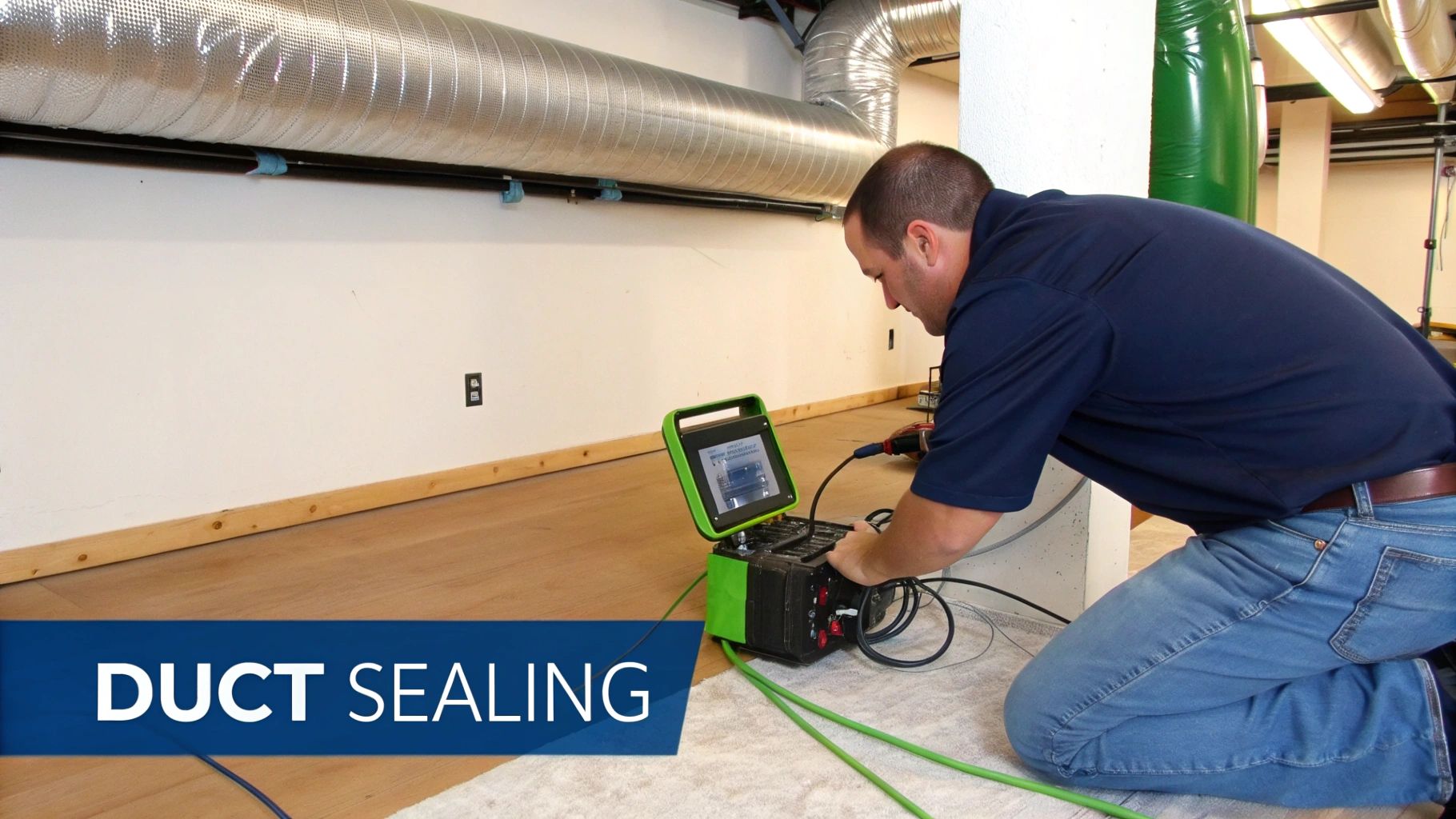
The EPA’s ENERGY STAR program highlights that leaky ducts in commercial buildings can waste 20-30% of the conditioned air before it ever reaches its intended space. This forces your HVAC system to run longer and harder to compensate, leading to inflated energy bills and accelerated wear on expensive components. Furthermore, dirty or contaminated ducts can become a breeding ground for dust, mold, and allergens, which are then distributed throughout your facility, negatively impacting the health and productivity of occupants.
Implementation in the Phoenix Valley
The benefits of professional ductwork maintenance are not just theoretical; they are proven and measurable across the Valley. For instance, several Phoenix office buildings that underwent professional duct testing discovered leakage rates exceeding 40%, a massive and previously invisible energy drain. After implementing comprehensive sealing, they saw a significant drop in operational costs. Similarly, Mesa medical facilities regularly schedule professional duct cleaning to comply with stringent sterile environment standards, safeguarding patient health. By addressing the duct system directly, these businesses protect their assets, people, and bottom line.
Actionable Tips for Ductwork Maintenance
To maintain the integrity and performance of your building's ductwork, integrate these best practices into your maintenance plan:
- Schedule Pre-Season Inspections: Have a professional inspect your ductwork for leaks, damage, or disconnections before the peak cooling season begins. Catching issues early prevents major energy waste during the hottest months.
- Leverage Advanced Sealing: For hard-to-access or completely sealed duct systems, traditional sealing methods are often impractical. Consider advanced solutions like Aeroseal, which seals leaks from the inside out for comprehensive coverage. You can learn more about Aeroseal duct sealing and its application in commercial settings.
- Clean When Necessary: Schedule professional duct cleaning if you see visible contamination through registers, after a building renovation, or if there are unexplained air quality complaints.
- Test for Pressure Balance: After sealing, verify its effectiveness by having a technician test the ductwork's pressure balance. This ensures conditioned air is being distributed evenly and efficiently as designed.
- Document All Work: Keep meticulous records of all inspections, sealing, and cleaning services. This documentation is essential for tracking system performance, warranty claims, and building resale value.
6. Compressor and Motor Bearing Lubrication
If the evaporator and condenser coils are the lungs of an HVAC system, the compressor is undoubtedly its heart. This critical component compresses refrigerant gas, driving the entire cooling cycle. Proper lubrication is the lifeblood that prevents friction, wear, and ultimately, catastrophic failure. This task on the commercial HVAC maintenance checklist is about more than just adding oil; it's a proactive strategy to protect the single most expensive component in your system.
Commercial compressors, especially larger screw or centrifugal types, operate under immense pressure and heat. The specialized oils they use must be kept at precise levels and free from contaminants like moisture or metal shavings. When lubrication is inadequate, internal bearings wear down rapidly, leading to seizure. This isn't just a repair; it’s a complete system overhaul that brings operations to a halt. As outlined in Trane's rigorous maintenance guidelines, vigilant lubrication and oil analysis are essential for equipment reliability and longevity.
Implementation in the Phoenix Valley
This isn't just theory; it's a proven asset protection strategy. Several large manufacturing facilities in Mesa prevent costly, unplanned production shutdowns by integrating proactive oil checks and annual oil analysis into their maintenance protocols. This allows them to detect wear particles and predict bearing failure long before it happens. Similarly, commercial property managers across the Phoenix Valley have extended the operational life of their rooftop units by 5+ years simply by adhering to a strict lubrication and oil maintenance schedule, avoiding premature capital expenditures.
Actionable Tips for Lubrication
To protect your system's most vital components, implement these best practices:
- Use the Right Oil: Always use the specific type and viscosity of oil recommended by the compressor manufacturer. Using the wrong oil can cause as much damage as having no oil at all.
- Regular Level Checks: For larger commercial units with oil sight glasses, check the compressor oil level monthly. It should typically be about halfway up the glass when the unit is running.
- Monitor for Contamination: Keep an eye on the oil's color. Dark, cloudy, or milky-looking oil is a red flag for contamination or moisture, indicating the need for a system flush and oil change.
- Check Crankcase Heaters: Ensure the crankcase heater is functioning correctly, especially during off-cycles. This heater prevents refrigerant from migrating into the oil, which would dilute its lubricating properties.
- Address Leaks Immediately: Even a small oil leak can lead to a significant loss of lubrication over time. Identify and repair any leaks promptly to prevent a low-oil shutdown or compressor damage.
- Keep Detailed Records: Document every time oil is added or changed, including the date, amount, and oil type. This log is crucial for tracking consumption, diagnosing issues, and maintaining warranty compliance.
7. Electrical Connection Inspection and Tightening
The electrical system is the central nervous system of any commercial HVAC unit. While mechanical components get much of the attention, inspecting and tightening electrical connections is a critical safety and performance task that prevents catastrophic failures. Commercial systems often operate on high-voltage three-phase power, where even a minor loose connection can generate immense heat, cause voltage imbalances, and create a significant fire hazard. Over time, the constant vibration from compressors and fans inevitably loosens these vital connections, making regular inspections a non-negotiable part of any comprehensive commercial HVAC maintenance checklist.
A compromised electrical connection forces components to work harder under improper voltage, leading to reduced efficiency and a shorter operational lifespan. This can cause intermittent system shutdowns or complete motor failure. As outlined by the National Electrical Code (NEC) and leading manufacturers like Trane, ensuring the integrity of every terminal, contactor, and disconnect switch is fundamental to safe, reliable, and efficient operation. Honestly, is there anything more frustrating than a system failing on a 115°F day because of a loose wire?
Implementation in the Phoenix Valley
Preventive electrical maintenance provides a massive return on investment, especially in the extreme Arizona heat. For example, Phoenix Valley hospitals, where cooling is a life-safety system, implement strict electrical maintenance protocols to ensure their critical systems have zero unplanned downtime. Similarly, many large office buildings in Mesa have adopted quarterly electrical inspections after experiencing repeated outages, effectively catching loose connections before they could take down a unit during a hot summer day. This proactive approach prevents costly emergency repairs and maintains a comfortable, productive environment for tenants.
Actionable Tips for Electrical Maintenance
To properly address electrical system integrity, follow these professional best practices:
- Schedule and Frequency: Plan for electrical inspections at least biannually. For larger systems or those under constant heavy load, a quarterly check is recommended.
- Use Proper Tools: Utilize thermal imaging cameras to quickly identify "hot spots" at connections, which indicate high resistance and a pending failure. Always tighten connections to the manufacturer's specified torque settings to avoid under or over-tightening.
- Check Voltage Balance: For three-phase systems, verify that the voltage between phases is balanced, ideally within 3% of each other. Imbalances can severely damage motors.
- Inspect Contactors and Relays: Carefully examine contactors for signs of pitting, corrosion, or burning. Replace any components showing significant wear to prevent them from failing under load.
- Verify Protection Devices: A crucial aspect of electrical connection inspection is verifying the integrity and functionality of all overcurrent protection devices. Ensure breakers and overloads are correctly sized for the equipment they protect.
- Document Meticulously: Keep a detailed log of all electrical checks, including torque values, voltage readings, and component replacements. This documentation is vital for compliance and warranty claims.
8. Heat Pump or Furnace Flame Verification and Gas Valve Testing
For commercial properties equipped with heating systems, ensuring their safe and efficient operation is a non-negotiable safety protocol. This critical task on any commercial HVAC maintenance checklist involves verifying the proper function of furnaces and heat pumps, focusing on combustion safety, gas valve response, and the integrity of all safety controls. Neglecting this can lead to catastrophic failures, dangerous carbon monoxide (CO) leaks, and potential fire hazards, making it a paramount concern for facility managers.
A gas furnace must burn fuel cleanly and efficiently. This is visually confirmed by inspecting the burner flame and is quantitatively measured by testing gas pressure and CO levels. Technicians test critical safety devices like limit switches (which prevent overheating) and rollout switches (which detect flames outside the combustion chamber) to ensure they will shut the system down in a dangerous situation. According to the National Fire Protection Association (NFPA), regular inspection and testing of these components are fundamental to preventing heating-equipment-related fires in commercial buildings.
Implementation in the Phoenix Valley
In the Phoenix area, where heating systems are used less frequently than cooling systems, they can often be overlooked until a cold spell hits. Proactive annual inspections are crucial. For instance, many Phoenix healthcare facilities and Mesa-based commercial offices mandate strict furnace safety checks before the heating season begins in late fall. This preventative maintenance ensures that when the heat is needed, it operates safely and reliably, protecting employees, customers, and sensitive equipment from malfunctions or hazardous gas leaks.
Actionable Tips for Heating System Safety
To ensure your commercial heating system is safe and ready for operation, follow these essential steps:
- Schedule Annual Inspections: Have a qualified technician perform a full inspection and tune-up every year before the heating season, typically between September and October.
- Verify Proper Flame: The furnace flame should be steady and blue with a slight yellow tip. A flame that is mostly yellow, orange, or flickering indicates incomplete combustion, which can produce dangerous CO.
- Test Safety Switches: Ensure all safety controls, including the limit switch, pressure switch, and flame rollout switch, are tested for proper operation.
- Check for Gas Leaks: A technician should check all gas line connections and valves using a calibrated gas detector or a soap solution to identify and repair any leaks immediately.
- Inspect the Burner Assembly: Look for any signs of cracks, corrosion, or significant carbon buildup on the burners, which can impede performance and create safety risks.
- Document All Tests: Maintain a detailed log of all safety checks, gas pressure readings, and component tests. This documentation is vital for compliance, insurance, and tracking the unit's health over time. For a comprehensive overview of what this process entails, you can get more details on a professional commercial furnace tune-up in Mesa, AZ to ensure every safety aspect is covered.
Commercial HVAC Maintenance — 8-Point Comparison
| Maintenance Item | Implementation complexity | Resource requirements | Expected outcomes | Ideal use cases | Key advantages |
|---|---|---|---|---|---|
| Air Filter Inspection and Replacement | Low — routine task, minimal skill | Filters (MERV 8–16), storage, scheduling | Improved airflow, IAQ, reduced energy use | All commercial buildings; high-traffic/dusty spaces | Low cost, high impact on efficiency and IAQ |
| Refrigerant Level Checks, Performance Testing, and Capacity Verification | High — EPA Section 608 required | Certified tech, gauges, leak detectors, refrigerant | Correct capacity, leak detection, optimized efficiency | Systems with cooling loss, older refrigerants, commissioning | Prevents compressor damage, ensures regulatory compliance |
| Condenser and Evaporator Coil Cleaning | Medium — careful technique, system shutdown | Low-pressure wash, coil cleaners, trained tech | Restores 10–30% efficiency, improves IAQ, prevents corrosion | Dusty exteriors, mold-prone evaporators, seasonal prep | Significant energy recovery and extended equipment life |
| Thermostat Calibration and Control System Testing | Medium — calibration + control expertise | Reference thermometers, BAS access, Wi‑Fi setup | Accurate setpoints, reduced runtime, energy reporting | Buildings with BAS, multi-zone or occupancy control needs | Remote control, scheduling, measurable energy savings |
| Ductwork Inspection, Sealing, and Cleaning | High — complex systems, specialized methods | Aeroseal or mastic, cameras, vacuums, trained crew | Dramatic leakage reduction, better distribution, improved IAQ | Large commercial, older buildings, obvious leakage | Large efficiency gains and improved occupant comfort |
| Compressor and Motor Bearing Lubrication | Medium — technical oil selection, monitoring | Spec oils, oil analysis, certified tech, heaters | Extended compressor life, reduced wear, fewer failures | Large compressors, critical/process systems, industrial sites | Prevents catastrophic failure and costly replacements |
| Electrical Connection Inspection and Tightening | Medium — electrical safety procedures | Torque tools, thermal imager, licensed electrician | Reduced fire risk, fewer outages, improved efficiency | High-vibration units, mission-critical facilities | Low-cost risk reduction with major safety benefits |
| Heat Pump or Furnace Flame Verification and Gas Valve Testing | High — combustion and safety testing | Combustion/CO analyzers, draft gauges, certified tech | Safe combustion, reduced CO risk, efficient heating | Gas-fired systems, winter readiness, safety inspections | Protects occupants, ensures code compliance and safety |
Why a Proactive Checklist Matters for Your Business
Navigating the complexities of commercial HVAC systems in the Phoenix Valley is no small task. From the relentless summer heat to the specific demands of different business environments, maintaining peak performance, efficiency, and air quality is paramount. This extensive guide has provided a detailed roadmap—a comprehensive commercial hvac maintenance checklist designed to empower you with the knowledge to protect your significant investment.
We’ve dissected the essential tasks, from monthly filter checks to intensive annual inspections, so you understand the critical role of clean coils, correct refrigerant levels, and safe electrical connections. But why does this all truly matter for your bottom line?
Proactive maintenance can reduce energy costs by up to 25% and extend equipment life by years, turning a potential liability into a reliable asset. This isn't just about avoiding repairs; it's about strategic asset management that directly impacts your operational budget.
From Checklist to Confident Action
The true value of this checklist isn't just in knowing what to do; it's in understanding why each step is crucial for your business's success. Every item, from lubricating motor bearings to calibrating thermostats, directly impacts three core pillars:
- Financial Health: Proactive maintenance prevents catastrophic failures, which often come with exorbitant emergency repair bills and costly operational downtime. It also ensures your system runs at peak efficiency, directly reducing your monthly utility expenditures.
- Occupant Well-being: A well-maintained HVAC system is the heart of your building's indoor air quality. Regular filter changes and coil cleanings minimize the circulation of dust and allergens, creating a healthier, more productive environment for employees and a more welcoming one for customers.
- Asset Longevity: Your commercial HVAC system is one of your property's most valuable assets. Adhering to a rigorous maintenance schedule is the single most effective strategy to extend its operational lifespan, delaying the massive capital expense of a full system replacement.
The Professional Partnership Advantage
While knowledge is power, execution is everything. The detailed tasks on this checklist, especially those involving refrigerants, high-voltage electrical components, and gas systems, demand specialized tools, diagnostic equipment, and certified expertise. Handling these tasks without proper training carries significant risks to both the technician and your equipment.
This is where a professional partnership becomes indispensable. Entrusting your maintenance to a qualified team ensures every task is performed correctly, safely, and in compliance with local codes. It provides a layer of accountability and detailed record-keeping that is invaluable for warranty claims, asset management, and long-term planning.
Your next step is to transition from understanding the checklist to implementing it with a trusted partner. Don't wait for a breakdown to disrupt your business. Take control of your building's comfort, efficiency, and health today.
By leveraging a detailed commercial hvac maintenance checklist with a dedicated professional partner, you transform your HVAC system from a potential liability into a reliable asset. For a team that combines local Phoenix Valley expertise with an unwavering commitment to quality, trust Comfort Experts to manage your maintenance needs with precision and care. Call us at 480-207-1239 or schedule service online to build a customized maintenance plan that protects your business.