

A Mesa facility manager can have a service truck on site and still lose valuable time before the technician touches the unit. The roof hatch may be locked, the disconnect key may be missing, the filter size may be unclear, and nobody may know which tenant zone has the comfort complaint. A facility manager HVAC pre-service checklist for Mesa businesses turns those preventable delays into a controlled handoff, especially before heat, dust, and monsoon weather pressure commercial equipment.
Why Mesa Facility Managers Need a Pre-Service Checklist
A late-June service visit can go wrong before the rooftop unit starts. The facility manager gets a report that several offices are warm, sends a technician upstairs, and then discovers that the roof access key is with an absent employee. The unit label doesn't match the maintenance record, the replacement filters on site are the wrong size, and the building automation system password is known only by a former contractor.
Mesa's climate leaves little room for that kind of delay. Average July highs reach about 104.3°F, while August averages around 101.8°F, and the area records about 3,931 cooling degree days annually, according to Mesa climate data. Commercial cooling equipment therefore works through a long, intense season. A dirty filter, restricted coil, weak capacitor, or marginal refrigerant circuit can become a serious comfort or reliability problem when the building stays under heavy cooling demand.
A generic checklist may mention filters, belts, drains, and electrical connections. A Mesa-specific version also records roof access, dust exposure, monsoon damage, tenant impact, BAS handoff, and the condition of older packaged units. Windblown dust can foul outdoor coils, while idle electrical compartments can attract insects or small animals. Water intrusion around rooftop panels and curbs can create a second problem after a storm.
The same operational discipline used in industries for field service teams applies well to commercial HVAC. Before a technician arrives, the facility manager should identify the affected zones, gather records, confirm safe access, and communicate the building's priorities. That preparation supports a more productive visit for businesses arranging commercial cooling services, particularly when a rooftop failure affects occupied offices, retail space, or production areas.
Access, Safety, and Documentation Before the Tech Arrives
Roof work starts with access control, not tools. The facility manager should confirm the roof hatch or ladder route, identify any property access rules, and verify that the technician can reach the equipment without crossing blocked storage areas or restricted tenant space. A roof that looks accessible from the parking lot may still require a key, escort, approved ladder route, or designated tie-off arrangement.
Secure the work path
Before the appointment, confirm:
- Roof access: Test the hatch key, door code, and any elevator or ladder access required to reach the units.
- Disconnect access: Locate the electrical disconnect and confirm that any lock or tag can be handled through the property's established safety process. A missing padlock key can stop work immediately.
- Walking route: Remove loose materials, abandoned equipment, and other obstructions around the rooftop units.
- Roof condition: Flag deteriorated sealant, loose flashing, exposed fasteners, bird spikes, and areas where foot traffic could damage the membrane.
- Site contact: Assign one person who can authorize access, answer questions, and coordinate tenant entry.
The facility manager shouldn't bypass lockout procedures or open electrical compartments without the appropriate training. The Comfort Experts AC diagnostic visit can proceed more efficiently when the property has already identified safe shutoffs, access restrictions, and the person responsible for site coordination.
Put the unit history in reach
The handoff packet should include unit identification, model and serial numbers, refrigerant information, installation details, recent service notes, and warranty documents. Add the filter size, last filter change, coil-cleaning history, and any earlier notes about leaks, noise, short cycling, weak airflow, or ceiling water spots.
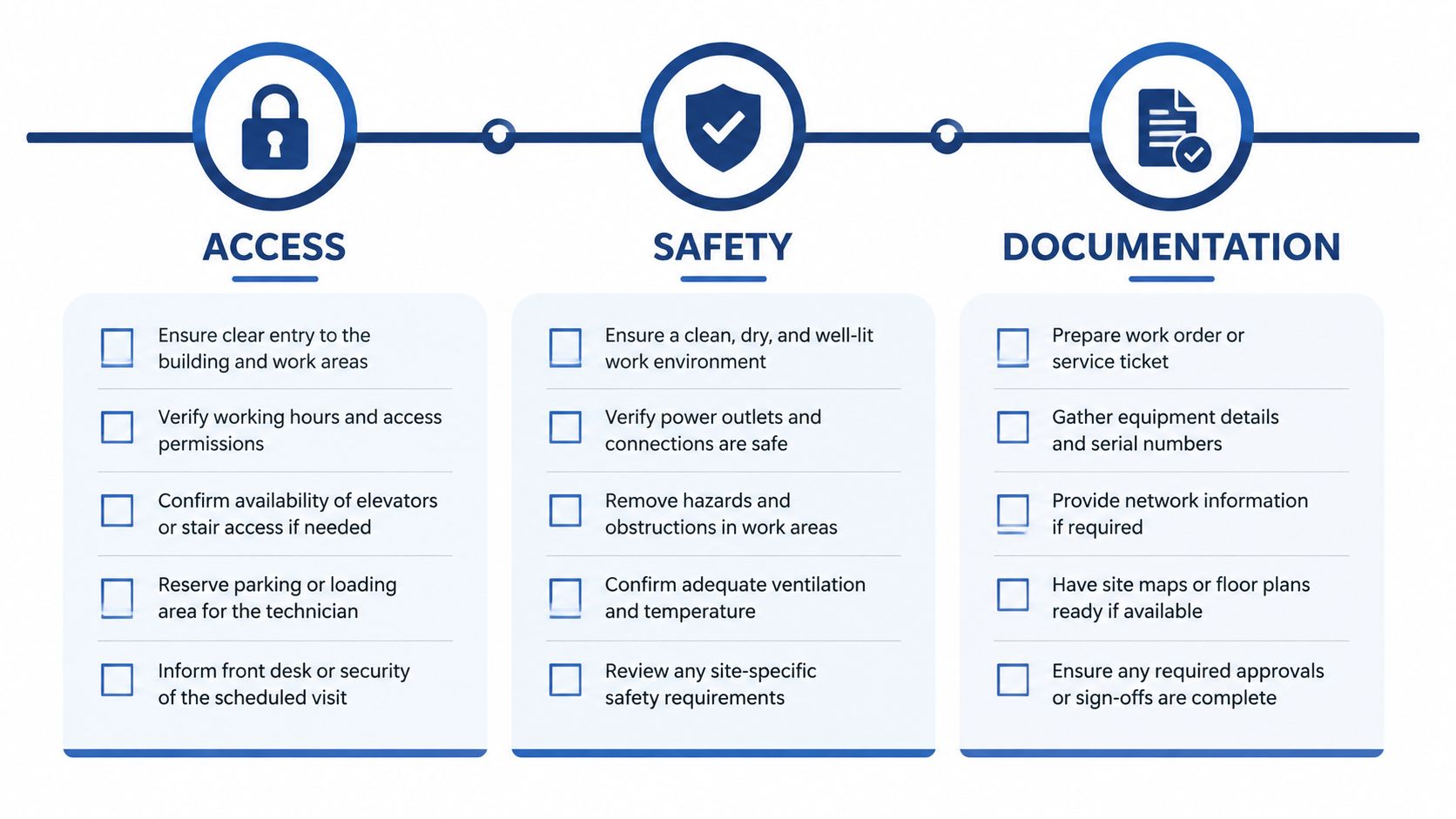
A roof map or marked photograph also helps. It should show unit IDs, disconnect locations, access points, and the orientation of each curb. The technician can then match the physical equipment to the records without spending the first part of the appointment reconstructing the site.
Rooftop and Package Unit Checks That Matter in Desert Heat
A packaged rooftop unit needs more than a quick visual glance. The pre-service inspection should capture the conditions that can explain a failure before the system is placed under full cooling demand.
Outdoor coils deserve close attention after dusty weather. A thin layer of debris reduces heat transfer, while a dense dust mat can raise operating pressure and make the compressor work harder. The inspection should also look for bent fins, irrigation-related corrosion, loose panels, and nesting beneath covers. Power should be shut off before inspection, and outdoor coils should be cleaned with low-pressure water rather than a pressure washer, as recommended in Arizona monsoon HVAC guidance.
Airflow measurements help separate a filter problem from a deeper equipment problem. The technician can record static pressure across the filter and coil, inspect belt tension and condition, and compare supply and return conditions. Refrigerant diagnostics should include superheat, subcooling, leak checks, filter-drier pressure drop, and expansion-valve operation where applicable. These readings matter because restricted airflow and refrigerant faults can compound each other, reducing capacity and increasing compressor stress, as outlined in this Mesa commercial cooling maintenance guidance.
Desert heat pre-service mechanical checks
| Check | What to Record | Mesa Failure Mode It Catches |
|---|---|---|
| Outdoor coil | Dust loading, bent fins, corrosion, nesting | Reduced heat transfer after dust or storm exposure |
| Filters and airflow | Filter condition, static pressure, belt condition, fan performance | Restricted airflow and loss of cooling capacity |
| Refrigerant circuit | Superheat, subcooling, leak indications, filter-drier pressure drop | Low charge, restriction, or expansion-valve problems |
| Drain system | Pan condition, trap, drain line, overflow protection | Water damage from blocked drainage |
| Electrical section | Amperage, contactor condition, capacitor readings, connection security | Overheating, nuisance faults, and startup failure |
| Controls | Thermostat or BAS response, setpoints, safeties | Short cycling, incorrect scheduling, or failed commands |
The condensate pan and drain line need special attention during humid monsoon periods. Standing water, biological buildup, a dry or incorrect trap, and a failed overflow switch can turn a cooling visit into a ceiling-damage event. A technician reviewing a rooftop HVAC system overview can also use the unit's design to identify which components need priority on a particular packaged system.
Mesa's utility rate structure adds an operating-cost reason to document performance. The city's FY 2025/2026 utility rate book lists a commercial demand-related charge of $8.45 per rated ton and an energy charge of $0.07388 per ton-hour, so airflow and equipment condition belong in the facility record, not only on the service invoice. The figures appear in the Mesa utility rate book.
Paperwork and Records to Hand the Technician
The strongest service handoff is a single packet that answers the technician's first questions before the visit begins. A unit roster should identify every affected system by tag, model, serial number, refrigerant type, rated capacity, installation date, and last service date. If the building has several similar rooftop units, the tag and roof map should make it clear which unit serves each zone.
Build one usable record
The packet should contain:
- Filter history: Sizes, change dates, loading observations, and the filter level currently installed.
- Coil history: Cleaning dates, visible contamination, and any chemical products previously used.
- Controls information: Thermostat or BAS schedules, occupied and unoccupied setpoints, alarm history, and the correct login contact.
- Comfort notes: A short description of each complaint, including room, time of day, occupancy condition, and whether the issue is constant or intermittent.
- Service records: Earlier invoices, diagnostic findings, recommended repairs, and parts replaced.
- Warranty documents: Compressor, controls, economizer, or other coverage records that may affect repair decisions.
- Site photos: Unit labels, disconnects, roof access points, curb orientation, and any visible damage.
A screenshot of the relevant BAS screen can be more useful than a verbal description. It gives the technician the exact zone name, schedule, setpoint, and alarm state that the facility manager sees. Access credentials shouldn't be left in an unsecured packet, but the designated contact should know how to provide them safely when needed.
The record should also flag complaints that aren't obvious at the unit. Note short cycling, unusual noise, warm perimeter offices, supply diffusers with weak airflow, odor concerns, and water marks below rooftop equipment. A printed copy should remain on site alongside a PDF copy. Cell coverage can be unreliable behind rooftop parapets or inside mechanical areas, and the technician shouldn't have to wait for a file that only exists on a disconnected device.
Seasonal Timing for Pre-Summer, Monsoon, and Pre-Winter Visits
Mesa facilities need different checklists at different points in the year. A spring capacity review, a monsoon readiness visit, and a fall heating inspection don't ask the same questions or prioritize the same parts.
| Window | Months | Primary Focus | Key Checks |
|---|---|---|---|
| Pre-summer | March through early May | Cooling capacity and readiness | Refrigerant diagnostics, coil cleaning, belts, motors, amperage, capacitors |
| Mid-monsoon | Mid-July through early September | Drainage and storm exposure | Drain pans, condensate lines, overflow switches, panels, coils, visible wind or hail damage |
| Pre-winter | Late October and November | Heat-mode operation | Gas valve, igniter, combustion, heat pump reversing valve, thermostat changeover |
Use the right seasonal emphasis
Pre-summer service is the broadest mechanical review. The system may have operated at low load during the cooler months, so the technician should verify refrigerant performance, condenser cleanliness, motor operation, belt condition, and electrical components before sustained heat exposes a weak part.
Mid-monsoon work shifts toward water and contamination control. Dust storms can load filters and outdoor coils quickly. Filter selection also requires judgment. Arizona guidance notes that MERV 11 to 13 filters should be used only when the equipment can handle the added resistance, so a higher rating isn't automatically a better choice for every rooftop unit. The technician should verify airflow rather than treating the filter rating as a standalone upgrade.
Fall checks prepare heat pumps and furnaces for the change in operating mode. Gas equipment requires appropriate combustion and safety checks, while heat pumps need reversing-valve and control verification. Facility managers looking for a broader seasonal plan can use this guide to prepare your AC for Mesa summer, then adapt the same record for monsoon and heating visits.
Tenant and Occupant Coordination for Smooth Service
A rooftop unit can be mechanically ready for service while the building remains operationally unprepared. In a Mesa office or retail property, the technician may need access to a locked suite, a ceiling area below the unit, or a thermostat controlled by a tenant. Without notice, the visit turns into a sequence of calls, escorts, and interruptions.
Consider a multi-tenant office where the east wing reports warm rooms. The facility manager should identify the affected zones, confirm the tenants' operating hours, and reserve a service window that won't disrupt a busy retail period or a meeting schedule. Notice should state the date, expected duration, affected areas, temporary airflow changes, and the person to contact with complaints.
Assign responsibilities before arrival
- Reception and security: Provide the technician's name or photo, arrival instructions, parking details, and escort rules.
- Building contact: Keep one decision maker available for access questions and repair approvals.
- Tenant contacts: Record who can open each suite, equipment room, and roof hatch.
- Work areas: Ask occupants to clear desks near supply diffusers and protect papers, food, or merchandise near indoor work.
- Noise planning: Schedule vacuum pumps, coil-cleaning equipment, and other disruptive work for a low-occupancy period when practical.
- Completion notice: Share what was inspected, what was repaired, which zones were affected, and when normal operation should resume.
The facility manager should also tell tenants not to adjust setpoints repeatedly while diagnostics are in progress. Constant overrides can obscure the original complaint and make control testing harder. A short, accurate comfort log is more useful than several conflicting thermostat changes.
A Reusable Pre-Service Template and Next Steps
A practical template should fit on a few pages and work for more than one visit. The first block identifies the property, contact person, unit ID, last service date, affected zones, known complaints, access instructions, and the BAS or thermostat information the technician needs.
Pre-summer full inspection
Record the unit roster and roof map, then list the required verification points:
- Cooling circuit: Superheat, subcooling, leak indications, filter-drier pressure drop, and expansion-valve operation.
- Air path: Filters, static pressure, coils, belts, fan performance, and supply and return conditions.
- Electrical section: Connections, contactors, capacitors, amperage, disconnect access, and visible heat damage.
- Drainage: Pan, trap, drain line, and overflow protection.
- Controls: Setpoints, schedules, safeties, alarms, and zone response.
Monsoon readiness and pre-winter blocks
The monsoon block should emphasize coil and filter loading, loose panels, roof penetrations, drainage, and storm-related damage. The pre-winter block should identify furnace or heat-pump mode, igniter and gas-valve checks where applicable, combustion verification for gas equipment, and reversing-valve operation for heat pumps.
Each block should include spaces for technician findings, photographs, vendor sign-off, parts needed, repair priority, and a post-service action list. A facility manager can also compare the document with broader facilities management best practices 2025 when standardizing records across multiple properties.
The completed template should reach the service company before the appointment, not after the truck leaves. That gives the technician a clearer starting point and helps identify whether the visit calls for diagnostic tools, replacement filters, belts, controls work, or other parts. Property teams can also use this stay productive with regular AC upkeep checklist approach to keep maintenance records consistent between service calls.
Facility managers in Mesa can send the completed access notes, unit records, comfort complaints, and seasonal priorities to Comfort Experts before scheduling commercial HVAC work. Comfort Experts serves Mesa and the East Valley with commercial cooling service, rooftop and packaged-unit repair, maintenance, and diagnostics. Call 480-207-1239 or schedule service and provide the checklist details so the visit starts with the right information.