
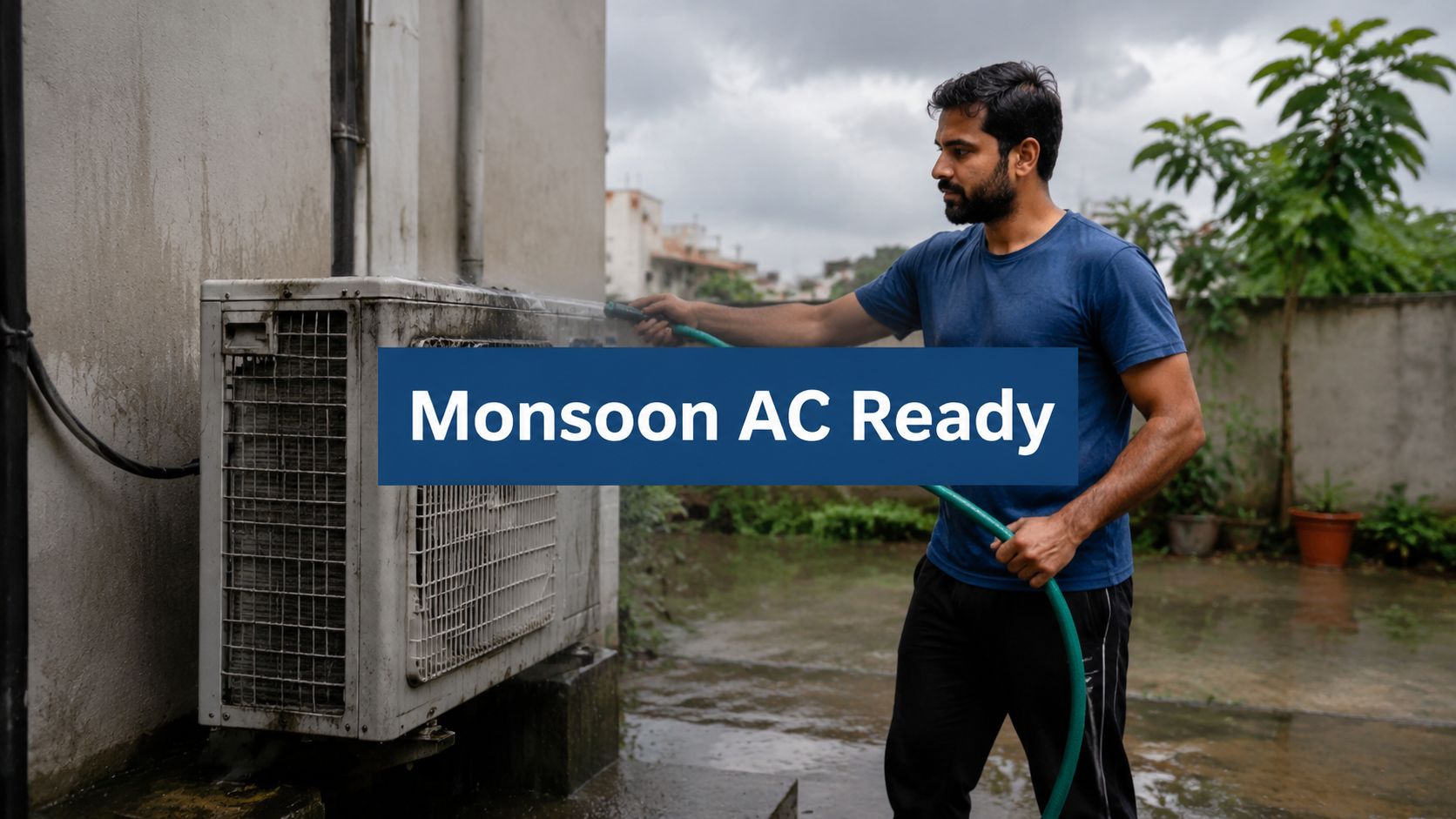
The first big dust wall of the season usually hits when the AC is already running hard. In Mesa and the East Valley, monsoon season AC maintenance isn't just a filter reminder. It's prep for dust storms, sticky humidity, and storm-related power problems that can turn a working system into a service call fast.
Why Monsoon Prep Is Different in the East Valley
Arizona monsoons don't just bring rain. They bring a rough mix of fine dust, sudden humidity, and electrical instability that hits air conditioners from three directions at once.
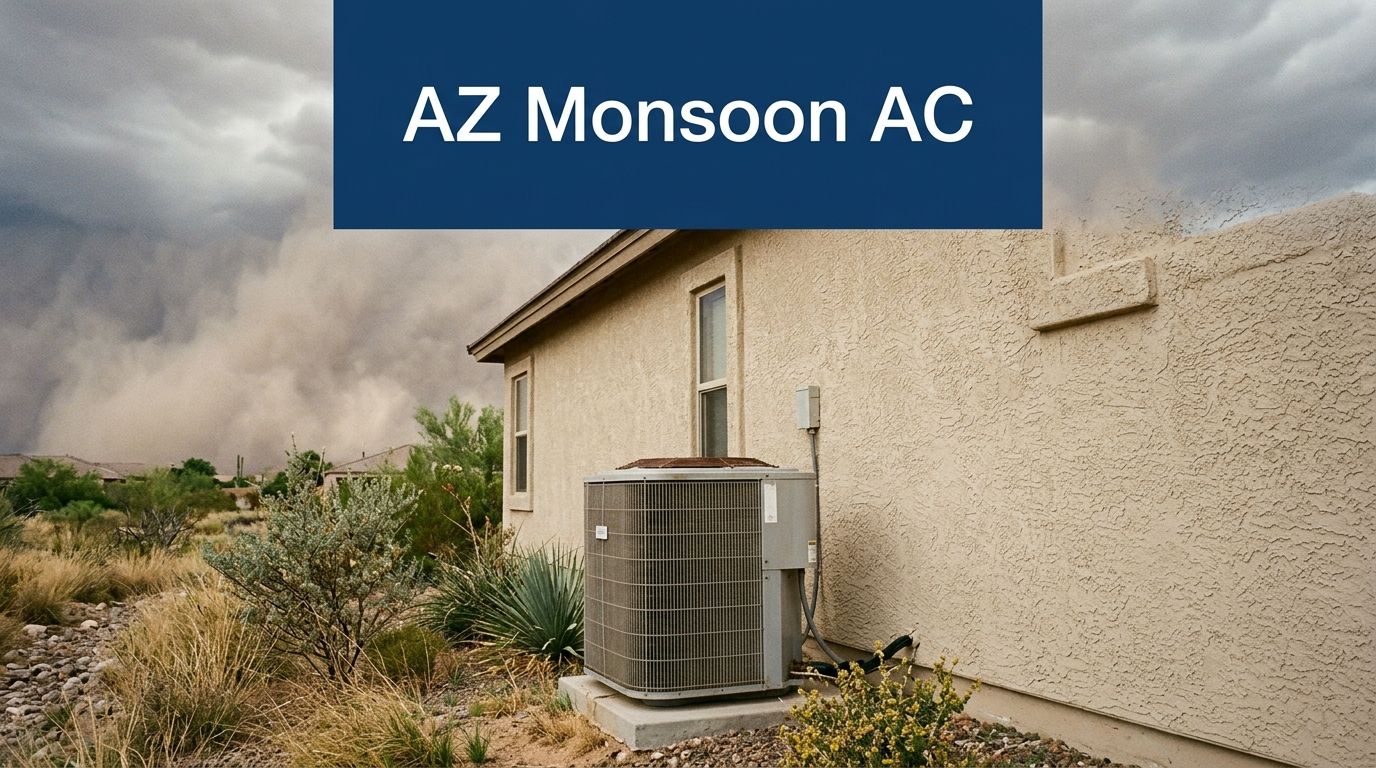
In Mesa, that matters even more because so many homes and commercial properties rely on package units, rooftop systems, and older split systems that already spend summer under heavy load. During Arizona's monsoon season, typically June through September, dust and pollen loads increase enough to clog filters, reduce HVAC efficiency by up to 15%, push package and rooftop units to use 20 to 30% more electricity, and drive AC repair requests up by nearly 30% according to Comfort 1's monsoon HVAC damage overview.
That combination changes the maintenance plan. Generic summer advice doesn't go far enough in the East Valley. A system can be cooling fine on a dry June afternoon, then struggle a week later after one haboob coats the condenser, the filter loads up, and the drain line starts carrying much more moisture.
Why normal summer upkeep isn't enough
A lot of homeowners think monsoon prep means replacing the filter and moving on. That helps, but it doesn't address the full problem.
The outdoor unit gets packed with desert dust. The indoor side has to remove more moisture than usual. Storms can also create brief power events that modern control boards don't tolerate well. Rooftop and package units are especially exposed because they sit where wind-driven debris and dust hit first.
The best approach is targeted maintenance before the first serious storm rolls through. For homeowners who want a local service option, working with an East Valley HVAC contractor makes more sense than waiting for a mid-season breakdown when schedules get tight.
What usually goes wrong first
The first failures during monsoon season are often simple, but expensive if ignored:
- Restricted airflow: Dirty filters and dust-loaded coils make the unit run longer.
- Drain problems: Extra humidity means more condensate, and blocked drains can shut systems down.
- Outdoor coil fouling: A layer of dust acts like insulation and cuts heat rejection.
- Electrical damage: Voltage swings during storms can take out motors or boards.
A lot of utility bill complaints in July and August trace back to those issues. The system still runs, so it seems fine. It just runs longer, cools slower, and wears itself out doing it.
Your DIY Pre-Monsoon Inspection Checklist
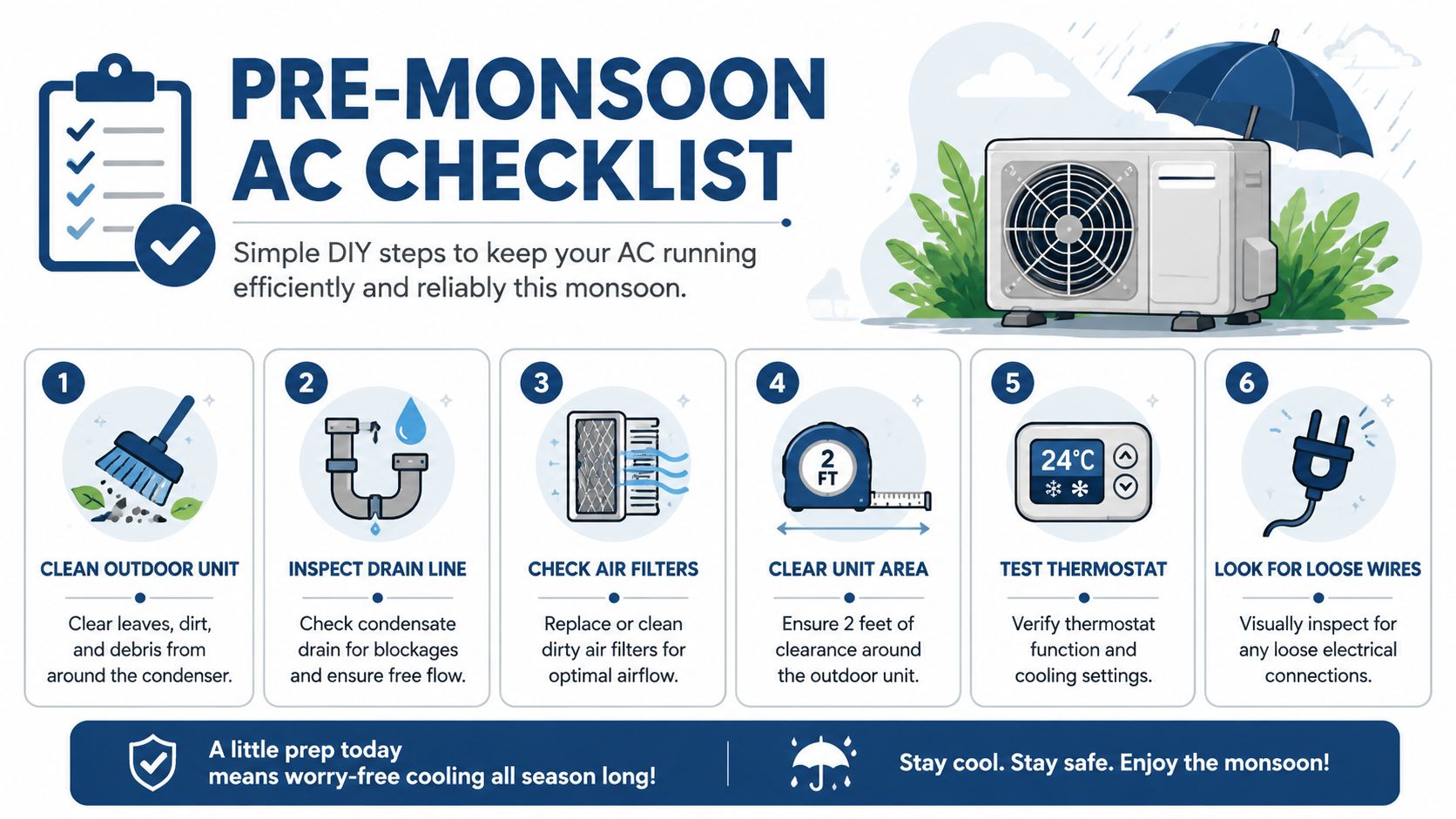
A homeowner can do a useful amount of monsoon season AC maintenance without getting into unsafe DIY work. The key is sticking to the basic checks that improve airflow, drainage, and outdoor heat transfer, then leaving refrigerant, electrical testing, and deeper cleaning to a technician.
Check the filter before the storm checks it for you
Dust storms load filters quickly. Waiting for the usual monthly glance can be too slow during haboob season, especially in older homes with duct leakage or high indoor dust.
Start by pulling the filter and holding it up to the light. If airflow is visibly blocked, replace it. If the system can handle it, a MERV 11 to 13 filter is commonly recommended for monsoon dust capture on Arizona systems, as noted in Forbes Refrigeration's guidance on monsoon dust and AC performance. The catch is compatibility. A stronger filter isn't automatically better if the system can't move enough air through it.
A homeowner who wants the full system checked before heavy summer weather can book a pre-summer AC tune-up. That's usually the easiest way to confirm the filter choice matches the equipment.
Clear the condensate drain safely
Humidity is the part many Arizona homeowners underestimate. During monsoon weather, the AC can pull much more water from the air, and a partially blocked drain can turn into an overflow problem quickly.
A simple homeowner checklist looks like this:
- Turn the system off at the thermostat before inspecting anything near the air handler.
- Locate the drain line outlet, usually outside near the foundation or near the indoor unit depending on installation.
- Check for standing water around the indoor equipment or in the auxiliary pan.
- Use a wet/dry vacuum at the drain outlet if accessible to pull out slime and debris.
- Watch for normal flow once the system starts back up.
Rinse the outdoor coil the right way
This is one of the most useful DIY steps, but it's also where homeowners damage equipment by using too much pressure. For desert monsoon maintenance, a critical method is to power the unit off at the disconnect, then use a low-pressure hose under 40 PSI with a shower-pattern spray to clean the condenser coil from the inside out. High-pressure washing can bend fins and cause a 15 to 20% reduction in heat transfer efficiency based on the verified maintenance protocol provided for monsoon coil cleaning.
Keep the approach basic and careful:
- Shut power off first: Use the disconnect by the outdoor unit.
- Use a garden hose, not a pressure washer: Gentle flow is enough for surface dust.
- Rinse with the coil's shape, not against it: The goal is washing dust away, not flattening fins.
- Check around the cabinet: Remove leaves, weeds, and debris that recirculate into the coil.
This is especially important on side-yard condensers that collect dust against block walls and on package units where access is awkward and buildup is easy to miss.
Protecting Your AC from Dust Debris and Storms
A lot of Mesa homeowners notice the same pattern. The AC was keeping up fine, a haboob rolled through, then the house felt sticky and the system started running longer. In the East Valley, that usually points to storm dust packed into the condenser, debris around the cabinet, or damage on rooftop equipment that is easy to miss from the ground.
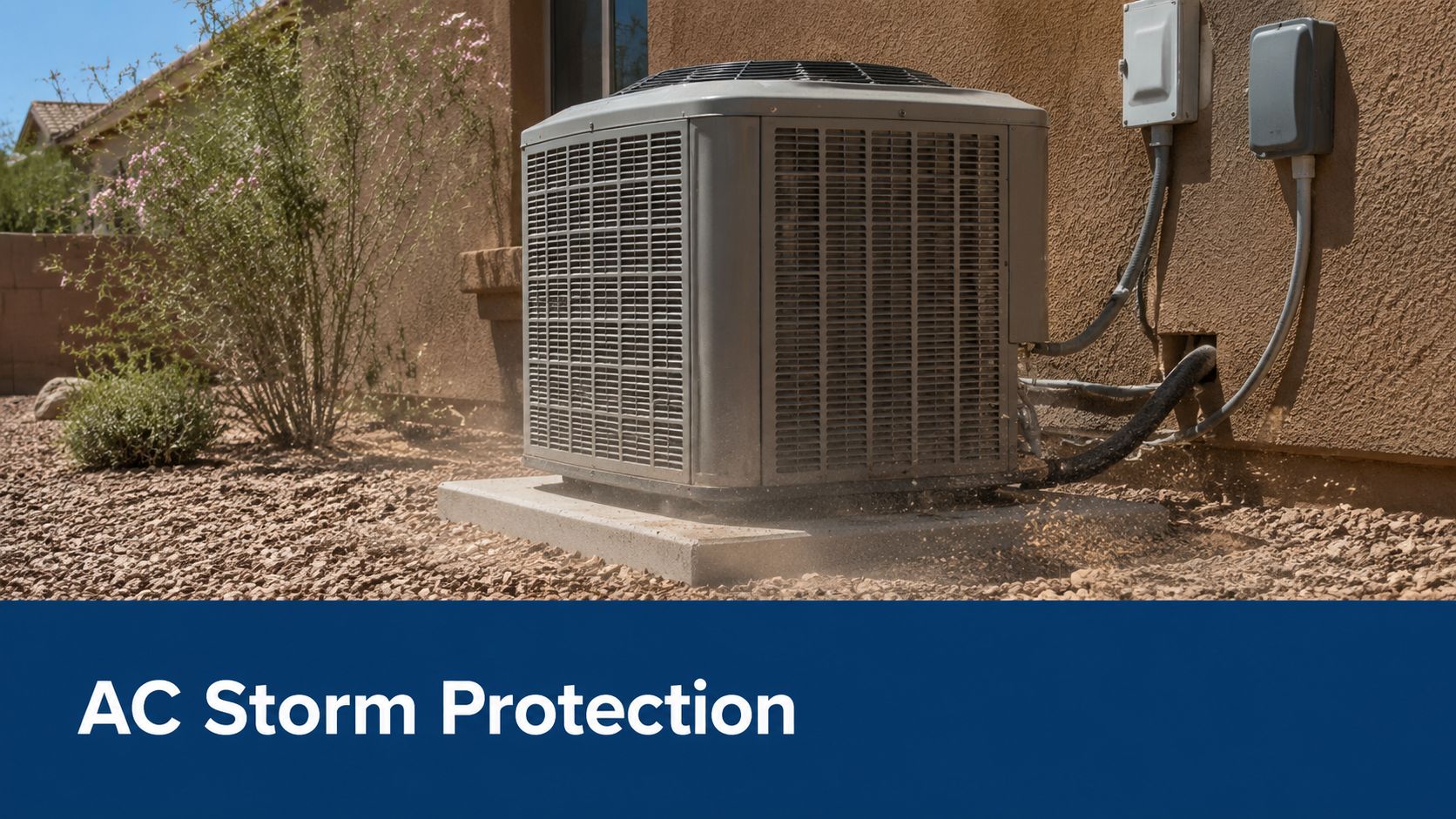
Monsoon protection is different from routine summer maintenance because the threat changes fast. One storm can coat an outdoor coil with fine dust, blow trash into the fan section, and leave a rooftop package unit sitting in wet debris at the same time. That mix of dirt, moisture, and wind is hard on Arizona equipment.
Before the storm
Start with clearance and secure anything that can blow into the unit. Gravel, palm debris, seed pods, and loose yard items are common problems here. If a condenser is tucked into a side yard, dust can bounce off the block wall and recirculate right back through the coil.
Keep open space around the unit so air can move freely and so you can inspect it after a storm. Rooftop and packaged units need the same attention. Loose roof debris, damaged screens, and clutter around access panels make storm cleanup harder and can hide damage.
Do not cover a running AC with a tarp or improvised cover. That traps heat and can hold moisture against the cabinet. If a unit already has signs of rust, standing water, or past leakage, review Comfort Experts' AC leak solutions before monsoon season ramps up.
After a haboob
Check the system once conditions are safe. The goal is not a full teardown. The goal is to catch obvious airflow problems and storm damage before the AC spends days fighting through it.
Focus on a few practical checks:
- Look at the coil surface: A light brown film of dust can be enough to hurt performance, even if the coil does not look completely plugged.
- Clear debris from the base and fan guard: Leaves, plastic, and roof grit restrict airflow and can get pulled deeper into the cabinet.
- Listen on startup: Rattling, fan imbalance, or a harsher-than-normal sound after a storm can mean debris is stuck inside.
- Watch cooling performance indoors: Longer run times, warmer air at the vents, or a sudden drop in airflow after a storm usually means the system needs attention.
- Check for moisture problems around ducts and vents: Dust plus monsoon moisture can create indoor air quality issues, including conditions that lead to AC duct mold removal.
A unit that cooled normally before the storm and struggles right after it usually has a specific restriction or damage issue. Start with what changed.
Packaged and rooftop units need closer attention
Monsoon season often catches East Valley homes off guard. Rooftop and packaged systems take the full hit from wind, dust, and rain, and many owners do not see the equipment often enough to spot trouble early.
Inspect visible duct connections, cabinet seams, and panel fasteners from a safe position. If panels are loose, insulation is exposed, the fan section is noisy, or the coil is impacted with mud-like dust that will not rinse off gently, stop there and schedule service. Roof units also deserve a professional check if you see bent coil fins, disconnected flex duct, or signs that storm water got into the cabinet.
Ground units are easier to monitor. Rooftop units hide problems until comfort drops or a small issue turns into a service call during the busiest week of monsoon season.
Managing Humidity and Preventing Water Damage
Humidity is the hidden side of Arizona monsoon season AC maintenance. Dust gets the attention because it's visible. Moisture causes the indoor problems that homeowners often notice later, after there are stains, musty odors, or a shutdown from a clogged drain.
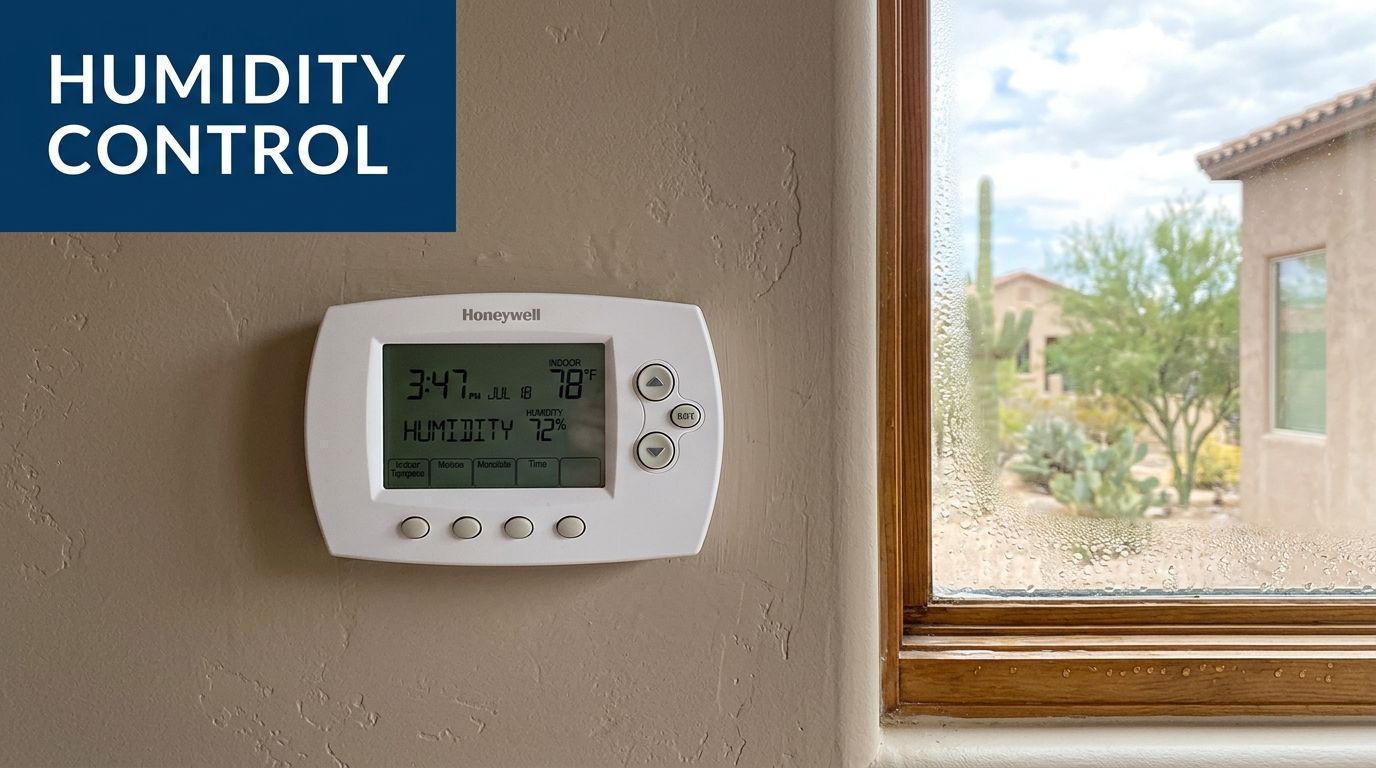
In Mesa and the East Valley, monsoon-driven humidity levels frequently exceed 70%, creating ideal conditions for mold growth in ductwork and condensate line clogs that can shut an AC system down completely, according to Rite Way's guidance on monsoon condensation line maintenance.
Why the drain line becomes a bigger problem
In dry weather, a slightly dirty drain line may not show obvious symptoms right away. During monsoon season, the system has to remove much more moisture from indoor air, so that same partial blockage can turn into backup, pan overflow, or water around the air handler.
Industry guidance recommends flushing drain lines every 3 to 4 weeks during monsoon season. Pipe pitch also matters. If the line has sagging sections or unnecessary bends, water and slime collect more easily.
A homeowner who has already dealt with dripping vents, ceiling stains, or water near the indoor unit should read Comfort Experts' AC leak solutions for the usual HVAC-side causes and warning signs.
Thermostat settings that help
The thermostat can make humidity worse if it's set wrong. During monsoon weather, the fan should usually stay on Auto, not On. Constant fan operation can move moisture back across the coil and leave the house feeling clammy even when the temperature setting looks normal.
If the thermostat has Dry Mode, that setting can help pull moisture out more effectively during humid stretches. It won't solve a clogged drain or undersized system, but it can reduce that sticky indoor feel that shows up during stormy weeks.
Mold concerns in older homes
Moisture problems often show up first in older East Valley homes with leaky ducts, aging insulation, or long condensate runs. If there is visible growth in ductwork or a persistent musty odor when the AC starts, a focused resource on AC duct mold removal can help homeowners understand what proper remediation involves before any cleaning or restoration work begins.
Electrical Safety and Power Surge Protection
A lot of homeowners assume the condenser is built for storms, so electrical protection is already handled. That's not a safe assumption.
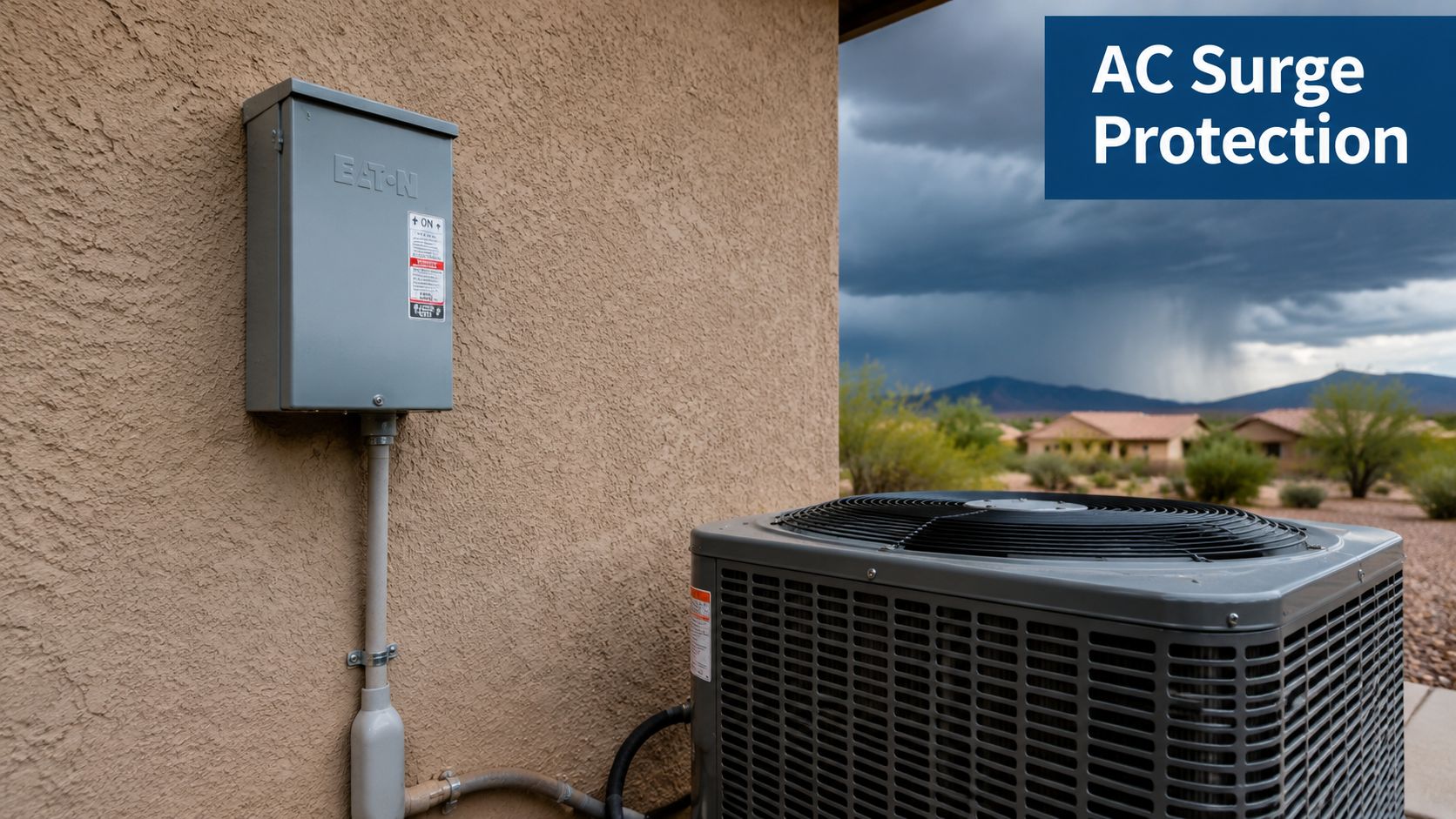
In the Phoenix Valley, monsoon storms can trigger voltage spikes exceeding 270V, and 30% of AC failures during monsoon season are directly linked to electrical surges according to Voltas' monsoon AC maintenance checklist. Modern systems rely on boards, sensors, and motors that don't handle those events well.
Why the outdoor unit needs its own protection
A whole-home surge device can help, but the AC has unique exposure because the condensing unit sits outside and ties into equipment with expensive electronics and motors. A dedicated AC stabilizer or surge protector adds a layer of protection right where the risk hits.
That matters most on systems with variable-speed components, communicating thermostats, and newer boards. When a storm causes a flicker, the system may restart. It may also fail without immediate indication and show symptoms later, like no cooling, short cycling, or a dead condenser fan.
Homeowners who want a deeper breakdown of options can review protecting your AC from power surges for the HVAC-specific side of surge protection.
What a homeowner can do during a severe storm
If there isn't dedicated surge protection installed yet, the practical move during a severe lightning event is to avoid forcing the system through repeated starts and stops. Turning the thermostat off during the worst of the storm can reduce restart stress.
Electrical safety guidance varies by region and code, but the general principles in Essential electrical safety for Brisbane homeowners are still a useful reminder that storm protection starts with safe, properly installed equipment and not improvised fixes.
A homeowner should never open electrical panels, pull apart disconnect wiring, or try to test AC high-voltage components without training and proper tools.
When to Call a Professional for Monsoon Maintenance
Monsoon prep stops being DIY the moment the job moves past cleaning and basic checks. If you are dealing with refrigerant, high voltage, motor testing, a repeated drain backup, or anything inside a rooftop package unit that requires opening panels and working in tight access, schedule service.
That line matters more in Mesa than it does in milder climates. A system can look fine after a storm and still have hidden problems from dust intrusion, moisture, or a power hit that damaged a board or fan motor.
The article on maintenance tips for Arizona HVAC is a useful reference for setting a service schedule, especially if the home has an older system, a rooftop package unit, or a history of airflow problems.
DIY vs. Professional Monsoon AC Maintenance
| Task | DIY Action | When to Call Comfort Experts |
|---|---|---|
| Air filter check | Inspect and replace a dirty filter | Call if the filter keeps loading unusually fast or airflow still feels weak |
| Outdoor unit cleanup | Remove loose debris around the cabinet and keep clearance open | Call if the coil is heavily impacted, fins are bent, or the unit still runs hot |
| Condenser rinse | Gently hose the coil after shutting power off at the disconnect | Call if access is unsafe, especially on rooftop or package units |
| Drain line check | Look for water around the unit and vacuum the outlet if accessible | Call if there is repeated backup, overflow, or musty odor |
| Thermostat settings | Use Auto fan and Dry Mode if available | Call if humidity stays high or temperatures swing room to room |
| Storm-related electrical concern | Watch for failure to restart, breaker trips, or odd noises | Call immediately for surge damage, burnt smell, or nonresponsive equipment |
| Duct leakage or dust intrusion | Replace filters and note dusty rooms | Call if dust keeps building up, supply vents blow weakly, or duct sealing is needed |
One common East Valley example is the rooftop package unit that takes a direct hit from windblown dust, then pulls humid air through small cabinet gaps once the storm passes. A homeowner can spot the symptoms. Weak airflow, a new rattle, rooms that feel sticky, or a unit that restarts poorly after a power flicker. The repair itself still belongs to a technician, especially when the cabinet, controls, or blower section need to be opened and cleaned properly.
Call sooner if you see water near the indoor equipment, hear buzzing after a storm, smell something burnt, or notice the system cooling in long, uneven cycles. Those are not tune-up items. They usually point to a component problem, drainage issue, duct leak, or electrical damage that gets more expensive if the unit keeps running.