
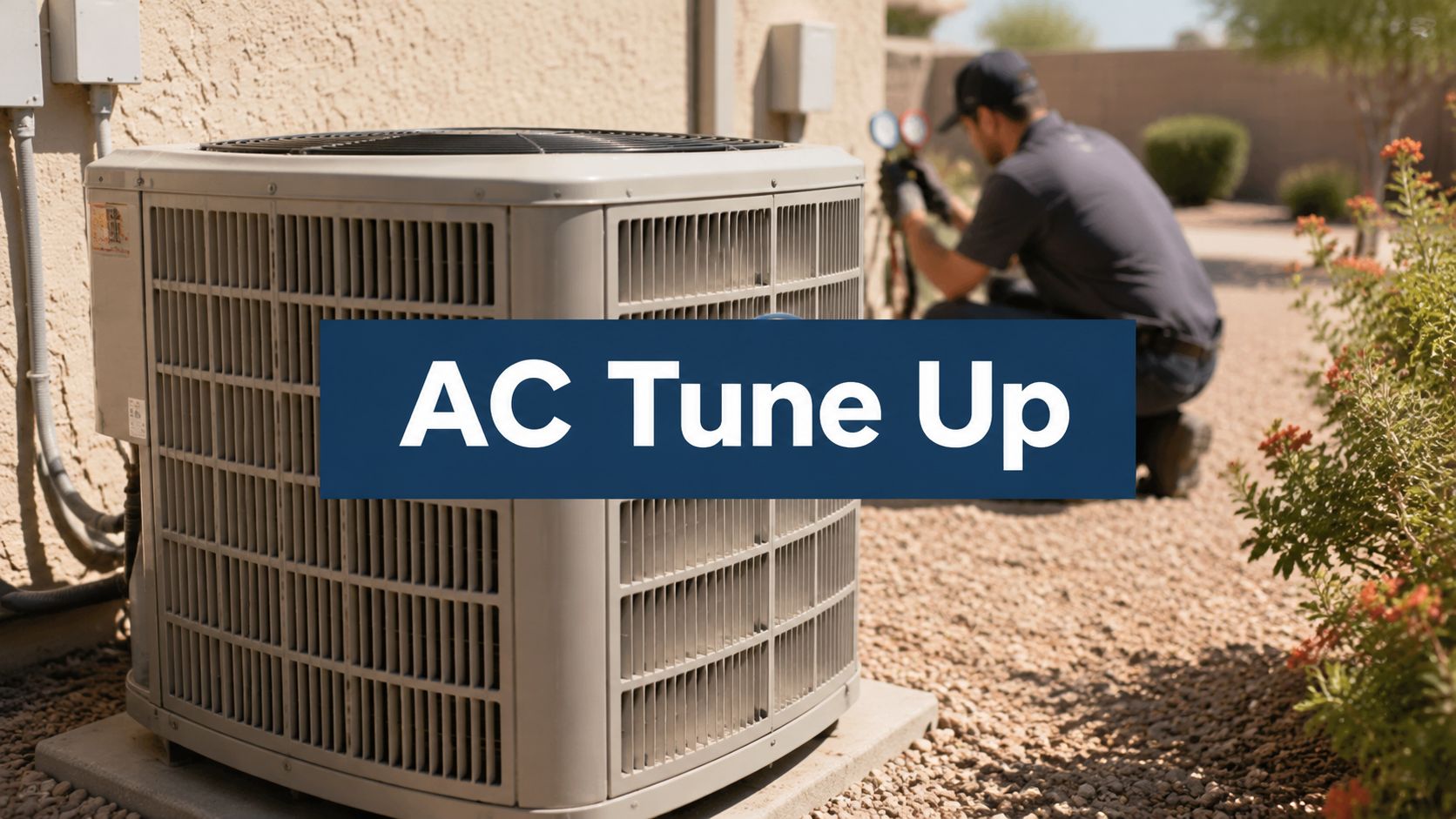
By late spring in Mesa, a lot of homeowners start thinking the same thing. If the AC quits in June or July, the house heats up fast, the schedule gets blown up, and the repair usually shows up when the system is under the most stress.
That's why an AC tune up before summer in Mesa isn't just another item on a home checklist. It's practical prep for long run times, dust, rooftop heat, monsoon weather, and the kind of electric bills that get attention fast.
Preparing Your AC for a Mesa Summer
Mesa summers don't ease in. One week the system is running lightly, and the next it's carrying the whole house through triple-digit afternoons, hot nights, and dusty wind. A unit that seemed “good enough” in spring can start showing its weak spots once that demand hits every day.
A pre-summer tune-up gives the system a chance to be checked under controlled conditions instead of during a breakdown. That matters in the East Valley, where older homes, rooftop package units, attic duct runs, and dust buildup all add stress before monsoon season even starts. Homeowners who want a simple starting point can review essential AC upkeep for Mesa homes before booking service.
There's also value in looking at the whole house, not just the condenser. A practical guide to protecting your home investment can help homeowners line up seasonal maintenance so HVAC, filters, drainage, and other basics don't get ignored until the hottest week of the year.
A tune-up works best when it's treated as preparation, not rescue. The point isn't just checking boxes. The point is making sure the system is ready for the climate it has to survive.
Why Timing Your Tune-Up is Critical in the East Valley
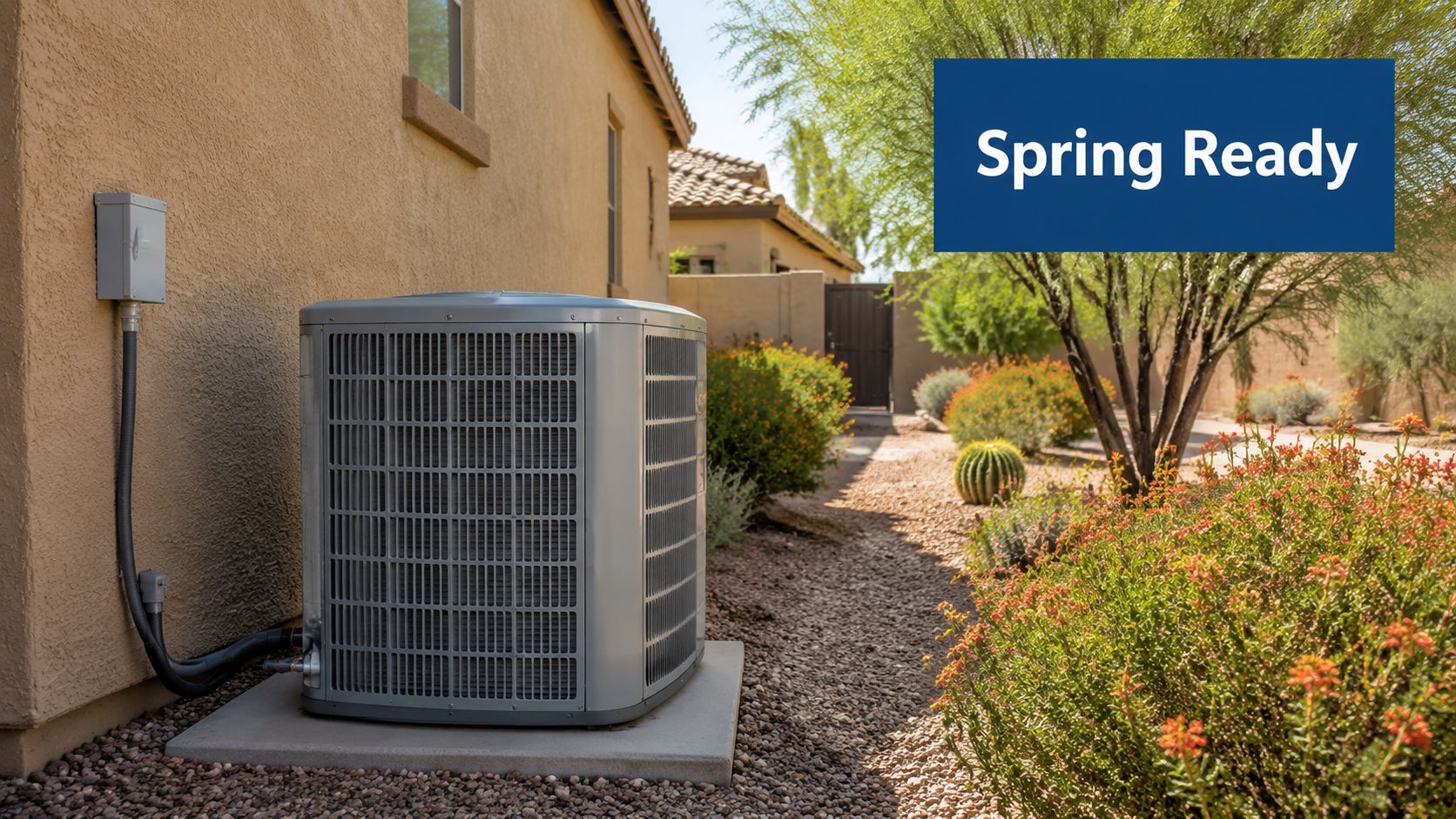
In the East Valley, timing matters almost as much as the tune-up itself. Waiting until the first real heat wave usually means the system has already started working at full load, and if there's a weak capacitor, dirty coil, airflow problem, or control issue, that's when it tends to show up.
Industry guidance for hot climates is pretty consistent on this point. In hot climates like Mesa, Arizona, most HVAC manufacturers and industry guidelines recommend at least one annual AC tune-up, and for the Phoenix and East Valley area, spring tune-ups between March and May are widely cited as the optimal timing window because they allow minor issues to be caught before the long high-heat season, as noted in this Mesa HVAC maintenance timing guide.
Why spring works better than early summer
March through May gives a technician time to inspect the system before it's running nonstop. That's important because a unit can still cool the house in mild weather while hiding problems that show up only when outdoor temperatures climb and runtime stretches.
That spring window also helps with practical scheduling. Once the valley gets deep into summer, service boards fill up with no-cooling calls. Homeowners who handle maintenance early usually have more flexibility if the tune-up turns up a part that needs attention.
A Mesa-specific tune-up also lines up with what the climate does next:
- Dust season arrives first. Condenser coils collect fine debris fast, especially on side-yard units near gravel, block walls, and busy streets.
- Heat follows hard. Rooftop and packaged systems take direct sun and extreme roof-surface heat, which pushes already-tired components harder.
- Monsoon weather changes operating conditions. Moisture, wind, and debris can expose drainage issues and weak electrical connections that weren't obvious in dry weather.
The local reality most generic advice misses
A lot of national maintenance advice treats every climate the same. Mesa isn't the same. Systems here often run for long stretches, many homes have aging ductwork, and package units on roofs are common enough that access, heat exposure, and service condition all matter.
The best timing is the timing that gives room to act. In Mesa, that usually means getting the system checked before the house depends on it every hour of the day.
A Simple Homeowner Checklist Before Your Pro Arrives
A homeowner doesn't need gauges, refrigerant tools, or electrical meters to make a service visit more productive. A few simple steps before the appointment can help the technician get a clearer picture of the system and avoid wasting time on preventable airflow or access issues.

What to handle before the visit
Replace the air filter if it's due. Mesa dust loads filters quickly, and a loaded filter changes airflow through the whole system. Homeowners who aren't sure about sizing, orientation, or installation can use this Phoenix AC filter replacement guide.
Clear around the outdoor unit. Remove leaves, weeds, stored items, and windblown debris so air can move through the condenser properly. Side-yard units in desert landscapes often collect more debris than homeowners realize.
Check that supply and return vents are open. Closed vents, blocked returns, and furniture pushed over registers can create airflow problems that look like equipment trouble.
Test the thermostat settings. Make sure the thermostat is set to cool and the programmed schedule matches the household's current routine. Sometimes comfort complaints are partly control issues, not equipment failure.
For homeowners who like a written routine, this seasonal HVAC care template can help organize filter checks, vent inspections, and seasonal reminders.
What not to treat as DIY
Some tasks belong to a licensed HVAC technician. Anything involving electrical components, refrigerant, capacitors, contactors, compressor testing, or deeper disassembly carries safety and equipment risks.
That matters even more in Arizona heat. A wrong move around a capacitor or electrical compartment can injure someone. A guess on refrigerant can damage performance and create a larger repair.
A simple way to divide the work is below.
| Task | Homeowner can handle | Pro should handle |
|---|---|---|
| Filter replacement | Yes | |
| Clearing debris around condenser | Yes | |
| Checking open vents and thermostat settings | Yes | |
| Coil deep cleaning | Yes | |
| Refrigerant testing and adjustment | Yes | |
| Electrical inspection and capacitor testing | Yes | |
| Static pressure and airflow diagnosis | Yes |
That boundary matters. The homeowner's role is to clear, check, and observe. The technician's role is to test, measure, and diagnose.
What a Comprehensive Comfort Experts Tune-Up Includes
A professional tune-up should do more than wipe off a cabinet and swap a filter. In Mesa, it needs to evaluate how the whole cooling system is handling heat, dust, airflow, electrical load, and drainage before summer pushes every weak point harder.
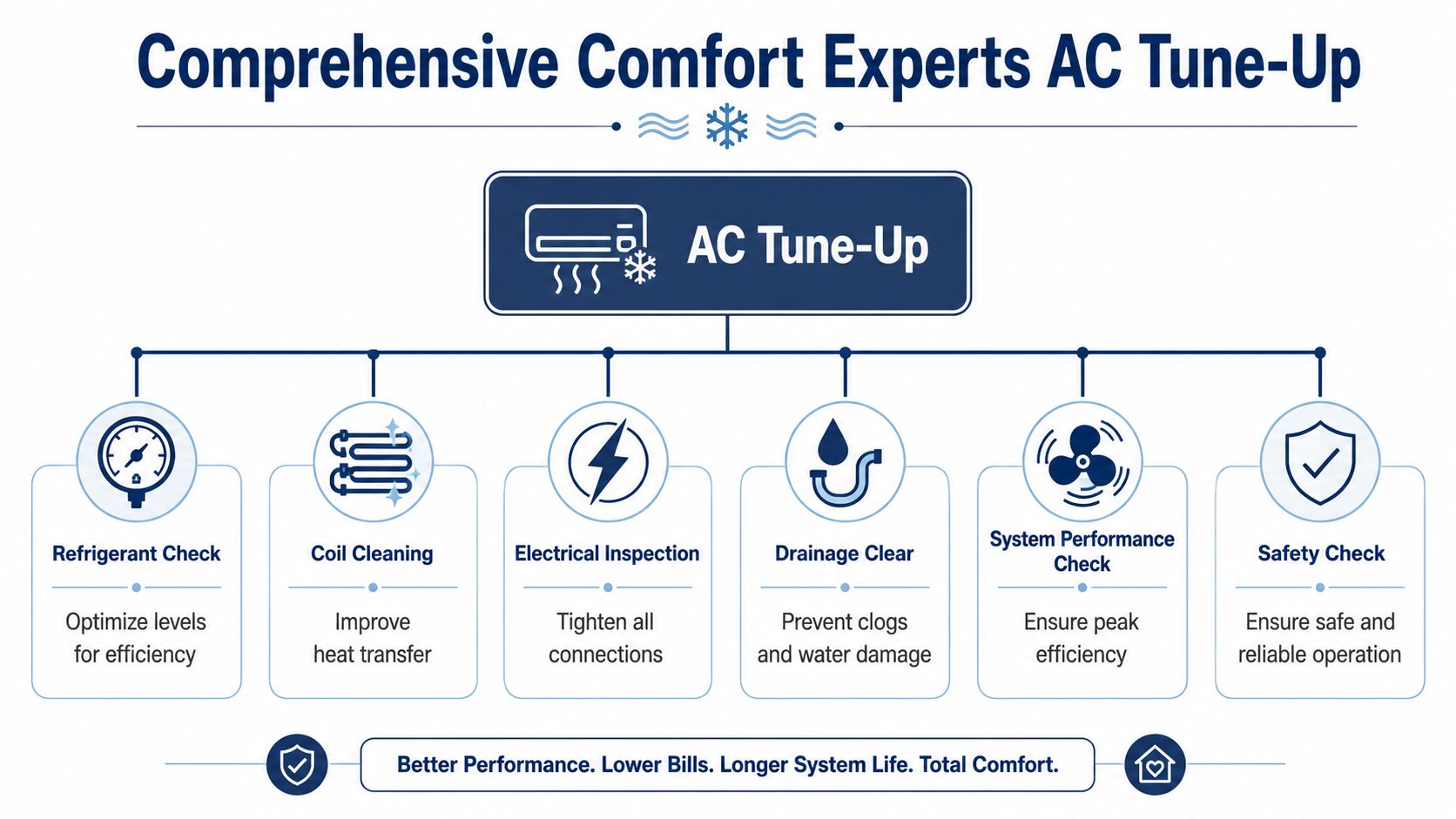
Homeowners looking for a local service option can review what an AC tune-up typically covers for Mesa-area systems. Its core value lies in what gets measured and why it matters in this climate.
Coil, airflow, and heat rejection checks
Desert dust doesn't just make equipment look dirty. It coats condenser surfaces, restricts heat transfer, and makes the system work harder to dump heat outdoors. That's a direct problem in side yards, on rooftops, and near alleys or bare-soil lots where dust movement is constant.
A proper tune-up includes coil inspection and cleaning as needed, along with airflow-related checks inside the home. If airflow is off, the unit may still run, but it won't run efficiently or safely under sustained summer demand.
Key areas usually include:
- Outdoor coil condition
- Indoor airflow across the evaporator
- Blower performance
- Visible duct or return-air issues
- Temperature behavior during operation
Electrical components and controls
Arizona heat is rough on electrical parts. Capacitors, contactors, wire connections, and control components all live with high ambient temperatures, especially in rooftop equipment and attic-adjacent installations.
A tune-up should inspect and test those components before one weak part turns into a no-cool call. Electrical issues often announce themselves with subtle hints first. Hard starting, intermittent operation, short cycling, or delayed fan response can all be early warning signs.
Refrigerant and performance verification
Refrigerant isn't something to top off by assumption. A technician needs to evaluate system operation, pressures, temperatures, and overall performance before deciding whether there's a charge issue or another cause such as airflow restriction or coil fouling.
That distinction matters because symptoms overlap. A warm house in Mesa could point to low charge, poor airflow, duct leakage, a dirty condenser, a weak blower, or several smaller issues stacking up at once.
Drainage and moisture handling
Mesa is dry for much of the year, but AC systems still remove indoor moisture whenever they run. Drain lines, pans, and condensate management need attention, especially before monsoon humidity adds another operating layer.
A blocked or slow drain can turn a cooling visit into an interior water problem. For attic or closet installations, that risk deserves a real inspection.
Filtration and indoor air quality decisions
A generic checklist often falls short. EPA and ASHRAE guidance emphasizes that HVAC maintenance is a key lever for reducing particulate and allergen load indoors, yet filter type, system compatibility, and duct leakage need to be evaluated together. A higher-MERV filter can help capture more fine particles, but moving from MERV 8 to MERV 13 or toward HEPA-style expectations without checking airflow and static pressure can cut cooling capacity and increase compressor wear.
That's especially relevant in Mesa, where dust, wildfire smoke, and long cooling runtimes push homeowners to upgrade filtration fast. The smarter move is to evaluate:
- Current filter size and fit
- Return-air capacity
- Static pressure impact
- Coil airflow
- Duct leakage
- Whether add-ons like UV or air-cleaning equipment fit the system
A tune-up in this market shouldn't treat indoor air quality as an afterthought. It should connect filtration choices to equipment health.
The Payoff Lower Bills, Fewer Breakdowns, and Safer Operation
The value of a tune-up shows up in three places homeowners notice quickly. Utility bills, breakdown risk, and whether the system is running in a way that looks and sounds normal.

Fewer repair calls in the worst part of summer
A commonly cited HVAC benchmark estimates that up to 80% of major air conditioning repairs are preventable when equipment receives regular professional service, according to this pre-summer AC maintenance analysis. In the same body of data, systems on annual pre-summer maintenance plans saw roughly 35% to 45% fewer emergency calls per cooling season than systems that were only serviced after failure, and preventive maintenance performed before sustained extreme heat reduced emergency-call probability by about half across an installed base in a summer-peak market.
That doesn't mean maintenance prevents every failure. It does mean many breakdowns leave warning signs first, and a good tune-up is designed to catch those signs.
Lower summer energy use
The same source notes that a single pre-season tune-up can restore roughly 5% to 15% of lost cooling efficiency. Separate energy guidance summarized in the verified data indicates that properly maintained HVAC systems can use 15% to 20% less energy than neglected units, and for Mesa-like summer cooling demand that can translate to roughly $100 to $250 in avoided cooling costs over one summer.
That's why tune-ups connect directly to SRP and APS bills. A system with cleaner coils, better airflow, and corrected operating issues doesn't need to work as hard to deliver the same cooling. Homeowners looking for broader energy saving strategies for Phoenix homeowners can combine maintenance with thermostat settings, duct improvements, and filtration choices. For a wider home-budget view, these strategies to lower Arizona electric bills can help put HVAC use in context.
Safety and equipment protection
Not every payoff shows up on a bill. Tune-ups also help identify loose electrical connections, overheated components, and airflow conditions that can shorten equipment life. For homes with gas heating equipment that shares system components or controls, seasonal service also supports safer operation outside cooling season.
For most Mesa homeowners, that's the primary return. Fewer unpleasant surprises, a better chance of stable cooling, and less money wasted making the AC fight avoidable problems.
Signs Your AC Needs More Than Just a Tune-Up
Sometimes the right call isn't maintenance. It's repair. If the system is already showing stronger symptoms, a basic tune-up may not be enough to solve the problem.
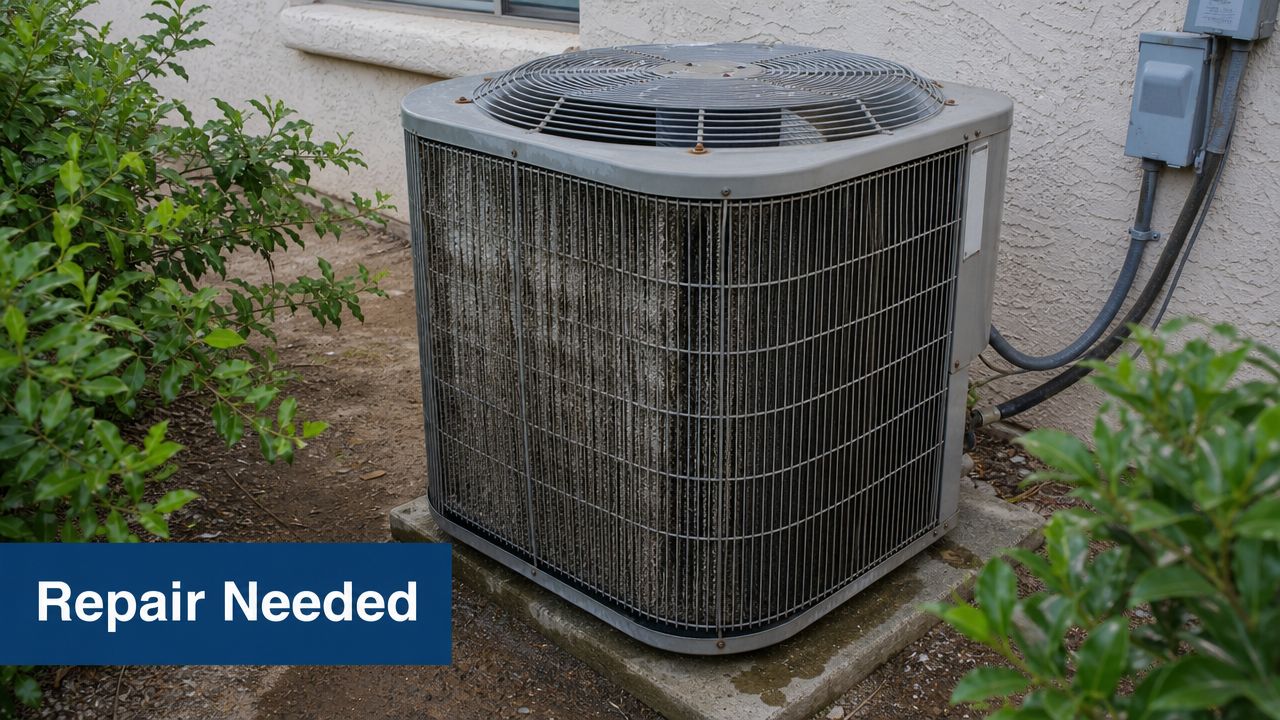
Red flags that point to repair
- Warm air from the vents when the thermostat is clearly calling for cooling
- Grinding, banging, or buzzing noises that weren't there before
- Frequent on-and-off cycling that doesn't match normal operation
- Water around the indoor equipment or signs of a clogged drain
- Weak airflow in multiple rooms
- A sudden jump in summer electric bills without a clear explanation
- The system won't start or struggles to start repeatedly
If those symptoms are showing up, the homeowner should stop treating it like a routine maintenance visit and start treating it like diagnosis time. This guide can help identify AC issues in Mesa before the problem gets worse.
When waiting makes things worse
Some issues are expensive because the part failed. Others get expensive because the system kept running after the warning signs started. A struggling blower, weak capacitor, frozen coil, or restricted condenser can put extra stress on larger components.
That's the practical difference between a tune-up and a repair call. A tune-up prepares a working system for summer. A repair visit finds out why the system isn't acting like a working system anymore.
If the goal is to avoid a midsummer breakdown, lower the strain on the system, and make the house easier to keep cool through Mesa heat, the next step is simple. Contact Comfort Experts at 480-207-1239 or schedule service to have the system checked before the hottest stretch of the season arrives.