
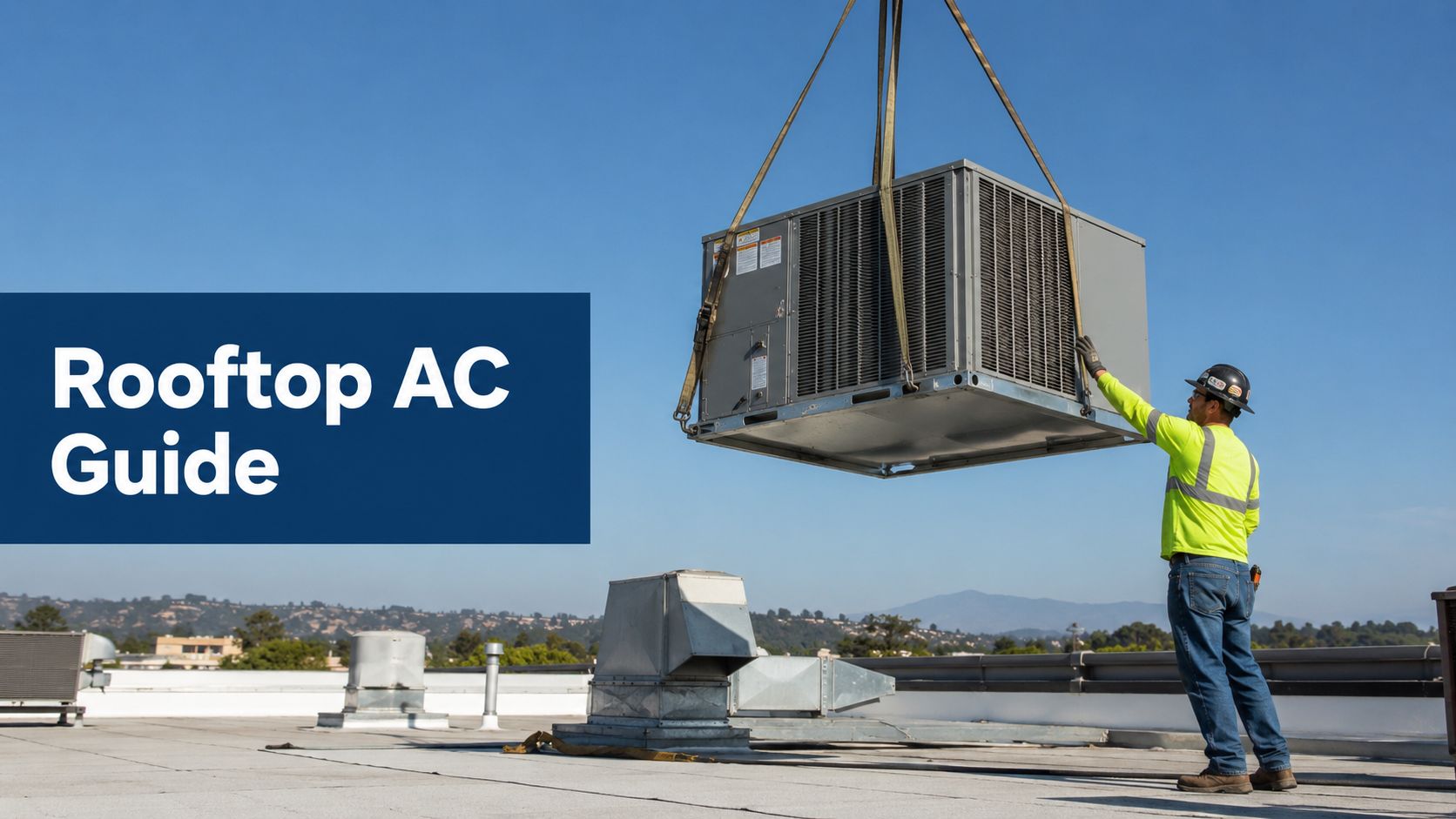
If you're staring at an aging rooftop package unit in Mesa or anywhere in the Phoenix Valley, you're probably thinking about more than equipment. You're thinking about heat, roof leaks, permitting, crane day, and whether the next system will hold up. A proper Rooftop AC Unit Installation isn't just about swapping metal on a roof. It's about getting the structure, curb, ductwork, electrical, sealing, and startup right the first time.
What Are Rooftop AC Units and Are They Right for You
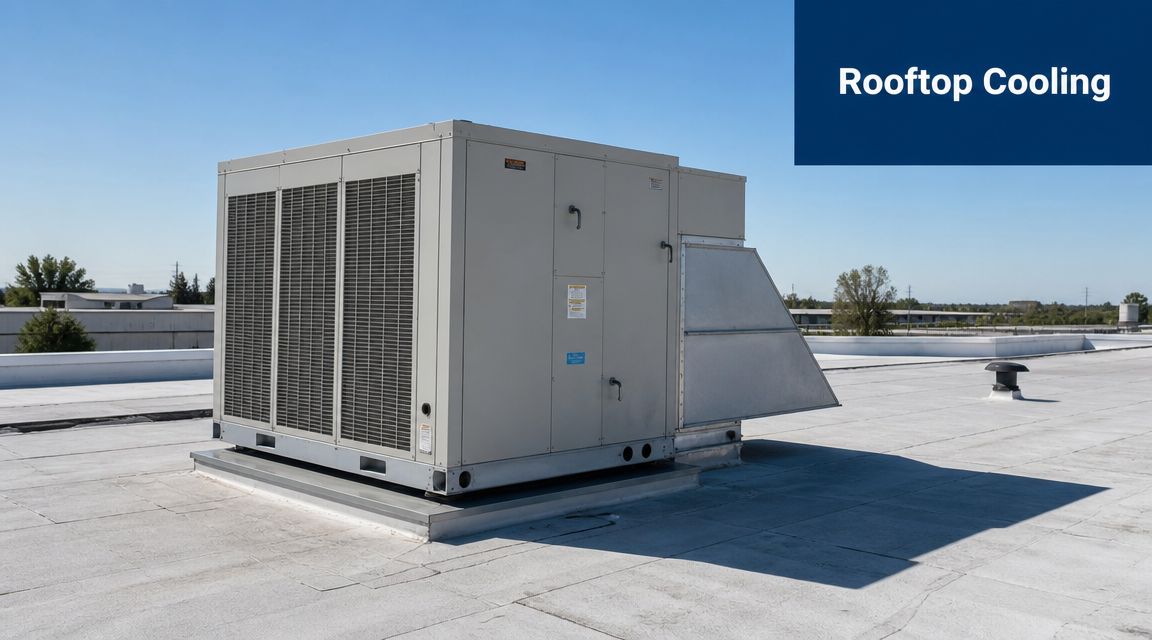
A rooftop AC unit is usually a packaged system. That means the cooling components are housed in one cabinet on the roof instead of split between an outdoor condenser and an indoor air handler or furnace. In Arizona, you'll see these on many flat-roof homes, mobile offices, small retail spaces, churches, and a lot of light commercial buildings.
That setup can make sense in Mesa. It keeps equipment off the ground, frees up side-yard space, and can reduce some of the clutter around the house or building. On some properties, it also simplifies duct routing because the duct system is already designed around a roof-mounted unit.
How a rooftop package unit differs from a split system
A split system separates the equipment. The condenser sits outside on the ground, while the air handler or furnace sits inside the attic, garage, or closet. A rooftop package unit combines that into one cabinet.
For a homeowner, the practical difference is this:
- Space use: A rooftop system preserves indoor and yard space.
- Access: A split system is usually easier to service because technicians don't need roof access for every major task.
- Roof considerations: A rooftop unit adds structural and waterproofing concerns that a ground system doesn't.
- Replacement complexity: A roof unit changeout often involves curb compatibility, crane planning, and roof sealing details.
If you're still deciding between system types, it can help to compare options like ductless mini-split vs central air before committing to a rooftop layout.
Why rooftop systems became so common
Packaged rooftop equipment became standard for a reason. According to an ACEEE paper on packaged rooftop HVAC units, more than 40% of commercial building space in the U.S. is served by unitary packaged rooftop HVAC units. That same source explains why. They preserve indoor floor space and can tie into broader controls and building management systems.
When rooftop installation is a good fit in Phoenix
In the Valley, rooftop units make the most sense when the building was designed for them from the start or when replacing an existing package unit on a compatible roof structure. Flat roofs common in older Mesa and Phoenix neighborhoods often support that layout well, but only if the roof condition and structural support check out.
They're not right for every property. If the roof is aging, access is poor, or future service will be difficult, a ground-mounted split system may be the smarter long-term move. You know what? That service-access question gets ignored far too often. A unit can physically fit and still be the wrong choice.
The Critical Pre-Installation Site Assessment
The most expensive rooftop installation mistakes usually happen before installation day. Not during startup. Not during the crane lift. They happen when someone skips the hard questions at the beginning.
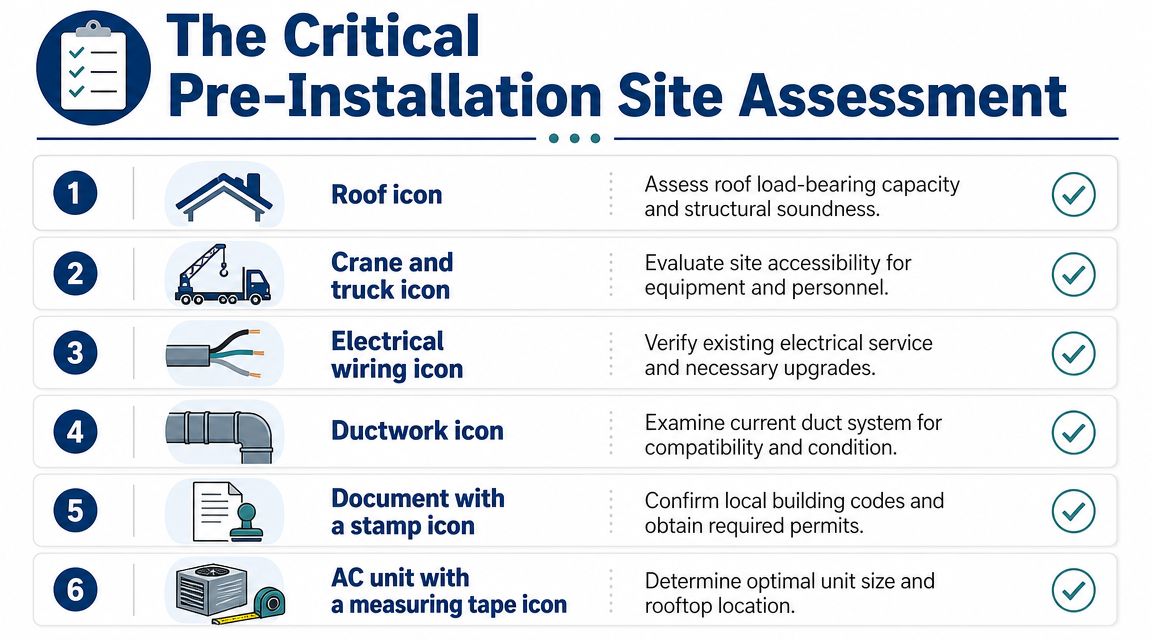
A real site assessment checks the roof, the curb, the duct layout, the electrical service, the access path, and local permit needs before anyone orders equipment. In Phoenix and Mesa, that matters even more because high heat punishes weak design and sloppy workmanship fast.
What gets checked before a unit is ordered
The first issue is structural support. The roof must safely carry the weight of the unit and the curb assembly. That's not guesswork. If the roof framing, deck condition, or curb details are questionable, the installer needs to stop and verify before moving forward.
The second issue is clearance. Rooftop units need enough space around them for airflow and service. In extreme summer conditions, restricted airflow can drag performance down, and tight placement turns routine maintenance into a problem.
The third issue is the electrical supply. The serving circuit, breaker sizing, grounding, and disconnect arrangement all need to match the new equipment. An older building in Mesa may have a rooftop unit that was replaced once already, and the electrical history can be messy.
The parts homeowners rarely see
Duct connections deserve just as much attention as the equipment itself. If the supply and return openings don't line up correctly with the curb and plenum arrangement, you can end up forcing field modifications that hurt airflow and create sealing problems. Load sizing matters too. If you're trying to understand capacity and matching the system to the building, this guide on what size air conditioner you need gives useful background before replacement decisions get made.
A proper pre-install review also looks at these jobsite realities:
- Roof condition: Is the membrane, coating, or roof surface sound enough to support curb work and sealing?
- Crane access: Can a crane safely reach the lift point without creating traffic or property issues?
- Service path: Will technicians be able to reach the unit safely for future maintenance?
- Drain planning: Where will condensate go, and how will the line be protected from clogging and roof damage?
Safety access is part of the assessment
Roof access often surprises many owners later. Roof access isn't just about installation day. It affects every maintenance visit after that. On some properties, access improvements may be needed so technicians can work safely over the life of the unit. That's also why outside trades that work at height often emphasize inspection and anchor planning. For a related example, Professional Window Cleaning safety inspections show how seriously roof access and anchor verification are treated in other roof-service fields.
In the desert, shortcuts don't stay hidden. They turn into leaks, nuisance shutdowns, weak airflow, and callbacks in the hottest week of the year.
Navigating Permits and Codes in Phoenix and Mesa
Permits make homeowners nervous because they sound like delays, paperwork, and extra cost. In reality, permits and inspections protect you. They create a record that the work was reviewed for safety and code compliance, which matters for insurance, resale, and liability.
Mesa and Phoenix both expect rooftop HVAC work to meet local building and electrical requirements. The exact details vary by project, but common issues include the electrical disconnect, grounding, condensate management, proper equipment anchoring, and safe service access. On gas package units, combustion and venting details also matter.
What you should expect the contractor to handle
A reputable contractor should handle permit filing, inspection coordination, and code-related corrections if something needs to be adjusted. The owner shouldn't be left chasing city departments or trying to explain equipment specs to an inspector.
For Phoenix-area property owners looking at replacement work, a local page on AC installation in Phoenix can help frame what a code-compliant install process should look like from first visit to final startup.
Why code matters more on rooftop jobs
Roof-mounted equipment combines multiple trades in one project. HVAC, electrical, roofing, and sometimes gas piping all intersect at the same location. If one part is wrong, the whole install suffers.
Consider what can go wrong when code gets treated as optional:
- Electrical hazards: Incorrect breakers, disconnects, or grounding create serious safety problems.
- Water intrusion: Weak flashing or curb sealing can damage insulation, ceilings, and framing.
- Inspection delays: Failed inspections can delay startup in hot weather when you can least afford it.
- Resale issues: Unpermitted rooftop work can become a problem during a sale or insurance claim.
The right contractor won't act annoyed when you ask about permits. They'll answer clearly and show you how the process works.
The Step-by-Step Rooftop Installation Process
Installation day is busy, but it shouldn't look chaotic. A solid crew follows a sequence. That sequence matters because rooftop replacements leave very little room for improvising once the old unit is off and the roof opening is exposed.
The first step is making the site safe. Power is isolated. The old system is disconnected. If the unit is a gas/electric package, fuel piping is shut down and handled correctly. Then the old unit is lifted off or dismantled as needed.
The curb and roof opening come first
The curb is the foundation for the new rooftop unit. If it's new, it has to be set square and aligned properly. If an existing curb is being reused, it has to be verified for compatibility with the replacement equipment and the existing plenum geometry.
This sequence is not optional. According to Carrier rooftop guidance on curb placement and sealing, the curb must be placed and squared to the roof joists first, and the roofer must flash and seal the opening before the unit is set. That same guidance warns that a costly mistake is discovering after the curb is sealed that the plenum geometry is wrong, forcing field modifications that can compromise weather-tight sealing.
What crane day usually looks like
Once the curb and roof prep are ready, the crane sets the new package unit. This part gets all the attention because it's visible, but the lift itself is only one step.
After the unit lands, the crew handles:
- Mechanical connection: Supply and return openings are aligned and attached correctly.
- Electrical connection: High-voltage and low-voltage wiring are landed according to code and manufacturer requirements.
- Gas connection when applicable: Gas piping is connected, tested, and verified for safety.
- Drain setup: Condensate drainage is routed and sealed properly.
- Weather protection: Penetrations and connection points are sealed against water intrusion.
If you own or manage a business, a contractor with dedicated experience in commercial AC installation in Mesa is usually a better fit than a company that mainly handles basic residential split systems.
Typical Rooftop AC Installation Timeline
| Phase | Key Activities | Estimated Duration |
|---|---|---|
| Pre-job setup | Safety prep, power isolation, equipment staging, roof protection | Partial day |
| Old unit removal | Disconnecting services, removing old equipment, preparing opening | Partial day |
| Curb and roof work | Verifying or setting curb, squaring alignment, flashing and sealing | Partial day to full day |
| New unit setting | Crane lift, placement, alignment, mechanical fit-up | Partial day |
| Connections | Electrical, controls, duct, drain, and gas connections where applicable | Partial day to full day |
| Startup and verification | Testing, charge verification, airflow checks, thermostat and control setup | Partial day |
Timelines vary by roof condition, access, curb compatibility, weather exposure, and whether hidden repairs show up after the old unit comes off.
Verifying a Successful Installation with Proper Testing
A rooftop unit isn't finished when it's bolted down. It's finished when it's commissioned. That's the startup and testing phase where the technician proves the system is operating correctly instead of just assuming it is.
In Arizona heat, this step is where good installers separate themselves from crews that rush to the next job. A unit with poor airflow, bad charge, or sloppy controls may still blow cool air on day one. That doesn't mean it's right.
What a professional startup includes
According to installation guidance covering startup and commissioning checks, proper commissioning includes verifying refrigerant integrity and charge, confirming airflow and static pressure, checking electrical safety, calibrating the thermostat, and, on gas-equipped units, checking combustion and vent safety.
A competent startup normally includes these checks:
- Refrigerant verification: The technician confirms the system has the correct charge and no leak issues.
- Airflow confirmation: Static pressure and delivered airflow are checked so the blower and duct system are working together.
- Electrical inspection: Circuits, breakers, grounding, and disconnects are verified for code compliance and safe operation.
- Control operation: Thermostat response and low-voltage control functions are tested.
- Penetration sealing review: Openings and routed components are checked for weather-tightness and future reliability.
Why line routing and sealing matter
Poor line-set routing and weak penetration sealing create problems that show up later. That same guidance notes those as frequent failure points that can lead to refrigerant leaks, water intrusion, vibration, and control faults.
A clean startup gives the owner something valuable. Confidence that the system wasn't just installed. It was verified.
Common Rooftop Installation Pitfalls to Avoid
Some rooftop jobs fail slowly. The unit cools, so the owner assumes everything is fine. Months later the roof leaks. The airflow is weak. Service calls get harder and more expensive. Then everyone discovers the original install was built around speed instead of durability.
That's why the warning signs matter.
The mistakes that keep showing up
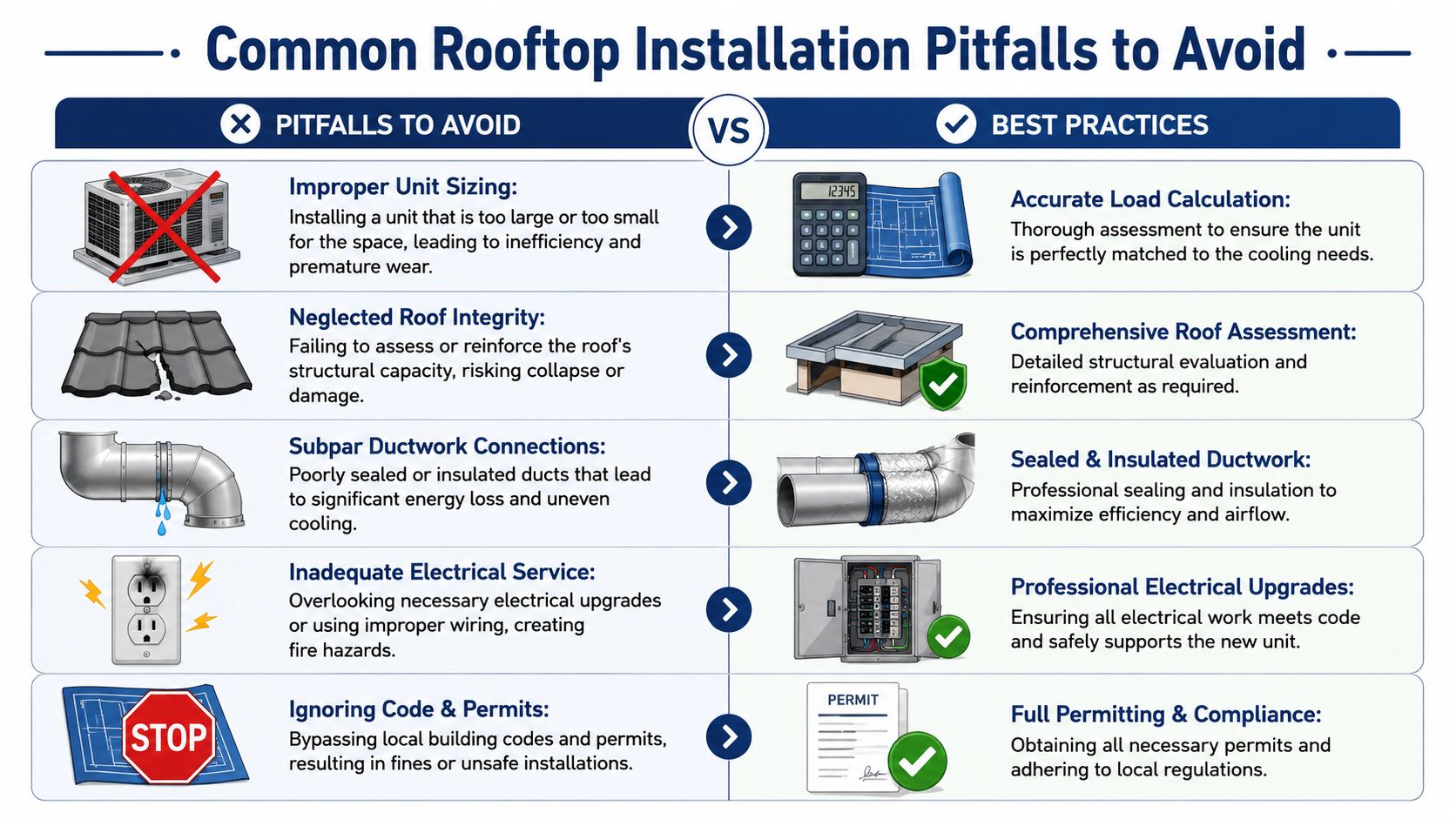
The first is bad sizing. Oversized equipment can short cycle and wear unevenly. Undersized equipment can struggle through Mesa summer afternoons and run too long.
The second is weak curb and roof sealing. Arizona sun destroys poor materials fast, and once water gets in, damage spreads beyond HVAC.
The third is ignoring duct and plenum fit. If airflow paths are compromised at the curb connection, you'll feel it inside. Rooms stay uneven, return performance suffers, and static pressure problems start stacking up.
The pitfall owners ask about too late
Service access. This is one of the biggest blind spots in rooftop work.
A unit may fit physically, but that doesn't mean it was placed well. The roof access guidance discussed in this OSHA-focused video points to a bigger issue than simple placement. Permanent ladders, fall protection, and clear service pathways increasingly matter as part of the install itself. The key question isn't just “Can it go there?” It's “Who can safely service it later?”
That affects:
- Routine maintenance: Filter changes and coil cleaning become harder when access is poor.
- Repair cost: Major repairs may require extra labor, roof safety setup, or lift equipment.
- Response speed: Some contractors may delay service if the roof setup is unsafe or awkward.
- Equipment life: Units that are hard to reach often get maintained less consistently.
Other red flags to watch for
A few more issues should put an owner on alert:
- No meaningful roof inspection: If the crew never talks about structure or roof condition, that's a problem.
- No discussion of clearances: Tight placement hurts both airflow and maintenance.
- No startup documentation: If nobody verifies operation beyond “it's cooling,” corners were likely cut.
- No permit conversation: That usually means risk has been pushed back onto the owner.
Rooftop systems can work very well in Phoenix. But they punish shortcuts faster than ground systems do, especially when monsoon moisture and extreme heat expose every weak point.
Hiring a Licensed Rooftop AC Installer in Arizona
There are plenty of HVAC companies in Arizona, and that's exactly why screening matters. The Spherical Insights rooftop unit market report estimated the U.S. rooftop units market at USD 9,427.4 million in 2025, which tells you this is a large category with a lot of companies selling into it. Large market size doesn't mean every installer has real rooftop experience.
A crew that does basic condenser changeouts well may still struggle with roof curbs, crane coordination, access planning, and permit-driven rooftop details.
What to verify before you sign
Start with license and insurance. In Arizona, you can verify a contractor through the Arizona Registrar of Contractors. Comfort Experts lists ROC #275914, which is the kind of transparency you should expect from any company you're considering.
Ask for clear answers on these points:
- Rooftop experience: How often do they install package units on roofs like yours?
- Site assessment process: Did they inspect roof structure, curb condition, duct alignment, and electrical service?
- Permit handling: Will they pull permits and coordinate inspections?
- Insurance coverage: Do they carry liability and workers' compensation insurance?
- Startup procedure: What testing will they perform after installation?
- Service access planning: How will future maintenance be handled safely?
If a contractor gets vague on any of that, keep looking. You can also compare standards using resources on how to choose the best HVAC company near you, especially if you're sorting through multiple bids that don't all include the same scope.
Pay attention to how the company operates
A company's sales process tells you a lot. Do they inspect thoroughly, or do they push a replacement from a glance at the old unit? Do they explain curb compatibility, roof sealing, and electrical requirements, or skip straight to a brand name and price?
There's another angle here. If you want to understand how HVAC companies think about lead generation and sales behavior, this guide on getting new HVAC customers gives useful context on why some contractors prioritize fast quoting over technical depth. That doesn't make every marketing-driven company bad. It does mean you should separate polished sales from actual rooftop expertise.
A final hiring checklist
Before approving a rooftop AC project, make sure you can answer yes to these:
| Question | Why it matters |
|---|---|
| Did the contractor inspect the roof in person? | Rooftop jobs can't be quoted accurately from photos alone. |
| Did they discuss curb compatibility and duct alignment? | Poor fit creates airflow and sealing problems. |
| Did they explain permit responsibility? | You need clarity on inspections and code compliance. |
| Did they address safe future service access? | Every maintenance visit depends on it. |
| Did they describe startup testing? | A real install ends with measured verification. |
Mesa and Phoenix properties put HVAC systems under serious stress. The installer you choose matters just as much as the equipment brand. Let me explain one last practical truth. A lower quote often leaves out the parts of the job you can't see from the ground.
If you want to talk through your options for a rooftop replacement or new packaged system, contact Comfort Experts for a no-pressure consultation. You can call 480-207-1239 or schedule service online.