
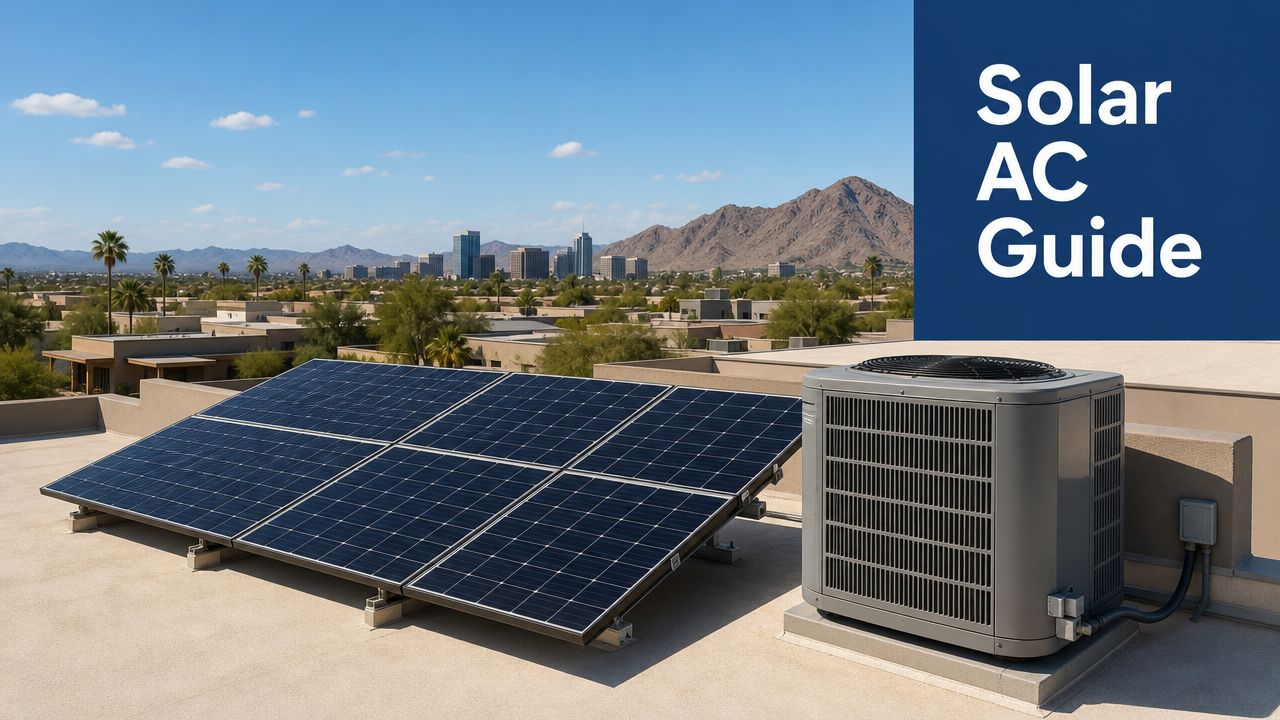
If you're reading this in Phoenix, there's a good chance your AC has already been running for hours and the meter outside feels like it's spinning just as fast. A ***solar powered AC system* sounds like the perfect answer in a city with brutal sun, but the real story is less about panels alone and more about whether the whole cooling system is designed to work in Arizona conditions.
What a Solar Powered AC System Means in Arizona
A solar powered AC system uses solar energy to offset or directly power cooling equipment. That sounds simple, but in practice there are a few very different ways to do it, and they don't all perform the same when it's still well over 100 after dinner.
In Arizona, the idea makes sense on paper because our cooling demand lines up with strong daytime sun. That's one reason interest keeps growing even though the category is still relatively specialized. The global solar air-conditioning market was valued at US$ 586.8 million in 2026 and is projected to reach US$ 761.8 million by 2033, according to Coherent Market Insights on solar air-conditioning market growth.
It's not free cooling from a few panels
Most homeowners first picture a roof with panels feeding an air conditioner nonstop. Real systems don't work that way unless the equipment, wiring, controls, and backup strategy all match the cooling load.
The panels are the fuel source. The AC equipment is the engine. If the engine is inefficient, badly sized, or poorly integrated, the panels alone won't save the day.
That distinction matters in Phoenix, Mesa, Scottsdale, Chandler, and everywhere else in the Valley because homes here often have long cooling hours, high attic heat, and heavy late-day demand. A roof may be solar-friendly, but panel layout, roof age, and future reroofing plans still matter. If you're evaluating roof condition before adding solar, Arizona Roofers on solar roofs gives a practical overview of how roofing and solar planning intersect.
What most homeowners actually want
Many individuals aren't chasing an engineering project. They want a few basic things:
- Lower daytime electric demand when utility costs hurt the most
- Reliable cooling without gambling on experimental equipment
- Less strain on the main central AC
- A clearer path to energy-efficient upgrades that fit their house
For many homes, that means looking at solar cooling as one piece of a broader efficiency plan, not a stand-alone miracle fix. If you're comparing your options beyond solar alone, this guide to energy-efficient cooling systems is a useful place to widen the lens.
The Three Main Types of Solar AC Setups
Not all solar AC systems deserve the same label. Some are basically standard air conditioning supported by rooftop solar. Others are purpose-built hybrids that can use solar more directly. A few try to push full battery-backed cooling, which sounds exciting until actual trade-offs show up.
Standard solar PV with a regular AC
This is the most familiar setup. You install rooftop solar panels, and those panels offset electricity used by a conventional central air conditioner or heat pump.
It can work well for homeowners who already want whole-home solar and plan to stay grid-connected. But it isn't a dedicated solar AC in the purest sense. The AC itself still operates like a normal electric air conditioner, and your system depends heavily on how your home solar array interacts with the utility and the rest of the house load.
Good fit:
- Whole-home solar households already planning a larger PV system
- Homes with strong roof exposure
- Owners who want broad electric bill reduction, not only cooling relief
Weak spot:
- You're still tied to the grid for evening peak cooling
- The AC doesn't become magically more efficient just because panels are on the roof
Hybrid solar heat-pump mini-splits
This is the setup I point homeowners toward most often when they specifically ask about a solar powered AC system for Arizona. Many modern residential designs are hybrid solar heat-pump mini-splits because they can run directly on DC solar power during the day and automatically switch to grid power when solar output drops. One industry explanation notes that a well-designed system can cool about 750 sq. ft. with under 1,000 watts of solar input, using an example system around 11,500 Btu with roughly 885 W peak cooling power. You can review that framework in Green Builder Media's explanation of hybrid solar AC.
That hybrid approach matters because it avoids one of the biggest cost traps. Batteries.
These systems are especially attractive for:
- Casitas and additions
- Main living areas with heavy daytime use
- Homes where the central AC is oversized for only part of the day's needs
- Owners comparing zoned cooling options, including ductless mini-split vs central air
Battery-backed solar AC systems
This is the version many online articles oversell. The concept is straightforward. Panels charge batteries, and the batteries run the AC after sunset or during outages.
The problem isn't whether this can be done. It can. The problem is whether it makes practical and economic sense for a Phoenix homeowner who needs long cooling hours in July.
Battery-based systems add complexity fast:
- More equipment to size correctly
- More conversion losses
- Higher upfront cost
- More points of failure
- Harder decisions around inverter limits and backup duration
Comparing Solar AC System Types
| System Type | How It Works | Best For | Estimated Cost |
|---|---|---|---|
| Standard solar PV with regular AC | Rooftop solar offsets electricity used by a conventional AC system | Homeowners already planning whole-home solar | Varies by home and solar scope |
| Hybrid solar heat-pump mini-split | Uses solar directly during the day, then switches to grid power automatically | Daytime cooling of key rooms or zones | Varies by equipment and installation complexity |
| Battery-backed solar AC | Solar charges batteries that supply AC when sun is weak or gone | Specialty projects, backup-focused setups, off-grid use | Usually the highest-cost path |
Sizing and Feasibility for Your Phoenix Home
The biggest question isn't whether solar AC exists. It's whether it will keep your house comfortable during an Arizona summer without turning into an expensive disappointment.
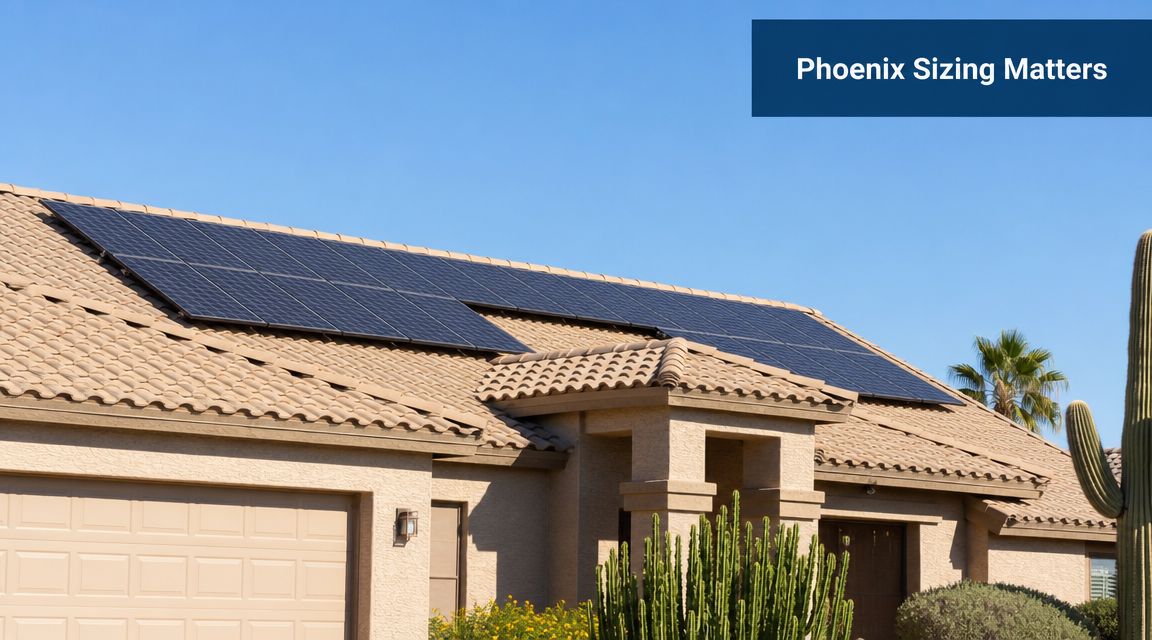
What decides whether it's feasible
A solar AC design rises or falls on load, not marketing. The home matters as much as the equipment.
Key factors include:
- Roof exposure because shade, orientation, and usable roof area affect solar production
- Insulation quality because weak attic insulation drives up afternoon demand
- Window performance because west-facing glass can punish a system late in the day
- Duct condition if you're pairing solar with existing central air
- Occupancy pattern because a home used all day has very different needs than one empty until evening
In Phoenix, sizing mistakes show up fast. A setup that looks fine on a pleasant spring day can struggle badly during extreme summer heat, especially if the home has poor air sealing or a lot of direct sun exposure.
AC efficiency matters more than the solar label
A lot of people focus first on the panels. I'd flip that around. Start with the cooling equipment.
For benchmark performance, one expert source on DC solar mini-splits states that a unit can run on 100% solar power during daylight, needs 3 to 6 PV panels in roughly the 290–375 W range, and is rated at SEER 22 on normal AC power, with a calculated SEER equivalent greater than 75 when the DC solar contribution is counted. That technical explanation is outlined by HotSpot Energy's solar air conditioner guide.
That doesn't mean every home gets those results. It means efficient equipment can reduce compressor demand right when the sun is strongest, which is exactly the window where Arizona cooling loads are punishing.
If you're not sure whether your current system is oversized, undersized, or just worn out, a sizing baseline matters before adding solar. This guide on what size air conditioner you need can help frame the conversation.
The monsoon evening problem nobody explains well
You know what? At this point, online guides usually get fuzzy.
A Phoenix home may still need serious cooling in the evening, especially after a scorching day when roof decking, stucco walls, and attic spaces have been soaking up heat for hours. During monsoon season, conditions get even trickier. Cloud cover cuts solar output. Dust can reduce panel performance. Late-afternoon storms can arrive right when the house still needs cooling.
That's why the phrase solar-powered can be misleading if nobody explains the fallback strategy.
Real-world DIY and off-grid examples show practical limits such as inverter faults, fan-speed restrictions, and the need to keep systems on lower settings to avoid overloads. That gap is one reason battery-free daytime hybrid systems often make more sense than trying to force a simple off-grid AC concept into a Phoenix house. The issue is discussed in this real-world video example on solar AC constraints.
The Real Cost and ROI of Solar AC in the Valley
Solar AC economics live or die on design quality. Homeowners often focus on the equipment price, but the bigger question is whether the system will offset meaningful cooling demand without wasting money on hardware that doesn't solve the late-day load problem.
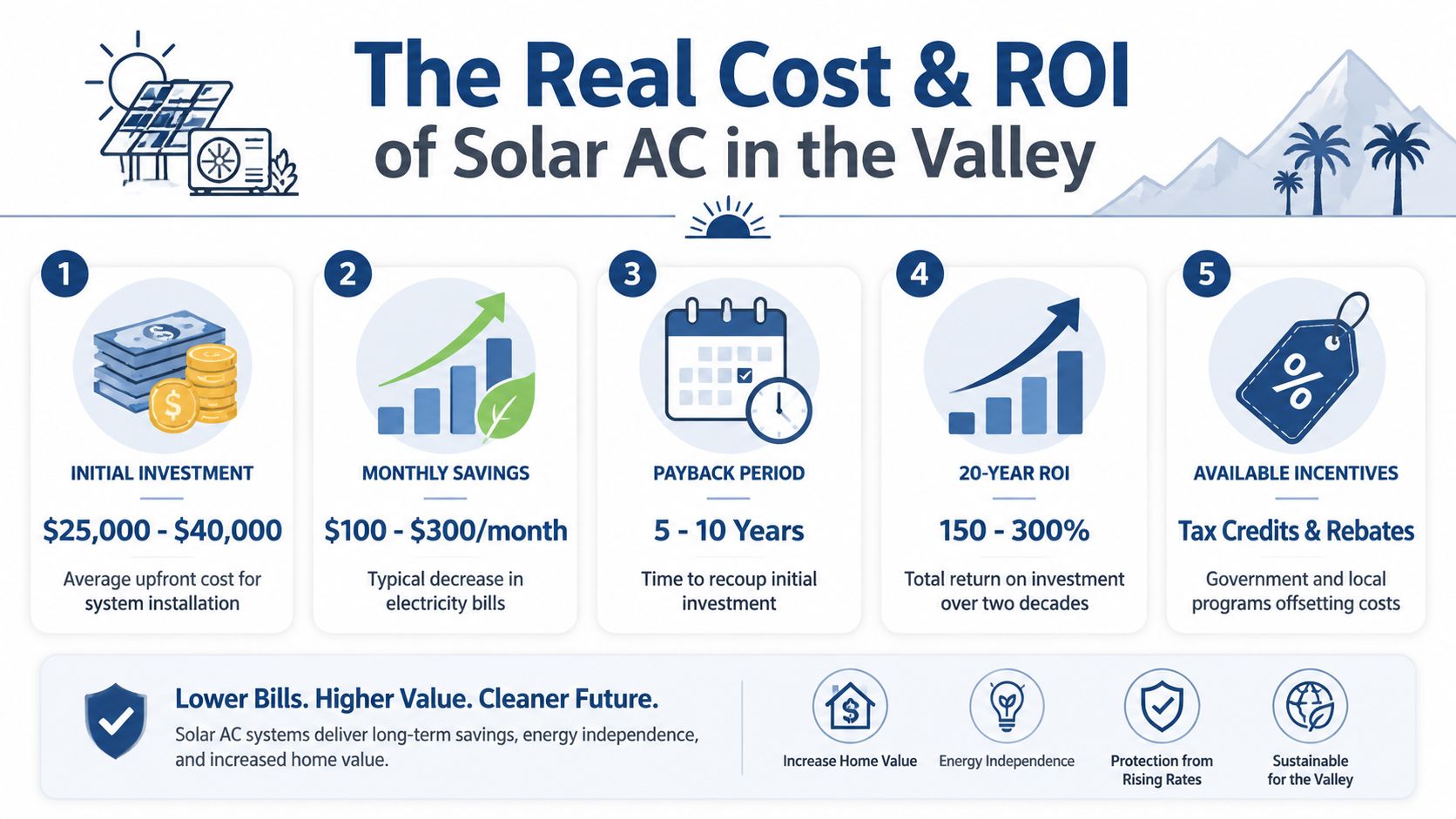
What drives value
The best return usually comes from matching solar cooling to a specific job. That might be:
- Offsetting daytime cooling in the main living area
- Reducing runtime on an older central unit
- Improving comfort in a hot room or addition
- Using a hybrid design that avoids battery cost
What usually hurts ROI is overbuilding. If someone sells you on full independence from the grid without carefully walking through evening cooling, inverter limits, roof constraints, and home load, that's where disappointment starts.
What to evaluate before calling it a good investment
A realistic ROI conversation should include more than one line item. Look at:
- Your daytime cooling pattern because savings are strongest when solar and AC demand overlap
- Existing equipment condition because pairing solar with failing HVAC equipment can backfire
- Roof readiness because panel removal and reinstallation later can change the math
- Control strategy because setpoints, zoning, and staging affect actual performance
- Utility structure because the timing of your electric usage matters as much as the total amount
Some homes are better candidates than others. A well-insulated house with a defined daytime cooling zone is usually easier to justify than a drafty whole-home setup trying to cover every cooling hour with solar alone.
The cost question homeowners should ask differently
Instead of asking, “How much does solar AC cost?” ask, “Which part of my cooling bill can this realistically attack?”
That shift leads to better decisions. Daytime solar-assisted cooling is often practical. Full evening independence is a different project with a different budget and a different tolerance for complexity.
Available Incentives and Rebates for Arizona Homeowners
Financial incentives can help, but homeowners need to be careful. Incentive programs change, utility offerings change, and qualification rules depend on the exact equipment and how the system is installed.
What to verify before counting on savings
Start with current program terms, then confirm them with your tax professional, solar contractor, and HVAC installer. Don't build the project around an incentive you haven't validated.
Use this checklist:
- Federal tax treatment if your system includes qualifying solar components
- Utility-specific offers that may apply to efficiency or energy upgrades
- Equipment eligibility because not every component is treated the same way
- Installation timing since deadlines and funding windows can affect availability
- Roof planning if reroofing may be needed before or after the solar work
If you're trying to understand local utility programs that may overlap with broader efficiency upgrades, this summary of Salt River Project rebates is a practical starting point.
Why roof timing affects incentives too
A lot of homeowners miss this. If your roof is near the end of its life, the order of operations matters. Pulling panels later for reroofing can create avoidable labor costs and scheduling headaches.
For that reason, it helps to review examples of how contractors think about detach-and-reset planning before finalizing a solar job. This article on detach-and-reset for solar reroofing explains the coordination issues in plain language.
Keep expectations grounded
There may be valuable incentives available. There may also be none that apply cleanly to your exact setup at the time you're shopping.
That's normal. The smart move is to treat incentives as a bonus, not the sole reason the project works. If the numbers only make sense because of a rebate you hope will still be there later, the project probably needs a second look.
Integrating with Your Existing HVAC and Maintenance
A solar AC system doesn't always mean tearing out everything you already own. In many Phoenix homes, the better move is to add a solar-capable cooling zone that takes pressure off the main system during the hardest part of the day.
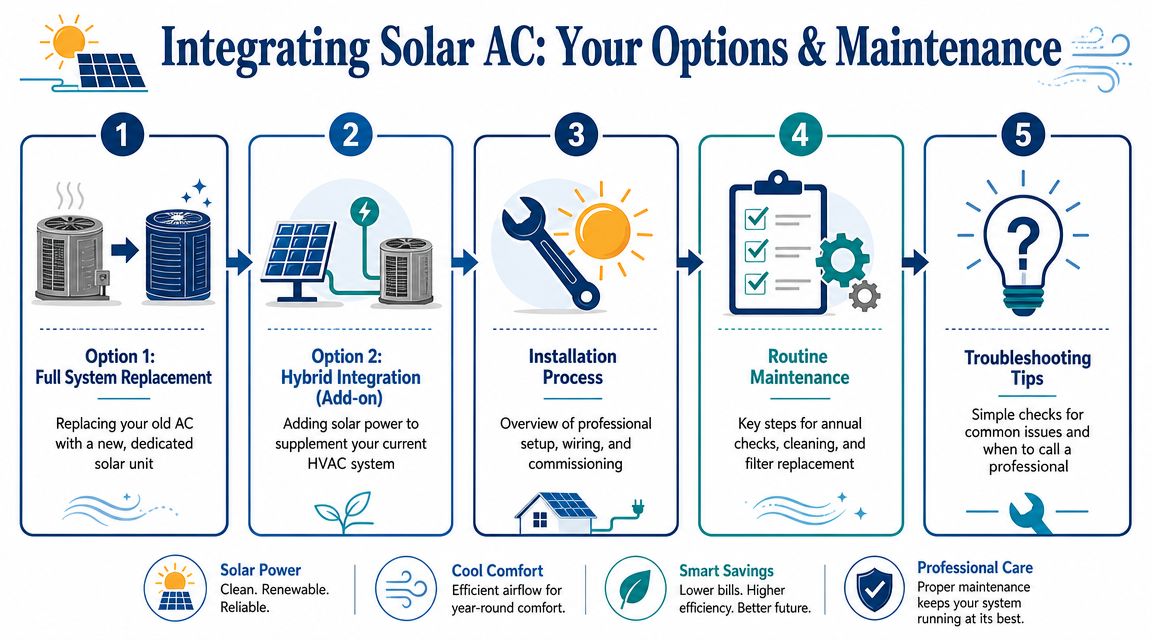
The add-on approach often makes the most sense
A hybrid mini-split can work alongside a central ducted system instead of replacing it. That approach is useful when one area of the house carries most of the daytime load, such as:
- Great rooms with high ceilings
- South- or west-facing living spaces
- Home offices occupied all day
- Additions that the existing duct system never handled well
In that scenario, the solar-assisted unit handles the daytime zone while the central AC gets a break. That can improve comfort and reduce wear on the larger system.
A local provider like Comfort Experts can assess whether your current HVAC layout is a fit for zoned solar-assisted cooling, full replacement, or a standard high-efficiency upgrade with no solar component.
DIY setups versus professional system integration
This is one of the biggest gaps in the market. People watch a video, see a small unit running from panels, and assume the concept scales neatly to a house in Phoenix.
It usually doesn't.
Recent consumer content often under-explains the difference between DIY solar AC projects and true hybrid HVAC systems. Real-world examples show inverter issues and operational limits, especially in hot climates where cooling demand stays high as solar output fades. Before putting panels on a roof, it's also worth reading broad planning advice like Artisan Quality Roofing solar advice because roof condition and project sequencing matter more than many homeowners expect.
What maintenance actually looks like
Maintenance isn't wildly different from owning regular AC plus rooftop solar, but there are more components to keep an eye on.
Plan for:
- Panel cleaning when dust buildup affects performance
- Routine filter changes on the indoor unit
- Electrical and inverter checks during service visits
- Drain line inspection on mini-splits or air handlers
- Performance verification so the system is switching and modulating correctly
If you already stay on top of HVAC upkeep, this part won't feel exotic. It just requires discipline. A standard residential air conditioning maintenance routine becomes even more important when you're depending on high-efficiency operation to justify the solar side.
Is a Solar AC System Your Next Smart Move
For the right Phoenix home, yes. But the right answer isn't “solar everything.” It's “solve the right cooling problem with the right design.”
A solar powered AC system makes the most sense when your biggest pain is daytime cooling cost, when your house has a zone that needs heavy sun-hour cooling, and when you're willing to treat system integration as the priority. That last part matters more than people expect. The panels, the inverter path, the equipment efficiency, the control logic, the roof condition, and the evening fallback all have to make sense together.
A good fit usually looks like this
A homeowner is usually a strong candidate when several of these are true:
- The house gets hammered by daytime cooling demand
- There's usable roof area with decent solar exposure
- One zone of the home carries a disproportionate cooling load
- The owner wants lower grid dependence without going fully off-grid
- The existing central system needs help, not necessarily immediate replacement
That person can often benefit from a hybrid setup that trims demand during the hottest, brightest part of the day.
A weak fit looks different
Some homes should be cautious.
Common warning signs include:
- Most occupancy happens in the evening
- The house needs whole-home cooling deep into the night
- Roof condition is uncertain
- The plan relies on batteries without a clear use case
- The home envelope is inefficient enough that fixing insulation and air leakage should come first
Let me explain one key point. If the building shell is leaky and the existing HVAC system is poorly matched, solar won't fix the underlying comfort problem. It may offset part of the electric use, but it won't turn a bad thermal envelope into a good one.
What matters most in Phoenix
Phoenix isn't gentle on HVAC equipment. We ask our systems to run hard, for long hours, under punishing conditions. That's why hype falls apart here faster than it does in milder climates.
The practical version of solar cooling for the Valley is usually not a fantasy of endless off-grid comfort. It's a carefully targeted system that reduces daytime electric demand, supports the main HVAC equipment, and keeps expectations honest about cloudy monsoon afternoons and hot summer evenings.
That honesty is what keeps a project smart.
If you want a clear, neighbor-level assessment of whether a solar cooling setup makes sense for your home, contact Comfort Experts by calling 480-207-1239 or schedule service online.