
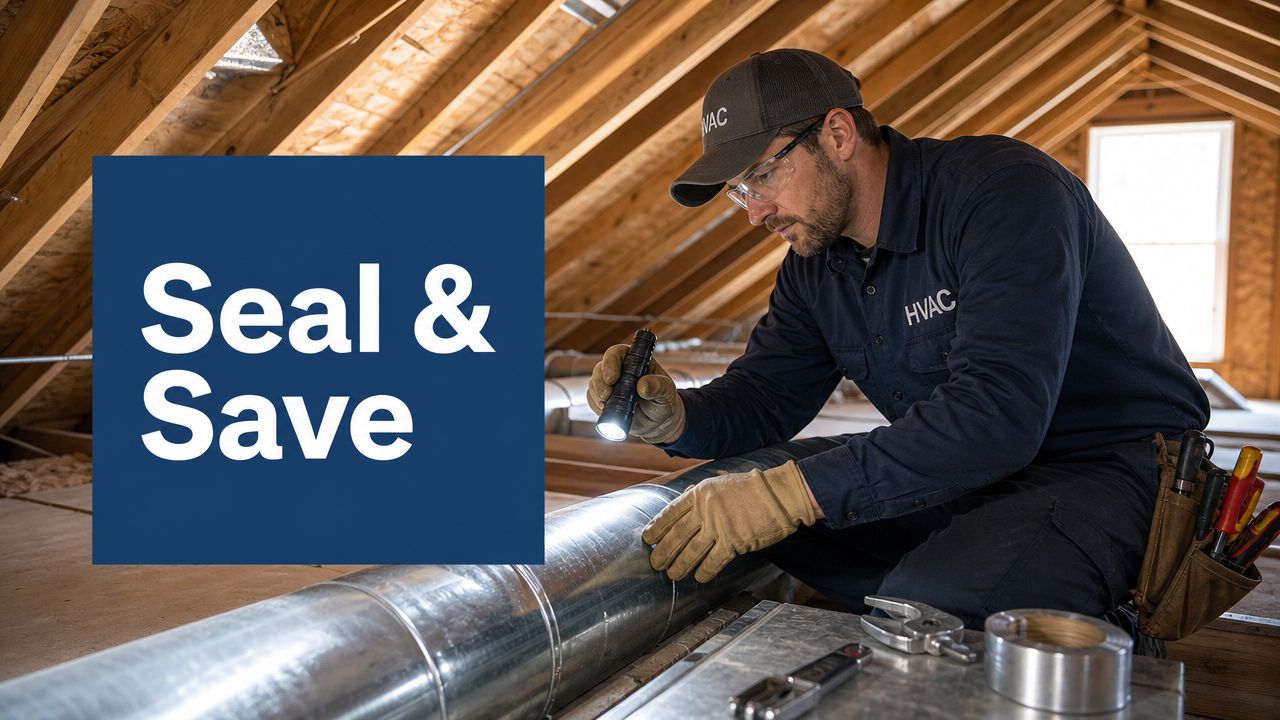
If the AC has been serviced, the filter is clean, and some rooms in the house still feel warm by late afternoon, the missing piece may be the duct system. In Mesa homes, especially older properties and houses with attic ductwork, duct sealing often solves the problem that thermostat changes and repeated AC service calls don't.
Is Your AC Working Overtime for Nothing
A common Mesa summer pattern goes like this. The thermostat is set low, the system runs for long stretches, the back bedrooms stay warm, and the power bill climbs anyway. The equipment may not be the main problem. The cooled air may be escaping before it ever reaches the rooms that need it.
That's why duct sealing in Mesa, AZ comes up so often in homes that seem to have “mystery” comfort problems. Air leaks in attic ductwork can waste cooling while the unit keeps running harder to make up the difference. Homeowners looking for broader ways to reduce strain on the system can also review how to save on summer cooling and handle routine basics like DIY ventilation system maintenance before deciding whether the duct system needs testing.
What Leaky Ducts Really Cost Mesa Homeowners
Leaky ducts raise costs in ways homeowners usually do not see right away. The obvious hit is wasted cooled air. The less obvious one is what that waste does to runtime, comfort, and equipment life during a Mesa summer.
In older East Valley homes, I often find the same pattern. Supply air is escaping into a hot attic, and the system keeps running to make up for air that never reaches the rooms. Homeowners notice the symptoms first. One bedroom stays warm, the hallway feels stuffy, and the electric bill looks wrong for how uncomfortable the house still feels.
A separate Arizona HVAC source explains that homes with duct leakage can lose a meaningful share of conditioned air before it reaches the living space, especially in older systems, in its breakdown of how much professional duct sealing can save each year. For Mesa residents trying to decide whether the problem is worth testing, that lost air is only part of the cost. The bigger issue is paying to cool an attic while the house stays uneven.

Where the money goes
Mesa heat makes every duct defect more expensive. Many homes have ductwork above the ceiling line, where attic temperatures push well past indoor conditions for months at a time. If joints are loose, boots are not sealed well, or flex runs are kinked or torn, the system loses capacity where homeowners can least afford it.
Common results include:
- Higher summer bills: The AC runs longer to satisfy the thermostat because part of the cooled air never reaches the rooms.
- Uneven cooling: Back bedrooms, additions, or rooms with long duct runs stay warmer than the rest of the house.
- More equipment strain: Longer cycles add wear to motors, capacitors, compressors, and blower components.
- Poorer air quality: Return-side leaks can pull attic dust, insulation particles, and musty air into the system.
There is also a diagnosis problem. Leaky ducts can look like an undersized unit, a bad thermostat, weak airflow, or even a system near the end of its life. Homeowners spend money chasing symptoms, then find out later the duct system was a large part of the issue.
Why it feels worse in Arizona homes
Arizona homes punish weak duct systems. Attic heat dries out old tape. Dust works into small gaps. Monsoon humidity can expose sagging insulation, disconnected sections, and boot leaks around ceiling penetrations.
That is why replacing the AC without checking the ducts can be an expensive miss. A properly sized system can still underperform if air is being lost on the way to the living space. In homes where hidden leaks are suspected, homeowners often start by reading Aeroseal duct sealing reviews to understand how whole-system sealing compares with basic spot repairs.
One more point matters for Mesa homeowners. If duct sealing is going to be part of a rebate application through SRP, poor documentation can cost you as much as the leak itself. Testing, dates, and paperwork matter, and missing a deadline can wipe out savings that might have reached up to $400.
Comparing Duct Sealing Methods Aeroseal vs Manual Sealing
A common Mesa service call goes like this. One room stays warm, the hallway feels stuffy, and the equipment seems to run longer every afternoon. The question is not which method sounds better on paper. The question is where the leaks are, what shape the duct system is in, and whether the repair can be documented properly if SRP rebate paperwork is part of the plan.
When manual sealing is the better fit
Manual sealing is the right choice when the problem is visible and reachable. A technician exposes the failing joints, secures loose connections, and seals the leak sites with the correct duct materials.
This works well for:
- Boot and register leaks: Gaps where the duct meets the ceiling, wall, or floor boot
- Plenum and takeoff failures: Common trouble spots near the air handler
- Loose or damaged flex connections: Sections that need fastening and sealing, not just a surface patch
- Limited-scope repairs: Homes with a few obvious failures instead of leakage spread through the whole system
Manual work also gives the technician a chance to correct physical defects that sealant alone will not fix. Crushed flex duct, disconnected runs, poor support, and torn sections need repair first.
The downside is access. In many Mesa homes, large portions of the duct system are buried in tight attic spaces or hidden behind finished areas. If the leaks are scattered throughout the system, manual sealing can leave the hardest losses untouched unless the homeowner is willing to pay for a lot of labor and partial disassembly.
Where Aeroseal makes more sense
Aeroseal is designed for systems with leakage that cannot be reached easily by hand. The process pressurizes the duct system and sends a sealant through the ductwork so small leaks can be sealed from the inside.
That matters in houses where the symptoms point to system-wide leakage rather than one failed connection.
Aeroseal is often a better fit for:
- Hidden leakage: Runs buried in attic insulation or located in hard-to-reach areas
- Many small leaks: Systems that have aged across multiple joints and seams
- Verification-focused jobs: Projects where measured before-and-after results matter for decision-making and rebate documentation
- Homes with persistent comfort issues: Cases where spot repairs have not solved uneven airflow
Homeowners who want a plain-language look at real-world pros, limits, and expectations can start with these Aeroseal duct sealing reviews. Comfort Experts also offers Aeroseal duct sealing for homes where internal leakage is the larger issue.
Aeroseal vs manual duct sealing at a glance
| Feature | Manual Sealing (Mastic & Tape) | Aeroseal Sealing |
|---|---|---|
| Best use | Visible, accessible leaks | Hidden leaks throughout the system |
| Access required | Usually yes | Less dependent on direct access to each leak |
| Main strength | Repairs obvious failures and connection problems | Seals small leaks across the full duct system |
| Limitation | May miss concealed leakage | Does not replace repair of crushed, torn, or disconnected duct sections |
| Verification | Visual review, plus testing if included | Commonly paired with measured pre- and post-seal testing |
| Good SRP paperwork fit | Can work if testing and records are handled correctly | Often easier to document because the process is test-driven |
What usually wastes money
Some approaches sound cheaper and end up costing more.
- Cloth duct tape: It dries out fast in hot attic conditions and should not be treated as a lasting repair.
- Sealing without testing: Low airflow can also come from bad duct design, crushed runs, balance problems, or equipment issues.
- Choosing a method before inspecting the system: A house with disconnected duct sections may need repair work first. A house with widespread small leakage may benefit more from whole-system sealing.
The right choice depends on leak location, duct condition, access, and whether the homeowner plans to file for an SRP rebate. That last part gets missed all the time in Mesa. A good result is not enough by itself if the testing dates, contractor details, and required documentation are incomplete.
The Professional Duct Sealing Process Step by Step
You call for duct sealing because the house never feels quite right. One room stays warm, the attic smells dusty, and the AC seems to run longer than it should. A proper service visit should answer a simple question first. Where is the air going?
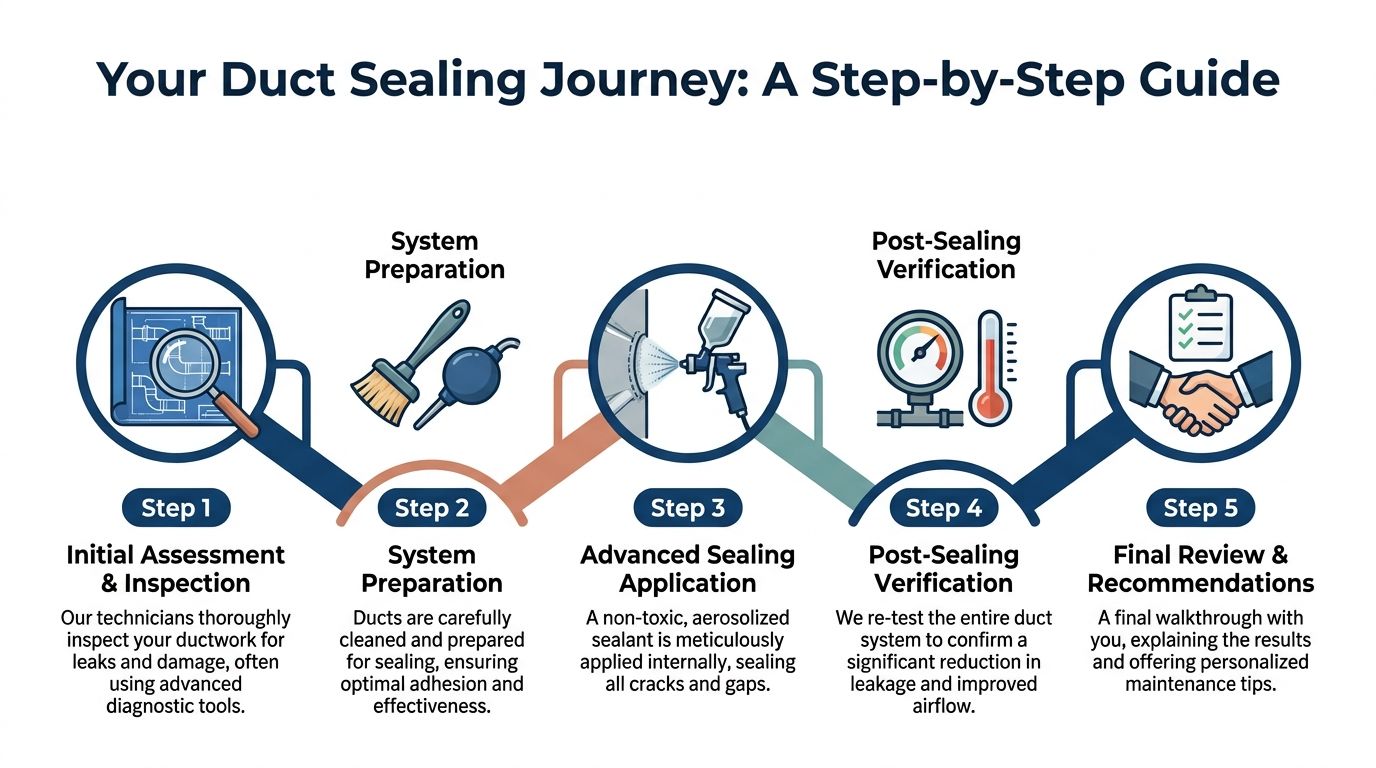
Inspection and preparation
The first step is a hands-on inspection of the duct system, not a quick glance in the attic. Technicians check for loose connections, crushed flex duct, disconnected runs, worn boots, poor support straps, and leakage around the air handler or package unit. If the ducts are damaged, sealing alone will not fix the problem.
That matters in Mesa attics, where heat ages materials fast.
Registers are usually covered or isolated before testing and sealing begin. This allows the crew to measure leakage correctly and control where the sealant or repair materials go. If sections are torn, detached, or collapsed, the homeowner may need to repair leaky ductwork before a sealing-only job makes sense.
Pre-test and sealing work
A measured job starts with a pre-test. That gives the contractor a baseline and shows whether the leakage is minor, widespread, or tied to a few obvious failures. It also helps separate duct leakage from other comfort issues like restricted airflow, bad balancing, or equipment problems.
For manual sealing, good prep matters. The surface has to be clean and dry, and larger gaps usually need mastic with reinforcing mesh instead of a shortcut patch. Cloth duct tape does not hold up well in attic heat, so it should not be treated as a lasting repair.
If the home is a fit for internal sealing, the duct system is pressurized and the sealant is introduced through the system under controlled conditions. That method can reach many small leaks that are hard to access directly, but it still does not replace repair work on crushed or disconnected ducts.
Post-test and review
After the sealing work is finished, the system is tested again. The point is to verify the leakage reduction, not just assume the job worked because the materials were applied.
This is also where good contractors protect the homeowner from rebate problems. For Mesa residents planning to apply through SRP, the post-test results, contractor information, and job documentation need to be complete and dated correctly. Missing paperwork or late submission can cost you the rebate even if the duct sealing itself was done properly.
A solid final review should also cover any remaining issues the sealing did not solve, such as insulation gaps, airflow imbalance, or filter setup problems that contribute to dust. That kind of closeout is what separates a real diagnostic service from a patch job.
Cost Savings and SRP Rebates for Mesa Homeowners
A common Mesa call goes like this. The house cools, but the AC seems to run too long, one bedroom stays warm, and the electric bill keeps climbing. Homeowners want to know whether duct sealing will pay off, and whether the SRP rebate is real or just another utility program with fine print.
What duct sealing usually costs
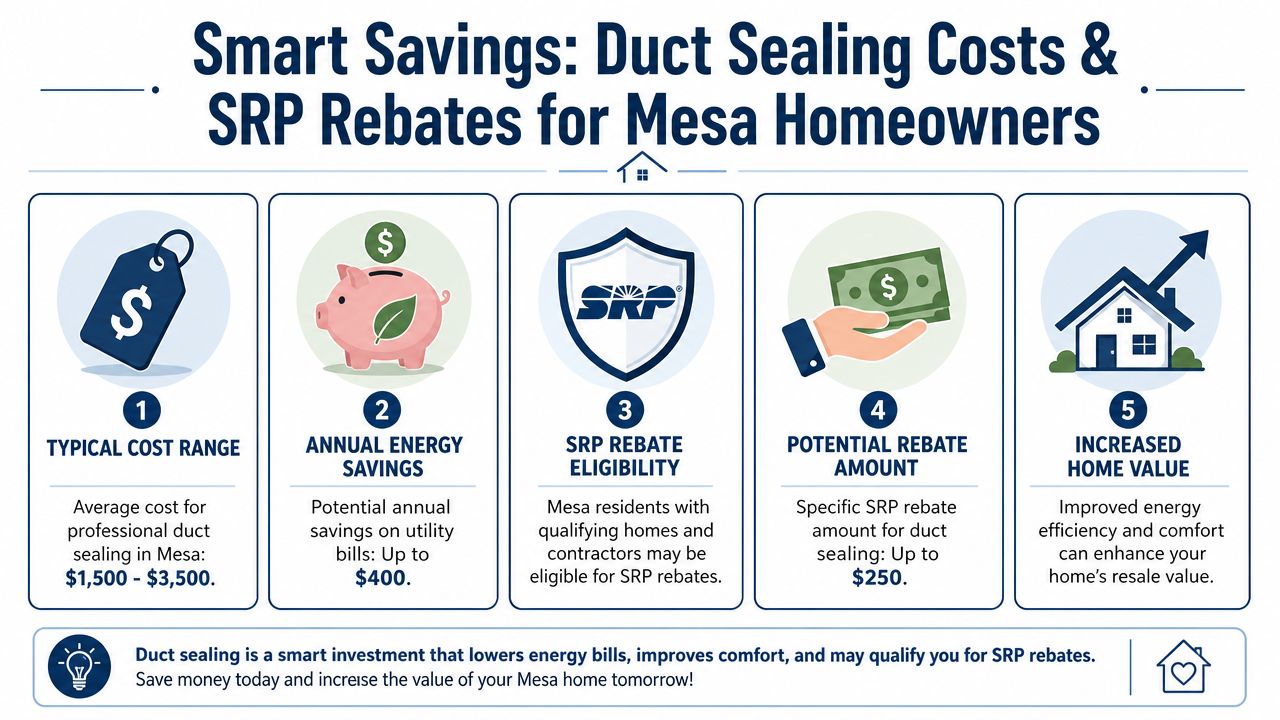
In Arizona, professional duct sealing often lands between $1,500 and $2,500 per air conditioner, based on home size, duct layout, attic access, and how much repair work has to happen before any sealing starts, according to Arizona duct sealing cost guidance.
That range is useful, but real jobs vary for a reason. A clean, accessible attic with minor leakage is one kind of project. An older Mesa home with disconnected runs, damaged flex duct, or hard-to-reach boots is another. The labor changes. The prep changes. The final price changes.
The biggest cost drivers are usually:
- Attic access and working conditions: Low-clearance attics slow everything down.
- Duct condition: Loose connections, torn flex, or crushed sections need repair before sealing can do its job.
- Sealing approach: Manual sealing and internal sealing solve different leakage patterns and are priced differently.
- Number of systems: Homes with two units are often treated as two separate duct systems.
Where the savings usually show up
The payoff is not just lower utility use. Homeowners usually notice better room-to-room cooling first. Less air gets lost into the attic, and the system has an easier time delivering conditioned air where it belongs.
Savings still vary house by house. Older homes with obvious leakage and comfort complaints tend to show more improvement than newer homes with tighter ducts. If the main issue is equipment sizing, insulation, or poor balancing, duct sealing helps less. That trade-off matters, and a good contractor should say so before quoting the job.
The SRP rebate details people miss
SRP can reimburse 75% of duct repair costs up to $400, according to SRP's duct test and repair rebate information. The catch is not the rebate amount. The catch is timing and paperwork.
The application has to be submitted within 6 months of the repair date. SRP also requires a qualifying contractor, and the invoice needs to include the contractor's ROC license number. If the testing paperwork is incomplete, if dates do not line up, or if the homeowner waits too long to submit, the rebate can fall apart after the work is already done.
I have seen that happen. The sealing work was fine. The file was not.
What to ask your contractor before the job starts
Mesa homeowners can avoid most rebate problems by asking a few direct questions up front:
- Are you currently approved for SRP duct repair rebates?
- Will you provide the pre-test and post-test results in writing?
- Will your ROC number appear on the final invoice?
- Who fills out the rebate paperwork, your office or the homeowner?
- What documents should I have in hand before your technician leaves?
Those questions save time later.
A practical timeline that keeps the rebate on track
Use a simple checklist.
- Before scheduling: Confirm the contractor meets SRP program requirements.
- Day of service: Make sure testing is completed and documented.
- Before the technician leaves: Open the invoice and check for the ROC number yourself. If it is missing, ask for a corrected copy on site.
- Same week: Save the invoice, test results, and any contractor-completed rebate forms in one folder.
- At 5 months after service: Set a calendar reminder if you have not submitted yet. Waiting until month six is how people miss the deadline.
For homeowners comparing utility programs and filing steps, this guide to Salt River Project savings in 2026 is a helpful reference.
A rebate should reduce the net cost of the job. It should not create another round of frustration. The homeowners who get the credit most smoothly are usually the ones who treat the paperwork as part of the repair, not something to deal with later.
7 Telltale Signs Your Home Needs Duct Sealing
A duct problem doesn't always announce itself with a visible hole. Most homeowners notice symptoms first.
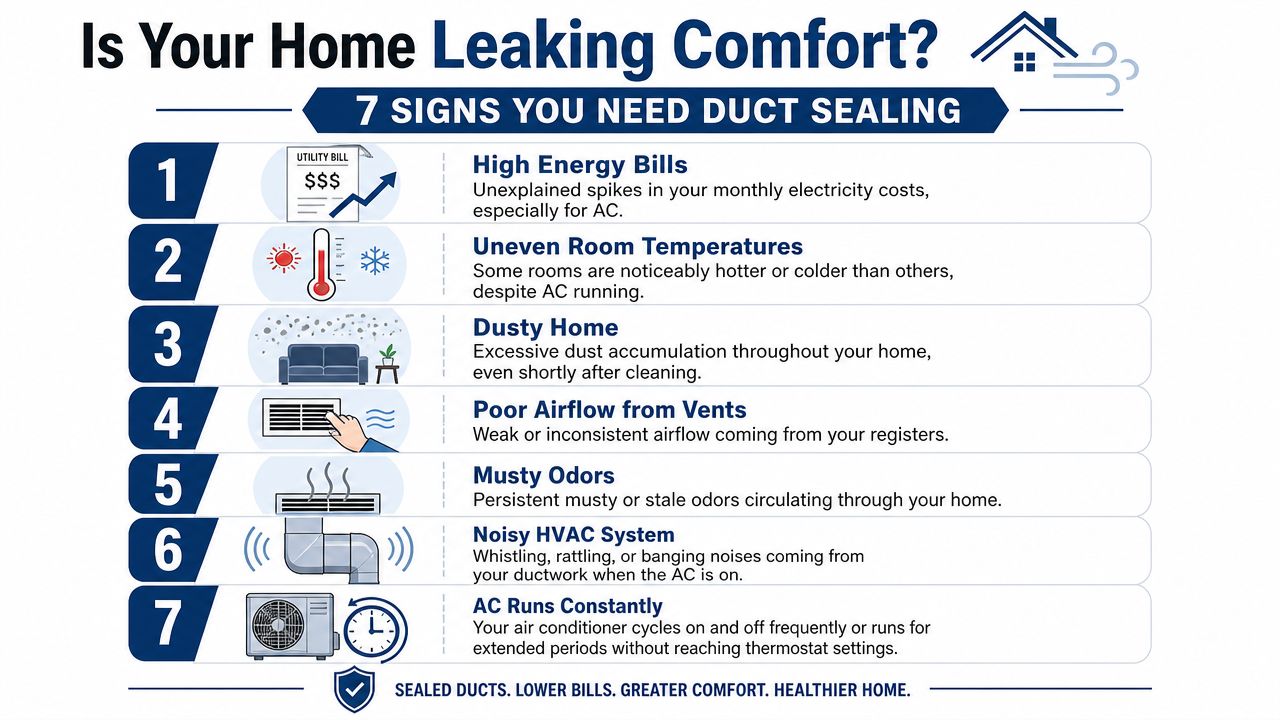
What to watch for around the house
- One or two rooms stay warm: The thermostat says one thing, but certain bedrooms or additions never cool down properly.
- The house gets dusty fast: If surfaces need frequent wiping, duct leakage may be pulling attic dust into the system.
- Airflow feels weak at some vents: A room with weak supply air often points to leakage, duct damage, or poor routing.
- The AC seems to run and run: Long cycles without good comfort can signal distribution problems, not just equipment trouble.
Signs homeowners often overlook
- Musty or stale odor when the system starts: That can mean the ducts are drawing air from places they shouldn't.
- Visible duct damage in the attic: Crushed flex duct, loose connections, and old patch materials are warning signs.
- Indoor air quality complaints: If allergies feel worse inside, the duct system may be part of the issue. Homeowners comparing leakage concerns with cleanliness concerns can also review when to clean your air ducts.
Not all of these symptoms automatically mean sealing is the fix. Some homes have balancing issues, undersized duct runs, or return-air problems. But if several of these signs show up together, a duct inspection is usually worth scheduling.
Common Questions About Duct Sealing
Is the sealing material safe around people and pets
Homeowners ask this a lot, especially in Mesa homes with kids, pets, asthma concerns, or anyone sensitive to odors. The right answer depends on the method being used and how the contractor sets up the job. Ask what product will be applied, where it will be applied, and whether the system needs to be isolated during the work.
A good contractor should answer that clearly, not brush past it. If anyone in the home has medical or indoor air quality concerns, say that before the appointment so the crew can plan the job correctly.
Will the job make a mess in the house
A properly run duct sealing job is usually controlled and contained. Registers are covered as needed, the duct system is tested deliberately, and manual sealing stays on the duct joints, boots, and connections where the leaks are found.
If you are dealing with suspected mold instead of ordinary dust or leakage, standard sealing may not solve the underlying problem. Read AMPM Restoration's mold duct guide before treating it like a basic comfort issue.
How long does a duct seal last
That depends on what shape the duct system is in before the work starts. Sealing lasts longer when the ducts are supported well, damaged sections are repaired first, and the material used matches the surface being sealed.
In Mesa attics, heat matters. So does old flex duct, loose hanging straps, and joints that move every time the system cycles on. A seal on stable ductwork can hold up well. A seal on failing ductwork is often a temporary patch.
Can duct sealing help me qualify for an SRP rebate
Sometimes, yes, but paperwork decides that as much as the repair itself. This is the part many homeowners miss.
If you want the SRP rebate, ask about documentation before the work is scheduled, not after. The contractor may need pre- and post-work testing, itemized invoices, and job details that match SRP program rules. Deadlines also matter. Miss the submission window or leave out a required document, and the rebate can disappear even if the duct sealing work was done correctly. For Mesa homeowners trying to save up to $400, that detail is worth checking twice.
When should a homeowner call a professional instead of trying a DIY fix
Call a pro if the ductwork is in the attic, if comfort problems show up in several rooms, or if you want tested results instead of a guess. DIY mastic on a visible joint can help in a small, obvious spot. It does not tell you how much air the system is losing overall.
Professional testing also matters when rebate eligibility is on the table. Comfort Experts helps Mesa and East Valley homeowners figure out whether the problem is leakage, damaged ductwork, poor airflow design, or something larger in the HVAC system. Call 480-207-1239 or schedule service to have the system evaluated and get clear next steps.