
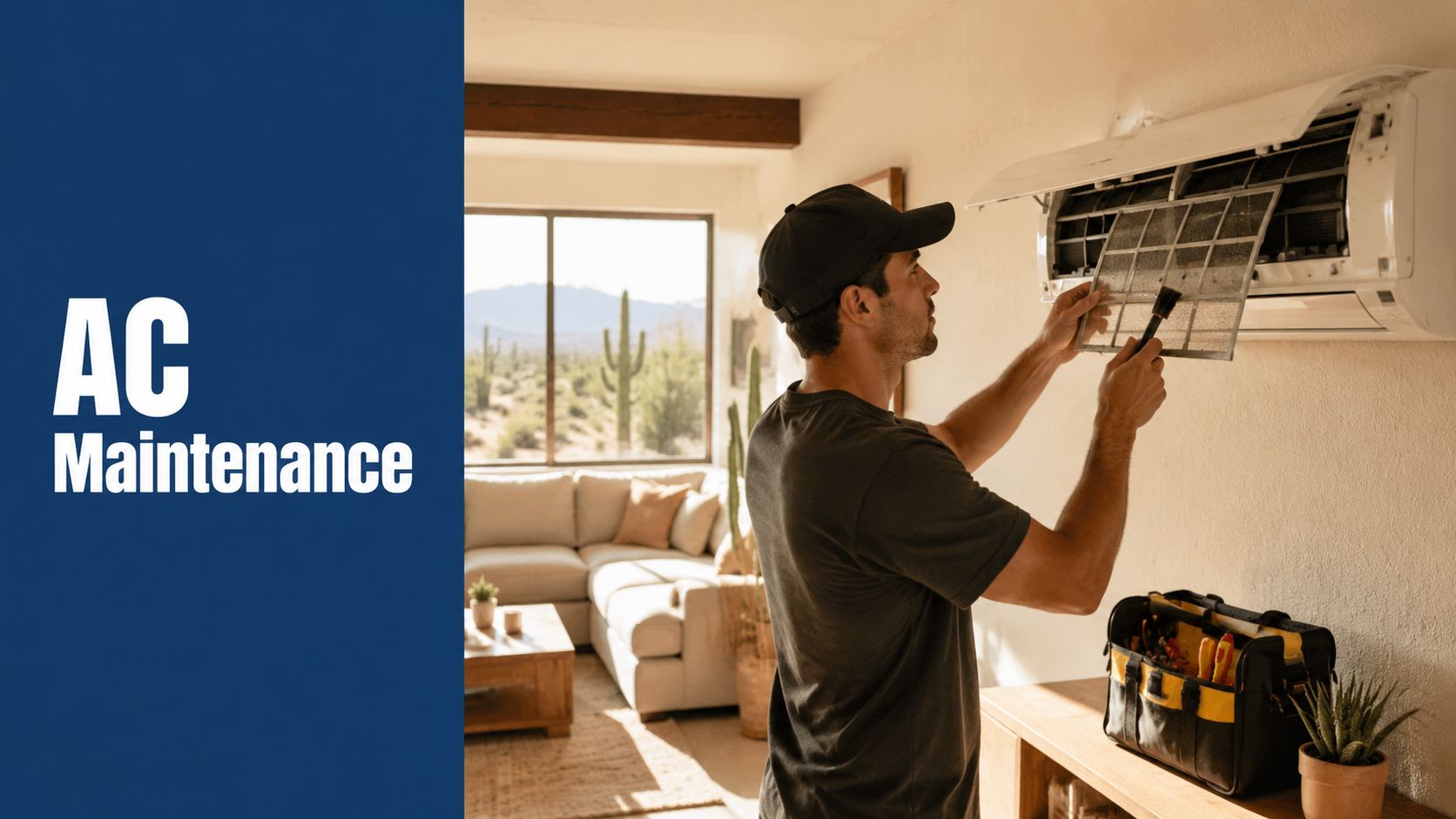
A lot of Mesa homeowners notice the same pattern with a ductless system. The mini-split cools great in spring, then summer heat, fine dust, and monsoon humidity start to chip away at airflow, efficiency, and drain performance. Good mini split AC maintenance keeps that slide from turning into a mid-season repair call.
Why Mini Split Maintenance Matters in Arizona
Mini-splits make a lot of sense in Mesa and the East Valley. They work well for additions, garages, older homes with hard-to-balance rooms, and spaces where full ductwork doesn't fit the layout. They also give homeowners room-by-room control, which matters when one side of the house takes the full afternoon sun.
What gets missed is that a mini-split isn't maintenance-free. Industry experts recommend servicing it at least once per year to maintain long-term efficiency and prevent component degradation, especially in dusty environments like Arizona's East Valley (industry guidance for dusty climates). That matters here because a mini-split in Mesa doesn't get gentle operating conditions. It deals with desert dust, extended cooling seasons, and long runtimes when outdoor temperatures stay punishing for weeks.
Arizona dust changes the maintenance schedule
A mini-split can lose performance slowly enough that homeowners adapt to it without realizing it. The room takes longer to cool. The fan sounds busier. Utility bills creep up. None of that feels dramatic at first, but it usually starts with basic airflow restriction.
Filters load up faster in East Valley homes than generic national advice suggests. Fine dust works its way onto indoor components, and outdoor units also collect debris after wind events and monsoon storms. That combination makes routine cleaning less about housekeeping and more about protecting system operation.
Homeowners who want a broader seasonal routine can start with this guide to essential AC upkeep for Arizona heat. The same local logic applies to ductless systems. In Arizona, heat exposes every weak point faster.
What maintenance protects
Mini split AC maintenance does three things that matter most in this market:
- Airflow protection keeps the indoor head from struggling against clogged filters and dirty coil surfaces.
- Heat rejection outside helps the condenser shed heat in extreme weather, which is critical when the system is already under heavy load.
- Moisture control reduces the chance that drain clogs and biological buildup turn into leaks during humid monsoon stretches.
That's the practical case for staying ahead of maintenance. It helps the system cool the way it should, and it reduces the chance of finding out in July that a small issue had been building for months.
Your Essential DIY Maintenance Checklist
A mini-split in Mesa can look clean from across the room and still be pulling dust through the filter every day. By June, I often see indoor heads that are not broken at all. They are just restricted by buildup that came in through open doors, pets, remodeling dust, or one windy weekend.
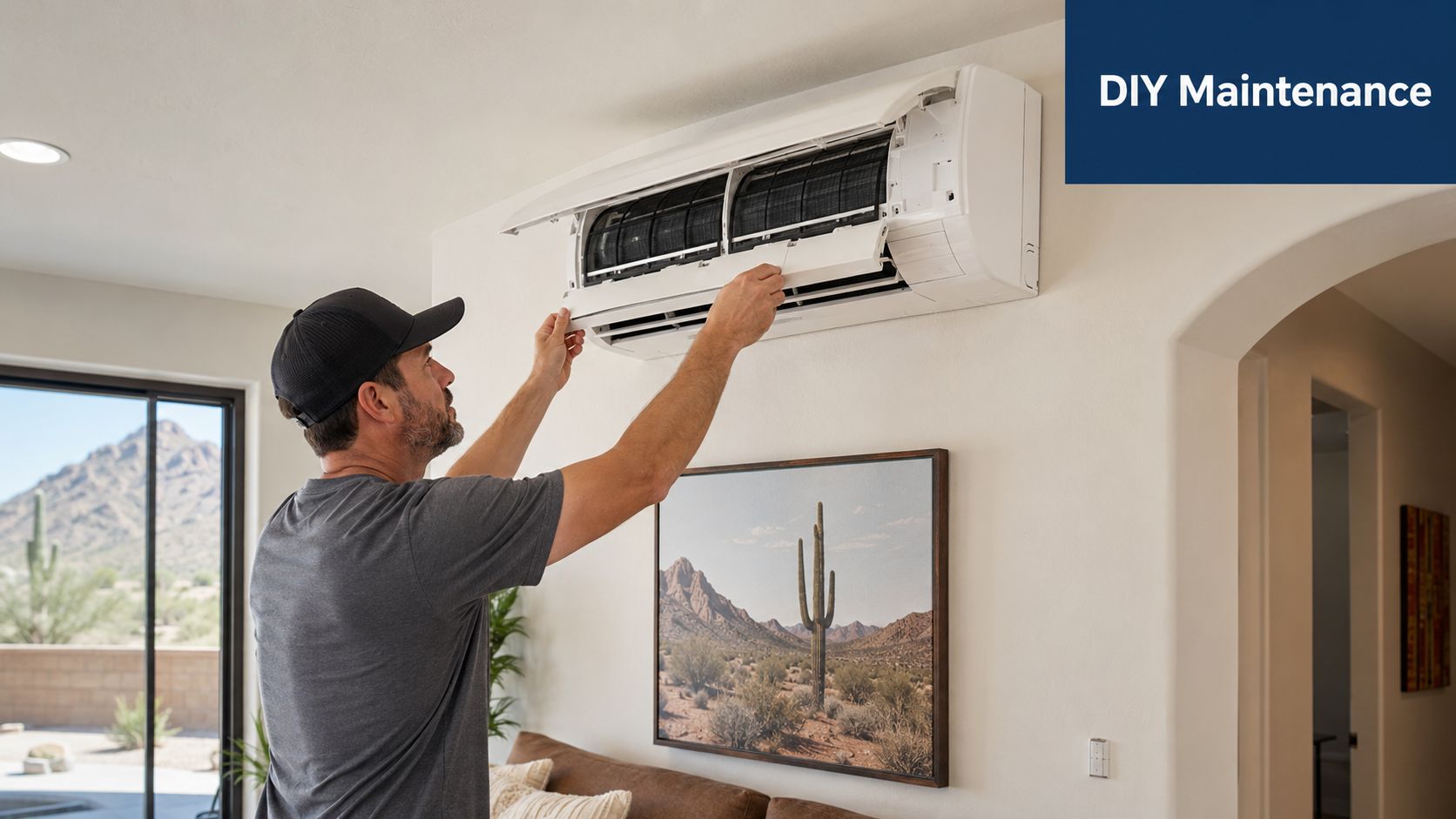
Start with a safe setup
Turn the system off at the remote first. If your manufacturer calls for disconnecting power before opening the front panel, do that too. The indoor head has moving parts, a control board, and plastic tabs that do not tolerate rough handling.
Use a stable step stool, not a chair. Keep your tools simple: a microfiber cloth, mild dish soap, water, and a vacuum with a soft brush attachment. That handles the routine work most homeowners should do themselves.
Clean the filters on an Arizona schedule
The filter is the first thing to check and the first thing to clean. In Mesa and the East Valley, every 4 to 6 weeks is a good starting point, but that is only a starting point. Homes with pets, nearby construction, frequent patio traffic, or one head serving a room that runs all day may need attention closer to every 2 to 4 weeks during peak cooling season.
Use this routine:
- Lift the front cover carefully. Most wall heads have a hinged panel that opens upward.
- Remove the filters gently. Do not twist the frame or force the tabs.
- Vacuum off loose dust first. That keeps thick buildup from turning into mud in the sink.
- Wash with mild soap and water. Avoid harsh cleaners and stiff brushes.
- Rinse well. Soap left behind catches dust faster.
- Let the filters dry fully before reinstalling. Monsoon humidity slows drying more than people expect.
If you want a broader look at cleaning evaporator components, this guide to crucial Phoenix home AC maintenance gives useful background on what dirt does to cooling surfaces.
Check more than the filter
A good DIY visit takes five extra minutes and can catch problems early.
Wipe the intake grille, outer housing, and louvers with a soft dry cloth or a lightly damp one. Keep water away from the display, wiring area, and control compartment. If the louvers have stuck-on dust, clean them slowly with the unit off so you do not knock debris deeper into the head.
Then look for a few warning signs:
- Uneven airflow: Weak discharge can point to a loaded filter, blower buildup, or early coil fouling.
- Moisture marks on the wall below the unit: That can signal a drain problem before it becomes a ceiling or drywall repair.
- Musty odor at startup: Often a clue that the unit needs more than filter cleaning.
- Slow remote response: Sometimes the issue is just batteries, and it saves time to rule that out first.
What to avoid
A few common shortcuts create service calls.
- Putting filters back in while damp: Moisture inside the head can lead to odor and biological growth.
- Spraying cleaners into the unit without checking the manual: Some products can stain plastics, damage coatings, or leave residue on the coil.
- Scrubbing the filter hard: The mesh tears easily.
- Waiting until cooling drops off: By then the system has usually been running hotter and longer for weeks.
I also tell homeowners not to treat every mini-split like a central system. Ductless heads sit high on the wall, pull room air directly, and show the effects of room-specific dust much faster. A home office with the dog bed under the unit may need filter cleaning twice as often as a guest room head.
Keep the routine repeatable
The best DIY maintenance plan is the one you will keep doing in August. Put a reminder on your phone, check the filter condition instead of relying on a fixed national schedule, and pay attention after dust storms and monsoon humidity spikes.
If your filters come out dirty again after a short interval, that is useful information. It often points to heavy indoor dust load, buildup behind the filter, or a system that is running long hours because the space has high heat gain. Homeowners dealing with whole-home air quality concerns may also find this Northern AZ AC duct cleaning guide useful, even though a mini-split itself does not use ductwork.
Deep Cleaning Your Indoor Coils and Drain Line
A clean filter helps, but it doesn't keep every internal surface clean. Fine Arizona dust still gets past the filter over time, and once it settles on the evaporator coil, airflow and heat transfer start to suffer.
Why coil cleaning matters more than most guides admit
Many mini-split articles stop short. They focus on filters and barely mention the coil. That misses a major failure point in desert climates.
Recent 2025 industry reports note that 40% of mini-split failures in arid climates like Arizona stem from biological growth on uncleaned coils. Skipping professional coil cleaning can lead to a 15% increase in energy consumption (Filterbuy discussion of coil cleaning consequences).
That matters in Mesa because dust and humidity don't arrive separately. Dust coats the coil first. Monsoon moisture then gives that buildup a better environment to hold moisture and contamination.
Homeowners dealing with broader airflow and cleanliness issues may also find this Northern AZ AC duct cleaning guide useful as background reading, especially when comparing ducted and ductless maintenance needs.
A careful approach to indoor coil cleaning
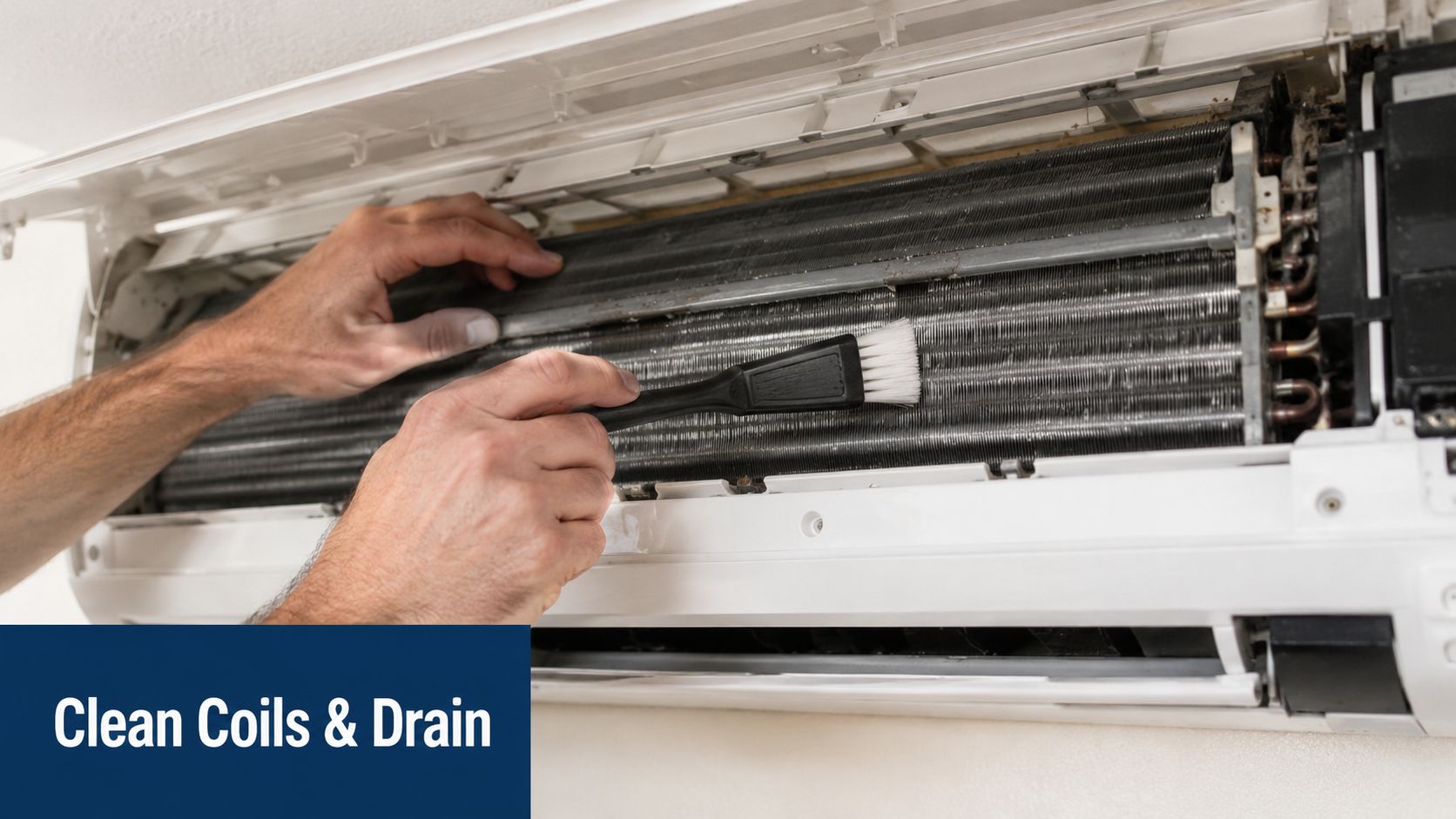
The indoor coil fins are delicate. The goal is to remove buildup without flattening fins or soaking electrical parts.
A safe homeowner-level approach includes:
- Power the unit off completely.
- Access the coil per the manufacturer's panel layout.
- Use a soft brush attachment or very gentle vacuuming. This removes loose dust without pressing debris deeper into the fins.
- Apply a no-rinse coil cleaner made for evaporator use if the product label allows homeowner application. A non-caustic cleaner is the safer direction for delicate indoor components.
- Avoid over-wetting the area. Excess liquid can create a mess inside the housing and may carry debris into the drain system.
For more detail on evaporator cleaning principles, this article on crucial Phoenix home AC maintenance is worth reading.
Don't skip the drain line
If a mini-split leaks water down the wall, the drain line is one of the first places to look. Dust, slime, and biological film can restrict drainage and cause overflow inside the indoor head.
The homeowner-level routine is straightforward:
- Check for visible standing water or staining under the unit.
- Flush the drain line with vinegar if the installation allows access.
- Watch the discharge point outside to confirm water is moving through the line.
This is one of those maintenance items that pays off most during monsoon season. When humidity rises, condensate production increases. A partially restricted drain that seemed fine in dry weather can start leaking once the system pulls more moisture out of the air.
If the unit has repeated leaking, heavy odor, or buildup deep inside the blower section, that's a good stopping point for DIY. At that stage, a deeper cleaning is usually needed than surface access allows.
How to Care for the Outdoor Condenser Unit
A Mesa mini-split can look fine from ten feet away and still struggle through a 114-degree afternoon because the outdoor coil is packed with fine dust. That is common here. Side yards collect dirt, lint, leaf fragments, and storm debris fast, especially after a haboob or the first monsoon winds.
Keep airflow open around the unit
The outdoor condenser has one job. It has to move heat out of your home. If the coil is choked with debris or the discharge air is trapped against walls, fences, or overgrown plants, the unit runs hotter and longer.
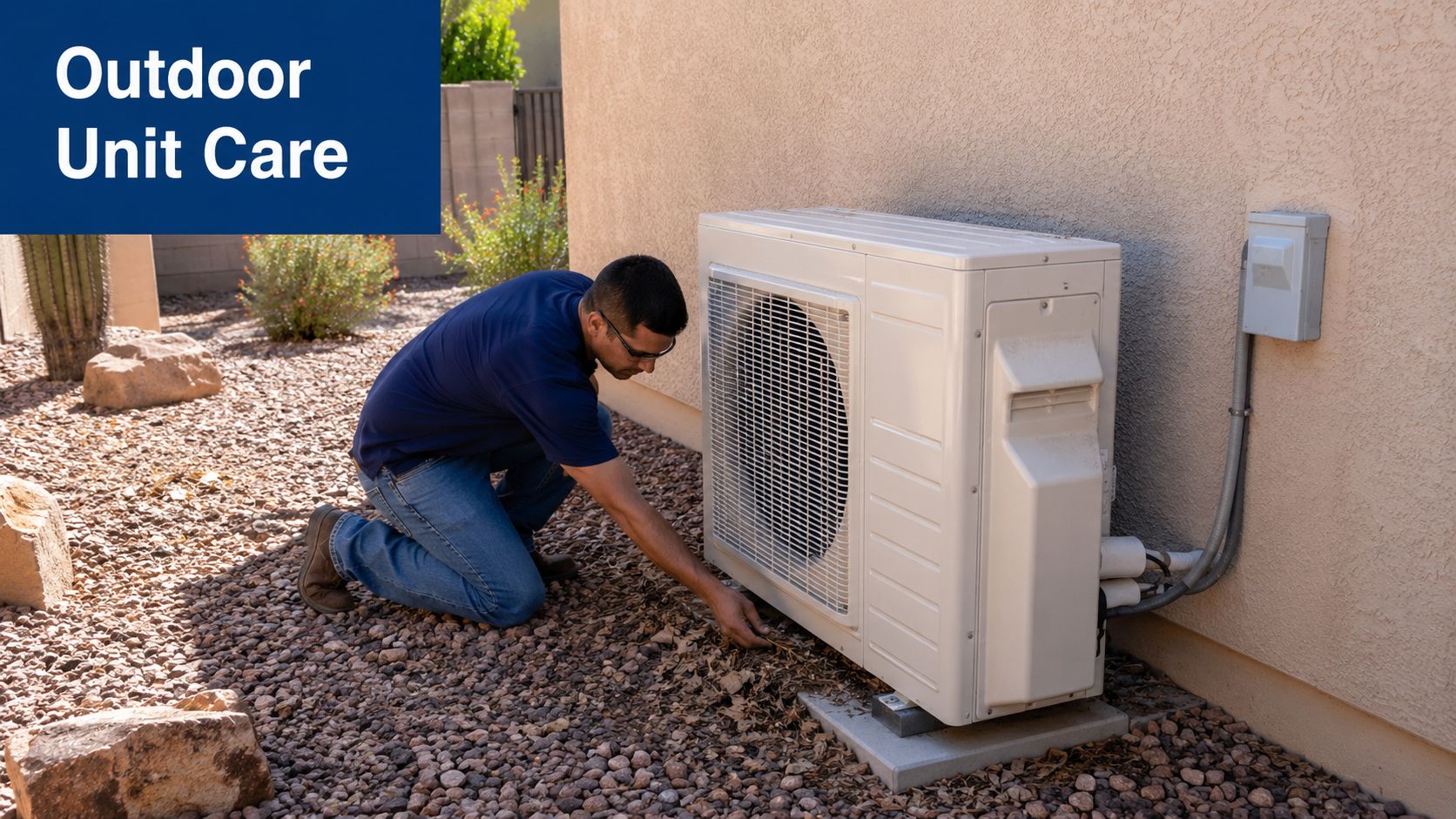
Check the area around the condenser after dust storms, yard work, and monsoon weather. Pull weeds, remove trash, and clear out anything stuck against the coil or under the unit. Mesa installations often sit in narrow side yards, so even a small pile of windblown debris can matter.
Homeowners who want a broader comparison to standard AC upkeep can browse this Richmond Tree Experts AC service page for general maintenance context.
Rinse the coil gently
Outdoor fins bend easily. I see damage all the time from pressure washers and stiff brushes. Once fins are mashed down, airflow drops and cleaning gets harder next time.
Use a simple method instead:
- Shut off power at the disconnect.
- Remove loose debris by hand or with a soft brush.
- Rinse the coil with a garden hose using light pressure.
- Let the unit dry, then restore power after any panels are secured.
If the coil has greasy buildup, caked dirt, or residue that water will not move, use a cleaner made for condenser coils and follow the label. This homeowner's guide to AC coil cleaner gives a good overview of what is safe to use and what to avoid.
What to watch for outside
A quick inspection can catch problems early, especially in the East Valley where dust load is high for much of the year.
- Dust packed into the coil fins. Common after long dry stretches and haboobs.
- Bent fins or crushed spots. Usually caused by pressure washing, impact, or rough cleaning.
- Rattling or unusual vibration. Loose panels, debris contact, or mounting issues are common causes.
- Mud or blockage near the base. Monsoon runoff can splash dirt into the lower coil area.
- Oil residue near refrigerant connections. That needs professional inspection because it can point to a leak.
If the coil is badly impacted, the fan sounds off, or the unit still struggles after a careful cleaning, stop there and schedule service. Outdoor maintenance is homeowner-friendly up to a point, but electrical faults, fan motor problems, and refrigerant issues need proper tools and diagnosis.
What a Professional Mini Split Tune-Up Includes
DIY maintenance handles the easy wins. It does not replace a real tune-up. A technician checks the parts of the system that homeowners can't safely test or accurately measure.

Ductless mini-split systems require professional maintenance at least once annually. Consistent upkeep extends equipment lifespan by 5–7 years beyond average expectations, while neglect can lead to a 25% drop in system efficiency within two years. The annual professional service cost typically ranges from $140 to $380 per single-zone unit (Carrier mini-split maintenance guidance).
What the visit actually covers
A proper tune-up goes beyond spraying off the outdoor unit and rinsing filters. It usually includes deeper cleaning, electrical inspection, operational testing, and refrigerant-related checks that require trained handling.
For homeowners in Mesa looking at scheduled mini split service, Comfort Experts offers ductless support as one local option among the broader AC maintenance services available in the East Valley.
DIY vs Professional Mini Split Maintenance
| Task | Frequency | Who Performs It |
|---|---|---|
| Clean washable air filters with mild soap and water | Every 4–6 weeks | Homeowner |
| Wipe indoor housing and check louvers for dust buildup | As needed during routine cleaning | Homeowner |
| Check remote batteries and basic operation | As needed | Homeowner |
| Flush an accessible drain line and look for visible leaks | Periodically | Homeowner |
| Inspect electrical connections and components | At least once annually | Professional technician |
| Check for refrigerant leaks and verify charge-related performance | At least once annually | Professional technician |
| Deep clean indoor and outdoor coils and blower assembly | During scheduled tune-up | Professional technician |
| Test operating performance and overall system condition | During scheduled tune-up | Professional technician |
Why technical checks matter
Mini-splits are less forgiving than many homeowners realize. The systems use relatively small refrigerant charges, compact electronics, and tight airflow paths. A unit can still run while operating poorly, and that's exactly why problems get missed.
Professional service helps catch issues such as:
- Electrical wear: Loose or degraded connections can lead to erratic operation or no-cool calls.
- Coil and blower contamination: Surface cleaning won't always remove buildup deeper in the fan assembly.
- Refrigerant-related problems: Homeowners shouldn't try to diagnose charge issues by guesswork.
- Drain failures: A technician can clear and confirm the full condensate path, not just the visible access point.
For many East Valley properties, spring and early fall are the smart windows to schedule service, especially when the mini-split also handles heating. That timing gives the system a better chance of entering peak season clean, tested, and ready to run.
Troubleshooting Issues and When to Call an Expert
When a mini-split starts acting up, the symptom usually points back to a short list of maintenance or repair issues. A simple check can save time. It can also show when the problem has moved past DIY.
If the unit isn't cooling well, start with the filter and visible airflow path. A loaded filter, blocked discharge, or dirty outdoor coil can all drag performance down. If those look fine and cooling is still weak, stop there. Professional annual maintenance for mini-splits has a 94% success rate in extending system lifespan to 12–15 years. Technical checks like ensuring refrigerant charge is weighed precisely, where errors greater than ±5g cause 12–18% efficiency loss, are beyond DIY capabilities and prevent the most common failures (technical service discussion for mini-splits).
Common symptoms and the decision point
- Water leaking indoors: Check for a clogged drain line or heavy buildup around the indoor coil area. If flushing the accessible drain doesn't stop it, professional service is the next move.
- Strange noises: Rattling can come from debris or loose panels. Buzzing, grinding, or repeated clicking deserves a technician.
- Weak airflow with a clean filter: That often points to coil or blower buildup deeper inside the unit.
- Unit runs but struggles in extreme heat: That can be airflow, charge, electrical, or sensor related. It isn't a guess-and-see repair.
When to stop troubleshooting
DIY maintenance is for cleaning and observation. It isn't for opening sealed refrigerant circuits, testing live electrical components, or trying to "top off" a system.
A good rule is to call for service when the issue involves any of these:
- Repeated leaks
- Error codes
- Icing
- Burning smell
- Persistent poor cooling after basic cleaning
- Visible oil residue or damaged wiring
Homeowners in Mesa who are past the maintenance stage and need diagnostics can start with mini split repair.
Mini split AC maintenance works best when it stays simple. Clean the filters on schedule, keep the outdoor unit clear, pay attention to the drain, and call for professional help when the problem moves beyond surface cleaning.
Comfort Experts helps Mesa and East Valley homeowners keep ductless systems running through desert heat, dust, and monsoon season with practical diagnostics, maintenance, and repair support. For help with a mini-split that needs service beyond basic cleaning, call 480-207-1239 or schedule service online.