
Your summer bill shows up, and it feels like the house is fighting you. In Phoenix, energy efficient cooling systems aren't a luxury upgrade. They're often the difference between staying comfortable and paying too much for an aging system that runs all day and never quite catches up.
Introduction
If you've lived through even one full Phoenix summer, you know the pattern. The AC starts earlier, runs longer, and the bill climbs right along with the temperature.
Most homeowners aren't just asking which system cools. They're asking which one cools efficiently, holds up in extreme heat, and makes financial sense for the way we live here. That's the part generic HVAC guides usually miss.
Why Your AC Bill Is So High and What Efficiency Really Means
In Phoenix, a cooling system can look fine in April and still get exposed in July. Once we hit long stretches of 110-plus days, every weak point shows up fast. The bill jumps, certain rooms drift warm by late afternoon, and the system runs so long that homeowners assume the equipment alone is the problem.
Sometimes it is. A lot of the time, it is a cost problem created by several smaller issues working together. Old equipment pulls more power. Leaky ducts dump cooled air into a hot attic. Poor insulation keeps feeding heat back into the house. A thermostat set aggressively low in the evening can also push run time higher without fixing the comfort issue.
What efficiency ratings actually tell you
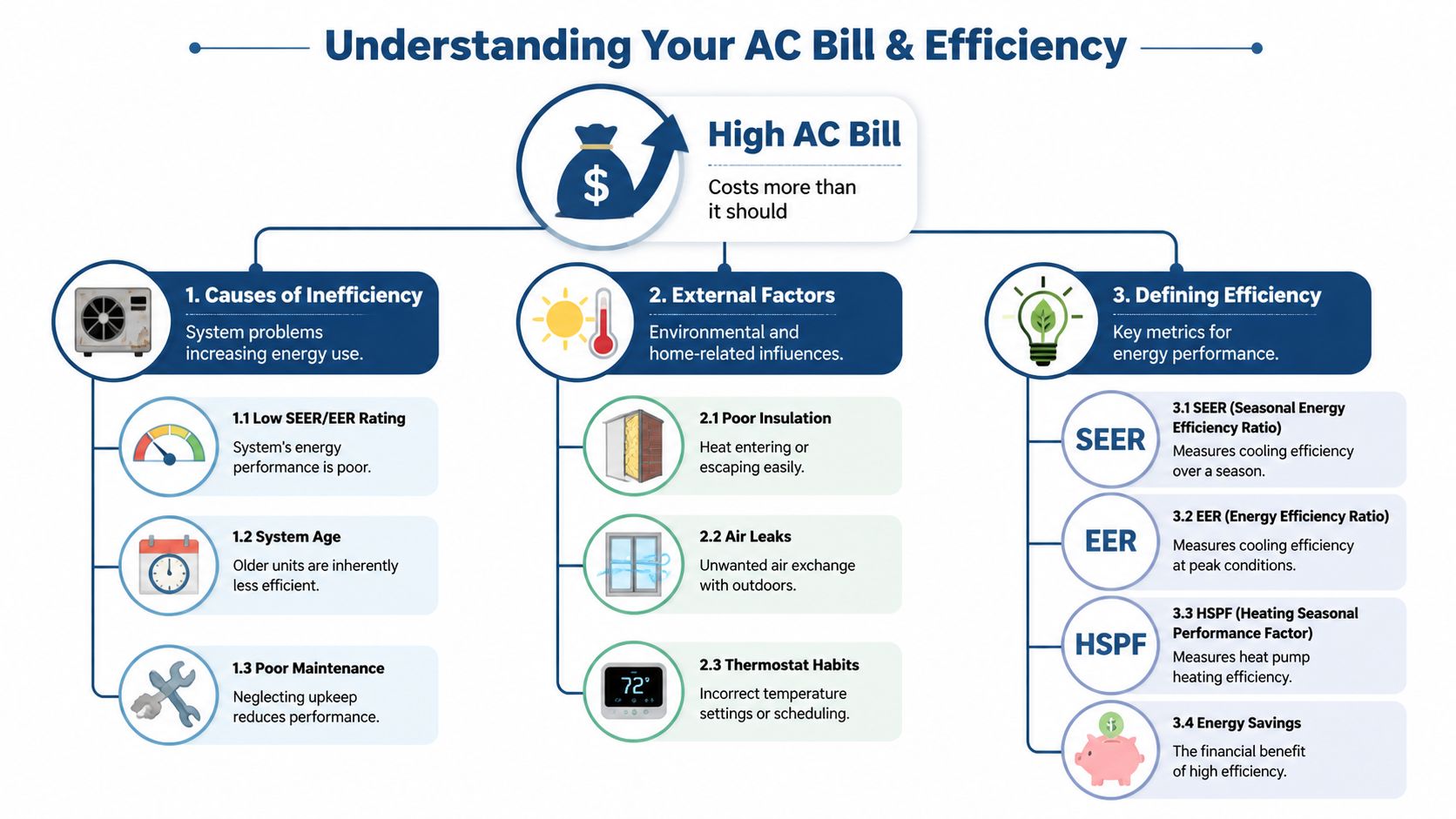
SEER2, EER2, and HSPF2 are useful. They just get oversimplified.
- SEER2 measures seasonal cooling efficiency under a range of test conditions.
- EER2 shows how efficiently a unit performs at higher-demand conditions.
- HSPF2 applies to heat pumps and measures heating efficiency.
For Phoenix homeowners, EER2 deserves more attention than it usually gets. We do not live in a mild climate where seasonal averages tell the whole story. Systems here spend long hours dealing with brutal afternoon heat, hot attics, and houses that never fully cool off if the envelope is weak. A unit with a strong SEER2 number but mediocre high-heat performance can look good on a brochure and still leave you with a disappointing summer bill.
That is also why the cheapest replacement is often the most expensive one over time.
What usually pushes cooling costs higher
In the field, high bills usually come from a stack of problems rather than one dramatic failure.
- Aging equipment: Older systems generally use more electricity for the same amount of cooling.
- Airflow problems: Dirty filters, clogged coils, weak blower performance, and undersized returns make the system run longer.
- Duct leakage: Lost air in the attic is common in Phoenix and expensive during peak summer.
- Heat gain from the house: Poor attic insulation, sun-facing windows, and roof heat increase the load all day.
- Thermostat habits: Big temperature swings and constant manual changes often hurt comfort more than they help.
- Deferred maintenance: Low refrigerant charge or neglected service can drag down efficiency before the unit breaks.
If you are also updating roof openings or bringing in more daylight, understanding skylight energy performance matters because envelope changes affect cooling load and payback.
Some of the fastest savings come from basic operating habits and small house-side fixes. These HVAC energy saving tips cover the simple improvements that can lower run time before you spend money on new equipment.
Efficiency means delivered comfort per dollar
Homeowners in Phoenix do not buy an AC system for a lab rating. They buy it to keep the house comfortable in extreme heat without getting hammered on the utility bill.
That is the true standard. If a back bedroom stays hot, if the system short-cycles, or if attic duct leaks are pouring conditioned air outside the living space, the efficiency on the equipment label is only part of the story. Installed performance matters more than advertised performance.
I have seen plenty of homeowners price out a high-SEER replacement and expect a dramatic drop in cost. Sometimes that happens. Sometimes the better return comes from sealing ducts, fixing airflow, improving insulation, or choosing a system with stronger high-heat performance instead of chasing the highest sticker rating. In Phoenix, the best value is the setup that holds comfort through the worst part of the day and earns back the extra upfront cost in a reasonable time.
Decoding Your Modern Cooling System Options
Not every cooling system fits every Phoenix house. The right choice depends on layout, ductwork, insulation, how long you plan to stay, and whether you want whole-home cooling or targeted comfort in specific rooms.
Phoenix Cooling System Comparison
| System Type | Upfront Cost | Avg. Running Cost (Phoenix) | Best For | Humidity Control |
|---|---|---|---|---|
| High-efficiency central AC | Higher than basic replacement | Lower than older central systems when properly installed | Whole-home cooling with existing ductwork | Good |
| Ductless mini-split | Varies by number of zones | Efficient for targeted spaces | Additions, casitas, garages, problem rooms, homes without ducts | Good |
| Heat pump | Similar decision range to premium central systems | Efficient year-round for homes wanting electric heating and cooling | Homeowners replacing both heating and cooling strategy | Good |
| Evaporative cooler | Lower initial equipment cost in some cases | Can be attractive in dry conditions | Limited use cases, select homes, shoulder seasons | Poor during humidity |
Central air is still the workhorse
For most Phoenix homes with existing ducts, a high-efficiency central AC is still the most practical option. It cools the whole house, integrates cleanly with a smart thermostat, and handles our climate far better than shortcut solutions.
The catch is that brand alone doesn't solve anything. A premium condenser tied to bad ductwork or sloppy commissioning won't deliver the result you're paying for.
Mini-splits solve specific problems really well
Ductless mini-splits are one of the best tools available when the house has one or two stubborn spaces that never stay comfortable. Think garage conversions, Arizona rooms, home offices, upstairs bedrooms, detached guest spaces, or additions where extending ductwork would be awkward or wasteful.
They also make sense when you don't want to cool the whole house the same way all day.
- Zoned comfort: You can cool the room you're using instead of every room equally.
- No duct losses: That's useful in homes with aging or poorly designed duct systems.
- Flexible installation: Great for remodels and additions.
If you're weighing one against a whole-house setup, this comparison of ductless mini-split vs central air helps clarify where each option makes sense.
Heat pumps deserve more attention in Arizona
A lot of Phoenix homeowners still think of heat pumps as a cold-climate debate. In reality, a modern heat pump can be a strong fit here because cooling is the dominant job, and winters are relatively mild.
If you're replacing both an air conditioner and an older heating system, a heat pump can simplify the setup. It gives you one electric system for cooling and heating, with modern controls and variable output options available on many models.
Evaporative coolers have limits in real Phoenix conditions
People still ask about swamp coolers, and that's fair. They can work in dry air. The problem is that Phoenix weather isn't just dry all season long.
During monsoon periods, humidity rises and evaporative performance drops. Indoor comfort can go downhill fast. They also don't control humidity the way refrigerated air does, and many homeowners who try to rely on them for primary comfort end up frustrated.
The Goldilocks problem is real
Sizing is more important than commonly realized. Too small, and the system struggles all afternoon. Too large, and it short cycles, wastes energy, and often leaves the house clammy.
That’s why I put installation quality above brand loyalty almost every time. A properly sized mid-range system installed with attention to airflow, duct static, refrigerant charge, and controls will usually beat a poorly installed top-tier system.
One local option for Phoenix-area homeowners is Comfort Experts, which handles high-efficiency replacements, mini-splits, smart thermostat upgrades, and zoned systems based on the house rather than a one-size-fits-all recommendation.
The Right Size Matters Sizing and Installation Done Right
A lot of expensive HVAC mistakes start with one bad assumption. Bigger must be better.
It isn't.
An oversized system cools the thermostat quickly and shuts off before the rest of the house catches up. That leads to short cycling, uneven temperatures, poor moisture removal, and extra wear on components. A system that's too small has the opposite problem. It runs and runs, especially during extreme afternoon heat, and still struggles to hold setpoint.

system sizing is the standard, not a guess
A proper contractor should base system size on a a system-sizing review, not just the square footage, not the size of the old unit, and not a quick glance at the house.
That calculation considers things like:
- Window area and sun exposure: West-facing glass gets punished in Phoenix.
- Insulation levels: Attic performance changes the load.
- Air leakage: A tight house and a leaky house don't need the same system.
- Ceiling height and layout: Open floor plans behave differently than chopped-up ones.
- Occupancy and internal heat: Kitchens, electronics, and daily use matter.
If a contractor skips that step, you're already taking on risk. If you want to understand what influences tonnage and equipment selection, this guide on what size air conditioner do I need is worth reading before you sign anything.
Installation details decide whether efficiency is real
The equipment label tells you what the unit can do. Installation determines what it will do in your house.
A quality install includes correct refrigerant charge, verified airflow, proper return sizing, sealed duct connections, solid drain management, and thermostat placement that reflects actual living conditions. If any of those pieces are off, comfort suffers first, and efficiency suffers right after.
Controls matter too
The AC is the muscle. The thermostat and zoning strategy are the brain.
A smart control setup helps the system run with more intention instead of reacting blindly all day. In two-story homes, homes with large west exposures, or layouts with guest rooms that sit empty most of the week, zoning can make a meaningful comfort difference without overcooling the whole house.
Maximizing Performance with Smart Tech and Maintenance
Phoenix exposes every weak point in a cooling setup. A system can be properly sized and still waste money all summer if the controls are sloppy or maintenance gets skipped during the hottest months.
Smart thermostats save money only if they match how the house is used
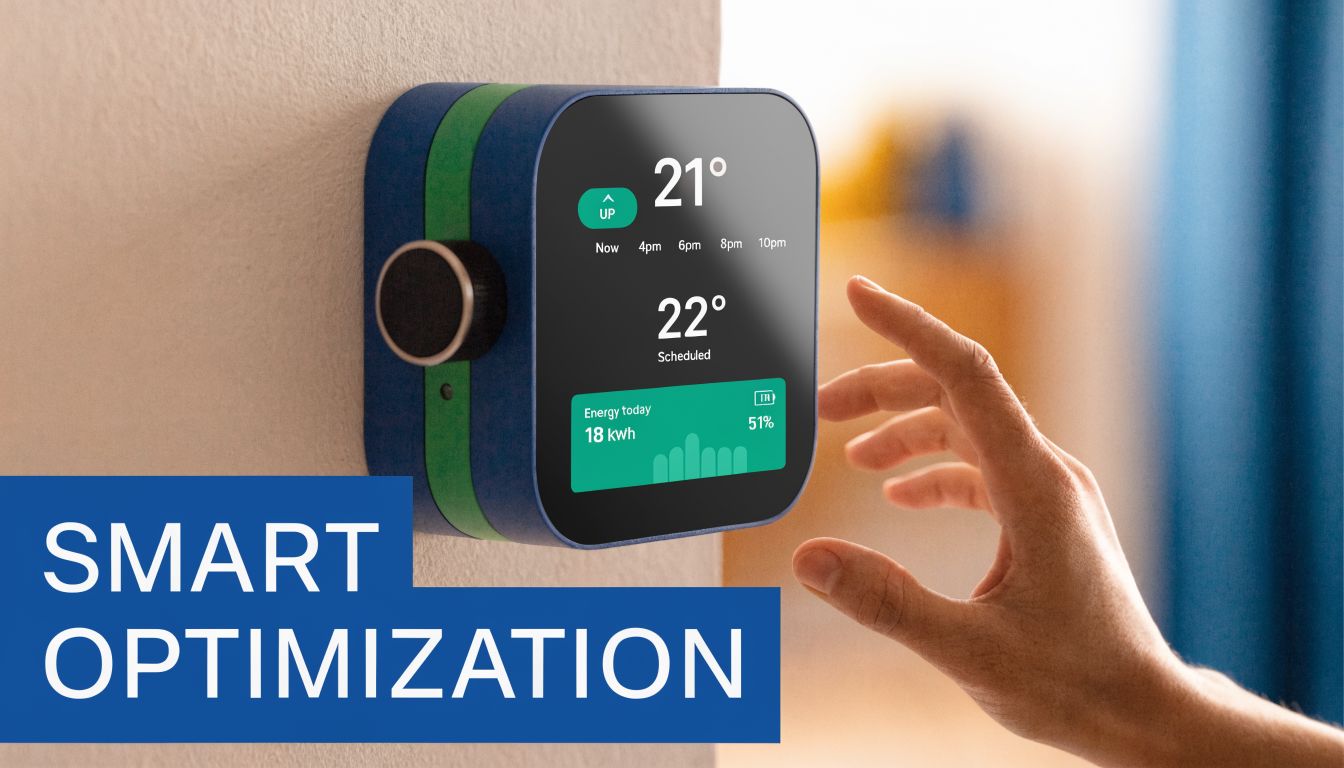
In Phoenix, a smart thermostat pays off fastest in homes that sit empty for part of the day, families with changing schedules, and households that tend to overcorrect by dropping the temperature too low in the evening. The thermostat does not create efficiency on its own. It cuts waste by reducing unnecessary runtime and tightening temperature control.
That trade-off matters. A basic programmable thermostat costs less up front. A smart model usually gives better visibility, easier schedule changes, and fewer bad habits, which is why many homeowners get more real-world value from the upgrade than they expected. The practical benefits of a smart thermostat go well beyond app control.
Features that usually earn their keep here include:
- Structured daily schedules: Good for commuters and households with predictable weekday routines.
- Remote changes: Useful during long summer days when plans shift and nobody wants the house cooling an empty space for hours.
- Usage tracking: Helps spot expensive habits before they show up as a surprise APS or SRP bill.
- Less manual thermostat bouncing: Fewer big setpoint swings usually means steadier comfort and less wasted runtime.
Zoning can improve comfort, but only in the right house
Zoning makes the most sense when the home has a clear imbalance. Two-story houses, large west-facing rooms, split floor plans, and additions are common examples across the Valley. In those homes, zoning can reduce the urge to overcool the whole house just to make one hot area bearable.
It is not automatically the best ROI for every homeowner. Zoning adds cost, more controls, and more components that need to be set up correctly. In a smaller single-story home with a simple layout, that money may be better spent on duct sealing, insulation, or better attic ventilation.
For homeowners tying HVAC into a larger automation setup, HVAC system integration is a useful reference because control strategy works better when occupancy patterns, temperature settings, and the rest of the home tech are working together.
Maintenance is where a lot of projected savings disappear
I see this every summer. A homeowner invests in high-efficiency equipment, then runs it with a clogged filter, a dirty condenser coil, weak airflow, or a drain line that is one dust storm away from backing up. In Phoenix heat, those small problems show up fast in comfort, runtime, and repair bills.
A few maintenance habits have a direct payoff:
- Change filters on schedule: Airflow drops quickly when filters load up with dust.
- Keep the outdoor unit clear: Cottonwood, leaves, and debris choke off heat rejection.
- Schedule seasonal service: Refrigerant charge, capacitor health, blower performance, and drain operation need to be checked under real conditions.
- Fix minor issues early: A weak capacitor or marginal airflow problem is much cheaper to handle before a 115-degree week pushes the system over the edge.
High-SEER equipment only delivers high-SEER performance when it is clean, moving the right amount of air, and running under proper controls. In Phoenix, smart settings and routine maintenance are often the difference between an upgrade that pencils out and one that never quite earns back its cost.
The Bottom Line Cost, Savings, and Phoenix-Area Rebates
Most homeowners eventually ask the same question. Is the higher-efficiency option worth the money here?
In Phoenix, that's a smarter question than it sounds, because our cooling season is long and severe. A feature that looks optional in a mild climate can become financially sensible here because the equipment runs so much more often.
The real ROI depends on the house
A lot of online articles talk about long-term savings but don't give homeowners usable local math. That's a known gap. As noted in this discussion of eco-friendly cooling options and payback gaps, many guides fail to quantify realistic payback periods for extreme-heat markets like Phoenix, leaving decisions too abstract.
That's exactly why two neighbors can install similar equipment and have very different outcomes.
The variables that change ROI most are usually these:
- Age of the existing system: Replacing a very inefficient unit changes the economics quickly.
- Condition of ductwork: Savings shrink if cooled air is lost before it reaches the rooms.
- Insulation and air sealing: Better shell performance improves equipment payoff.
- Occupancy pattern: A family home occupied all day uses cooling differently than a mostly empty house.
- Length of ownership: The longer you expect to stay, the more efficiency improvements matter.
How to think about costs without guessing
If a contractor gives you one price and one box checked on a proposal, that isn't enough to make a good decision. You need to compare options in layers.
Ask for a range that includes:
- A solid base replacement: Properly sized, reliable, no unnecessary add-ons.
- A higher-efficiency upgrade: Better performance and lower operating cost potential.
- Control upgrades: Smart thermostat or zoning if the layout supports it.
- Duct improvements if needed: Sometimes this changes comfort more than condenser size.
A useful local reference point is this breakdown of the cost to replace an AC unit, because system pricing should be tied to scope, not just equipment branding.
Rebates help, but don't let them drive a bad choice
Phoenix-area utility and manufacturer incentives can lower upfront cost, but rebates should support the right decision, not distort it. Programs change, qualification rules change, and availability changes. What matters is whether the proposed equipment and installation fit your home.
A few practical rules apply:
- Ask what efficiency tier qualifies.
- Verify whether the thermostat or controls are part of the rebate path.
- Check timing requirements for submission.
- Make sure the matched system qualifies, not just one component.
A Phoenix-specific decision framework
When homeowners are stuck between repair, standard replacement, and high-efficiency replacement, I usually recommend looking at four things together instead of one at a time:
| Decision Factor | What to Consider |
|---|---|
| Current comfort | Are rooms uneven, noisy, or hard to cool in late afternoon? |
| System reliability | Has the unit become unpredictable during peak heat? |
| Operating cost pressure | Do summer bills feel out of proportion to the comfort you get? |
| Time horizon | Are you staying long enough to benefit from better efficiency and controls? |
If the current system cools poorly, needs repeated repairs, and leaves major comfort issues unresolved, a like-for-like swap may not fix the actual problem. Sometimes the better investment is a more complete solution that includes sizing review, airflow correction, and controls.
Repair or Replace Navigating Your Next HVAC Decision
This decision gets emotional fast, especially when the system fails during extreme heat. Nobody wants to overspend, but patching a bad system over and over can cost more in the long run.
That rule isn't perfect, but it's useful. It forces the conversation away from today's invoice and toward total ownership cost.
Other signs replacement deserves serious consideration:
- Frequent breakdowns: If you're calling for service repeatedly, reliability is already telling you something.
- Older refrigerant platform: Systems using older refrigerants can become harder and more expensive to keep going.
- Rising bills without better comfort: That's a red flag for efficiency loss.
- Big comfort complaints: Hot rooms, weak airflow, and long run times often point to a larger system issue.
Ask any contractor direct questions. Is the failure isolated, or is it a symptom of broader decline? Will this repair restore dependable service, or just buy a little time? A trustworthy answer should sound clear, not slippery.
Choosing Your HVAC Partner Questions to Ask a Contractor
The equipment matters. The contractor matters just as much.
The broader market is moving this direction too. The U.S. energy-efficient cooling market is projected to grow at a CAGR over 9% through 2030, according to Grand View Research's market report. More options are entering the market, which makes contractor evaluation even more important for homeowners.
When you're comparing bids, ask questions that reveal how the work will be done.
Questions worth asking
- How are you determining system size? Listen for system sizing, not rule-of-thumb sizing.
- Will you evaluate ductwork and airflow? A new unit on a weak duct system is not a full solution.
- What efficiency levels are you recommending, and why for my house? The answer should relate to your layout, usage, and goals.
- Do you verify refrigerant charge and airflow at startup? Good installation includes commissioning, not just placement.
- What thermostat or zoning options fit this layout? Controls should match the home's problem areas.
- Who handles rebate paperwork, and what qualifies? The process should be explained clearly.
- Can you explain the trade-offs between repair and replacement in plain language? If they dodge this, keep looking.
- Can you show examples of similar installations nearby? Local experience matters in Phoenix conditions.
A solid contractor won't get defensive when you ask detailed questions. They should welcome them.
If you want straight answers about which Comfort Experts options make sense for your home, call 480-207-1239 or schedule service online.