
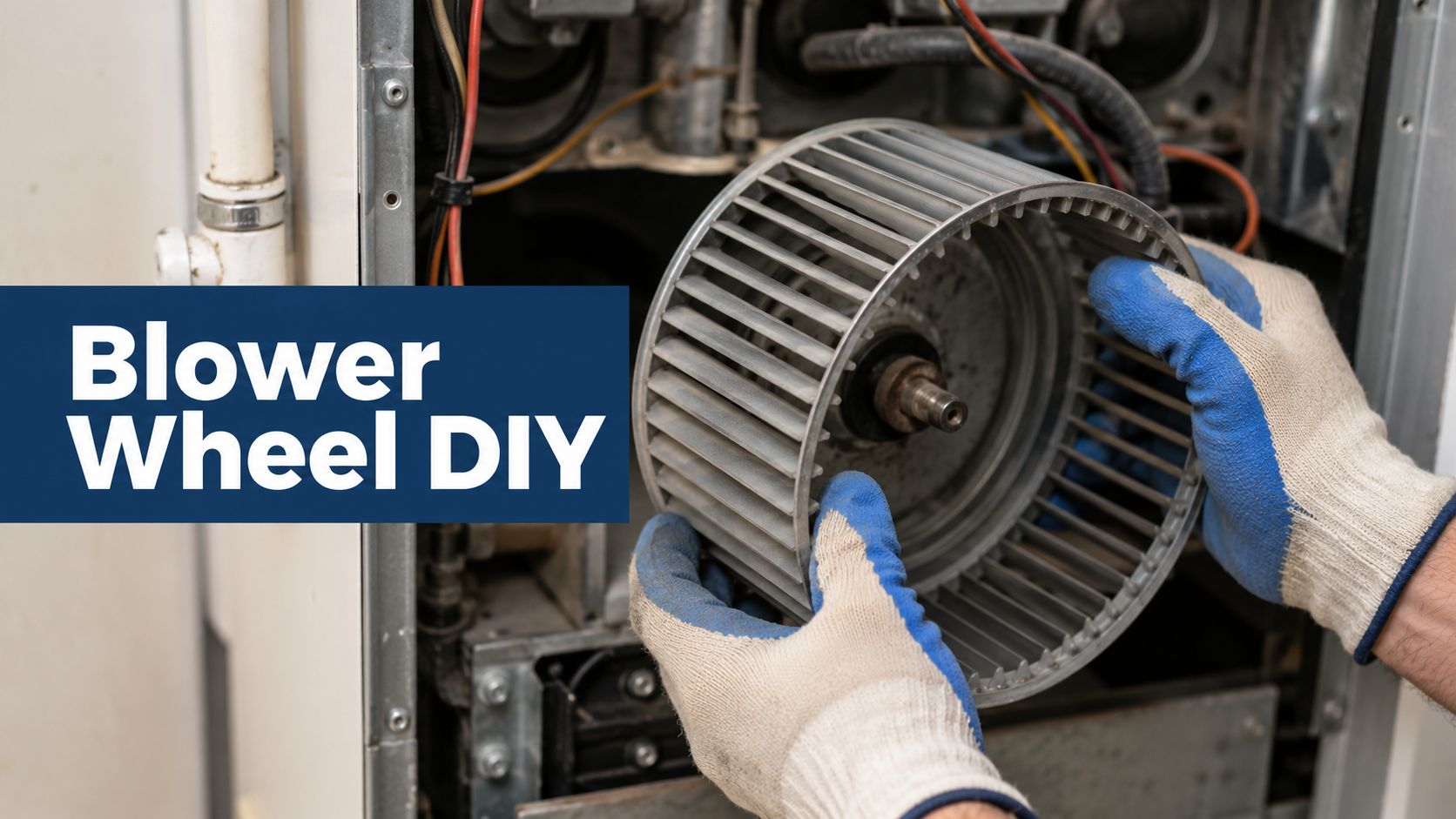
If your furnace suddenly starts rattling, roaring, or pushing weak air through the vents, you may be staring at a furnace blower wheel replacement job whether you planned for one or not. In Mesa, we see this a lot when dust buildup, wear, or a seized wheel starts turning a basic airflow issue into a noisy, stressful problem.
Is Your Furnace Blower Wheel Actually Bad?
A bad sound doesn't always mean a bad wheel. That's the first thing we tell homeowners across the Phoenix Valley, because replacing the wrong part is one of the easiest ways to waste a Saturday and still have the same furnace problem Sunday morning.
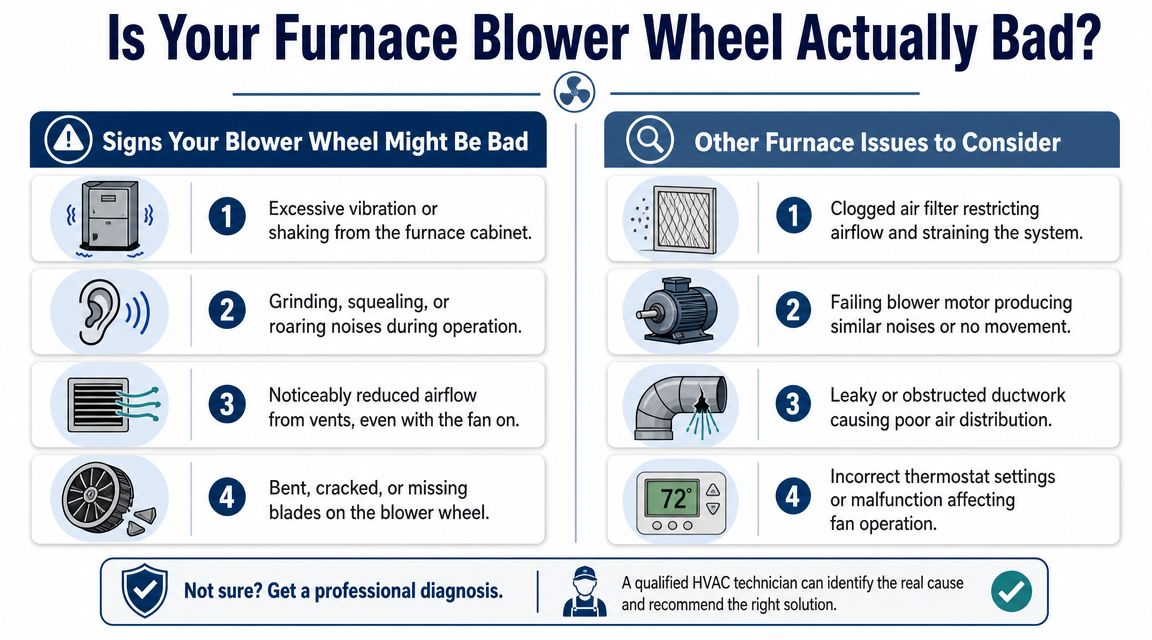
If you're hearing rattling, roaring, scraping, or cabinet vibration, the blower wheel is a fair suspect. But it's not the only suspect. Reduced airflow can also come from dirt buildup, a slipping set screw, misalignment, motor trouble, duct restrictions, or thermostat-related fan issues. That's why the main question isn't just “Is it noisy?” It's “What kind of noise, what kind of airflow change, and what do you see when you inspect the wheel?”
Sounds and symptoms that point to the wheel
When the wheel is the problem, the symptoms usually have a mechanical feel to them. You may hear rubbing, uneven spinning noise, or a shake that seems tied directly to blower operation. If the furnace cabinet vibrates more when the fan ramps up, that often points toward an imbalanced wheel, a damaged fin, or a wheel that has shifted position on the motor shaft.
Look for these clues:
- Visible blade damage: Bent, cracked, or missing fins usually mean replacement is the safer move.
- Wheel wobble: If the wheel doesn't spin true and looks like it's drifting side to side, cleaning alone probably won't solve it.
- Heavy debris buildup: Dirt can load one side of the wheel and create imbalance. Sometimes a careful cleaning fixes the problem.
- Set screw slip: The wheel may be intact but loose on the shaft, which can cause vibration and poor airflow.
When it may be the motor or something else
A failing blower motor can sound a lot like a bad wheel. The difference is that motor problems often show up as humming without normal movement, intermittent starts, overheating, or noise from the motor body rather than the wheel area. A clogged filter can also mimic blower trouble by choking airflow and making the system work harder. If you haven't checked that yet, our article on why a furnace isn't blowing hot air is a useful place to troubleshoot the bigger picture.
According to Grainger's blower wheel guidance, a major gap in most how-to advice is the decision between cleaning, balancing, reinstalling, or replacing the wheel, especially because symptoms like rattling or reduced airflow can come from dirt buildup, set-screw slip, misalignment, or motor issues rather than wheel damage alone (blower wheel selection and fitment guidance).
Replace it or clean it
At this point, homeowners often jump too fast.
If the wheel is just dirty, a careful cleaning may restore airflow and quiet things down. If the wheel has visible cracks, bent fins, a worn hub, or keeps rubbing the housing even after repositioning, replacement makes more sense. If you clean it, reinstall it, and the system still shakes or roars, stop assuming. Re-check alignment and shaft fit before buying more parts.
Gathering Your Tools and the Right Replacement Wheel
A blower wheel job usually goes sideways before any screws come out. It happens when someone opens the furnace, sees a round cage fan, orders the first one that looks close online, and finds out later the hub bore, width, or shaft fit is wrong. We see that a lot in Mesa, especially on older furnaces where labels are faded and parts look similar at a glance.
Good prep keeps this DIY job reasonable. Poor prep leaves you with the blower assembly on the garage floor and a wheel you cannot use.
Start with the tools you will actually use
You do not need specialty tools for every step, but you do need a few basics ready before you pull the assembly. If your toolbox is light, this guide to essential homeowner tools is a practical place to check what you already have and what you still need.
| Item | What you need it for | Cost note |
|---|---|---|
| Replacement blower wheel | Must match the original part, dimensions, and shaft fit | Price varies by brand and furnace type |
| Screwdriver set | Removes access panels and bracket screws | Varies |
| Nut drivers or socket set | Common on blower housing fasteners | Varies |
| Allen or hex key set | Loosens the wheel set screw on the hub | Varies |
| Work gloves | Protects your hands from sharp cabinet edges | Varies |
| Safety glasses | Helps during removal, brushing, and cleaning | Varies |
| Phone camera | Records wiring, screw locations, and orientation | Usually already on hand |
| Penetrating oil | Helps if the wheel is rusted or seized to the motor shaft | Varies |
| Marker or tape labels | Marks wires and blower orientation during disassembly | Varies |
| Small wire brush | Cleans rust and debris off the shaft before removal | Varies |
Penetrating oil and a wire brush matter more than many homeowners expect. In the Phoenix Valley, older equipment can still develop rust at the hub or heavy dirt buildup that locks the wheel onto the shaft. If that happens, removal gets harder fast.
Match the wheel by measurements, not by appearance
The safest match is the original part number. If the sticker is readable, start there. If it is not, pull the assembly far enough to verify the wheel diameter, wheel width, shaft size, and hub location before ordering anything.
A replacement guide from Surplus City Liquidators also recommends cross-referencing OEM numbers, checking physical dimensions carefully, and confirming the wheel fits the motor and application, especially on systems with higher blower speeds or more sensitive airflow requirements (blower wheel part-matching guidance).
Check these details before you buy:
- Part number: Best option if you can still read it.
- Diameter and width: Even a small mismatch can cause rubbing inside the housing.
- Bore size and hub fit: The wheel has to sit correctly on the motor shaft.
- Hub location: Some wheels are centered differently, which affects alignment.
- Rotation and application: A wheel that physically fits can still move air poorly if it is the wrong design.
DIY cost savings can disappear. One wrong wheel often leads to a return delay, extra disassembly, or damage to the housing if someone tries to force a bad fit.
One quick check before you spend money
Look at the air filter and the blower compartment condition. A packed filter often goes with a wheel coated in dust and lint, and that buildup can make a wheel seem worse than it is. If you are not sure where your filter is, this guide on where your air filter is located in the house can help you find it.
Comfort Experts handles furnace repair in Mesa, including blower diagnostics and wheel replacement. For homeowners doing this themselves, the smartest prep step is simple. Verify the exact wheel before it goes in your cart.
The Step-by-Step Blower Wheel Replacement Process
This job goes smoother when you treat the blower assembly like one complete unit instead of trying to fight the wheel inside the cabinet. That's how most technicians approach it because access improves fast once the assembly is out where you can see it.
Shut power off completely
Start at the breaker or disconnect and de-energize the furnace. Don't trust the thermostat being set to off. You want the unit dead before your hands go near wiring, sharp sheet metal, or a blower that could move unexpectedly.
Open the blower compartment panel and take a moment to look before touching anything. Some systems are straightforward. Others have cramped wiring, control boards, or awkward fastener locations.
Document first, disconnect second
A service guide for blower wheel replacement recommends documenting wiring before disassembly, and photographing the wiring is one of the simplest ways to reduce miswiring risk during reassembly (blower wheel removal and reinstall procedure).
Take several photos from different angles. Then disconnect the wires you need to move. If labeling helps you, use tape and a marker. It feels slow in the moment, but it's much faster than guessing later.
Remove the blower assembly
Most furnace blower wheel replacements are done as a controlled assembly removal. That usually means:
- Remove the access panel and locate the blower section.
- Disconnect or document wiring attached to the motor assembly.
- Take out the mounting fasteners holding the blower assembly in place.
- Slide the blower assembly out carefully as one unit.
Set the whole assembly on a stable work surface. A garage bench is ideal. The floor works too if you protect the wheel and motor from getting banged around.
Loosen the wheel from the shaft
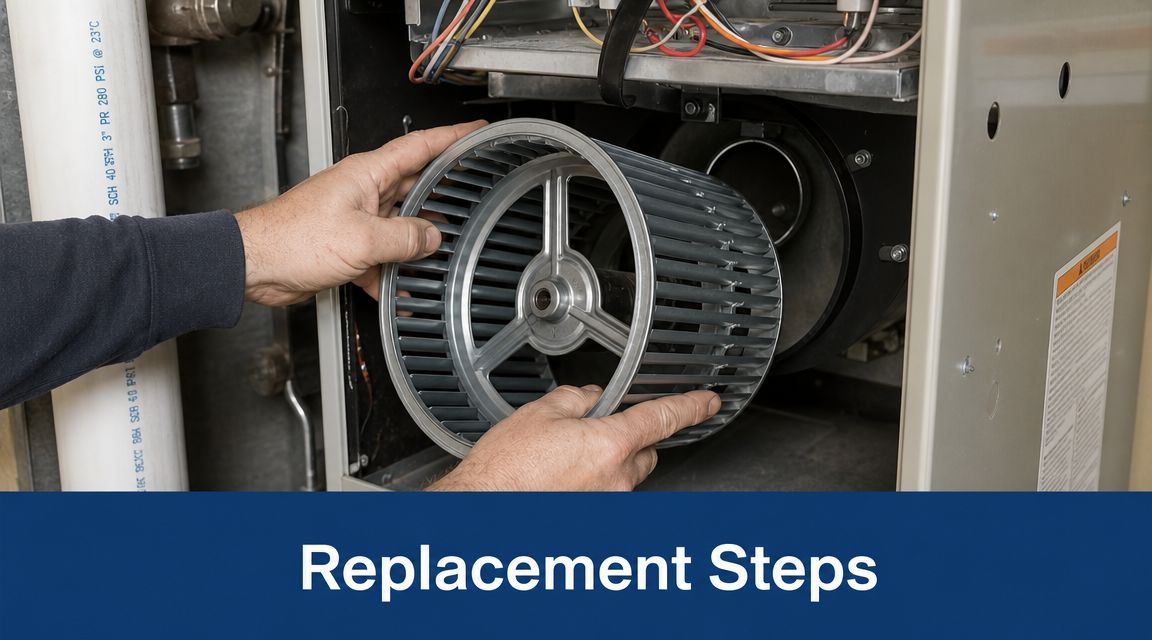
Find the blower wheel set screw. It's often an Allen or hex style set screw mounted in the wheel hub. Rotate the wheel by hand until you can access it clearly, then loosen it.
Once the set screw is loose, slide the wheel off the motor shaft. That's the ideal version. If it moves easily, you're in good shape. If it doesn't, don't escalate too fast. The next section covers the stuck-wheel problem that catches a lot of DIYers.
Install the new wheel correctly
When the old wheel is off, compare it side by side with the replacement. Check width, diameter, hub location, and shaft fit before installation. If anything looks off, stop there.
Then install the new wheel and focus on alignment:
- Center the wheel in the housing: You want equal clearance on both sides.
- Set the shaft position correctly: The wheel should sit where the original did, unless the old position was obviously wrong.
- Tighten the set screw on the flat of the shaft: That helps prevent slippage and imbalance.
- Spin it by hand: It should rotate freely without scraping the housing.
If your system has dust buildup elsewhere in the air-moving side, it's worth understanding how related maintenance affects performance. Our post on air handler coil cleaning can help connect the dots if airflow issues have been building over time.
Reinstall and test carefully
Slide the blower assembly back into the furnace, secure the fasteners, and reconnect the wiring based on your photos. Double-check that nothing is pinched, rubbing, or hanging loose near the wheel.
Restore power and run a test cycle. Listen closely. You want smooth startup, normal airflow, and no scraping, grinding, or heavy cabinet vibration. If the system runs but sounds wrong, shut it back off and inspect alignment before running it longer.
This is the point where patience pays off. Most post-repair noise comes from wheel position, housing clearance, or a set screw that isn't fully tightened on the shaft flat.
Pro Tips for a Stubborn Wheel and Proper Balancing
A rusted or seized blower wheel is where a simple repair can get expensive fast. In Arizona, dust is everywhere, and older equipment can lock up harder than you'd expect even without obvious heavy corrosion.
What works on a stuck wheel
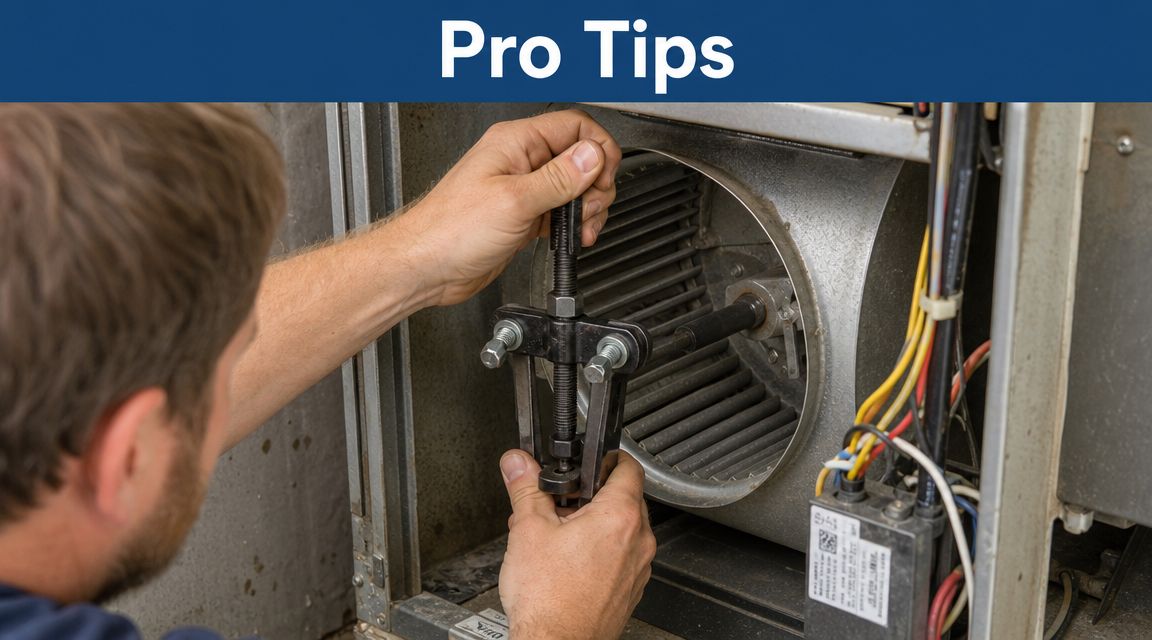
HVAC School's removal guidance recommends oiling the shaft, working the wheel back and forth, and warns that hammering the shaft can mushroom the end and make removal much harder. Their wording is blunt. If you hammer the shaft, “you will really struggle to get it off” (field advice for seized blower wheels).
That warning matters because once the shaft end mushrooms, the job may stop being a wheel replacement and turn into a motor replacement too.
Try this sequence instead:
- Apply penetrating oil: Give it time to work into the hub and shaft area.
- Work the wheel gently: Rock it back and forth instead of forcing one hard pull.
- Support the assembly well: Twisting against a poorly supported blower housing can bend things.
- Use proper removal methods: If you have access to a puller or wheel-specific approach, use that before resorting to impact.
What not to do
Don't hit the end of the motor shaft with a hammer. Don't pry against thin blower fins. Don't clamp down on the wheel in a way that deforms the hub or blades. Those moves feel productive in the moment. They usually create a second repair.
If your blower issue overlaps with fan problems on the cooling side too, our article on why an AC fan isn't spinning can help you compare symptoms across the system.
Centering and balance after installation
Once the new wheel is on, check side clearance carefully. It should sit centered in the housing with equal spacing so it doesn't rub under load. Tighten the set screw securely on the shaft flat, then do a hand spin test.
Watch for these signs:
- Smooth rotation: No scrape points.
- Consistent clearance: No side-to-side drift into the housing.
- No visible wobble: A wobble often means bad positioning, a damaged wheel, or a fit issue.
That hand spin test won't replace a full operational check, but it catches a lot of preventable noise before the furnace goes back together.
When to Call Comfort Experts for Your Furnace Repair
You get the blower wheel halfway out, the set screw is loose, and the wheel still will not budge. That is the point where a careful DIY repair can turn expensive fast.
We tell Mesa homeowners to stop when the job changes from controlled disassembly to force. If the wiring is burnt or brittle, if the shaft is scored or mushroomed, or if the replacement wheel is close but not exact, the safer move is a service call. In those cases, the actual risk is not just losing time. It is damaging the motor, the housing, or the control side of the furnace and turning a wheel replacement into a larger repair.
Cost is part of that decision. A blower wheel by itself is usually one of the less expensive parts in this repair. A full blower assembly or motor-related repair costs a lot more. We see that trade-off often across the Phoenix Valley, especially when someone keeps pulling on a rusted wheel until the shaft bends or the housing gets distorted.
Here are the situations where we recommend stopping and bringing in a technician:
- You are no longer sure the wheel is the only failed part: The motor hums, overheats, has bearing play, or trips out.
- The wheel is stuck after reasonable removal attempts: Penetrating oil, set screw removal, and controlled pulling did not free it.
- Electrical damage is visible: Burnt terminals, melted insulation, or wiring that does not match what you expected.
- The new part does not match exactly: Width, diameter, rotation fit, hub depth, or bore size is off.
- The system still has noise or airflow problems after reassembly: That usually means alignment, balance, motor condition, or a second fault still needs attention.
- You need dependable heat today: A half-finished blower repair is a rough place to be on a cold desert night.
If you are at one of those decision points, our team handles furnace repair in Mesa, AZ with the kind of troubleshooting that keeps a wheel problem from becoming a motor problem. On the business side, even service companies are improving response time with tools like AI-powered call handling for HVAC firms, which helps after-hours calls get routed faster.
A good furnace repair visit should answer three questions before parts go in. Is the wheel bad, is the motor still healthy, and can the assembly go back together without rub, wobble, or wiring risk. If those answers are not clear in your garage or hallway, stop there and let a pro finish it.
Your Next Steps and Furnace FAQs
A blower wheel replacement feels good when it goes right. The furnace gets quiet again, airflow improves, and you know the problem was fixed instead of patched.
What if the new blower wheel is still noisy
Check alignment first. If the wheel is off-center in the housing, it may scrape only at certain speeds. If the noise is more of a vibration, recheck the set screw and make sure it's tight on the flat of the shaft.
How do I keep the wheel from getting dirty again
Change the air filter regularly and don't ignore airflow issues. A clogged filter makes the blower work harder and allows dust problems to build over time.
Can I reuse the old set screw
Usually yes, if it's in good shape and threads cleanly. If it's stripped, rusted badly, or doesn't tighten securely, replace it with the correct type before reassembly.
What if I'm not sure the motor is okay
If the wheel is off and the motor still shows signs of bearing noise, resistance, overheating, or intermittent operation, don't assume the wheel was the only problem.
If you've hit a snag or would rather have a technician handle the repair, Comfort Experts can help with furnace service in Mesa and across the Phoenix Valley. Call 480-207-1239 or schedule service online.