
If you're in Mesa or anywhere in the Phoenix Valley and you feel like your nose, eyes, and sinuses never really get a break, you're not imagining it. Allergies in Arizona by season aren't just an outdoor problem. They become a whole-home air problem the moment pollen, dust, and spores make their way inside.
Why Arizona Allergies Are a Unique Challenge
Arizona creates a rough setup for allergy sufferers. The air is dry, the wind carries particles easily, and different plants take turns pollinating across much of the year. That means many homeowners never get a clean break between one trigger and the next.
Seasonal allergies are a major issue here. About 35% of Arizona residents experience hay fever, and Phoenix's worst allergy stretch runs from late February to early June, when tree and grass pollen overlap for maximum symptom pressure, according to the University of Arizona seasonal allergy update. That same source notes that allergies affect 82 million people nationally and lead to 3.6 missed workdays per sufferer annually.

Why the desert doesn't give you relief
A lot of people move here expecting the desert to be easier on allergies. Sometimes it is for one specific trigger. But in day-to-day life, Arizona often swaps one set of allergens for another.
Three things make the Valley especially difficult:
- Dry air keeps particles suspended: In a humid climate, moisture can help weigh particles down. In Arizona, pollen and fine debris often stay airborne longer.
- Bloom cycles overlap: Trees, grasses, and weeds don't all hit at once, but they hit in sequence. For many households, symptom season stretches from late winter well into fall.
- Wind changes everything: Even when your own yard looks clean, allergens can blow in from nearby neighborhoods, washes, road edges, golf areas, and manicured medians.
Why homes become part of the problem
This is the piece many allergy guides gloss over. Once outdoor allergens come inside, your house can hold onto them. Return ducts pull in air. Filters catch some particles and miss others. Leaky ducts, dirty registers, and clogged filters can keep that exposure going long after you've shut the front door.
I've seen plenty of homes where the issue wasn't just "bad allergy season." It was a combination of peak outdoor pollen and an HVAC system that hadn't been cleaned, sealed, or upgraded to handle the load. That's when bedrooms feel dusty by morning, furniture gets a fine layer on it fast, and people wake up congested even after staying indoors.
If you want to understand how buildup inside the system contributes, this guide on duct cleaning in Mesa homes is worth reading.
What works and what doesn't
Some habits help, but they have limits.
What helps
- Closing windows during heavy pollen periods: Basic, but effective.
- Changing clothes after outdoor time: Especially helpful during spring and fall peaks.
- Using your HVAC fan and filtration wisely: This can clean air continuously if the system is set up correctly.
What falls short
- Relying on a cheap filter alone: Better than nothing, but not enough in many homes.
- Assuming indoor air is automatically cleaner: It often isn't.
- Cleaning surfaces while ignoring ducts and airflow: You remove what settled, not what's still circulating.
Arizona makes allergies feel relentless because the problem isn't limited to one season and one source. It's outdoor pollen, indoor buildup, air movement, and timing all working together.
Your Seasonal Guide to Arizona's Top Allergens
If you want to make sense of symptoms, timing matters. The pattern of allergies in Arizona by season is fairly consistent, especially in the Phoenix area, even though the exact intensity can shift with weather.
In Arizona, tree pollen dominates from February to April, grass pollen peaks in May and June, and weed pollen, especially ragweed, surges from September to October, according to Allermi's Arizona allergy season overview. That same source notes that fall ragweed counts can reach 200-400 grains/m³ in September and October.
Arizona allergy season timeline for Phoenix Valley
| Season | Months | Primary Allergens | Common Symptoms |
|---|---|---|---|
| Late winter to spring | February to April | Tree pollen, including juniper and pine in central and southern Arizona | Sneezing, itchy eyes, nasal congestion, throat irritation |
| Late spring to early summer | May to June | Grass pollen, especially Bermuda grass and Arizona fescue | Runny nose, coughing, sinus pressure, watery eyes |
| Summer | July to August | Lingering grasses, weeds, and mold after moisture periods | Congestion, postnasal drip, irritated sinuses |
| Fall | September to October | Weed pollen, especially ragweed, sagebrush, Russian thistle, pigweed | Heavy sneezing, itchy eyes, chest irritation, fatigue |
| Late fall to early winter | November to January | Lower outdoor pollen for some households, but indoor triggers often become more noticeable | Morning congestion, dry throat, indoor allergy flare-ups |
Spring is rough for a reason
From late February through spring, trees are usually the first big wave. In central and southern Arizona, juniper and pine are major contributors. In Phoenix, tree pollen can overlap with the next phase instead of ending cleanly, which is why some homeowners feel like spring never lets up.
If your symptoms start with itchy eyes, head congestion, and repeated sneezing fits, tree pollen is often the first suspect.
Then grass takes over
May and June are hard on a lot of Valley households because grass pollen ramps up while some tree pollen can still linger. Bermuda grass is a major problem in residential neighborhoods, parks, school grounds, and common areas.
This matters even if your own yard is low maintenance. You still breathe what circulates through the area.
For homeowners trying to reduce the amount that makes it indoors, a good starting point is understanding which air purifiers are best for allergies. Room units can help in specific spaces, though they don't replace whole-home filtration.
Fall catches people off guard
A lot of residents brace for spring and forget about fall. That's a mistake. Ragweed and other weeds become the headline in late summer and fall, especially after monsoon conditions shift and dry air returns. Symptoms can feel different too. More sinus pressure. More throat irritation. More lingering congestion.
Fall can be the season that convinces people their house has a dust problem, when the issue is that outdoor weed pollen is getting indoors and staying there.
If you're landscaping or just trying to understand what grows well in the region, this overview of Arizona succulent plants is a useful local resource because it helps homeowners think more carefully about what they plant close to doors, windows, and outdoor living areas.
A quick way to read your symptoms
- Eyes hit first: Often points to pollen exposure.
- Symptoms strongest in the morning: Could be overnight recirculation, bedding, or indoor particles.
- Worse after windy days: Outdoor infiltration is likely.
- Symptoms improve when you leave the house: Time to look harder at indoor air quality, not just the weather report.
Beyond Pollen The Indoor Allergy Triggers You Can't See
A lot of people think staying indoors solves the allergy problem. It helps with direct exposure, but it doesn't end the problem. In many Arizona homes, it changes the mix.
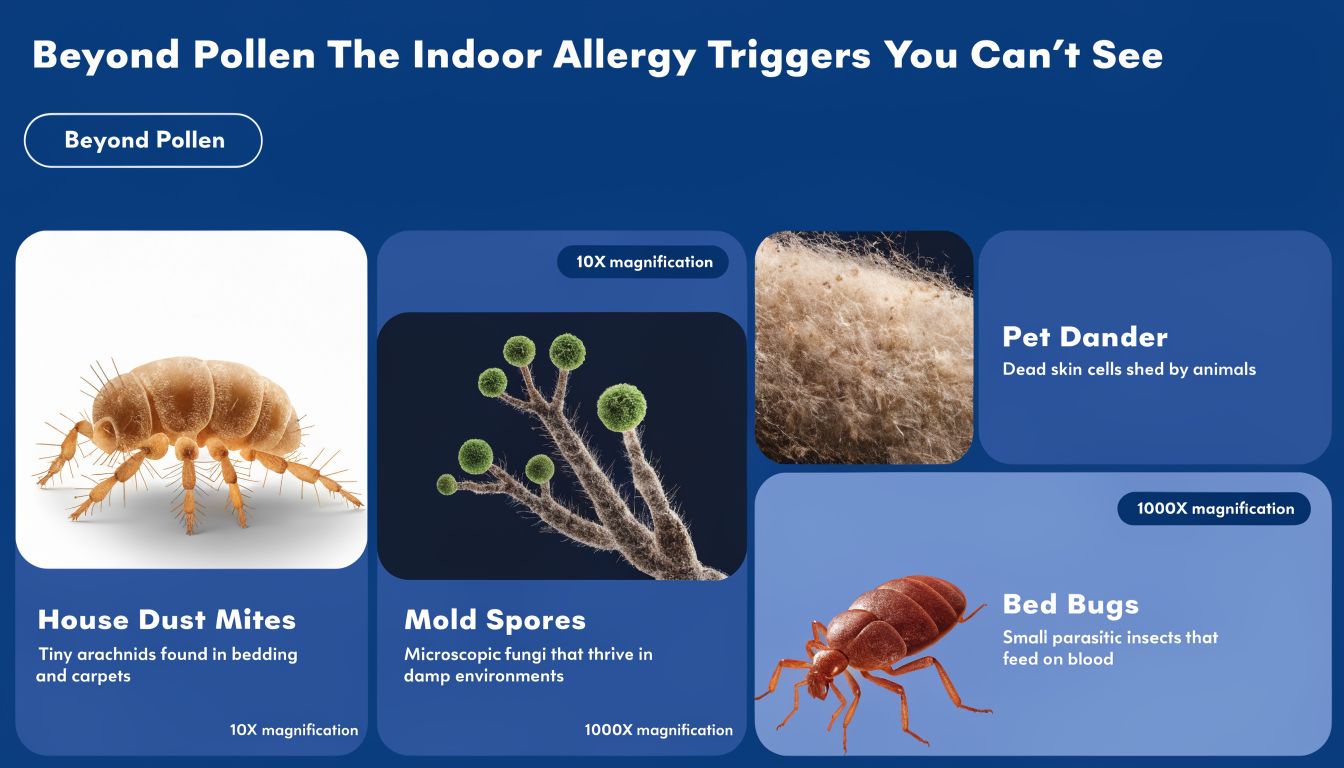
Many homeowners focus on outdoor pollen but overlook how Arizona's climate increases indoor time, which can raise exposure to dust mites, pet dander, and mold, according to this Arizona indoor allergy overview. That same source says professional duct cleaning can reduce airborne particles by up to 90%, and HEPA air purifiers can capture 99.97% of irritating particles. It also notes that indoor allergens affect 50% of allergy sufferers year-round in dry climates.
The hidden list most people miss
Indoor allergy triggers usually don't announce themselves. You don't see them floating through the room, but you notice the pattern. Congestion indoors. Dust returning right after cleaning. A musty smell when the air kicks on. Worse symptoms in one bedroom than the rest of the house.
Common indoor culprits include:
- Dust mites in soft surfaces: Bedding, upholstery, and carpet hold particles longer than people think.
- Pet dander: Even clean, well-loved pets contribute fine particles that move through return air.
- Mold spores: Not always obvious. Sometimes the first clue is odor near a vent or around windows.
- Dirty duct interiors: Dust and pollen can accumulate and recirculate.
- Low-grade moisture issues: Condensation, drain problems, and poor humidity control can support mold growth.
A lot of homeowners also miss window areas. If you suspect moisture buildup around frames or sills, this guide on window mold for homeowners is a practical read.
Your HVAC system can help or hurt
Your HVAC system sits in the middle of all this. It can remove particles from the air. Or, if it's neglected, it can keep distributing them.
That's why filter location and fit matter more than many people realize. If you aren't even sure where your system's filter belongs, or whether you have more than one, this guide on where to find your home's air filter can save you a lot of guesswork.
What doesn't solve indoor allergy issues
Plenty of households work hard and still don't get relief because the fix is too narrow.
What often falls short:
- Spray fragrances and scented cleaners: These can irritate sensitive airways.
- A countertop gadget in one room: Helpful in a small zone, limited for a full house.
- Surface dusting without airflow correction: You clean what settled, not what keeps moving.
- Ignoring return air pathways: If dust is being pulled into the system, the cycle continues.
The goal isn't to sterilize your home. It isn't realistic, and it isn't necessary. The goal is to reduce the circulating load enough that your body isn't fighting your house all day and night.
Your HVAC System The Secret Weapon Against Allergies
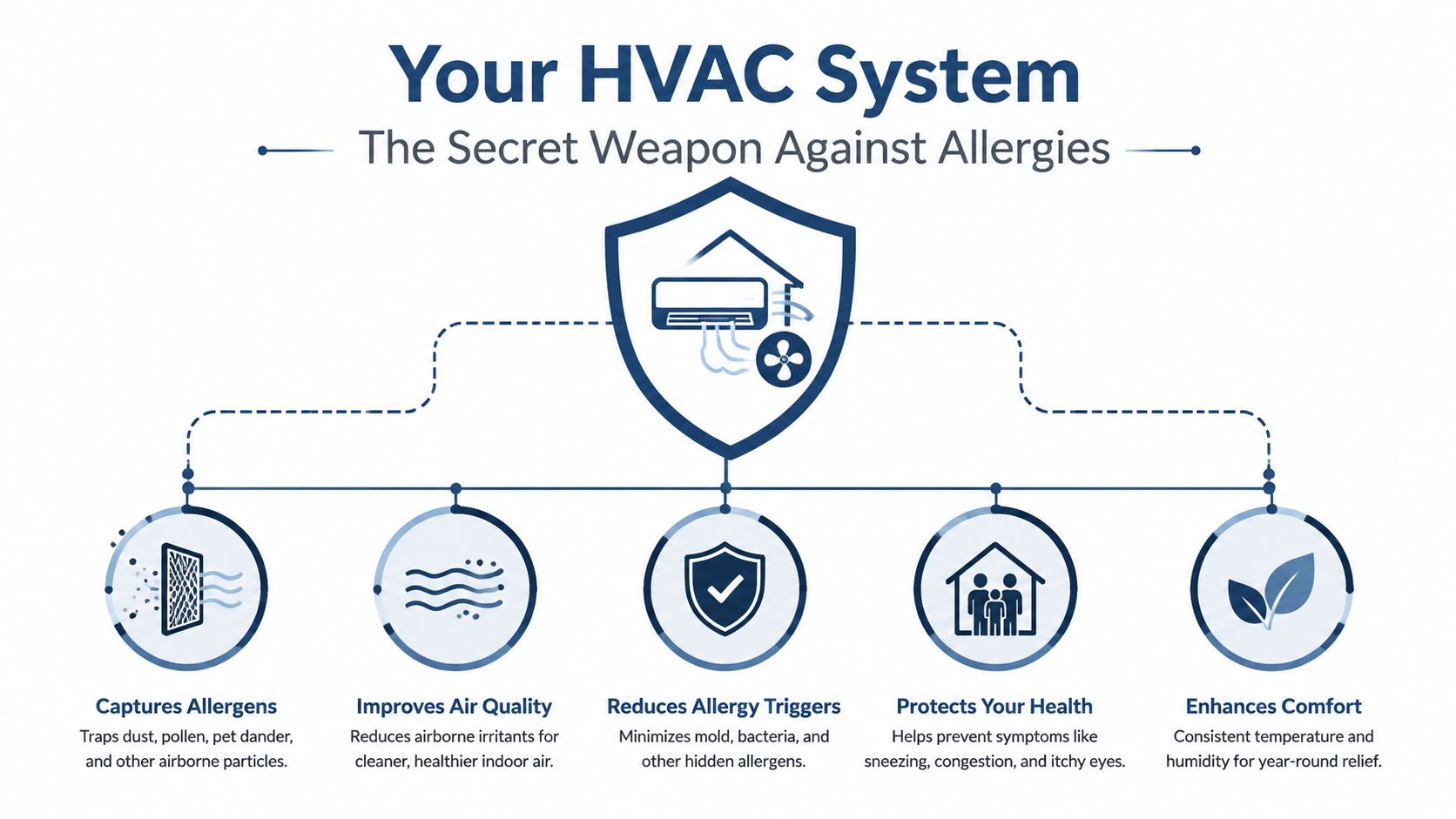
When people think about allergy relief, they usually think medication first. For Arizona homeowners, the more durable solution often starts with airflow, filtration, and system condition. You can't control every mesquite, weed, or grass source outside. You can control what your house does with the air once it comes in.
Filtration is your first line of defense
Start with the filter because everything else builds from there. A better filter can trap more fine particles before they circulate through supply vents. But there is a trade-off. Not every system can handle a denser filter without affecting airflow.
That's why homeowners shouldn't just buy the "strongest" filter on the shelf and hope for the best.
A few real-world points matter:
- Fit matters as much as rating: If air slips around the filter, performance drops.
- Higher filtration can increase resistance: Some older systems struggle if the filter is too restrictive.
- Replacement timing matters: A good filter loaded with dust becomes a bad filter fast in peak season.
If you're comparing options, this guide to the best HVAC filters for allergies helps explain what works in actual residential systems.
Purification handles what filters don't
Filters are excellent at capturing particles. They are less effective at addressing every air quality issue in motion. That's where whole-home purification equipment can help.
Homeowners in the Valley often ask about UV lights, air scrubbers, and HEPA add-ons. Each has a place, but they solve different problems.
| HVAC tool | Best used for | Trade-off to know |
|---|---|---|
| High-efficiency media filter | Pollen, dust, pet dander, larger airborne particles | Must match system airflow capacity |
| UV purifier | Coil area treatment and microbial control support | Doesn't replace filtration |
| Air scrubber | Broad air cleaning support in occupied homes | Needs proper installation and maintenance |
| HEPA solution | Fine particle capture in targeted applications | Not every central system is designed for direct HEPA integration |
| Duct sealing such as Aeroseal | Reducing infiltration and loss through duct leaks | Works best after confirming duct condition |
Ducts matter more than most people think
If ducts leak, they don't just waste conditioned air. They can also pull in attic dust, insulation particles, and other contaminants. In allergy season, that matters. A well-sealed duct system gives your filtration and purification equipment a better chance to do its job.
Duct cleaning can also make sense when there's visible buildup, recent remodeling dust, long-term neglect, or clear signs of recirculated debris. It isn't magic, and it isn't needed in every home every year. But in the right house, it's one of the fastest ways to cut down what keeps blowing back into occupied rooms.
Humidity control is part of the equation
Arizona is dry, but that doesn't mean every home is balanced. Some houses swing between very dry conditions and isolated moisture problems around coils, drain lines, bathrooms, or window areas. Good humidity control helps limit mold risk and keeps the indoor environment more stable.
This is why a smart thermostat, zoning strategy, and equipment tuning can matter for allergies even when the homeowner's original complaint is "dust" or "pollen." Good HVAC design reduces hot spots, stagnant rooms, and uneven air movement. Bad design leaves some spaces under-filtered and overexposed.
The secret isn't flashy equipment by itself. It's getting the house to move, clean, and contain air properly.
An Actionable HVAC Maintenance Plan for Arizona Homeowners
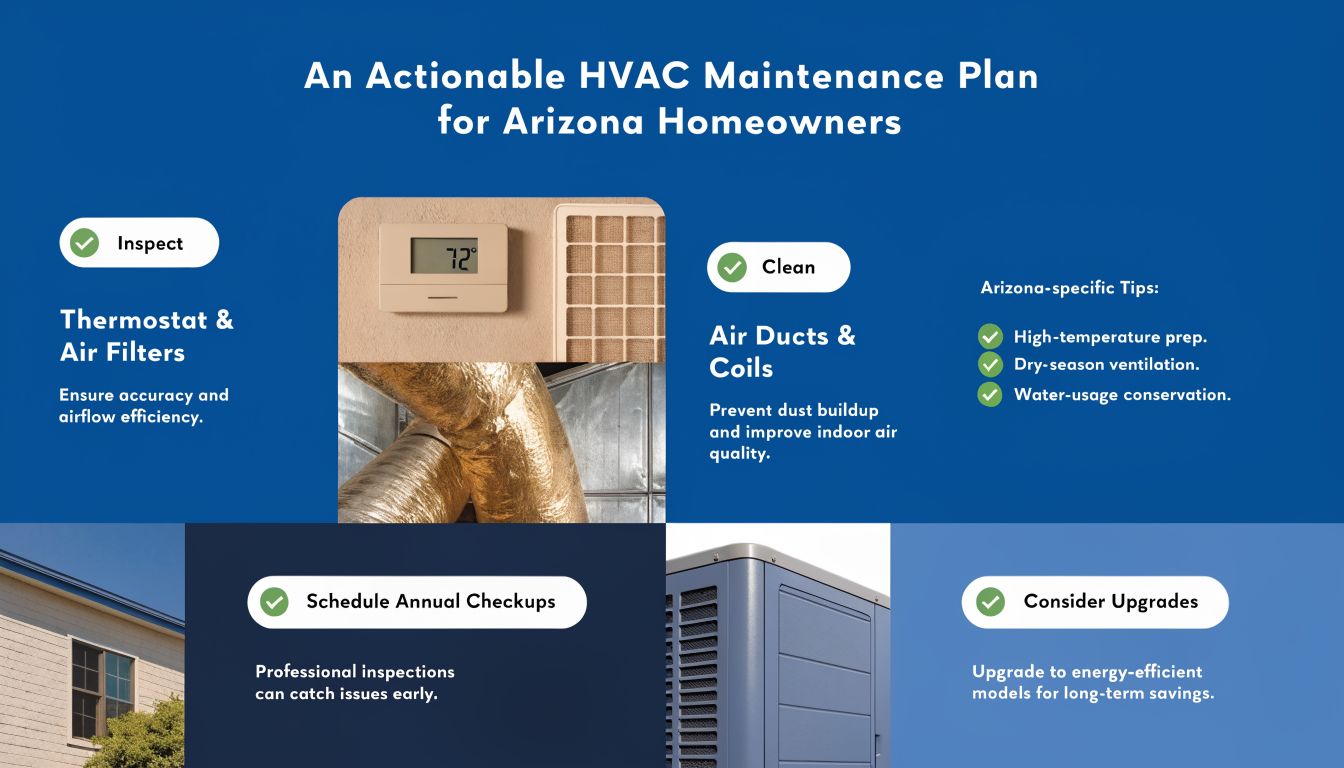
A lot of people handle allergy season reactively. Symptoms spike, then they remember the filter, or they book service after the house already feels miserable. In Arizona, that approach leaves you behind the calendar.
Recent 2025-2026 trend reporting says warming conditions are extending Arizona pollen seasons by 2-4 weeks, with earlier juniper blooming and a 15% rise in winter allergy-related ER visits in the Phoenix Valley, according to this Arizona winter pollen and HVAC strategy article. That same source says maintaining indoor humidity between 30-50% and using zoned systems can cut symptoms by 40-60%, and it specifically calls out duct sealing such as Aeroseal before spring as an overlooked step. Because these are future-facing trend claims, it's best to treat them as directional planning data rather than a guarantee for any individual home.
Late winter prep
This is the pre-pollen window. If your system isn't ready before tree season, you're playing catch-up.
Use this period to:
- Replace or upgrade the filter: Don't wait until it's visibly dirty.
- Inspect return grilles and vents: Dust mats around returns are a sign the system is pulling a lot from the living space.
- Check blower performance and airflow: Weak airflow often means poor filtration performance in real life.
- Consider duct sealing: If you've got dusty rooms or uneven comfort, this is a smart time to investigate leakage.
A homeowner checklist can help you stay organized. This HVAC preventive maintenance checklist is a solid starting point.
Spring response
Once tree and then grass pollen ramp up, the priority shifts from preparation to containment.
Focus on habits that reduce what enters and recirculates:
- Keep windows closed on high symptom days
- Change filters on schedule, not by memory
- Vacuum return-adjacent areas more often
- Pay attention to bedrooms first, because that's where overnight exposure shows up fastest
If one room is always worse, don't assume it's just that room. It may point to duct imbalance, leakage, or poor return design.
Post-monsoon reset
Monsoon season changes the indoor picture. Rain can briefly knock down dust, but moisture introduces other concerns. Once the weather shifts again, some homes end up with a mix of residual dust, weed pollen, and mold-friendly trouble spots.
This is the right time to inspect:
| Season window | What to check | Why it matters |
|---|---|---|
| After monsoon humidity | Drain lines, coil area, nearby insulation, musty odors | Moisture problems can support microbial growth |
| Early fall | Filter condition, return cleanliness, duct dust load | Weed season can pile onto existing buildup |
| Late fall | Humidity behavior, room-to-room comfort, thermostat programming | Indoor-heavy months expose weak IAQ performance |
Fall and winter control
Fall in Arizona is not a safe season for allergy households. Weed pollen can be intense, and later in the year people spend more time indoors with windows closed and systems cycling regularly.
This is when neglected houses start showing the full pattern. The family cleans. The counters look fine. But everyone still wakes up stuffed up.
A good fall and winter routine includes:
- Checking for musty supply air
- Watching for fast dust return after cleaning
- Addressing isolated moisture issues before they spread
- Reviewing whether zoned control or purification upgrades make sense
What homeowners should stop doing
Some common habits create extra work without solving the underlying problem.
- Stop buying random allergy gadgets one at a time: The house needs a strategy, not a pile of devices.
- Stop skipping maintenance because the system still cools: Cooling and air quality aren't the same thing.
- Stop assuming a filter change fixes everything: Filters matter, but they can't compensate for leaking ducts or contamination inside the system.
The best maintenance plan follows Arizona's rhythm. Prepare before pollen hits. Inspect after moisture periods. Correct system weaknesses before they become another season of miserable mornings.
When to Stop Guessing and Call in the Experts
At some point, allergy troubleshooting stops being practical DIY. If you've already cleaned, replaced filters, and changed routines but the house still feels like part of the problem, it's time to get the system evaluated as a system.
Look for these red flags:
- Persistent symptoms indoors: If sneezing, congestion, or irritated eyes stay strong even when you're inside most of the day, your indoor air may be carrying the load.
- Dust returns quickly after cleaning: That often points to recirculation, duct leakage, poor filtration, or a combination of all three.
- A musty or stale smell when the air turns on: That can signal moisture or contamination issues in the system.
- One or two rooms feel much worse than the rest: Localized discomfort usually means airflow or duct problems, not bad luck.
- Filter changes don't seem to help: If a fresh filter gives little relief, the bigger issue may be in ductwork, purification, humidity control, or equipment performance.
- You feel overwhelmed by conflicting advice: That's common. A lot of allergy guidance talks about pollen counts but never connects them to what your HVAC system is doing inside the house.
Arizona homeowners can't stop trees, grasses, and weeds from pollinating. But they can make the house a cleaner place to recover. That's the practical shift that matters most.
If you've cleaned, you've changed filters, and you're still suffering, it's not a failure on your part. It's a sign that the problem lies deeper within your home's system. For a comprehensive assessment and solutions tailored to your Mesa or Phoenix Valley home, contact Comfort Experts at 480-207-1239 or schedule service online today. We treat our customers like neighbors, because you are.