
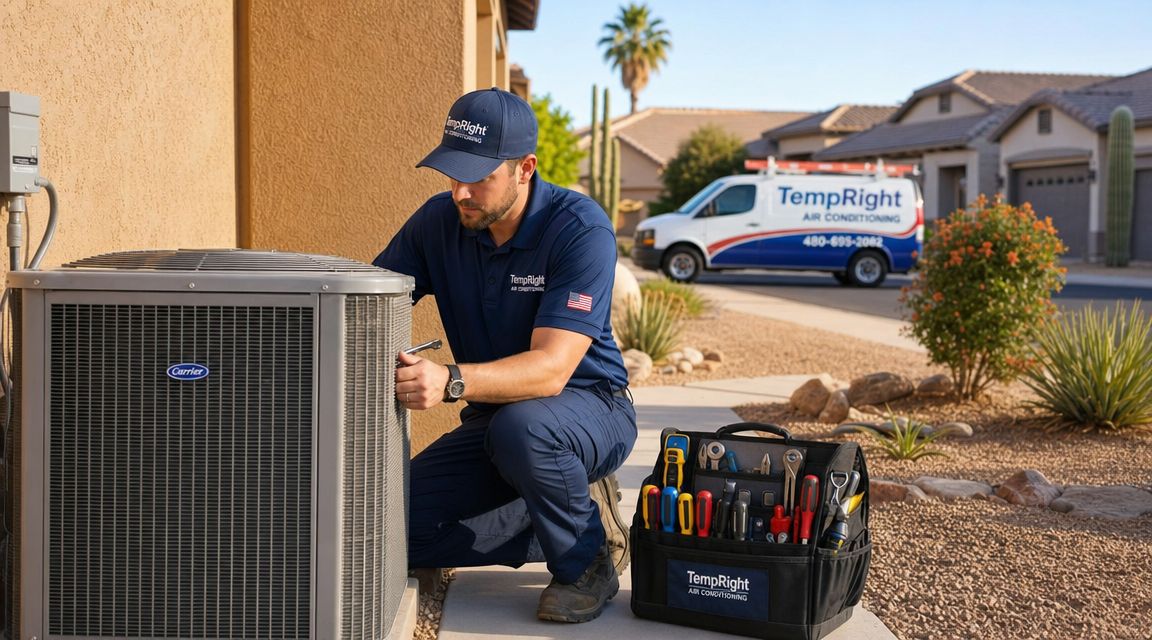
If the AC stops in Mesa, start with the safe basics first: check the thermostat and breaker, look for ice or water, listen for dangerous noises, and then decide whether it's a true emergency or a problem that can wait until regular hours. Typical HVAC repairs in Mesa often run $250 to $850, while full replacement usually falls between $6,000 and $15,000, so a calm triage process can help avoid unnecessary after-hours costs and speed up the right repair decision.
A lot of homeowners search for emergency AC repair in Mesa when the house is already heating up, everyone is uncomfortable, and the unit seems to have failed without warning. In that moment, the most useful advice isn't hype. It's knowing what can be checked safely, what signals real danger, and what information will help the technician solve the problem faster.
For local homeowners, there are two separate questions. First, is this unsafe or likely to cause home damage right now? Second, if it isn't dangerous, is it still urgent enough in Arizona heat to call for same-day service when availability allows? That distinction matters.
Is It a Real AC Emergency? Signs to Watch For
When an air conditioner quits in the East Valley, the stress level jumps fast. But not every cooling issue needs an after-hours dispatch, and not every strange symptom means the system is about to fail completely.
Industry guidance on emergency HVAC calls notes that true emergencies are usually complete system failure in extreme weather, electrical sparking, or water leaks. It also warns that homeowners often skip simple checks and pay an after-hours premium for issues tied to a clogged filter, tripped breaker, or thermostat setting. That practical trade-off is covered in Comfort Experts' AC advice.
Emergency signs versus urgent inconvenience
The easiest way to think about emergency AC repair in Mesa is to sort symptoms into two buckets. One bucket is safety or damage risk. The other is comfort loss without immediate danger.
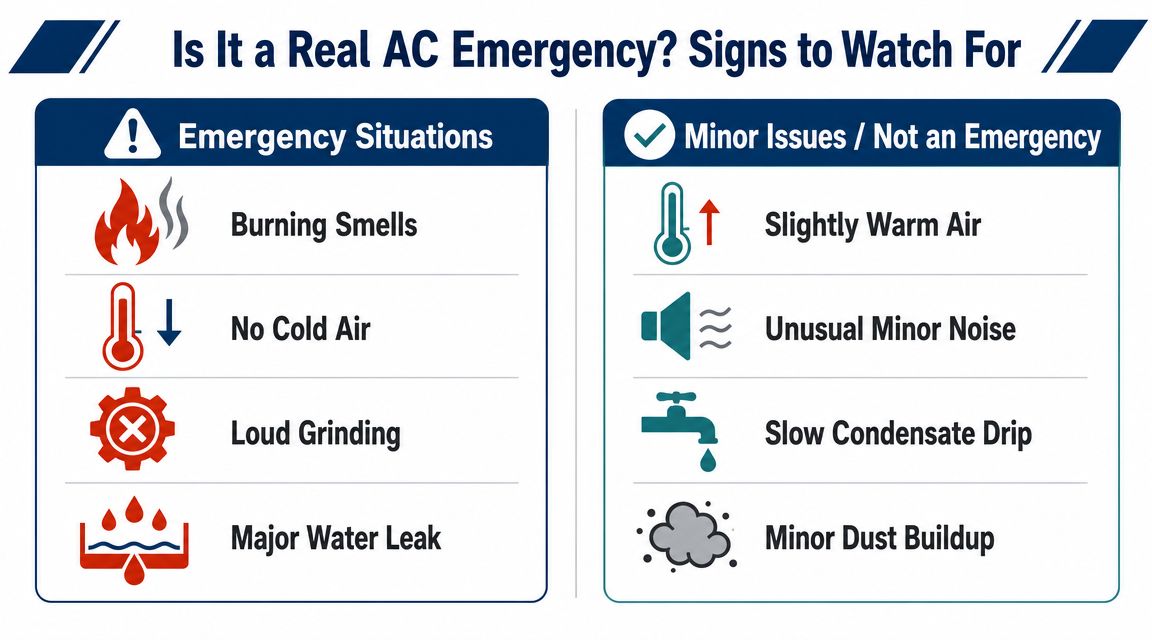
| Symptom | Severity Level | Recommended Action |
|---|---|---|
| Burning smell, sparks, or buzzing from electrical components | High | Shut the system off and call for emergency service |
| System completely stops cooling during extreme heat | High | Check thermostat and breaker once, then request urgent service |
| Major water leak around the indoor unit | High | Turn the system off to limit damage and call a professional |
| Loud grinding, banging, or metal-on-metal noise | High | Shut the unit off and schedule immediate diagnosis |
| Slightly warm air but some airflow remains | Moderate | Check filter, thermostat, and outdoor unit condition |
| One room warmer than the rest | Low to moderate | Likely can wait for regular service unless vulnerable occupants are affected |
| Minor new noise without burning smell or shutdown | Moderate | Monitor briefly, then book service if it continues |
| Slow drainage or light moisture near condensate line | Moderate | Inspect drain area and call if water starts spreading |
What usually qualifies as a true emergency
A burning odor, visible sparking, or signs of electrical trouble move the issue out of DIY territory right away. The same goes for a major water leak that could damage ceilings, flooring, drywall, or nearby equipment.
A full loss of cooling in extreme weather also deserves serious attention. In Mesa, that's not a minor comfort issue. It's one reason the city treats AC and heater repair or replacement as a habitability matter in its housing assistance program, covered later in this article.
Problems that feel urgent but may wait until morning
Reduced airflow, mild temperature drift, or a single problem room often don't require after-hours dispatch. Those issues still matter, but they usually allow time for safe troubleshooting first.
If there's visible ice on refrigerant lines or the indoor coil area, airflow restriction is one possibility. Homeowners trying to understand the causes of frozen AC coils can get a useful overview there, but a frozen system should generally be turned off and checked rather than pushed harder.
When the concern falls into the middle ground, same-day service when availability allows often makes sense. Emergency service should be reserved for safety risks, major water damage risk, or a total cooling failure when the heat makes waiting unreasonable.
Immediate Steps You Can Safely Take
A good emergency response starts with non-invasive checks. The goal isn't to fix sealed electrical or refrigerant components. It's to rule out simple problems and gather useful clues.
One industry article on emergency HVAC calls makes this point clearly: homeowners often pay more after hours for problems that trace back to a clogged filter, tripped breaker, or thermostat issue, and emergency repairs are commonly priced 40 to 60% higher than routine service, with a typical emergency range of about $600 to $1,100 versus $300 to $550 during normal hours, according to this emergency HVAC cost guidance. That doesn't mean waiting is always right. It means a few safe checks can save time and money when the problem is minor.
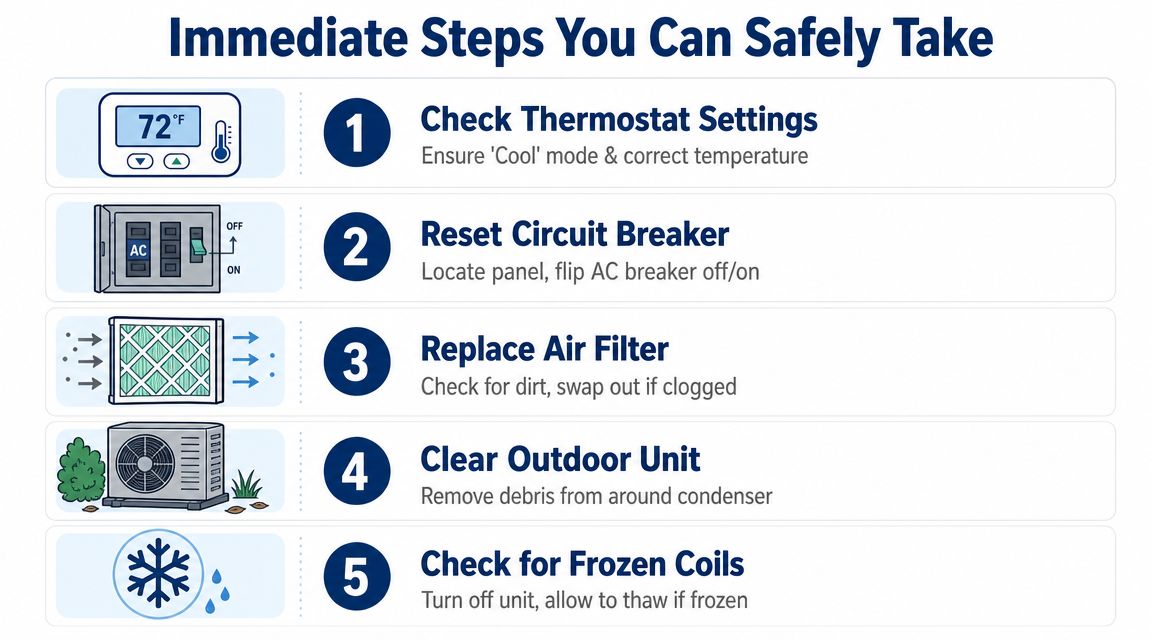
Safe homeowner checklist
Check the thermostat
Make sure it's set to Cool and the target temperature is lower than the indoor temperature. If the thermostat screen is blank, that points to a power issue or thermostat problem rather than a refrigerant or compressor failure.Check the breaker
Look at the electrical panel for a tripped AC breaker. Reset it once if needed. If it trips again, stop there and call a technician. Repeated resetting can hide a more serious electrical fault.Inspect the air filter
A heavily clogged filter can choke airflow, reduce cooling, and contribute to coil freeze-up. If the filter is dirty, replace it with the correct size and let the system run briefly to see if airflow improves.Check indoor airflow
Put a hand near several supply registers. If one room is weak but the rest are normal, the issue may be more localized. If the whole house has weak airflow, that points toward a larger blower, filter, or airflow restriction problem. Homeowners dealing with an AC not blowing situation can use that as a quick reference.Look for ice or standing water
Ice on the line set or near the indoor coil means the unit should usually be turned off and allowed to thaw. Water around the air handler or ceiling area needs attention, especially if it's spreading.Check the outdoor unit
If it's safe to access, look for obvious debris around the condenser. Leaves, trash, and windblown buildup can interfere with operation. Don't open panels or touch wiring.
What to write down before calling
These details help narrow the diagnosis:
- When it started and whether it failed suddenly or gradually
- What the thermostat says
- Whether air is blowing and whether it feels cool
- Any sound or smell changes
- Whether the breaker tripped
- Whether ice or water is visible
That information helps the technician move directly toward the most likely fault path instead of rechecking every possibility from scratch.
When to Stop and Immediately Call a Professional
Homeowners can safely check settings, filters, airflow, and visible conditions. The line should stop there.
If the AC is smoking, sparking, making harsh grinding sounds, tripping the breaker repeatedly, or leaking water into finished areas, the safest move is to shut it down and call for service. Running a struggling system longer can turn a smaller repair into a larger one.
Red flags that mean hands off
Some symptoms don't need more troubleshooting. They need the system powered down.
- Burning or hot electrical smell: This can point to wiring, capacitor, contactor, or motor trouble.
- Repeated breaker trips: One reset is reasonable. A second trip means the cause still exists.
- Loud metal noise: Grinding, banging, or hard buzzing usually signals mechanical or electrical distress.
- Visible smoke or sparks: This is an immediate shutoff situation.
- Large or active water leak: Water and HVAC equipment don't mix well, especially in attics, closets, and ceiling-mounted applications.
Repairs that should never be DIY
Refrigerant work, capacitor replacement, contactor diagnosis, compressor testing, and opening electrical compartments should all be left to licensed HVAC professionals. A lot of online articles about fixing your AC problems are useful for understanding symptoms, but understanding a symptom isn't the same as safely repairing the equipment.
Mesa homes also have plenty of attic-mounted and rooftop equipment where access itself adds risk. Heat, sheet metal, electrical components, and slippery roof surfaces aren't a combination for improvised repairs.
For homeowners seeing electrical warning signs near the HVAC circuit, this article on troubleshooting humming electrical panels is a useful reminder of why those sounds shouldn't be ignored.
Professional diagnosis matters because the same symptom can come from very different causes. Warm air could mean a filter issue, a frozen coil, a failed capacitor, a blower problem, low refrigerant, or a thermostat fault. Guessing wrong can waste time and create more damage.
What to Expect from a Comfort Experts Emergency Call
A lot of stress during an AC failure comes from not knowing what happens next. The call itself is usually simpler than people expect.
In Mesa, urgent service is common, not unusual. A local market roundup from ConsumerAffairs notes that many providers advertise same-day, 1-hour, or after-hours emergency availability, and it places typical HVAC repairs at $250 to $850 while full system replacement often runs $6,000 to $15,000 in the Mesa market, according to this Mesa HVAC cost and service overview. That range is exactly why diagnosis comes first. The right next step might be a modest repair, or it might be a conversation about whether the system is worth repairing at all.
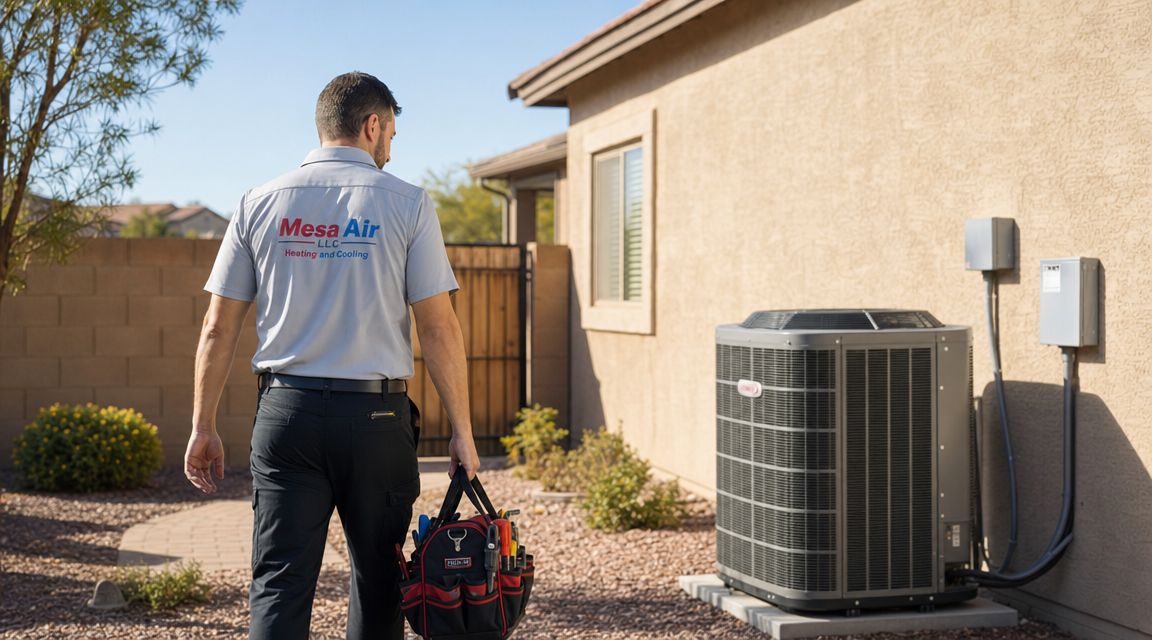
What the technician needs from the homeowner
The most helpful thing a homeowner can provide is a clean symptom report:
- What the system is or isn't doing
- Any sounds, odors, or water
- Whether the filter was changed recently
- Whether the breaker has tripped
- Whether the issue affects the whole house or one area
That information shapes the first inspection steps and helps narrow the likely causes faster.
What happens on site
A licensed HVAC technician usually starts by confirming power, controls, airflow, and basic operating conditions. Then the diagnosis moves toward the fault area, such as indoor airflow, outdoor condenser operation, electrical components, drainage, or refrigerant-related concerns.
If the system can be safely repaired, the technician explains the issue and options. If the unit has a larger failure, the conversation may shift toward replacement planning instead of putting repair money into a system with poor long-term value.
One helpful reference for homeowners wondering about timing is this article on how long AC repair takes. Repair time depends heavily on the actual fault, system access, and whether special parts are needed.
Where emergency service fits
Comfort Experts provides emergency cooling service in Mesa and the East Valley through its emergency AC repair service and broader Mesa AC repair services. The right use case for emergency dispatch is when waiting creates a safety risk, a home-damage risk, or an unreasonable exposure to extreme indoor heat.
What doesn't work well is calling after hours before checking the thermostat, breaker, filter, and obvious signs of ice or drainage trouble. What does work is calling with clear symptoms after those safe checks are done.
Mesa's Heat, Dust, and Power Grid Realities
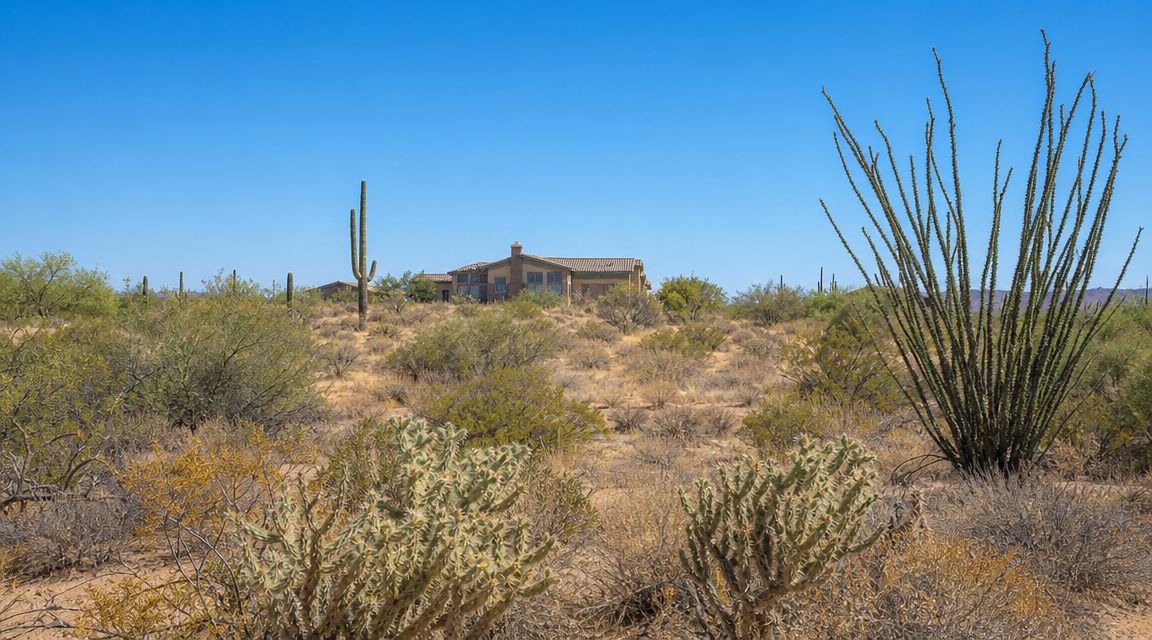
Arizona cooling problems aren't generic. Mesa homes deal with a combination of extreme heat, fine dust, sudden monsoon conditions, older duct systems, and a mix of split systems, package units, and rooftop equipment.
That matters because the same AC issue behaves differently here than it might in a milder climate. A system that's limping along elsewhere may become an urgent problem quickly in the East Valley.
Why Mesa systems fail under stress
Fine dust can load filters faster and coat equipment over time. Monsoon weather can introduce debris, moisture, and power disturbances. Older homes may also have aging ductwork, weak return airflow, or electrical components that are already close to the edge.
Rooftop and package units add another local factor. They sit in direct sun, face weather exposure, and can be harder to access quickly when a problem starts.
Why the city treats AC loss seriously
The City of Mesa's Emergency Rehabilitation Program explicitly lists AC/Heater Repair/Replacement among repairs affecting habitability, and the program allows a maximum grant of $20,000 per household per year for qualifying cases, as described by the City of Mesa Emergency Rehab Program. The city also requires applicants to have owned and lived in the home for at least 12 months. That public-policy treatment says something important: in this climate, AC failure can be a housing problem, not just a comfort complaint.
Protecting against local power issues
Power fluctuations and storm-related electrical stress can also affect cooling equipment. Homeowners thinking ahead can look into AC surge protection in Phoenix as part of a broader strategy to protect motors, boards, and controls.
The bigger point is simple. Mesa systems don't need perfect conditions to fail. They need enough heat, enough dust, and one weak component.
After the Repair: How to Prevent the Next Emergency
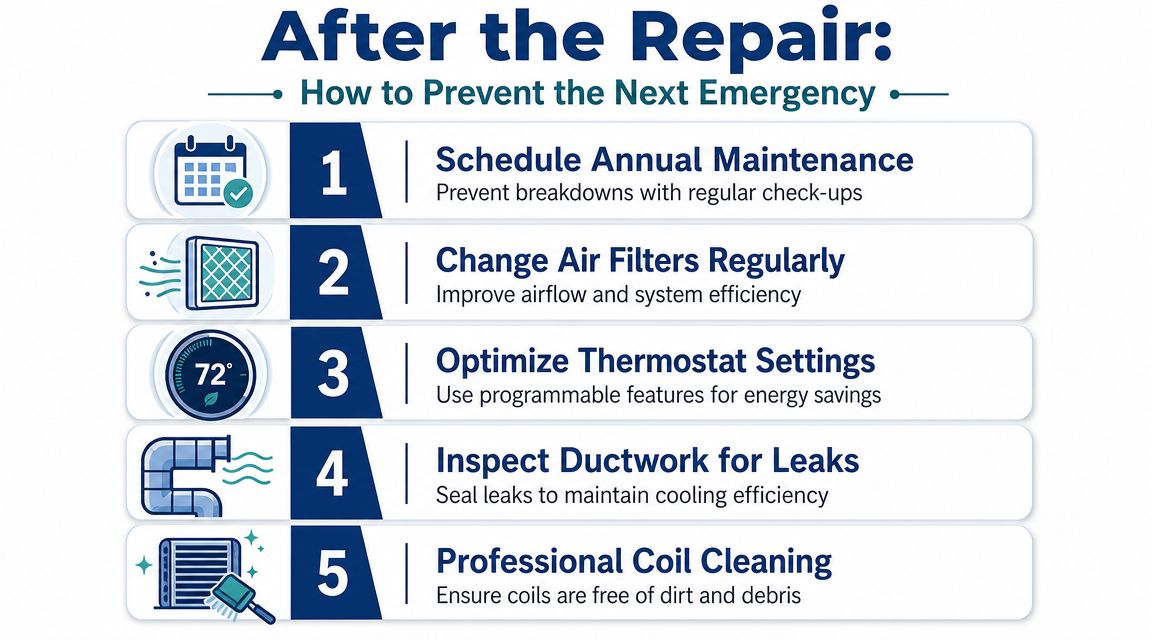
An emergency repair should solve the immediate failure, but it should also change what happens next. The best prevention plan is usually simple and consistent.
The habits that make the biggest difference
- Replace filters on time: In dusty Arizona conditions, a neglected filter can start a chain reaction of low airflow, freezing, and poor cooling.
- Keep the outdoor unit clear: Remove debris and give the condenser breathing room.
- Pay attention to early warning signs: New noises, rising indoor humidity, weak airflow, and short cycling are often advance notice.
- Schedule regular professional maintenance: Seasonal inspection catches worn electrical parts, drain problems, airflow issues, and dirty coils before they become after-hours calls.
Homeowners who want a practical local option can look at AC maintenance in Mesa, especially if the system has already had one emergency breakdown.
Look beyond the equipment itself
Some repeat cooling complaints come from the house, not just the unit. Hot attics, duct leakage, weak insulation, and sun-loaded rooms can make the AC run harder than it should. For homeowners comparing envelope improvements, it can help to compare hot climate attic insulation alongside HVAC maintenance and repair planning.
When repair isn't the long-term answer
A successful emergency repair doesn't automatically mean the system is in good overall shape. If the unit is older, unreliable, or stacking one repair on top of another, planning for replacement may be the more stable decision. The goal isn't to avoid every repair forever. It's to stop losing money and comfort to repeat failures.
A good next step is based on the condition of the system, how often it's struggling, and whether the home is staying comfortable without constant workarounds.
If the system is unsafe, shut it off and call. If it isn't unsafe, do the safe checks first, document the symptoms, and then decide how urgent the situation really is. For help with emergency AC repair in Mesa or a fast cooling diagnosis in the East Valley, contact Comfort Experts at 480-207-1239 or schedule service.