

You wipe the coffee table, come back an hour later, and that fine beige film is already back. In the Phoenix Valley, how to reduce dust in your home isn't really a cleaning question alone. It's an air movement, filtration, and source-control problem.
The Unending Battle with Dust in the Phoenix Valley
You clean the table after breakfast, head out for errands, and by dinner there is already a light film back on the surface. In Mesa and across the Phoenix Valley, that usually points to an air problem, not a housekeeping problem.

We see this every week in homes in Mesa, Gilbert, Chandler, and Phoenix. Homeowners wipe, sweep, and vacuum constantly, but the dust keeps coming back because the house is still pulling it in and moving it around. In our climate, the HVAC system and ductwork often do more to spread dust than the furniture ever does to collect it.
What dust really is in an Arizona home
Household dust in the desert is a mix of outdoor and indoor material. Some of it is fine soil, pollen, road grit, and construction debris. Some of it is pet dander, skin flakes, carpet fibers, and lint from normal living.
The part many homeowners miss is the delivery path. In Arizona, dust does not only drift in through an open door or cracked window. It also gets pulled through return leaks, attic gaps, and poorly sealed duct connections. Once that happens, your HVAC system can recirculate those particles room after room.
That is why two houses on the same street can have very different dust problems. The one with tighter ductwork and better filtration usually stays cleaner, even if both homes get the same desert air outside.
Why Phoenix Valley homes feel dustier
Dry air changes how dust behaves.
Fine particles stay loose longer, settle lightly, and get kicked back into the air with normal foot traffic or a supply register turning on. Add wind, long cooling seasons, and frequent use of the air conditioner, and you have a home that is constantly moving air. If that air path is dirty or leaky, dust keeps cycling through the house.
Dust on the coffee table is often the symptom. The source is commonly in the return side of the system, the ductwork, or the gaps that let attic air get pulled indoors.
Humidity still matters, just for a different reason. Lower indoor humidity helps limit dust mites, but in the Phoenix area, visible dust is usually a filtration and air-sealing issue first. Dust isn't only about appearance; it affects comfort, allergy symptoms, and how clean the whole house feels.
Why endless wiping doesn't solve it
Surface cleaning has a place, but it only handles what already landed.
If the system is drawing dusty attic air, if the filter is too cheap for the job, or if return leaks are feeding debris into the air stream, wiping furniture becomes a repeat task with no real end point. That is the trade-off. More cleaning helps the room look better for a while. Fixing airflow and filtration reduces how much dust shows up in the first place.
For a closer look at one of the biggest hidden contributors, our guide on duct cleaning in Mesa AZ explains when dirty ducts are part of the problem and when the bigger issue is leakage, filtration, or both.
Reducing clutter also helps because fewer exposed surfaces means fewer places for dust to collect. If that is part of your plan, 10 Pro Methods to Declutter Your Home is a useful companion read.
The first mindset shift
The homes that stay cleaner usually follow a three-part approach.
- Source control: Limit how much dust gets into the house and into the duct system.
- Capture: Use filtration that effectively holds onto fine particles.
- Removal: Clean settled dust without sending it right back into circulation.
That shift changes the goal. Instead of chasing dust after it lands, you reduce how much your home and HVAC system move around all day.
Build Your Dust-Busting Cleaning Routine
In Mesa and across the Valley, a house can look clean on Saturday morning and show a fresh layer of dust by Sunday afternoon. A better routine helps, but the goal is not to wipe every surface harder. The goal is to remove settled dust without throwing it back into the air, especially in a home where the AC runs often and keeps particles moving.
Order matters more than people expect.
Clean from top to bottom
Start high and finish with the floor. Ceiling fans, upper shelves, door trim, blinds, furniture, baseboards, then floors. If you vacuum first and dust second, the room usually needs another pass.
That simple sequence cuts rework.
Use microfiber cloths or electrostatic dusters instead of dry rags. Older cotton towels often push fine dust off one surface and into the next room. On sticky spots, use a lightly damp microfiber cloth so the dust sticks to the cloth instead of drifting back into circulation.
Use tools that capture dust, not just move it
A weak vacuum can make a dusty house look cleaner while leaving the air worse for an hour or two. We see that a lot in homes with carpet, area rugs, pets, and fabric furniture.
Choose a vacuum with sealed filtration and a HEPA filter if possible. That setup does a better job of keeping fine dust inside the machine instead of blowing it out through the exhaust. In bedrooms and living rooms, that difference is noticeable.
It also helps to use the attachments you already paid for. Brush tools work better on lamp shades, window sills, and return grilles than a full-size floor head ever will.
Focus on the spots that keep feeding dust back into the room
Some areas act like storage bins for dust. If they get skipped week after week, the same particles keep getting stirred up by footsteps, supply air, and ceiling fans.
Pay extra attention to:
- Upholstered furniture: Vacuum under cushions, along seams, and beneath the frame.
- Curtains and fabric shades: Vacuum with a brush attachment or wash them if the material allows.
- Under beds: One of the most common dust reservoirs in the house.
- Behind appliances: Refrigerators and laundry equipment collect lint fast.
- Vent covers and nearby trim: Wipe the grille and vacuum around it.
- Electronics: Dust clings to screens and equipment, so use a soft microfiber cloth.
Set a weekly routine you can consistently keep
A routine only works if it is realistic. For most households, weekly light cleaning beats an occasional all-day reset.
Use a simple pattern:
- Bedrooms: Change bedding, dust nightstands, and vacuum under the bed.
- Living areas: Dust shelves, tables, ledges, and media stands before vacuuming.
- Soft surfaces: Vacuum rugs, sofas, and chairs with the right attachment.
- Entry areas: Clean mats and the floor around the main doors.
- Floors last: Finish with hard floors and carpet after everything above them is done.
That last step matters because dust that falls during cleaning has to go somewhere.
Do a monthly reset on the areas that get ignored
Monthly cleaning is where many homes in the desert start to improve. Fine dust builds up on surfaces you do not touch every day, then drops or gets pulled back into the air stream.
Check these areas once a month:
- Ceiling fans and high ledges
- Baseboards and door frames
- Closets where lint and clothing fibers collect
- Decor, baskets, and open storage surfaces
- Return grilles and the wall around them
If clutter is part of the problem, reducing open surfaces helps. 10 Pro Methods to Declutter Your Home is a useful guide if you want fewer dust-catching objects out in the open.
Keep cleaning habits from working against your HVAC system
This section is about cleaning, but in Phoenix-area homes the HVAC side still matters. If return vents are blocked by furniture, laundry, or storage bins, the system cannot pull air evenly, and dust tends to collect around the rooms that already struggle with airflow.
Keep return grilles clear and wipe them regularly. If you are planning to change the filter too, this guide on where to find your home HVAC air filter will help you check the right spot before you buy a replacement.
A good cleaning routine lowers the dust load your system has to deal with. It does not fix duct leaks or poor filtration, but it gives you a cleaner baseline and makes the HVAC improvements in the next step work better.
Upgrade Your HVAC System's Role in Dust Reduction
In Mesa and across the Phoenix area, dust problems often start in the HVAC system, not on the coffee table. The system runs for long stretches, pulls air through returns, and pushes it back through supply ducts all day in summer. If filtration is weak, airflow is restricted, or attic ductwork is leaking, your house keeps getting fed a fresh supply of fine desert dust.
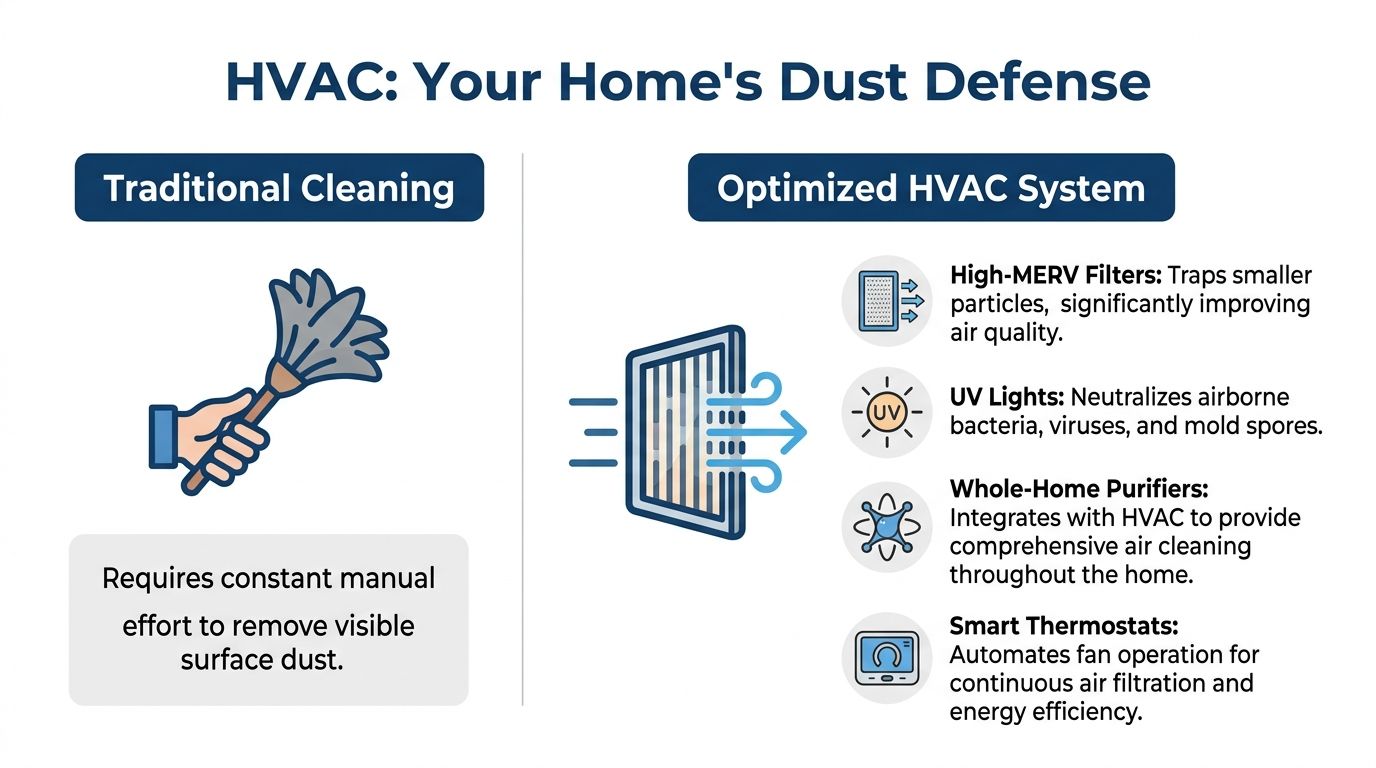
Your AC system is the largest air-moving and air-cleaning equipment in the home. If it is set up well, it removes a lot of suspended dust before it settles. If it is set up poorly, it spreads that dust room to room.
Why filter choice matters more than many homeowners realize
The filter is the first place we look, but the right answer is not always the highest MERV number on the shelf.
MERV stands for Minimum Efficiency Reporting Value. A higher rating captures smaller particles more effectively. That helps with fine dust, but only if your blower and duct system can still move enough air. In real homes, that trade-off matters. We see plenty of systems in older Phoenix-area houses where an overly restrictive filter causes comfort problems, longer run times, and weak airflow at the far rooms.
COIT's guidance on reducing dust in the house notes that MERV 13 to 16 filters can capture very small particles at high rates. It also points out the downside of choosing a filter that is too restrictive for the system. That is why filter selection should match the equipment, not just the dust problem.
HVAC Air Filter MERV Rating Comparison
| MERV Rating | Typical Particle Capture | Effective Against | Best For |
|---|---|---|---|
| MERV 8 | Basic dust control | Larger dust, lint, visible debris | Homes with lighter dust loads |
| MERV 11 | Better fine particle capture | Finer dust, some pollen, more suspended debris | Households wanting stronger everyday filtration |
| MERV 13 | High capture of smaller airborne particles | Fine airborne dust and smaller particulates | Many allergy-conscious homes, if system-compatible |
| MERV 16 | Very high fine-particle capture | Very fine particle capture | Select systems only, with professional review |
What we usually recommend in Mesa homes
For many homes here, a quality pleated MERV 11 or MERV 13 filter is the practical range. It usually improves dust control without choking airflow, assuming the system was designed for it and the filter rack seals properly.
That last part gets missed a lot. If the filter slot has gaps around it, dust bypasses the filter completely. We find this in real service calls all the time, especially on systems with loose filter doors or warped return cabinets.
Filter maintenance matters too. In desert conditions, filters can load up faster than homeowners expect, especially with pets, kids going in and out, or nearby construction. Check the filter monthly. Replace it on schedule based on how quickly it is collecting debris and how your system is performing.
If you want help comparing pleated media options, our guide to the best HVAC filters for allergies gives a useful breakdown of what works in different systems.
A practical filter decision checklist
Before upgrading, check these points:
- System compatibility: The blower has to handle the added resistance.
- Filter thickness: A 4-inch media cabinet performs differently from a 1-inch slot filter.
- Cabinet seal: Air should go through the filter, not around it.
- Dust load: Pets, frequent door use, and remodeling dust fill filters faster.
- Room comfort: If airflow drops after a filter change, the system may be too restricted.
A stronger filter only helps if the system can pull air through it properly.
What doesn't work well
Basic fiberglass filters do very little for the fine dust that hangs in the air in Arizona homes. They stop larger debris, but they are a weak choice if your main complaint is that surfaces get dusty again right after cleaning.
A clogged filter is another common problem. Once it is loaded up, airflow drops and dust control usually gets worse, not better.
The bigger issue, though, is assuming the filter is the whole answer. If ducts are leaking in a hot attic, return gaps are pulling in dusty air, or supply boots are poorly sealed at the ceiling, the system can bring in dirt before clean filtration does its job. In arid climates, that HVAC side of the dust problem is often the part that makes the biggest difference.
Beyond Filters Advanced Indoor Air Quality Solutions
Basic filtration handles a lot, but sometimes it isn't enough. If your home still gets dusty quickly after you've improved cleaning habits and filter maintenance, the next step is looking at the whole air path.

Whole-home air purification
Portable units can help in a bedroom or office, but they only treat the air in that space. Whole-home systems connect to the HVAC system and clean air as it circulates through the house.
That approach makes more sense for homes where dust complaints show up in multiple rooms instead of one isolated spot. If you're comparing options, whole-home air purifiers are designed to work with the central system rather than fighting room by room.
Some homeowners also add UV or air-scrubber style accessories. These don't replace filtration. They complement it by addressing contaminants that filters alone don't fully manage.
The ductwork problem many people miss
Let me explain. A high-quality filter only works on air that passes through it.
If your duct system is leaky, especially in a hot dusty attic, the system can pull in dirty unfiltered air before it ever reaches the living space. That's why some homes still look dusty even after frequent cleaning and filter upgrades.
According to the verified data based on PMC research on dust control and duct interventions, professional duct cleaning combined with sealing can yield a significant reduction in total dust. The same source notes that technologies like Aeroseal can seal leaks up to a certain size, with a high seal rate benchmark.
In desert homes, leaky ducts can undo the benefit of a better filter. Seal the leaks, then let filtration do its job.
That combination matters more than cleaning alone. Cleaning removes what is already in the system. Sealing helps stop re-entry.
Where professional solutions fit
Not every house needs every IAQ add-on. The right combination depends on the source of the dust and how the HVAC system is built.
A few examples:
- If dust shows up strongest near vents: Duct leakage or debris inside the system may be contributing.
- If bedrooms stay dusty despite regular cleaning: Air circulation and filtration may need upgrading.
- If allergy symptoms are persistent: Whole-home purification and better capture at the HVAC level often help more than surface cleaning alone.
- If the home has attic duct runs: Sealing becomes much more important in our climate.
Comfort Experts offers whole-home filtration upgrades, UV purifiers, and air scrubber options that integrate with existing AC systems when a home's dust issue points to an HVAC-side solution.
Humidity still matters
Arizona is dry, but indoor humidity control still matters for comfort and dust behavior.
Air that's too damp can encourage dust mite issues. Air that's extremely dry can make dust feel more persistent because particles stay mobile and static cling increases. The goal is balance, not extremes.
That means humidity control, filtration, and duct integrity all work together. When one piece is off, homeowners end up cleaning the symptom instead of fixing the cause.
Stop Dust at the Door Pet and Entryway Strategies
A lot of dust never needs to enter your home in the first place. Shoes, paws, backpacks, and everyday foot traffic bring in a steady stream of debris, especially in the Valley.
If you have pets, add fur and dander to that mix and the dust load rises fast.
Entryway habits that make a real difference
The front door is a control point.
Use a tougher mat outside to scrape off grit, then a softer mat inside to catch what remains. The setup is simple, but it works better than relying on sweeping after the fact.
A few habits are worth making standard:
- Shoes off at the door: This cuts down on dirt, fine sand, and outdoor debris moving through the house.
- Bag drop zone: Keep backpacks, work bags, and sports gear from landing on sofas or beds.
- Mat maintenance: Vacuum or shake out entry mats regularly so they keep trapping material instead of becoming another dust source.
- Quick threshold wipe-down: Door trim and nearby baseboards collect more fine debris than many notice.
Managing pet hair and dander without chasing it all day
Pets don't just shed on the floor. Hair and dander settle into fabric, move through return air, and collect under furniture.
The most effective approach is steady maintenance.
- Brush regularly: Remove loose hair before it spreads through the home.
- Wash pet bedding often: Beds hold hair, dander, and dust quickly.
- Vacuum pet zones more often: Focus on favorite sleeping spots and areas near returns.
- Limit fabric overload: If your dog lives on upholstered furniture, that room will need more frequent cleaning than the rest of the house.
If shedding is the main issue, this guide on how to stop dog shedding is a useful companion resource for grooming and coat-care basics.
Small barriers beat constant cleanup
Homeowners often try to solve dust after it spreads. The easier path is to interrupt it earlier.
Keep dust in the entryway, hair on the brush, and outdoor debris off the carpet. Prevention is cheaper than extra cleaning time.
For families with kids and pets, creating simple routines matters more than trying to keep the whole home spotless every day. One bench, one shoe tray, one pet towel by the door, and a consistent grooming habit can lower the amount of debris that reaches the main living areas.
When to Call a Phoenix Air Quality Expert
You wipe the coffee table at night, run the AC as usual, and by the next afternoon there is a fresh layer of fine dust on the same surface. In Phoenix-area homes, that pattern often points to the HVAC system, not a cleaning problem.

Signs the issue goes beyond routine cleaning
Call for an inspection if the house stays dusty even after you have handled the basics.
- Dust shows up again within a day or two: That usually means the system is circulating or pulling in fine debris.
- You see buildup around supply registers or return grilles: Airflow problems, duct leakage, or a poor return path can leave clues there.
- Indoor allergy symptoms stay active: If better cleaning and regular filter changes have not helped, the air distribution system needs a closer look.
- The home was remodeled recently: Construction dust often gets into returns and duct runs, then keeps recirculating.
- The ductwork is older or runs through the attic: In Mesa and Phoenix, attic leaks can pull dusty air into the system every cooling cycle.
Why Phoenix homes need a different kind of diagnosis
Here in the Valley, dust does not just settle from open windows or foot traffic. A lot of it gets drawn in through leaks on the return side of the duct system, especially in homes with attic ductwork.
That matters because the HVAC system moves air all day in summer. If return ducts are pulling from a hot, dusty attic instead of the living space, the house can stay in a constant dust loop. Homeowners often blame furniture, pets, or housekeeping first. We usually start with the air path.
As noted earlier from Ecovacs' dust reduction guidance, unsealed ducts can be a major source of dust infiltration, and professional sealing can make a noticeable difference in how much dust settles indoors.
What we check during a professional assessment
A useful dust inspection should answer one question first. Where is the dust entering the system?
We typically look at:
- Filter fit and filter type: A high-MERV filter can help, but only if the system can handle it and the filter is sealed properly in the rack.
- Return leaks and supply leaks: Even small gaps can pull in attic dust or push conditioned air into the wrong place.
- Pressure balance in the home: Closed doors, weak returns, and imbalanced airflow can draw outdoor or attic air inside.
- Blower and coil condition: Dust buildup inside the equipment can keep particles moving through the house.
- Whether duct sealing is justified: If testing shows leakage, professional Aeroseal duct sealing can address hidden leaks from inside the duct system.
There are trade-offs. A stronger filter is not always the first fix. Portable purifiers help in isolated rooms, but they do not solve dusty return leaks in an attic. Duct cleaning has a place after remodeling or heavy contamination, but if the ducts are still leaking, the dust problem usually comes back.
If dust keeps returning on a fixed schedule, usually right after the system runs hard, test the HVAC side before buying another vacuum.
That is the point where expert help saves time. Once you know whether the source is filtration, duct leakage, pressure imbalance, or leftover construction debris, the fix gets a lot more straightforward.
Take Control of Your Home's Air Quality Today
Reducing dust in a Phoenix-area home takes more than wiping surfaces. The best results come from combining smarter cleaning, better filtration, controlled entry points, and an HVAC system that isn't pulling dirty air from places it shouldn't. When those pieces work together, the house stays cleaner longer and feels better to live in.
If you're tired of cleaning the same dust over and over, Comfort Experts can help you find the source and recommend practical next steps for your Mesa or Phoenix Valley home. Call 480-207-1239 or schedule service online.