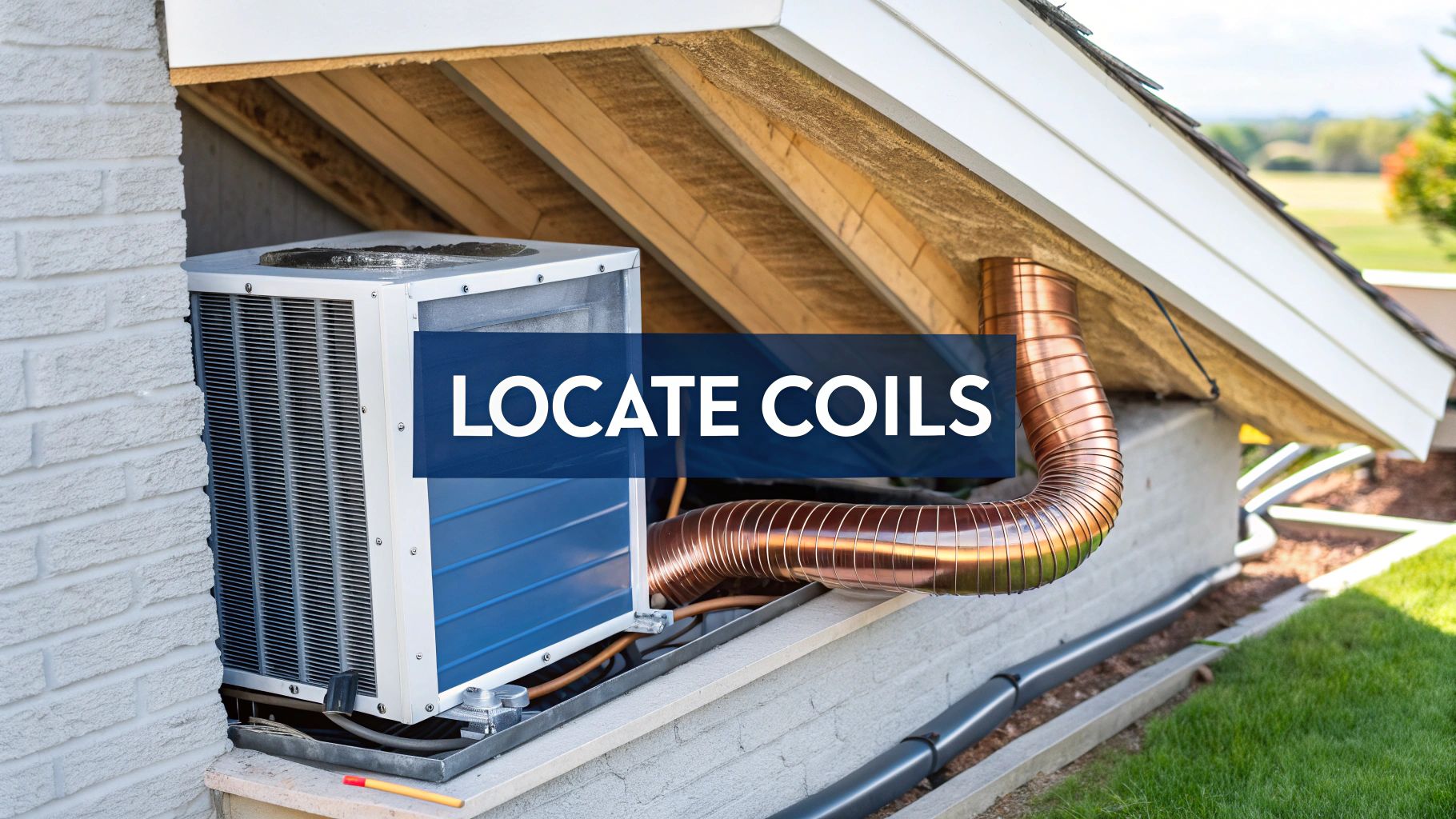
When your Phoenix home starts feeling more like an oven, your first instinct is probably to blame that big, noisy air conditioner unit sitting outside. But what if the real key to your comfort is actually tucked away inside? It’s time to talk about the unsung hero of your cooling system, and we're going to answer the question, where are the evaporator coils?
Your AC's Unsung Hero: The Evaporator Coil
Think of these coils as a super-chilled sponge, constantly soaking up heat and humidity from the air inside your house. Understanding where to find them and what they do is the first step toward a cooler, more efficient home—especially when the Arizona sun is really beating down. As a team with decades of hands-on experience in Mesa, Gilbert, and across the Valley, we at Comfort Experts have seen firsthand how a healthy evaporator coil is the difference between a comfortable home and a sweltering one.
The evaporator coil works with a special chemical to perform this cooling magic. You can learn more about this substance in our article explaining what is Freon. The coil's main job is to absorb all that thermal energy from your living space and get it ready to be dumped outside.
While evaporator coils are the heart of traditional air conditioning, it’s helpful to see how they differ from other cooling methods. For a great side-by-side comparison, check out this guide on an Evaporative Cooler vs Air Conditioner.
In short, the evaporator coil is the part of your air conditioner that actually gets cold. It's where the real heat exchange happens, pulling warmth and sticky moisture from your indoor air before that air gets blown back into your rooms.
This process is what makes your home feel truly cool and comfortable, not just like a fan blowing warm air around in circles. A properly functioning coil is critical for both temperature control and dehumidification, which is a major factor in our Arizona climate.
Finding the Evaporator Coil in Common HVAC Systems
So, where is this all-important part hiding? The answer depends entirely on your home's HVAC setup. You know what? It’s actually simpler than it sounds. To make it easy, we've broken down the most common systems you'll find around Phoenix to help you pinpoint the coil's location.
Whether it’s tucked away in a dusty attic or sitting inside a big unit on your roof, we’ll help you find it. In most central air conditioning systems across the Valley, evaporator coils are located inside the indoor air handler or furnace cabinet. This clever placement lets the coils pull heat directly from your home's air before it’s recirculated—a critical job when Arizona temperatures push past 110°F.
The demand for these coils is huge. The North America HVAC Fan and Evaporator Coil market hit $8,510.2 million in 2023, with a massive portion of that driven by homeowners just like you. Our own experience backs this up; maintaining and replacing these coils is a core part of ensuring reliable cooling for our customers.
This diagram shows how the indoor unit, the evaporator coil, and the heat absorption process all work together to keep your home comfortable.
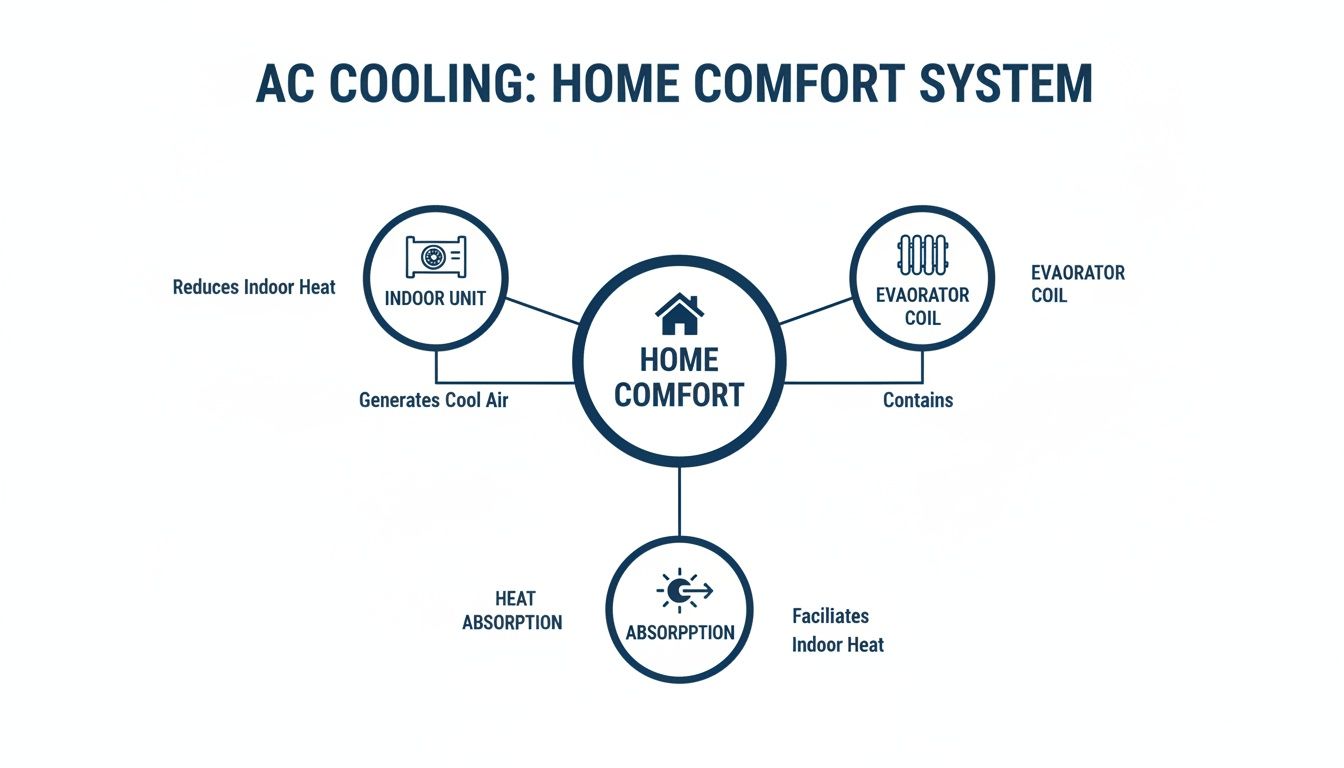
As you can see, that coil is the heart of your indoor unit's cooling power. To figure out what kind of system you have, use the quick guide below.
Evaporator Coil Locations by HVAC System Type
This table is a simple reference guide to help you identify your HVAC system and know right where to look for your evaporator coil.
| HVAC System Type | Common Coil Location | What to Look For |
|---|---|---|
| Split System | Inside the indoor air handler or furnace cabinet. | A large metal box in your attic, garage, or a utility closet connected to your ductwork. The coil is inside behind an access panel. |
| Packaged Unit | Inside the single outdoor cabinet on your roof or a concrete slab. | A large, all-in-one metal unit. All components, including the evaporator coil, are housed together inside. |
| Ductless Mini-Split | Within the indoor, wall-mounted air handler unit. | A sleek, rectangular unit mounted high on a wall in the room it cools. Each indoor unit has its own small evaporator coil. |
Finding the coil is the first step, but remember that each system design has its own unique layout and service needs.
Ductless mini-splits, for example, are a popular choice for cooling specific areas like a home office or add-on room. If you want to learn more about how they work, check out our guide on ductless AC installation and replacement services.
A Deeper Look Into Each System Type
Now that you have the big picture, let's zoom in on the specifics. Every HVAC system is designed a certain way for a reason, and knowing the "why" behind the layout helps you understand how your home actually stays cool. Our technicians are trained on all these configurations, giving us the expertise to diagnose issues no matter the setup.
Here are the three most common setups you'll find in Arizona homes and where to find that all-important evaporator coil in each one.
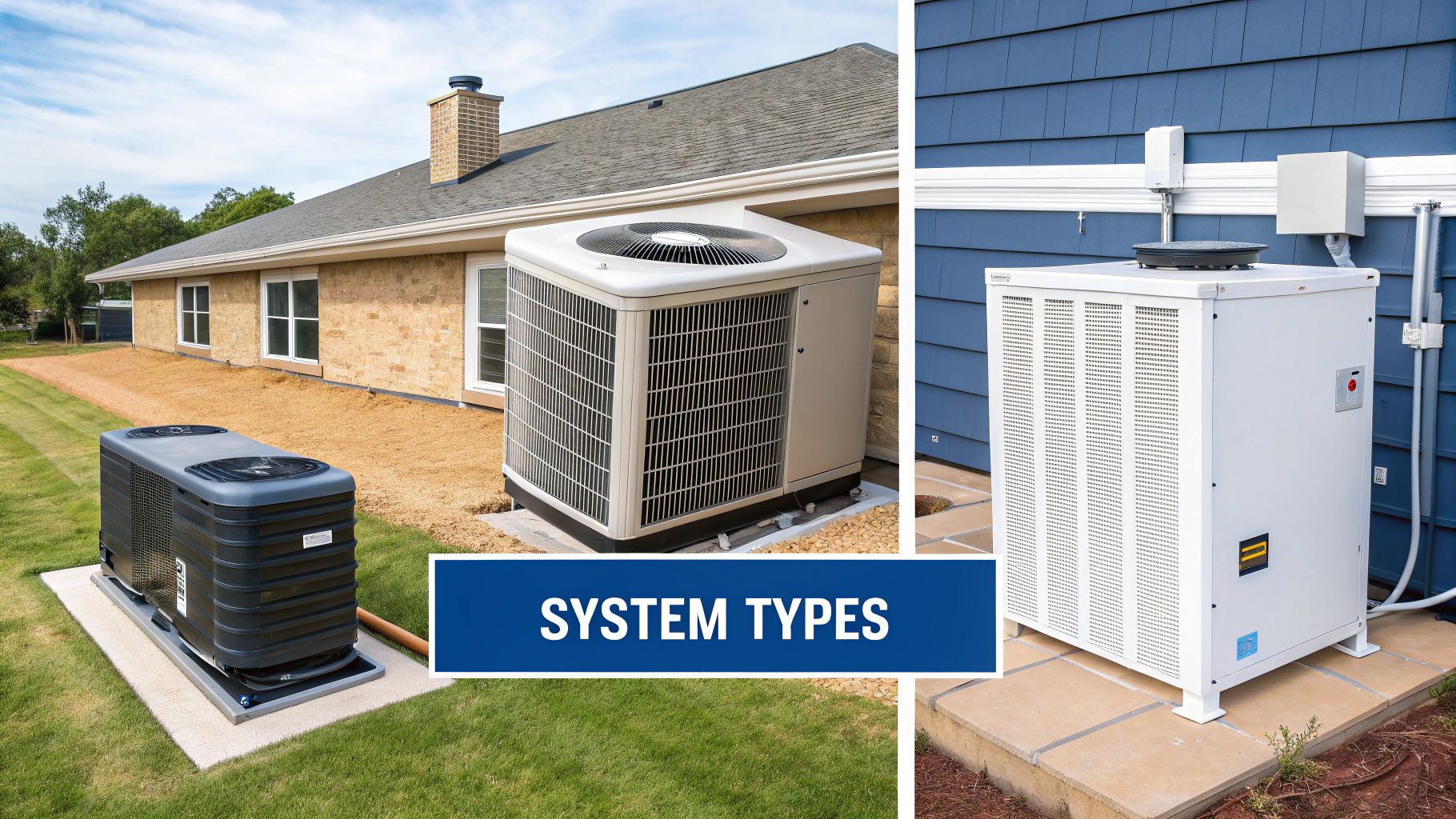
Split Systems: The Residential Standard
This is the system most people in the Phoenix area have. It’s called a "split" system because it's split into two main parts: an outdoor unit (the condenser) and an indoor unit (your furnace or air handler). The evaporator coil is tucked away inside that indoor air handler cabinet.
You'll usually find this cabinet in a utility closet, the garage, or up in the attic. Inside, the coil is often shaped like the letter 'A'—we call it an A-frame coil—which is a clever way to maximize the surface area that your home's air passes over as the blower fan pulls it through. This design is highly efficient for heat transfer, which is why it's so prevalent.
Packaged Units: The All-in-One Solution
You've probably seen these on the rooftops of businesses or sitting on a concrete slab next to a house. Unlike a split system, a packaged unit bundles all the major components—the evaporator coil, condenser, and compressor—into one large outdoor cabinet.
The main advantage of a packaged unit is its self-contained design. Air is pulled from the building into this single unit to be cooled, then pushed back inside through ducts. This means the evaporator coil is located right inside that main exterior box, which can simplify installation and maintenance for certain properties.
This design also keeps all the noisy mechanical parts outside, which is a nice bonus. Our team has extensive experience servicing these common rooftop units, ensuring they can stand up to the intense Arizona heat.
Ductless Mini-Splits: Zoned Cooling Power
Ductless mini-splits are the modern, hyper-efficient way to cool specific rooms or zones without needing any ductwork. In these systems, each indoor, wall-mounted air handler has its own compact evaporator coil built right inside. This setup delivers precise, powerful cooling directly where you need it.
They're perfect for Mesa home additions or remodels where trying to extend old ductwork would be a nightmare. Because the coil is right there in the room, the refrigerant gets to work immediately for some serious spot cooling. That's a lifesaver in Phoenix, where even a 73°F summer thermostat setting can push older central systems to their limits.
Knowing your system type is the first step, and if you want to geek out on how this technology is changing, you can check out these global market insights on coil design.
Warning Signs of an Evaporator Coil Problem
Knowing where your evaporator coil is tucked away is one thing, but spotting the signs of trouble is a whole different ballgame. Your air conditioner has a way of sending out little distress signals—some subtle, some not-so-subtle—when this key part is struggling. Ever wonder why your AC just can't seem to keep up on a hot day?
When you're dealing with weak cooling, weird noises, or puddles of water that shouldn't be there, the evaporator coil is often the prime suspect. Pushing these symptoms aside can lead to much bigger, more expensive repairs down the road. And nobody wants a full system meltdown during a Phoenix summer. Based on our experience with thousands of service calls, ignoring these signs is the fastest way to a preventable emergency.
Telltale Signs to Watch For
Does something just feel off with your air conditioner? You're probably onto something. Here are the most common red flags that point straight to a problem with the evaporator coil.
- Weak or Warm Airflow: If the air drifting out of your vents feels lukewarm or just doesn't have the "oomph" it used to, that's a classic symptom. A dirty or frozen coil acts like a roadblock, choking off the air that needs to pass over it to get cooled.
- AC Running Constantly: An inefficient coil just can't keep up. It forces your entire system to work harder and longer to cool your home. If your AC seems to run nonstop but never quite hits the temperature you set, the coil is likely forcing it into overtime.
- Hissing or Bubbling Noises: Strange sounds coming from your indoor unit are never good news. A distinct refrigerant leak often creates a hissing sound right at the coil. This is a serious issue that needs a professional’s attention right away.
- Water Pooling Near the Indoor Unit: Besides cooling, the coil pulls humidity out of the air, creating condensation that’s supposed to drain away harmlessly. If that drain line gets clogged or the coil freezes into a block of ice, the water has nowhere to go but all over your floor.
- Sudden Spike in Energy Bills: When the coil can't absorb heat the way it's supposed to, your AC has to run longer cycles to compensate. All that wasted energy shows up as a nasty surprise on your next utility bill.
A very common sign we see is a coil literally covered in a sheet of ice. This can be caused by anything from a clogged filter to low refrigerant. You can learn more about the causes in our guide on why your AC is freezing up.
How to Safely Inspect Your Evaporator Coils
If you think something’s off with your AC, a quick peek inside can sometimes tell you a lot. But before you even think about touching a single screw, we need to talk about safety. It’s the only thing that matters.
Let me explain the right way to do a basic visual check without putting yourself at risk. This is the same process our certified technicians follow before beginning any diagnostic work, ensuring safety for both our team and your home.
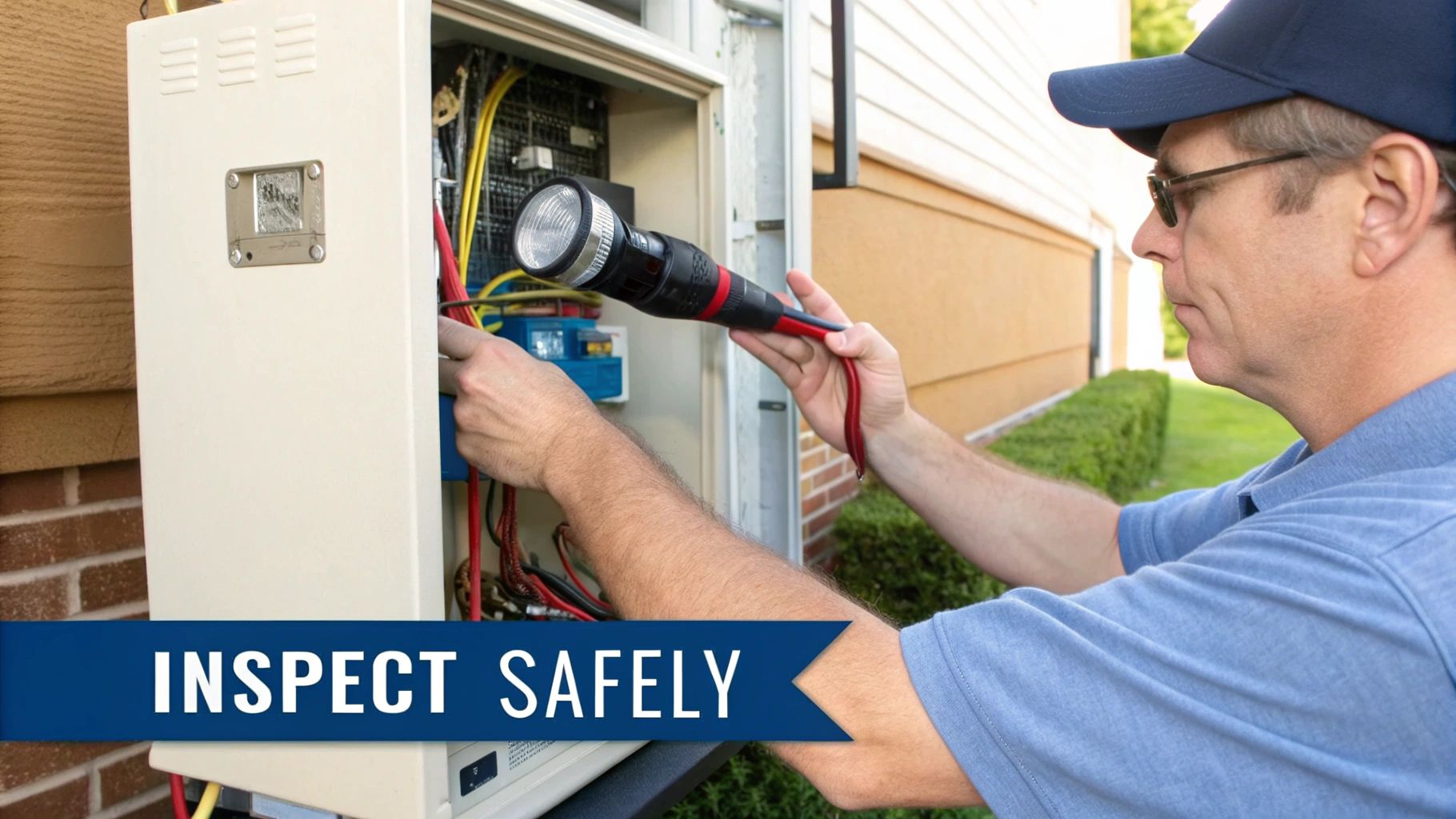
First Things First: Shut Off the Power
This is the most critical step, and it is absolutely non-negotiable. Find your home’s main electrical panel—the breaker box—and locate the circuit breaker for your furnace or air handler. Flip it to the "OFF" position.
Some systems also have a separate power switch right on or next to the indoor unit. If you see one, turn that off, too. This double-check ensures there’s zero electrical current flowing to the unit while you have the panels off.
Warning: Never, ever try to inspect your HVAC system without killing the power at the breaker first. Touching live electrical components can cause serious injury or even death.
Once you’re positive the power is off, you can carefully take off the access panel on your indoor air handler, which usually just involves removing a few screws. With the panel off, look for these classic signs of trouble:
- A thick blanket of dust: If the coil looks like a fuzzy gray sweater, it’s choking off airflow and killing your efficiency.
- Visible mold or mildew: Dark, splotchy spots mean you’ve got an underlying moisture and drainage problem.
- Ice buildup: A frozen coil is a dead giveaway that you have an airflow restriction or a refrigerant issue.
- Signs of corrosion: Rust or crusty buildup can eat away at the delicate metal fins and lead to leaks.
A quick visual check like this arms you with good information. But if you spot any of these problems, it’s time to call in a professional. For more ways to keep your system humming along, check out these essential AC maintenance tips for Arizona residents.
Why Coil Cleaning and Repair Is a Job for the Pros
Honestly, while a curious homeowner can certainly take a peek at their evaporator coil, any actual hands-on cleaning or repair work is a job best left to a trained professional. It’s not just about having the right tools or cleaners; it’s about avoiding costly mistakes and some pretty serious safety risks. We built our reputation at Comfort Experts on doing things the right way, protecting our customers' investments and safety.
Trying to DIY a coil cleaning might seem like a smart way to save a few bucks, but it can backfire in a hurry. What seems like a simple task can quickly turn into a complex and expensive problem if not handled with expert care.
The Dangers of DIY Coil Maintenance
First off, those thin metal fins on the coil are incredibly delicate. They’re usually made of aluminum and can bend or get crushed with just a little too much pressure from a scrub brush or a high-powered hose. Once those fins are bent, they block airflow—which completely defeats the purpose of cleaning them and puts a huge strain on your system’s blower motor.
Beyond the physical fragility of the coil, you’ve got chemical and electrical hazards to worry about. Using the wrong cleaning solution is one of the most common and disastrous mistakes we see.
Many household cleaners or generic chemicals you find at the hardware store are far too acidic or alkaline for evaporator coils. These harsh substances can literally eat away at the aluminum and copper, leading to refrigerant leaks—a problem that’s a whole lot more expensive than a simple cleaning service.
Here’s the thing: the risks far outweigh the potential savings. Here’s a quick rundown of the main risks you’re looking at:
- Handling Refrigerant: The refrigerant circulating through the coils is a federally regulated substance. Without an EPA certification, it is flat-out illegal for an individual to handle or dispose of it. A licensed technician knows how to manage these chemicals safely and according to environmental laws.
- Electrical Hazards: Even with the power shut off at the breaker, HVAC systems have capacitors that can hold a dangerous electrical charge. A pro knows how to safely discharge these components before starting work, which is critical for preventing a nasty electrical shock.
- Specialized Equipment: We use tools you just can’t find at a big-box store. Things like fin combs to gently straighten bent fins, low-pressure sprayers, and specific pH-neutral, foaming coil cleaners that are designed to work deep without causing any damage.
When you spot trouble, the smartest move is to step back and let an expert take the wheel. To get a better sense of what can go wrong with an AC, you might want to read our article on common AC repairs in Arizona. A professional tune-up gets the job done right, protecting your investment and making sure your system is ready for the brutal summer ahead.
If your own inspection turned up a problem, or you just want to make sure your system is running at its absolute best, the team at Comfort Experts is here to help. Our technicians have the training, tools, and real-world experience to handle your evaporator coils safely and effectively. Give us a call at 480-207-1239 or schedule service online for a thorough, professional cleaning and inspection today.