
Ever found yourself staring at a wall vent, wondering, "where is the air conditioner filter?" Honestly, it's a question we at Comfort Experts hear all the time, and the good news is, the answer is usually hiding in plain sight. This simple component is the unsung hero of your home, acting as the first line of defense against the dust and allergens that plague our air, especially during monsoon season. Keeping it clean has a massive impact on your AC's efficiency and the quality of the air you breathe every single day.
Finding Your AC Filter Without the Headache
Knowing where to look is half the battle. For most central AC systems common in homes across the Phoenix Valley, the filter is typically tucked right inside the return air duct grille or in a dedicated slot on the air handler unit itself, often near the blower fan.
For folks here in Mesa dealing with our scorching summers, just spotting and swapping this filter every 1-3 months can slash your energy bills by up to 15%. You know what? A dirty filter forces your entire system to work overtime, and that's the last thing you want when it's 110 degrees outside. If you're curious about how this fits into the bigger picture of HVAC performance, some great market insights are available from resources like the Textile Value Chain.
The easiest way to start your search is to figure out what kind of system you have. That simple step will immediately narrow down the possible hiding spots.
A clean filter is one of the cheapest and most effective ways to protect your expensive HVAC equipment from strain and premature failure. It’s a small task with a huge return on investment for your comfort and wallet.
To make it even simpler, we put together this quick reference guide. Just identify your HVAC system type to pinpoint where your filter is probably located.
Common AC Filter Locations At a Glance
| System Type | Common Filter Location | What to Look For |
|---|---|---|
| Central Air & Heat | Wall or ceiling return air grille | A large, vented cover with tabs or latches. |
| Central Air & Heat | Inside the air handler or furnace | A slot or door on the unit, usually where the large return duct enters. |
| Ductless Mini-Split | Indoor wall-mounted unit | A hinged front panel that lifts or snaps open. |
| Window/Portable AC | Front or side of the unit | A slide-out or removable grille. |
Once you've zeroed in on the location using the table, you're just a few moments away from checking—and likely changing—that critical component.
A Practical Guide to Locating Filters in Different AC Systems
Okay, let's get down to it. Finding your air conditioner filter shouldn't feel like a treasure hunt. Once you know the common hiding spots for your specific system, checking it becomes a quick, simple chore. Let’s walk through the most frequent setups we see in Phoenix homes.
For the vast majority of houses with central air, your search will probably end at one of two places. The first and most obvious is the return air grille. This is that big, grated vent you see on a wall in a central hallway or maybe on the ceiling. You’ll usually spot small tabs or latches holding the cover in place. Just unclip those, and the grille will hinge down, revealing the filter sitting right behind it.
If it’s not there, your next stop is the indoor unit itself—the air handler or furnace. This is typically tucked away in a garage, attic, or utility closet. Look for a thin, slot-like cover on the side of the unit where the large return duct connects. This cover might be held on with a simple handle or a screw, and the filter just slides straight out. It's a good idea to have a flathead screwdriver handy just in case.
To make the search even easier, this flowchart breaks down the process visually.
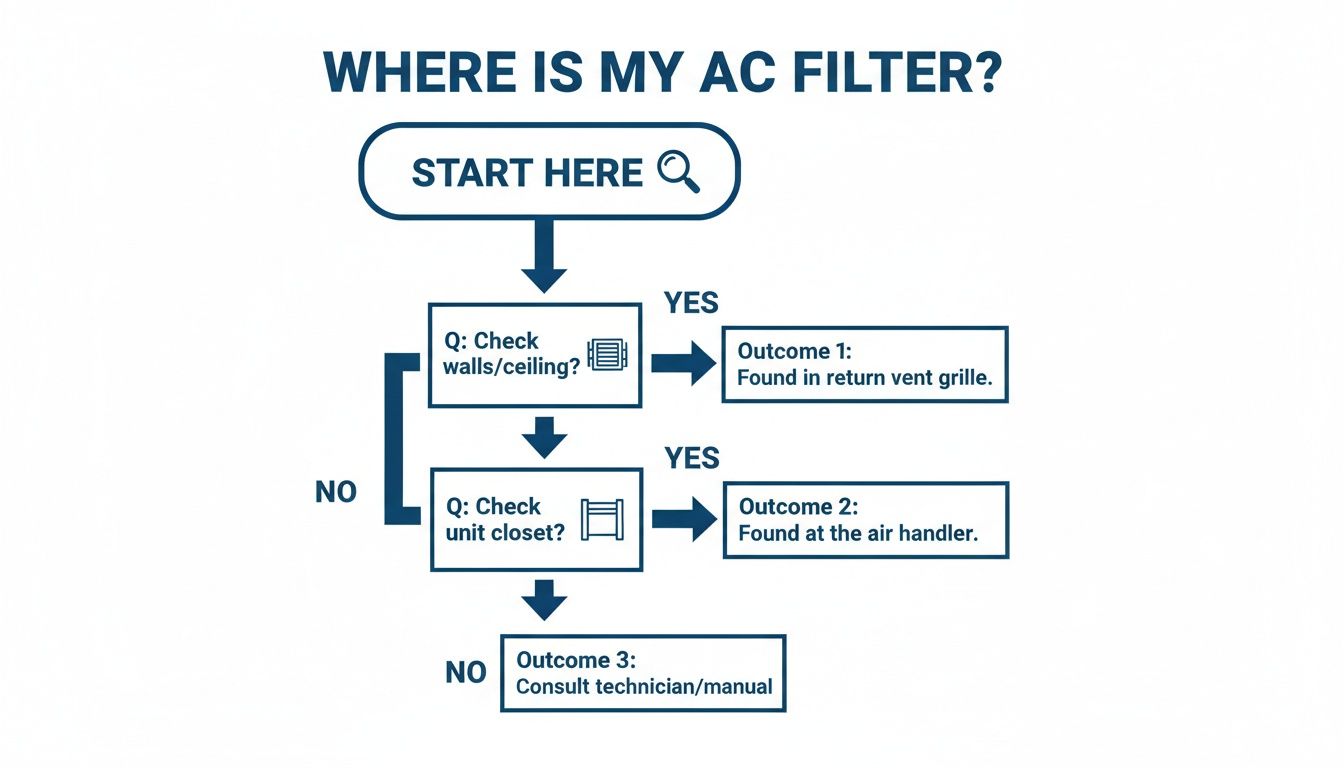
As you can see, a quick check of your walls and closets will solve the mystery for most central HVAC systems.
Locating Filters in Other Common AC Systems
What if you don't have a traditional central system? The process is just as straightforward, but the location changes.
-
Ductless Mini-Splits: These popular systems keep their filters inside the wall-mounted indoor unit. The front panel of the unit typically unclips and lifts right up. Inside, you'll find one or two thin, screen-like filters that you can easily slide out, clean, and pop back in. Because of their unique design, proper maintenance is key, and if you have questions, it can be a big help to learn more about professional ductless AC services in Mesa.
-
Window or Portable Units: For these smaller, self-contained units, the filter is almost always located right behind the front grille. You can usually slide the grille off or pop it open to get to a washable mesh filter. It's designed for quick access and regular cleaning.
Here's a pro tip from our years of experience: the filter's job is to be the first line of defense for air entering your system. If you follow the path of the air backward from your vents, you'll eventually find the filter guarding the entrance.
Why Your AC Filter Location Matters in Arizona
You'd be surprised how much the location of your air conditioner filter says about your system's needs, especially here in Arizona. Where that filter lives—whether it's staring you in the face from a hallway return grille or tucked away inside the air handler—directly impacts how often you need to be checking on it.
Think of it this way: a filter in a wall or ceiling return grille is on the front lines, catching the brunt of our dust storms and all the fine, powdery gunk they kick up. These filters will clog up much faster than one sealed inside an air handler in the garage or a closet, where it’s a bit more protected from the ambient dust.
Ignoring it is asking for trouble. Nationally, a staggering 70% of residential AC failures are tied back to clogged filters, which can also crank up your energy use by 25%. It's a small detail with huge consequences, which is why figuring out your filter's location is the first step in any real AC maintenance plan. You can find more details on these HVAC industry findings from Research and Markets.
The Role of MERV Ratings in Dusty Climates
The whole point of the filter is to trap airborne particles, and its muscle is measured by a MERV (Minimum Efficiency Reporting Value) rating. Simply put, the higher the MERV rating, the smaller the junk it can pull out of your air. In the Phoenix area, where dust and allergens are a year-round battle, picking the right MERV rating can completely change your indoor air quality.
A cheap, standard fiberglass filter might have a MERV rating of 1-4. That’s okay for stopping large dust bunnies and not much else. But a pleated filter with a MERV rating of 8-13 will capture much more, including stuff like:
- Pollen
- Pet dander
- Mold spores
- Dust mite debris
For families with allergies or breathing sensitivities, upgrading to a higher-rated filter isn't a luxury—it's a necessity for feeling comfortable in your own home. For more specific local advice, check out our guide on AC maintenance tips for Arizona residents.
"I once visited a home where the family couldn't figure out why their allergies were so bad indoors. We found a five-year-old, rock-solid filter completely choked with dust inside their air handler. A simple filter change and a duct cleaning made an immediate difference for them."
– A Comfort Experts Technician
How to Choose the Right Replacement AC Filter
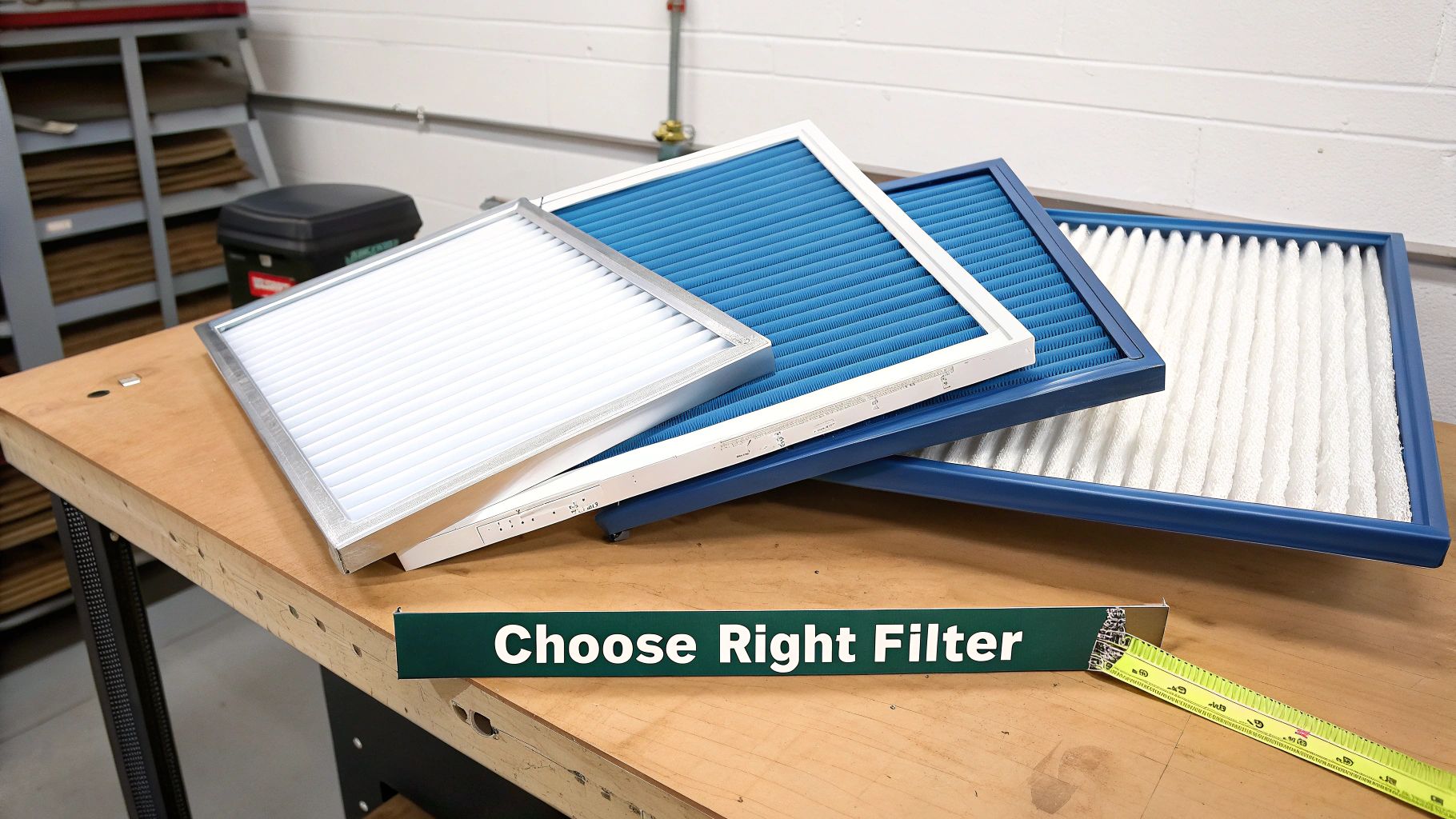
Here’s the thing, once you find the filter, the next challenge is picking the right replacement. This isn't just about grabbing one that looks right—choosing incorrectly can restrict airflow, forcing your AC to work way harder than it should.
Your first move is always to check the filter’s size.
The dimensions are almost always printed right on the cardboard frame of the old filter. Look for a series of numbers like 20x25x1. Those are the length, width, and depth (thickness) in inches. Simple as that.
If the numbers are faded or missing, no problem. Just grab a tape measure and get the length, width, and depth yourself. Jot them down so you get a perfect fit when you’re at the store.
Choosing Your Next AC Filter
Not all filters are created equal, and the best one for your Phoenix home depends on your air quality needs, your budget, and how often you're willing to swap it out. A filter’s effectiveness is measured by its MERV rating (Minimum Efficiency Reporting Value)—the higher the number, the more it traps.
To help you decide, here is a breakdown of the most common options we see in local homes.
| Filter Type | Typical MERV Rating | Best For | Replacement Frequency (Phoenix) |
|---|---|---|---|
| Fiberglass | 1-4 | Basic filtration of large debris like dust and lint. Prioritizes airflow over particle capture. | Every 30 days due to high dust levels. |
| Pleated | 6-13 | Capturing smaller particles like pollen, pet dander, and mold spores. A great balance for most homes. | Every 60-90 days, depending on rating and home conditions. |
| HEPA | 17-20 | Capturing 99.97% of airborne particles. Ideal for homes with severe allergies or respiratory issues. | Every 6-12 months, but check your system's compatibility first. |
A higher MERV rating provides better filtration, but it can also restrict airflow if your system isn't powerful enough to handle it. For most homes in our area, a pleated filter with a MERV rating between 8 and 11 is the sweet spot.
Understanding how often you should change air filters in our dusty climate is one of the easiest ways to keep your system running efficiently and your air clean.
Warning Signs and When to Call a Professional
Pulling out your old AC filter is a great DIY win, but sometimes what you find is a sign of a bigger problem lurking inside your system. Knowing how to read the clues can save you from a much bigger headache—and a much bigger repair bill—down the road.
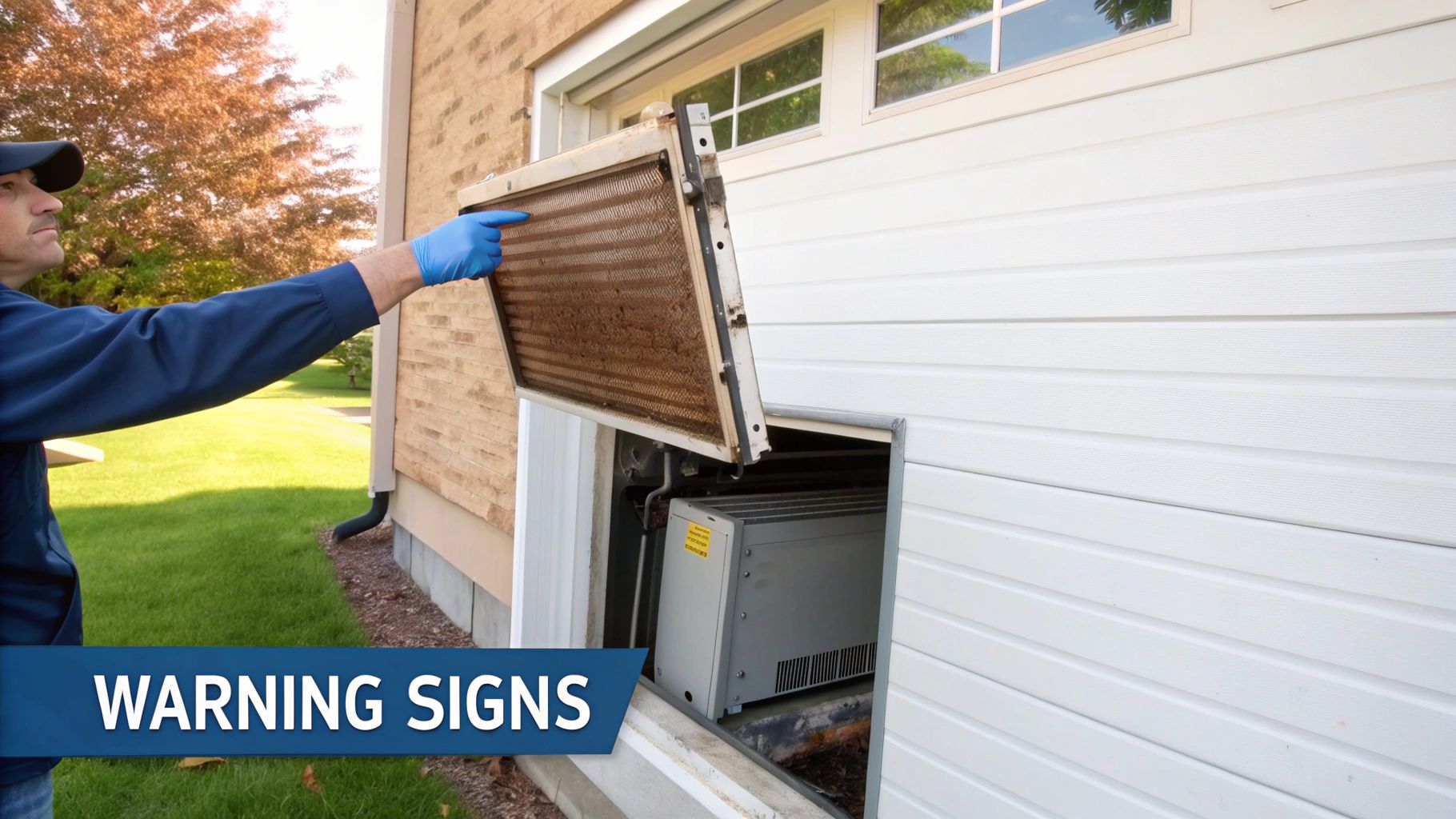
A filter that's just covered in dust is normal. But if you see anything more serious, it’s time to pause before sliding that new filter in.
Red Flags to Watch For
If you notice any of these issues when you go to change your filter, it's a signal that a new filter alone won't solve the real problem.
- A Bent or Damaged Filter Frame: This is a classic sign that the filter was either the wrong size or was jammed in forcefully. A poor fit is bad news because it lets dusty, unfiltered air sneak around the edges and get into your system's sensitive components.
- Signs of Moisture or Mold: Is the filter damp? Do you see dark, spotty discoloration on it or in the surrounding housing? This is a serious red flag. It often points to a clogged condensate drain line or a problem with your evaporator coil.
- Excessive Debris Beyond Dust: Finding chunks of insulation, drywall dust, or other weird debris is a bad sign. It often means you have leaky or damaged air ducts that are pulling junk in from your attic or walls.
These are just a few of the things a clogged filter can be hiding. For a deeper dive, our article on the 5 common signs you need AC repair in Mesa can give you even more to look out for.
Think of your air filter as the "check engine" light for your HVAC system. Ignoring what it's telling you can turn a small, fixable issue into a costly, system-wide failure.
While most homeowners in the U.S. replace their filters 4-6 times a year, about 40% skip this simple task, leading to a 10-15% loss in efficiency. Since we at Comfort Experts started serving the Phoenix area back in 2011, we’ve found that over 60% of our service calls are tied back to filter-related neglect. You can learn more about how different filter types impact system performance from industry sources like Allied Market Research.
Your Next Step to Cleaner Air and a Healthier AC
Changing your AC filter is one of the easiest and most important things you can do to keep your system running at its best. It’s not just about preventing dust buildup—a fresh filter genuinely helps slash your energy bills during our brutal desert summers.
If you’ve ever found yourself asking, “where is my air conditioner filter?”, you now know exactly where to look.
Beyond the Basic Filter Swap
Truly clean air involves more than just swapping out a filter every so often. A healthy home environment is about a bigger picture. For more on that, you can explore these general house cleaning tips for ideas that go hand-in-hand with good HVAC care.
A clean filter isn't just a minor tweak; it can slash your AC's energy use by up to 15% and add years to its lifespan.
A Few Quick Maintenance Habits
As you get into the routine, keep these simple checks in mind:
- Give the filter frame a quick look for cracks or damage that could cause air leaks.
- Glance at your vents to make sure they aren't blocked by furniture or debris.
- Set a recurring reminder on your phone or calendar—it’s the easiest way to track changes.
If you’d rather have an expert handle the check-ups and keep your system in top shape without the hassle, our Maintenance Plan Benefits are designed to do just that.
Keeping that filter fresh is your first line of defense, so make it a habit year-round.
Still Have Questions? We've Got Answers
We've walked through the basics, but it's the little details that often trip people up. Here are a few of the most common questions we get from homeowners right here in the Phoenix area.
How Often Should I Really Change My AC Filter in Phoenix?
That old "every 90 days" advice you hear online? It doesn't fly here in the desert. Our dust is on another level.
For a basic fiberglass filter, you need to be checking it every 30 days, especially when the dust storms kick up. If you've got a better pleated filter (MERV 8 or higher), you can usually stretch that to 45-60 days.
But remember, that's just a starting point. You'll need to change it more often if you have:
- Pets that shed. All that fur and dander clogs things up fast.
- Family members with bad allergies or asthma.
- Any construction or remodeling happening in your neighborhood.
What Happens if I Install My Air Filter Backward?
It’s a super common mistake, so don't feel bad if it happens. Every filter has a small arrow printed on its cardboard frame. That arrow must point toward your air handler or furnace, following the path the air travels.
Let me explain why this is a bigger deal than you'd think. The filter won't catch much of anything, and worse, it chokes your system. The restricted airflow puts a ton of strain on the blower motor, which can spike your energy bills and lead to some pretty expensive repairs. We’ve even seen backward filters collapse and get sucked right into the ductwork.
A backward filter doesn't just work poorly; it actively works against your HVAC system. Always double-check that the airflow arrow is pointing in the right direction before you slide it into place.
Is a Higher MERV Rating Always Better?
Nope, and this is a big one. It's tempting to grab the highest number on the shelf, but that can backfire.
A super-high MERV filter (think 13 or more) is amazing at catching tiny particles, but it's also incredibly dense. If your HVAC system wasn't designed for that much resistance, it's like forcing it to breathe through a coffee straw. It struggles, works way too hard, and can't move enough air to cool your home properly.
For most homes in our area, a MERV rating between 8 and 11 is the sweet spot. It gives you fantastic filtration without starving your system for air.
At Comfort Experts, we believe an informed homeowner is a happy homeowner. If you've swapped out your filter and your AC is still struggling, don't hesitate to give us a call. Our team is here to give you honest answers and solutions that actually work.
You can reach us at 480-207-1239 or schedule service online to get your system back in top shape.