
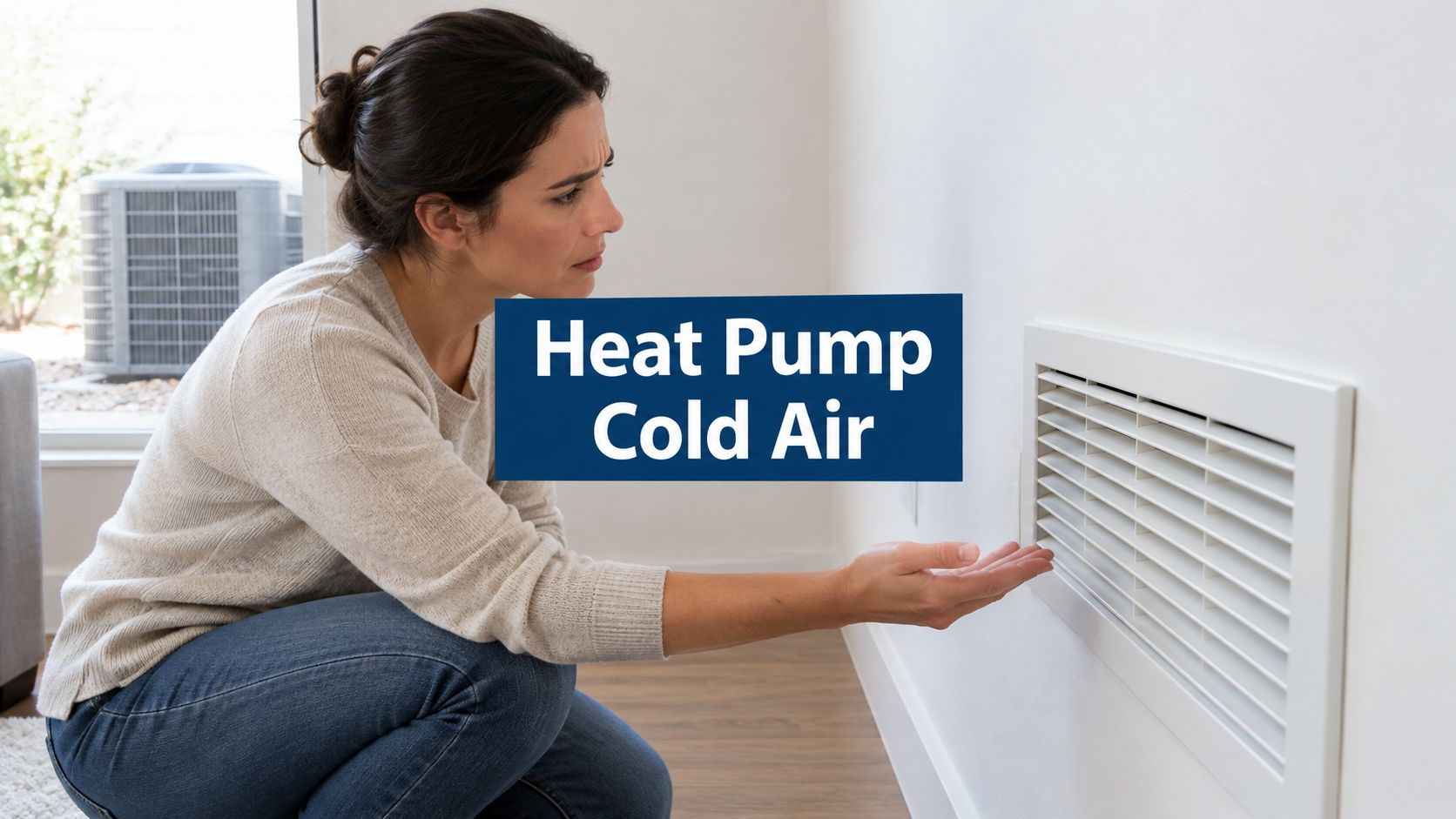
A Mesa homeowner sets the thermostat to Heat, feels cool air at a vent, and wonders whether the system has switched to cooling. A brief change in air temperature can be normal during startup or defrost; continuous cold airflow needs attention. The useful clues are how long it lasts, what the outdoor unit is doing, and whether the thermostat eventually reaches its set temperature.
For East Valley homeowners, the next step isn't to guess at a failed part. It's to record what the system is doing, check a few settings without opening equipment, and know when to stop observing and call a technician.
Why Heat Pumps Can Blow Cold Air
A heat pump can blow air that feels cool for two very different reasons. During a brief startup or defrost cycle, the system may temporarily deliver cooler air while it changes operating mode. If cool air continues and the home doesn't warm, the cause may instead involve thermostat settings, restricted airflow, backup heat, controls, or the refrigerant circuit.
That distinction matters because heat pumps don't deliver heat exactly like furnaces do. Supply air may feel less warm than furnace air even when the system is heating the home. The thermostat's room-temperature reading offers useful context: if that reading is rising toward the setpoint, the system may be working despite a cool sensation at the vent.
Comfort Experts is a locally owned Mesa HVAC company, and this guide uses an observation-first approach for homeowners and property decision makers in the East Valley. The goal is to distinguish a short, explainable change from a pattern that calls for professional diagnosis, without asking anyone to open or test equipment.
Homeowners comparing different heat delivery options may also find it helpful to check designer radiator heat pump performance. Radiator output and heat-pump supply air aren't the same measure, so that comparison shouldn't be treated as a diagnosis of a home's system.
How Heating and Defrost Cycles Work
A heat pump moves heat rather than creating it in the same way a furnace does. In heating mode, the outdoor coil absorbs heat from the outside air. Refrigerant carries that energy indoors, where the indoor coil releases heat into the air moving through the home. A plain-language guide from Comfort Experts on heat pumps describes this basic heating process.
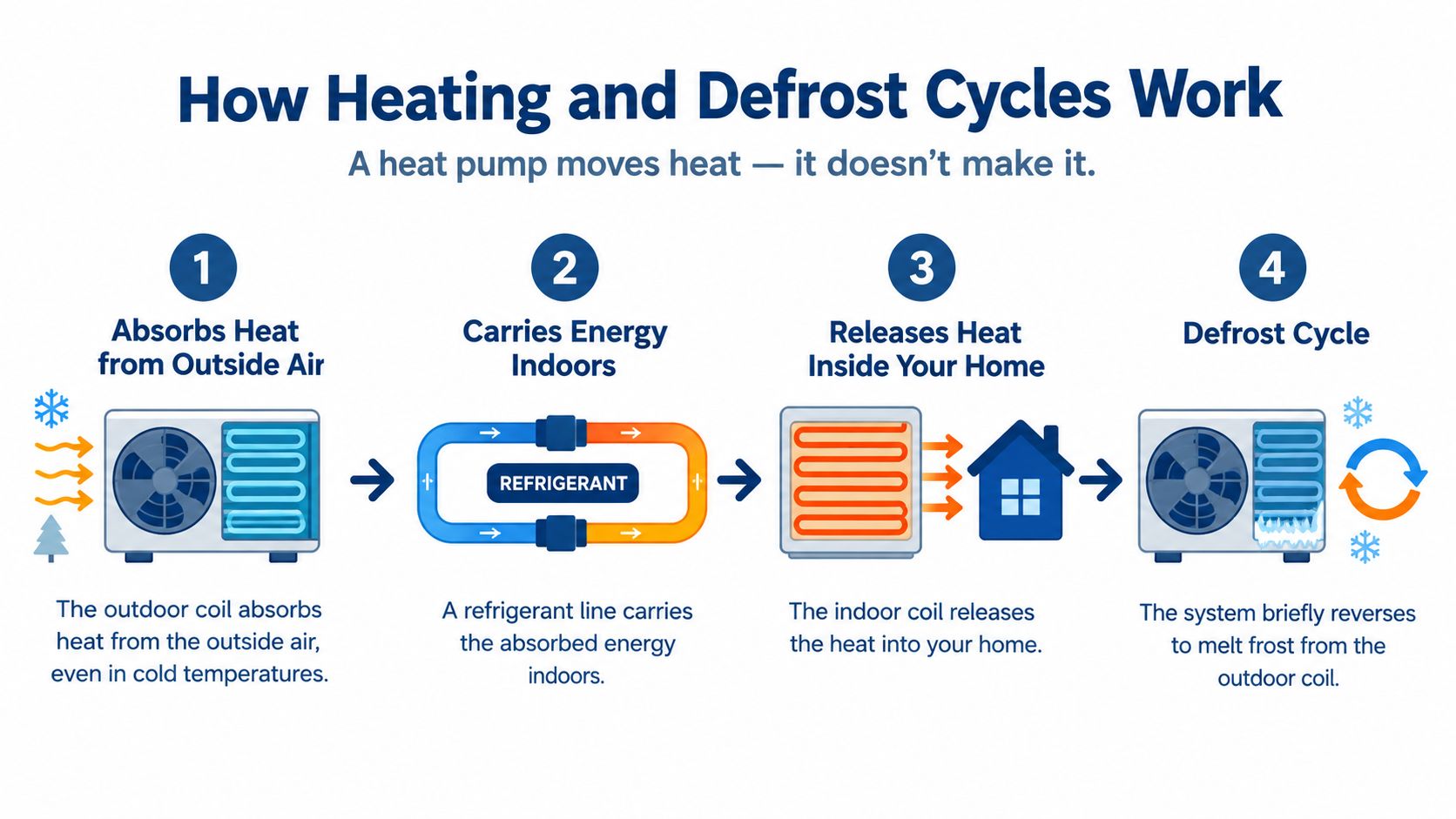
In cold, damp conditions, moisture can freeze on the outdoor coil. Frost interferes with airflow and heat transfer, so the system may briefly reverse refrigerant flow and send hot refrigerant through the outdoor coil to melt the ice. This is the defrost cycle. Think of a reversible conveyor belt: it changes direction briefly to clear the outdoor coil, then returns to carrying heat indoors. The U.S. Department of Energy describes defrost as necessary when moisture freezes on the coil and explains that the heat pump reverses operation to warm it (DOE test documentation).
During defrost, the indoor coil isn't providing heat in its usual way, so the vents may deliver cooler air. Depending on the equipment and control strategy, the indoor fan may keep running and auxiliary heat may operate. The outdoor fan commonly stops while the unit melts frost; visible vapor may also appear as moisture clears.
A short cool-air episode that ends and is followed by normal heating isn't automatically a malfunction. The concern is a repeated or prolonged pattern, especially if heavy ice remains or the thermostat doesn't approach its set temperature.
Normal Operation Versus Fault Signs
A quick comparison can help homeowners decide what to observe next. These signs are screening clues, not a service diagnosis. Equipment, control settings, and weather affect what a normal cycle looks and sounds like.
| What to Observe | May Be Normal | Possible Fault Sign |
|---|---|---|
| Startup | Air initially feels cool, then becomes warmer as heating continues. | Cool airflow continues and the room temperature doesn't move toward the setpoint. |
| Defrost behavior | A brief change in air temperature; the outdoor fan may pause as the coil clears. | Repeated or prolonged cool-air episodes, or the system doesn't return to heating. |
| Duration of cool airflow | A short interval that ends, followed by normal heating. | Continuous cool air or repeated episodes that leave the home below the setpoint. |
| Outdoor-unit state | The outdoor fan temporarily stops during defrost and later resumes. | The unit remains inactive while cool air continues, or the outdoor coil stays heavily iced. |
| Thermostat display | Heat mode is selected, and the displayed room temperature trends toward the setpoint. | A different mode or fan setting is selected, or the thermostat repeatedly calls for heat without reaching temperature. |
| Auxiliary heat | The system may show an auxiliary-heat indication, depending on its controls. | The home stays cold during a heating call, or backup heat appears not to restore warmth when expected. |
The thermostat display and the change in room temperature can be more useful than judging the vent air by touch alone. For a closer look at how equipment type affects cold-weather operation, see this overview of cold climate heat pump performance.
Causes Behind Continuous Cold Air
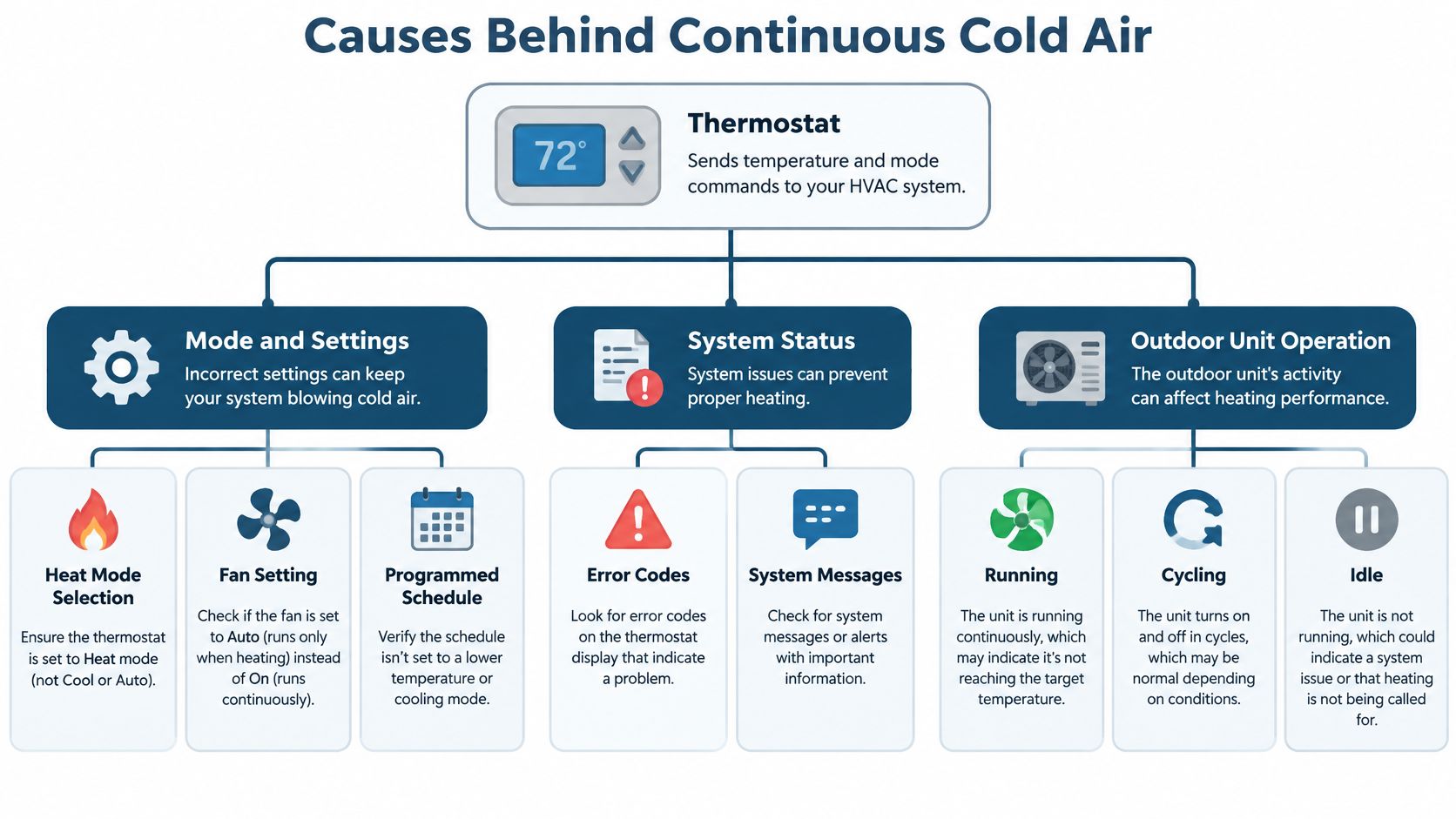
If cool air keeps coming, start with what the homeowner can observe. Check that the thermostat is set to Heat, review whether the fan is set to Auto or On, and look for a schedule or status message that might explain the current operation. Fan On can move air between heating cycles, which may feel cool even when the system isn't actively heating.
Next, note whether the outdoor unit is running, briefly pauses, or remains inactive while indoor air stays cool. A pause during a short defrost cycle can be normal. If heating doesn't return, or the thermostat keeps calling without warming the home, the pattern needs diagnosis rather than a guessed explanation.
Airflow, backup heat, and sealed-system problems
A heavily loaded filter, blocked return grille, closed registers, damaged ductwork, or indoor blower trouble can reduce airflow and interfere with heat delivery. Duct leakage can also let heated air escape before it reaches occupied rooms. For a homeowner, replacing a visibly dirty filter and opening supply and return grilles are reasonable observations and basic checks, but they won't fix every airflow fault. The National Institute of Standards and Technology's analysis of heat-pump installation faults identifies low airflow, duct problems, and refrigerant charge issues among faults that can degrade performance.
Auxiliary heat is intended to support comfort in certain operating conditions, including defrost, but whether it runs depends on system design and controls. If the heat pump runs while the home remains cool, the issue could involve backup heat, thermostat staging, airflow, or system capacity. A technician can check whether auxiliary heat operates when commanded rather than assuming it has failed.
Refrigerant undercharge or overcharge and a reversing-valve problem can also affect heating. Those are measured diagnostic issues. Don't add refrigerant based on cool air at a vent; a technician needs to check the system and identify the actual cause. Regular heat pump maintenance can help identify developing airflow or control concerns before they become a persistent comfort problem.
Run a Five-Minute No-Tools Check
This short observation sequence won't identify a failed part, but it can give a technician a clearer account of what happened. Keep the equipment closed and observe from safe, accessible locations.
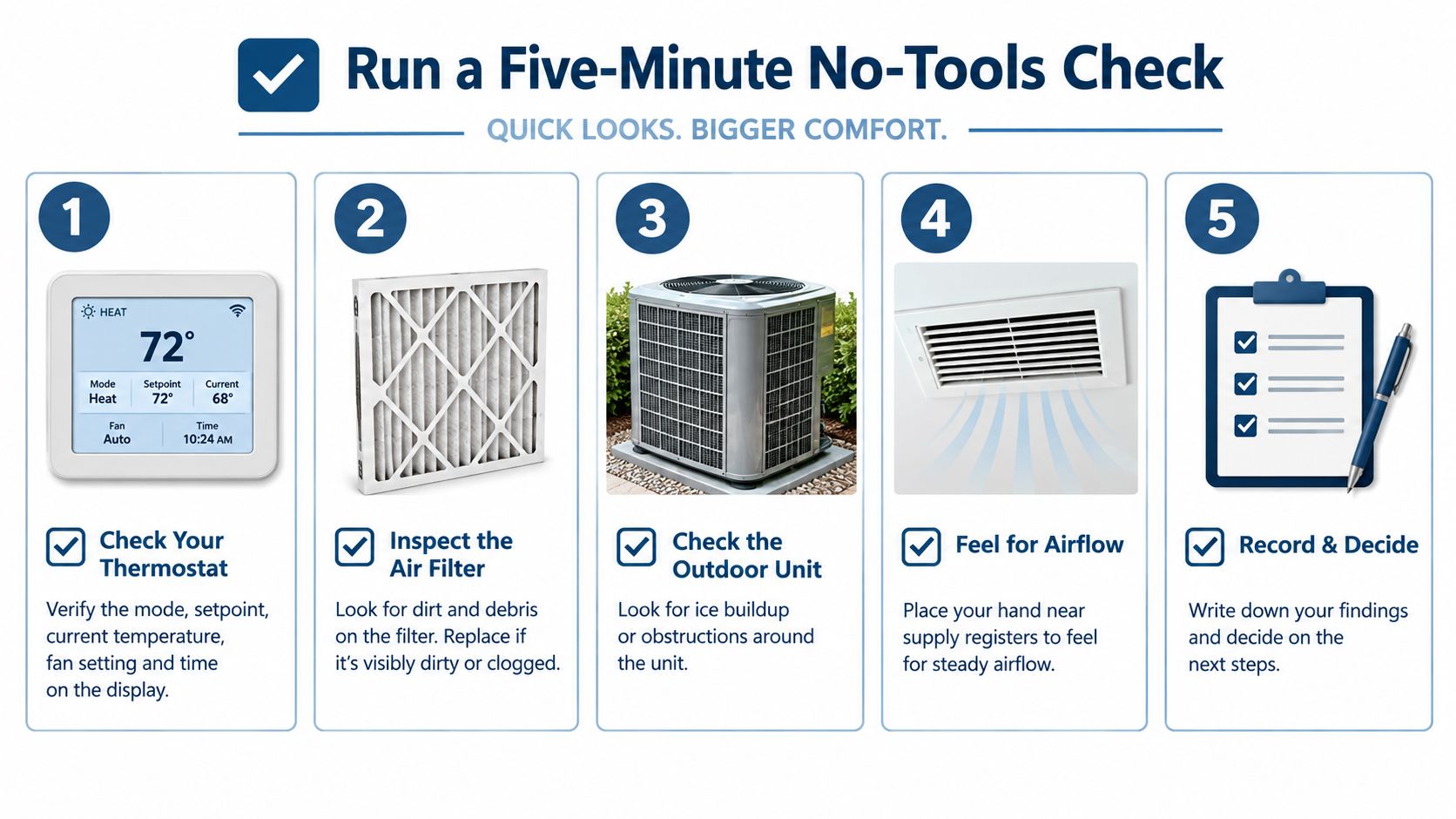
- Record the thermostat display. Write down the selected mode, setpoint, current temperature, fan setting, any status message, and the time. Confirm that Heat is selected.
- Note the indoor airflow. Check whether the indoor blower is running and whether air comes from the supply registers. Don't remove the filter or equipment panels during this observation.
- Listen from a safe position. Note whether the outdoor unit is running, quiet, or changing sound. Stay clear of the unit and don't touch its casing or wiring.
- Look from ground level. Note visible debris or heavy ice around the outdoor unit without reaching inside, climbing, or trying to chip ice away.
- Record what changes. Write down when cool air starts and ends, whether the thermostat display changes, whether auxiliary heat appears to activate, and whether warm air returns before the observation ends.
The point is to provide a symptom log, not a remote diagnosis. If the thermostat is unfamiliar, a matching manufacturer controller reference, such as a page to find AKB73757604 controller, may help identify which control is in use. It won't determine whether the system is heating correctly.
Know When to Stop Troubleshooting
A five-minute observation is enough to gather clues, not a reason to wait through persistent cold airflow or heavy icing. Stop and seek professional help if the home loses heat, the outdoor coil remains heavily iced, the system repeatedly shuts down, or the thermostat continues calling without a return to normal heating.
Don't reset a tripping breaker repeatedly, remove equipment covers, probe electrical connections, handle refrigerant lines, or chip ice from the coil. Keep away from damaged wiring, electrical parts exposed to water or ice, smoke, a burning odor, or unusual mechanical noise. For an immediate electrical hazard or smoke, leave the area and contact the appropriate emergency service.
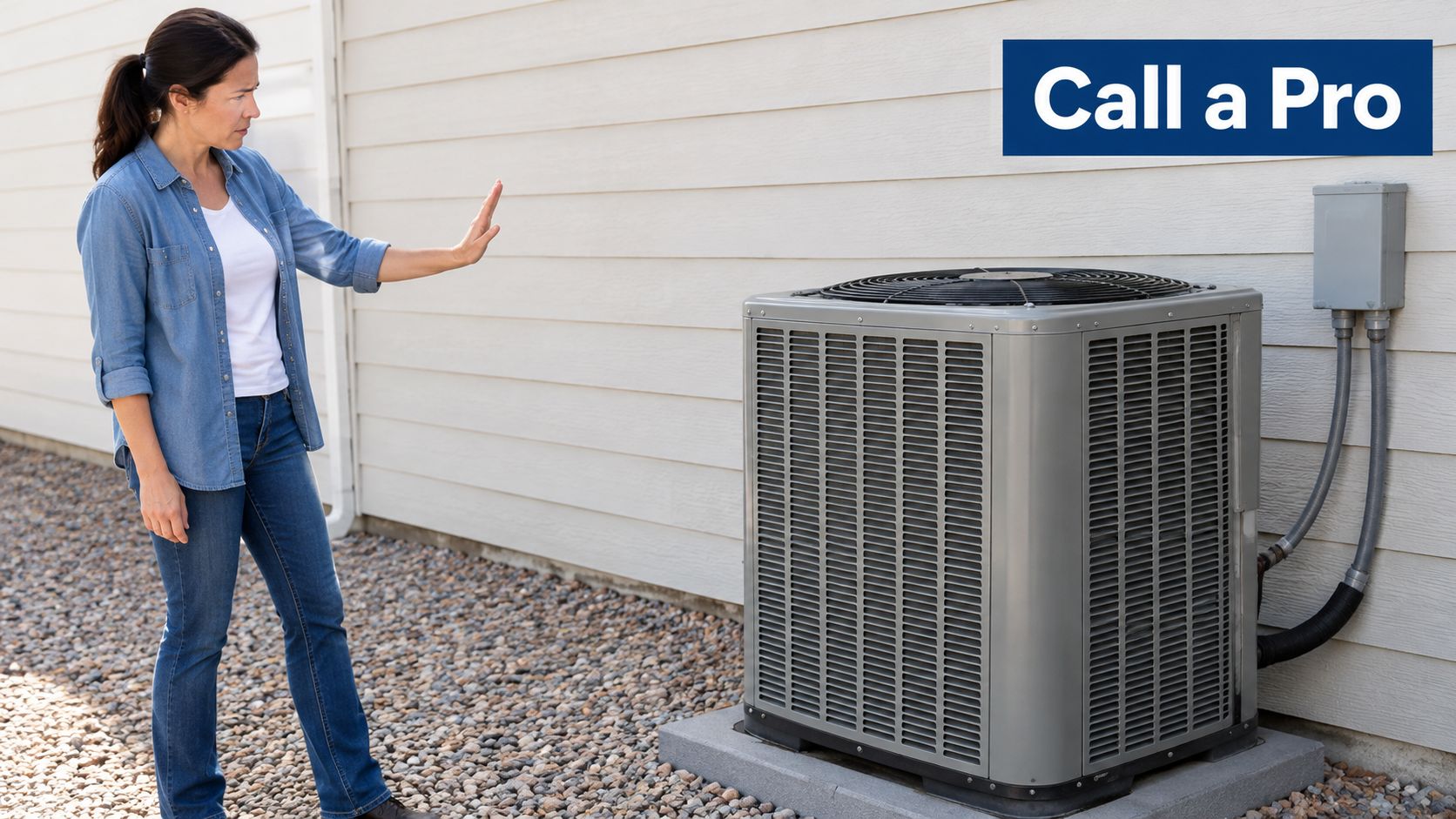
If the system has a gas-furnace backup, stop if there's a suspected combustion problem or the furnace produces unusual burning odors or sounds. Don't attempt to inspect the burner or open the furnace. A technician can check the controls, sensors, airflow, electrical operation, refrigerant circuit, reversing-valve behavior, and auxiliary heat without relying on guesswork.
For persistent symptoms, heat pump repair in Mesa is the relevant next step. A brief cool-air episode that ends is different from a system that stays cold, stays iced, or never satisfies the thermostat.
Choose the Right Next Step
If the air felt cool briefly but the system returned to heating and the thermostat temperature moved toward its setpoint, record the pattern and consider routine maintenance. If a filter looks dirty, replacing it with the correct type and keeping grilles open are reasonable homeowner steps. They aren't a substitute for diagnosis if the symptom continues.
Arrange professional evaluation when cool air persists, defrost cycles seem repeated or prolonged, ice doesn't clear, auxiliary heat doesn't restore warmth when expected, or the thermostat keeps calling without reaching temperature. A technician can determine whether the problem calls for a repair or whether a broader evaluation of the equipment and home is appropriate. For general context on air conditioning in humid climates, improve AC performance in humid climates, though that guidance isn't a diagnosis of a heat-pump fault in Arizona.
For a system-specific assessment, heat pump service in Mesa connects homeowners with Comfort Experts' local HVAC service. The useful decision is straightforward: observe a short episode that resolves, but request professional diagnosis for persistent cold airflow, lasting ice, or no heat.
Comfort Experts helps Mesa and East Valley homeowners diagnose heat-pump comfort problems and choose the appropriate next step. Call 480-207-1239 or schedule service to discuss the symptoms and request an assessment.