As the temperatures in the Phoenix Valley dip, a reliable furnace shifts from a luxury to a necessity. Knowing the signs your furnace needs repair can save you from costly breakdowns and keep your family safe and warm all winter long. Honestly, catching problems early is the key to avoiding a chilly, middle-of-the-night surprise.
Your furnace often communicates issues through subtle, and sometimes not-so-subtle, warnings long before it fails completely. Ignoring a strange rattle, a spike in your utility bill, or uneven heating in your Mesa home can turn a minor fix into a major, expensive replacement. Think of your furnace like a car; unusual noises and poor performance are its way of asking for a check-up before you're left stranded in the cold.
This guide is designed to empower you, the homeowner, to decode these signals. We will walk through the eight most common indicators that your furnace needs professional attention, from odd sounds and smells to performance issues. For each sign, we’ll explain potential causes, provide quick DIY troubleshooting steps you can safely perform, and outline when it's crucial to call in a certified technician from a trusted company like Comfort Experts. This knowledge will help you make informed decisions, ensuring your home remains a comfortable sanctuary.
1. Strange Noises or Loud Banging Sounds
A healthy furnace should operate with a gentle, consistent hum in the background. When that hum is replaced by a symphony of bangs, rattles, or squeals, it’s one of the most direct signs your furnace needs repair. These aren’t just minor annoyances; they are auditory warnings of underlying mechanical problems that can range from simple fixes to severe safety hazards.
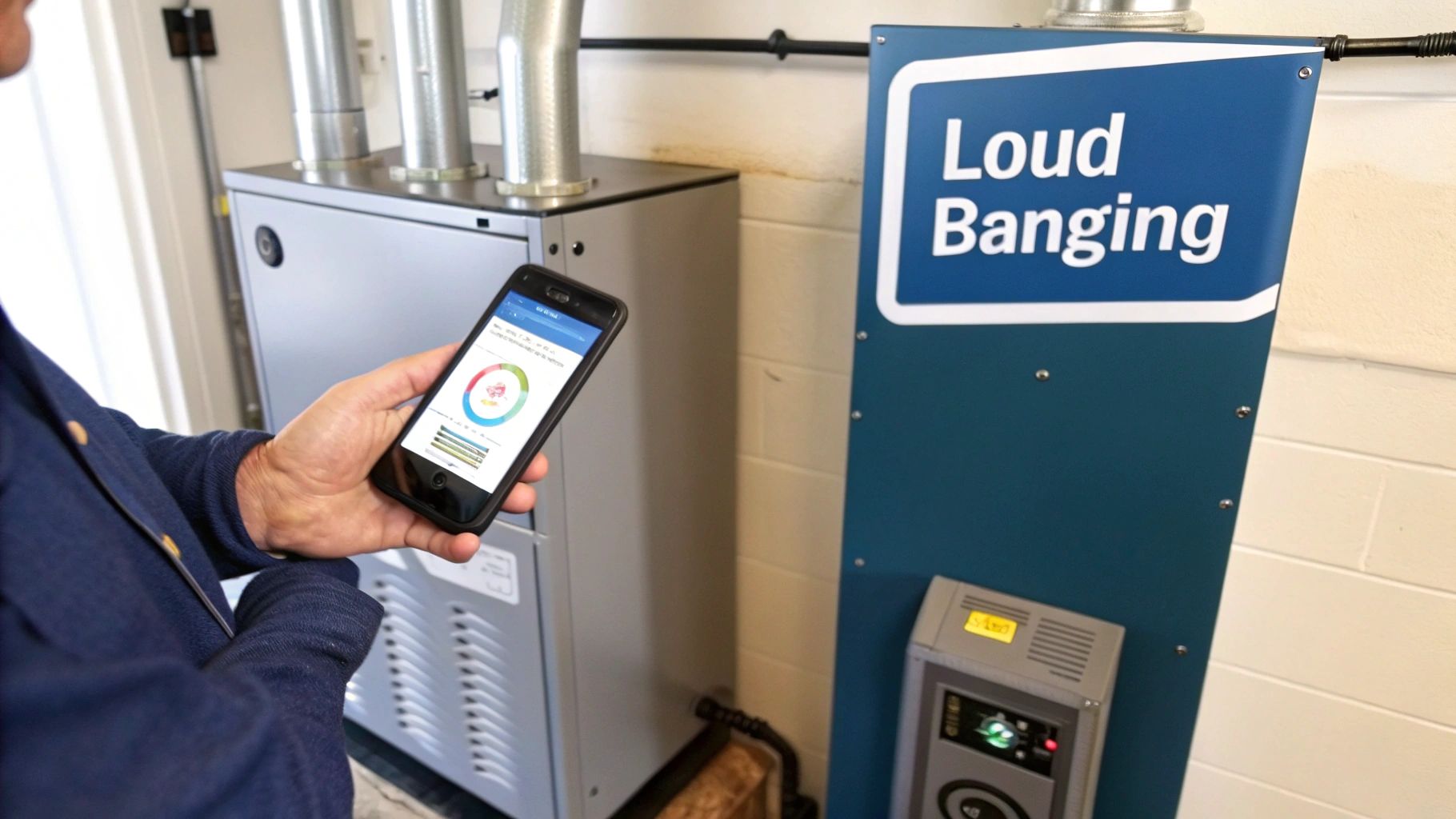
Here’s the thing: ignoring these sounds is a gamble. A loud bang or pop, especially at startup, often points to delayed ignition. This is a dangerous condition where gas accumulates inside the combustion chamber before igniting with a mini-explosion, placing unnecessary stress on the heat exchanger. Over time, this can lead to a crack, which is a serious carbon monoxide risk. As HVAC professionals with over a decade of experience in the Phoenix Valley, we've seen firsthand how a small noise can escalate into a major safety concern.
What Different Furnace Noises Mean
Understanding the sound can help you gauge the urgency of the problem. While these are common culprits, only a certified technician can provide an accurate diagnosis.
- Banging or Booming: As mentioned, this often signals a dirty burner or ignition issue. For a Phoenix Valley homeowner hearing this at startup, it's a clear indicator that the burner assembly needs professional inspection.
- Rattling: This sound could be something as simple as a loose access panel or ductwork. However, it can also indicate a failing motor or a cracked heat exchanger, especially in older furnaces.
- Squealing or Screeching: High-pitched sounds typically point to problems with moving parts, such as a worn-out blower motor bearing or a slipping belt. Left unaddressed, this can lead to total motor failure. While some noises are similar to those your AC might make, their root causes in a furnace are unique. You can learn more about decoding HVAC sounds to better understand what your system is telling you.
What You Should Do
If your furnace starts making unusual noises, don’t attempt a DIY repair, as many of these sounds are linked to safety components. Instead, record the noise with your smartphone to help our technicians understand the issue and call for a professional inspection immediately.
2. Inconsistent or Weak Heating Output
When your furnace is running but the air coming from your vents feels lukewarm at best, or some rooms feel like a sauna while others are icy cold, you're dealing with a classic heating problem. This inconsistent or weak output is more than just a comfort issue; it's a clear signal that your system isn't distributing heat effectively and is one of the most common signs your furnace needs repair. Ignoring it can lead to higher energy bills and accelerated wear on your system.
Let me explain: your furnace is designed to deliver consistent, powerful heat. When it fails to do so, the culprit could be anything from a simple airflow blockage to a more serious malfunction like a failing blower motor or even gas supply issues. For homeowners in the Phoenix Valley, where winter nights can bring a surprising chill, having reliable heat is crucial for comfort and preventing your system from overworking.
What Causes Uneven or Weak Heat
Several factors can cause your furnace to underperform. While some are easy fixes, others demand immediate professional attention to avoid costly damage or safety risks.
- Blocked Airflow: This is the most common cause. A severely clogged air filter, blocked vents, or obstructed ductwork can significantly reduce the amount of warm air circulating through your home.
- Thermostat Malfunctions: An improperly calibrated or failing thermostat can misread the room's temperature, telling your furnace to shut off before the space is adequately heated.
- Blower Motor Issues: The blower motor is the heart of your furnace's distribution system. If it's failing or its capacitor is weak, it won't be able to push enough warm air to reach every room effectively.
- Ductwork Problems: Leaks, disconnects, or poorly designed ductwork can cause a tremendous loss of heated air before it ever reaches your vents, particularly in multi-story homes.
What You Should Do
If you're experiencing weak or uneven heating, there are a few initial steps you can take. First, check your air filter and replace it if it's dirty. Next, walk through your home and ensure all supply and return vents are open and not blocked by furniture or rugs. If these simple checks don't solve the problem, it’s time to call in a professional for a diagnostic test to pinpoint the root cause.
3. Furnace Won't Start or Keeps Shutting Off
One of the most frustrating and obvious signs your furnace needs repair is when it simply refuses to start or can't stay running. A furnace that fails to ignite or runs in short, frequent bursts (a behavior known as short-cycling) is not just an inconvenience; it's a clear signal from the system that something is wrong. Modern furnaces are equipped with safety features that shut the unit down when they detect a problem, and ignoring this warning can lead to bigger, more expensive failures.
This issue is particularly common in the Phoenix Valley, where older furnaces that sit dormant for most of the year are suddenly called into action. A failure to start could stem from the ignition system, thermostat, or fuel supply, while short-cycling often points to an overheating issue caused by a dirty filter or a malfunctioning limit switch. These are not problems that resolve themselves.
Our experience shows that over 40% of no-heat calls at the start of winter are related to simple issues like a clogged filter causing the system to overheat and shut down. However, a significant portion involves failing ignitors or flame sensors, which require professional service to ensure safe operation.
Why Your Furnace Is Malfunctioning
A non-starting or short-cycling furnace can be caused by several factors. While a professional diagnosis is essential, understanding the potential culprits can help you communicate the issue effectively.
- Ignition or Pilot Light Failure: In older units, a pilot light that won't stay lit prevents the furnace from starting. In newer systems, a faulty electronic ignitor or flame sensor can be the problem, preventing the burners from firing up safely.
- Thermostat Issues: Sometimes the problem is as simple as a dead battery or incorrect setting. However, it can also be a wiring issue or a malfunctioning thermostat that isn't properly communicating with the furnace.
- Overheating/Limit Switch Tripping: Short-cycling is frequently caused by a furnace getting too hot, too fast. This is often due to restricted airflow from a clogged filter, which forces the high-limit switch to shut the system down for safety. A faulty switch can also be the cause.
What You Should Do
Before calling for professional help, there are a few simple troubleshooting steps you can take. If these don't resolve the issue, it’s time for a technician.
First, check your thermostat settings. Ensure it's set to "HEAT" and the temperature is set higher than the current room temperature. Next, try resetting the furnace by turning off its power at the circuit breaker, waiting five minutes, and then switching it back on. Finally, make sure the furnace access door is closed securely, as a safety switch prevents operation if it's ajar. If the problem persists, especially on a cold morning, don't hesitate to seek professional emergency furnace repair to restore your comfort and safety quickly.
4. Visible Rust, Corrosion, or Water Leaks
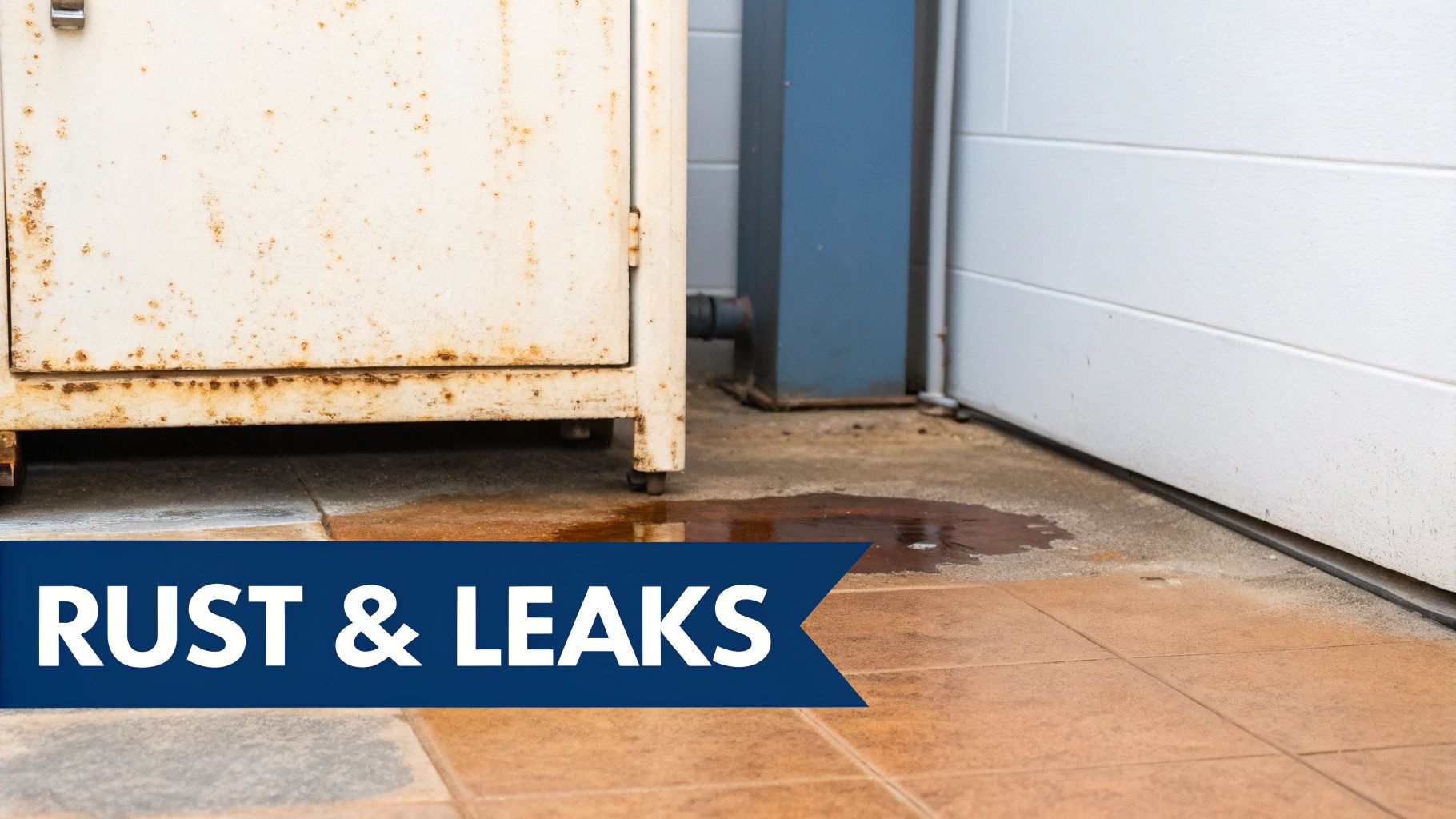
Your furnace is designed to handle heat, not moisture. Seeing rust, corrosion, or any water pooling around your unit is a significant red flag and a clear one of the signs your furnace needs repair. These symptoms point directly to an internal moisture problem that can compromise both the safety and longevity of your entire HVAC system.
You know what? Water and metal are a bad combination, especially inside a complex machine like a furnace. A leak could be caused by a clogged condensation drain line, an issue with the humidifier, or, more seriously, a cracked secondary heat exchanger in a high-efficiency unit. Left unchecked, this moisture will corrode vital components, leading to expensive failures and potentially dangerous operational hazards.
What Rust and Leaks Indicate
Pinpointing the source of moisture is critical for a proper diagnosis. While only a certified technician can definitively identify the cause, these are common culprits that Phoenix Valley homeowners might encounter.
- Rust on External Panels: This often points to high ambient humidity in the installation area, like a utility closet or garage. While seemingly cosmetic, it can weaken the cabinet and allow internal components to become exposed to more moisture.
- Water Pooling at the Base: This is frequently caused by a blockage in the condensation drain line. High-efficiency furnaces produce acidic condensate, and if it can't drain properly, it will back up and leak, corroding everything it touches.
- Corrosion on Internal Components: Rust seen inside the unit, especially around the burners or heat exchanger, is a much more serious issue. It can signal a cracked heat exchanger, which is a major safety risk due to potential carbon monoxide leaks.
What You Should Do
If you spot rust or water, do not ignore it. Shut off the power to the furnace at the circuit breaker as a safety precaution. You can check the condensation drain line for any obvious clogs at the exit point, but avoid disassembling any part of the furnace yourself. While some water leak issues are similar to those you might see with your air conditioner, the causes can be very different in a heating system. You can learn more about common HVAC leaks to understand the potential sources better. Take clear photos of the rust and the leak and call Comfort Experts for an immediate professional inspection.
5. Yellow or Orange Pilot Light (Gas Furnaces)
For homeowners with gas furnaces, the pilot light is a small but vital indicator of your system's health. A steady, blue flame signifies proper and efficient combustion. If you notice the flame is yellow, orange, or flickering erratically, it’s one of the most urgent signs your furnace needs repair. This color change isn't a cosmetic issue; it's a direct warning of incomplete combustion, which can lead to reduced efficiency and a dangerous carbon monoxide leak.
A discolored pilot light is often caused by a dirty orifice or an improper air-to-fuel mixture. In dusty environments, like a garage or utility closet common in many Mesa homes, debris can be drawn into the burner assembly, obstructing the gas flow and starving the flame of oxygen. This is a significant safety hazard that requires immediate attention from a qualified professional.
Why Pilot Light Color Matters
The color of the flame is a direct reflection of the combustion process. While a quick look can tell you a lot, only a certified technician can safely diagnose and correct the underlying problem.
- Blue Flame: A crisp, blue flame indicates complete combustion. The furnace is burning fuel efficiently and safely, with the correct mixture of gas and oxygen. This is the healthy state you want to see.
- Yellow or Orange Flame: This color indicates that the fuel is not burning completely. The yellow color comes from soot particles in the flame, a byproduct of incomplete combustion. This is a clear warning sign of a problem that is wasting fuel and producing carbon monoxide.
- Flickering or Weak Flame: A flame that appears weak, flickers constantly, or struggles to stay lit could indicate a problem with the thermocouple or a draft issue. This can lead to the furnace shutting down unexpectedly, leaving you without heat.
What You Should Do
Given the serious safety implications of a faulty pilot light, this is not a DIY repair. The risk of gas leaks and carbon monoxide exposure is far too high for an untrained person. If you see a yellow or orange flame, your first step should be to ensure your carbon monoxide detectors are working. Then, contact a professional immediately for an inspection. Keeping the area around your furnace clean can help prevent dust from causing this issue in the future.
6. Rising Energy Bills Without Increased Usage
Your utility bill is often the first place to find clues about your furnace's health. If you notice a significant spike in your heating costs that doesn't correspond with a rate hike or a drastic increase in usage, it's a clear sign your furnace needs repair. An efficient furnace should provide consistent warmth without an ever-growing appetite for energy. When it starts working harder to do the same job, that lost efficiency translates directly into higher bills.
This isn't just about paying more each month. It’s an indication that your furnace is struggling due to internal issues like component wear, airflow restrictions, or combustion problems. Ignoring this symptom means you’re not only wasting money but also allowing a potentially serious mechanical issue to worsen, which could lead to a complete system breakdown. Could your hard-earned money be going to waste every month?
What Causes an Inefficient Furnace?
Several underlying problems can force your furnace to consume more energy to heat your home. While only a professional diagnosis can pinpoint the exact cause, common culprits include:
- Dirty or Clogged Filters: This is the most frequent cause of inefficiency. A blocked filter restricts airflow, forcing the blower motor to work much harder and run longer to circulate air, driving up electricity usage.
- Worn-Out Components: As parts like the blower motor, capacitors, or bearings age, they lose efficiency and draw more power to operate correctly.
- Ductwork Leaks: In many Phoenix Valley homes, leaky or poorly sealed ducts can lose 15-20% of the heated air into attics or crawl spaces before it ever reaches your rooms, forcing the furnace to run longer to compensate.
- Aging System: An older furnace, especially one over 15 years old, simply can’t operate at the efficiency levels of modern units. Upgrading from an 80% AFUE furnace to a 95% model can yield significant savings annually.
What You Should Do
If your energy bills are on the rise, start with the simplest fix. Check and replace your air filter if it's dirty, a critical step for system health. You can learn more about how often to change air filters to establish a proper routine. If a new filter doesn't curb the rising costs, it's time to call in the professionals. Our technicians can perform an energy audit and a full system diagnostic to identify the source of the inefficiency and restore your furnace's performance.
7. Age and Maintenance History of the Furnace
While performance issues like strange noises or uneven heating are immediate problems, the age and maintenance history of your unit is a critical, forward-looking diagnostic factor. A furnace that is 15-20 years old, especially one with a spotty maintenance record, is operating on borrowed time. This is one of the most predictive signs your furnace needs repair or, more likely, is nearing a necessary replacement.
An aging system isn't just less efficient; its components have endured thousands of heating cycles, leading to cumulative wear and tear. For homes in Mesa and across the Phoenix Valley built in the early 2000s, many of those original furnaces are now hitting the 20-year mark, placing them at high risk for major, age-related failures during a cold snap.
Why Age and Maintenance Are So Important
A furnace's lifespan is directly tied to its upkeep. Without regular professional attention, parts like the blower motor, ignitor, and heat exchanger degrade much faster. Think of it this way: a well-maintained 15-year-old furnace might still have several years of reliable service left, while a neglected 12-year-old unit could be on the brink of a catastrophic breakdown.
- Declining Efficiency: As a furnace ages, its ability to convert fuel to heat diminishes. An old unit might run constantly just to keep your home comfortable, leading to significantly higher utility bills.
- Increased Repair Frequency: Parts that were once robust begin to fail. What starts as one small repair often becomes a cascade of component failures, quickly making replacement a more cost-effective option.
- Safety Risks: The heat exchanger is particularly vulnerable in older units. Years of expansion and contraction can cause cracks, creating a serious risk of carbon monoxide leaking into your home.
What You Should Do
Proactive assessment is key when dealing with an older furnace. Don't wait for it to fail completely on the coldest night of the year.
First, locate the manufacturer's label on the side of your furnace cabinet to determine its installation date. If it's over 15 years old, it's time to start planning. If you haven't been consistent with upkeep, it's not too late to start; scheduling a professional evaluation can give you a clear picture of its remaining lifespan. Regular heating maintenance and tune-ups are crucial for extending the life of any unit, especially one in its later years. Consider budgeting for a replacement, as this allows you to choose a high-efficiency model during the off-season for better pricing and scheduling.
8. Foul Odors: Gas Smell, Burning, or Musty Odors
Your sense of smell can be a powerful diagnostic tool for your heating system. When your furnace emits a strong, unusual odor, it's not just unpleasant; it’s a critical warning and one of the clearest signs your furnace needs repair. These smells often indicate dangerous conditions that require immediate professional attention to protect your home and family.
Ignoring strange furnace odors is a significant safety risk. Unlike a noisy fan, a foul smell can signal an immediate threat, such as a natural gas leak or a fire hazard. Addressing these odors promptly is essential for maintaining a safe environment, especially for Phoenix Valley homeowners who rely on gas furnaces during the cooler months.
What Different Furnace Odors Mean
Pinpointing the type of smell can help you understand the potential danger and determine the right course of action. While a certified Comfort Experts technician is needed for a definitive diagnosis, here are the most common culprits:
- Rotten Eggs or Sulfur: This is the most alarming scent. Natural gas is odorless, so utility companies add a substance called mercaptan to give it this distinct smell. If you detect it, you likely have a gas leak, which is an immediate fire and explosion hazard.
- Burning or Electrical Smells: A metallic or electrical burning smell often points to an overheating motor or wiring issue. A dusty burning smell might occur briefly when you first turn on the heat for the season as dust burns off, but if it persists, it could indicate a clogged filter causing the system to overheat or a more serious electrical fault.
- Musty or Damp Odors: This smell usually suggests the presence of mold or mildew within your ductwork or the furnace unit itself. This can happen if moisture has accumulated, posing a risk to your home's indoor air quality and potentially triggering allergies.
What You Should Do
Your response should match the severity of the odor. Safety must always be your first priority.
If you smell rotten eggs, do not operate any electrical switches, use your phone, or create any sparks. Evacuate your home immediately, and from a safe distance, call your gas company's emergency line first, then call us for a professional furnace inspection. For burning or musty smells, turn off the furnace at the thermostat and circuit breaker and schedule a service call. Do not operate the unit until it has been professionally inspected.
8-Point Furnace Repair Signs Comparison
| Item | Implementation complexity | Resource requirements | Expected outcomes | Ideal use cases | Key advantages |
|---|---|---|---|---|---|
| Strange Noises or Loud Banging Sounds | Moderate–High (professional diagnosis; possible component replacement) | Technician, diagnostic tools, replacement parts (igniter, burners, blower) | Noise elimination, restored safe operation, prevent further damage | When loud bangs, popping, rattles, or squeals occur | Early detection is easy; fixes improve comfort and safety |
| Inconsistent or Weak Heating Output | Moderate (airflow, thermostat, or ductwork work) | Thermostat checks, duct sealing, blower/heat exchanger service | More consistent temperatures, improved comfort and efficiency | Rooms remain cold, temperature fluctuates, slow heat-up | Often correctable without full replacement; enables zoning |
| Furnace Won't Start or Keeps Shutting Off | High (ignition, controls, safety switches) | Licensed technician, ignition/controls parts, diagnostic equipment | Reliable startup, reduced short-cycling, improved safety and efficiency | Unit fails to ignite, short-cycles, or immediately shuts off | Restores safe operation; reduces energy waste and outages |
| Visible Rust, Corrosion, or Water Leaks | High (may require heat exchanger or unit replacement) | Inspection, corrosion repair or full replacement, drainage/humidity fixes | Stops leaks, prevents secondary damage, may require replacement | Visible rust, pooling water, cracked heat exchanger | Visible indicator prompting immediate action; prevents structural/IAQ damage |
| Yellow or Orange Pilot Light (Gas Furnaces) | Low–Moderate (combustion cleaning/adjustment; sometimes parts) | Licensed tech, combustion tuning, cleaning, CO detector | Restored proper combustion, reduced CO risk, better efficiency | Pilot flame is yellow/orange, flickering, or sooty deposits | Often quickly fixable; prevents carbon monoxide hazards |
| Rising Energy Bills Without Increased Usage | Moderate–High (diagnostic audit, sealing or replacement) | Energy audit, duct sealing, filters, possible high-efficiency replacement and smart thermostat | Lower energy bills, improved system efficiency, potential rebates | Unexplained bill increases, older system, frequent cycling | Long-term cost savings; efficiency gains and incentive eligibility |
| Age and Maintenance History of the Furnace | Varies (routine maintenance to full replacement) | Service history review, annual tune-ups, budget for replacement if needed | Predictable lifespan, fewer emergencies, planned replacement timing | Furnaces >15 years or lacking regular maintenance | Enables proactive budgeting and extended service life with maintenance |
| Foul Odors: Gas Smell, Burning, or Musty Odors | High (possible emergency response and remediation) | Immediate gas company/technician response, CO detectors, duct cleaning or electrical repair | Hazard elimination, restored safety and indoor air quality | Rotten egg/gas smell, burning odors, pervasive musty/mold smells | Alerts to life‑threatening issues; prompts immediate safety actions |
Your Next Step for a Warm and Safe Home
Navigating the complexities of your home's HVAC system can feel daunting, but understanding the common signs your furnace needs repair is the most critical first step you can take. Throughout this guide, we've broken down the telltale symptoms, from the jarring bangs and whines of mechanical distress to the subtle but costly increase in your monthly energy bills. We’ve explored why a yellow pilot light demands immediate attention and how musty or burning odors are more than just a nuisance; they're urgent warnings about your family’s health and safety.
Your furnace isn't just a machine; it's the heart of your home's comfort system, especially during those unexpectedly chilly Mesa and Phoenix Valley nights. Ignoring these signs is a gamble, one that often leads to more extensive damage, higher repair costs, and the risk of a complete system failure when you need it most. Proactive attention is your best defense against waking up to a cold house and an emergency situation.
From Awareness to Action: Securing Your Home’s Comfort
The journey from recognizing a problem to resolving it should be straightforward and stress-free. Your primary takeaway should be this: early detection saves money, prevents emergencies, and protects your home. Whether it's the inconsistent heating that leaves some rooms cold or the furnace constantly cycling on and off, each symptom we've discussed is a clear communication from your system that it needs professional attention. You've learned some basic troubleshooting, like checking your thermostat settings and replacing air filters, which can solve minor issues. But for the more complex problems, a certified technician is your safest and most reliable resource.
When it's time to call in the professionals, knowing what to look for can help you make an informed decision. For instance, you might want to learn how to evaluate a professional HVAC contractor's website to gauge their credibility, experience, and service offerings. This small bit of research ensures you partner with a company that aligns with your needs for trustworthiness and expertise. Don’t wait for a small issue to escalate into a major system breakdown. Taking decisive action now ensures your home remains the safe, warm, and comfortable sanctuary it should be all winter long.
Don't let furnace problems leave you in the cold. The NATE-certified technicians at Comfort Experts have provided trusted, reliable furnace repair and maintenance to the Phoenix Valley since 2011. For an honest diagnosis and expert service you can count on, call us at 480-207-1239 or schedule service online today.