Late at night, when the house is finally quiet, a strange AC sound can feel a lot louder than it really is. If you’re hearing an air conditioner humming noise in Mesa or anywhere around the Phoenix Valley, don’t panic, but don’t ignore it either.
That Unmistakable Air Conditioner Hum
Most homeowners know their system’s usual sound without even thinking about it. Then one evening the normal background drone changes, and suddenly you notice a hum that seems sharper, heavier, or just plain different.
That matters.
A humming air conditioner can be completely normal, or it can be your first warning that a part is struggling in Arizona heat. The trick is not guessing. The trick is listening for what changed, where it’s coming from, and whether the system is still cooling the house the way it should.
Normal humming vs A Problematic Hum
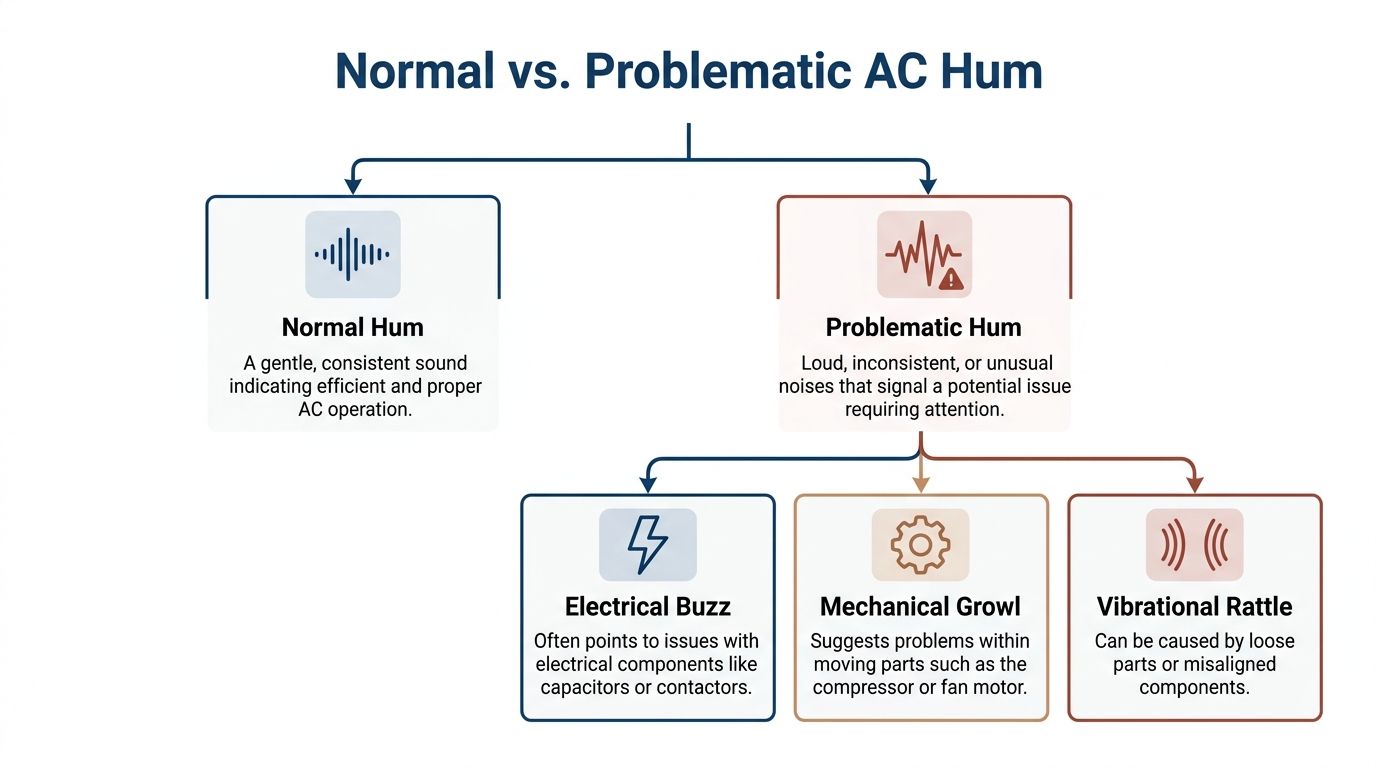
Not every hum means trouble. Air conditioners are electrical machines with motors, fan blades, and refrigerant moving through them. They make noise. A healthy system often has a low, even hum that blends into the background.
A problem hum stands out because it sounds new, louder, rougher, or more strained.
What normal sounds like
A normal hum is steady. It does not pulse, rattle, surge, or sound angry.
A good comparison is your refrigerator. According to Daikin’s explanation of air conditioner noise ratings, normal AC hums typically fall in the 32-47 dBA range, while more disruptive problem noises often reach 55-70 dBA. That difference is easy to hear in a quiet house.
If the unit starts, cools, and shuts off normally, and the hum has not changed, that is often just the sound of the outdoor fan blade and motor doing their job.
What problematic sounds like
A bad hum usually has one or more of these traits:
- It is louder than usual and easy to hear from inside the house.
- It changed recently even though thermostat settings stayed the same.
- It comes with poor cooling or long run times.
- It happens without the fan spinning on the outdoor unit.
- It is joined by buzzing, clicking, vibration, or a hot electrical smell.
That last point is important. Humming rarely shows up alone when the problem is serious.
A healthy AC sounds boring. When the sound gets your attention, the system is asking for attention too.
Why Phoenix homeowners hear this more often
Phoenix systems work hard for a long season. In the same Daikin reference, major markets like the Phoenix Valley average 2,500-3,000 cooling hours annually. More runtime means more wear on motors, contactors, capacitors, bearings, and mounting hardware.
National advice often sounds like this: “If your AC hums, check it later if the house still feels cool.”
That advice can fall short in Arizona.
A unit that is only slightly stressed in a mild climate may limp along for a while. In Mesa heat, that same weak electrical part or dragging motor can fail fast once the outdoor temperature climbs.
Three broad sound families
When I help people think through AC noise, I usually sort the hum into three groups.
| Sound family | What it usually suggests | What it often feels like to the homeowner |
|---|---|---|
| Soft steady hum | Normal operation | “I can hear it, but nothing seems wrong.” |
| Electrical buzz hum | Capacitor, contactor, wiring, or breaker issue | “It sounds energized, but something isn’t starting right.” |
| Mechanical strain hum | Fan motor, compressor, or vibration issue | “The outdoor unit sounds like it’s working too hard.” |
That simple sorting method helps because homeowners often describe every unusual sound as “buzzing” or “humming,” even when the causes are completely different.
Quick reality check
Ask yourself these questions:
- Is the hum new?
- Is it louder outdoors, indoors, or at the wall?
- Is the outdoor fan spinning normally?
- Is the air from the vents still cold?
- Did the sound start during the hottest stretch of the week?
If you answer yes to more than one, the sound deserves a closer look.
Common Electrical Humming Culprits in Your AC
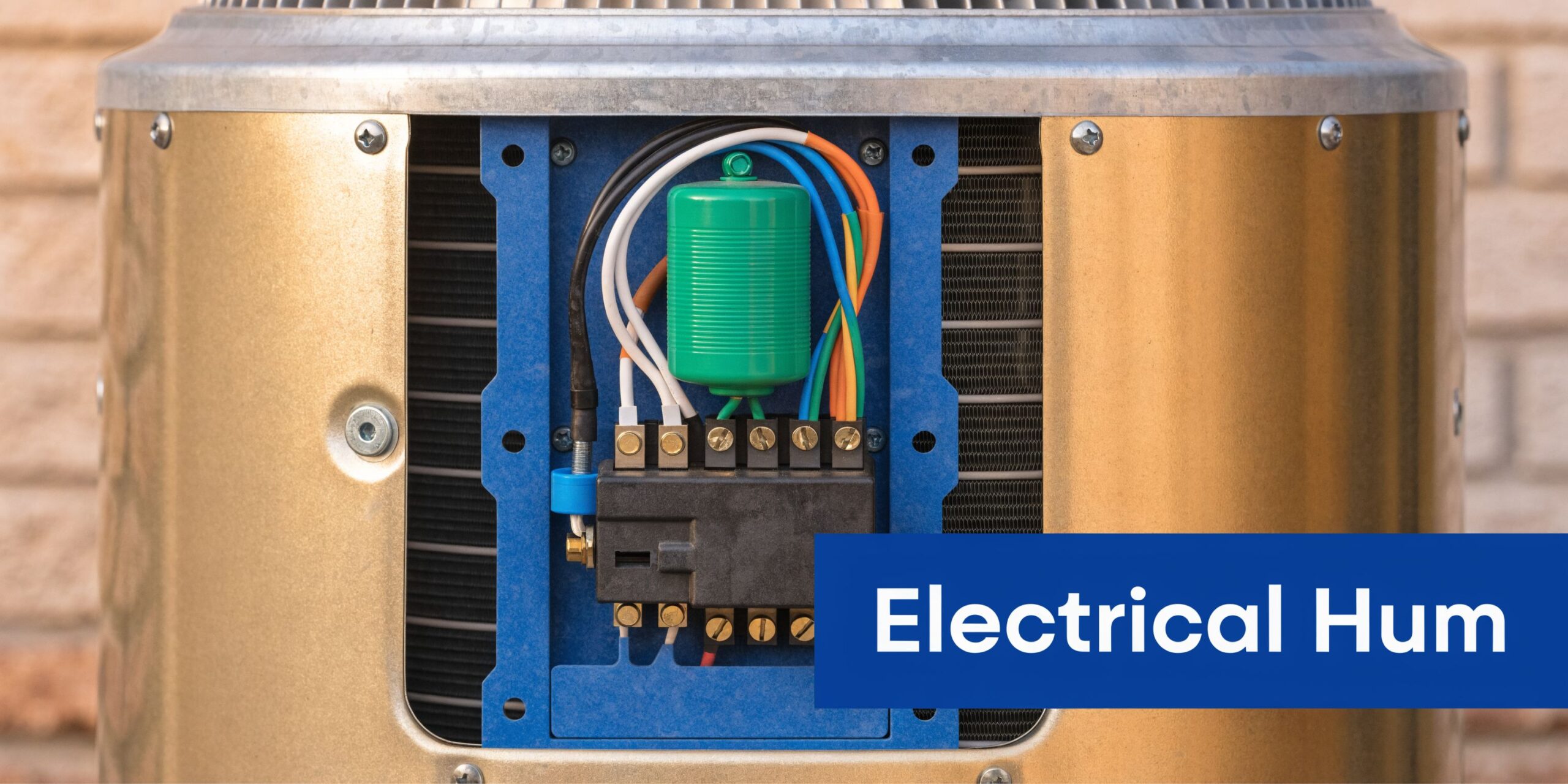
A lot of persistent humming starts on the electrical side. That does not always mean the repair is huge. It does mean you should take it seriously, especially in Arizona where long summer runtimes expose weak parts quickly.
According to Hartman Brothers’ discussion of humming air conditioners, faulty contactor relays and capacitors cause 50-60% of persistent hums. The same source notes that contactors fail in 25% of units over 10 years old, and Arizona’s 110°F+ summers strain systems 40% more than national averages.
The capacitor problem
The capacitor is the part that helps motors start and run. The easiest way to picture it is as a stored burst of electrical help. When that burst weakens, the fan motor or compressor may try to start, fail to get moving properly, and sit there humming.
That sound often shows up like this:
- The thermostat calls for cooling.
- You hear the outdoor unit try to come alive.
- The fan may hesitate or not spin.
- The system hums instead of starting smoothly.
In Phoenix, capacitor trouble shows up more often because heat is brutal on electrical parts. Capacitor malfunctions are especially common during hot weather, and desert conditions make that stress worse. A weak capacitor in spring can become a dead one in peak summer.
The contactor problem
The contactor is basically the outdoor unit’s heavy-duty switch. When your thermostat calls for cooling, the contactor closes and sends power where it needs to go.
When it gets worn, pitted, or stuck, you can hear a hum or buzz from the energized component without the full startup you expect. Sometimes the contactor chatters. Sometimes it sticks. Sometimes it hums while the fan or compressor never fully engages.
This is one of those problems homeowners can hear, but should not poke around and test themselves.
If the hum sounds electrical, stop at observation. Do not remove panels and do not touch the contactor or capacitor. Those parts can hold dangerous voltage.
What Arizona heat changes
Local experience matters significantly here.
A lot of national articles give decent general advice, but they do not account for how much punishment a Phoenix-area system takes. A part can be “aging but still okay” in a milder place and become a repeat nuisance here because the unit cycles hard day after day.
Electrical humming in Arizona often gets worse:
- Early in the cooling season when a weak part first gets stressed
- During the first major heat wave when runtime jumps
- In older systems where contact wear and heat exposure stack up
- After deferred maintenance because dirty coils and airflow issues make the whole system work harder
The result is not just noise. Hartman Brothers notes that ignoring these faults can lead to 20% higher energy use. Homeowners usually notice that as a utility bill that climbs while comfort drops.
What works and what does not
Some practical truth here.
What works
- Replacing a failed capacitor with the correct rated part
- Testing the contactor under load
- Inspecting wiring for heat damage or loose connections
- Cleaning and tuning the system so motors are not starting under extra strain
What does not
- Hoping the noise goes away
- Resetting the thermostat over and over
- Smacking the unit to “get it going”
- Running the system all day while it hums but struggles to start
That last one is rough on the equipment. Every hard-start attempt adds stress.
A better way to think about the sound
If your AC hums but does not start cleanly, think of a car engine trying to turn over with a weak battery. Power is present, but the system is not making a healthy transition from off to running.
That does not confirm the exact failed part, but it points you in the right direction.
For a broader walkthrough of symptoms and system behavior, this guide on how to diagnose AC problems is a useful companion read.
Mechanical Monsters The Compressor and Fan Motors
When the hum is coming from the outdoor unit and sounds heavy, strained, or forceful, the problem often shifts from electrical controls to moving parts.
In such cases, humming becomes more urgent.
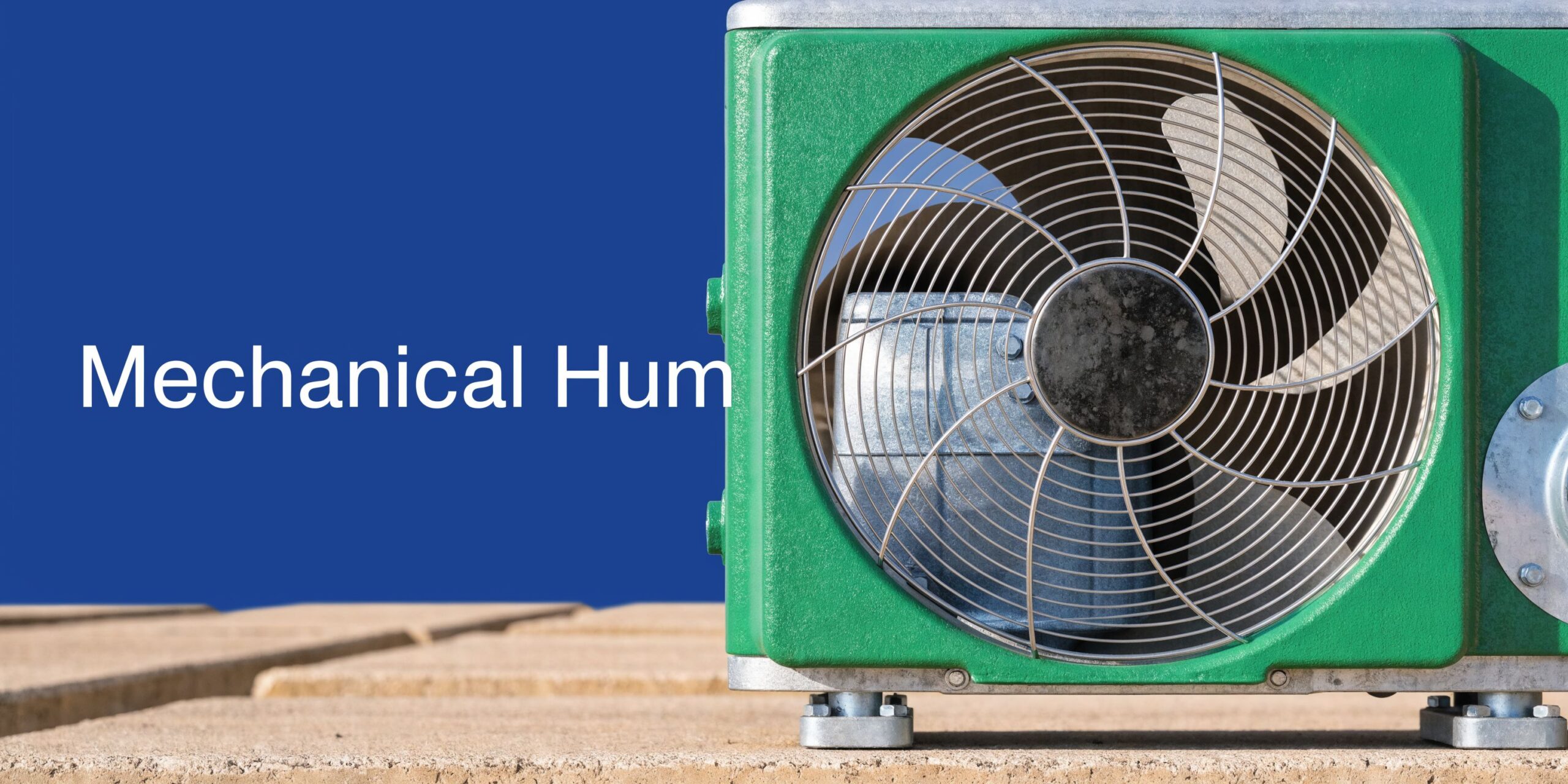
The condenser fan motor that has power but will not turn
One of the clearest mechanical causes is a seized condenser fan motor. According to Service Experts’ explanation of a humming air conditioner, this happens when the motor receives power but fails to rotate because of mechanical binding. The same source notes that 40% of outdoor unit service calls in hot climates trace to this issue.
That matters because the fan is not optional. It pulls heat off the condenser coil. If it stops while power is still present, the outdoor unit can sit there humming while airflow collapses.
Then the rest of the system starts paying for it.
Why a stalled fan becomes a bigger problem fast
When the fan does not move air across the condenser coil, pressure rises inside the system and the compressor has to work harder. You may hear the hum first. Then you notice warm air, short cycling, or the system shutting itself down.
In plain language, the unit is trying to reject heat and cannot do it.
In Mesa, this can get ugly in a hurry because the outdoor unit is already fighting high ambient temperatures. A motor with worn bearings, debris binding, or internal damage has very little margin for error when it is sitting in direct summer heat.
What that sound is telling you
A seized fan motor hum is different from a loose-panel vibration.
It usually sounds:
- lower in tone
- stronger
- more constant
- more obviously tied to the outdoor condenser
If you look at the unit while it is calling for cooling and the fan is not spinning, that is not a “wait and see” situation.
If the outdoor unit hums and the fan blade is still, turn the system off and call for service. Letting it keep trying can drive damage into more expensive parts.
The compressor hum
The compressor is the heart of the cooling cycle. When it struggles, the hum can be deep and unsettling. Homeowners often describe it as the unit sounding “loaded down” or “stuck.”
Sometimes the compressor hum points back to an electrical start issue. Other times the compressor itself is in trouble. That distinction matters because one repair may be relatively straightforward, while compressor work can be far more serious.
A bad compressor hum is not subtle. It usually comes with poor cooling, repeated startup attempts, or a system that trips out after trying to run.
Bearings, blades, and imbalance
Not every mechanical hum means the compressor is failing.
Sometimes the outdoor fan motor still spins, but the bearings are wearing out. In that case, the hum may come with a rough edge. You may also hear a droning sound that gets louder as the unit runs.
Fan blades can create a different problem. If a blade is bent, loose, dirty, or out of balance, the unit may hum and vibrate at the same time. That vibration can travel through the cabinet and make the whole condenser sound worse than the root issue.
What works and what does not
Mechanical problems reward quick action.
What helps
- Clearing visible debris around the condenser
- Shutting the system down if the fan is not spinning
- Having a technician verify whether the issue is motor, capacitor, compressor, or both
- Replacing worn motor components before they take out other parts
What usually wastes time
- Assuming a loud hum is “just normal summer noise”
- Continuing to run the system once the outdoor fan stops
- Trying to force a stuck blade by hand with power on
- Delaying diagnosis until the system quits completely
If you are already worried the outdoor unit’s core components may be involved, this page on air conditioner compressor replacement helps explain the bigger repair picture.
Other Sneaky Sources of AC Humming
Not every humming complaint turns into a failed capacitor or seized motor. Sometimes the sound comes from smaller issues that still deserve attention because they can mimic bigger trouble. These are the calls that often fool homeowners.
Loose panels and cabinet vibration
A common example is an access panel that has loosened over time. The system starts, the cabinet vibrates, and that panel acts like a drum skin.
You hear a hum. The cause is vibration.
The same thing can happen with mounting screws, fan guards, or nearby metal components. Arizona heat does not directly “create” loose hardware, but long run cycles and constant vibration give those little issues more opportunities to show up.
Refrigerant lines touching something
Another sneaky one is line vibration.
Refrigerant lines can transmit noise into the wall, the frame, or another part of the equipment if they are resting against something they should not touch. The sound may seem like it is coming from inside the house when the problem originates outside.
In extreme desert conditions, the intense heat that regularly pushes past 110°F can accelerate wear across AC components, including refrigerant lines and motor bearings, which raises the chance of humming complaints during the May through September cooling stretch, as noted by Pipe Wrench’s article about why an AC unit hums.
Freeze-up strain
A freezing air conditioner can also create a low strained hum. This is the kind of issue homeowners miss because they are focused on the sound, not the airflow.
A few clues often show up together:
- Weak airflow indoors
- Long run times
- The system sounds loaded down
- Ice on the line or indoor coil
- A dirty filter or blocked airflow path
A clogged filter is one of the first things to check. If you are not sure where yours is located, this quick guide on where your air conditioner filter is can save you some time.
Three short real-world style scenarios
| Situation | What you hear | What it may mean |
|---|---|---|
| Hum starts after a windy day | Light vibration at the outdoor unit | Debris or a panel issue |
| Hum seems to travel through the wall | Low transmitted drone | Refrigerant line or mounting contact |
| Hum comes with weak cooling | Strained, dull sound | Freeze-up, airflow issue, or a larger mechanical problem |
These are the kinds of problems that can look minor at first. Left alone, some stay minor. Others turn into expensive service calls because the original vibration or airflow issue kept stressing the system.
Your Safe Homeowner Troubleshooting Checklist
When you hear air conditioner humming, the goal is not to become your own HVAC technician. The goal is to narrow down the problem safely and avoid making it worse.
Use this as a homeowner checklist, not a repair manual.

Listen first
Before touching anything, stand still and listen.
Try to identify:
- Where the hum starts. Indoor unit, outdoor unit, wall, or ceiling.
- When it happens. At startup, during steady operation, or during shutoff.
- Whether cooling has changed. Strong cooling, weak cooling, or no cooling.
- What else you hear. Buzzing, clicking, rattling, or silence except for the hum.
A startup hum points in a different direction than a constant running hum. That detail helps.
Check the thermostat and airflow basics
Sometimes the system is being asked to do more than it can because of a simple setup issue.
Look at:
- Thermostat mode. Make sure it is set to cool and calling properly.
- Filter condition. If it is clogged, replace it.
- Supply vents. Make sure they are open and not blocked by furniture.
- Return grille. Check for heavy dust buildup.
You know what? A dirty filter creates more confusion than almost any other basic issue. It can reduce airflow, increase strain, and make other sounds seem worse.
Inspect outside with the power off
Turn the system off before doing a visual check. If you are shutting power off at the disconnect or breaker, do that before getting close to the outdoor cabinet.
With power off, look for:
- Debris around the condenser such as leaves, cottonwood buildup, or anything pressing against the unit
- Visible ice on refrigerant lines
- A fan that looks obstructed
- Loose screws or access panels
- Oil spots or obvious wiring damage
Do not open the electrical compartment. Do not touch wiring. Do not test components.
Safe homeowner troubleshooting stops at looking, listening, and basic maintenance. Electrical testing and component replacement are professional work.
Pay attention to fan behavior
If the thermostat is calling for cooling and the outdoor unit hums but the fan does not spin, shut it down. That symptom belongs in the urgent category.
If the fan spins but the unit vibrates hard, note that too. Vibration changes the diagnosis.
A simple decision table
| What you notice | What you can do | When to stop |
|---|---|---|
| Dirty filter and weak airflow | Replace filter and recheck operation | Stop if humming continues |
| Loose exterior screw or panel | Tighten accessible exterior hardware gently | Stop if noise remains or gets louder |
| Debris against unit | Clear space around cabinet | Stop if fan still does not run right |
| Electrical smell, hot panel, or no startup | Turn system off | Stop immediately and call a pro |
Reset once, not repeatedly
A single reset can sometimes clear a minor control glitch. More than that is usually just repeated stress on a struggling system.
Try it once:
- Turn the thermostat off.
- Shut the system off at the breaker.
- Wait briefly.
- Restore power.
- Turn cooling back on and observe.
If the same hum returns, that is useful information. It is not an invitation to keep resetting it.
Know when the DIY part ends
Call for professional help if any of these happen:
- The hum is electrical
- The outdoor fan is not spinning
- The system is blowing warm air
- You see ice
- You smell burning
- The breaker trips
- The noise keeps coming back after basic checks
If your AC and heat behavior seem generally inconsistent or the system is not responding the way it should, this related troubleshooting article on heater and AC not working can help you sort broader system symptoms.
Understanding AC Repair Costs and Prevention
Nobody likes a summer surprise from the HVAC system. The best way to reduce that surprise is to understand two things. First, what kind of hum usually points to what kind of repair. Second, why catching it early usually costs less than waiting for a breakdown.
The verified data available here gives us only a limited set of cost points, so the table below uses those and keeps the rest qualitative.
AC Humming Troubleshooting and Cost Guide
| Potential Cause | Sound Description | Urgency | Typical Repair Cost (2026 est.) |
|---|---|---|---|
| Loose panel or vibration issue | Light cabinet hum or rattle | Low to medium | Varies by cause |
| Capacitor or contactor issue | Electrical hum, startup struggle | Medium to high | Varies by diagnosis |
| Seized condenser fan motor | Outdoor unit hums, fan does not spin | High | Varies by motor and system |
| Compressor-related failure | Deep strained hum, poor cooling or no cooling | High | Significant cost for compressor replacement. |
| General humming tied to neglected maintenance | Mixed symptoms, rising strain | Medium | Moderate average repair costs. |
Why prevention beats reaction
The same verified data notes that skipped tune-ups increase motor strain and can reduce efficiency, which is exactly how “just a hum” turns into a no-cool call in the middle of an Arizona afternoon.
Preventive maintenance is not glamorous, but it works because it catches the things homeowners usually cannot see:
- weak electrical components
- worn contact surfaces
- dirty condenser coils
- early motor trouble
- loose hardware
- airflow restrictions
A smart home routine helps too. If you already keep a seasonal task list for your property, a practical resource like this seasonal home maintenance checklist can help you remember the non-HVAC items that also affect comfort, airflow, and equipment surroundings.
If you want a local breakdown of what different repairs can involve, this guide on cost to fix AC adds more context.
In Arizona, prevention is not about being extra careful. It is about respecting how hard your cooling system works for most of the year.
When to Call the Experts Don't Wait for a Breakdown
An unusual hum is often your system’s first warning, not its last. If the sound is electrical, if the outdoor fan is not spinning, if cooling has dropped off, or if anything smells hot or looks iced over, waiting is a gamble that rarely pays off in Phoenix heat.
Mesa homeowners deal with a harsher cooling environment than most national advice accounts for. That is why strange AC sounds deserve a fast, informed diagnosis instead of guesswork.
If your AC is humming and you want a straight answer from a local team, contact Comfort Experts to get it checked before the problem grows. You can call 480-207-1239 or schedule service online for an honest diagnosis.