
If you’re wiping dust off the furniture again and wondering how it came back so fast, you’re not imagining it. In Scottsdale, duct cleaning scottsdale isn’t just a nice-to-have for neat freaks. It’s often part of keeping a home comfortable, breathable, and easier on your HVAC system.
Why Scottsdale Air Ducts Are A Special Case
Scottsdale homes deal with a combination that’s rough on ductwork. Desert dust is constant, monsoon season changes the moisture profile inside and around the system, and the AC runs hard for long stretches because cooling isn’t optional here. That means your ducts are always at work. They’re moving a lot of air, for a lot of months, through a dusty environment.
Most providers talk about duct cleaning like every home in America has the same conditions. That’s not how it works in the Valley. Local conditions matter, and Scottsdale’s are unusually punishing.

Desert dust doesn’t stay outside
Fine dust gets into homes in more ways than commonly realized. Doors open, windows crack, filters load up, attic leaks pull particles inward, and unsealed duct joints can bring in debris from spaces you never breathe on purpose. In high-dust areas, annual dust deposition in the Phoenix Valley can exceed 100 g/m², and NADCA advises cleaning every 3 to 5 years in high-dust areas. Monsoon pollen can also spike allergens by 40% after July rains, according to local duct cleaning guidance for North Valley and Scottsdale homes.
That’s why a Scottsdale home can feel dusty even when the homeowner is doing everything right. The HVAC system is often circulating air through a duct network that’s under more stress than the same setup would face in a milder climate.
If you’re in the area, it also helps to work with a team that already understands Scottsdale HVAC service conditions instead of applying a one-size-fits-all cleaning schedule.
Practical rule: If your home sits near active roads, open desert, new construction, or frequent monsoon wind exposure, your duct cleaning needs may be more aggressive than the generic national advice you see online.
Monsoon season changes the equation
Dust is only half the story. Monsoon season introduces bursts of humidity, and that matters because ducts don’t just collect dry debris. They can also hold onto a mix of pollen, dirt, and moisture that creates stubborn buildup around registers, returns, and sections with weaker airflow.
That buildup doesn’t always show up as something dramatic. Sometimes it’s just a stale smell when the system starts. Sometimes it’s a vent cover that gets dirty way too quickly. Sometimes it’s a child’s room that always feels a little stuffy compared to the rest of the house.
A lot of homeowners assume those are separate issues. Often, they’re connected.
Heavy AC use magnifies small problems
You know what? In Scottsdale, the HVAC system doesn’t get many long vacations. When a system runs often, even minor duct contamination has more chances to affect daily comfort. Small restrictions can turn into noticeable room-to-room differences. Dust in the system can keep recirculating instead of settling down. Filters can only do so much if contamination is already sitting inside the duct network.
Here’s what makes local homes a special case:
- Long cooling seasons: The system moves air constantly, so dirty ducts matter more in daily life.
- Fine particulate intrusion: Desert dust is persistent and gets into places homeowners never see.
- Monsoon shifts: Humidity and pollen can change what’s inside the ductwork and how it behaves.
- Attic-related contamination: Leaky or aging ducts in hot attic spaces often pull in insulation dust and debris.
- Sensitive households: Families dealing with allergies usually notice duct issues sooner than everyone else.
Scottsdale homeowners often aren’t dealing with one problem. They’re dealing with dust load, seasonal allergens, and long AC runtime all stacking on top of each other.
7 Telltale Signs Your Air Ducts Are Crying For Help
Some homes practically whisper that the ductwork needs attention. Others shout. The trick is knowing what to look for before you spend money chasing the wrong problem.
1. Dust comes back almost immediately
You clean. The house looks great. Then a day or two later, the same flat surfaces already have a dusty film. That doesn’t automatically prove the ducts are the only culprit, but it’s one of the strongest clues that your HVAC system is feeding fine debris back into the living space.
General housekeeping still matters. If you want a good companion read, these tips to reduce dust in your home cover the practical basics outside the HVAC side.
2. Allergy symptoms feel worse indoors
If someone in the house feels more congested, sneezy, or irritated when the AC is running, don’t ignore that pattern. A dusty duct system can circulate particles over and over instead of letting them stay trapped at the filter where they belong.
This is especially noticeable in bedrooms, home offices, and rooms that stay closed most of the day.
3. There’s a musty or stale smell at startup
That brief blast of odor when the system kicks on tells you something. It may mean debris has built up in the ductwork, around the air handler, or on related components. Homeowners often describe it as dusty, sour, or “old house air,” even in homes that are otherwise clean.
4. One room never feels like the others
A room that’s always warmer, harder to cool, or stuffier than the rest of the house doesn’t always mean the AC unit is failing. Sometimes one duct run is restricted by buildup, disconnected, or leaking. That’s why comfort problems should be looked at as airflow problems first, not just equipment problems.
5. You see buildup around supply or return vents
Take a close look at the vent edges. Dark dust lines, fuzzy buildup on the grille, or debris collecting unusually fast often suggest the system is moving contaminated air through that opening. The vent itself isn’t the whole issue. It’s just where the issue becomes visible.
6. The filter gets dirty faster than expected
A loaded filter means it’s doing its job, but if it’s clogging unusually quickly, the system may be pulling in more debris than it should. If you’ve ever wondered where your filter sits or whether your home has more than one, this guide on where the air filter is in a house is worth checking.
7. You’ve had remodeling, drywall dust, or nearby construction
This is one of the biggest missed triggers. Renovation dust is extremely fine, and once it gets into returns or open duct runs, it can linger much longer than homeowners expect. Even if the project happened months ago, the system may still be redistributing that debris.
If your home changed after a remodel, a flooring project, or even a long season of open-window weather, trust what you’re noticing. Houses usually tell on themselves.
A quick self-check helps:
- Look at the vents: Are they dusty again right after cleaning?
- Notice the smell: Does the system push out an odor when it starts?
- Track the rooms: Is one space consistently less comfortable?
- Watch your symptoms: Do allergies act up more indoors than outdoors?
- Think back: Has the home had construction dust, pet dander buildup, or long-term neglect?
When several of these signs show up together, a proper inspection makes more sense than guessing.
The Professional Duct Cleaning Process From Start To Finish
A real duct cleaning isn’t a guy showing up with a shop vacuum and good intentions. It’s a controlled source-removal process designed to pull contamination out of the system without spreading it through the house. Consider it a deep cleaning for your home’s lungs. The point isn’t to stir dirt around. The point is to contain it, dislodge it, and remove it.
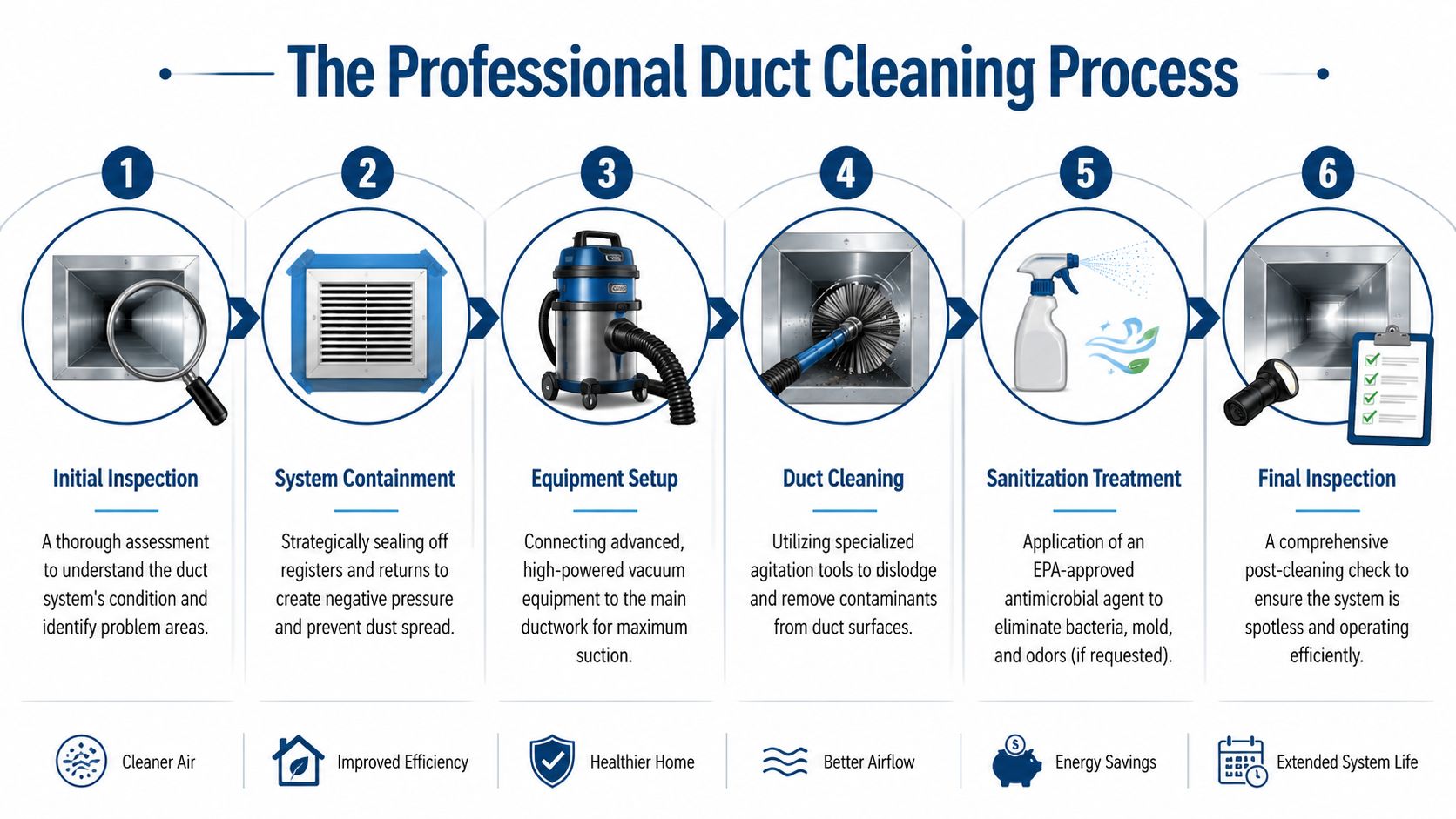
In Scottsdale’s climate, dust and microbial growth can cause a 30-50% reduction in airflow efficiency, and professional cleaning with HEPA-filtered systems can improve HVAC energy efficiency by 20-40%. Agitation-vacuum methods can also produce an 80-95% contaminant reduction, verified by camera inspection, according to Scottsdale duct cleaning performance data.
If you want to compare what a complete service should include, take a look at professional duct cleaning options for indoor air quality.
Inspection comes first
A proper visit starts with looking at the system, not selling the service before anyone has seen the ductwork. The technician checks supply and return runs, vent condition, visible buildup, access points, and related components that may affect the job.
That first look matters because not every home has the same layout. A single-story ranch, a two-story home with long attic runs, and a house with past remodel work all present different cleaning challenges.
Containment protects the house
Before active cleaning starts, the system should be set up to control dust. Registers and returns may be covered or managed strategically, and the equipment connection is arranged to create negative pressure. That pressure is what keeps loosened debris moving toward the collection system instead of into your living room.
This is the difference between professional source removal and a messy blow-and-go job.
Good duct cleaning should feel organized and contained. If the process looks careless at the setup stage, the results usually follow that same pattern.
Agitation tools do the hard part
Vacuum alone doesn’t remove stuck debris well. Technicians use tools like rotary brushes, air whips, and other agitation devices to break material loose from the inner surfaces of the ductwork. Then the vacuum system captures what’s dislodged.
Some contamination is fluffy and easy to remove. Some is compacted and clings to corners, seams, and long horizontal sections. That’s why tool choice matters.
Here’s what a typical appointment often includes:
- System inspection to identify buildup, access needs, and problem runs.
- Protective setup to keep floors, furnishings, and living spaces clean.
- Vacuum hookup to establish negative pressure in the duct system.
- Mechanical agitation with rotary brushes or air tools to loosen debris.
- Cleaning of registers and returns so leftover contamination doesn’t cycle back.
- Final verification to confirm the system is cleaner and ready to run.
Final review separates real work from guesswork
Homeowners should expect proof, not just reassurance. A trustworthy service includes a clear explanation of what was found, what was cleaned, and whether any follow-up issues showed up, such as damaged duct sections, heavy leakage, or filtration problems.
A solid cleaning can help the whole system breathe easier. But if the ducts are also leaking, dirty air can keep getting pulled in. That’s why some homes need cleaning plus a separate repair or sealing strategy.
The Comfort Experts Method What Makes Our Service Different
Most homeowners don’t just want cleaner ducts. They want confidence that the work was necessary, done carefully, and verified before the technician leaves. That’s where service quality really shows up.
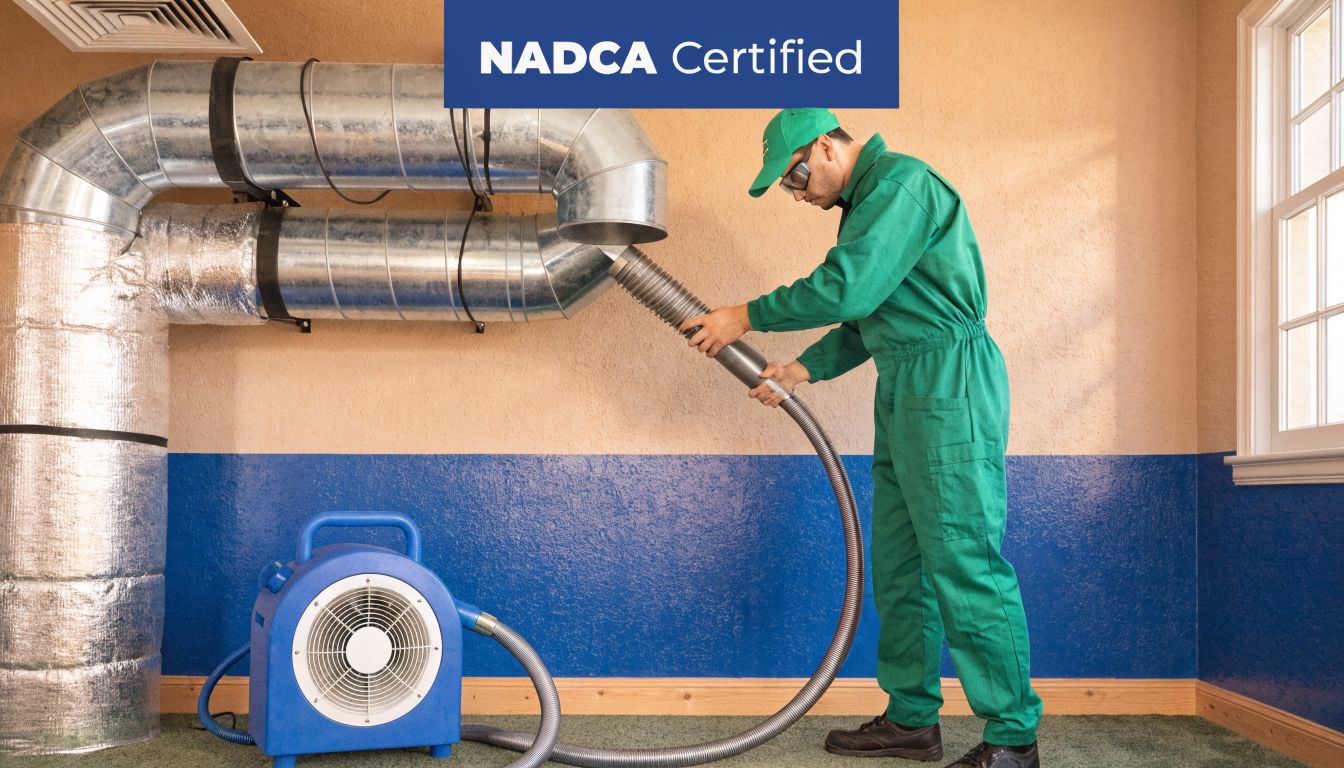
A 2025 EPA study found that duct cleaning can deliver 10-20% HVAC efficiency gains in dusty climates like Arizona, but only 30% of services include video verification. The same source notes that integrated solutions such as UV or scrubber add-ons align with trends showing 35% fewer service calls after more complete air quality work, according to Scottsdale duct cleaning market notes on verification and follow-up solutions.
Verification matters more than promises
A lot of duct cleaning companies talk about cleaner air, but if they can’t show what changed, you’re left taking their word for it. Video verification matters because ducts are hidden. Homeowners can’t judge the result by looking at one grille in the hallway.
That’s one of the practical gaps in this industry. A provider can clean aggressively, clean lightly, or barely clean at all, and the average homeowner won’t know the difference without visual proof and a clear final review.
The method should fit the home
Not every house needs the exact same add-on package. Some need source removal and a filter strategy. Some need attention to leakage, attic dust intrusion, or odor treatment. Some allergy-prone households also benefit from a broader indoor air quality plan.
Comfort Experts offers duct cleaning, sanitization, final inspections, and whole-home IAQ options such as UV and air scrubbers as one available path for homeowners who want the duct system addressed as part of the bigger air quality picture.
The best duct cleaning result is rarely “clean the ducts and walk away.” The real win is identifying what caused the contamination to build up so fast in the first place.
What works and what usually doesn’t
The trade-offs are pretty straightforward.
| Approach | What it helps with | Where it falls short |
|---|---|---|
| Basic vent-only cleaning | Surface dust at the openings | Misses contamination deeper in the system |
| Full source-removal cleaning | Removes debris from inside the duct network | Won’t solve duct leakage by itself |
| Cleaning plus verification | Gives visible proof of results | Requires better equipment and more thorough workflow |
| Cleaning plus IAQ upgrades | Helps households with ongoing dust or sensitivity concerns | Needs honest evaluation so extras aren’t oversold |
Homeowners should be cautious when a company skips inspection, avoids showing results, or pushes chemicals before explaining the condition of the ducts. Transparent diagnostics beat scare tactics every time.
Decoding Duct Cleaning Costs in Scottsdale
A Scottsdale homeowner will sometimes call after seeing a bargain coupon, then ask why another quote is higher. The answer is usually labor, access, and how thoroughly the system is being cleaned.
In desert homes, duct cleaning is rarely a one-size-fits-all job. Fine dust finds its way into returns, attic access can slow setup, and heavy AC use means the system has been moving a lot of air for a lot of months. Two homes with similar square footage can land at different prices because the duct system itself is different.
Why one home costs more than another
The biggest cost driver is time on site. A smaller single-story home with open access and light buildup is usually simpler to clean than a two-story home with tight attic space, long branch runs, and years of dust packed into the system.
The number of supply vents and returns matters too. More openings mean more cleaning points, more setup, and more verification work at the end. If a home has had remodeling, pet dander buildup, or visible debris in the returns, the crew may need extra time to do proper source removal instead of a quick pass.
That is where very low teaser pricing falls apart. If the quote barely covers travel and setup, something usually gets skipped.
Scottsdale duct cleaning cost factors
| Factor | Lower Cost Situation | Higher Cost Situation |
|---|---|---|
| Home size | Less ductwork to access and clean | More system coverage and more labor time |
| Duct layout | Shorter, simpler runs | Multiple branches, longer runs, tighter turns |
| Story count | Single-story access is often easier | Two-story layouts can add time and difficulty |
| Dust and debris level | Light buildup removes faster | Heavy dust, remodel debris, or neglected returns add labor |
| Vent and return count | Fewer openings to service | More openings increase cleaning time |
| Access conditions | Easy attic or air handler access | Tight attic entry, crowded mechanical areas, or difficult reach |
Cheap quotes usually hide something
A proper cleaning takes time, equipment, and a crew that knows how to isolate sections and pull contamination out of the system instead of stirring it around. In Scottsdale, that matters even more because duct leakage and attic dust often work together. A homeowner can pay to clean the ducts, then see dust return sooner than expected if leaks are still pulling in hot, dirty attic air.
That is one reason many homeowners ask about Aeroseal duct sealing for dusty Scottsdale duct systems when they are comparing long-term value, not just the upfront cleaning price.
Watch for these red flags when comparing estimates:
- Tiny base price: The advertised number may cover only a few vents or a very limited visit.
- No inspection before quoting: Good pricing starts with seeing the system.
- No explanation of equipment: Real source-removal cleaning uses more than a shop vacuum and a brush.
- No time range: A whole-house job should come with a realistic service window.
- No proof of work: Before-and-after photos or a clear walkthrough help confirm what was cleaned.
Price should match the amount of labor and the condition of the duct system. In Scottsdale homes, the better value usually comes from a company that explains what is included, shows its process, and does not pretend every house has the same dust problem.
Level Up Your Air Quality With Aeroseal Duct Sealing
Cleaning and sealing are related, but they are not the same service. Cleaning removes contamination already sitting inside the ducts. Sealing fixes the leaks that let dusty, unconditioned air get pulled in from attics or other unwanted spaces.
That difference matters a lot in Scottsdale homes.

Think of a leaky garden hose
If you had a garden hose with small holes all along it, water wouldn’t reach the flowers the way it should. Your HVAC ducts work similarly. Leaks let conditioned air escape, and they can also pull in attic dust, insulation particles, and hot air from places you don’t want mixed into your breathing space.
So a homeowner may pay for duct cleaning, feel better for a while, and then wonder why the system seems dusty again later. In some homes, leakage is part of the answer.
One option for tackling that side of the problem is Aeroseal duct sealing for indoor air quality improvements.
Why sealing and cleaning make a strong pair
Cleaning handles what’s already there. Sealing helps prevent the system from recontaminating itself as quickly. When those two pieces work together, the duct system has a better chance of staying clean and delivering air where it’s supposed to go.
That pairing tends to make the most sense in homes with:
- Persistent dust complaints: Even after regular housekeeping and filter changes
- Attic duct runs: Common in Valley homes and more vulnerable to leakage issues
- Uneven room comfort: Where airflow losses may be part of the problem
- Older duct systems: Especially where joints, seams, and connections have aged
- Allergy-sensitive occupants: Who notice recirculated dust quickly
What sealing solves that cleaning can’t
Cleaning is a removal service. Sealing is a repair strategy. That distinction saves people a lot of frustration.
A proper cleaning can’t close gaps in duct joints. It can’t stop attic air from being pulled through weak connections. It can’t correct conditioned air loss before it reaches the room. If leakage is part of the home’s comfort problem, cleaning alone may only solve part of it.
If duct cleaning is like washing the inside of a straw, duct sealing is like fixing the cracks in the straw so clean air actually reaches the room.
That’s why the best recommendations usually start with diagnosis. Some homes only need cleaning. Some need sealing. Some benefit from both because the dust issue and the leakage issue are feeding each other.
Preparing for Service and Frequently Asked Questions
It is 6 p.m. in Scottsdale, the AC has been running most of the day, and a duct cleaning crew is due tomorrow morning. The house does not need to be spotless. What helps is clear access, good notes about what you have been noticing, and a few minutes of prep so the team can spend more time cleaning and less time moving around obstacles.
Good prep also helps the technician spot the underlying problem faster. In desert homes, that matters. Fine dust, attic heat, monsoon moisture, and long cooling seasons can leave behind a different mix of buildup than you would expect in a milder climate.
How to prepare before the technician arrives
Start with access. If supply vents are hidden behind chairs, baskets, or small furniture, move those items aside. Make a path to the indoor unit too, whether that is in a hallway closet, garage, or attic.
A few other steps help:
- Secure pets: Service doors open and close often, and the equipment setup creates more movement than a normal service call.
- Mention past remodeling or drywall dust: That history changes what the crew looks for.
- Point out rooms with weak airflow or musty odors: Those clues can signal more than simple dust buildup.
- Have your filter information handy: If you know the filter size or type, great. If not, ask during the visit.
If you want a broader local overview before booking, this guide on finding duct cleaning service near you gives a useful baseline for what to expect.
Common questions homeowners ask
How long does service usually take
Most appointments take a few hours, and some take longer. The biggest factors are home size, the number of vents, attic access, duct layout, and how much buildup is present. A newer single-story home with straightforward access usually moves faster than an older home with tight attic runs and several problem rooms.
Is the process messy or noisy
You will hear the equipment. That part is normal.
The house should not end up coated in dust afterward. A professional crew uses containment and negative-pressure equipment so loosened debris goes into the collection system instead of back into the living space. The job should feel organized from start to finish.
Will there be a chemical smell afterward
Usually not, especially if the service only involves mechanical cleaning. If a sanitizer or deodorizing product is being considered, ask what is being used, why it is being recommended, and whether there will be any odor for a short time after service. In Scottsdale homes, I recommend homeowners be cautious about treatments that are added automatically instead of for a clear reason.
Do I need duct cleaning if I change filters regularly
Filter changes help slow new buildup, but they do not remove what is already sitting inside the duct system. Both can be true at once. A homeowner can stay on top of filter maintenance and still have dust, odor, or airflow issues that justify an inspection.
Should I clean ducts before selling or after buying a home
After buying usually makes more sense. You do not always know how well the system was maintained, whether the previous owner had pets, or whether the home sat vacant with dust collecting in the ducts. It is also a smart step after renovations, especially in Scottsdale where construction dust and desert dust can stack on top of each other fast.
For sellers, duct cleaning can still be worthwhile if the home has noticeable odor issues, heavy dust around vents, or an HVAC system that has clearly been neglected.
If your home gets dusty again too quickly, smells stale when the AC kicks on, or has rooms that never feel right, Comfort Experts can help sort out whether the issue is buildup, leakage, or both. Call 480-207-1239 or schedule service online.