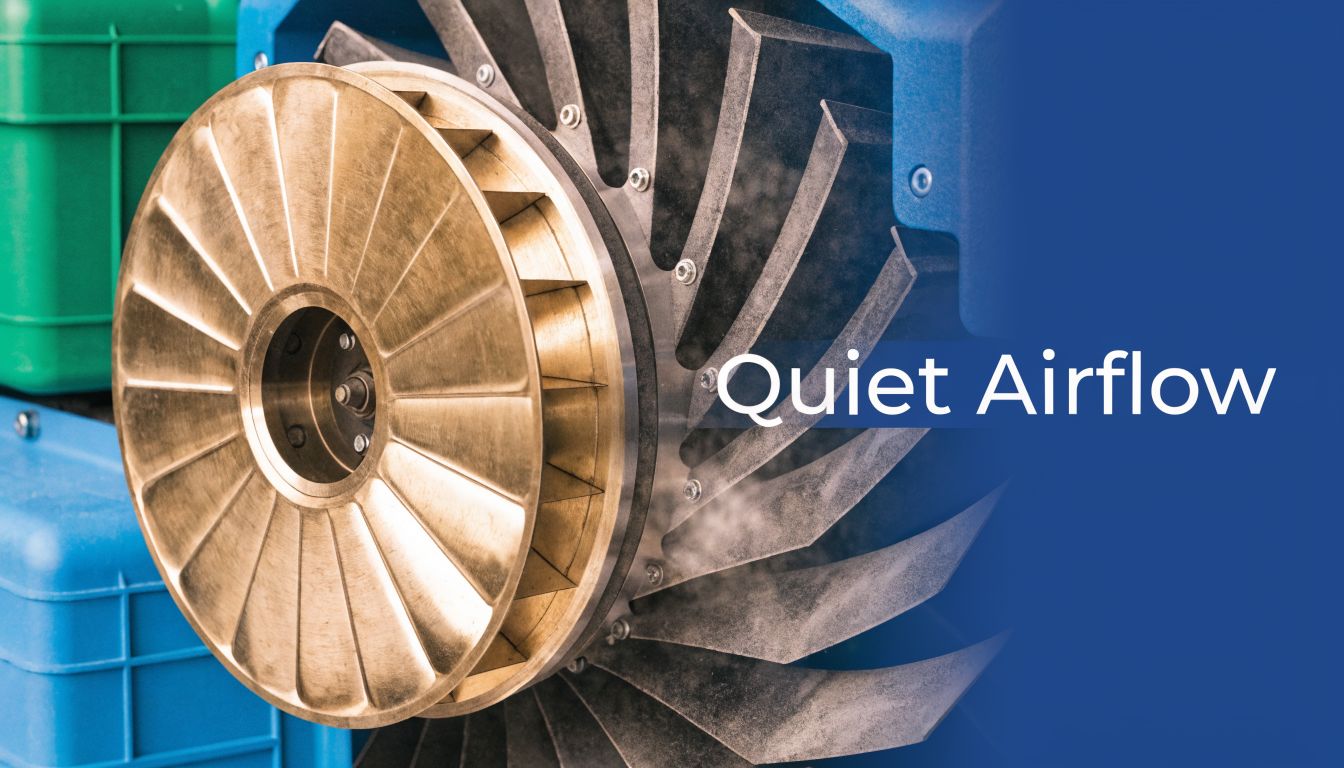
If your furnace is running but the air feels weak, dusty, or oddly noisy, the blower wheel furnace assembly is one of the first places I’d look. In Phoenix, that part takes a beating because your HVAC system doesn’t get much of a break, and desert dust finds its way into everything.
What Is a Furnace Blower Wheel and Why It Matters
On a Phoenix winter morning, the furnace can be running right on schedule and the house still feels off. One room warms up, another stays cool, and the airflow at the vents feels weaker than it should. In many of those calls, the problem comes back to the blower wheel.
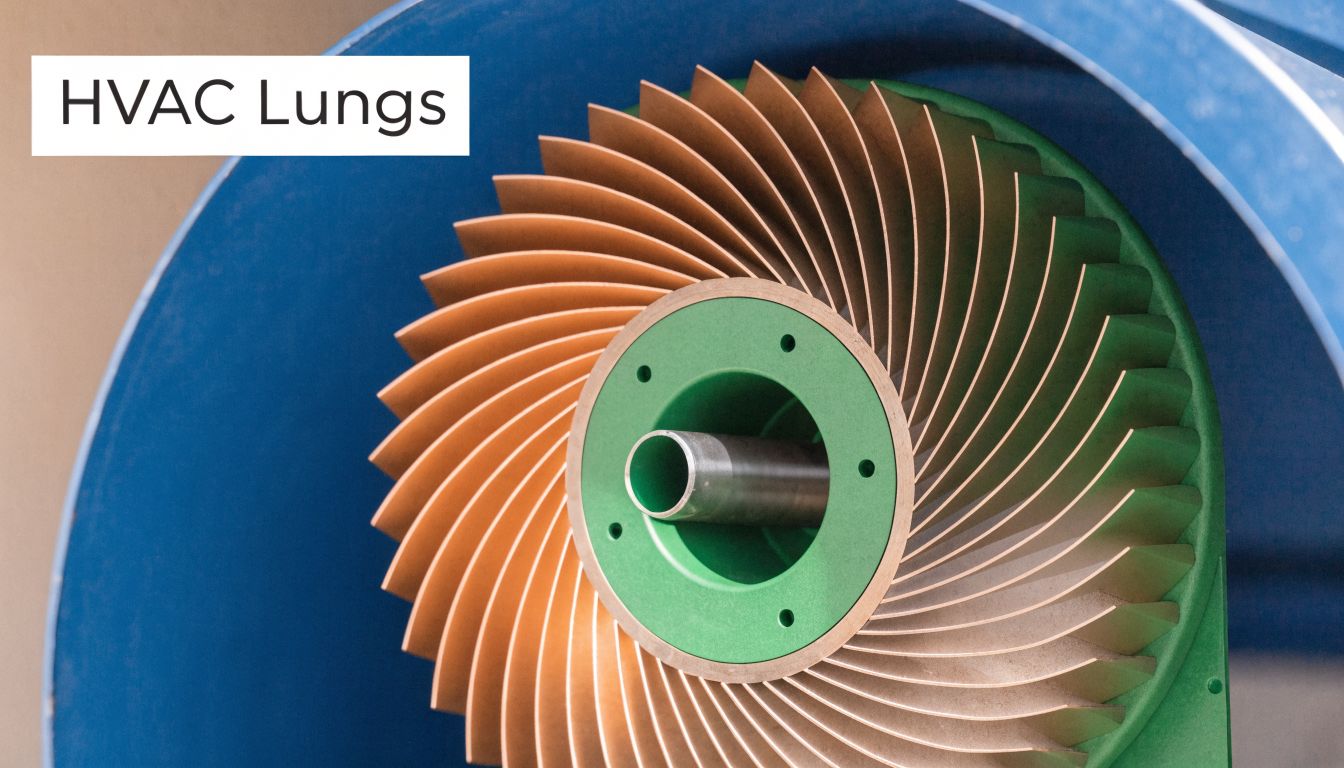
The blower wheel is the part that moves air through your system. The furnace makes the heat. The blower motor spins the assembly. The wheel pulls return air in, pushes it across the heat exchanger, and sends that warmed air through the ductwork. During cooling season, the same basic airflow job still matters, which is one reason Phoenix systems rack up wear faster than homeowners expect.
A lot of homeowners confuse the blower wheel with the blower motor. They are connected, but they do different jobs. The motor provides rotation. The wheel does the actual air moving. If the motor is the engine, the wheel is the fan blade assembly that has to grab enough air to feed the whole house.
What the blower wheel actually does
Inside a forced-air furnace, the blower wheel has one job that affects everything else. It has to move the right amount of air, at the right speed, through the equipment and into the ducts.
When that wheel gets packed with dust, goes out of balance, loosens on the shaft, or gets damaged, airflow drops. Heat still gets produced, but distribution suffers. That is why a house can have a furnace that technically runs while comfort gets worse and utility use creeps up.
Researchers at Lawrence Berkeley National Laboratory’s furnace blower research found that blower operation makes up a large share of residential furnace electricity use. Poor blower performance is not just a comfort issue. It can also make the system work longer to do the same job.
Why blower wheels matter more in Phoenix
Phoenix is hard on blower assemblies. Fine desert dust slips past worn filter racks, open returns, attic gaps, and construction debris. Once that dust starts sticking to the blades, the wheel cannot move air as cleanly or as evenly. I see this a lot in Valley homes where the system runs for long stretches and the buildup happens slowly enough that homeowners adapt to it before they realize how much airflow they have lost.
Heat adds another layer. In the Phoenix area, long cooling seasons put extra hours on blower motors and bearings, and that wear shows up in the wheel assembly too. A wheel that is slightly dirty or slightly out of balance might not cause obvious trouble in a milder climate. Here, with long run times and airborne dust, small blower issues tend to show up faster.
Filter condition plays into this more than many homeowners realize. If you are not sure where to check first, this guide on where your air filter may be located in the house can help you rule out a basic restriction before assuming the blower wheel is the only problem.
Here is the simple chain inside the system:
- The furnace creates heat
- The blower motor spins the shaft
- The blower wheel moves the air
- The ducts carry that air to each room
When one part falls behind, the whole system feels it.
The Most Common Signs of a Blower Wheel Problem
A lot of Phoenix homeowners first notice a blower wheel problem on a hot afternoon or a cold early morning. The system is running, the thermostat is calling, but the house never quite feels right. Air is coming out, just not with the force or consistency it should.
That pattern matters. A blower wheel usually gives you warning before it fails outright, and those warnings tend to show up as airflow issues, odd noises, vibration, and rooms that stay uncomfortable even though the furnace keeps cycling.
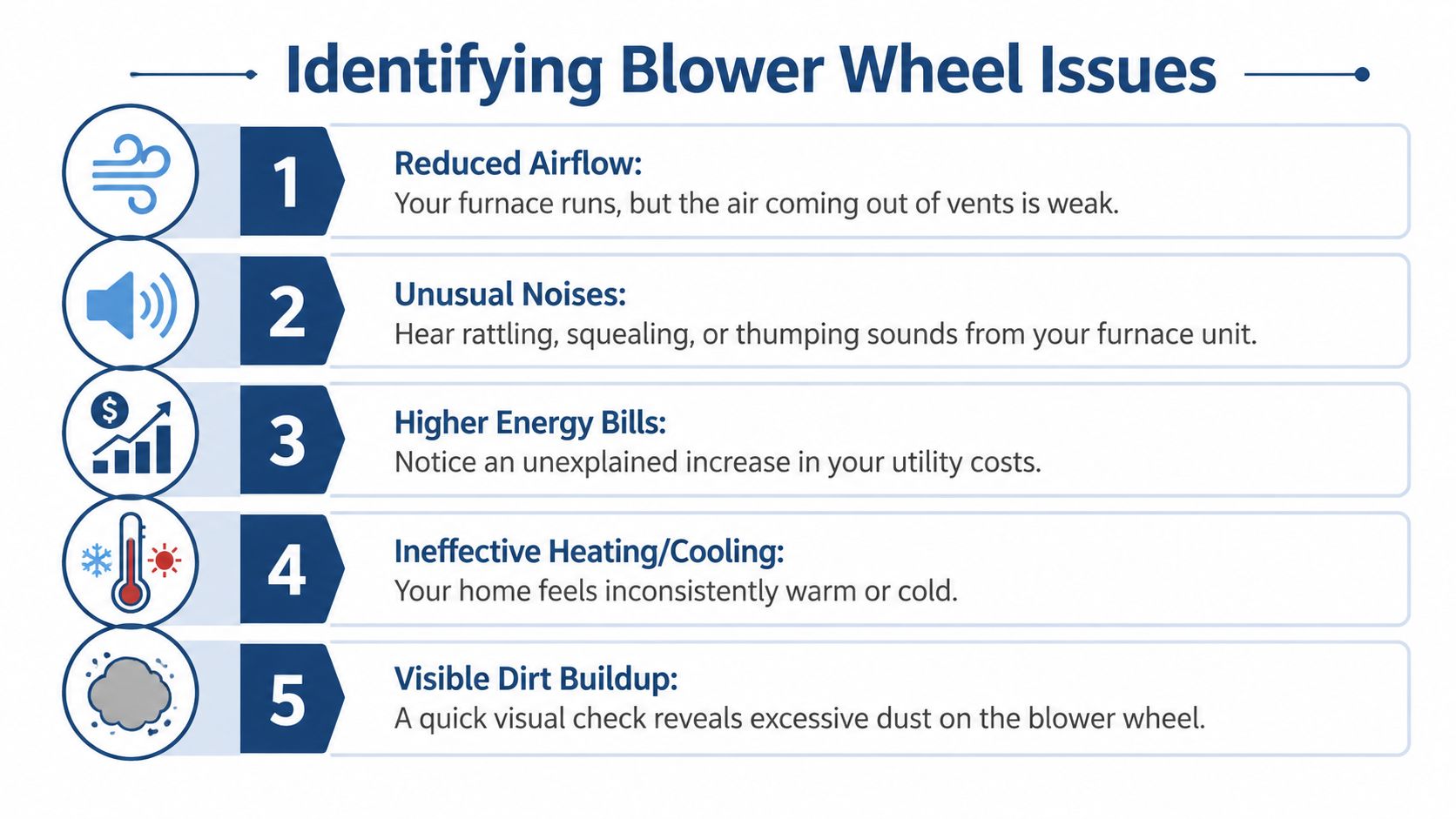
Weak airflow from the vents
Weak airflow is one of the clearest signs. The blower wheel may be packed with dust, loose on the shaft, or out of balance enough that it is no longer moving air efficiently. In Phoenix, that dust buildup happens faster than many people expect because fine desert debris gets into the system from filter gaps, attic infiltration, and return leaks.
The result is pretty simple. The furnace can still produce heat, but the heat does not get delivered well.
Look for signs like these:
- Back bedrooms feel colder than the main living area
- Registers are open, but airflow feels soft
- The system runs longer to reach the thermostat setting
- Comfort drops off during peak summer cooling too
If the same problem shows up during cooling season, our guide on AC not blowing properly can help you compare year-round airflow symptoms.
Noises that point to blower trouble
A healthy blower assembly has a steady sound. Once the wheel gets dirty, bent, loose, or misaligned, the sound changes. I pay close attention to that because the noise usually gives a good clue about what kind of wear is happening inside the cabinet.
Thumping or rhythmic knocking often points to a wheel that is out of balance. Sometimes dirt is caked heavier on one side of the blades. Sometimes a blade is bent. Either way, every rotation creates a wobble.
Scraping or rubbing usually means the wheel has shifted or is contacting the housing. That can wear metal fast, especially if the system keeps running through long Phoenix cooling cycles.
Whining or squealing often pushes suspicion toward the motor bearings, but the wheel and motor affect each other. A dirty or dragging wheel puts more load on the motor. In extreme Valley heat, that extra strain shows up sooner than it would in a milder climate.
Vibration you can feel in the house
Some blower wheel problems are easy to hear. Others are easier to feel.
You might notice a hum in the hallway floor, a buzzing closet door, or a slight shake when the fan starts up. That usually means the wheel is not spinning true, the mounting is loose, or the buildup on the blades has thrown the assembly off balance. In Phoenix homes near open lots, new construction, or dusty roadways, I see this a lot because fine dirt does not need much time to collect on a fast-spinning wheel.
Uneven heating from room to room
Blower wheel issues often look like a comfort complaint before they look like a mechanical problem. The thermostat reads close to target, but some rooms never catch up. The hallway feels fine. The bedrooms do not. Homeowners often suspect ductwork, a thermostat issue, or a furnace problem at the burner first.
Sometimes those are valid concerns. Sometimes the blower wheel is the bottleneck because it is not moving enough air to the far ends of the duct system.
That is one reason regular maintenance matters. A good checklist for keeping your furnace running efficiently includes the kind of basic system checks that can catch airflow problems before they turn into motor damage or a no-heat call.
Visible dirt on the wheel
If you can safely see the blower housing and the blades look coated in gray or brown debris, pay attention to that. Dirt on a blower wheel is not just ugly. It changes how the blades grab air, and even a moderate coating can reduce airflow and create imbalance.
Phoenix systems deal with a rough combination of heat, dust, and long run times. That means a blower wheel can go from slightly dirty to performance problem faster than many homeowners realize. Once that buildup starts affecting balance and airflow, comfort drops and wear on the motor usually rises with it.
A Homeowners Guide to Inspecting and Cleaning Your Blower Wheel
It is a common Phoenix service call. The system runs, air is coming out, but the house still feels flat and dusty. We open the blower compartment and find a wheel packed with desert dirt that has baked onto the blades.
A homeowner can check for that kind of buildup safely. Cleaning light surface dust is sometimes reasonable too. The line gets crossed when the job turns into disassembly, motor diagnosis, or anything involving a damaged wheel.
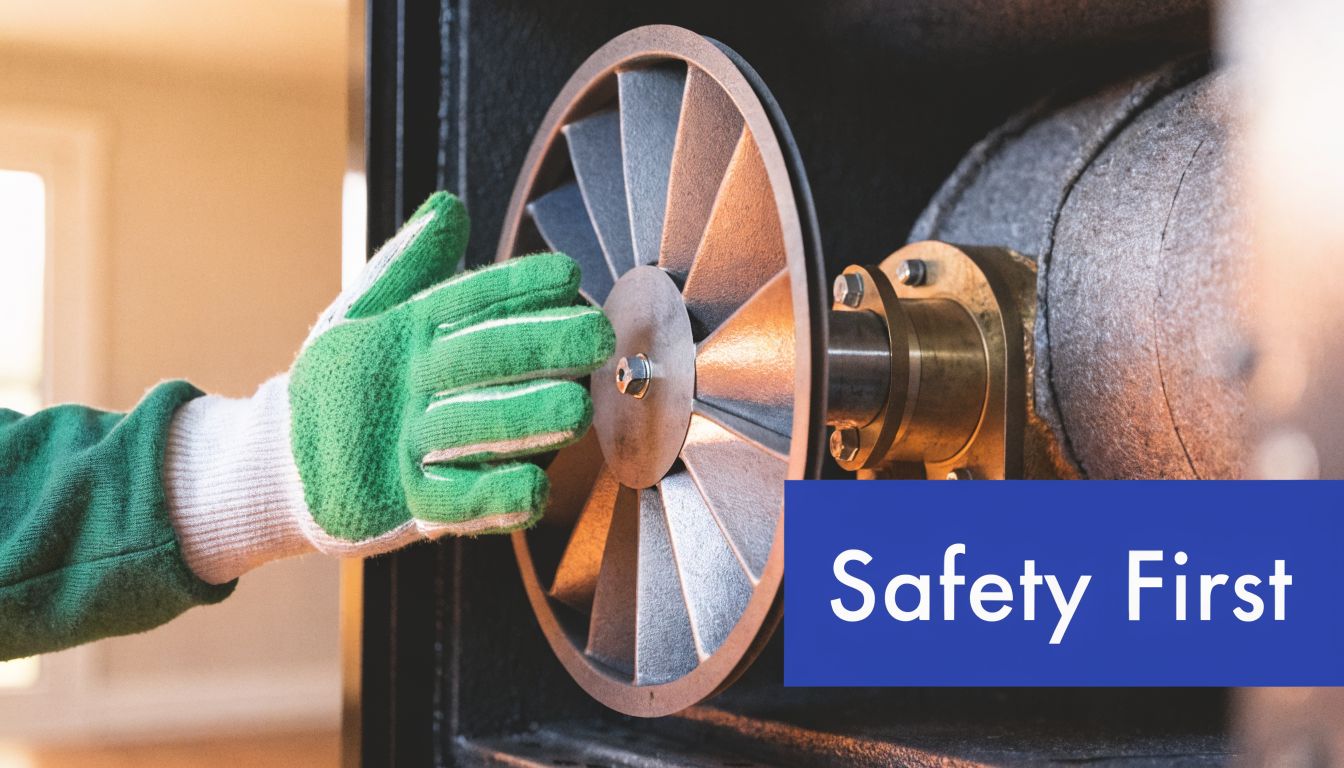
Start with safety
Shut power off at the breaker before you touch the cabinet. Turning the thermostat off is not enough because the blower can still energize under the right conditions.
If you have a gas furnace, stay out of the burner area and leave gas components alone. The blower section may be visible, but the full furnace is not a casual DIY project.
Stop sign: Burnt wiring smell, scorch marks, scraping metal, or anything that suggests a gas issue means stop and call for service.
What to inspect
Remove the access panel carefully and look into the blower compartment with a flashlight. In many homes, you will only see part of the wheel, and that is fine. You are checking condition, not trying to force a full diagnosis through a small opening.
Look for these problems:
- Dust caked on the blades: In Phoenix, fine dust sticks fast, especially after a long cooling season and another stretch of furnace use.
- Bent fins: A wheel has to stay balanced. Damaged fins can create vibration and noise.
- Rubbing marks on the housing: That points to misalignment, looseness, or a wheel that is no longer running true.
- Loose debris in the compartment: Insulation, hair, and dust clumps can get pulled into the wheel.
- Oil, metal dust, or discoloration near the motor: Those signs can point to bearing wear or heat stress.
How to clean light buildup
Surface dust is one thing. A wheel that is heavily packed, greasy, or buried inside the assembly usually needs to come out for a proper cleaning, and that is where homeowners often get in over their heads.
If the wheel is easy to reach and the buildup is light, use this basic process:
Cut power at the breaker
Confirm the unit is off before your hands go anywhere near the wheel.Remove the panel without forcing it
Set screws aside where you will not lose them.Brush the visible blades gently
Use a soft brush only. The fins bend more easily than they look.Vacuum the loosened dust
Use a brush attachment and keep the nozzle close, but do not press it into the wheel.Wipe reachable cabinet surfaces
Dust left in the compartment often gets pulled right back into the system.Check the wheel again after cleaning
Once the dust is gone, cracks, bent fins, and rub marks are easier to spot.Reinstall the panel and restore power
Listen closely at startup for scraping, wobble, or a motor that sounds strained.
A clean wheel helps airflow. It does not fix a bad bearing, a loose set screw, or a motor that has been running hot for too long.
Where DIY usually stops making sense
The hardest part is not brushing off dust. The hard part is knowing what you are looking at after the dust is gone. In Phoenix, extreme attic heat and long cooling runtimes can age motor bearings faster, and a worn bearing can make the wheel look like the problem when the motor is the actual issue.
Stop and hand the job off if you run into any of these:
- The wheel is buried inside the assembly
- It does not spin smoothly by hand
- You see bent fins or uneven spacing
- The wheel scrapes after cleaning
- There is visible scorching, oil, or metal shavings
- The same airflow problem comes back quickly
Blower performance also depends on the rest of the air side staying clean. If airflow has been restricted for a while, the indoor coil may need attention too. Our guide to air handler coil cleaning explains how that side of the system affects comfort and static pressure.
For a broader seasonal maintenance reference, this checklist for keeping your furnace running efficiently is a useful place to start.
Gentle cleaning is usually fine. Pulling the assembly apart without the right tools can turn a cleaning job into a repair bill.
Repair or Replace Understanding Costs and Timelines
Once a blower wheel problem is confirmed, most homeowners want the same answers. Can it be cleaned? Can it be repaired? Or is replacement the smarter move?
The honest answer depends on condition, age, accessibility, and whether the problem is isolated to the wheel or tied to the motor and housing. Dust and light debris may call for cleaning. A loose wheel, damaged fins, or repeated vibration may push the job toward repair or replacement.
What usually makes sense
A professional deep cleaning is the least invasive option when the wheel is dirty but structurally sound. Repair makes sense when a technician finds a correctable issue such as hardware looseness, alignment trouble, or a serviceable balance problem. Replacement becomes the practical choice when the wheel is damaged, seized to the shaft, badly corroded, or stressing the motor.
In the field, the biggest mistake I see is partial work on a worn assembly. A homeowner approves the cheapest fix, but the underlying problem stays in place. Then the system calls for help again.
A simple comparison for Phoenix homeowners
The table below gives planning ranges and time expectations for common blower wheel furnace service paths in Phoenix. These are estimates, not quoted pricing.
| Service Type | Estimated Cost Range | Typical Time on Site |
|---|---|---|
| Professional blower wheel cleaning | Varies by system condition and access | Often completed in a single service visit |
| Minor repair such as tightening, adjustment, or rebalancing | Varies by parts access and exact fault | Often completed in a single service visit |
| Blower wheel replacement | Varies by equipment match and labor complexity | May require a longer visit depending on disassembly |
| Blower motor and wheel assembly replacement | Varies more widely because motor type and assembly design matter | Often longer than cleaning or minor repair |
Trade-offs homeowners should think about
- Cleaning is lower commitment: Best when the wheel is dirty, intact, and the motor checks out.
- Repair works when the fault is specific: Good for a loose fastener or minor mechanical correction.
- Replacement is usually the durable answer for damaged parts: Especially when the wheel and motor have both been under strain.
- Access matters: An easy-access closet furnace is a different job from a cramped attic or tight utility space.
- Downtime matters too: If the system is your only source of conditioned air, repeated small repairs can be more disruptive than one decisive fix.
For homeowners budgeting ahead, this guide to the cost of a furnace inspection can help frame the first diagnostic step before you commit to repair decisions.
Why Phoenix Homeowners Face Unique Blower Wheel Challenges
Phoenix is hard on HVAC equipment. That’s not marketing talk. It’s daily reality in homes across Mesa, Gilbert, Chandler, Queen Creek, Tempe, and the rest of the Valley.
The environment here is different. Fine dust gets into return air, cabinets run through long cooling seasons, and high heat punishes moving parts.
Dust buildup happens faster here
A blower wheel works best when the blade surfaces stay clean and balanced. In Phoenix, airborne dust doesn’t need a dramatic monsoon event to become a problem. Everyday fine particulate can settle inside the system and stick to the wheel over time.
That buildup changes performance in two ways. First, it reduces how effectively the blades move air. Second, it can create imbalance, which leads to noise, vibration, and added strain on the motor bearings.
Heat affects more than comfort
Long periods of extreme outdoor heat translate into long operating hours. The more your system runs, the more every moving part matters. Bearings, shafts, mounting hardware, and wheel surfaces all see more wear when runtime stays high.
This is why a blower issue in Phoenix often doesn’t stay small for long. A little dirt becomes an airflow complaint. An airflow complaint turns into system strain. Then a homeowner starts hearing noise and wondering why one side of the house never feels right.
In cooler climates, a blower problem may develop slowly. In Phoenix, heavy runtime can expose it fast.
Large homes and long duct runs raise the stakes
Many Phoenix-area homes have layouts that demand solid airflow performance. Long branch runs, high ceilings, additions, and big open living areas all increase the importance of correct blower selection.
Blower wheel blade configuration directly affects airflow capacity, and choosing the correct blade count and width matters for larger homes or long duct runs, as explained in this guide to correctly sizing blower wheels.
That’s where local experience helps. A wheel that is technically close but not properly matched can leave a house with stubborn weak-air rooms, especially at the far ends of the duct system.
Why local conditions should shape maintenance habits
Phoenix homeowners need to think less like “fix it when it breaks” and more like “keep debris and wear from stacking up.” Filter changes matter. Return-side cleanliness matters. So does paying attention to early noise.
For readers comparing how other markets talk about furnace service, this roundup of Best furnace repair companies Birmingham is a useful example of how regional conditions change repair priorities. What works as a rule of thumb in one city doesn’t always fit desert HVAC reality.
When a DIY Fix Is Not Enough Call the Comfort Experts
A Phoenix homeowner often finds the line the hard way. The filter gets changed, the visible dust gets wiped off, the system comes back on, and the airflow still feels weak in the back bedrooms. Or the furnace starts with a new scraping sound that was not there last week. At that point, the problem is usually deeper than surface dirt.
Basic homeowner care still has value. Checking the filter, looking for obvious dust buildup, and cleaning light debris from an accessible compartment can help. But once you get into wheel balance, motor bearings, capacitor testing, wiring, or wheel removal from a tight cabinet, the risk goes up fast. In the Valley, our dust load and long cooling seasons also mean a blower assembly may have more wear than it first appears.
Red flags that need professional service
Call for service if you notice any of the following:
- Burning smell or hot electrical odor: This can point to an overheating motor, failing wiring, or a stressed capacitor.
- Breaker trips when the blower starts: That calls for electrical testing, not guesswork.
- Scraping or grinding sounds: The wheel may be rubbing the housing, or the motor bearings may be failing.
- Persistent vibration: A loose wheel, bent shaft, or bad mounting can damage other parts if the system keeps running.
- Repeated airflow problems after cleaning: The issue may be part selection, motor performance, duct restriction, or hidden wheel damage.
- Any concern around a gas furnace burner section: Work near combustion components needs proper training and safety checks.
Diagnosis matters because blower wheel problems like to stack on top of each other. A wheel can be dirty and out of balance. A motor can still run while the bearings are starting to fail. A homeowner may clean the blades and miss the underlying issue, which is a cracked hub or a wheel that has shifted on the shaft from vibration in extreme attic heat.
I see that a lot in Phoenix-area systems. Fine desert dust coats the blades, then the extra strain shows up in the motor. By the time the noise becomes obvious, the repair is no longer a simple cleaning call.
Professional service saves money when it prevents the second repair. A technician can check amp draw, inspect wheel alignment, verify the capacitor and motor condition, and confirm whether the problem is confined to the blower assembly or tied to a larger airflow issue in the system. If your unit is already past basic maintenance and showing repeat symptoms, schedule a professional furnace repair in Mesa before a noisy blower turns into a failed motor or a no-heat call.
Furnace Blower Wheel Frequently Asked Questions
Is it safe to run a furnace with a bad blower wheel
Sometimes the system will still run, but that doesn’t mean it’s safe to keep using it. If the wheel is only dirty, operation may continue with poor airflow and lower comfort. If the wheel is loose, scraping, or badly imbalanced, continued use can damage the housing, strain the motor, and make the eventual repair larger.
If there’s a burning smell, shut the system off and have it checked.
How often should a Phoenix homeowner have the blower wheel checked
Phoenix systems deal with more dust and long runtime, so regular inspection is a good idea. The exact timing depends on filter habits, home cleanliness, pets, nearby construction, and how often doors and windows are open.
A good practical rule is to have the blower area looked at during routine heating or cooling maintenance, especially if you’ve noticed dust at vents, changing airflow, or new noise.
Can a dirty blower wheel affect cooling too
Yes. The blower wheel doesn’t only matter during heating season. It also helps move air during cooling operation, so the same dirt and imbalance issues can reduce comfort in summer.
That’s one reason blower problems feel so frustrating in Phoenix. You don’t get much of an off-season where the issue can hide.
What does a bad blower wheel sound like
Common sounds include thumping, scraping, rattling, and sometimes whining. Thumping often suggests imbalance. Scraping can mean the wheel is contacting the housing. Whining may point more toward motor-side strain.
The exact sound matters less than the change. If your system sounds different than it used to, pay attention.
Can cleaning fix weak airflow
Sometimes, yes. If surface dirt is the main problem and the wheel is otherwise intact, cleaning can help restore airflow. If weakness remains after cleaning, the issue may involve the motor, duct restriction, incorrect wheel match, or mechanical wear.
Does blower wheel size really matter
Absolutely. The wheel has to match the equipment and airflow needs of the home. In houses with longer duct runs or larger layouts, the wrong wheel configuration can leave rooms under-served even if the furnace itself is producing heat normally.
Should I try to remove the blower assembly myself
Usually not unless you have solid mechanical experience and the equipment layout makes removal straightforward. It’s easy to bend fins, misalign parts, or create a bigger problem during reassembly.
Basic inspection and light cleaning are one thing. Assembly removal is another level.
If your furnace is noisy, dusty, or pushing weak air, Comfort Experts can help you pin down whether the problem is the blower wheel, the motor, or something else in the airflow path. Call 480-207-1239 or schedule service to get it checked before a small airflow issue turns into a larger repair.