When your air conditioner gives up in the middle of an Arizona summer, the first question that pops into your head is always, "How much is this going to cost me?" While the final cost to fix an AC can be anything from a simple fix to a major expense, you don’t have to go in blind. This guide is here to give you a clear, straightforward look at typical repair costs right here in the Phoenix area so you know what to expect.
Your Quick Guide to Arizona AC Repair Costs
Trying to figure out AC repair expenses can feel overwhelming, especially when the temperature inside your house is climbing by the minute. The honest truth is that your final bill comes down to one thing: what broke? A minor issue is usually a relatively small hit to the wallet, but if a major component has failed, it can be a significant investment.
According to recent industry numbers, the average cost for an HVAC system repair falls somewhere between $130 and $2,000. Most homeowners, however, end up paying around $350 for a standard job. That’s a huge range, right? It’s because a simple clogged drain line might only set you back $75 to $200, while a dead compressor can easily run from $800 to $3,000. You can find more details on these figures by reviewing findings from trusted home service experts.
To give you a clearer picture of where your problem might land, we've broken down the most common repairs into a simple reference table.
Typical AC Repair Cost Ranges at a Glance
This responsive table provides estimated cost ranges for common AC repairs in the Phoenix area, helping homeowners quickly understand potential expenses. Use it as your quick reference to see where your specific problem might fall.
| Common AC Repair | Average Cost Range | Typical Complexity |
|---|---|---|
| Capacitor Replacement | $150 – $450 | Low |
| Refrigerant Recharge (Leak Fix) | $300 – $1,200+ | Medium to High |
| Fan Motor Replacement | $400 – $900 | Medium |
| Thermostat Replacement | $200 – $650 | Low to Medium |
| Control Board Replacement | $500 – $1,000 | Medium |
| Compressor Replacement | $1,500 – $3,500+ | High |
Keep in mind these prices are good ballpark estimates. Your final cost will depend on a few key factors, like your unit's brand, its age, and how easy it is to get to—all things we'll dig into a bit later.
This initial breakdown should help demystify the numbers. The goal is to give you the knowledge you need to feel less stressed about getting your home's comfort back on track.
Understanding Common AC Repairs and Their Costs
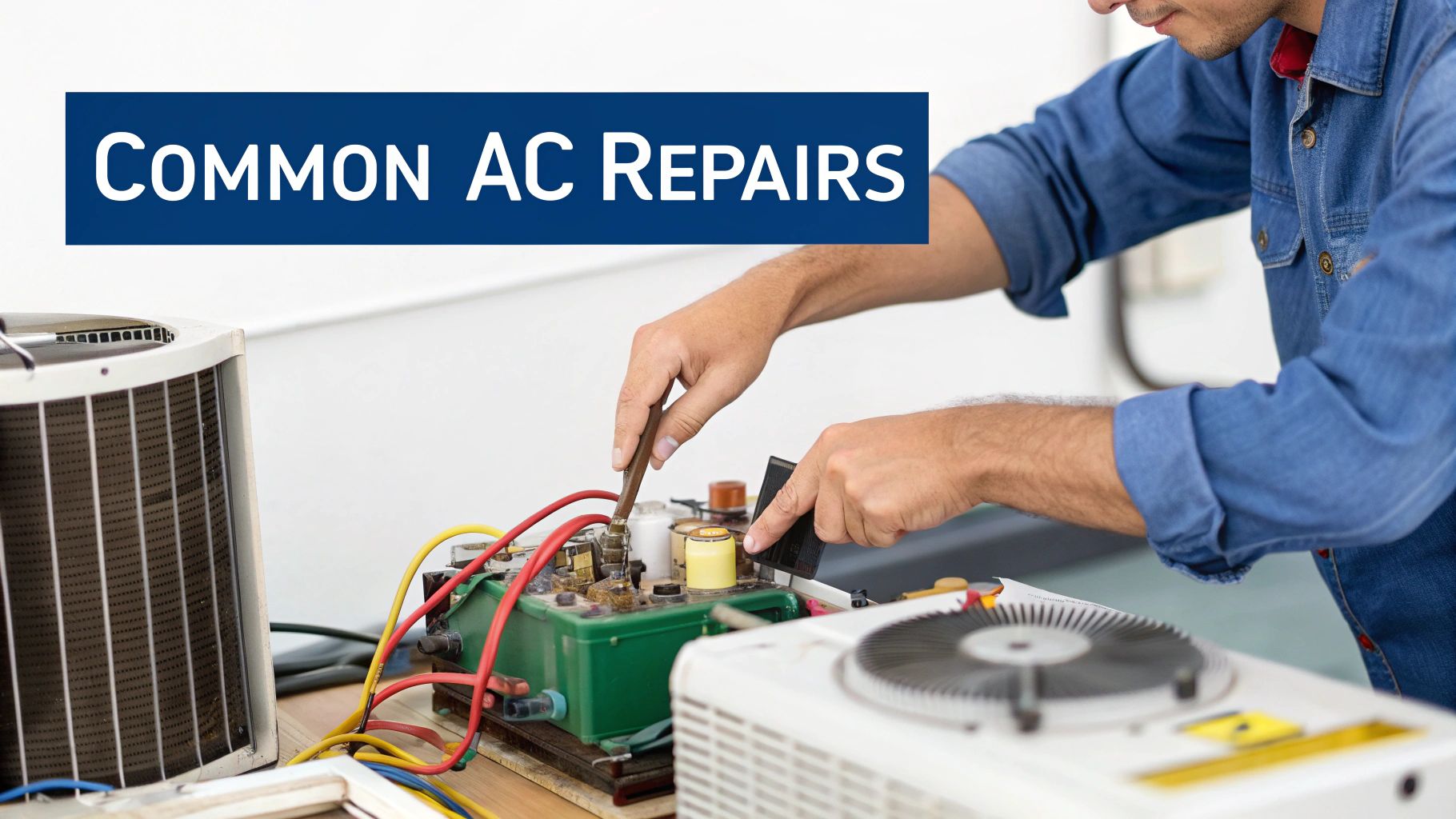
It’s one thing to see a price range, but it's another thing entirely to understand what you're actually paying for. When an HVAC technician starts throwing around terms like "capacitor" or "compressor," it can sound like a foreign language.
Let's pull back the curtain on the most frequent AC failures we see here in Arizona. Knowing what these parts do demystifies the diagnosis and helps you see the real value behind a repair quote.
The Capacitor: A Small Part with a Big Job
Think of the capacitor as the small battery that gives your AC's motors the jolt of energy they need to get started. It’s a small, cylinder-shaped part, but without it, the fan motor and compressor just can't get going.
A classic sign of a bad capacitor is when your outdoor unit hums but the fan won't spin. This little component works incredibly hard, especially in our brutal summer heat, making it one of the most common failure points we fix.
- Signs of Failure: You hear a humming or clicking from the outdoor unit, the fan blades won't start, or the whole system struggles to turn on.
- Typical Repair Cost: Fixing this AC problem usually lands between $150 and $450. For a trained technician, it's a relatively quick and straightforward fix.
The Compressor: The Heart of Your AC System
If the capacitor provides the initial jolt, the compressor is the powerful heart of your entire cooling system. It's the workhorse responsible for pressurizing and circulating refrigerant, which is how your system absorbs heat from inside your home and dumps it outside.
Honestly, a compressor failure is one of the most serious and expensive repairs an AC can have.
Because it's such a critical and costly component, a dead compressor on an older unit is often what triggers the "repair vs. replace" conversation.
A compressor replacement is a labor-intensive job. It involves recovering old refrigerant, brazing in the new part, and then recharging the system to precise levels. The high cost reflects both the expensive part and the specialized labor required to do it right.
Fan Motor Failures
Your AC system relies on two critical fans to work. There's one inside (the blower) that pushes cool air through your home's vents, and one outside that gets rid of the collected heat. When either of these motors dies, the whole cooling cycle grinds to a halt.
Worse yet, a faulty outdoor fan motor can cause the compressor to overheat and fail, turning a moderate repair into a massive one.
- Signs of Failure: The fan blades aren't spinning, you hear strange rattling or buzzing noises, or the system keeps shutting itself off unexpectedly.
- Typical Repair Cost: Replacing a fan motor generally costs between $400 and $900.
Refrigerant Leaks: The Slow Killer
A lot of people think their AC "uses up" refrigerant like a car uses gas, but that’s a total myth. Your AC is a sealed system. If it's low on refrigerant, it means you have a leak somewhere.
Just "topping it off" is like putting air in a tire with a nail in it—it's a temporary patch that doesn't solve the real problem. A proper repair means finding the leak, fixing it, and then recharging the system to the manufacturer's exact specifications.
The cost to fix this AC issue can vary widely, mostly depending on how hard it is to find and get to the leak. For more insight, you can learn about some of the most common AC repairs in Arizona in our detailed guide.
Key Factors That Influence Your Final Repair Bill
Let's be honest: the final price on your invoice is rarely just about the one broken part. Several key variables can swing your AC repair cost up or down, turning what seems like a simple fix into a much bigger financial question. Knowing what these factors are helps you understand the why behind a technician's quote.
Two homes can have the exact same broken component, but the repair bills can look wildly different. The gap between those prices almost always comes down to the specifics of your system and the situation.
Age and Efficiency of Your AC Unit
The age of your air conditioner is a huge piece of the puzzle. For systems that are over a decade old, finding the right replacement parts can feel like a scavenger hunt. This often means higher costs and longer waits for components that just aren't made anymore. On top of that, an older unit might use R-22 refrigerant, which is being phased out and has become incredibly expensive.
A system's efficiency—its SEER (Seasonal Energy Efficiency Ratio) rating—also plays a big role in the repair-or-replace decision. Sinking a bunch of money into an old, inefficient unit that guzzles electricity might not be the smartest long-term investment, especially when a new high-efficiency model could slash your monthly power bills.
A common guideline we use is the "50% Rule": if a repair is going to cost more than half the price of a brand-new system, replacement is usually the more financially sound choice. For an aging unit, you hit that threshold a lot faster.
HVAC Brand and Part Accessibility
Not all AC units are created equal, and neither are their parts. Premium brands sometimes use proprietary components that simply cost more than generic or third-party alternatives. The availability of those parts matters, too. A common part for a popular brand is usually cheaper and easier to get our hands on than a specialized component for a less common model.
This is exactly why having a technician who works with a wide range of brands is so important. They know the ins and outs of sourcing parts and can navigate the quirks between different manufacturers to find what's needed.
Labor Costs and Job Complexity
How hard is it to physically get to your unit? An AC condenser sitting on a concrete slab in your backyard is a world away from an air handler crammed into a sweltering, hard-to-reach attic. The tougher the access, the more labor time it takes, and that directly adds to your bill. A big chunk of any AC repair bill is labor; understanding how service providers calculate their fully burdened labor rate can help demystify where those charges come from.
Emergency and After-Hours Service
When your AC dies at 8 PM on a Friday during a Phoenix heatwave, waiting until Monday morning just isn't an option. That’s where emergency, weekend, and after-hours service comes in, and yes, it comes at a premium. This surcharge covers the extra cost of keeping certified technicians on standby outside of normal business hours, ensuring you can get help when you truly need it. While it costs more, for Arizona homeowners in July, this service is often a lifesaver.
The Phoenix Factor: Why Arizona Summers Drive Up Costs
Let's be blunt: keeping an AC running in Phoenix is a completely different ballgame. Our relentless, triple-digit heat isn’t just uncomfortable; it’s an absolute torture test for HVAC systems, pushing them to their breaking point for months straight. This brutal workload isn't a small detail—it directly fuels the frequency, the severity, and ultimately, the cost to fix AC units around here.
Think of your air conditioner like a car engine. An engine that just makes short, easy trips in mild weather is going to last a lot longer than one that’s constantly redlining on a racetrack in 115-degree heat. That racetrack is the Arizona summer, and your AC is the high-performance engine getting lapped day after day.
This constant, high-stress operation is what we call the "Phoenix Factor." Here’s the thing, it’s the simple reason why parts that might last 15 years in a gentler climate can give up the ghost in under 10 years here.
Common Heat-Related Failures
That extreme heat basically hits the fast-forward button on wear and tear. Critical components are forced to work harder, run hotter, and stay on longer, leading them to fail way ahead of schedule.
- Capacitors: These little cylinders are the spark plugs for your AC, giving the fan motor and compressor the jolt they need to start. The intense heat cooks their insides, which is why a failed capacitor is one of the most common calls we get when the summer heat really kicks in.
- Fan Motors: The outdoor fan motor's job is to blow heat away from your home. When it’s already over 110°F outside, that poor motor has to spin like crazy just to keep up, often leading it to overheat and burn out completely.
- Compressors: This is the heart of your whole system, and it’s under the most strain. Running nonstop in extreme heat can cause it to overheat and seize up—a catastrophic failure that leads to one of the most expensive repairs you can face.
The reality of our climate is that components don't just fail on their own; they're pushed to failure by the environment. This is why having local technicians who have seen it all since 2011 is so critical—we know the unique symptoms of heat-induced stress on an AC system.
Peak Season Demand and Pricing
The other side of the Phoenix Factor is simple supply and demand. As soon as the temperatures spike, our phones start ringing off the hook with AC repair calls from all over the Valley. This massive surge in demand can lead to longer waits for service and can definitely affect pricing, especially for emergency or after-hours calls.
It’s not just about the heat breaking your AC; it’s about the heat breaking everyone's AC at the same time. Knowing a few tricks to reduce cooling costs during an Arizona summer can help take some of that strain off your unit and your bank account. Understanding this local reality is key to appreciating why getting a solid, timely repair is so important here.
Repair vs. Replace: Deciding Your AC's Fate
Every homeowner eventually gets to this crossroads: do you keep sinking money into an aging air conditioner, or is it time to invest in a new one? You know what? It’s a tough question, especially when you’re looking at a big repair quote for an older system. Making the right call here can literally save you thousands of dollars down the road.
One handy rule of thumb we share with homeowners is the "5,000 Rule." Let me explain. It's a simple bit of math: multiply your AC unit's age in years by the estimated repair cost. If that number climbs over $5,000, replacement is probably the smarter financial move.
For example, say you have a 12-year-old unit that needs a $450 repair. That gives you a total of $5,400 (12 x 450), which suggests it's time to start looking at new systems.
This infographic breaks down how our intense Phoenix heat, high seasonal demand, and constant component stress create a perfect storm for rising AC costs.
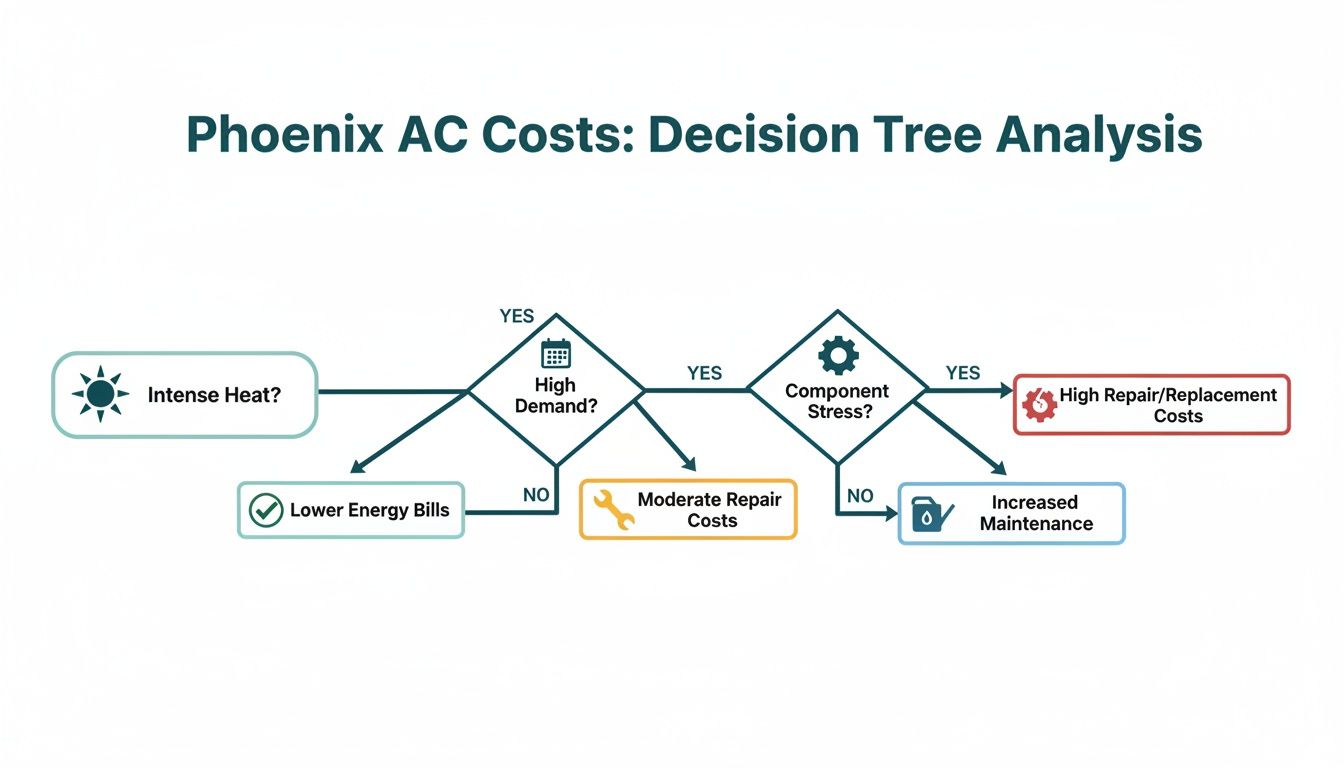
As you can see, these factors all feed into each other, leading to more frequent and expensive failures—and pushing many of us right into that repair-versus-replace dilemma.
Weighing Your Options Carefully
The decision isn't always cut and dry. Over the last five years, the entire HVAC industry has seen costs climb dramatically. A basic 4-ton heat pump replacement that might have been around $5,800 in 2020 can easily top $10,500 by 2025—that's an 81% jump, thanks to supply chain chaos and new government efficiency rules.
That price hike makes this decision more critical than ever. To help you think it through, we've put together a simple table comparing the pros and cons of each path.
AC Repair vs. Replacement Decision Matrix
This responsive table lays out the key differences to help you see which option makes more sense for your budget and your peace of mind.
| Consideration | Repairing Your AC | Replacing Your AC |
|---|---|---|
| Short-Term Cost | Lower initial out-of-pocket expense. | Higher upfront investment. |
| Long-Term Savings | None; energy bills likely stay high. | Big potential savings from better efficiency. |
| System Reliability | Still a gamble, especially on older units. | High reliability with a brand-new system. |
| Warranty Coverage | Usually limited to just the repaired part. | Comprehensive 5–10 year manufacturer warranty. |
| Future Standards | May use old, expensive R-22 refrigerant. | Compliant with new SEER2 and R-454B rules. |
As you can see, a repair solves the immediate problem, while a replacement is more of a long-term investment in reliability and efficiency.
One huge factor for older systems is the type of refrigerant it uses. If your unit still runs on R-22 (which is now phased out), the cost for a simple recharge can be astronomical. That alone often tips the scales heavily toward replacement.
Ultimately, a minor fix on a younger, well-maintained unit makes perfect sense. But if you're dealing with constant breakdowns or a major component failure on a system that's over 10 years old, putting that money toward a new, high-efficiency unit is almost always the wiser path to long-term comfort and savings.
To get a better handle on what a new system might cost, take a look at our guide on AC replacement cost in Arizona.
How to Save Money on AC Repair Costs
Nobody likes a surprise AC repair bill, especially when it hits during a sweltering Arizona summer. The good news is, you don’t have to just cross your fingers and hope for the best. With a few smart, proactive steps, you can get a handle on potential costs and protect both your comfort and your wallet.
This isn’t about finding cheap, corner-cutting fixes. It’s about playing the long game as a smart homeowner. A little bit of consistent effort can make a huge difference in preventing those catastrophic failures that always seem to happen on the hottest day of the year.
Embrace Proactive Maintenance
The single best way to save money on AC repairs is to stop them from happening in the first place. Think of regular, professional maintenance as the cheapest insurance you can buy for your cooling system. It’s like a routine oil change for your car—it catches the small stuff before it leaves you stranded.
During a tune-up, a good technician will clean, inspect, and test all the critical parts of your system. This is their chance to spot a worn-out capacitor or a minor electrical issue that, if left alone, could snowball into a complete system meltdown. We're talking about a fix that could save you hundreds, if not thousands, of dollars. One industry analysis even found that regular maintenance can slash the frequency of repairs by a whopping 30%. You can dig into some of those global market trends to see why staying ahead of problems is more important than ever.
An annual maintenance plan is one of the smartest financial moves you can make for your home. It’s a small, predictable expense that helps you dodge large, unpredictable ones.
Understand Your Warranty Coverage
Before you give the green light on any repair work, take five minutes to check on your warranty status. It's surprising how many homeowners forget they have coverage that could dramatically lower their out-of-pocket costs. You might have one of two types:
- Manufacturer's Warranty: This usually covers the cost of specific parts if they fail within a certain window, typically 5 to 10 years.
- Home Warranty: If you have a separate home warranty plan, it might cover the cost of labor, parts, or sometimes both for your AC repair.
Just knowing what’s covered can keep you from paying for something you shouldn't have to. You can find more practical advice like this in our guide to essential AC maintenance tips for Arizona residents.
Consider Financing for Large Repairs
Even with the best planning, a major breakdown can put a serious strain on any budget. If you're looking at a big-ticket repair, don't put it off and risk even more damage to your system.
Most reputable HVAC companies offer financing options. This can break down a large, intimidating bill into smaller, more manageable monthly payments. It’s a great way to get your home's comfort restored right away without creating an immediate financial crisis.
Trust Comfort Experts with Your AC Repair
When your air conditioner dies in the middle of a brutal Phoenix summer, you need more than just a quick fix. You need a team you can count on for honest answers, fair pricing, and work that actually lasts. Since 2011, we've built our reputation at Comfort Experts on being that team for families across Mesa and the Valley.
We’re a fully licensed and insured contractor (ROC #275914), and our seasoned technicians know exactly what our climate does to HVAC systems. We see the unique symptoms of heat-related failures every day and know how to solve them right the first time. Choosing the right partner is a big deal, which is why we've even put together a guide on how to choose an HVAC company you can genuinely rely on.
Our whole philosophy is built around treating you right. That starts the moment you call—you’ll always talk to a real person in our local call center, not an endless phone tree. To make sure no call gets missed, especially for urgent needs, many top-tier AC companies are even implementing a specialized HVAC answering service to guarantee that level of responsiveness.
Our promise is simple: we'll treat you like a neighbor, not just a number on a work order. We know AC problems don’t stick to a 9-to-5 schedule, which is why we offer weekend and after-hours emergency availability.
This isn't just about fixing a machine for us. It's about restoring your family's comfort and giving you back your peace of mind.
When you need a transparent, professional opinion on your air conditioning issues, trust the local team at Comfort Experts. Give us a call today at 480-207-1239 or schedule service online to get the help you need.