
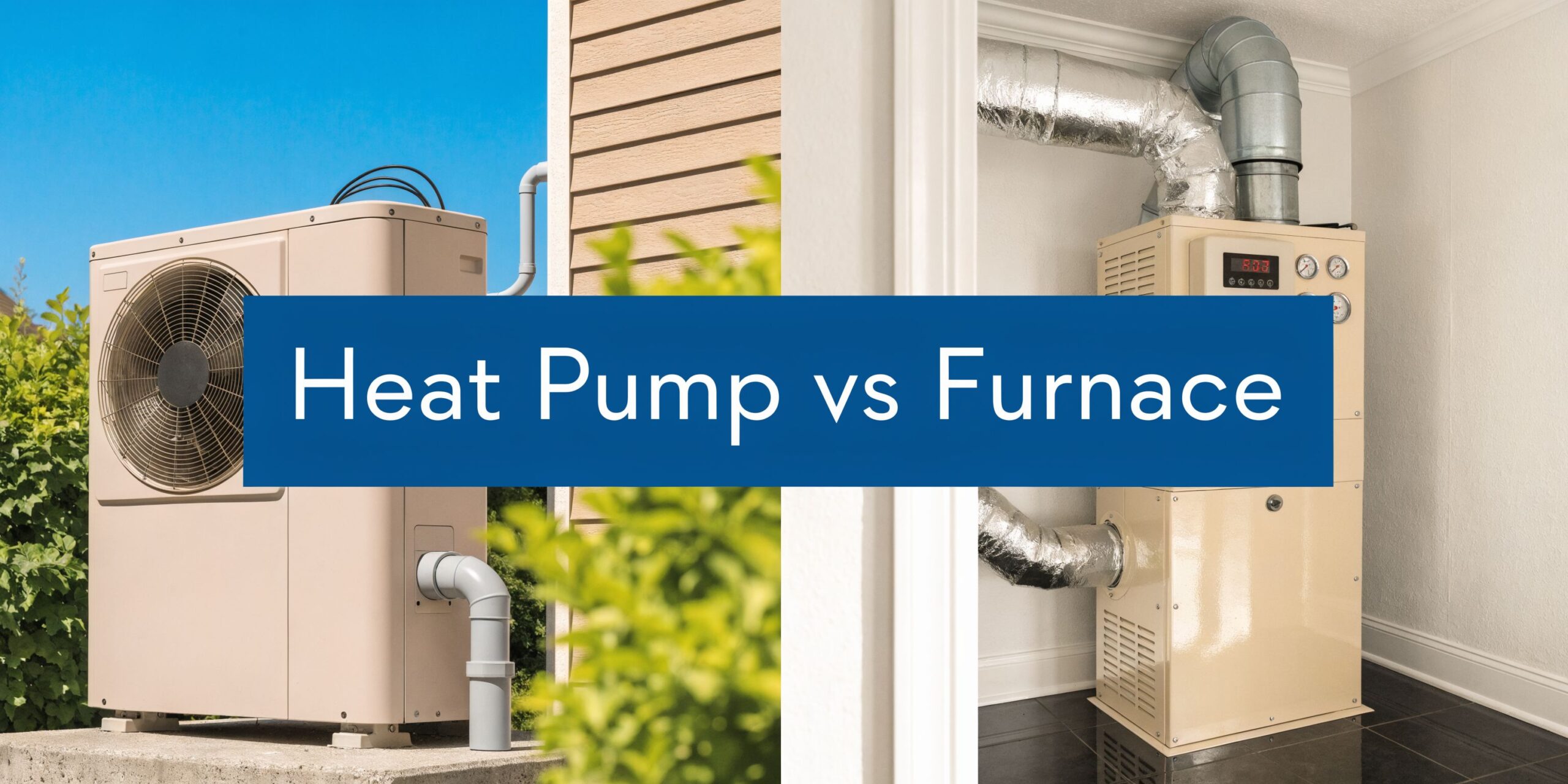
If you’re staring at an aging heating system in Mesa, you’re probably asking a simple question with a not-so-simple answer: what is the key difference between a heat pump and furnace for your home? In the Phoenix area, the right choice isn’t only about heat. It’s about comfort on dry winter mornings, utility costs, and whether your next system fits the way Arizona homes live.
Your Guide to Mesa Home Comfort
A lot of homeowners around Mesa reach the replacement point the same way. The AC still matters most because of our long cooling season, but then a cold desert night hits and suddenly the heating side of the system becomes a bigger deal than expected.
The confusion usually starts here. Both a heat pump and a furnace can keep your home warm, but they do it in completely different ways, and that difference affects energy use, indoor comfort, air feel, and long-term value.
If you want a clear answer instead of sales talk, start with the basic idea. A furnace creates heat. A heat pump moves heat. That one distinction explains most of what matters later.
How Heat Pumps and Furnaces Actually Work
Step outside in Mesa on a January morning and the air can feel cold enough to make you reach for the thermostat, even though we are nowhere near a true northern winter. What matters inside your house is not just whether the system makes heat. It is how that heat feels, how evenly it spreads, and whether it leaves the air even drier than it already is in the desert.
A furnace creates heat. A heat pump transfers heat.
A furnace creates heat
In a gas furnace, burners fire inside a sealed combustion chamber and heat the heat exchanger. The blower then pushes household air across that hot exchanger and sends it through the ductwork. Electric furnaces skip combustion and use resistance heat strips, but the result is similar. The air leaving the supply vents is hot.
According to Lennox’s heat pump vs furnace explanation, high-efficiency gas furnaces can reach 97% or 98.5% AFUE, but they still operate at a COP of 1 because they generate heat instead of moving it.
That is why furnace heat feels stronger at the register. You stand over a vent and feel a quick blast of hot air. Some Mesa homeowners like that because the house feels warm fast, especially in tile-floor homes that feel chilly early in the morning.
There is a trade-off. Shorter, hotter cycles can create more temperature swing from room to room, and in a dry winter climate that hotter air often feels harsher.
A heat pump moves heat
A heat pump uses the same refrigeration process your AC uses, but it can reverse direction in winter. It pulls heat from the outdoor air and brings it inside.
That sounds odd until you remember our winter conditions in Mesa are usually mild. Even when the air feels cool, there is still heat available outdoors for the system to capture and move.
If you want the mechanics in plain language, this guide on how a heat pump works breaks down the refrigeration cycle without the usual jargon.
Why the efficiency terms are different
Heat pumps and furnaces are measured two different ways because they do two different jobs.
COP
Heat pumps use coefficient of performance, or COP. Lennox also notes that a heat pump can operate with a COP between 2 and 5, which means it can deliver 2 to 5 units of heat for every 1 unit of electricity consumed.AFUE
Furnaces use Annual Fuel Utilization Efficiency, or AFUE. According to the same source, even top gas furnaces stay below 100% efficiency, with premium models reaching 98.5% AFUE.
In plain terms, a heat pump can deliver more heat energy than the electrical energy it consumes because it is transferring existing heat. A furnace does not work that way. It converts fuel or electricity into heat.
What you feel in the house matters
On paper, both systems can heat a home. In real houses around Mesa, they feel different.
Lennox also notes that furnaces typically deliver hotter supply air in the 55 to 60°C range, while heat pumps usually deliver milder air in the 25 to 45°C range. That difference shows up in comfort. Furnaces bring hotter bursts. Heat pumps usually run longer and more evenly.
That steady operation is one reason many homeowners say a heat pump feels less drafty. It can also be easier on indoor dryness. No heating system adds moisture unless you install a humidifier, but a furnace’s hotter discharge air often leaves people feeling drier in the skin, nose, and throat during our desert winters. That comfort detail gets ignored in a lot of heat pump versus furnace articles, but homeowners notice it fast.
Why Mesa changes the conversation
Cold-climate heating advice does not always apply here.
Lennox reports that at 8°C, air-source heat pumps can maintain COPs from 2.0 to 5.4, while at –8°C performance drops to 1.1 to 3.7. That matters because Mesa homes spend winter in the milder range far more often than in extreme cold.
In other words, a heat pump in the Phoenix area is usually working in conditions that suit it well. A furnace still has advantages if you want very hot supply air or have a strong preference for that quick warm-up feeling. But for many local homes, the heat pump’s gentler cycles line up better with our climate and the fact that the same equipment also handles cooling for most of the year.
The same heat-transfer principle shows up outside space heating too. For example, heat pump hot water systems use that same approach to move heat efficiently instead of generating it directly.
The Efficiency and Operating Cost Showdown
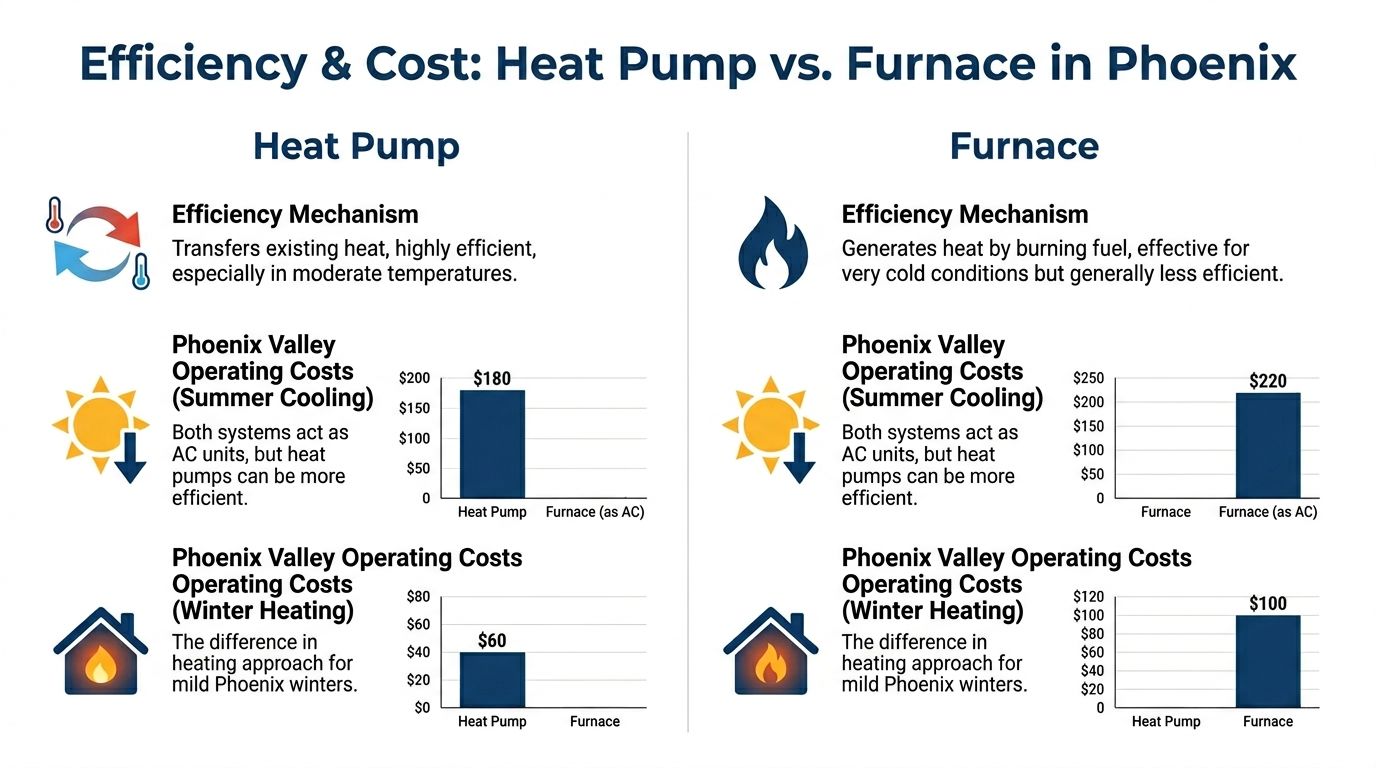
A Mesa homeowner usually asks this a little differently than the internet does. The key question is not which system wins a spec sheet. It is which one keeps the house comfortable in January without driving up utility bills or making the indoor air feel harsher than it already does in a dry climate.
Operating cost depends on more than the equipment label. Utility rates, gas availability, duct leakage, insulation levels, thermostat settings, and how often the system runs all affect the final bill. In Mesa, though, heat pumps deserve a serious look because our winter conditions let them work in their better range.
A quick Mesa comparison
| Metric | High-Efficiency Heat Pump | High-Efficiency Gas Furnace |
|---|---|---|
| How it heats | Transfers outdoor heat indoors | Burns gas to create heat |
| Efficiency framework | COP 2.0-4.0 in mild Arizona conditions per ACR Service | Up to 98% AFUE in cited comparison data from the same analysis |
| Cooling included | Yes | No, requires separate AC equipment |
| Best fit in Mesa winters | Strong fit for mild winter conditions | Strong fit if you want hotter discharge air |
| Typical comfort feel | Longer, gentler cycles | Shorter, hotter bursts |
| Dryness impact | Less likely to worsen dry indoor air | Can feel drier in winter |
The comparison gets more useful when you tie efficiency to actual living conditions.
The highest efficiency number on paper only matters if the system matches the home and the climate. ACR Service reports that in mild climates like Arizona, heat pumps can reach 200 to 400% efficiency (COP 2.0 to 4.0) and use 75% less electricity for heating than electric resistance systems. The same analysis states some homeowners can cut total HVAC operating costs by 30 to 50% over a furnace when paired with a smart thermostat, especially with modern variable-speed equipment.
Those numbers do not guarantee the same savings in every house. I see plenty of Mesa homes where attic heat, leaky ducts, or poor return airflow wipe out part of the gain. A good heat pump in a bad envelope still struggles. A decent furnace in a tight, shaded house can sometimes cost less to run than a homeowner expects.
Why a furnace still has a case
Furnaces keep their place for practical reasons.
Hotter supply air
If you want the vents to feel noticeably warm right away, a gas furnace does that better.Strong performance during cold snaps
Phoenix area winters are mild, but cold desert mornings still happen. A furnace gives fast recovery after setback temperatures overnight.Straightforward replacement in an existing gas setup
If the home already has gas service, a venting path, and a working AC system, replacing a failed furnace can be the simpler move.
That said, Mesa is a cooling-dominant market. A furnace only handles the smaller part of the annual workload. You still need separate cooling equipment, so the budget conversation is usually furnace plus AC versus one heat pump system doing both jobs.
Comfort affects value more than many homeowners expect
This is the part that gets missed. Two systems can heat the house to the same thermostat setting and still feel different to live with.
A furnace delivers hotter air in shorter cycles. Some homeowners love that. Others tell us the house feels more uneven, or they notice dry skin, a scratchy throat, or static electricity more during heating season. A heat pump usually runs longer and with lower discharge temperatures, which can feel softer and more even. It does not add moisture, but it often feels less aggressive in a desert house where indoor air is already dry.
That comfort difference matters because people respond to discomfort by changing the thermostat. If furnace heat feels too sharp or too dry, some homeowners turn the system down and live with cold spots. If a heat pump feels too mild at the vents, others turn it up looking for that blast of warmth. Either habit changes operating cost fast.
The house can swing the result
Before comparing equipment, look at the building shell. Insulation, window exposure, duct condition, and attic temperatures all influence whether a high-efficiency system performs like one.
If you want to improve system performance before deciding on equipment size or type, practical upgrades that improve home insulation and cut energy bills can make the comparison more meaningful. Better envelope performance gives either system a fair chance.
For the same reason, homeowners should review a few HVAC energy saving tips for Arizona homes before replacing equipment. Small fixes sometimes change the recommendation.
What usually pencils out in Mesa
Heat pumps usually make more financial sense when the homeowner wants one system for heating and cooling, spends a lot of the year running AC, and values steadier winter comfort over very hot supply air.
Furnaces still make sense for homeowners who already have a solid gas-and-AC setup, strongly prefer hotter air from the registers, or want to replace only the heating side without changing the cooling equipment yet.
A practical rule is simple. In Mesa, the better operating-cost choice is often the system that fits the house and the homeowner’s comfort habits, not the one with the most impressive headline rating.
Climate Suitability for the Phoenix Valley
Mesa is not a generic HVAC market. The right answer here comes from our actual weather pattern, not a national average.
Our summers are brutal. Our winters are usually mild, but the overnight chill can still surprise you. A system that looks average on a broad comparison chart may be a very good fit locally.
Summer matters more than many homeowners admit
In the Phoenix Valley, your equipment has to survive and perform through an extremely long cooling season. That alone pushes many homeowners toward looking at the full-year job, not just the winter side.
A heat pump handles cooling and heating in one setup. For many homes, that’s attractive because the equipment earns its keep year-round.
A furnace doesn’t help with summer at all. It depends on a separate AC system, which means more coordination between components when you’re replacing equipment.
Winter in Mesa is different from winter in colder markets
The old line that “heat pumps don’t work in cold weather” doesn’t really fit how most Mesa homes operate. Our winter nights can feel cold, but we’re not living through long stretches of severe freezing weather.
That’s why a heat pump can be a very practical heating choice here. It spends more of its time operating in conditions where it has an efficiency advantage, rather than fighting extreme outdoor temperatures every day.
If you’re preparing for those colder desert evenings, this guide to preparing Arizona winter heating HVAC in Mesa covers the local readiness issues homeowners tend to ignore until the first chilly night arrives.
But what about the air you actually breathe
This is the part many articles miss, and in Arizona it matters a lot.
Dryness isn’t just a side note here. It affects sleep, skin, eyes, sinuses, and how comfortable the house feels even when the thermostat says the temperature is fine.
According to Trane’s discussion of furnace heat versus heat pump heat, Arizona’s average relative humidity is 36%, and a 2025 Trane study noted 25-30% more complaints of dry skin and eyes in gas-heated homes versus heat pump homes in low-humidity zones. That same source explains that gas furnaces can exacerbate indoor dryness in arid climates, while heat pumps are better for maintaining more comfortable indoor air quality.
That lines up with what homeowners often describe in desert winters. The house may be warm, but the air feels sharper, drier, and less comfortable.
In Mesa, comfort isn’t only about reaching the thermostat setting. It’s also about whether the house feels dry, irritating, and restless once the heat comes on.
Side-by-side comfort differences in desert living
Heat pump comfort profile
Gentler airflow
The air usually feels less harsh coming from the registers.Better fit for dry climates
It doesn’t add the same combustion-related dryness issue associated with gas heat.Steadier indoor feel
Longer run times can reduce temperature swings.
Furnace comfort profile
More intense warm-air sensation
Some people love the immediate “hot air” effect.Drier indoor feel
In desert conditions, that can become a real quality-of-life issue.Faster recovery
If the home drops well below setpoint, a furnace often feels quicker bringing it back.
Ownership differences homeowners should expect
Choosing between these systems also means choosing a maintenance and installation path.
A heat pump needs an outdoor unit and indoor air-handling components that work together for both seasons. A furnace is usually an indoor heating appliance, but gas models also need proper venting and gas supply.
For homeowners with allergies or respiratory sensitivity, the dryness issue can shift the decision. Temperature alone doesn’t tell the whole story. In Mesa, air feel can be the deciding factor.
Installation Maintenance and Lifespan Differences
A lot of Mesa homeowners ask the wrong first question. They ask which system is cheaper to buy, then get surprised later by service calls, uneven comfort, or a heating setup that makes the house feel harsher every winter.
Installation quality decides a lot of that.
Installation is a system decision, not just an equipment decision
A heat pump has to be set up correctly for both cooling and heating. In Mesa, that matters because the unit will work hard through a long cooling season, then switch roles in winter. Refrigerant charge, airflow, defrost controls, thermostat setup, and duct performance all have to be right or the homeowner feels the consequences fast.
A furnace install has a different risk profile. The equipment is indoors, but gas piping, venting, combustion safety, and return air all have to be handled correctly. I have seen plenty of furnace replacements where the box was new but the airflow problems were old, and the comfort complaints never went away.
The trouble usually comes from poor system matching, not from the label on the equipment.
Wrong sizing
An oversized system short cycles. An undersized system runs too long and struggles on peak days or cold mornings.Duct issues left untouched
Leaky, undersized, or poorly balanced ducts can make a good furnace or heat pump feel mediocre.Control setup that doesn’t fit the equipment
Staging, fan settings, and thermostat programming affect comfort more than many homeowners expect.
Maintenance follows the workload
A heat pump handles cooling and heating, so it racks up more annual runtime in our market. That usually means more wear on contactors, capacitors, coils, fan motors, and other working parts over the life of the system. It also means skipped maintenance shows up sooner.
In Mesa, dust is part of the equation too. Outdoor coils collect it. Filters load up faster than some homeowners expect. Once airflow drops, comfort drops with it.
A furnace has a lighter annual workload here because our winters are short. But gas heat still needs yearly inspection. Burners, heat exchanger condition, ignition components, safeties, venting, and airflow all need attention. If you want a practical homeowner refresher before your tune-up, this furnace maintenance checklist covers the basics.
Lifespan is different, but so is what you are asking the equipment to do
Heat pumps usually have a shorter service life than furnaces. That makes sense. They run in both summer and winter, and Phoenix-area summers are brutal on outdoor equipment.
Furnaces often last longer because they only handle heating, and in Mesa they are not working for long stretches of the year. But that longer furnace life does not mean the full heating and cooling setup lasts longer. A furnace still depends on separate cooling equipment, and that cooling side has its own repair history and replacement timeline.
As noted by sources like Lennox, heat pumps often fall into a shorter lifespan range than furnaces. The practical takeaway is simple. Look at the whole comfort system, not one piece of it.
Comfort maintenance matters too
This gets missed in a lot of heat pump versus furnace articles.
If a furnace is producing heat but the home feels overly dry, dusty, or harsh in winter, many homeowners assume that is just normal desert living. It is not always that simple. Duct leakage, dirty filtration, weak airflow, and poor fan settings can make winter air feel worse than it should.
Heat pumps usually avoid that hotter blast of air you get from a furnace, which some homeowners in Mesa find easier to live with during dry winter nights. Furnaces can still be the right choice, but they benefit more from good filtration, proper airflow, and sometimes humidity strategies if indoor dryness is already a problem.
What usually holds up well
Equipment matched to the duct system
Good airflow protects comfort, efficiency, and service life.Regular service before peak seasons
Small refrigerant, ignition, or airflow issues are cheaper to fix early.Controls set for the house, not just the equipment
Fan timing and staging can change how the home feels room to room.
What usually causes expensive frustration
Swapping equipment without testing ducts
New hardware cannot fix bad air distribution.Skipping tune-ups because the system still turns on
Many failures give warning signs before a breakdown.Choosing only by purchase price
The cheaper bid often leaves out the work that makes the system last.
The best installation is the one that fits the house, the utility setup, and the way you want the home to feel in a Mesa winter. That includes comfort, dryness, service needs, and how many years of trouble-free operation you are likely to get.
The Best of Both Worlds with Hybrid Heating Systems
A Mesa homeowner feels this choice most on a January night. The house has been cool since sunset, the air is already dry, and nobody wants a system that is expensive to run or hard to live with. That is where a hybrid heating system earns its keep.
A hybrid system combines a heat pump with a gas furnace and lets the controls choose which one should run. In our climate, that usually means the heat pump handles the lighter winter heating, and the furnace steps in when outdoor conditions or comfort settings call for stronger heat.
How dual-fuel actually works
The heat pump is the first choice for most winter hours because Phoenix-area winters are mild compared with colder parts of the country. The furnace is the backup heat source, but in a well-set-up dual-fuel system, it is more than backup. It is there for colder mornings, fast recovery, and homeowners who want warmer supply air at certain times.
The switch between the two is automatic. A properly configured thermostat or control board uses outdoor temperature and system settings to decide which heat source makes more sense. Homeowners do not need to manage it day to day.
That matters for comfort, not just efficiency. In a desert climate, some people prefer the gentler, longer heat cycles from a heat pump because the home feels more even and less harsh overnight. Others still want the stronger punch of gas heat in the early morning. Hybrid gives you both options in one setup.
Why this setup fits Phoenix-area homes
Mesa homes spend far more time cooling than heating, so a heat pump already lines up well with how the equipment is used most of the year. Adding a furnace gives the system another tool instead of forcing one technology to cover every situation.
That flexibility has real value in desert homes. If winter dryness already bothers your family, the heat pump can carry much of the season with a softer heating profile. If you want quicker warm-up on colder nights, the furnace is there. If utility prices change over the life of the system, you are not locked into a single heating method.
The national efficiency arguments around dual-fuel systems get a lot of attention, but the local comfort argument is just as important. I see homeowners in Mesa respond well to hybrid because it reduces compromises. They are not choosing only efficiency, only hot air, or only familiarity. They are choosing a system that can adapt.
If you are weighing replacement options, working with an experienced Mesa HVAC company matters here because dual-fuel performance depends heavily on setup. Lockout temperature, thermostat programming, airflow, and duct condition all affect whether the system feels smart or frustrating.
Who should seriously consider hybrid
Homeowners replacing the full system
If both heating and cooling equipment are due, hybrid is easier to justify because the decision is being made at the system level, not piece by piece.Homes where comfort matters as much as utility cost
Hybrid helps households that notice dry winter air, uneven room temperatures, or the difference between gentle heat and hotter furnace air.Families that want gas heat without running it all winter
This setup keeps the furnace available without making it the only heating option.Homeowners planning to stay in the house
The long-term value is better when you will live with the comfort and operating-cost benefits for years.
Why hybrid is often misunderstood
Some homeowners hear "dual-fuel" and assume it means more parts to worry about. In practice, the bigger issue is whether the system was designed and commissioned correctly. A poor setup can make any equipment disappoint. A good setup makes hybrid feel simple.
Field experience backs that up. When dual-fuel works well in Mesa, the homeowner usually notices three things first. Winter bills stay reasonable. Morning comfort improves. The house feels less like it is swinging between too cool and too hot.
What this option does especially well
It balances comfort better
The heat pump can handle the long stretches of mild winter weather. The furnace can cover the shorter periods when stronger heat feels better.
It gives you more control over dryness trade-offs
No heating system adds moisture, but the feel of the heat still matters in a dry climate. Many homeowners find that relying on the heat pump for much of the season makes winter air feel less aggressive than running gas heat alone.
It adds flexibility without daily hassle
The controls do the switching. You get the benefit of two heat sources without managing them by hand.
For many Mesa homes, hybrid is the most balanced answer. It fits the way people live here, where efficiency matters, comfort matters, and dry winter air can change what "best" means.
Making the Right Choice for Your Arizona Home
So what’s the key difference between a heat pump and furnace when it’s time to choose for your own house?
It comes down to what matters most in your home. Not in a showroom. Not in a national article. In your actual rooms, your ductwork, your utility habits, and your comfort expectations.
A heat pump is likely the better fit if
You want one system that handles both cooling and heating.
You want strong efficiency in mild winter weather.
You care about indoor comfort beyond just temperature, especially if dry air already bothers your family during winter.
You want a system that aligns well with how Mesa homes use HVAC most of the year.
A furnace is still a strong option if
You already have gas infrastructure in place and prefer to stay with it.
You like hotter air from the vents and want that immediate warm-air sensation.
You’re replacing a heating appliance and want to keep a familiar setup.
You place a premium on the feel of gas heat more than the gentler profile of heat-pump heating.
A hybrid system often makes the most balanced choice if
You want efficiency during most winter conditions but don’t want to give up gas backup.
You’re replacing a larger portion of the HVAC system and want flexibility.
You want to reduce trade-offs instead of choosing one side completely.
The best choice usually becomes clear only after someone evaluates the home itself. Duct condition, insulation, room-by-room airflow, equipment sizing, and comfort complaints all matter. That’s why homeowners who start with “just give me a price” often end up with the wrong system.
If you’re comparing contractors as well as equipment, this article on finding the best HVAC company near me can help you judge the person doing the diagnosis, not just the brand on the box.
The right recommendation should answer questions like these:
Does the house run hot or uneven now
That can point to airflow or duct issues, not just equipment choice.Do you hate dry winter air
In Arizona, that complaint should influence the recommendation.Are you replacing cooling equipment too
That changes the cost and value comparison.Do you want the lowest operating cost, the hottest air, or the most balanced comfort
Those are not always the same answer.
You know what? Most bad HVAC decisions come from treating every house in Mesa like it has the same priorities. They don’t.
Some homeowners want the simplest path. Some want the lowest winter bill. Some want relief from dry, irritating indoor air. Some want premium flexibility and no compromises. All of those are legitimate priorities.
The smartest move is to match the system to the home and the people living in it.
For a personalized recommendation based on your home’s layout, comfort goals, and existing equipment, contact Comfort Experts by calling 480-207-1239 or schedule service online.