It's a frustrating feeling when your furnace kicks on but only pushes out cold air, especially during a chilly Arizona night. Before worrying about an expensive repair, know that a furnace not blowing hot air often has an easy fix. In fact, many common issues can be resolved with a few simple checks that take less than 15 minutes.
Honestly, a few quick checks can often solve the problem in minutes without costing you a dime.
First Steps For a Furnace Blowing Cold Air
That blast of cold air from your vents is more than just annoying; it’s a sign something in the system is off. But it’s rarely a sign of total failure. More often than not, your furnace is trying to tell you something simple needs attention.
Let's walk through the most common culprits, starting with the absolute basics that we check first on every service call.
A furnace blowing cold air is a symptom, not a catastrophe. Think of it as your system’s way of saying a simple maintenance item—like a dirty filter or the wrong thermostat setting—needs a quick look.
We've created a simple decision tree to illustrate the first three things you should always check. It’s the same mental checklist our technicians at Comfort Experts run through.
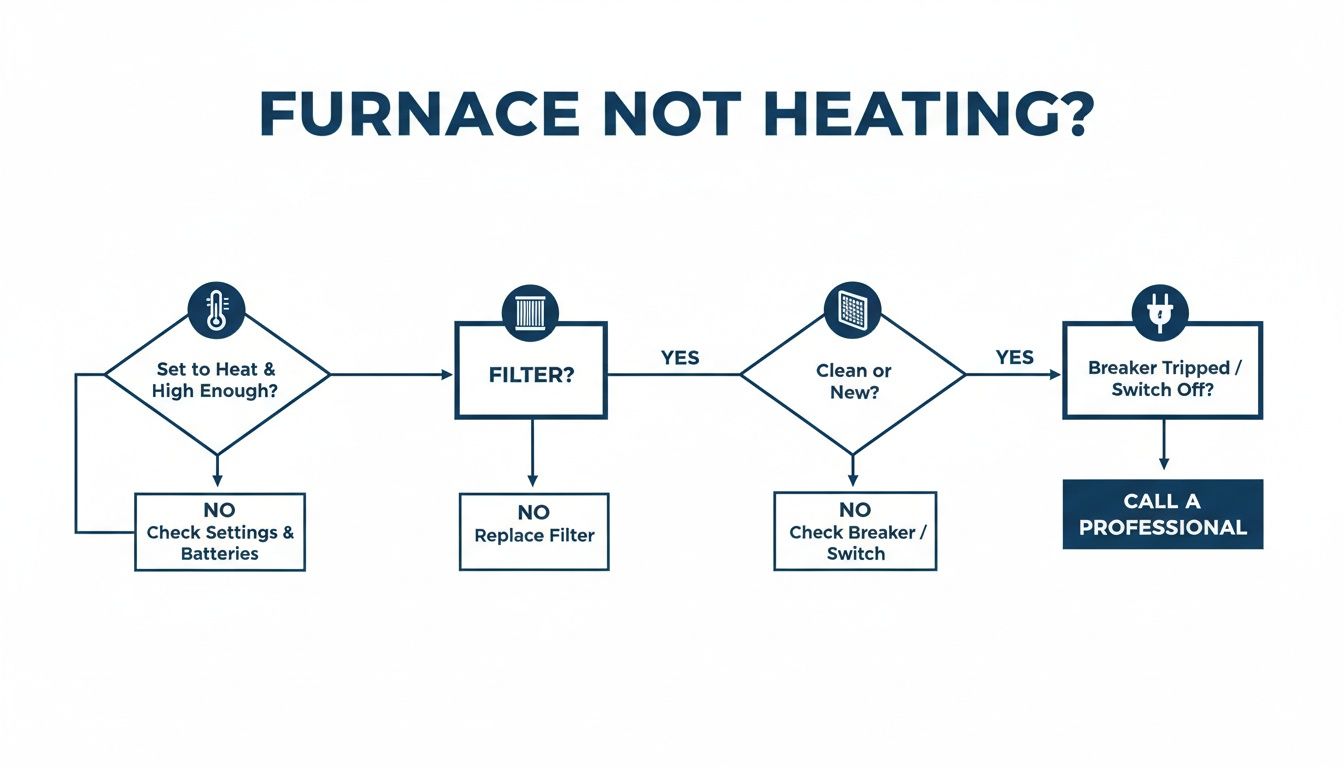
As the chart shows, starting with the thermostat, then the air filter, and finally the power source covers the most frequent and easily fixable problems.
Common Causes and Simple Solutions
Beyond the thermostat, a few other simple issues can stop your furnace from producing heat.
A severely clogged air filter is a huge one. It can restrict airflow so much that the heat exchanger overheats and triggers a safety shutoff. If you're curious about this critical component, we have a helpful guide explaining what a heat exchanger is and why it matters.
When that safety switch trips, the furnace stops the burners but keeps the fan running to cool things down—which is why you suddenly feel cold air blowing through your vents.
In the same vein, a tripped circuit breaker or a flipped power switch (often located on or near the furnace unit itself) can cut power to the heating elements while leaving the blower fan with enough juice to run.
Quick DIY Furnace Troubleshooting Checklist
To make it even easier, here’s a quick table you can use to run through the most common fixes before you do anything else.
| Symptom | Potential Cause | Easy Fix | Estimated Time |
|---|---|---|---|
| Furnace blows, but air is cool or cold. | Thermostat is set to 'COOL' or 'FAN ON' instead of 'HEAT'. | Switch the mode to 'HEAT' and ensure the temperature is set at least 3-5 degrees above the current room temp. | 1 Minute |
| System doesn't turn on at all. | Thermostat has dead batteries. | Replace the batteries (usually AA or AAA) in the thermostat unit. | 2-3 Minutes |
| Airflow from vents is very weak and not warm. | The air filter is completely clogged with dust and debris. | Replace the furnace filter. Check the size printed on the side of the old filter. | 5 Minutes |
| Nothing is running—no fan, no heat. | Furnace power switch is off or the circuit breaker is tripped. | Find the power switch near the furnace and flip it on. Check your breaker box for a tripped breaker and reset it. | 5-10 Minutes |
Running through these four checks can save you a lot of time and frustration. If you've tried all of them and you're still left in the cold, it’s time to look at slightly more complex issues.
The #1 Culprit: A Clogged Air Filter
More often than not, the reason your furnace is blowing cold air isn't some catastrophic failure. It's something much simpler and, thankfully, much cheaper to fix. In our experience across the Phoenix Valley, the most common problem is a dirty, clogged air filter.
It’s the easiest thing to overlook and the absolute first thing you should check.
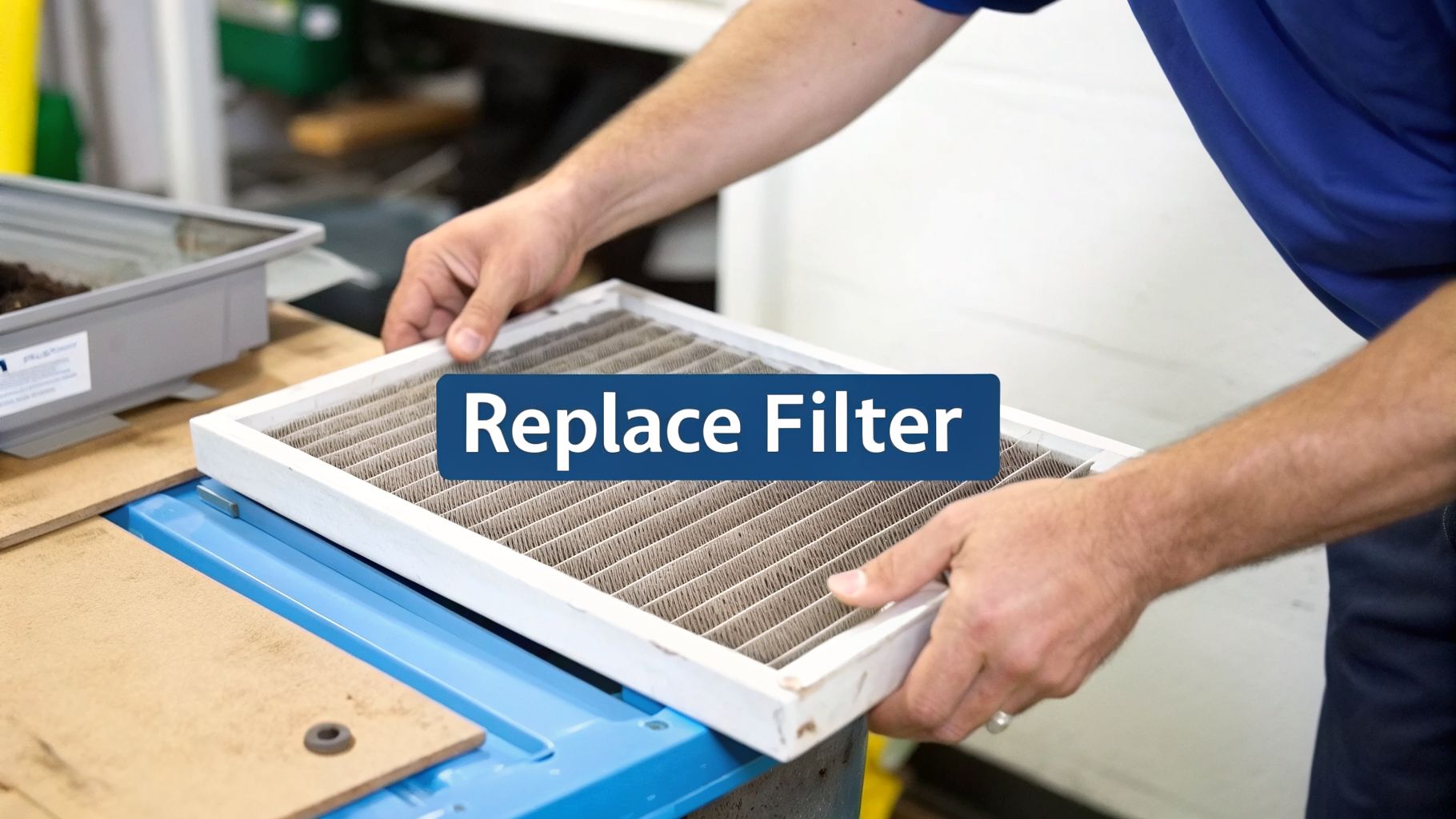
Think of it this way: your furnace needs to breathe. When the filter is packed with dust, pet dander, and everything else floating around our Arizona air, it suffocates the system. This lack of airflow causes the heat exchanger—the part that actually warms the air—to get dangerously hot.
Your furnace has a built-in safety control that says, "Whoa, too hot!" It shuts off the burners to prevent damage but leaves the fan running. That’s why you’re suddenly getting a blast of lukewarm or cold air from your vents. The system is protecting itself.
How a Simple Filter Creates a Big Headache
Believe it or not, a dirty filter is the #1 preventable cause we see, showing up in roughly 50% of our "no heat" service calls. Here in Arizona, the dust means filters can clog up twice as fast as the national average.
A seriously clogged filter can slash airflow by up to 60%, which is more than enough to trigger that safety shutoff.
The first step is finding the filter itself. If you're not sure where it is, you're not alone. We put together a simple guide on where to find the air filter in your house to help you locate it quickly.
The Light Test: Once you have the filter out, hold it up to a light. Can you see the light clearly through the filter material? If not, it's toast. Time for a new one.
When you're grabbing a replacement, pay attention to the MERV rating. That number just tells you how well it traps particles.
- MERV 1-4: These are your basic, budget-friendly filters. They’ll catch the big stuff like dust mites and pollen.
- MERV 5-8: This is the sweet spot for most homes. They grab smaller particles like pet dander and mold spores without choking your system’s airflow.
- MERV 9-12: A great choice if you have allergies or asthma. Just be sure to check your furnace manual—some systems can’t handle the thicker material of these higher-rated filters.
Your Furnace Might Be Overheating
It sounds backward, doesn't it? But sometimes, your furnace blowing cold air is actually a sign it's working perfectly—it's protecting itself, and your home, from a much bigger problem.
Every modern furnace has a safety device called a high-limit switch. Think of it as a smart thermostat for the internal parts of your furnace. If the temperature inside gets dangerously hot, this switch does its job and immediately shuts off the burners. The fan, however, keeps running to push air through the system and help it cool down. That's the cold air you're feeling.
What Causes a Furnace to Overheat?
So, what’s causing all that heat to back up in the first place? Here’s the thing: in almost every case, it comes down to one thing: restricted airflow. The furnace is making plenty of heat, but that hot air has nowhere to go.
- Clogged Air Filter: This is offender number one, every time. A filter packed with dust and pet hair is like trying to breathe through a pillow—it suffocates your furnace and causes heat to build up fast.
- Blocked or Closed Vents: If you’ve closed the vents in too many rooms or a piece of furniture is sitting on top of a supply register, you’re creating a roadblock. The hot air gets trapped, and the limit switch trips.
- Dirty Blower Wheel: Over time, the fan blades (blower wheel) can get caked with dust. This buildup makes the fan less effective at moving air, leading to the same overheating problem.
Overheating is behind a surprising number of service calls—we see it in about 20-25% of cold air complaints, especially with older units. Most modern furnaces will trip their limit switch around 160-180°F to prevent serious hazards like a cracked heat exchanger or even a fire.
Here in the dusty Phoenix Valley, clogged filters can accelerate this problem by 40%, making it one of our most frequent winter calls. Thankfully, the fix is often simple: turn the system off, let it cool down completely, and clean any visible dirt or obstructions. You can find more insights about this common issue from HVAC professionals if you want to dig deeper.
One of the easiest and most effective first steps you can take is to simply walk through your home and make sure every single air vent is open and not blocked by furniture or rugs. You might solve the problem in five minutes.
Checking Your Ignition System or Pilot Light
Alright, so you've checked the easy stuff—the filter is clean and the thermostat is set right. Now we need to look at the heart of the furnace: the part that actually makes the fire. You know what? When a furnace blows cool air, it's often because the system that creates the flame isn't doing its job.
Depending on how old your furnace is, you’ll either have a classic standing pilot light or a more modern electronic igniter.
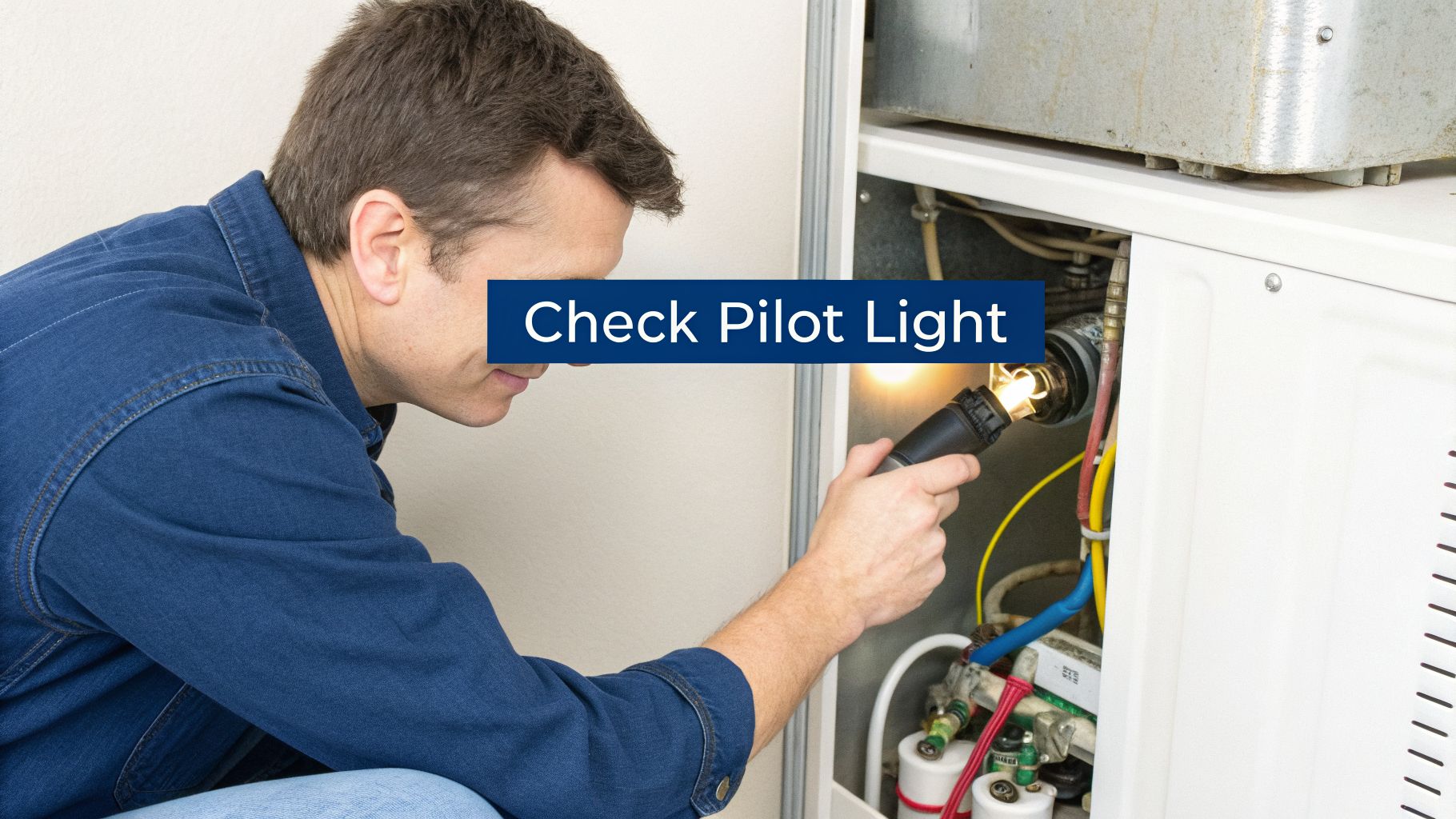
Older furnaces keep a small flame—the pilot light—burning 24/7. This little flame is what ignites the main burners whenever the thermostat calls for heat. If it goes out for any reason, the furnace can’t light, but the fan might still run, pushing that unheated air through your vents.
Newer, higher-efficiency furnaces use an electronic ignition. Instead of a constant flame, they create a spark or heat up a small element to get things going. You might hear a repetitive clicking sound, or see a component start to glow bright orange (that’s a hot surface igniter). If the main burners don’t light up after a few tries, the furnace’s safety controls will shut the whole process down to keep raw gas from building up.
CRITICAL SAFETY WARNING: If you smell gas—that unmistakable "rotten egg" smell—stop what you're doing. Do not try to light anything or even flip a light switch. Get everyone out of the house immediately, call your gas company from a safe location, and then give a professional a call.
Pilot Lights vs. Electronic Igniters
If you have an older furnace, you can usually find instructions for relighting the pilot printed right on a sticker inside the furnace access panel. Make sure you follow those directions to the letter. If you get it lit but it won't stay lit, the problem is often a dirty or worn-out thermocouple.
For furnaces with electronic systems, that persistent clicking with no flame usually points to a bad igniter or a dirty flame sensor. These are parts that can be cleaned or replaced, but it takes some know-how.
Sometimes, the root cause is deeper. We often see situations where a heater and AC are not working at the same time, which can signal a more complex problem with the main control board or power supply that goes beyond a simple ignition fix.
When to Call a Professional for Help
Okay, so you’ve done all the simple stuff. You’ve checked the thermostat, swapped the filter, and made sure the vents are wide open, but your furnace is still blowing cold air. It’s a frustrating place to be.
While plenty of furnace problems are a quick DIY fix, some issues are clear warning signs that it’s time to put the tools down and call in an expert. Let me explain: pushing it further can turn a simple repair into a complete system replacement—or worse, create a real safety risk for your family.
Red Flags You Shouldn't Ignore
Some symptoms are your furnace’s way of screaming for professional help. If you notice any of these, it’s a strong signal that the problem goes way beyond a dirty filter.
- Loud Noises: Your furnace should hum, not sound like a metal band is practicing in your closet. Any sudden banging, scraping, or high-pitched squealing usually points to a failing blower motor, a loose part, or another serious mechanical issue.
- Frequent Cycling: Is your furnace kicking on for a minute, shutting off, then firing right back up again? We call this "short cycling," and it often means you have a bad flame sensor or an overheating problem that a new filter couldn't solve.
- Yellow Pilot Flame: If you have an older furnace, that little pilot flame should be a crisp, steady blue. A weak, flickering, or yellow flame is a major red flag for incomplete combustion, which can produce dangerous carbon monoxide.
A cracked heat exchanger is one of the most dangerous furnace failures. It can leak deadly carbon monoxide into your home. Loud noises or strange smells coming from your vents are urgent signs that demand an immediate professional inspection.
Diagnostics That Require an Expert
The problems I just listed are almost always caused by failed components that are unsafe for a homeowner to mess with. You need specialized training and the right diagnostic tools to tackle them safely.
A faulty flame sensor, for example, needs to be handled and cleaned very carefully, and replacing a blower motor is a complex electrical job. If you’ve tried the easy fixes and are still stuck, you could be facing an HVAC repair emergency that needs a pro right away.
Attempting these repairs yourself puts you at risk of electrical shock, gas leaks, or causing even more damage to your system. To get a better feel for what a professional diagnosis involves, check out our guide on the common signs of furnace repair needs in Mesa AZ.
Common Questions About Furnace Problems
Even after you've checked the usual suspects, some furnace behaviors can still leave you scratching your head. It’s totally normal to wonder about the strange noises or odd cycles your system goes through.
Here are a few of the most common questions we get from homeowners all across the Phoenix Valley.
Why Does My Furnace Blow Cold Air First?
Ever feel a puff of cool air right after your furnace kicks on, just before the warm air starts flowing? Believe it or not, this is a good sign. It means your furnace's safety features are doing their job.
It’s all part of a planned startup sequence. The blower fan turns on first to get air moving through the system before the burners ignite. This simple step prevents the heat exchanger—the heart of your furnace—from getting hit with a sudden, intense blast of heat, which could cause damage over time. Once the system knows the flame is steady and the heat exchanger is safely warmed up, it sends that cozy air your way.
Is It Normal for My Furnace to Turn On and Off Frequently?
This one is a little more concerning. A furnace that constantly starts and stops in short bursts is what we call "short cycling." While any system will run more often on a truly cold day, cycles that only last a few minutes are a red flag.
Often, the culprit is something simple like restricted airflow from a dirty filter or a blocked vent, which causes the furnace to overheat and shut itself down for safety. But it can also point to bigger issues. It's worth learning the other signs your furnace needs repair to see if you notice any other symptoms.
A healthy furnace cycle on a cold day usually lasts 10-15 minutes, maybe two or three times an hour. If your unit is only running for a few minutes at a time, something is wrong. That constant starting and stopping puts a ton of unnecessary wear and tear on your equipment.
How Often Should I Get My Furnace Serviced in Arizona?
We get it—furnaces aren't top-of-mind here in Arizona. But we still strongly recommend a professional service once a year, usually in the fall before you actually need the heat. This quick tune-up makes sure your system is clean, running safely, and ready for those chilly winter mornings.
Regular maintenance is the single best way to prevent surprise breakdowns. A technician can spot a small problem before it turns into an expensive repair, extend the life of your furnace, and keep it running efficiently. Following a complete furnace maintenance checklist ensures nothing gets missed, giving you real peace of mind.
When you've tried the DIY fixes and still don't have heat, Comfort Experts is ready to help. Our certified technicians will find the real cause of the problem and get warm air moving through your home again. Give us a call at 480-207-1239 or schedule service online for fast, honest furnace repair you can count on.