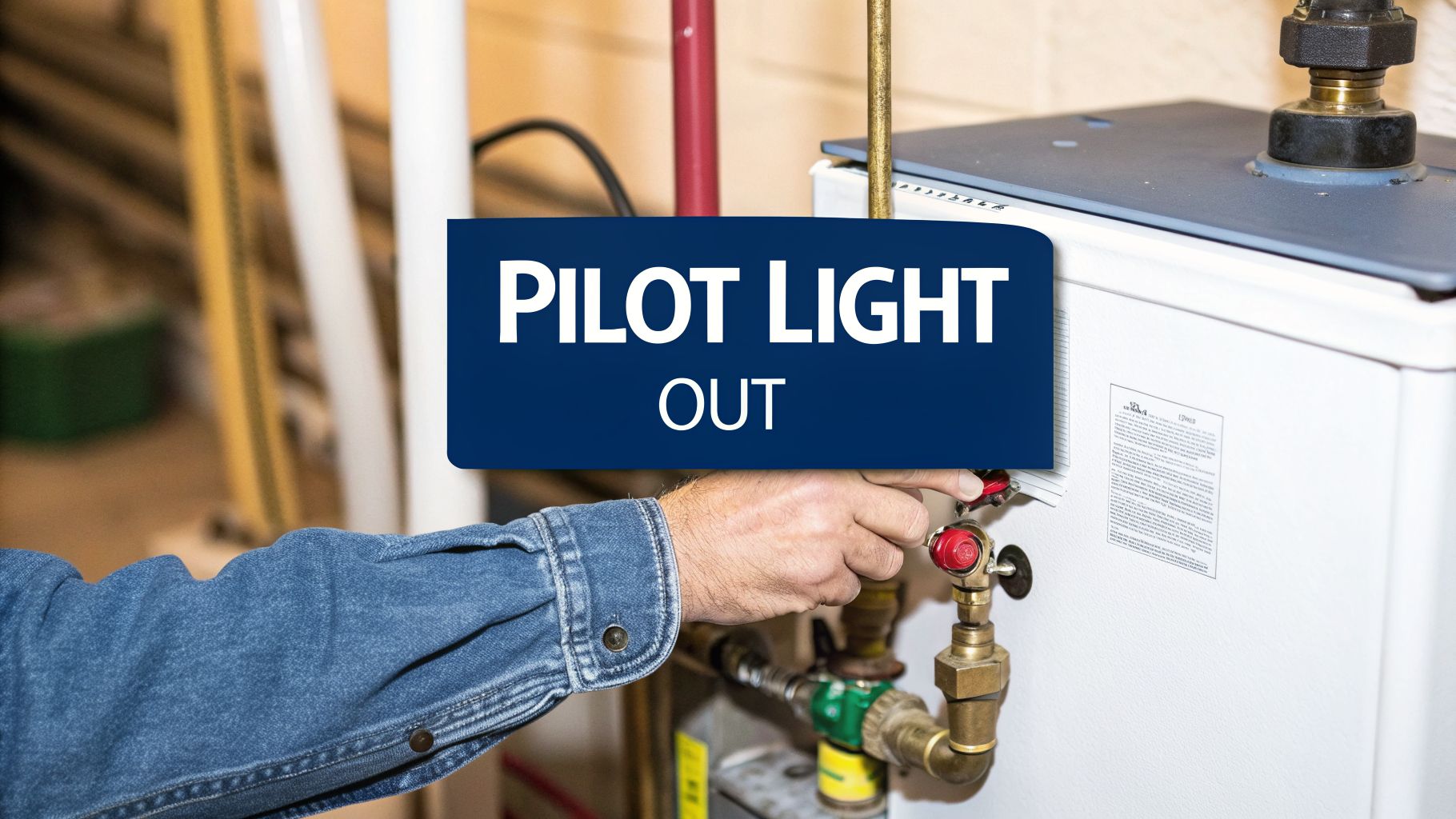
It’s a chilly Arizona night, and just when you need the heat to kick on, an unnerving silence hangs in the air. If your pilot light keeps going out on your furnace, you’ve got more than a small hassle—you’ve got a cold house and a frustrating mystery to solve. This is one of the most common—and stressful—wintertime calls we get at Comfort Experts from homeowners all over the Phoenix Valley.

So, What’s Happening in There?
When your heating system suddenly fails, it can feel overwhelming, but figuring out why your heating isn't working often starts with that tiny flame. This guide will walk you through the usual suspects, from simple DIY fixes to problems that absolutely need a pro’s touch. Our goal, based on years of in-the-field experience, is to help you understand the issue and get that warmth back on for good.
Here's the thing: the pilot light is a small, steady flame that’s always on, ready to ignite the main burners whenever your thermostat calls for heat. If that flame goes out, a crucial safety feature immediately shuts off the gas supply. It’s a smart design that prevents unburnt gas from filling your home, but it also means no heat until the problem is solved.
Sometimes, the issue can seem unrelated, like an airflow problem caused by a component like the furnace’s heat exchanger. You can learn more about what a heat exchanger is in our detailed article on the topic.
So, why does your pilot light keep going out? It's rarely a random fluke. More often than not, your furnace is trying to tell you something specific is wrong, and it usually points to one of a handful of common culprits. Let's walk through what our techs see most often in the field, starting with the absolute number one cause of pilot light headaches.
Common Causes of Pilot Light Outages
Before we dive into the nitty-gritty, this table gives you a quick snapshot of the most frequent issues our technicians encounter, what you'll typically see, and whether it’s something you might tackle yourself or if you need to call in a pro. This is the kind of diagnostic thinking we use every day.
| Cause | Common Symptom(s) | DIY Potential |
|---|---|---|
| Faulty Thermocouple | Pilot goes out as soon as you release the reset button. | Low: Cleaning is possible for a handy homeowner, but replacement is tricky and best left to a pro for safety. |
| Drafts | Pilot light blows out intermittently, often when doors open or other appliances run. | High: Check for drafts from doors, windows, or vents. Ensure the furnace cover is secure. |
| Dirty Pilot Orifice | A weak, yellow, or wavering flame instead of a crisp, steady blue one. | Medium: Can be cleaned, but requires extreme care to avoid damaging the delicate port. |
| Gas Supply Issues | No gas smell, or other gas appliances in the house are also not working. | None: Call your gas company immediately. Do not attempt to fix gas lines yourself. |
| Faulty Gas Valve | Pilot won't light at all, or it goes out and you can't relight it. | None: This is a complex component that requires professional diagnosis and replacement. |
Think of this as your diagnostic starting point. A weak flame points to a different problem than a flame that just won’t stay lit, and knowing the difference helps you get to the solution faster.
The Mighty (and Often Finicky) Thermocouple
Let me explain. Imagine this: it's a chilly winter evening here in the Phoenix Valley, and your furnace pilot light decides to quit right when you need it most. That frustrating cycle of lighting the pilot only to have it go out moments later is a classic story we hear from homeowners all over Mesa.
This issue plagues countless homes, and a faulty thermocouple is the prime suspect in up to 60% of reported cases, according to HVAC industry diagnostics. It’s an incredibly common point of failure, as you can see from these 10 fast-facts about your furnace pilot light.
The thermocouple is a small but vital safety sensor sitting right in the pilot flame. When it gets hot, it creates a tiny electrical current—just 20-30 millivolts—that tells the main gas valve, "It's safe, the pilot is on, keep the gas flowing."
Key Takeaway: If that thermocouple is dirty, bent away from the flame, or just plain worn out from years of service, it can't send the signal. Your furnace's brain assumes the pilot is out (even if you just lit it) and cuts the gas supply as a safety measure. This is a perfect example of a safety feature doing its job, but for the wrong reason.
This is the number one reason a pilot light won't stay lit after you let go of the reset button. A bad thermocouple is also a symptom you might notice when your furnace is not blowing hot air, as it can be part of a chain of other issues.
Pesky Drafts and Airflow Problems
Is your furnace tucked away in a laundry room, basement, or garage? Sometimes the simplest answer is the right one: a strong draft is blowing the pilot light out.
It’s just like trying to keep a birthday candle lit in a breezy room. That small pilot flame is surprisingly delicate. A sudden gust of air from a nearby window, an exterior door swinging open, or even a powerful clothes dryer exhaust fan kicking on can be all it takes to extinguish it.
In older furnaces, we sometimes find more serious internal drafts caused by a cracked heat exchanger. This is a much bigger problem that creates airflow disruptions inside the unit itself. It's a hidden issue a professional can spot quickly during a tune-up, and it's a major safety concern.
A Dirty or Clogged Pilot Orifice
The pilot orifice is the tiny metal nozzle that releases a steady stream of gas to create the pilot flame. Over the years, this little port can get gummed up with dust, soot, or other debris. Think of it like a clogged fuel injector in your car—if the fuel can't get through, the engine sputters.
When that orifice is partially blocked, the pilot flame will look weak, yellow, and lazy instead of the strong, steady blue it’s supposed to be. A weak flame might not be hot enough to properly envelop the thermocouple, triggering the same safety shutdown we just talked about. If the blockage gets bad enough, it will starve the flame of gas completely.
Safe Troubleshooting You Can Do Yourself
Before you grab the phone to call for a repair, there are a handful of safe checks you can do yourself when your pilot light keeps giving you trouble. Honestly, knowing a little bit about what you're looking at can save you the time and money of a service call, especially if it's a simple fix. We'll walk you through a safety-first way to investigate what’s going on.
But first, the most important rule: If you ever smell gas—that distinct rotten egg odor—stop what you're doing. Leave the house immediately and call your gas company from a safe distance outside. Your safety is always priority number one.
Visually Inspect the Pilot Flame
The flame itself is your first and best clue. Take a careful look at the pilot light assembly inside your furnace. What color is it? How strong is it?
A healthy pilot flame should be a strong, steady blue color. It should stand about 1 to 2 inches tall and wrap its tip completely around the thermocouple, which is the little metal sensor sitting right next to it.
- A Weak or Flickering Flame: This usually hints at a problem with either fuel or air. If the flame is too small, it won't generate enough heat to keep the thermocouple happy.
- A Yellow or Orange Flame: This is a red flag. A yellow flame means incomplete combustion because the gas-to-air mix is wrong. This can create soot and, far more dangerously, carbon monoxide.
- A Waving or "Dancing" Flame: This almost always means one thing: a draft.
When your pilot light keeps going out, it's often a sign that your furnace won't stay lit, and these visual cues are the start of figuring out why.
This flowchart gives you a good road map for diagnosing the most common culprits behind a pilot light that won't stay on.

Starting with the flame and working your way through other possibilities like a bad thermocouple or a simple draft can help you narrow down the issue pretty quickly.
Hunt for Drafts and Debris
Drafts might seem minor, but in our experience, they're the top environmental reason a furnace pilot light goes out. They're responsible for nearly 40% of intermittent outages, especially in older, less-sealed homes. Even a 5-10 mph breeze from a nearby window, an attic fan, or a poorly sealed door can be enough to snuff out that delicate flame.
Pro Tip: Check that the furnace access panel or cover is on tight. A loose cover is a surprisingly common source of drafts that can blow out the pilot, and it's an easy fix. We see this all the time after a filter change.
While you're there, look around the pilot assembly for any soot, dust, or other debris. A buildup of black soot is another tell-tale sign of poor combustion. You don't want to start poking tools into the pilot orifice itself, but you can certainly see if the area is generally dirty, which could point to a clog.
If you've noticed that both your heater and AC are not working, it might suggest a bigger issue with a shared component in your system, which is good information to have when you call a professional.
Confirm the Gas Supply Is On
This last check is the simplest but gets overlooked all the time. Find the gas valve for your furnace—it’s usually on the gas pipe that leads right into the unit.
Make sure the handle is "in-line" or parallel with the pipe. That means the gas is on. If the handle is turned perpendicular to the pipe, the gas is off, and that's your problem right there.
Knowing When to Call a Professional HVAC Technician
You’ve tried the basics—you relit the pilot, you checked the furnace cover—but that stubborn little flame just won’t stay lit. Knowing where the line is between a simple fix and a job that needs a professional is key, not just for your furnace, but for your family’s safety. Some jobs are fine for a confident homeowner. But messing with gas lines or complex sensors? That's a different story.

You know what? This is where a DIY project can turn dangerous, fast. Trying to replace a thermocouple or troubleshoot a gas valve without the right tools, training, and testing equipment is a serious risk. A single wrong move could lead to a natural gas leak or, even worse, expose your home to life-threatening carbon monoxide. It's just not worth the gamble. That’s when the expertise of a licensed HVAC technician is non-negotiable.
Don't Ignore These Warning Signs
There are a few red flags that mean you should put down the tools and pick up the phone immediately. If you run into any of these, it's time to call in a pro. Your safety is paramount.
- You Smell Gas: This is an emergency. If you catch that rotten-egg smell of natural gas, don't touch any light switches or electronics. Get everyone out of the house right away, and call your gas company from a safe distance.
- The Pilot Flame is Yellow: As we covered earlier, a weak, yellow flame is a huge warning sign. It means incomplete combustion, which can create deadly carbon monoxide. This isn’t a "wait and see" situation—it needs professional attention now.
- The Pilot Goes Out Right Away: You followed the steps, held the reset button down for a full minute, and the flame still dies the second you let go. This almost always points to a bad thermocouple or a failing gas valve. While you can sometimes clean a thermocouple, correctly replacing one is a job for a tech.
- You See Black Soot: A buildup of black soot around the pilot assembly is a clear sign of poor combustion or venting problems. An expert needs to find and fix the source of the issue.
- You Suspect a Cracked Heat Exchanger: A cracked heat exchanger can create drafts that blow the pilot out, but the bigger danger is that it can leak carbon monoxide directly into your home. This is a severe hazard that only a trained professional can safely diagnose.
When you’re in doubt, always play it safe. Your family's well-being is worth much more than the cost of a service call. A professional technician won't just fix the problem; they'll make sure your whole system is running safely and efficiently.
What to Expect for Professional Repair Costs
Deciding to call for help is easier when you have a ballpark idea of the costs. Prices can vary depending on your furnace model and what’s actually wrong, but here’s a realistic look at what you can expect for common pilot light-related repairs based on our experience in the Phoenix area.
| Professional Repair Service | Estimated Cost Range | What's Typically Included |
|---|---|---|
| Full Diagnostic & Tune-Up | $80 – $150 | A complete inspection, cleaning of the pilot assembly, and basic safety adjustments. |
| Thermocouple Replacement | $150 – $250 | The cost of the new part plus the labor to install and test it correctly. |
| Pilot Orifice Cleaning/Replacement | $125 – $300 | A more involved job that requires taking the pilot assembly apart to clear or replace the port. |
| Gas Control Valve Replacement | $300 – $700+ | This is a complex repair with a more expensive part and significant labor. |
These numbers help set expectations so there are no surprises. For our neighbors, getting professional furnace repair in Mesa, AZ, is the surest way to get a precise quote and service you can trust. A certified technician can pinpoint the exact cause of the problem and give you a clear, upfront price before starting any work, putting you in complete control.
How Preventive Maintenance Can Stop Future Outages
You know the old saying: an ounce of prevention is worth a pound of cure. When it comes to your furnace pilot light, it's absolutely true. Knowing how to relight a pilot is a great skill, but the real win is never having to do it on a cold night in the first place.
That’s where getting ahead of problems with regular furnace maintenance comes in. Think of it less like a chore and more like a yearly physical for your home’s heating system. It's the single best thing you can do to catch the small, invisible issues that lead to bigger, colder headaches later.
What a Professional Tune-Up Actually Fixes
When one of our Comfort Experts performs a tune-up, we’re not just wiping down the outside of the unit. We’re proactively hunting for the exact failures that cause a pilot light to keep going out on your furnace. It’s a direct strike against dirt, wear, and inefficiency.
A thorough tune-up takes care of critical tasks like:
- Cleaning the Pilot Assembly: We don't just blow on it. We meticulously clean the pilot orifice and the entire assembly to make sure the flame is strong and blue, not weak and yellow. This single step prevents the tiny clogs that starve the pilot of fuel.
- Testing the Thermocouple: We check the thermocouple's millivolt output. It’s a quick test that tells us if the sensor is getting weak and about to fail when you need it most.
- Inspecting the Heat Exchanger: We carefully inspect the heat exchanger for cracks or stress fractures. This is a huge safety check, as a compromised heat exchanger can create drafts that blow out the pilot and leak dangerous carbon monoxide.
- Checking Gas Pressure: A stable pilot flame needs consistent gas pressure. We verify that it’s set exactly to the manufacturer's specifications.
By tackling these potential failure points once a year, you can sidestep the vast majority of pilot light problems. You can see everything we check by looking over our detailed furnace maintenance checklist.
The goal of preventive maintenance is simple: to move your furnace from a state of reacting to problems to a state of preventing them. It’s about reliability and peace of mind on the coldest nights.
The Long-Term Solution to Pilot Problems
If your furnace is getting up there in years and still uses a standing pilot light, should you be thinking about an upgrade? Absolutely. Furnaces with those little 24/7 flames are a throwback to another era of HVAC design. Not only are they more prone to outages from age, but they're also surprisingly inefficient.
That tiny flame, burning day and night, is a constant low-level drain on your gas bill. Standing pilot lights can chew through anywhere from 400 to 1,200 cubic feet of natural gas every single month. At typical utility rates, that’s like adding $5 to $16 to your monthly bills just to keep a flame on standby.
Modern furnaces, on the other hand, use electronic ignition. They only create a spark at the exact moment the thermostat calls for heat. It's more reliable, completely eliminates pilot light issues, and offers a big jump in energy savings. Upgrading to a system with electronic ignition can slash that standby energy waste by 80-90%, paying for itself over time in lower bills and fewer service calls. It really is the ultimate long-term fix for pilot light headaches.
Frequently Asked Questions About Furnace Pilot Lights
When your furnace acts up, a million questions can pop into your head. Is this dangerous? Is it expensive? Is it finally time to replace the whole thing? We hear these concerns from homeowners all the time when a pilot light won't stay lit.
Here are the straight answers to the most common questions we get in the field, so you can make a smart, safe decision for your home.
How Much Does It Cost to Fix a Pilot Light That Keeps Going Out?
The cost to get your pilot light fixed really depends on what’s causing the problem. There's a big difference between a simple cleaning and a major part replacement.
Sometimes, it’s a quick fix. If the issue is just a dirty pilot orifice that we can clean during a standard furnace tune-up, you’re likely only looking at the cost of the service call, which usually runs between $80 and $150.
But if a specific part has given up, the price will reflect the part and the labor.
- Thermocouple Replacement: This is one of the most common repairs. Expect to pay between $150 and $250. That covers the new part and the technician's time to install it safely and test everything.
- Gas Valve Replacement: A faulty gas valve is a more serious—and more expensive—repair. Depending on your furnace model, this can cost anywhere from $300 to $700, sometimes more for high-end units.
Is a Pilot Light That Keeps Going Out Dangerous?
Yes, it absolutely can be. Your furnace has built-in safety features, like the thermocouple that's designed to shut off the gas when the flame goes out. But you should never assume those safeties will work perfectly on an aging or failing system.
If a safety component fails, or if someone tries to relight the pilot improperly, you could end up with a natural gas leak. That’s a serious fire and explosion hazard.
A flickering, weak, or yellow pilot flame is another major red flag. This points to incomplete combustion, which can create deadly, odorless carbon monoxide (CO) gas. Any issue with your pilot light needs to be treated with caution to keep your family safe.
Should I Upgrade My Old Furnace That Has a Pilot Light?
If your furnace is over 15 years old and still uses a standing pilot light, upgrading is an excellent investment. In fact, it’s one of the smartest long-term moves you can make.
Modern high-efficiency furnaces don't have a pilot light that burns 24/7. Instead, they use reliable electronic ignition systems that only create a flame when your thermostat calls for heat.
Upgrading gets rid of pilot light problems for good. Even better, it stops you from paying for that little flame all year long, which can save you up to $200 per year on your gas bill. You get better reliability, lower energy costs, and most importantly, peace of mind.
If you've tried all the troubleshooting steps and your pilot light still won’t cooperate—or if you'd rather have a pro handle it safely from the start—Comfort Experts is here for you. Don't let a finicky furnace leave you in the cold. Call us today at 480-207-1239 or schedule service online for fast, reliable furnace repair you can trust.