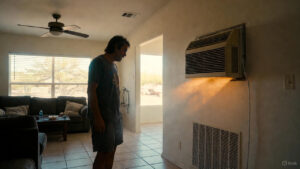

It's a question we hear all the time from Phoenix homeowners, and honestly, you're not alone in asking "where is my air filter in my house?" The good news is, finding this crucial component is usually easier than you think and is the first step toward better air and a more efficient AC. For most homes in the Valley, your air filter is hiding in one of two main spots.
Quick Guide to Common Filter Locations
Your air filter is the unsung hero of your home's comfort system, silently working to keep your air clean and your AC running smoothly. To make it easier to find, here’s a quick cheat sheet. Find where your indoor HVAC unit is located, and you'll have a great starting point for your filter scavenger hunt.
| If Your HVAC Unit Is In… | Your Filter Is Likely… |
|---|---|
| A Garage or Utility Closet | Tucked into a 1-inch slot directly on the side or bottom of the furnace/air handler. |
| An Attic | Either in a slot on the unit itself or behind a large return grille in a central hallway ceiling. |
| A Condo or Apartment | Almost always behind the main return air grille, which is typically on a wall or ceiling. |
| A Packaged Unit on the Roof | Behind the return air grille inside the home. The filter is never on the roof with the unit. |
Once you locate it, you're halfway to better air and a happier AC. But why is this small task so incredibly important, especially here in Arizona?
Why Finding Your Air Filter Actually Matters
Let me explain. In our dusty desert climate, changing your air filter is probably the single most important (and easiest) thing you can do for your AC system. A clogged filter literally chokes your air conditioner. It can't breathe.
When airflow is restricted, your system has to work overtime just to pull air through the gunk, which leads to a few problems you'll definitely notice:
- Weak Cooling: The air coming out of your vents just doesn't feel as cold or strong.
- Sky-High Energy Bills: Your AC runs longer and harder, using way more electricity to do the same job.
- Bad Air Quality: That filter is your first line of defense against dust, pollen, and pet dander. When it's full, that stuff just circulates back into your home.
Think of it this way: ignoring your filter is like trying to run a marathon while breathing through a straw. Sooner or later, something's going to give.
Taking care of this simple task is a cornerstone of smart homeownership. For a few more ways to keep your system in top shape, check out our other AC maintenance tips for Arizona residents. Now, let's get that old filter out of there.
Your Air Filter's Most Common Hiding Spots
Alright, let's track down that filter. For most homes here in the Valley, it’s going to be in one of two places, and thankfully, they're both pretty easy to get to once you know what you’re looking for.
The number one spot is inside a return air vent. This is that big, grated metal cover on your wall or ceiling. It's not the smaller vent blowing air out—it's the one sucking air in. These are designed for quick access, so you'll usually find a couple of simple latches or tabs on the frame. Just slide those, and the whole grille should swing open like a little door, revealing the filter right behind it.
If it's not in a vent, the other very common location is right at the air handler or furnace itself. If your unit lives in the garage, a utility closet, or the attic, take a look at the machine. You're searching for a thin slot, usually about 1-inch wide, right where the big return air duct connects to the main cabinet.
Here’s a pro tip from our years of experience: This slot is meant for you to use. It’s almost never hidden behind panels you need tools to remove. If you're looking at the main unit, it should be fairly obvious and easy to slide the old filter out.
This little decision tree can help you visualize where to start looking. It covers the two main possibilities you'll run into.

As you can see, the search is pretty straightforward—it’s either in an easy-to-open vent or right at the unit itself.
Keeping that filter clean is a big deal in Phoenix. With all the dust and the sheer amount of work our ACs do, proper filtration is non-negotiable. It's no surprise that the market for these systems is growing; the U.S. HVAC packaged units market was valued at USD 8.44 billion in 2025 and is on a steep upward trend. You can read more about the growing HVAC market from the analysts at Precedence Research.
Choosing The Right Replacement Filter
Alright, you’ve found the filter. Now comes the part that a lot of people get wrong: picking the right replacement. Just grabbing one that looks right at the hardware store is a classic mistake, and in a place like Phoenix, it can seriously choke the airflow to your AC when you need it most.
First things first, you need to match the size. Look at the cardboard edge of the filter you just pulled out. The dimensions—length, width, and depth (or thickness)—should be printed right there. If the numbers are worn off, no worries. Just grab a tape measure and get the exact size yourself. A filter that’s too small lets all that nasty dust sneak around the edges, and one that’s too big simply won’t go in.

Understanding MERV Ratings
Beyond the physical size, you'll see a MERV rating, which stands for Minimum Efficiency Reporting Value. This little number is a huge deal for us here in Arizona. It tells you exactly how good the filter is at trapping all the airborne gunk you don't want to breathe—dust, pollen, pet dander, you name it.
A higher MERV number means the filter catches smaller particles, but—and this is important—higher isn't always better. A filter that’s too dense for your system can act like a roadblock for air, forcing your AC to work way too hard. For most homes in the Valley, a filter with a MERV rating between 8 and 11 is the sweet spot. It gives you great air quality without strangling your system's performance.
If you’ve got family members with allergies or asthma and need even better filtration, that's when we start looking at options like professionally installed whole-home air purifiers. They're designed to clean the air without compromising airflow.
Once you know the exact size and MERV rating you need, you're ready to buy. For those in our service area, this simple guide to Chandler air filter replacement offers some great local tips for making sure you get the right product and keep your system running efficiently.
How Often Should You Change Your Air Filter in Arizona?
You've probably heard the generic advice to change your filter every 90 days. To be blunt, that rule just doesn't fly here in the dusty Phoenix metro. Have you ever seen the air after a haboob rolls through?
Our desert environment is a different beast altogether. With our notorious dust storms and high pollen seasons, a filter can get completely choked with dirt in a fraction of the time it would in other parts of the country. This isn't just about dust bunnies; it's about protecting your expensive HVAC system from a ton of unnecessary strain.

A Realistic Filter Schedule for The Valley
Think of a clean filter as your first line of defense against sky-high energy bills and poor cooling performance. To help you stay on track, we at Comfort Experts put together a realistic, location-specific schedule based on our decades of experience in homes across Mesa, Gilbert, and Chandler.
Arizona Air Filter Replacement Schedule
Use this table as your guide, but remember to physically check your filter monthly, especially after a big dust storm.
| Household Type | Recommended Frequency | Considerations |
|---|---|---|
| Single Occupant, No Pets | Every 60-90 Days | Check it monthly during monsoon season. A single haboob can clog a fresh filter surprisingly fast. |
| Average Family, No Pets | Every 45-60 Days | Spring pollen can be heavy out here, so you might need to swap it out more often from March to May. |
| Home with Pets or Smokers | Every 30-45 Days | Pet dander and smoke particles are serious filter cloggers. Staying on top of this is non-negotiable. |
| Allergy Sufferers | Every 30 Days | This is essential for maintaining healthier indoor air quality and cutting down on airborne allergens. |
Letting this simple task slide can lead to some expensive headaches, like a frozen evaporator coil or even a complete system failure during a brutal July heatwave. It’s all about protecting both your comfort and your wallet. For a deeper dive into protecting your unit, our guide to AC maintenance and tune-ups is a great resource.
What to Do If You Still Can't Find Your Filter
Alright, you’ve checked behind every vent cover and given the air handler a thorough once-over, but you’re still coming up empty-handed. Don't worry. You're definitely not the first homeowner to be stumped by a cleverly hidden filter.
In some homes, especially custom builds or older properties, the filter isn’t in one of the usual spots. It might be tucked away in a dedicated filter cabinet along the ductwork that needs a screwdriver to open. Other times, a house might have a washable or electronic filter that looks nothing like the disposable cardboard ones you see at the store. Trying to force a panel that won't budge or ignoring a filter you can't quite reach can easily lead to costly damage.
Your home's HVAC system is a complex piece of machinery. If you're feeling unsure, concerned about safely getting to a unit in a tight attic, or just want an expert to confirm you have the right setup, it’s always best to call a professional.
Knowing When to Stop Searching
Sometimes the smartest move is knowing when to stop looking. If you run into any of these situations, it’s a clear sign to get an expert on the line:
- Sealed Panels: The only place the filter could be is sealed shut with screws or looks like it was never meant to be opened by a homeowner.
- Unusual Noises: You hear whistling or a strained sound coming from your system. That often points to a severe blockage you can't see.
- Complex Wiring: The spot where you think the filter should be is surrounded by a tangle of wires and sensitive-looking components.
The HVAC industry is always evolving—the global market is projected to hit USD 277.79 billion by 2026. This constant innovation means more advanced (and sometimes more complex) filtration systems are making their way into homes across the Valley. You can discover more insights about these market trends here and see how they're changing modern homes.
A hard-to-find filter can also be a symptom of older, less efficient ductwork. A professional eye can spot opportunities for improvement that go beyond just the filter. In fact, our guide on professional duct cleaning services explains how clean ducts work hand-in-hand with good filtration for better air quality.
Common Air Filter Questions from Valley Homeowners
We talk to homeowners across the Phoenix area every day, and air filter questions come up all the time. Here’s the thing: you are not alone in your questions. We’ve compiled some quick, no-nonsense answers to the ones we hear most often.
What Happens If I Install My Air Filter Backwards?
You know those little arrows printed on the filter’s cardboard frame? They’re there for a very important reason—to show you which way the air needs to flow. The arrows should always point toward your furnace or air handler, not away from it.
Putting it in backwards is like trying to push water through a sieve from the wrong side. It chokes off the airflow, forcing your system to work way harder than it should. This drives up your energy bills and can even cause the filter to collapse and get sucked into the ductwork, where it can seriously damage the fan motor.
Can A Dirty Air Filter Make My House Smell Bad?
Absolutely. A filter clogged with dust also traps moisture, pet dander, and other organic gunk. That creates the perfect damp, dark environment for mold and bacteria to have a party.
When your AC kicks on, it pulls air through that musty, smelly mess and blows those odors right into every room of your house. If you've got a mysterious funky smell you can't pin down, checking the filter is one of the easiest first steps.
Key Takeaway: Don't underestimate how much a dirty filter impacts your home's air. If you've ever wondered why your house smells stuffy even after cleaning, the air filter is the first place to check.
Is A Higher MERV Rating Always Better For My Home?
Not always, and this is a big one for Arizona homeowners. While a higher MERV rating (think 13 or higher) is great at trapping tiny dust particles, it also makes it much harder for air to get through. It's like trying to breathe through a thicker mask.
Many HVAC systems, especially older units, simply weren't built to handle that kind of resistance. Forcing your system to pull air through a filter that’s too dense can strain the fan motor, reduce your home's airflow, and lead to expensive repairs down the road. It’s always best to check your system's manual or ask a pro what the maximum recommended MERV rating is for your specific unit.
For a deeper dive into other common concerns, feel free to explore our full list of frequently asked HVAC questions.
Your Partner For Clean Air And Peace Of Mind
Keeping up with your air filter is one of the simplest but most powerful things you can do for your AC system and your family’s well-being. It’s a small task that pays off big by improving efficiency, cutting down on strain on expensive parts, and keeping the air you breathe a whole lot cleaner. You know what? It’s also one of the easiest to forget.
Most of the time, changing a filter is a quick DIY job. But sometimes, you just need an expert eye. Here at Comfort Experts, we're not just a repair company that shows up when things break. We see ourselves as your local partners in keeping your home comfortable and running smoothly for the long haul.
If you’re still scratching your head wondering, "where is my air filter in my house?" or you're not sure which MERV rating is right for our dusty environment, we've got you covered. For a deeper dive, you can always explore professional Indoor Air Quality Services designed to keep your home’s environment healthy and your HVAC system in top shape.
Don't let a forgotten filter turn into an expensive emergency repair during a Phoenix heatwave. We’re here to offer clear answers and genuine peace of mind, whether it’s for a simple filter swap or a full system check-up.
When you need expert advice or hands-on help with your HVAC system, turn to a team that knows Arizona homes. For fast, friendly service from a team that treats you like a neighbor, give Comfort Experts a call at 480-207-1239 or schedule service online today.