
When the Arizona sun beats down, a working air conditioner isn't a luxury—it's the only thing standing between you and a full-blown meltdown. This is why getting serious about local air conditioning maintenance is the single smartest thing a Phoenix homeowner can do. Let me explain how staying ahead of the game protects you from the misery of a dead AC, keeps your house a cool retreat, and stops your energy bills from spiraling during our brutal summers.
Why Proactive AC Maintenance Is Your Best Defense Against The Phoenix Heat
It’s not just us—the demand for HVAC maintenance is climbing everywhere, mostly because energy costs keep rising. Left to its own devices, a neglected HVAC system can eat up a staggering 51% of a home's total energy, a number that only gets worse in a climate like the Valley.
Think of it this way: proactive care isn't just about dodging a repair bill; it's about keeping your system running at peak efficiency and saving your sanity. As HVAC professionals with over 15 years of experience in the Phoenix area, we at Comfort Experts have seen firsthand how routine maintenance prevents catastrophic failures. To see what our technicians actually check, take a look at our detailed HVAC preventive maintenance checklist.
Beyond just the machine itself, there are other smart ways to fight back against the heat. Simple landscaping choices can make a surprising difference, and it’s worth learning how shade trees can lower cooling costs for an extra layer of relief.
DIY AC Care vs. Professional Service: What’s the Real Difference?
Think of your AC unit like a high-performance vehicle constantly running a marathon in the brutal Phoenix heat. You can handle the basics—like checking the tire pressure or topping off washer fluid—but you still need a certified mechanic for a real tune-up. That’s the core difference between simple DIY tasks and professional local air conditioning maintenance.
A DIY approach is great for surface-level upkeep, and it absolutely helps. Swapping out your air filter is a perfect example. Doing this every 30-90 days is crucial for keeping air flowing and your indoor air quality in check. If you're not sure where yours is, our guide on where to find the air filter in your house will point you in the right direction.
Another easy win is keeping the area around your outdoor condenser unit clear. Just raking away leaves, trimming back weeds, and clearing debris from a two-foot perimeter ensures the unit can "breathe" and release the heat it’s pulling from your home.
But these tasks only scratch the surface of what your system truly needs to survive a summer here.
What Professional AC Maintenance Really Involves
Honestly, professional service operates on a completely different level. It’s a deep, diagnostic process designed to restore your system's efficiency and catch small problems before they turn into catastrophic—and expensive—failures on a 110-degree day.
Our certified technicians at Comfort Experts use specialized tools and years of on-the-ground experience to service components you can't—and frankly, shouldn't—touch yourself. This isn’t just a quick look-see; it’s a comprehensive tune-up that addresses the electrical, mechanical, and chemical health of your air conditioner.
A professional tune-up is about calibration and prevention, not just cleaning. By inspecting every electrical connection, measuring refrigerant levels with precision, and lubricating motors, our technicians ensure every part is working in perfect harmony. That meticulous process, backed by our expertise as a licensed, bonded, and insured company (ROC #275914), is what leads to lower energy bills, a longer system lifespan, and a much more comfortable home.
A Look at The Bigger Picture
This level of detailed care is becoming more important than ever. The entire air conditioning maintenance market is projected to grow at a rate of 6.2% annually, driven largely by extreme weather events right here in North America. For Phoenix Valley homeowners, this trend underscores what we’ve been saying for years: corrective maintenance is key to extending AC lifespan, improving indoor air, and cutting running costs.
New predictive technologies are even helping reduce failure rates by up to 30%, showing how expert servicing is evolving beyond simple checkups. You can see the full data for yourself in this air conditioning maintenance market report.
To truly understand what separates the two approaches, let’s put them side-by-side.
Professional Maintenance Vs DIY Tasks: A Quick Comparison
This responsive table highlights the difference in scope and impact between what a Comfort Experts technician handles during a tune-up versus what a homeowner can safely do on their own.
| Task | Professional Technician (Comfort Experts) | DIY Homeowner |
|---|---|---|
| Coil Cleaning | Deep cleans both indoor evaporator and outdoor condenser coils with specialized chemicals to restore critical heat transfer. | Can only gently rinse the exterior of the outdoor unit with a hose. |
| Electrical Check | Inspects, tests, and tightens all electrical connections, capacitors, and relays to prevent component failure and fire hazards. | Unsafe for homeowners; requires licensed expertise and proper tools. |
| Refrigerant Levels | Measures the system's refrigerant charge with precision gauges to ensure optimal cooling capacity and efficiency. | Illegal and unsafe to handle refrigerant without an EPA certification. |
| Motor Lubrication | Lubricates all moving parts, including fan motors and bearings, to reduce friction, noise, and premature wear. | Internal components are often sealed or inaccessible without disassembly. |
| Condensate Drain | Flushes and clears the entire drain line with high pressure or vacuums to prevent clogs, water damage, and mold growth. | Can pour vinegar down the line, but can't fix deep blockages or test the overflow switch. |
| System Calibration | Tests thermostat accuracy, measures airflow across the coil, and checks system cycles to ensure peak performance and efficiency. | Limited to just adjusting the temperature settings on the thermostat. |
As you can see, professional maintenance isn't just another expense—it's a crucial investment in your home's comfort and your system's health. It addresses the complex inner workings of the unit, making sure it runs safely and efficiently all summer long.
Inside A Comfort Experts Professional AC Tune-Up
Ever wondered what really goes on during a professional AC maintenance visit? It’s a whole lot more than a quick glance and a thumbs-up. At Comfort Experts, our certified techs follow a seriously detailed checklist to make sure every part of your cooling system is ready to battle the Arizona climate. This isn't just a cleaning—it's about restoring your system to peak condition for a reliable, powerful summer.
The whole thing starts with a thorough inspection. We’re not just looking for what’s already broken; we’re hunting for the small signs of wear that could turn into a big, expensive headache in the middle of July. This proactive approach is the heart of effective local air conditioning maintenance.
A huge first step is deep cleaning the coils. After a year of work, your outdoor condenser coil gets caked with dust, grass clippings, and grit, which chokes its ability to shed heat. Inside, the evaporator coil can get grimy, blocking airflow and robbing you of cooling power. We use specialized cleaners to dissolve all that gunk, bringing the coils back to near-factory condition and boosting your AC’s efficiency right away.
Electrical Integrity and Safety Checks
With the system clean, we dive into its electrical heart. Loose or corroded wires are a top cause of AC breakdowns and a real fire risk. Our technicians inspect and tighten every single connection, from the terminals to the breakers, making sure everything is secure and safe.
A critical part of this is testing the capacitors. Think of the start and run capacitors as the jolt of energy that kicks your compressor and fan motors into action. Failing capacitors are behind a massive number of "no-cool" calls, especially during the first heatwaves when your AC is stressed the most.
By testing a capacitor during a tune-up, we can often spot one that’s getting weak and replace it for a small cost. This simple step can save you from a sudden breakdown on the hottest day of the year—and the stress and high cost of an emergency repair.
This one check prevents a ton of frustration. We also measure the amperage draw on the compressor and fan motors to make sure they're running within the manufacturer's specs, which gives us a good idea of their remaining lifespan.
Mechanical and Refrigerant System Optimization
Once the electrical system is solid, we move on to the mechanical parts. We lubricate all the moving components, like the fan motors, to cut down on friction, noise, and wear. It’s a simple but vital step that can add years to the life of these expensive parts.
Next up is one of the most important checks: the refrigerant level. An air conditioner that’s low on refrigerant won't just cool poorly. It will run almost constantly, sending your energy bills through the roof and putting a ton of strain on the compressor. Using precision gauges, we check the system’s charge to ensure it’s dialed in exactly to the manufacturer's specs for peak performance.
We also give the condensate drain line a close look. If this little pipe gets clogged, water can back up into your home, causing major water damage and creating a perfect spot for mold to grow. We flush the line to clear out any sludge or blockages, ensuring that all that condensation flows safely outside. You can get even more detail on our process in our guide to AC maintenance and tune-ups.
This flowchart shows how the deep-dive steps of a professional tune-up build on basic homeowner tasks for complete system care.
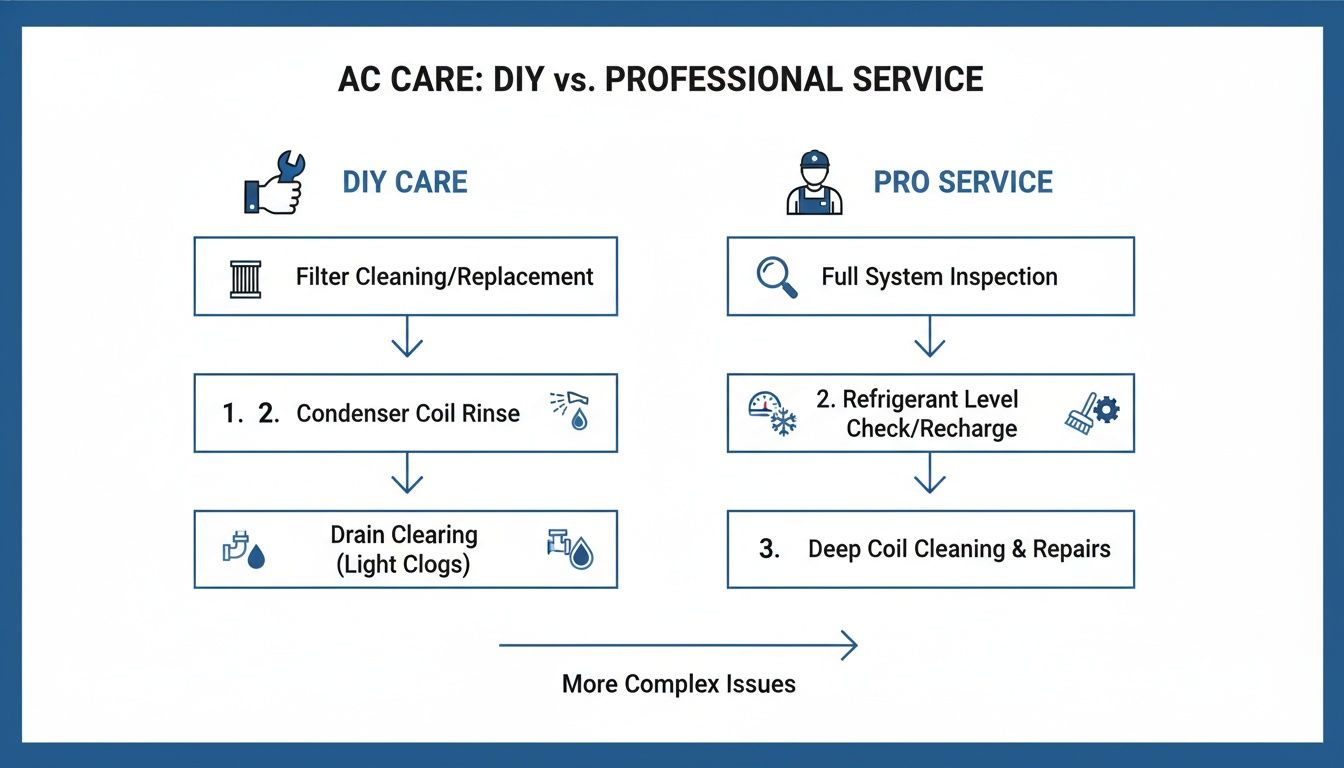
As you can see, while DIY filter changes are crucial, it’s the professional service that handles the technical work that’s essential for efficiency, safety, and a long lifespan. To wrap things up, we’ll calibrate your thermostat and run a full system test cycle, measuring the temperature drop between the return and supply air to prove it’s cooling effectively. That final check gives you real peace of mind that your AC is truly ready for summer.
The Ideal AC Maintenance Schedule For Arizona Homeowners
Here in the Phoenix Valley, your air conditioner puts in more overtime than just about anywhere else in the country. You know what? That brutal, relentless workload means the standard, once-a-year tune-up most people talk about just doesn’t cut it.
For the kind of reliability and efficiency you actually need, a twice-a-year maintenance schedule is the gold standard. Sticking with a bi-annual plan for local air conditioning maintenance is how you sidestep the majority of expensive repairs, keep your energy bills in check, and genuinely extend the life of your entire system.
The Critical Spring Pre-Season Tune-Up
The single most important service of the year is your spring tune-up, which we recommend scheduling between March and May. Think of it as getting your AC ready for battle before the war on heat actually begins. This checkup makes sure your system is clean, properly calibrated, and ready to face peak summer temperatures without giving up.
During this visit, a technician will fix any wear and tear from the previous season and get every part optimized for the extreme workload to come. This one appointment prevents a huge percentage of those mid-summer breakdowns that always seem to happen on the hottest day of the year.
Getting ahead of the heat isn’t just about staying comfortable; it’s a smart financial move. A pre-season tune-up is your best defense against surprise failures, poor performance, and the sky-high energy bills that come from a system that’s barely hanging on.
The Essential Fall Post-Season Service
That second service in the fall, usually between September and November, is just as crucial. Your air conditioner has just run a brutal marathon. This tune-up is all about addressing the immense strain it just endured and reversing that wear and tear before it settles in and causes permanent damage.
This appointment also pulls double duty. It’s the perfect time to have a professional inspect and prep your heating system for our cooler nights. It ensures a safe, efficient switch from cooling to heating, so you’re ready for whatever the Arizona winter has in store. If you want to dive deeper into service frequency, check out our guide on how often HVAC systems should be serviced.
Globally, the demand for air conditioning is only going up; global AC sales climbed 5% from 2022 to 2023. Here at home, we’ve seen that consistent tune-ups and high-efficiency replacements can extend a system’s service life by up to 2.8 times, helping our clients avoid emergency costs. That’s more important than ever, as new refrigerant phase-downs have pushed prices up by 15-25%, making system efficiency a non-negotiable.
Seasonal AC Maintenance Guide For Arizona Homeowners
To make it simple, this responsive table breaks down the focus for each seasonal visit. You can see how a bi-annual schedule gives you complete, year-round protection for your HVAC system.
| Season | Primary Focus | Key Tasks | Main Benefit |
|---|---|---|---|
| Spring (Mar-May) | Cooling Preparation | Clean condenser coils, check refrigerant, test capacitors, calibrate thermostat for cooling. | Ensures peak efficiency and reliability for the brutal summer months, preventing breakdowns. |
| Fall (Sep-Nov) | System Recovery & Heating Prep | Clean evaporator coil, inspect heating elements/burners, flush drain line, check safety controls. | Addresses summer strain to extend AC life and ensures your heating system is safe and ready. |
By following this twice-a-year schedule, you're not just doing basic maintenance on a piece of equipment—you’re actively managing your home’s comfort, safety, and energy budget like a pro.
Warning Signs Your Air Conditioner Needs Immediate Service
Your air conditioner will almost always whisper for help before it screams. Are you listening? Learning to recognize these early warning signs is your best defense against a catastrophic failure—and an expensive emergency repair right in the middle of a Phoenix summer. Just paying attention is half the battle.
Ignoring these signals is like driving your car after the check engine light comes on—it rarely ends well. These issues don’t fix themselves; they only get worse and more expensive over time. Acting fast can often turn a potential multi-thousand-dollar replacement into a simple, affordable repair.
Unusual Noises From Your AC Unit
One of the most obvious red flags is when your AC starts making sounds it shouldn’t. Your system is designed to run with a consistent, low hum. Any new or loud noises are a clear cry for help.
Keep an ear out for these specific sounds:
- Grinding or Scraping: This usually points to a serious mechanical problem, like a failing motor bearing or something broken inside the compressor. You should shut the system down immediately to prevent even worse damage.
- Squealing or Screeching: A high-pitched squeal often means a worn-out fan belt or an issue with the fan motor itself. While it might not seem as dire as a grinding noise, it needs to be addressed before the part fails completely.
- Banging or Clanking: Loud clanking noises typically mean a part has come loose, like a connecting rod or piston pin inside the compressor. This is a critical issue that requires immediate professional attention.
These aren't just annoying background sounds; they are direct warnings from the heart of your HVAC system. A quick call for local air conditioning maintenance when you first hear them can prevent a total system meltdown.
Poor Cooling Performance And Airflow
Is your air conditioner running constantly but your house still feels warm? Or maybe the air coming from your vents feels weak, like it’s barely moving. These are classic symptoms of a system that’s struggling to do its job.
Weak airflow is often caused by something simple, like a dirty air filter or a blockage in your ductwork. However, it can also signal a failing blower motor, which is the part responsible for pushing all that cool air through your home.
If your system is blowing lukewarm or even warm air, the problem is more serious. This is a primary indicator of a refrigerant leak. An undercharged system can't effectively cool your home and puts immense strain on the compressor—the single most expensive part of your AC.
Continuing to run your AC in this state is a surefire way to burn out the compressor, turning what could have been a manageable repair into a major replacement.
Other Critical Red Flags To Watch For
Beyond strange noises and poor cooling, a few other signs tell you it’s time to call a professional. Don't dismiss them, as they often point to hidden problems with your system's efficiency and safety.
A sudden, unexplained spike in your electricity bill is a huge red flag. If your habits haven’t changed but your bill has jumped by 20% or more, your AC is likely working way too hard due to a hidden issue, like a refrigerant leak or a dirty coil.
Likewise, any moisture or puddles forming around your indoor air handler are cause for immediate concern. This usually signals a clogged condensate drain line, which can lead to serious water damage, mold growth, and rust on internal components.
Finally, musty or burning smells from your vents are never normal. Musty odors suggest mold in the unit or ductwork, while burning smells can indicate an electrical problem or an overheating motor—a serious fire hazard.
How To Choose The Right HVAC Company In Phoenix
When your comfort is on the line during a brutal Phoenix summer, the HVAC company you choose makes all the difference. But with so many options scattered across the Valley, how do you cut through the noise and find a team you can actually trust? Here’s the thing: it boils down to checking a few key credentials that separate the true professionals from the rest.
Finding the right company for your local air conditioning maintenance isn't just about getting a quick fix. It’s about starting a relationship with a team that has your back, ensuring your home stays a cool refuge and you get real peace of mind.
Verify Licensing, Bonding, and Insurance
This is the absolute first step, and it’s non-negotiable. Any HVAC company working in Arizona must be licensed by the Registrar of Contractors (ROC). This license proves they’ve met the state's standards for experience and knowledge. For example, Comfort Experts operates under ROC #275914.
Just as important are bonding and insurance. Being bonded protects your money if the contractor doesn't finish the job. Insurance covers accidental damage to your property or injuries that might happen during a service call. For more clarity, this guide is great for understanding what it means for a service provider to be bonded vs insured.
A company that is licensed, bonded, and insured is telling you one thing loud and clear: they are a legitimate, professional business that stands behind their work and protects their customers. Never hire anyone who can’t show you proof of all three.
Check Reputation and Local Experience
A company's history in our community speaks volumes. How long have they been serving the Phoenix area? A long track record, like ours at Comfort Experts since 2011, points to stability and a deep understanding of the unique punishment our climate dishes out to HVAC systems.
Don’t just take the company's website for it. Dig into genuine customer reviews on third-party sites like Google, Yelp, and Angi. You're looking for patterns. Do people consistently mention professionalism, showing up on time, and fair pricing? A solid history of happy local homeowners is one of the best signs of quality service you can find.
Look For Transparent and Upfront Pricing
A trustworthy HVAC company gives you clear, upfront pricing before any work starts. You should always get a detailed estimate breaking down the costs for parts and labor. Be very cautious of companies that are cagey about their pricing or pressure you to decide on the spot.
High-pressure sales tactics are a massive red flag. A real pro will diagnose the problem, explain your options clearly, and then give you the space to make an informed choice for your home and budget. Our team at Comfort Experts has built its reputation on honest diagnostics and a customer-first approach, not aggressive upselling. Finding a company with that mindset is key, and our guide to choosing the best HVAC company near you offers even more tips.
Services Offered and Emergency Availability
Finally, make sure the company provides a full range of services that fit your needs. Can they handle routine tune-ups, emergency repairs, and full system installations? Do they service your specific brand of equipment? A company with that kind of comprehensive expertise can be your go-to partner for years.
In a place like Phoenix, emergency availability is also critical. An AC unit doesn't care if it's 9 PM on a Saturday when it decides to die. Look for a company that offers after-hours or weekend emergency support. It shows a real commitment to their customers' comfort and safety. At Comfort Experts, our local call center is fully staffed so you can always reach a real person when you need help the most.
Frequently Asked Questions About AC Maintenance
When it comes to local air conditioning maintenance, we get a lot of questions from homeowners. That’s a good thing—it shows you’re thinking about how to get the most out of your home’s hardest-working appliance. Here are straight-up answers to the questions we hear most often from our neighbors across the Phoenix Valley.
Is AC Maintenance Really Worth The Cost?
Absolutely, and it’s not even a close call. That small annual cost for professional maintenance is one of the smartest investments you can make, and it pays for itself by preventing huge repair bills and trimming your daily running costs.
Think of it this way: an emergency AC repair in the middle of a Phoenix summer can easily set you back thousands, not to mention the misery of a sweltering house. A scheduled tune-up lets our tech spot the weak capacitor or failing motor bearing that would have caused that meltdown, turning a crisis into a small, affordable fix.
In our experience, the savings from lower power bills and avoided emergency repairs almost always add up to more than the cost of a good maintenance plan. It’s the difference between reacting to expensive breakdowns and proactively saving money.
Plus, a clean, well-tuned system just uses less electricity. When the coils are clean and the refrigerant charge is right, your AC doesn't have to fight so hard to cool your home. Those efficiency gains show up directly on your monthly SRP or APS bill, creating a steady trickle of savings.
How Long Does An AC Maintenance Visit Take?
You can expect a thorough AC tune-up from a certified Comfort Experts technician to take between 60 and 90 minutes. We book this much time on purpose so we can run through our entire checklist without ever feeling rushed. For maintenance to actually work, it has to be meticulous.
The exact time can shift a bit depending on a few things:
- System Accessibility: Is your air handler in a wide-open garage or tucked into a tight closet? Easier access helps us work more efficiently.
- System Condition: A unit we’ve seen every year is usually quicker to service than one that’s been neglected for a while and needs a deep cleaning.
- Age of the Unit: Older systems often need a little more time so we can carefully inspect components that are showing their age.
No matter what, our techs are trained to be efficient without cutting a single corner. We’re there to do the job right, not just do it fast, ensuring your system is truly ready to handle another brutal summer.
What Happens If A Problem Is Found During Maintenance?
If our technician finds an issue during your tune-up, the very first thing they’ll do is stop and walk you through it. We believe in total transparency—no surprises, no high-pressure sales talk. Ever.
Whenever possible, our tech will physically show you the problem, whether it’s a corroded wire, a bulging capacitor, or a clogged drain line. They’ll explain what the part does, why it’s a concern, and what your options are.
You’ll then get a clear, upfront quote for any repair we recommend. It will break down the cost for parts and labor so you know exactly what you’re looking at. From there, the decision is 100% yours. Our job is to give you the expert info you need to make the best choice for your home and budget, with zero obligation.
Can I Just Do The AC Maintenance Myself?
While we absolutely encourage homeowners to handle the basics, a professional tune-up is on a whole different level. Changing your air filter every 30-90 days and rinsing down your outdoor unit to keep it clear of leaves and dust are fantastic habits that make a real difference.
However, a true tune-up involves work that requires specialized tools, safety training, and the right certifications. For instance:
- Handling Refrigerant: It is illegal and dangerous for anyone without an EPA 608 certification to work with refrigerants.
- Electrical Work: Checking high-voltage capacitors, tightening electrical lugs, and measuring amperage draw carry a serious risk of electrocution or fire if you don’t know exactly what you’re doing.
- Specialized Tools: We use things like combustion analyzers, digital refrigerant gauges, and ultrasonic leak detectors that just aren't in a typical home toolbox.
Trying to service these complex components yourself can not only lead to injury but can also void your manufacturer's warranty. The safest, most effective approach is to handle the simple stuff and leave the technical work to a licensed pro.
Ready to give your AC the expert care it deserves? The team at Comfort Experts is here to help with honest, reliable service you can count on. Give us a call at 480-207-1239 or schedule service online to book your professional tune-up today.