
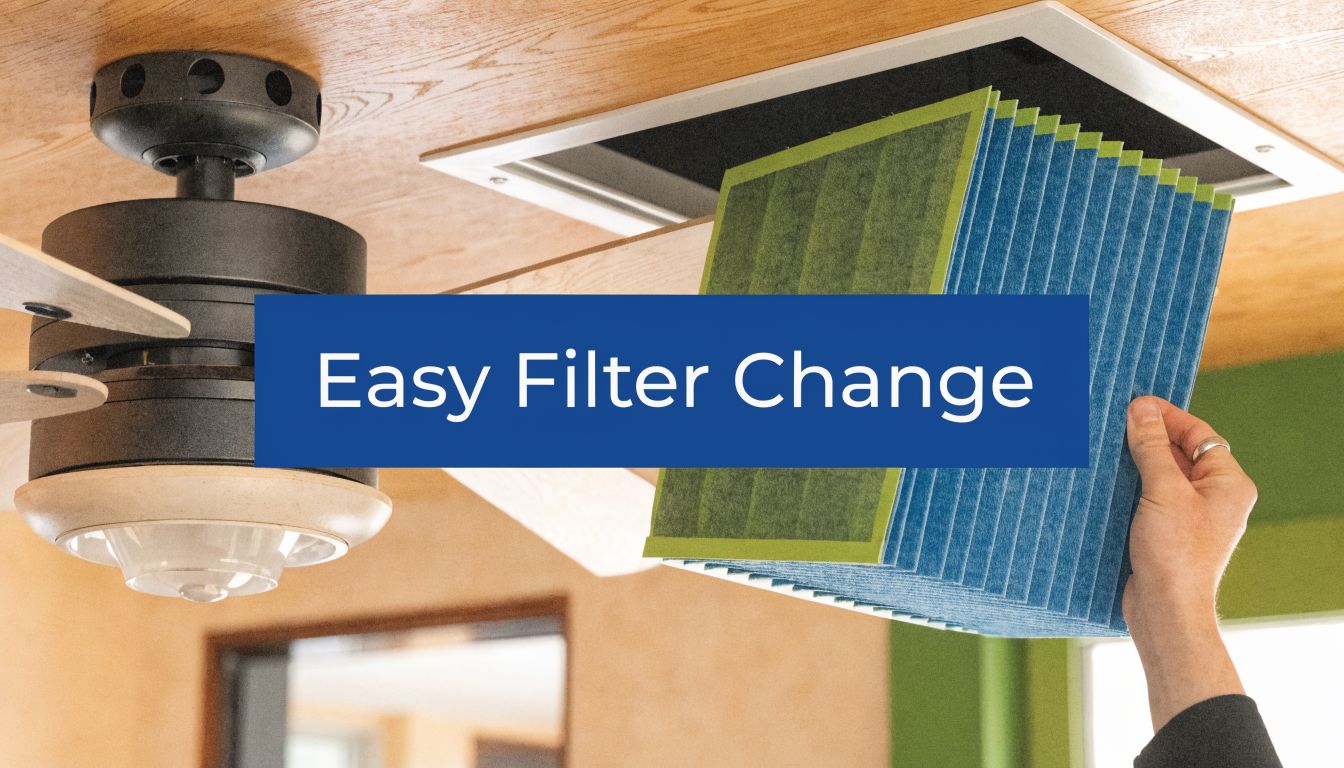
If you're reading this while your house feels a little dustier than it should and the AC seems to run forever, your filter is a good place to look first. ac filter installation is simple in most homes, but in Phoenix, doing it correctly matters more because heat, dust, and long run times punish small mistakes fast.
Why Changing Your AC Filter Is Non-Negotiable in Phoenix
Phoenix doesn’t give your HVAC system many easy days. Fine dust works its way into return grilles, air handlers, and ductwork, and summer cooling demand keeps the blower moving air for long stretches. That means a neglected filter stops being a minor chore and becomes a system problem.

A clean filter protects airflow. A dirty one restricts it. That simple change affects how well the system can move air across the indoor coil, how hard the blower has to work, and how much dust keeps circulating through the home. Regular AC filter maintenance is the single most impactful homeowner action for HVAC system efficiency and longevity, and changing the filter ranks as the #1 maintenance task a homeowner can perform to preserve system performance, according to this HVAC maintenance guidance.
Why Phoenix conditions make filter neglect worse
In milder climates, a homeowner might get away with stretching maintenance. In the Valley, that gamble is much riskier. When your system is already fighting high outdoor temperatures, any added airflow restriction stacks stress onto the equipment.
Think about what your filter is dealing with here:
- Desert dust: Fine particles load a filter faster than many homeowners expect.
- Long cooling cycles: More runtime means more air passing through the filter.
- Allergy concerns: Pollen, pet dander, and indoor dust all add to the load.
- Attic equipment: Many Phoenix homes have air handlers in hot attics, where service conditions are already rough.
Practical rule: If the filter looks loaded, airflow feels weak, or dust buildup around return grilles is obvious, don’t wait for a perfect date on the calendar.
The impact isn’t only mechanical. A dirty or clogged filter also compromises indoor air quality, which matters when windows stay shut for much of the year and the house depends on recirculated air. For families with allergies or anyone tired of wiping down dusty surfaces, this small task pays off in comfort, not just equipment care.
One small task that supports the whole system
There’s a reason technicians check filters early on service calls. A neglected filter can mimic bigger problems. Rooms may cool unevenly. The system may seem sluggish. Airflow may feel weak at certain registers. Sometimes the problem is deeper. Sometimes the filter is the first domino.
Filter care also fits into a bigger housekeeping picture. If you’re already thinking about airflow and fire safety around the house, the importance of regular vent cleaning is worth understanding too, because blocked vents and neglected air pathways create problems in more than one part of the home.
For homeowners trying to lower strain on the system during peak heat, these HVAC energy-saving tips for Phoenix-area homes pair well with consistent filter checks.
Locating and Measuring Your Current Air Filter
Before buying anything, find out where your system filters air. This sounds basic, but plenty of Phoenix homeowners have more than one return, a filter at the grille instead of the unit, or a remodel-era setup that doesn’t match the neighbor’s house.

In many homes, the filter sits behind a large return grille on a hallway wall or ceiling. In others, it slides into a slot at the air handler, often in an attic, garage closet, or utility area. If you’re unsure, this guide on where your air filter is located in the house can help you narrow it down.
The most common places to check
Start with the obvious return points. Supply vents blow air into rooms. Return grilles pull air back to the equipment. The filter is usually at one of those return locations or at the unit itself.
Look in these spots first:
- Hallway return grille: Common in single-story homes with a central return.
- Ceiling return grille: Often used in open living spaces or remodel layouts.
- Air handler slot: Typical when the system is in an attic or closet.
- Multiple return grilles: Some larger homes have separate filters in different zones.
If you remove a grille and don’t see a filter, don’t force anything. Some systems are filtered at the air handler only. Others may have a media cabinet that looks more like a box section attached to the return side of the unit.
If a home has been remodeled, don’t assume the filter location follows the original floor plan. Additions, converted garages, and zoned upgrades often change where filtration happens.
How to read the filter size correctly
Most disposable filters have the size printed on the cardboard frame. You’ll usually see something like 20x25x1. That gives you the nominal dimensions used for buying a replacement.
Check the frame for:
- Length and width
- Thickness
- Brand or model line
- Airflow arrow
- MERV rating, if listed
If the print is faded or the frame is torn, pull the filter out and measure it carefully with a tape measure. Measure length, width, and thickness. Write it down before heading to the store or ordering online.
A snug fit is good. A forced fit is not. If the filter bows, crumples, or won’t slide in smoothly, stop and recheck the size.
What to notice before you remove the old one
Don’t rush the inspection. The old filter tells you a lot. If one side is heavily loaded and the other isn’t, that can point to airflow direction. If the frame is collapsed, the filter may have been too restrictive or poorly supported. If there’s dust bypassing around the edges, the fit may be wrong even if the printed size looks right.
A quick pre-removal checklist helps:
- Take a phone photo: Capture the old filter before removal.
- Note the arrow direction: You’ll match this with the replacement.
- Check the condition of the grille or slot: Bent covers and loose tracks can create gaps.
- Look for visible dust around the opening: That can signal leakage or overdue maintenance.
That little bit of detective work prevents one of the most common DIY mistakes. Buying the right filter starts with knowing exactly what your system is asking for.
Choosing the Right Filter The MERV Rating Explained
Standing in the filter aisle can get weirdly confusing fast. You’ll see bargain fiberglass filters, pleated options, allergy-focused packaging, washable styles, and MERV numbers that sound more technical than they need to be.
MERV stands for Minimum Efficiency Reporting Value. In plain terms, it tells you how effective a filter is at capturing airborne particles. Higher MERV usually means finer filtration. It does not automatically mean it’s the right choice for your system.
Why higher isn’t always better
A lot of homeowners assume the most expensive, most restrictive filter must be the best. That’s not always true. Filters have to clean the air and allow the system to breathe.
A standard replacement interval for most homes falls within 30 to 90 days, and basic fiberglass filters may need changing every 30 days, while pleated filters can last 3 to 6 months. Homes with pets or dusty conditions may need changes 25% to 50% more frequently, based on this filter replacement guidance. In Phoenix, that dusty-condition part matters.
If your system wasn’t designed for a very dense filter, jumping to a much higher MERV can create airflow issues. That means less comfort, more strain, and a filter that technically catches more particles while making the equipment work harder than it should.
MERV Rating Guide for Phoenix Homes
| MERV Rating | Captures | Best For | Phoenix Pro-Tip |
|---|---|---|---|
| MERV 1-4 | Larger visible dust and lint | Very basic filtration where airflow is the top priority | Usually not the best fit if desert dust is your main complaint |
| MERV 5-8 | Common household dust, lint, and some larger particles | Many standard homes looking for a simple balance | A solid starting point for older systems that need easy airflow |
| MERV 8-11 | Finer dust, pollen, and more everyday airborne debris | Homes with pets, frequent dust, or moderate air quality concerns | Often a practical sweet spot for Phoenix households |
| MERV 11-13 | Smaller particles and stronger filtration | Allergy-prone households, cleaner-air upgrades, systems designed for it | Check your equipment specs before moving up, especially in older units |
That table simplifies the choice, but equipment design still matters. A filter should match the system, not the marketing on the package.
What usually works in real homes
Most homeowners do best with a quality pleated filter that balances filtration and airflow. Not the cheapest one on the shelf, and not the most aggressive one either. The right pick depends on dust levels, pets, allergies, and how the blower and duct system handle resistance.
A few practical guidelines help:
- If your home gets dusty fast: Lean toward a pleated filter instead of basic fiberglass.
- If someone has allergies: Consider a higher-efficiency option, but only within what the system can support.
- If airflow already feels weak: Don’t upgrade MERV blindly. Fix the airflow issue first.
- If you have multiple systems or zones: Each system may need its own filter choice.
The best filter is the one your system can move air through consistently in July, not the one with the most impressive packaging in the store aisle.
For homeowners who like making smarter equipment choices around the house, this type of decision-making is similar to following expert guides for choosing home components. Fit matters. Use case matters. The “best” option on paper may be wrong in the actual installation.
If allergies are your main concern, this overview of HVAC filters for allergy relief can help you think through the trade-off without guessing.
A Practical Guide to Installing Your New AC Filter
Once you’ve got the correct replacement in hand, the ac filter installation is usually quick. The part that matters is not speed. It’s direction, fit, and making sure you’re changing the filter your system uses.
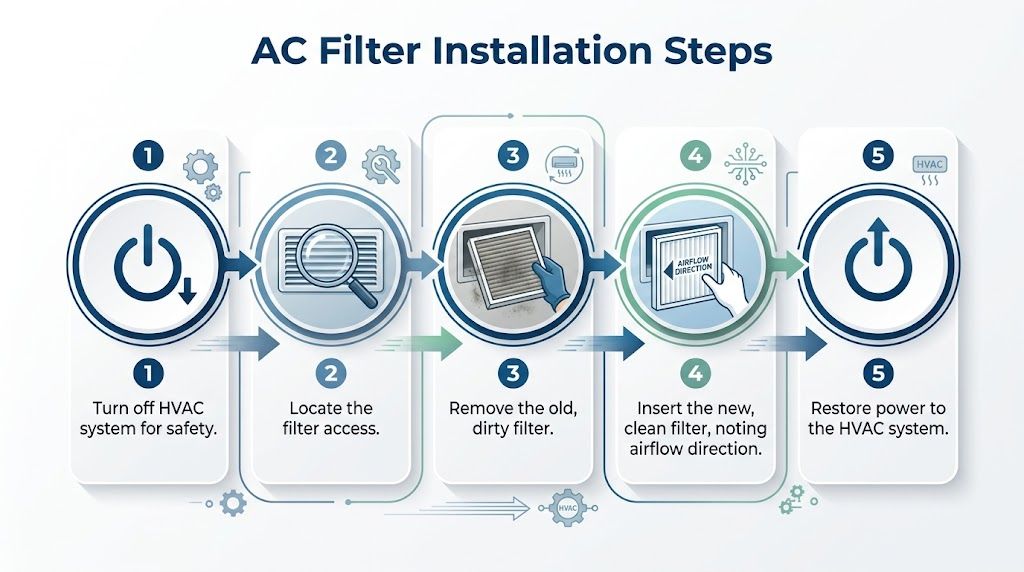
Step one starts with safety
Turn the HVAC system off at the thermostat before opening the grille or filter slot. This keeps the blower from pulling loose dust into the system while you’re removing the old filter, and it makes the job cleaner.
If the system is hard to access in an attic or utility closet, take a flashlight and move carefully. Phoenix attics get brutally hot, so pick a cooler time of day if possible.
Remove the old filter and check what it tells you
Open the grille or access panel slowly. Ceiling grilles often swing down on hinges, while unit-mounted filter slots may have a cover or retainer. Slide the filter out gently so it doesn’t dump dust everywhere.
Look at these details before you toss it:
- Arrow direction on the frame
- How tightly it fit
- Whether the frame is warped
- Visible dust bypass around the edges
- Heavy loading that may suggest the replacement interval is too long
If the opening is dusty, wipe the accessible surfaces before putting the new filter in. Don’t spray cleaner into the duct or the air handler. A dry cloth or light dusting around the slot is enough for routine replacement.
Reverse installation is one of the easiest mistakes to make. Follow the airflow arrow on the filter frame, not a guess based on where the grille sits in the room.
Install the new filter the right way
This is the part people tend to overthink. The arrow on the frame should point toward the blower motor. In most standard systems, that means the arrow points toward the air handler or furnace and away from the room or return grille opening.
Use this sequence:
- Match the size first: Confirm the frame matches the old filter.
- Find the airflow arrow: It should be printed on the edge of the frame.
- Orient toward the equipment: Air travels from the room, through the return, through the filter, then into the blower.
- Slide it in evenly: Don’t crush the frame to make it fit.
- Close the grille or panel securely: Gaps around the access point can reduce performance.
A proper fit should feel snug but not jammed. If the filter drops loosely into place and rattles, the size may be off. If you need to shove it hard, stop. Forcing it can bend the frame and leave unfiltered gaps around the edges.
What changes with return grilles and air handler slots
The process is similar, but the orientation can trip people up.
For a return grille filter, the arrow points away from the room and into the ductwork toward the equipment.
For an air handler slot filter, the arrow points directly into the unit. That’s usually easier to read because you can physically see which side faces the blower compartment.
If the home has a media cabinet or deeper filter housing, make sure the filter is seated all the way into the track. Deep media filters can look installed when they are riding crooked.
Non-standard systems in Phoenix homes
Generic online advice often proves inadequate. Many Arizona remodels use ductless mini-splits, room additions, converted garages, or zoned systems that don’t follow the usual “arrow toward the furnace” language.
For ductless mini-splits, the filters are commonly washable mesh filters located behind the front panel of each indoor head. There may not be a cardboard frame or airflow arrow at all. Instead:
- lift or open the indoor unit’s front cover
- remove the mesh filters carefully
- clean or replace them according to the manufacturer’s instructions
- make sure each filter seats fully into its track before closing the panel
In mini-splits, the key is identifying the intake side of the indoor head. Air gets pulled in through that section, passes through the filter, and then the unit conditions and discharges the air back into the room. If a washable filter isn’t seated correctly, airflow suffers and dust collects on the coil faster.
For zoned systems, check each return location separately. One zone may filter at the grille while another filters at the air handler. Don’t assume all filters in the house are the same size or type.
After the filter is in
Restore power at the thermostat and let the system run. Then pay attention.
Check for:
- Normal airflow at supply vents
- No rattling or whistling near the return
- No grille sag or loose panel
- No immediate strain sounds from the blower
If the system sounds different right after installation, don’t ignore it. A sound change is useful information. It may mean the filter fit is wrong, the MERV rating is too restrictive, or the access panel didn’t seal correctly.
That’s the practical side of ac filter installation. It’s not complicated, but the little details decide whether the filter helps the system or creates a new problem.
Common Filter Problems and Ongoing Maintenance Tips
Even when the installation is straightforward, a few issues show up again and again. Most are small. The trick is recognizing them early instead of assuming the system will sort itself out.
When the filter doesn’t fit quite right
A filter that’s too loose can allow bypass around the frame. A filter that’s too tight can bend, tear, or resist airflow if it isn’t seated properly. If you’ve just installed a new filter and it feels wrong, remove it and compare it to the old one side by side.
Whistling at the return grille is another clue. That sound often means air is being pulled through a small gap or through a filter that’s more restrictive than the system likes.
After installing a new filter, it’s wise to assess performance because a filter with a MERV rating that’s too high for the system design can cause pressure drop, leading to 10% to 20% higher energy use and a 15% increase in blower motor failure rates, according to this installation guidance from PNNL.
A new filter should make the system cleaner, not noisier. If sound or airflow changes right away, treat that as a sign to recheck the fit and filter choice.
Building a replacement routine that people actually follow
Most homeowners don’t forget filters because they don’t care. They forget because there’s no trigger. Once the grille closes, the task disappears from view.
A simple routine works better than good intentions:
- Set a recurring phone reminder: Match it to the filter type and the dust conditions in your home.
- Write the install date on the frame: That saves guesswork later.
- Check monthly even if you don’t replace monthly: Visual inspection catches early loading.
- Inspect more often during heavy-use seasons: Summer runtime in Phoenix exposes weak maintenance habits fast.
If your system has recurring airflow issues, uneven temperatures, or ongoing dust complaints even with regular filter changes, broader maintenance may be overdue. This guide on how often HVAC equipment should be serviced gives a good framework for the rest of the system.
A few mistakes to avoid
Throwing away the old filter uncovered can spread dust through the house. Bag it first if it’s loaded. Don’t vacuum and reuse a disposable filter. Don’t trim a filter to make it fit. And don’t assume every airflow problem is solved by a denser filter.
Sometimes the right answer is a better-fitting filter, a cleaner return area, or professional testing of static pressure and duct performance.
When a Filter Change Is Not Enough Call Comfort Experts
A fresh filter fixes a lot, but not everything. If the house still won’t cool properly after the replacement, if airflow remains weak, or if the system starts making unusual noises, the issue may be deeper than filtration. Dirty coils, duct leakage, blower problems, zoning faults, and thermostat issues can all look like filter problems at first.
That matters even more in Phoenix, where long cooling seasons expose weaknesses quickly. A unit that’s already struggling can’t afford added restriction, poor airflow, or hidden duct losses. If you’re dealing with a whole-home media filter upgrade, a MERV change that needs system verification, a mini-split setup that isn’t filtering correctly, or a return-air design problem in a remodel, this stops being a simple DIY task.
A professional should also step in when the filter location is hard to access, the housing is damaged, or the system needs testing after an airflow change. Guessing on these jobs can create bigger headaches than the original problem.
For advanced filtration work, system diagnostics, or a direct appointment request, use the Comfort Experts service scheduler.
If your AC still seems strained after a filter change, or you want help with the right filtration setup for your Phoenix home, contact Comfort Experts at 480-207-1239 or schedule service.