
If you're hearing your AC kick on, run a minute or two, click off, then start right back up while the house still feels warm, that's not normal in Mesa. ac short cycling causes are worth taking seriously because that fast stop-and-start pattern can beat up your system right when you need it most.
That Annoying Click Why Your AC Wont Stay On
A lot of homeowners notice the sound before they notice anything else. The condenser starts, the indoor air begins moving, and then click, it shuts down before the house ever feels comfortable. On a brutal afternoon in the East Valley, that sound gets old fast.
That pattern is called short cycling. It isn't just quirky behavior. It usually means your system is struggling with airflow, controls, refrigerant, sizing, or an electrical fault.
Sometimes people try a quick thermostat reset first, and that's a reasonable first step if the issue looks minor. If you want to try that safely, this guide on how to reset an AC thermostat is a useful place to start.
In Phoenix and Mesa, that matters more than in milder climates. Your system already works hard for months on end. Repeated short runs pile stress on top of heat, dust, and long operating hours.
What AC Short Cycling Actually Is and Why It Matters
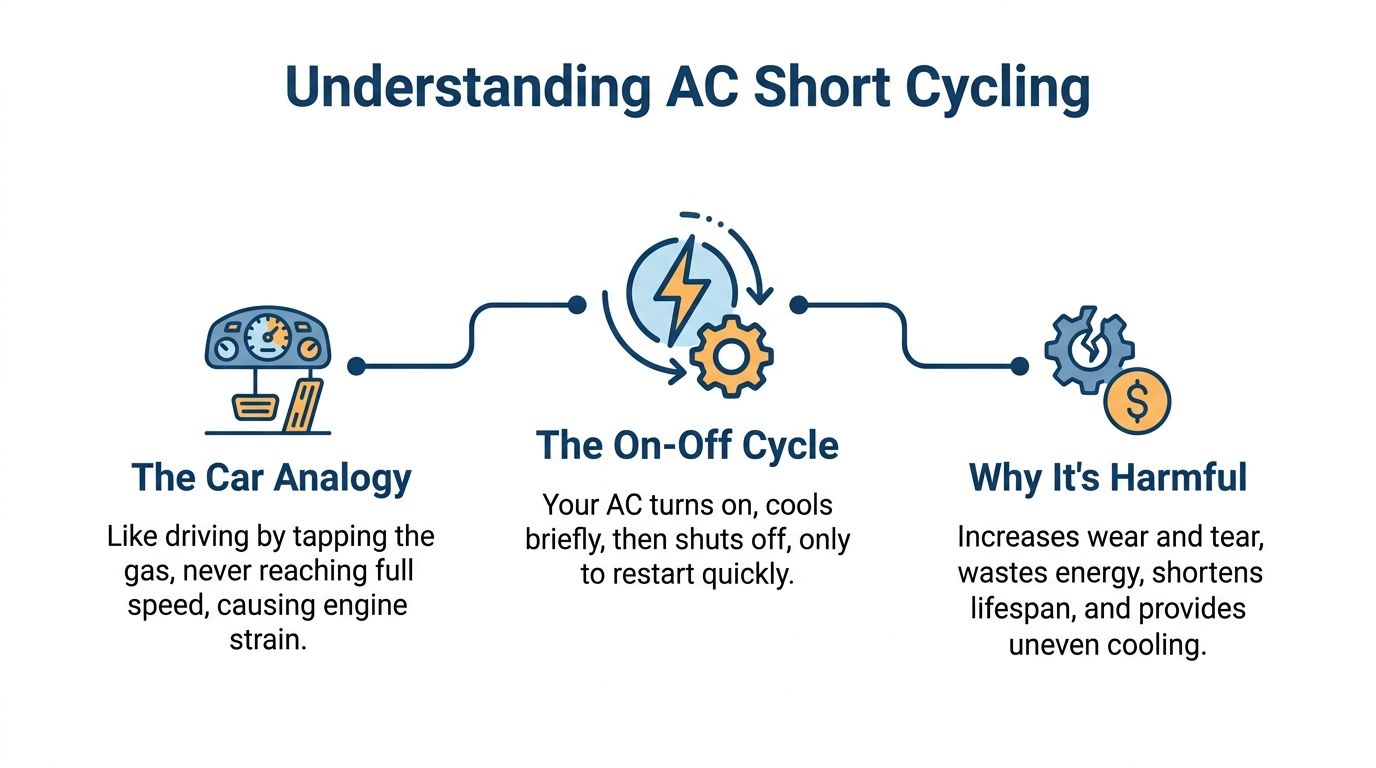
Short cycling means your air conditioner starts and stops too often, before it completes a normal cooling run. Imagine driving across town by pressing the gas pedal for a few seconds, then lifting off, then pressing again. The car never settles into a smooth pace. Your AC reacts the same way.
What a healthy cooling cycle looks like
A properly operating AC doesn't just blast cold air for a moment and quit. It runs long enough to pull heat out of the house, move that heat outdoors, and gradually bring indoor temperature down evenly.
During a healthy cycle, you usually notice:
- Steady operation: The system stays on long enough to do meaningful cooling.
- More even room temperatures: Hot spots don't linger as badly.
- Better humidity control: During monsoon season, longer run times help the system remove moisture from the air.
- Less start-up stress: Motors and compressors don't have to keep restarting every few minutes.
What a short cycle feels like in real life
When short cycling starts, the house often feels off even if the thermostat says everything is fine. One room gets a burst of cool air, another still feels stuffy, and the unit seems busy without effectively solving the problem.
You may notice:
- Frequent starts and stops
- Uneven cooling
- Air that feels clammy during humid weather
- More noise from repeated start-up
- A sense that the system is always working but never catching up
That start-up phase is one of the harder parts on the equipment. The system pulls hard to get moving each time.
Why short cycling is hard on your AC
The biggest issue is wear. The compressor, fan motors, relays, and electrical components all experience repeated demand when the system starts over and over. Even if the equipment still runs, that pattern can shorten its useful life.
It also hurts comfort in a way many homeowners don't expect. Cooling isn't only about dropping temperature. Your AC also needs enough run time to remove moisture. That becomes a bigger deal when monsoon humidity rolls through Mesa and the house feels sticky even with the thermostat set low.
Why Phoenix area conditions make it worse
Our climate adds pressure from three directions at once.
First, extreme heat forces the outdoor unit to reject heat in very high ambient temperatures. Second, fine dust coats coils and clogs filters faster than people expect. Third, seasonal humidity can make a too-short cycle feel worse because the system never runs long enough to dry the air properly.
That combination means a problem that might seem minor in another city can become serious quickly here. A filter that looks only slightly dirty, a thermostat in a bad spot, or a coil coated with dust can push a struggling system into repeated shutoffs.
Why acting early usually saves trouble
Short cycling rarely fixes itself. It usually starts as one fault, then creates more. A dirty filter can contribute to freezing. A refrigerant issue can overheat a compressor. A thermostat issue can hide what the system is doing.
If your AC has started doing the on-off routine, it's best to treat it as a warning light, not a nuisance.
Common Airflow and Thermostat Issues You Can Check
A lot of short cycling calls begin with something simple. Not always cheap to ignore, but simple. Airflow and thermostat issues are the first places I'd look in a Phoenix home because dust, sun exposure, and long cooling seasons create problems fast.
Start with the air filter
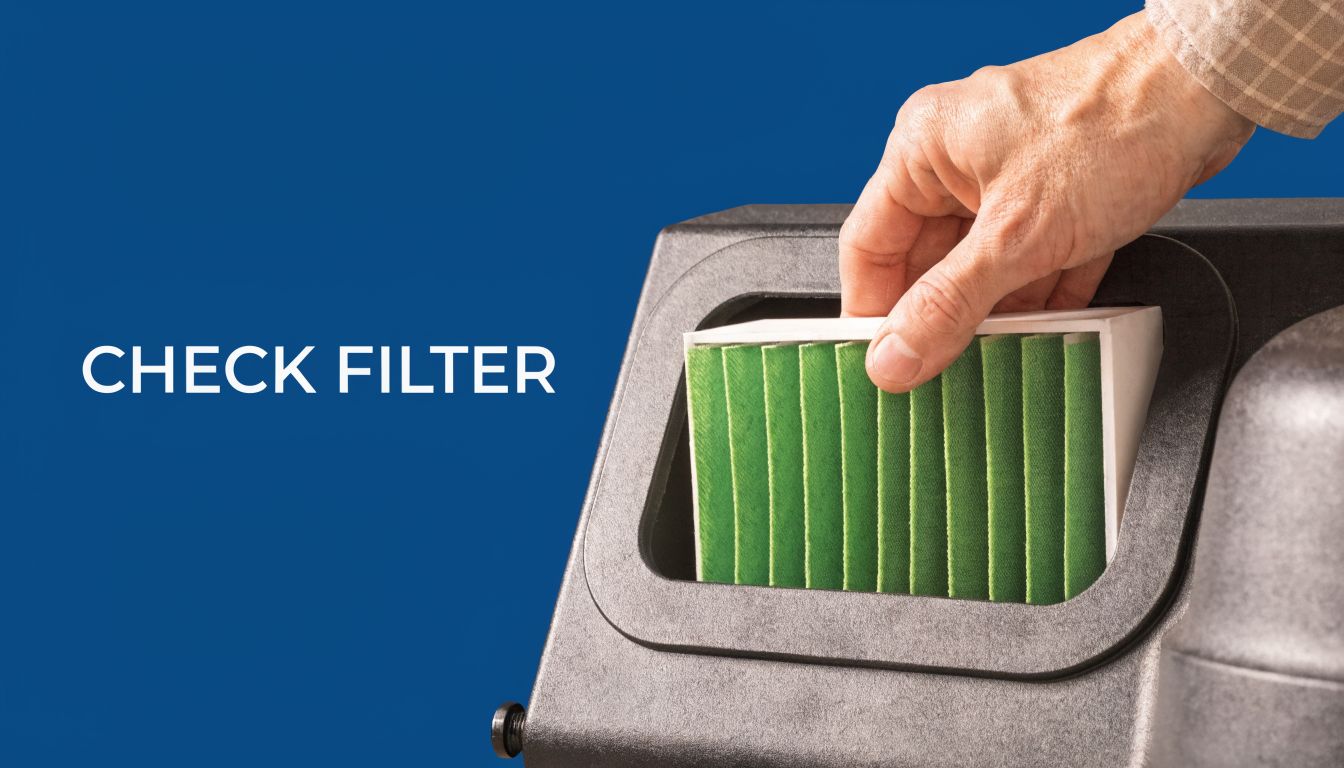
A dirty filter can choke the system. When airflow drops, the evaporator coil can't exchange heat the way it should. The unit may overheat, ice up, or trip protective controls, then try again a short time later.
In Mesa, filters often load up faster than homeowners expect. We deal with fine dust, construction dust, pet hair, and long stretches where the AC runs daily. A filter that looked okay a few weeks ago may already be restricting airflow.
Check the filter first if your AC is short cycling. If you aren't sure where yours is installed, this guide on where your air filter may be in the house can help you find it.
A few filter realities matter:
- A collapsed filter is worse than a dusty one: If the media is bowed inward, airflow may be heavily restricted.
- The wrong filter can cause trouble: Some high-restriction filters are great for particle capture but can be rough on older systems not designed for that resistance.
- One dirty filter can affect the whole system: The problem may show up as short cycling, weak airflow, or warm rooms.
Dirty indoor coil problems
If the filter hasn't been changed regularly, dust often makes its way to the evaporator coil. Once that coil gets coated, heat transfer drops and airflow resistance increases. The AC may cool for a moment, then shut off because system conditions drift out of range.
You usually can't inspect the full coil safely without opening equipment panels, but there are clues:
- Weak airflow at multiple vents
- A musty smell when the system starts
- Visible dust buildup near the air handler
- Condensation or signs of freezing around the cabinet or line set
Homeowners can look for symptoms, but coil cleaning itself is usually not a casual DIY job. Indoor coils are delicate, and it doesn't take much to bend fins or create a drainage mess.
Outdoor coil and condenser blockage
Phoenix dust doesn't just stay indoors. It sticks to the outdoor condenser coil too. Add cottonwood fluff, leaves, weeds, plastic bags, or monsoon debris, and the condenser can't dump heat properly.
When that happens, pressures rise and the system may shut off on safety controls or overheat under load. The short cycling you notice inside can start from a problem sitting right outside your house.
Walk out to the condenser and check for these:
- Debris packed against the coil
- Shrubs or stored items crowding the unit
- A visibly dirty coil surface
- Bent fins or signs of impact
- A fan that starts late or sounds strained
A gentle rinse with power off can help remove loose dust from the outdoor coil. A pressure washer is not the answer. Too much force can flatten fins and make the problem worse.
Thermostat placement can fool the whole system
Thermostats don't think. They react to what they feel where they're mounted. If a thermostat sits in direct sunlight, near a warm hallway, close to a supply vent, or next to a heat-producing appliance, it may tell the AC to turn off or on at the wrong time.
That creates confusion that looks like a mechanical failure even when the equipment itself is still okay.
Common thermostat trouble spots include:
- Direct afternoon sun
- A wall shared with a hot garage
- Near a supply register
- By the kitchen
- In a narrow hallway with poor air circulation
If the thermostat gets cooled too quickly by nearby supply air, it may satisfy early and shut the system down before the rest of the house is comfortable. If it gets warmed by sunlight, it may call oddly and create erratic behavior.
Small thermostat issues that still matter
Sometimes the thermostat itself is the problem, not just its location. Batteries may be weak. The calibration may be off. The programming may be fighting your schedule. Smart thermostats can also create confusion if settings were changed during a utility event, Wi-Fi reconnect, or app update.
Check these basics:
- Mode and setpoint: Make sure it's set to cool and the target temperature makes sense.
- Fan setting: "On" vs "Auto" changes what you hear and can confuse diagnosis.
- Battery status: If your thermostat uses batteries, low power can cause erratic behavior.
- Scheduling: Overlapping programs can make the unit seem unpredictable.
- Temperature reading: Compare the thermostat reading with how the room feels.
You know what? Plenty of short cycling complaints end up tracing back to a filter, airflow restriction, or thermostat issue that started small and snowballed.
What works and what usually doesn't
Some homeowner steps are useful. Others waste time.
| Check | Usually worth doing | Usually not worth doing |
|---|---|---|
| Air filter | Yes, inspect and replace if dirty | Waiting because it was changed "not that long ago" |
| Outdoor unit | Yes, remove loose debris and verify clear space | Spraying it aggressively with high pressure |
| Thermostat | Yes, verify settings, batteries, and placement clues | Constantly lowering the temperature to force longer runs |
| Indoor airflow | Yes, confirm vents are open and air is moving | Closing many vents to "push more air" elsewhere |
Closing a bunch of vents is a common mistake. It often increases static pressure and creates more airflow problems, not fewer.
Deeper Mechanical and Refrigerant Failures
If the easy checks don't explain the problem, the cause often moves into the category homeowners shouldn't handle themselves. Here, a lot of serious ac short cycling causes show up, especially in older equipment or systems that have been limping through Phoenix summers without a proper inspection.
Low refrigerant is not normal wear
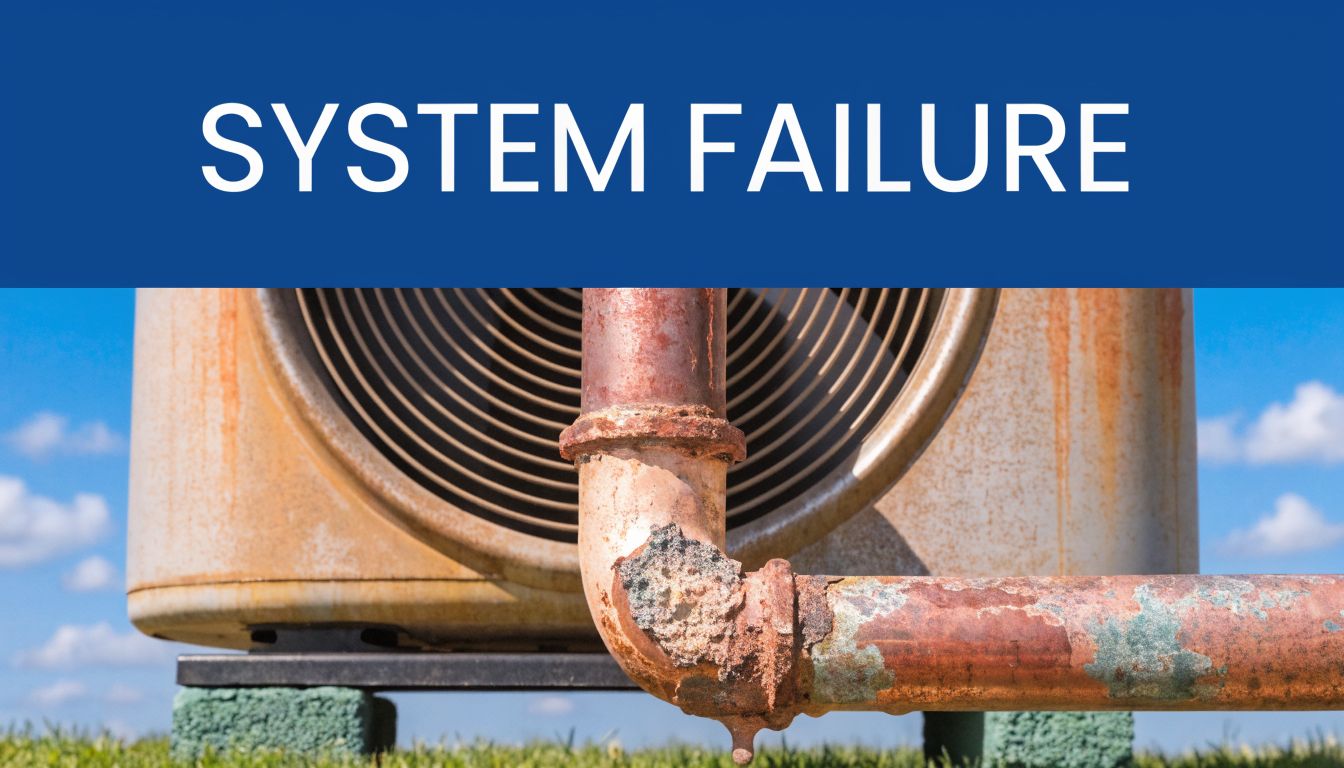
An AC does not consume refrigerant the way a car uses fuel. If refrigerant is low, there's a leak or there was a charging problem during prior service.
That matters because low charge doesn't just reduce cooling. It changes system pressures and temperatures in ways that can cause shutdowns, ice buildup, and compressor stress. According to Petro's short cycling explanation, low refrigerant levels are a primary cause of AC short cycling, and in an R-410A system, a 20 to 30% refrigerant loss can drop suction pressure below 100 psig, promote ice buildup, and force frequent restarts. The same source notes that in Phoenix's 110°F heat, discharge temperatures can exceed 225°F, triggering thermal overload shutdowns and accelerating compressor failure rates by over 50%.
That tracks with what technicians see in the field. A low-charge system may cool briefly, then trip out under heat stress. Once it cools down, it tries again. That repetitive cycle is rough on the compressor.
What refrigerant problems often look like
Refrigerant issues don't always show up as one dramatic failure. They often look inconsistent at first.
You might notice:
- The AC starts normally but shuts down early
- Some cooling, but not enough
- Ice on the indoor coil or suction line
- Longer discomfort paired with shorter equipment run bursts
- A system that struggles badly in late afternoon heat
A proper repair is not "top it off and hope." The right process is leak detection, repair, evacuation, and recharge to manufacturer specifications.
Oversized equipment can short cycle by design
This one surprises a lot of homeowners. Bigger is not automatically better in cooling.
An oversized AC can satisfy the thermostat too quickly. It blasts enough cold air to drop the temperature at the thermostat location, then shuts off before the rest of the house is evenly cooled. The cycle repeats all day.
In Mesa homes, this can feel especially frustrating because the house may be technically reaching setpoint while still feeling uneven, humid, or warm in back rooms. During monsoon conditions, oversizing gets even more annoying because the AC doesn't stay on long enough to remove enough moisture.
Signs your system may be oversized
This issue often appears after replacement, remodels, or major insulation changes.
Watch for patterns like these:
- Very short run times even when the house still feels uneven
- Quick temperature drops near the thermostat
- Cold blasts followed by warm periods
- Repeated cycling on mild mornings and evenings
- Poor comfort despite a newer unit
Sizing is based on more than square footage. Window exposure, insulation, duct design, orientation, ceiling height, air leakage, and occupancy all matter.
Capacitors, relays, and contactors
Electrical parts can also create on-off behavior. A failing capacitor may struggle to help the compressor or fan motor start properly. A weak contactor can chatter or fail to hold stable contact. A relay or board problem can interrupt normal operation.
These faults can mimic other problems because the symptoms overlap:
- The unit starts, then cuts out.
- The outdoor section hums but doesn't stay engaged.
- The fan and compressor don't behave consistently.
- The system works at one time of day and acts up later.
Electrical diagnosis takes testing, not guessing. Replacing random parts because a video suggested it often gets expensive.
Compressor protection trips
Compressors have safety protections for a reason. If the unit overheats, pulls improper current, or runs under damaging conditions, internal overload protection may shut it down.
When that happens, the homeowner often experiences "it runs for a few minutes, shuts off, then comes back later." The compressor isn't being dramatic. It's protecting itself.
If you're already worried that the compressor may be involved, this overview of air conditioner compressor replacement helps explain why that component gets so much attention.
What works and what doesn't with deeper faults
Some choices improve the odds of a real fix. Others just delay it.
| Situation | What works | What usually fails |
|---|---|---|
| Low refrigerant | Leak search and proper recharge | Adding refrigerant without repairing the leak |
| Oversized AC | Load-based evaluation and comfort correction | Trying to solve a sizing issue only with thermostat tweaks |
| Electrical faults | Meter-based diagnostic testing | Replacing parts based on guesswork |
| Repeated compressor trips | Finding the root cause first | Resetting and restarting over and over |
Let me explain one hard truth. If the compressor is shutting off on protection, the goal is not to make it run longer by force. The goal is to find out why it needs protection in the first place.
Your Homeowner Diagnostic and Repair Cost Guide
You can learn a lot before calling for service, as long as you stay on the safe side of the equipment. The goal isn't to perform a technician's job. It's to gather clues, rule out the obvious, and avoid making things worse.
Start with observation. Time a cooling cycle. Listen for where the click happens. Check whether the indoor blower stops with the outdoor unit or keeps running. Look at the filter, the thermostat, and the outdoor condenser area.
Safe checks you can do before scheduling service
Use this checklist without opening sealed panels or touching electrical components.
- Time the cycle: Note whether the system runs only briefly before shutting off.
- Check the filter condition: If it's loaded with dust, replace it and monitor system behavior.
- Look for ice: Visible ice on the larger refrigerant line or around the indoor cabinet points to a bigger problem.
- Clear outdoor debris: Remove leaves, weeds, and trash around the condenser.
- Confirm thermostat settings: Verify cool mode, fan mode, schedule, and batteries if applicable.
- Open supply and return vents: Make sure airflow isn't being restricted around the house.
If you're trying to understand how short cycling affects utility use, this breakdown on the cost of running your air conditioning gives useful context on why inefficient operation gets expensive fast.
AC Short Cycling Troubleshooting Guide
| Potential Cause | What You Can Check | Likely Professional Repair | Estimated Cost (Phoenix Area) |
|---|---|---|---|
| Dirty air filter | Remove filter and inspect for heavy dust, collapse, or incorrect size | Replace filter, inspect airflow and static pressure if needed | Varies |
| Dirty evaporator coil | Look for weak airflow, icing signs, or dust bypass around filter rack | Indoor coil cleaning and airflow evaluation | Varies |
| Dirty condenser coil | Inspect outdoor unit for dust, debris, blocked fins, and poor clearance | Condenser cleaning and performance testing | Varies |
| Thermostat misplacement | Check if thermostat sits near sun, vents, kitchen heat, or a hot wall | Relocation, recalibration, or replacement | Varies |
| Thermostat malfunction | Verify batteries, scheduling, display behavior, and temperature reading | Thermostat repair, setup correction, or replacement | Varies |
| Low refrigerant or leak | Look for ice, reduced cooling, and repeated shutoff behavior | Leak search, repair, evacuation, and recharge | Varies |
| Oversized AC system | Notice very fast cooling near thermostat but uneven comfort elsewhere | Load calculation, airflow correction, or system redesign | Varies |
| Capacitor or contactor issue | Listen for humming, chattering, or inconsistent starts | Electrical testing and part replacement | Varies |
| Compressor thermal overload | System runs briefly, stops, then restarts after cooling off | Full diagnostic to identify refrigerant, electrical, or airflow root cause | Varies |
| Smart control or firmware issue | In newer systems, note app alerts, odd code behavior, or erratic logic | Professional diagnostic, calibration, and control correction | Varies |
For local pricing details on common repairs, this guide on cost to fix AC can help set expectations before you book a visit.
A simple decision rule
If the issue is visible, low-risk, and external, it's usually fine to inspect it yourself. If it involves refrigerant, electrical parts, control boards, or repeated safety shutdowns, stop there.
When to Stop DIY and Call an HVAC Professional
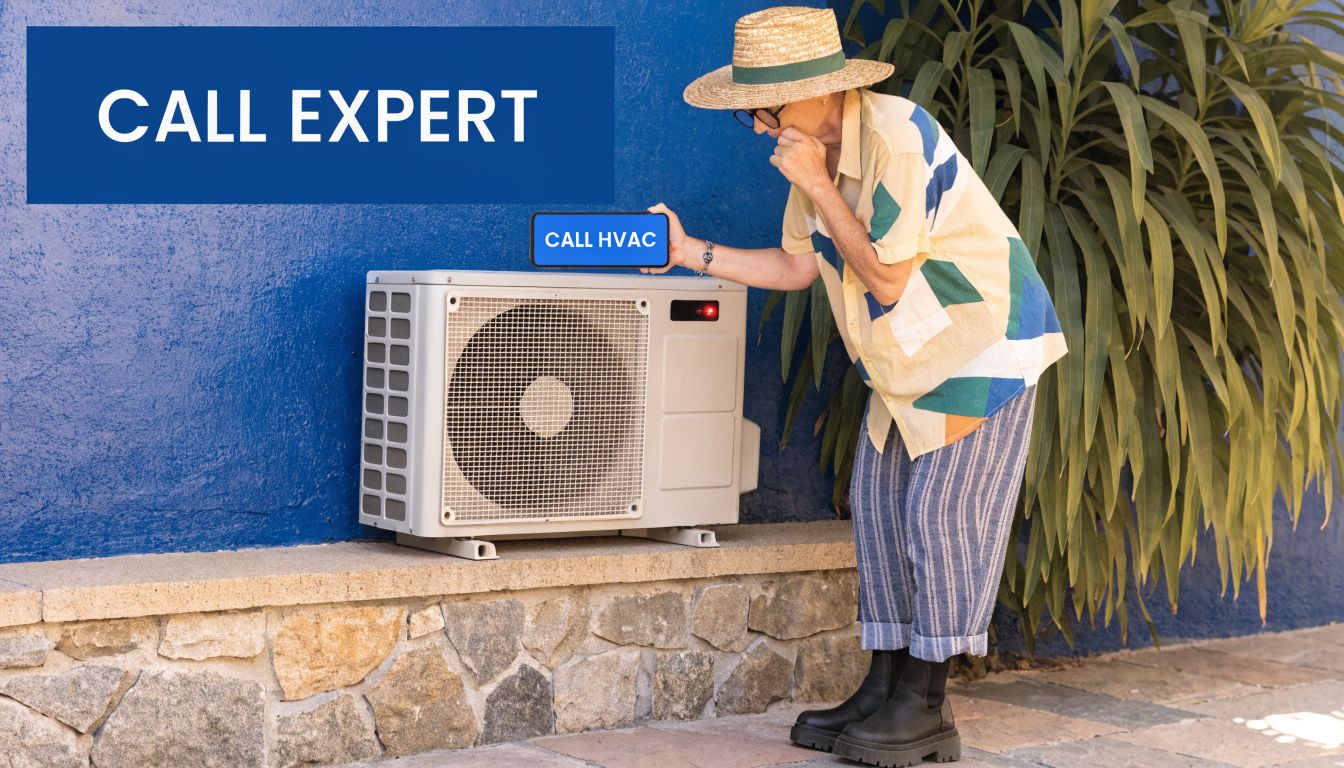
Some short cycling problems are telling you to put the screwdriver down. If the unit is buzzing, tripping breakers, showing ice, leaking oil-like residue, or giving off a burnt smell, that's the point to call a licensed technician.
Red flags that need a pro
These aren't "watch it for a few more days" symptoms:
- Breaker trips: Electrical faults can damage components or create safety hazards.
- Buzzing or chattering: Contactors, relays, or motors may be failing.
- Burnt or acrid smell: Overheated wiring or components need immediate attention.
- Ice formation: That points to airflow or refrigerant trouble, not extra cooling power.
- Oil-like residue near refrigerant lines: That can indicate a refrigerant leak.
- Noisy hard starts: Compressor and capacitor problems can escalate quickly.
High voltage and pressurized refrigerant are not homeowner projects. Even experienced DIY people should be careful about crossing that line.
Newer systems can fool you
Modern equipment isn't always failing in the old-school way. Some variable-speed systems and smart controls create symptoms that look mechanical when the underlying issue is electronic, software-based, or tied to calibration.
According to ARS on air conditioner short cycling, variable-speed heat pumps have seen a 35% rise in Phoenix installations, and short cycling in those systems can sometimes point to firmware glitches rather than hardware failure. The same source says DIYers frequently misdiagnose error codes and can waste over $500 on unneeded parts, while professionally calibrated smart thermostats can detect 80% of electrical short cycling issues early, though calibration matters in dusty Valley conditions.
That's a big deal. A homeowner may replace a capacitor because the symptoms look familiar, while the actual problem sits in system logic, communication, or setup.
Error codes and app alerts aren't a full diagnosis
Phone apps and thermostat alerts can help, but they don't replace proper testing. A code may point you toward a symptom category, not a final answer. Low pressure, capacitor problems, airflow issues, and board faults can overlap in ways that confuse anyone relying on app language alone.
Here's where people get burned:
- They trust the first code too much
- They replace the cheapest likely part
- They restart the system repeatedly
- They delay a proper diagnostic visit until more damage is done
Here’s the thing, newer HVAC systems can be better at self-monitoring, but they can also be easier to misread if you don't work with those controls every day.
When fast action matters most
Call quickly if your AC is short cycling during peak heat and any of these are true:
- The house is no longer cooling adequately
- The system is shutting off on very short intervals
- You see icing or hear electrical noise
- The unit is newly installed and behaving oddly
- Your smart thermostat or app keeps throwing inconsistent alerts
Short cycling in Mesa isn't something to casually ride out in July. The heat outside doesn't give equipment much margin.
Proactive Maintenance to Prevent Short Cycling in Phoenix
The best short cycling repair is the one you never need. Preventive care matters more here because our systems run hard, stay dusty, and deal with weather swings that generic maintenance advice doesn't always account for.
What homeowners should do routinely
A few habits make a real difference over a long cooling season:
- Change filters consistently: During heavy-use months, check them often and don't assume they still have life left.
- Keep the condenser clear: Remove weeds, trash, and storm debris from around the outdoor unit.
- Rinse outdoor coils gently: Power off first, then use a light water rinse to wash away loose dust.
- Watch for airflow changes: Weak air from vents is an early clue, not something to ignore.
- Pay attention to cycle behavior: If the unit starts running differently, don't wait for a complete breakdown.
What helps the AC beyond the equipment itself
Your cooling system works better when the house gains less heat in the first place. That means shading, insulation improvements, and smarter window management can reduce strain during the hottest parts of the day.
If your home gets hammered by sun through west-facing glass, these ideas on how to block heat from windows can help reduce indoor heat gain and make AC operation steadier.
Why seasonal professional maintenance still matters
Homeowner upkeep is important, but it doesn't replace a trained inspection. A technician can spot weak electrical parts, refrigerant issues, drainage trouble, control problems, and airflow problems before they turn into repeated shutdowns.
For a practical checklist of what should be reviewed, this HVAC preventive maintenance checklist gives a solid overview.
In Phoenix, regular maintenance isn't just housekeeping. It's part of keeping a stressed cooling system from failing at the worst time.
Keep Your Cool and Your Peace of Mind
Short cycling is your AC's way of telling you something isn't right. Sometimes it's a dirty filter or a thermostat issue. Sometimes it's refrigerant loss, an electrical fault, a sizing problem, or a control issue that needs proper testing.
The good news is that most short cycling problems can be diagnosed clearly once someone looks at the system the right way. If you want reliable help from a local team that knows Valley conditions, Comfort Experts is ready when you need it.
For honest diagnostics and practical AC help in Mesa and across the Valley, contact Comfort Experts. You can give us a call at 480-207-1239 or schedule service online today.