

That faint musty smell when the AC starts up is enough to make any Phoenix homeowner uneasy. If you’re wondering what causes mold in air ducts, the short answer is moisture plus dust plus the wrong conditions, but the complete story in Mesa and the Valley is more specific than most articles make it sound.
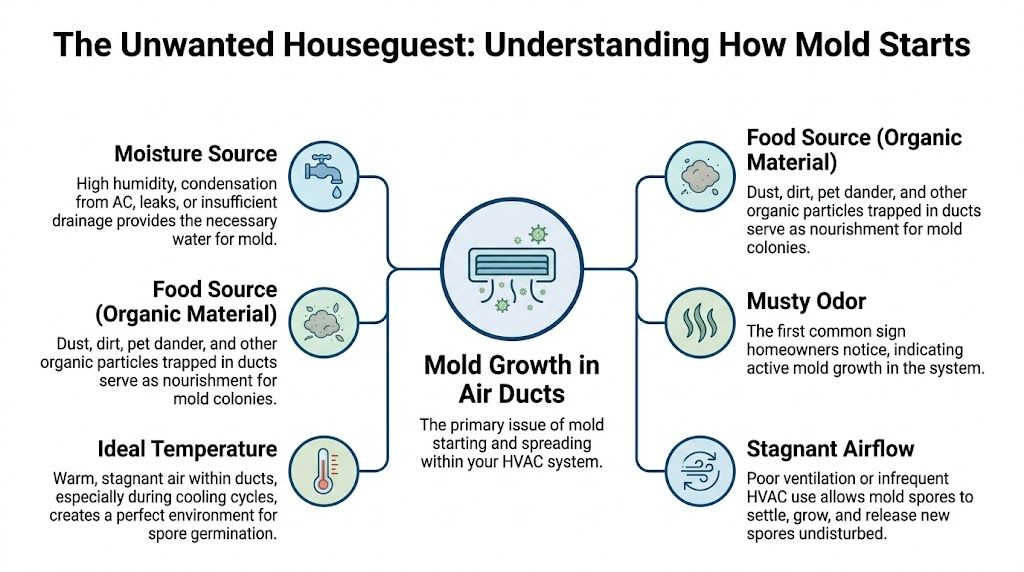
The Unwanted Houseguest Understanding How Mold Starts
A Mesa homeowner calls after the first humid stretch of August. The AC still cools, but every time the system starts, a vent pushes out that damp, musty odor. In the field, that smell usually points to one thing first. Moisture is hanging around somewhere inside the HVAC system longer than it should.
Mold needs three conditions to get established. It needs water, it needs something organic to feed on, and it needs enough time on a protected surface to grow. Remove any one of those, and growth gets a lot harder.
The mold triangle inside an HVAC system
Bare sheet metal and plastic duct don’t feed mold by themselves. The primary food source is the layer that builds up over time. Dust, pet hair, skin cells, and attic debris can collect inside return ducts, around registers, and near the air handler. Once that material gets damp, spores have what they need.
In Phoenix-area homes, moisture is usually the trigger. Cold conditioned air moves through ductwork while attics and wall cavities sit under extreme heat for months. On systems with poor insulation, air leaks, or weak sealing, that temperature difference can create condensation on or near duct surfaces, as explained in this breakdown of duct condensation and mold conditions.
Why Phoenix makes this worse
Our desert climate fools people. For much of the year, dry air works in your favor. Then monsoon season hits, indoor humidity climbs, and small HVAC defects start acting like moisture traps.
That is why duct mold here often shows up in bursts instead of as a year-round issue. A house can run fine through late spring, then start smelling off during a stretch of humid weather because the system already had a weak point. Maybe the return duct pulls in hot attic air. Maybe insulation has gaps. Maybe the drain setup at the air handler is slow and nobody notices until humidity rises.
The first growth also tends to show up in specific spots, not uniformly through every duct run. I usually check the evaporator coil area, blower compartment, supply plenum, and nearby joints before I assume the whole duct system is contaminated. If you want a clearer picture of why those cold surfaces matter, it helps to see where the evaporator coils sit in your system, because that area often stays wet enough to start the problem.
What the smell is really telling you
A musty odor means the system has a moisture issue worth checking. It does not automatically mean every vent is full of mold, and it does not mean you need an expensive whole-house duct cleaning just because a coupon showed up in the mail.
Common causes include:
- Condensation on poorly insulated duct sections
- A clogged or slow condensate drain
- Dust buildup near a cold evaporator coil
- Air leaks that let hot attic air mix with cold system surfaces
- A wet liner or boot near a register
That distinction matters. Homeowners get overcharged when mold gets treated like a mystery instead of a mechanical problem. In most cases, the primary fix is moisture control first, then cleaning or replacing the affected parts if growth is confirmed.
Phoenix's Perfect Storm The Real Causes of Mold in Ducts
A Phoenix system can run fine for months, then monsoon season hits and the weak spots show up fast. The house still feels cool, but humidity climbs, a duct boot starts sweating, the drain line slows down, and now you have the one thing mold needs most. Persistent moisture.

Monsoon humidity exposes existing HVAC weaknesses
Phoenix is dry for much of the year, which is exactly why homeowners get misled on this topic. Mold in ducts usually does not show up because the whole desert suddenly turned damp. It shows up because monsoon humidity finds a cold surface, a dusty surface, or a wet spot that was already one repair away from trouble.
I see that in older systems all the time. A return leak in a hot attic, torn insulation on a supply run, or an air handler closet with poor drainage may stay quiet in spring. Then July and August add enough humidity to turn a small defect into a mold-friendly pocket.
Condensation is usually the main trigger
In this climate, condensation causes more duct mold problems than some mysterious contamination from outside. Cold supply air moving through ducts while attic spaces and wall cavities are extremely hot creates the temperature difference that makes metal boots, seams, and nearby insulation get wet.
The common trouble spots are familiar:
- Supply boots at ceiling registers
- Poorly insulated duct sections in hot attics
- Loose joints and seams that pull in hot air
- Return leaks near dusty attic or garage spaces
- Cold surfaces near the coil and plenum
That is why a dry climate does not give ducts a free pass. If warm humid air hits a cold surface long enough, water forms.
Short cycling leaves moisture behind
An oversized AC can cool a house quickly and still do a poor job removing humidity. The thermostat gets satisfied, the system shuts off, and the equipment never runs long enough to wring much moisture out of the indoor air.
Homeowners in Phoenix often assume a colder house means the system is doing everything right. It doesn't. During monsoon season, a house can hit the set temperature and still feel sticky, especially in rooms with weaker airflow or duct leakage.
Drain and pan problems feed growth near the air handler
If water is not leaving the system cleanly, mold gets a head start around the indoor unit. A clogged condensate line, rusted pan, bad float switch, or slight pitch problem can keep water sitting where dust is already collecting.
That area deserves more attention than the average vent cover. If you have water around the indoor unit or repeated drips, this guide on why an air conditioner starts dripping water explains the common causes homeowners see before they call for service.
Dust plus leaks give mold a place to live
Moisture starts the problem. Dust keeps it going.
Leaky ducts can pull in attic insulation fibers, dirt, and organic debris. Once that material sticks to a damp surface near the coil, plenum, or register boot, you have both water and food in the same place. That does not mean every dirty duct is moldy, and it definitely does not mean every home needs an expensive full-system duct cleaning. In a lot of Phoenix houses, targeted repair makes more sense than a big cleaning bill.
A general HVAC mold overview from All Restored's guide on mold in air ducts lines up with what techs see in the field. Moisture problems come first. Growth follows where the system stays damp.
What I check first in Phoenix homes
If I am trying to figure out whether duct mold is a real risk or just a sales scare, I start here:
- Humidity swings during monsoon season
- Condensation at boots, seams, and insulated duct runs
- Drain line flow and drain pan condition
- Return leaks that pull attic or garage air into the system
- Dust buildup near wet HVAC components
Health concerns are part of the conversation, especially for sensitive households, but they should be handled with some caution and common sense. If you are worried about symptom patterns, this list of 17 signs of mold illness can give you a starting point for questions to bring to a doctor.
Around Phoenix, mold in ducts is usually a moisture-control problem with a mechanical cause. Fix the wet conditions first. Then clean, treat, or replace the affected parts based on what is present.
Detecting a Hidden Problem Signs You Might Have Mold
Most homeowners don’t spot mold by seeing it deep inside a duct run. They notice it with their nose first. The odor usually shows up when the system starts, especially after it has been off for a while.
What to notice before you remove a vent cover
The smell matters, but the timing matters too. If the odor appears only when the AC runs, that points you toward the HVAC system rather than a separate room issue. Damp, earthy, dirty-sock, or old-wood smells are all common descriptions.
Visual clues help, but don’t jump to conclusions. Dark film on a vent grille might be mold. It might also be dust sticking to condensation around the register.
Mold detection checklist
| Symptom Category | Specific Signs to Watch For |
|---|---|
| Odor | Musty smell when the AC starts, earthy odor near vents, stale smell strongest in one room or near the air handler |
| Visible clues | Dark or fuzzy spots on vent covers, staining around registers, moisture marks near ceiling boots, residue near the indoor unit |
| Moisture signs | Condensation on or around vents, recurring dampness near the unit, drip pan issues, wet insulation near duct connections |
| Air quality changes | Air feels stale when the system runs, rooms smell worse after long cooling cycles, dust seems to collect quickly around certain vents |
| Physical symptoms | More sneezing indoors, irritated eyes, coughing, throat irritation, symptoms that improve after leaving the house |
Dust or mold
People often confuse dust and mold. Dust is usually dry, gray, and loose. Mold often looks patchy, spotted, fuzzy, or stained into the surface. Still, you can’t identify everything accurately just by color.
A practical approach is to ask:
- Does it come back quickly after cleaning?
- Is there moisture nearby?
- Does the odor match the visual area?
- Do symptoms get worse when the AC runs?
For the health side, a useful outside reference is this overview of 17 signs of mold illness from Salus Natural Medicine. It’s worth reading if someone in the house has recurring irritation and you’re trying to connect symptoms with indoor exposure.
The strongest clue
The most convincing sign isn’t one black speck on a register. It’s a pattern. Odor, moisture, repeat buildup, and symptom flare-ups together are what make the issue worth investigating.
If you only have dust, that’s a cleaning issue. If you have dust plus dampness plus odor, that’s when mold moves higher on the suspect list.
Dont Panic Separating Mold Myths from HVAC Reality
A Mesa homeowner sees a dark ring around a ceiling vent in August, smells something stale after the AC kicks on, and starts picturing mold through the whole house. I get that call every year. In plenty of Phoenix homes, the problem is smaller and more specific than people fear.

Why true duct infestations are rarer than people think
Actual mold growing throughout ductwork is not the default. As noted in this HVAC inspection perspective on duct mold, mold usually needs two things working together for long enough to matter. Moisture and a layer of dust or debris it can feed on. Bare sheet metal and plastic ducts are not great growth surfaces by themselves, and steady airflow often helps sections dry out.
In Phoenix, that matters because homeowners get pitched whole-house duct cleaning the minute someone spots discoloration near a vent. Sometimes that cleaning is justified. A lot of times, the underlying issue is a sweating register boot, a wet coil area, a clogged drain line, or attic air leaking into the system during monsoon season.
What gets mistaken for mold in Phoenix homes
The desert creates its own kind of confusion. Dust is everywhere, and during humid weather that dust can stick to damp supply registers and turn dark fast.
A few common false alarms show up again and again:
- Dust glued to condensation around a register
- Staining on older vent covers or ceiling paint
- Mold growing on the outside of insulated ductwork in a hot attic or garage
- Dirt buildup near the blower or evaporator coil that is not spread through the full duct system
A musty smell also gets blamed on ducts all the time. Sometimes the odor is coming from the air handler cabinet, the drain pan area, a wet filter, or even a separate moisture problem in the house.
What actually turns suspicion into a real HVAC mold problem
Real duct mold usually means a moisture problem that keeps repeating. In our area, that often shows up during monsoon humidity spikes, or when very cold air inside the system meets hot attic or garage air outside the ductwork. If insulation is damaged, ducts leak, or airflow is weak, surfaces can stay damp longer than they should.
That is the point where mold gets a foothold.
The expensive mistake is paying for cleanup before anyone identifies where the water is coming from. The same outside source above notes that homeowners sometimes spend hundreds on cleaning when humidity control and moisture correction should have come first. That tracks with what I see in the field. If the source is still there, the problem comes back.
Better questions to ask before paying for cleaning
Before you approve duct treatment, ask a technician to narrow down the problem:
- Where is the moisture coming from?
- Is the growth inside the air path, or on the outside of insulation, boots, or nearby materials?
- Is the dark material active growth, old staining, or dust stuck to a damp surface?
- Are poor filtration, low airflow, or a drain issue making the system stay wetter than it should?
Filtration is part of this conversation too. A better filter will not fix a water problem, but it can cut down on the dust and organic debris that feed growth. If someone in the house is sensitive to allergens, this guide to HVAC filters for allergy-sensitive households helps explain which filter types make sense without choking airflow.
Here’s the honest version. Some Phoenix homes do have mold tied to the HVAC system. Many more have dust, condensation, drainage, or duct leakage problems that get labeled as mold because the symptoms look similar. That difference is what keeps you from overpaying and helps you fix the cause instead of the scare.
Your First Line of Defense Simple DIY Prevention Tips
The best mold fix is preventing the conditions that let it start. Homeowners can handle a surprising amount of that without touching anything risky or overcomplicated.
Change the filter on schedule
Dust is more than a cleanliness issue. It becomes food when moisture shows up. According to this explanation of organic buildup in HVAC systems, metal and plastic ducts are poor nutritional sources by themselves, but dust, pet dander, and household debris create the substrate mold feeds on.
That same source recommends filter replacement every 1 to 3 months, especially in dusty desert climates. In Mesa, I’d treat that as normal maintenance, not optional maintenance.
If you’re not sure where yours is, this guide on finding your home’s air filter location can save you a frustrating search.
Keep the drain path clear
Your air conditioner removes moisture every time it cools. That water has to leave cleanly. If the condensate line clogs, water backs up where you don’t want it.
A simple homeowner routine includes:
- Look for standing water near the indoor unit.
- Check for algae or sludge at the drain outlet.
- Pay attention to new musty odors near the air handler.
- Have the drain inspected seasonally if it has a history of clogging.
If the line repeatedly backs up, that moves out of DIY territory fast.
Lower indoor humidity during monsoon season
A house can be cool and still too humid. During monsoon season, moisture control becomes part of HVAC maintenance even if your equipment is technically still cooling.
Practical habits that help:
- Run bathroom exhaust fans after showers.
- Use kitchen ventilation when cooking.
- Keep windows closed during muggy periods.
- Watch for rooms that feel cool but damp
- Avoid letting AC issues linger, especially drainage or airflow issues
Keep vents and surrounding areas clean
You don’t need to deep-clean the entire duct system yourself. You do want to keep register covers and the surrounding ceiling or wall area clean enough that you can spot changes early.
Try this routine:
- Remove and wipe vent covers when they show buildup.
- Vacuum loose dust around supply and return grilles.
- Check for condensation staining while the cover is off.
- Look for recurring dark spots that return quickly.
What doesn’t work well
Some DIY moves waste time or make things worse:
- Fogging random chemicals into vents
- Painting over suspicious spots without solving moisture
- Ignoring a recurring odor because the house still feels cool
- Using the cheapest filter possible and leaving it in too long
Let me explain. Mold prevention isn’t about one magic product. It’s about keeping the system dry, moving air properly, and not letting dust pile up into a food source. That’s the basic discipline that works.
When DIY Isnt Enough Professional Solutions for Clean Air
A lot of Phoenix homeowners get sold a full duct cleaning the minute they mention a musty smell. Sometimes that service is justified. A lot of times, it is not.
The job is to find out where the moisture is coming from first. If nobody has identified the source, cleaning alone is often a short-term cosmetic fix. In our climate, the usual culprits are a sweating boot, a clogged drain line, a dirty evaporator coil, a return leak pulling attic air, or insulation problems around the duct.
When to stop troubleshooting on your own
DIY prevention makes sense up to a point. Once you have recurring odor, visible growth that keeps coming back, or water showing up around vents or equipment, it is time for a trained inspection. As noted in this guide on HVAC mold and duct contamination, larger contamination areas should be handled by professionals rather than treated as a simple homeowner cleaning project.
Call a pro if you notice any of these:
- Dark growth keeps returning after you clean the vent cover
- A musty smell shows up whenever the AC runs
- You see staining near ceiling boots or around supply registers
- The drain pan, drain line, or coil area is staying wet
- Someone in the home has asthma, allergies, or strong respiratory reactions
- You suspect duct leaks in the attic or around returns
- You want confirmation before paying for remediation
That last point matters. Dust, attic debris, and old staining get called "mold" all the time. Paying for the wrong service is common.
What professional work should focus on
A good HVAC or indoor air quality contractor should answer three questions before talking about add-ons.
Where is the moisture coming from?
What parts of the system are contaminated?
What repair keeps it from coming back?
That usually means work such as:
- System inspection: Checking the coil, blower compartment, drain pan, drain line, boots, insulation, and accessible duct runs
- Moisture correction: Fixing drainage problems, condensation issues, or air leaks
- Duct sealing: Closing leaks that pull hot, dusty attic air into the system
- Targeted cleaning: Cleaning confirmed buildup instead of selling whole-house cleaning by default
- Coil and air handler service: Addressing the areas where microbial growth often starts
- UV treatment in select cases: Useful near the coil or air handler when moisture has been an ongoing issue
If you want a general consumer reference for what professional air duct cleaning services typically involve, that overview is useful for comparing bids and spotting oversold packages.
Why duct sealing and diagnosis matter so much here
Phoenix homes run cooling systems hard for much of the year. That changes the equation. A small return leak in the attic may not seem dramatic, but it can pull in dusty, superheated air that creates condensation trouble once it hits colder surfaces in the system. During monsoon season, that risk goes up.
This is why I tell homeowners not to focus only on what they can see at the register. The underlying problem may be ten feet away at a disconnected return, a poorly insulated boot, or an air handler with a drainage issue. If you are comparing local duct cleaning and duct system service options, look for companies that inspect and repair the cause, not just vacuum the ducts.
What honest HVAC advice sounds like
Honest advice is usually pretty plain.
“Yes, you have confirmed contamination, and here is the moisture source we need to fix.”
Or:
“This looks like dust, staining, or insulation debris. Your real problem is airflow, leakage, or condensation.”
That is the difference between solving the issue and paying for a service call that makes the vent look better for a week.