If you live in Mesa or anywhere in the Phoenix Valley, you’ve probably had this moment: you wipe the table, step away, and swear a fresh layer of dust shows up almost immediately. To eliminate dust from home in Arizona, you need more than a spray bottle and a quick dusting routine. You need a whole-home strategy built for desert air, leaky houses, and HVAC systems that move dust around all day.
The Never-Ending Battle With Dust in Your Arizona Home
You clean the TV stand on Saturday morning. By Sunday afternoon, the surface already looks dull again. That’s not your imagination, and it doesn’t mean you’re doing a bad job keeping house.
In Phoenix-area homes, dust is persistent because it comes from more than one place at once. Some of it is generated indoors through skin flakes, fabric fibers, pet dander, and normal daily movement. Some of it blows in from outside, especially when wind picks up, construction is active nearby, or monsoon season sends fine desert particles into every crack that isn’t well sealed.

A lot of homeowners fall into a reactive pattern. A 2023 Dyson dust study found that 55% of Americans only clean when they see visible dust, and that habit had increased by nearly 20% in a year. The same study found that only 41% maintain a regular cleaning schedule, which matters because tiny particles like pet dander and dust mite feces build up long before you can see them.
So ask yourself a simple question. Are you cleaning dust, or are you interrupting the cycle that keeps creating it?
Why surface cleaning alone keeps failing
Most homeowners focus on what they can see. Coffee tables, blinds, baseboards, shelves. That makes sense, but visible dust is only the final stage of the problem.
Dust starts as airborne particulate. Your return air pulls it in. Your duct system may move it. Air leaks may introduce more of it. Then it settles on furniture and floors, which tricks people into thinking the furniture is the source.
Practical rule: If dust returns fast after a thorough cleaning, the issue usually isn’t effort. It’s airflow, filtration, leakage, or all three.
That’s why generic cleaning advice often falls short in Arizona. It tells you to dust more often, but it doesn’t account for desert conditions, attic infiltration, or duct leakage. In many homes, the system that should help manage air quality is part of the reason dust keeps circulating.
What the dust in your house usually includes
Dust isn’t one material. It’s a mixture, and that matters because different sources require different fixes.
- Indoor particles: skin cells, pet dander, clothing fibers, lint, and cooking residue
- Outdoor particles: desert soil, pollen, fine debris, and traffic-related particulates
- Hidden reservoirs: attic dust, dirty ducts, carpet backing, upholstery, and overloaded filters
For families with allergies, that mix is more than annoying. It can affect comfort, sleep, and how the house feels day to day.
A better path is to treat the home like a system. Clean the right way. Block the places dust gets in. Improve filtration so the HVAC system captures more and redistributes less. That’s the same mindset behind a strong whole-home indoor air quality plan.
The Arizona version of the problem
Mesa homeowners often tell the same story. The home looks fine right after cleaning, but sunlight through the windows reveals particles floating in the air by afternoon. That’s common in dry climates because fine particles stay suspended longer and move easily through leaky areas around doors, windows, attic penetrations, and ductwork.
You can keep chasing the layer on the dresser every weekend. Or you can start working on the sources and pathways that put it there in the first place.
Identifying Your Home's True Dust Sources
It's often assumed dust begins on shelves and tabletops. In reality, those are just landing zones. The important question is where the dust came from and how it traveled through the house before you noticed it.
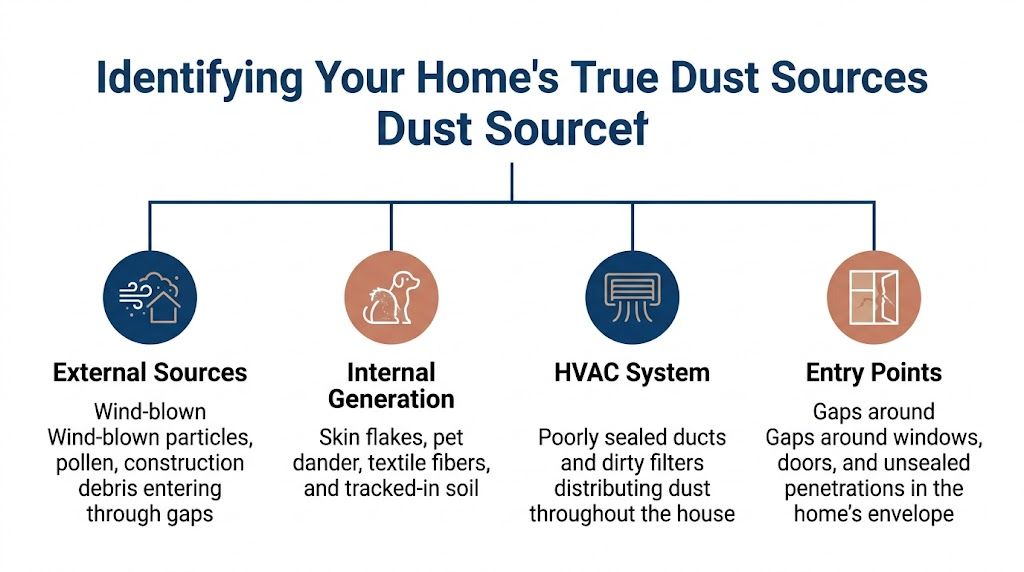
In the Phoenix Valley, that answer is often split between what your home creates and what your home lets in.
Outside-in dust is a bigger deal in Arizona
Local conditions change the whole equation. In arid climates like the Phoenix Valley, up to 70% of indoor dust can originate from outdoors, and haboobs can raise indoor fine particle concentrations by up to 50%, according to the cited claim in this Phoenix-focused dust source discussion. The same source says a 2025 ASHRAE study found duct sealing with technologies like Aeroseal can reduce dust recirculation by 40-60% by addressing a major entry path.
That fits what HVAC pros see in older and even mid-age Valley homes. If the envelope leaks and the duct system leaks, the house pulls dusty air from places you don’t intend to breathe from. Attics are a major one. Garages and wall cavities can contribute too.
Inside-out dust still matters
Even if outdoor dust is your biggest issue, indoor generation never stops. Every occupied home produces dust daily.
Common contributors include:
- People and pets: Skin flakes, hair, dander, and tracked-in dirt add up fast.
- Soft materials: Rugs, carpets, upholstered furniture, throw blankets, and curtains release fibers and hold particles.
- Movement: Walking, sitting on couches, making beds, and opening doors kick settled dust back into the air.
- Cooking and daily living: Fine grease residue in kitchens gives dust more surfaces to cling to.
A house with two dogs, carpeted bedrooms, and a frequently used patio door will behave very differently from a house with hard floors, minimal textiles, and tighter construction.
Dust doesn’t need a large opening. It only needs airflow.
That’s why the obvious spots aren’t always the most important ones. Tiny gaps around recessed lights, attic hatches, duct boots, window frames, electrical penetrations, and return chases can all act like pathways. In a windy, dry environment, those pathways keep feeding the dust cycle.
You know what? When a homeowner says, “I dust constantly and it still comes back,” I usually start thinking about leakage before I think about housekeeping.
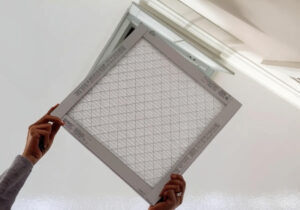
The HVAC side matters too. A clogged or poorly fitted filter, leaky return duct, or dusty supply network can distribute particles to rooms that would otherwise stay much cleaner. If you’re not sure where your filter is or whether you even have the right setup, this guide on where to find your home's air filter is a useful starting point.
A practical way to identify your likely sources
Walk through your house and classify the problem instead of treating all dust the same.
Look for outside-in signs
- Dust near window tracks: Fine grit on sills or around sliders often points to infiltration.
- Fast buildup after windy days: That usually suggests the house envelope or ducts are pulling in outdoor particles.
- Dust concentrated near supply vents: This can indicate recirculation through the HVAC system.
Look for inside-out signs
- Lint-heavy dust in bedrooms: Bedding, clothing, and carpet often drive this.
- Hair and fuzz in corners: Pets and fabrics are common culprits.
- Dust around electronics and media centers: Static and airflow patterns attract particles there.
Look for system-related signs
- Dirty vents soon after cleaning: Often tied to duct leakage, filtration problems, or neglected maintenance.
- Uneven dust from room to room: Usually means airflow differences, room pressure issues, or localized leakage.
- Filter loading faster than expected: A clue that the system is catching a lot, or that it’s being asked to handle more than it should.
Why national advice misses the Phoenix Valley reality
A national blog might tell you to open the windows for fresh air or just vacuum more often. In Arizona, that can backfire.
Open windows during dusty periods invite more particulates. Dry air keeps fine particles airborne longer. Leaky attics and ducts can feed dust into the system even when the windows stay closed. That’s why local diagnosis matters. Dust control here is less about one magic tool and more about controlling the house as an air-moving system.
Your First Line of Defense A Smarter Cleaning Routine
Before you upgrade filters or seal ductwork, fix the routine. Many homeowners work hard and still get poor results because the process itself keeps redistributing dust.
The American Cleaning Institute reported that 78% of households do spring cleaning, but only 12% rank dust as a top concern, and the EPA notes Americans spend 90% of their time indoors. That same source highlights methods like damp wiping and HEPA vacuuming for trapping particles instead of pushing them around in the air, as noted in the American Cleaning Institute survey coverage.
Clean top to bottom or you’ll do the same job twice
Dust falls. That’s obvious, but a lot of cleaning routines ignore it.
If you vacuum first and dust shelves second, you’ve just dropped debris onto a floor you already cleaned. Start high and work down in a controlled order.
Ceiling fans and upper shelves first
Knock down what’s overhead before touching lower surfaces.Furniture, electronics, and horizontal surfaces next
Focus on places where fine dust becomes visible fastest.Baseboards, lower trim, and floor edges after that
These areas catch what settles during the earlier steps.Vacuum or damp mop last
Finish by removing what fell instead of leaving it to recirculate.
A good cleaning routine should remove particles from the home. It shouldn’t just move them from one surface to another.
Use tools that trap dust instead of launching it
Feather dusters are one of the worst tools for Arizona homes with allergy concerns. They make things look active, but they often send fine particles right back into the room air.
A better setup looks like this:
- Damp microfiber cloths: These grab and hold dust better than dry cloths.
- A sealed HEPA vacuum: This matters on floors, rugs, upholstery, and even return grilles.
- Soft brush attachments: Useful for blinds, lamp shades, and vent covers.
- A second clean cloth: One for glass or electronics, one for general dusting, so you don’t smear residue around.
Microfiber also needs to be used correctly. If it’s overloaded or too dirty, it stops trapping effectively and starts dragging material across the surface.
Rooms that usually need more attention
Not every room loads with dust at the same rate. Bedrooms, living rooms, and spaces with heavy fabric use usually need a tighter routine than formal dining rooms or little-used guest spaces.
Areas worth prioritizing:
- Bedrooms: Bedding, clothing fibers, under-bed dust, and upholstered headboards
- Living rooms: Rugs, sofas, media consoles, ceiling fans, and supply vents
- Entry zones: Tracked-in grit, pet traffic, and door leakage
- Hard floor transitions: Dust collects where tile, wood, and rugs meet
If hard flooring is part of your plan, proper care matters too. Homeowners trying to reduce dust without damaging finishes can get practical tips from this guide on maintaining your hardwood floor investment.
The vacuum matters more than most people think
A cheap vacuum can make the room look cleaner while exhausting fine particles back into the air. That defeats the point, especially if someone in the house has allergies.
Look for:
- Sealed construction
- HEPA filtration
- Attachments for edges and upholstery
- Enough suction for rugs without scattering debris on hard floors
If dust is a health concern, your HVAC filter matters too. This overview of HVAC filters for allergy control helps explain why filter choice affects more than just system cleanliness.
A smarter cleaning routine won’t solve a leaky attic or dusty duct system. It will, however, give you a stronger foundation and make the deeper fixes pay off.
Home Adjustments That Stop Dust Before It Starts
Cleaning removes dust after it lands. Home adjustments reduce how much lands in the first place. That difference matters if you’re tired of fighting the same battle every week.
In Arizona, the most effective changes often have less to do with furniture polish and more to do with source control. If dust keeps entering the house or getting pulled from hidden spaces, no cleaning routine can fully keep up.
The attic is often the missing piece
A Phoenix-area case study tied to EPA indoor air quality guidance described an attic sealing retrofit using closed-cell spray foam to create an air barrier. In that example, the work reduced external dust infiltration by 80-95%, and the cited case noted that 40-60% of a home’s dust load in desert regions can come from the attic, making source control far more effective than filtration alone. The homeowner’s visible-dust “piano test” improved after the work, according to the related EPA indoor air quality reference.
That lines up with what many Valley homeowners don’t realize. A dusty attic isn’t separate from the house if the ceiling plane, duct boots, chases, and penetrations leak. Air moves. Dust moves with it.
Changes that lower your dust load over time
Some fixes are structural. Others are lifestyle and material choices. Together, they make the home less hospitable to dust buildup.
- Choose hard surfaces where practical: Tile, sealed concrete, vinyl plank, and well-maintained wood don’t trap particles the way wall-to-wall carpet does.
- Reduce heavy textiles: Thick drapes, extra throw pillows, and fabric-heavy décor hold dust and release it whenever they’re disturbed.
- Use closed storage more often: Open shelves display décor nicely, but they also create endless dusting work.
- Manage the entry points: Door sweeps, weatherstripping, and attention to window seals can make a noticeable difference.
Bedrooms deserve special attention
Many people feel dust most in the room where they spend the most still time. If you wake up congested, your bedroom needs more than occasional dusting.
Simple choices help:
- Wash bedding regularly
- Keep under-bed storage contained
- Reduce fabric clutter
- Vacuum mattresses and upholstered headboards as part of routine care
For homeowners wanting a room-specific checklist, this piece on keeping your sleeping space dust-free offers useful practical ideas.
Source control beats symptom control. If the house keeps pulling dust from the attic or exterior gaps, the duster is treating the result, not the cause.
Duct sealing and envelope sealing work together
A lot of homeowners fix one side and ignore the other. They replace filters but leave leaky ducts alone. Or they seal a few windows but overlook the attic access and return plenum. Dust control works better when the whole path is addressed.
That’s why duct sealing matters in dusty Arizona homes. If the duct system is drawing in attic air or losing conditioned air into dusty spaces, filtration alone can’t carry the whole load. Homeowners exploring that option can review how Aeroseal duct sealing addresses leakage pathways.
Don’t overlook humidity and furnishing choices
Dry conditions in Arizona let fine particles hang in the air longer. While you don’t want excessive indoor humidity, balanced conditions can help reduce how aggressively dust stays suspended.
On the furnishing side, dust-resistant choices are often the easiest long-term win:
- smooth blinds instead of fabric valances
- easier-to-clean upholstery
- fewer decorative textiles
- less clutter on open horizontal surfaces
These aren’t glamorous changes, but they often produce more durable results than buying another gadget. Dust control improves when the home stops feeding the problem.
Your HVAC System The Lungs of Your Dust-Free Home
Your HVAC system moves air through the house all day. That makes it either your strongest dust-control ally or a very efficient dust-distribution system.
Most homeowners think of heating and cooling as comfort equipment. From an indoor air quality standpoint, it’s also an air management system. It pulls air in, filters it, conditions it, and sends it back out. If filtration is weak or ducts leak, every cycle can carry fine particles from one part of the house to another.
Start with the filter, but choose it intelligently
Professional residential dust-control guidance notes that moving to a whole-home HEPA filter with MERV 13+ can cut airborne dust by 70-90% and allergens by 85-95%, and combining that with duct sealing such as Aeroseal, which can reduce system leakage by 80-90%, creates a broader solution for both circulating and infiltrating dust, according to this HVAC dust-control reference.
That doesn’t mean every system should get the highest-rated filter you can find off a store shelf. Filter performance has to match the blower, duct design, and pressure characteristics of the equipment.
What homeowners should know:
- A better filter can capture more dust, but only if airflow remains acceptable.
- A badly fitted filter lets air bypass around the edges, which defeats the upgrade.
- A dirty filter loads the system, reduces performance, and can worsen comfort problems.
What MERV means in practical terms
MERV is a rating that tells you how effectively a filter captures particles across certain size ranges. Higher numbers generally mean finer capture, but more resistance can come with that.
For the average homeowner, the practical takeaway is this:
- low-grade filters mostly protect equipment
- better media filters improve indoor air quality
- whole-home filtration should be selected with system performance in mind
This is one reason professional evaluation matters. A filter recommendation shouldn’t be based on packaging alone.
Duct leakage changes everything
A surprising amount of household dust is tied to the air distribution system, not just what’s drifting through open doors. If return ducts leak in the attic, they can pull dusty air into the system. If supply ducts leak, pressure imbalances can encourage outdoor dust infiltration elsewhere in the home.
That’s why duct sealing often produces a different kind of improvement than routine cleaning. Cleaning removes what’s already there. Sealing reduces what keeps getting introduced.
One local option for that type of work is Comfort Experts, which provides duct sealing and indoor air quality services for Phoenix Valley homes. Mentioning that here is practical because duct leakage is a system issue, not a housekeeping issue.
When duct cleaning helps and when it doesn’t
Duct cleaning has its place, but it’s not a cure-all. If ducts contain heavy dust accumulation, debris, or buildup from long neglect, cleaning can help remove material already sitting in the system.
What it doesn’t do is fix the reason dust got in there.
- Cleaning helps when contamination is present
- Sealing helps when the system is actively pulling in dust
- Filtration helps capture what remains airborne
- Maintenance keeps the gains from fading
That’s why isolated duct cleaning can disappoint homeowners if the house still has leakage, poor filtration, or overloaded returns.
A whole-home dust strategy through HVAC
For most Arizona homes, the strongest approach is layered.
| Strategy | Primary Target | Effectiveness | Typical Investment |
|---|---|---|---|
| Smarter dusting and HEPA vacuuming | Settled dust on surfaces and floors | Good for visible dust control, limited if the home keeps pulling in new dust | Low |
| Filter upgrade and scheduled replacement | Airborne particles moving through the system | Strong when properly matched to equipment and replaced on time | Low to moderate |
| Duct cleaning | Existing dust and debris inside ductwork | Helpful when contamination is present, limited if leakage remains | Moderate |
| Duct sealing | Dust entering or recirculating through leaks | High impact where attic or duct leakage is a driver | Moderate to high |
| Whole-home air purification and advanced filtration | Fine airborne particles and allergens | Strong as part of a broader system approach | Moderate to high |
| Attic and envelope sealing | External dust intrusion through the structure | Very strong when leakage is the root problem | Moderate to high |
Maintenance is what keeps the system from slipping backward
Even a well-designed filtration setup won’t hold its performance if maintenance gets ignored. Filters need replacement. Coils and blower components need inspection. Duct issues need follow-up when symptoms return.
A neglected system often shows predictable signs:
- more dust around vents
- weaker airflow
- uneven room comfort
- filters loading too quickly
- persistent allergy complaints indoors
If you’re not sure whether your current service cadence is enough, this guide on how often HVAC service should be scheduled is a good reference.
The HVAC system doesn’t create dust by itself. But when filtration is weak and ducts leak, it becomes the fastest way to spread dust through the house.
Where advanced air quality options fit
Some homes need more than a better media filter. Families with allergies, pets, heavy outdoor dust exposure, or older duct systems may benefit from whole-home filtration and purification add-ons.
These solutions can include:
- upgraded media cabinets
- HEPA-capable filtration setups
- air purification accessories
- duct sealing paired with maintenance
- targeted cleaning of contaminated duct runs and components
No single product solves every dust problem. The right answer depends on whether your main issue is infiltration, recirculation, indoor generation, or a combination of all three. In Mesa and surrounding areas, it’s often a combination.
Putting It All Together and When to Call the Experts
The cleanest homes in the Phoenix Valley usually follow three rules. Clean, seal, filter. Miss one, and dust finds a way to stay in the picture.
Cleaning matters because settled dust doesn’t remove itself. Sealing matters because Arizona homes deal with outdoor dust pressure, attic pathways, and dry conditions that keep particles moving. Filtration matters because the HVAC system handles the air your family breathes every day.
The simple framework that works
When homeowners make progress on dust, it usually looks like this:
- Clean with better technique: damp microfiber, top-to-bottom order, and a sealed HEPA vacuum
- Seal the obvious pathways: windows, doors, attic penetrations, and leaking ducts
- Filter the air moving through the house: quality HVAC filtration, proper fit, and regular maintenance
That approach is more realistic than chasing perfection. No occupied home stays dust-free forever. People live in it, pets move through it, doors open, laundry sheds fibers, and Arizona keeps being Arizona.
Signs your dust problem is bigger than DIY
Some situations call for more than routine cleaning and store-bought filters.
Watch for these patterns:
- Dust returns very quickly after thorough cleaning
- Allergy symptoms are worse indoors than outdoors
- Rooms near vents seem dustier than the rest of the house
- You see dust around ceiling registers or return grilles
- Your home is older, has attic ductwork, or feels drafty
- You’ve upgraded cleaning habits but the result barely changes
Those symptoms usually point to building leakage, duct leakage, filtration mismatch, or hidden dust reservoirs.
Why professional help can save time and frustration
A technician can test what a homeowner can only guess at. Airflow, filter fit, duct leakage, attic conditions, return performance, and pressure imbalances all matter. If those aren’t diagnosed, homeowners often spend money on the wrong fix first.
That doesn’t mean every home needs major work. Sometimes the answer is a better filter cabinet and a disciplined maintenance schedule. Sometimes it’s duct sealing. Sometimes it’s identifying attic infiltration that has been feeding dust into the home for years.
The right time to call is when your effort and the results no longer match.
If you want a clearer answer for your home, Comfort Experts can help evaluate the dust problem from the HVAC and indoor air quality side. When you’re ready, you can call 480-207-1239 or schedule service for a professional assessment.