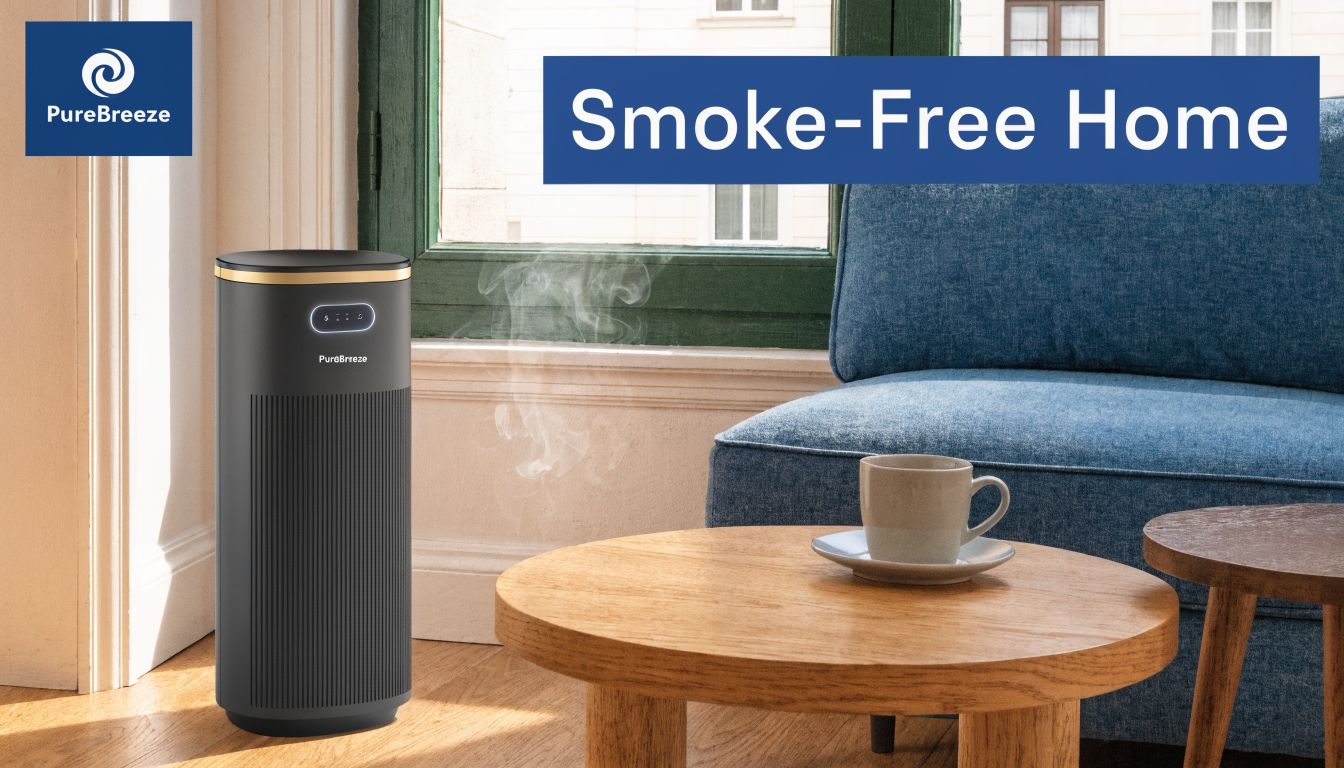
If you're dealing with stale smoke in a bedroom, a living room that never quite smells clean, or an AC system that seems to spread odor instead of removing it, you're not imagining it. Air purifiers for cigarette smoke can help, but only when you understand what they can do, what they can't do, and how they fit into the way an Arizona home moves air.
Understanding How Cigarette Smoke Contaminates Your Home
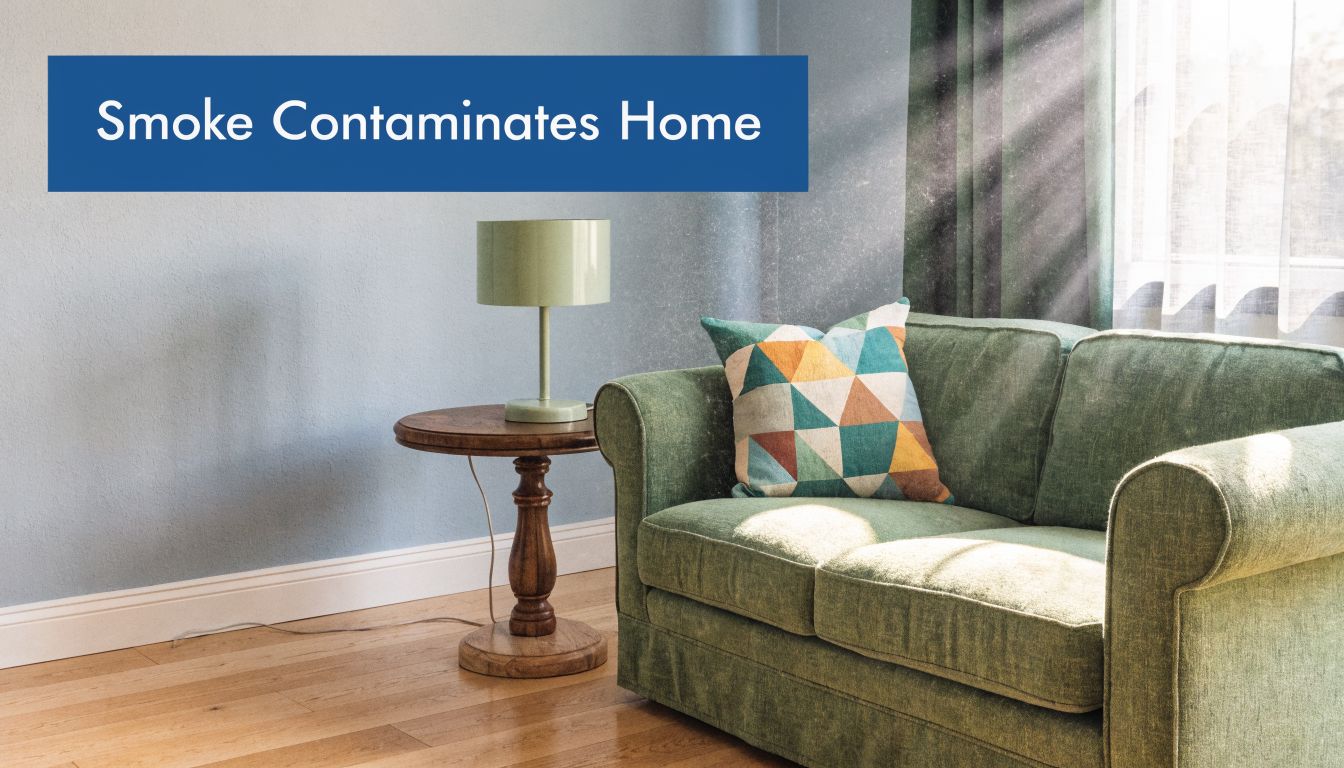
Cigarette smoke doesn't behave like ordinary dust. It spreads fast, moves through return vents, settles into fabrics, and leaves behind pollutants long after the cigarette is out. In Mesa and across the Phoenix Valley, that problem gets worse when homes stay closed up for long stretches because the AC is running most of the year.
Two kinds of pollution hit your home at once
The easiest way to think about cigarette smoke is this. It's like glitter and perfume released at the same time.
The glitter is the particle side of smoke. Those are the tiny solids and droplets that create haze, cling to surfaces, and float through the air stream. The perfume is the gas side. That's where the odor lives, along with the irritating compounds that keep a room smelling stale even after the visible smoke clears.
That split matters because one filter type won't handle both problems. A unit that catches particles well may still leave the smell behind. A unit that masks odor without trapping fine particles won't solve the health side of the problem.
Smoke isn't a single contaminant. It's a mix of particles, gases, and residue that behaves differently in the air and on surfaces.
Public health guidance is blunt about this. The CDC and NIOSH emphasize that no air cleaning technology fully protects nonsmokers, because tobacco smoke contains over 4,000 chemicals. Even with good ventilation, secondhand smoke can contribute 90-95% of respirable particulates in a room, with levels exceeding those on polluted highways, according to this published review on secondhand smoke exposure and filtration limits.
Why opening a window usually isn't enough
A lot of homeowners try the simple fixes first. Crack a window. Turn on a ceiling fan. Spray something that smells cleaner. Those steps may make the room feel less heavy for a while, but they don't remove the source load effectively.
Airflow has to do more than move smoke around. It has to pull contaminants through the right kind of filtration, and it has to do that consistently. In homes with central air, smoke often gets pulled into the return side of the system and redistributed before the smell ever fades.
If you've also noticed dust buildup or stale airflow from vents, smoke may be mixing with what was already sitting in the system. That's one reason homeowners sometimes pair purifier upgrades with services like duct cleaning in Mesa, especially after years of indoor smoking.
The part most people miss
Smoke doesn't stop affecting the home when the air looks clear.
A lot of it becomes thirdhand smoke, which is the residue left on walls, carpet, drapes, furniture, bedding, and inside ductwork. That residue can keep releasing odor and contaminants back into the air. So even a strong portable purifier may seem like it's losing the battle if the room keeps feeding the pollution source from surfaces.
That is why smoke complaints often sound the same:
- "The smell comes back every morning." Soft surfaces and HVAC airflow can reintroduce it.
- "One room is worse than the others." Smoke tends to collect where air circulation is weak.
- "The purifier helps, but not enough." That usually means the home has both airborne smoke and embedded residue.
You know what? That's frustrating, especially when someone in the house has asthma, COPD, or just can't tolerate the smell anymore. But it's also why realistic expectations matter. A purifier is a useful tool. It is not a magic eraser for years of smoke exposure.
Key Filtration Technologies That Actually Work
Cigarette smoke needs two different forms of filtration, and a lot of purifiers only do one of them well. In Mesa and across the Phoenix Valley, that gap shows up fast. The room may look clearer, but the odor hangs around, or the smell improves while fine particles keep circulating through the house.
For this job, the filter stack matters more than the marketing.
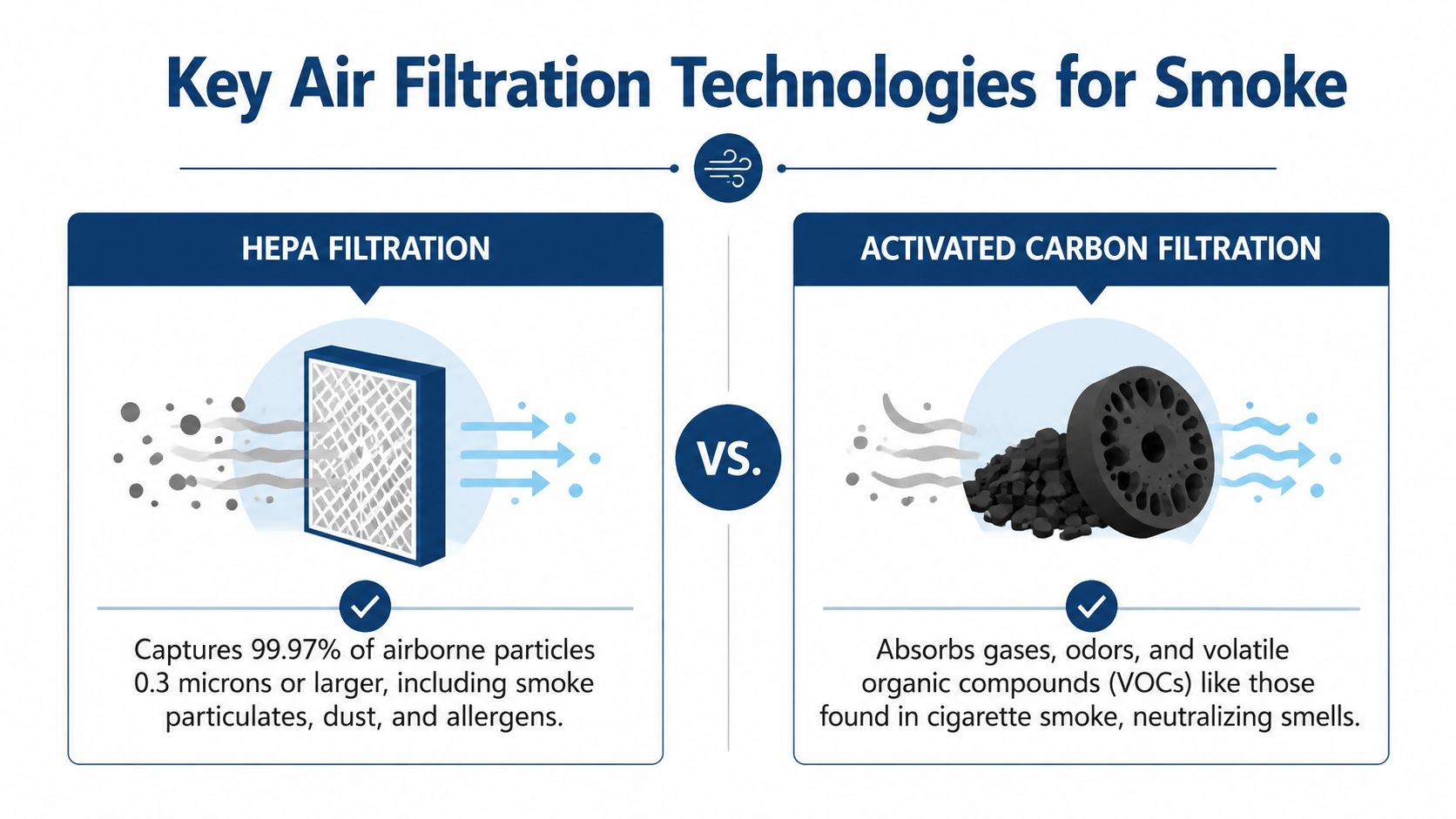
What HEPA actually does
A true HEPA filter handles the particulate side of smoke. The U.S. EPA explains that HEPA filters are designed to capture at least 99.97% of particles at 0.3 microns, which is one of the hardest particle sizes to remove. Cigarette smoke contains a heavy load of very fine particles, so that level of filtration matters.
In real homes, HEPA is what cuts the visible haze and a good share of the airborne irritation people feel in their eyes, nose, and throat. It also helps keep those fine particles from getting pulled into the return side of the HVAC system and recirculated through bedrooms and living areas.
A few things I tell homeowners to check:
- Look for "True HEPA." Terms like "HEPA-type" or "HEPA-like" are not the same standard.
- Check the filter size, not just the label. More filter media usually means better airflow and longer useful life.
- Make sure replacement filters are easy to get. A good purifier is only good if you can maintain it.
If you are also trying to improve filtration at the system level, this guide on the best HVAC filters for allergies and whole-home air cleaning explains how furnace and air handler filters fit into the bigger picture.
Why carbon matters just as much
HEPA does not remove smoke gases well. That is the part people notice as the stale, sharp odor that sticks around after the room looks clean.
Activated carbon handles that gas-phase pollution. The better units use a meaningful amount of granular activated carbon instead of a thin carbon-coated pad. The American Lung Association notes that activated carbon can help remove odors and some gaseous pollutants from indoor air. For cigarette smoke, that usually means less odor and less chemical residue floating in the air.
Here is the trade-off. Purifiers with heavier carbon beds cost more, weigh more, and need more fan power to pull air through them. In exchange, they generally do a better job on smoke smell than the lightweight models stacked at big box stores.
Practical rule: If a purifier advertises smoke control and the carbon stage looks like a thin black sheet, expect modest odor relief and faster saturation.
Smoke Filtration Technology Comparison
| Technology | What It Removes | Best For |
|---|---|---|
| True HEPA H13 | Fine airborne smoke particles | Haze, particulate matter, airborne irritants |
| Granular Activated Carbon | Gases, VOCs, and smoke odors | Lingering smell, chemical phase pollution |
| Ionizers or ozone-generating features | Limited smoke benefit, with safety concerns | Usually best avoided for this application |
What does not earn much trust in smoker's homes
I am cautious with ionizers and any purifier that leans hard on ozone-style language. The California Air Resources Board has warned that some electronic air cleaners can produce ozone and may not remove pollutants effectively enough to justify that trade-off. For a home already dealing with tobacco smoke, adding another respiratory irritant is not a smart bet.
Portable units also have a limit. They clean the air that passes through them. They do not clean the entire duct system, and they do not stop smoke residue from being redistributed by central airflow. In Arizona homes, where the AC runs hard for much of the year, the better approach is often a strong portable purifier in the main problem room plus an HVAC filtration setup that supports it instead of fighting it.
That combination usually performs better than chasing one all-in-one machine that promises everything.
How to Choose the Right Purifier for Your Space
But what do all those numbers on the box mean for your living room? That is where people either buy too small, overspend on the wrong feature, or end up disappointed because the machine never had enough airflow to begin with.
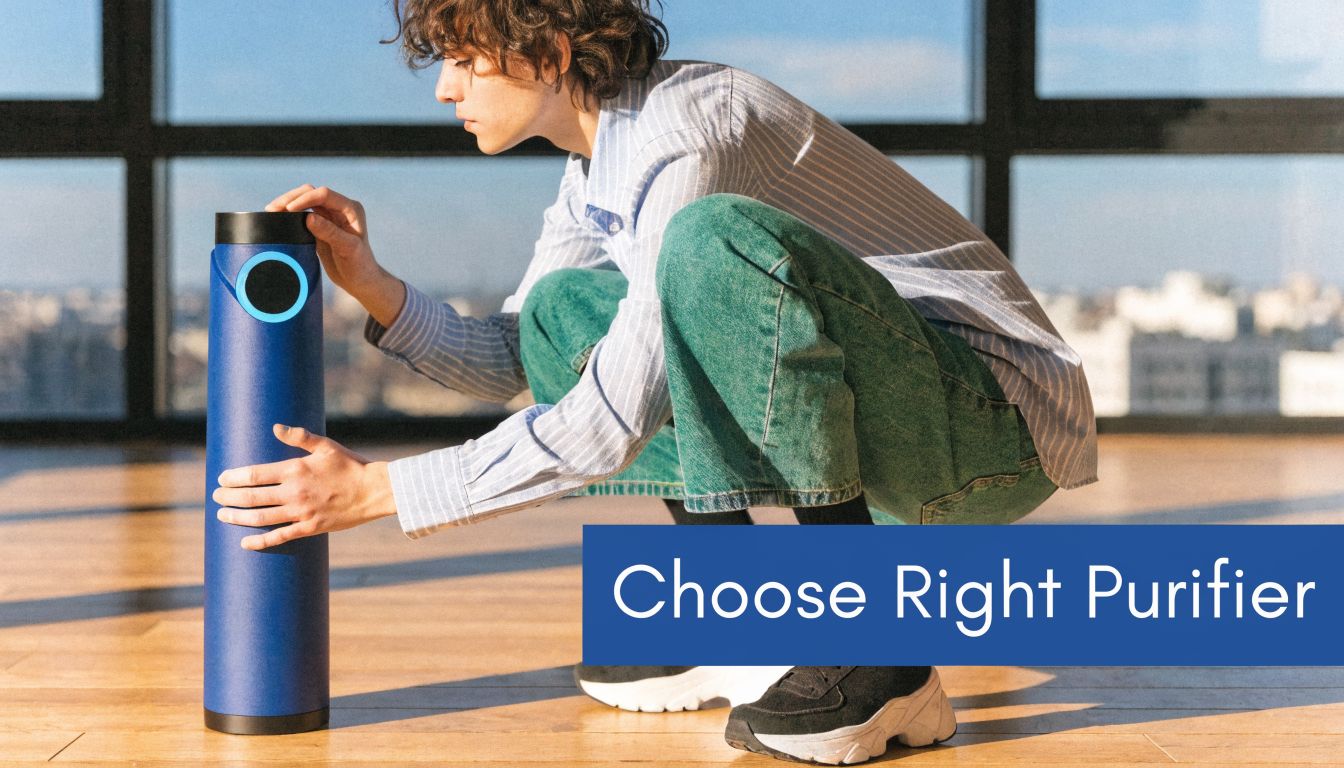
The most useful number for smoke is the tobacco smoke CADR, short for Clean Air Delivery Rate. That tells you how much cleaned air the unit can deliver for smoke specifically.
Start with the smoke CADR
Health Canada recommends choosing a unit with a tobacco smoke CADR that is at least two-thirds of the room's area in square feet, such as 80 for a 120 sq ft room, and top-rated large purifiers can reduce smoke particle concentrations by up to 85%, according to this consumer-focused review of smoke purifier performance.
That gives homeowners a simple rule they can use.
If the room is small, don't grab a tiny desktop unit and expect real smoke control. If the room is open to a hallway, kitchen, or stairwell, size up instead of sizing to the bare minimum. Air doesn't respect room labels on a floor plan.
A simple way to shop smarter
When comparing air purifiers for cigarette smoke, focus on these points first:
- Smoke CADR first. Don't get distracted by app features before you know the machine can move enough air.
- Filter combination second. Verify that it includes both True HEPA and meaningful carbon filtration.
- Room reality third. Measure the space the purifier serves, not just the square footage listed in the product ad.
- Noise tolerance matters. A unit only works when people keep it running.
Buy for the speed you need, not the quietest low setting in a showroom. Smoke control often requires stronger airflow than general dust control.
A lot of homeowners also compare purifier shopping with broader indoor air concerns. If you're sorting through options for smoke, pollen, and dust together, this article on air purifiers for allergies gives a useful parallel on matching a machine to room demands.
What about air changes
You may also see ACH, or air changes per hour. The practical idea is simple. The more times the purifier can process the room's air, the faster it can lower the concentration of smoke particles. You don't need to memorize engineering terms to use that idea well. You just need to understand that undersized equipment cleans slowly and can fall behind while someone is actively smoking.
In real homes, I tell people to think in terms of load, not just room size:
- A guest room where someone smoked once is a lighter cleanup problem.
- A bedroom with daily smoking is a persistent source problem.
- A large open living area connected to the kitchen is an airflow problem and a source problem.
Let me explain one common mistake. Homeowners often buy based on the "covers up to" number printed large on the box. That figure can be optimistic, and it doesn't always reflect cigarette smoke conditions. Smoke is more demanding than light dust control, so the better buying decision is usually the unit with a stronger smoke CADR and more carbon, even if the smart features are simpler.
Optimal Placement and Maintenance for Best Results
A strong purifier can still underperform if it's shoved behind a chair, trapped in a corner, or run only when the room smells bad. Placement changes performance more than is often expected.
Put the unit where air can move
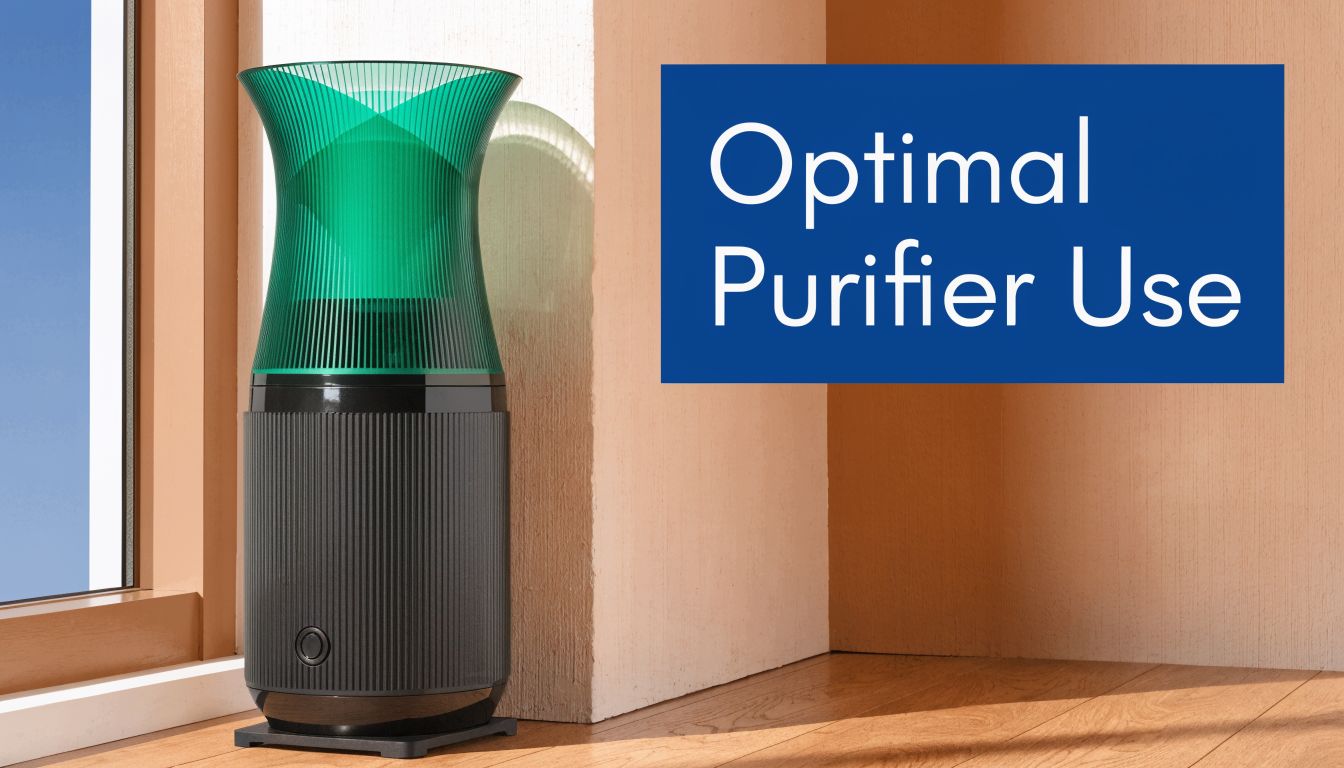
Portable purifiers work by pulling contaminated air in, passing it through the filter stack, and pushing cleaned air back into the room. That means they need breathing space around them.
Place the unit where smoke is likely to travel, not where it's easiest to hide. In many homes, that means near the main occupied zone of the room, away from blocked intake sides, and not pressed into a dead corner unless the manufacturer specifically allows that.
Good habits usually look like this:
- Keep clearance around the intake. Furniture, drapes, and tight corners choke airflow.
- Run it continuously in active smoking environments. Intermittent use lets pollutants build back up.
- Close windows when outdoor dust is high. In the Valley, outdoor particulates can compete with the purifier's workload.
- Use doors strategically. A purifier works better in a defined space than in a room that opens endlessly into the rest of the house.
Maintenance is not optional
Not changing your filters is like trying to breathe through a dirty rag. The purifier may still make noise, but airflow drops, performance falls, and the motor has to work harder.
Arizona homes collect a rough mix of contaminants. Dust, pet hair, desert particulates, and smoke all load the filter. That means you can't treat maintenance as an afterthought. Check pre-filters regularly, follow the manufacturer's replacement guidance, and don't ignore signs like weaker airflow or odor returning sooner than before.
If a purifier helped at first and then seemed to stop helping, a loaded filter is one of the first things to check.
If you're unsure where your central system filter sits or how it affects the airflow in the home, this guide on finding your house air filter can clear that up. Portable units and HVAC filtration influence each other more than people realize, especially when the AC fan runs often.
Beyond Portable Purifiers A Whole-Home IAQ Strategy
Portable units are useful. In a bedroom, home office, or smoking room, they can make a meaningful difference. But in many Phoenix Valley homes, they aren't enough by themselves because the house is larger than one room, the AC runs often, and the duct system keeps moving air between spaces.
That's where the conversation needs to get more practical. In Arizona heat, indoor air quality is tied directly to how the HVAC system circulates and filters air.
Why the house can work against the purifier
For Arizona homeowners, integrating a portable purifier with HVAC upgrades is key. In hot climates, poor air circulation can reduce a portable unit's efficacy by 30-50%. Pairing a high-CADR portable unit with a zoned HVAC system can improve smoke particle capture by 25% through forced air exchange, according to this analysis of purifier performance in whole-home airflow conditions.
That lines up with what we see in real houses. A purifier may clean the air in the room it's in, while the return ducts keep pulling contaminated air from elsewhere. Or one side of the house stays stale because airflow is weak and the unit never gets enough circulation to process the full load.
This is why a layered approach works better than thinking of the purifier as a stand-alone fix.
What a complete smoke strategy often includes
A more complete indoor air quality plan may include several parts working together:
- Portable purification in the highest-exposure room. This gives you immediate local cleanup where people spend time.
- Whole-home filtration through the HVAC system. That improves baseline air cleaning every time the system circulates.
- Duct cleaning when smoke residue has built up. Old residue inside the system can keep reintroducing odor.
- Duct sealing to improve delivery and return balance. Leaky ducts waste conditioned air and weaken circulation where you need it.
- Zoning or airflow corrections. Some rooms stay more polluted because they don't move air well.
For homeowners looking into a system-level option, whole-home air purifiers are one category worth comparing alongside portable room units. Comfort Experts offers these HVAC-integrated IAQ options as part of broader indoor air quality work in Mesa and the Phoenix Valley.
Matching the solution to the family
Some homes need better odor control. Others need respiratory relief for a child or older adult who reacts quickly to smoke. In households where someone has oxygen needs or significant breathing limitations, it also helps to understand the broader equipment side of respiratory support. A practical outside resource for that is this guide to St. Petersburg home oxygen therapy options, which explains equipment considerations in plain language.
The bigger point is simple. Smoke control works better when the room unit and the central system stop fighting each other. Once airflow, filtration, and source control are aligned, the house starts acting like a system instead of a collection of isolated rooms.
Take Control of Your Home's Air Quality Today
A portable purifier can make the smoking room easier to tolerate, but Arizona homes rarely solve cigarette smoke with one appliance alone. In Mesa and across the Phoenix Valley, smoke moves through return grilles, settles into carpet and upholstery, and gets pulled back into circulation every time the system runs. The better fix is a coordinated one: source control, surface cleaning, room-level filtration, and HVAC support that improves how the whole house handles air.
Soft surfaces are part of that equation. Smoke residue clings to rugs, drapes, and furniture, then keeps feeding odor back into the room long after the cigarette is out. If you want a practical example from another market, this article on healthy rug cleaning for Birmingham homeowners shows why cleaning fabrics and floor coverings supports better indoor air.
For Phoenix Valley homeowners, that final step often decides whether the improvement lasts. A purifier can clean the air passing through it, but if the HVAC system is spreading odor from one room to another, or old residue is sitting in the ductwork and on household surfaces, the house keeps recycling the problem. Comfort Experts helps tie those pieces together, so the portable unit, the central system, and the cleaning plan are working toward the same result.
Putting those pieces together creates a healthier home. When you're ready to build a plan that fits your house, room by room and system by system, Comfort Experts can help.
If cigarette smoke has taken over part of your home, Comfort Experts can help you figure out whether a portable purifier is enough or whether you need a more complete HVAC-based air quality solution. Call 480-207-1239 or schedule service to get practical guidance for your Mesa or Phoenix Valley home.