Have you ever noticed your AC seems to be running nonstop, yet the house still feels muggy and your power bill is creeping higher? The culprit is often a single, critical component most homeowners overlook: the need to periodically clean air handler coils. Getting this right is one of the most important skills you can have to protect your wallet and your family’s comfort, especially here in our dusty Arizona climate.
The Secret Behind High Energy Bills and Poor Air Quality
Let me explain. Your air handler's evaporator coil is the quiet workhorse of your entire HVAC system—think of it as the lungs. Its one job is to pull heat and humidity out of your indoor air. When it's clean, it does that job beautifully and efficiently.
The problem is, over time, these coils become a magnet for everything floating around in your air. We’re talking about a mix of dust, pet dander, pollen, and all sorts of other microscopic gunk. This stuff builds up and forms a thick, insulating blanket right over the coil’s delicate fins.
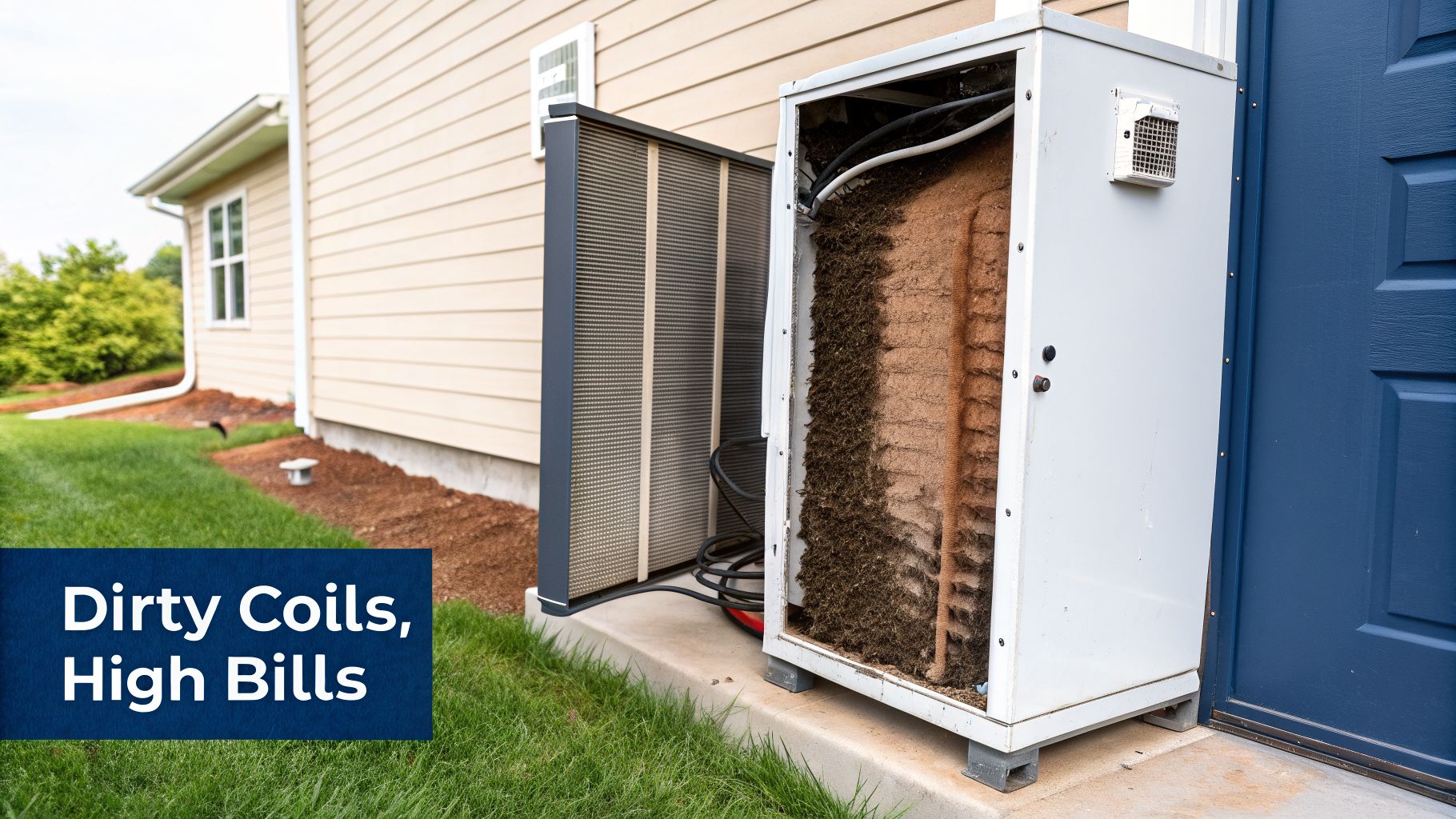
When that happens, the grime smothers the coil and cripples its ability to absorb heat. Your AC unit is forced to work much harder and run much longer just to hit the temperature you set on the thermostat. The result? A major spike in your electricity use.
According to the Department of Energy, a dirty coil can crank up your air conditioner's energy consumption by as much as 30%. That’s a huge financial hit for something that’s completely preventable.
More Than Just An Energy Drain
But the consequences of dirty coils go way beyond your monthly bills. That sticky layer of grime, combined with the natural condensation that forms on the coils, creates the perfect dark, damp breeding ground for mold and bacteria to take hold. Have you ever wondered if that musty smell is coming from your vents? It probably is.
This microbial mess leads to a few nasty problems:
- Poor Indoor Air Quality: As air blows over those contaminated coils, it picks up mold spores and bacteria, spreading them throughout your entire home. For anyone with allergies or asthma, this can be a real nightmare.
- Lousy Cooling Performance: You might notice your home just won’t get cool enough, especially in the afternoon. You’ll have uncomfortable hot spots and a general stuffy, humid feeling that never seems to go away.
- Serious System Strain: Forcing your system to work that hard puts immense stress on its most expensive part—the compressor. This can easily lead to a premature breakdown and a very costly repair bill.
Just as learning how to clean air handler coils is a game-changer for your AC's efficiency, homeowners are finding all sorts of smart ways to lower utility costs. For instance, some people cut energy bills and save water by using thermal blankets on their pools. For more ideas specific to your cooling system, you can check out our guide on other powerful HVAC energy-saving tips.
Why Your Coils Get So Dirty and What It Really Costs You
Think of your air handler’s evaporator coil as a giant, powerful magnet for everything floating around in your home's air. Day in and day out, it pulls in a constant stream of dust, pollen, pet dander, and other microscopic gunk.
Now, add the condensation that naturally forms during the cooling process. That dry dust immediately turns into a thick, sticky paste. Honestly, here in Arizona, our fine desert dust mixed with the humidity from monsoon season creates the perfect storm for a grimy, insulating blanket to form over the coil’s delicate fins. It’s like how dust sticks to a damp kitchen counter, but much, much worse for your AC's health.
The Real Cost of a Little Grime
It’s easy to write off a bit of dirt, but that buildup kicks off a domino effect that silently wrecks your comfort, your budget, and even your air quality. That layer of gunk acts as insulation, forcing your entire AC system to work dramatically harder just to cool your home.
This isn't a small problem. Studies show dirty coils can slash your AC's efficiency by up to 30%, forcing it to guzzle 40% more electricity to do the same job. This is a global issue, which is why the HVAC fan and evaporator coil market is projected to swell from $9.1 billion in 2025 to $14.9 billion by 2035, as homeowners fight back against runaway energy bills. You can dig into the data behind this trend in a HVAC coil market analysis from Future Market Insights.
The bottom line is that a dirty coil turns your air conditioner into an energy hog. This strain not only inflates your power bills but also puts immense stress on the compressor—the heart of your AC unit—risking a costly and premature breakdown.
More Than Money—It's About Your Health
Beyond the hit to your wallet, a dirty evaporator coil creates a serious air quality problem right inside your house. That dark, damp, grimy environment is the perfect breeding ground for mold and bacteria.
Then, this happens:
- Contaminated Air Circulation: Every time your AC kicks on, it blasts air directly over this growing microbial colony, spreading mold spores and bacteria throughout your entire home.
- Aggravated Allergies and Asthma: For anyone in your family with respiratory issues, this can trigger constant allergy flare-ups, asthma attacks, and other breathing problems.
- Musty Odors: That persistent, musty smell drifting from your vents is a classic tell-tale sign that something unpleasant is growing on your coils.
This contaminated air isn't just a nuisance; it directly affects your family's well-being. Cleaning your coils is a huge first step, but that contamination can also settle deep inside your ductwork. You might be interested in our guide on how professional duct cleaning in Mesa, AZ can completely refresh your home's air.
How to Safely Clean Your Evaporator Coils
Alright, if you're feeling handy and want to take on cleaning your evaporator coils yourself, let's get you prepped. Getting this right is the core of the job, and your reward is better cooling and a more efficient system. Think of this as a careful operation, not a five-minute scrub-down.
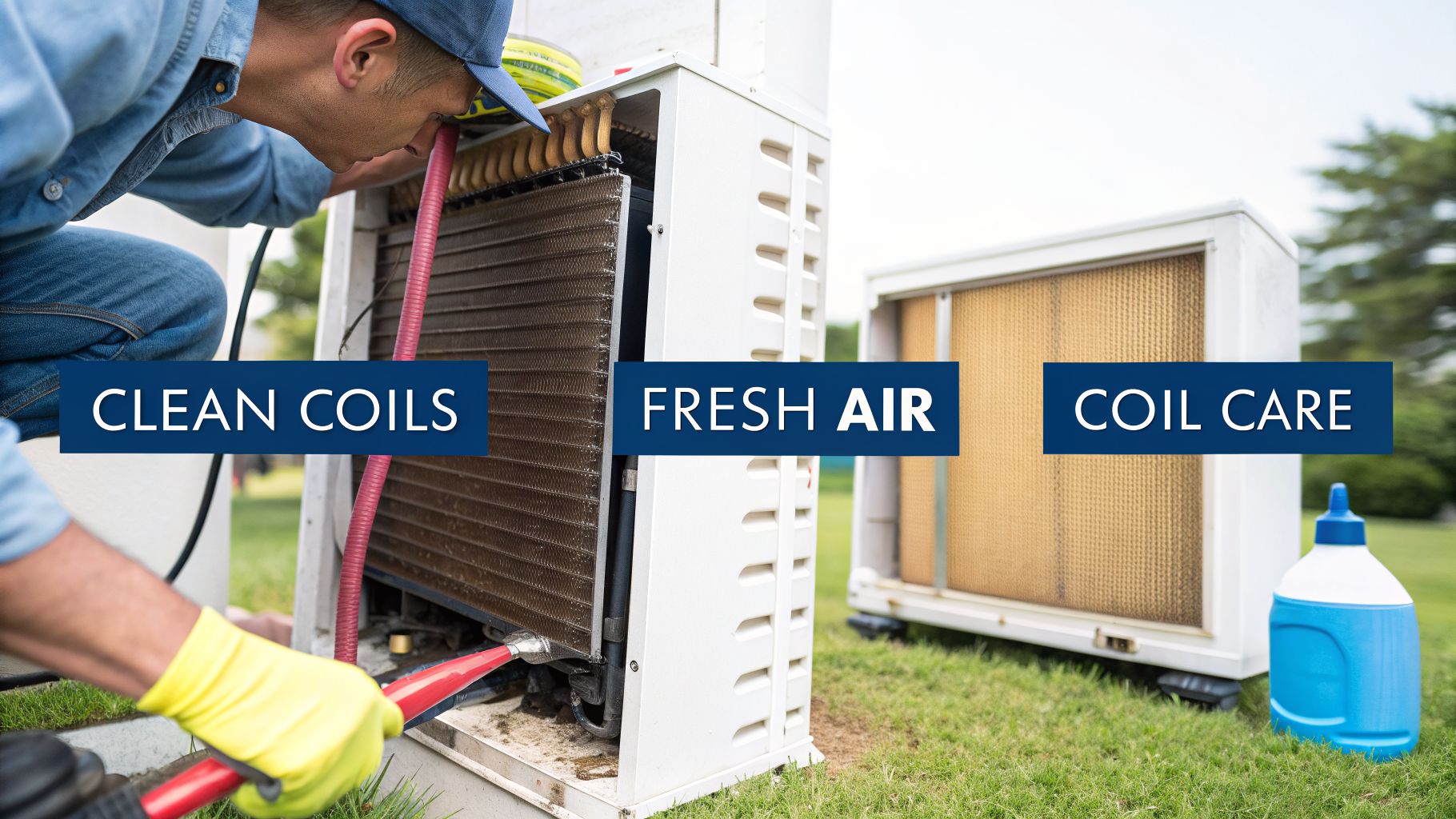
This infographic shows just how fast a little bit of dust turns into a serious drag on your AC system's performance.
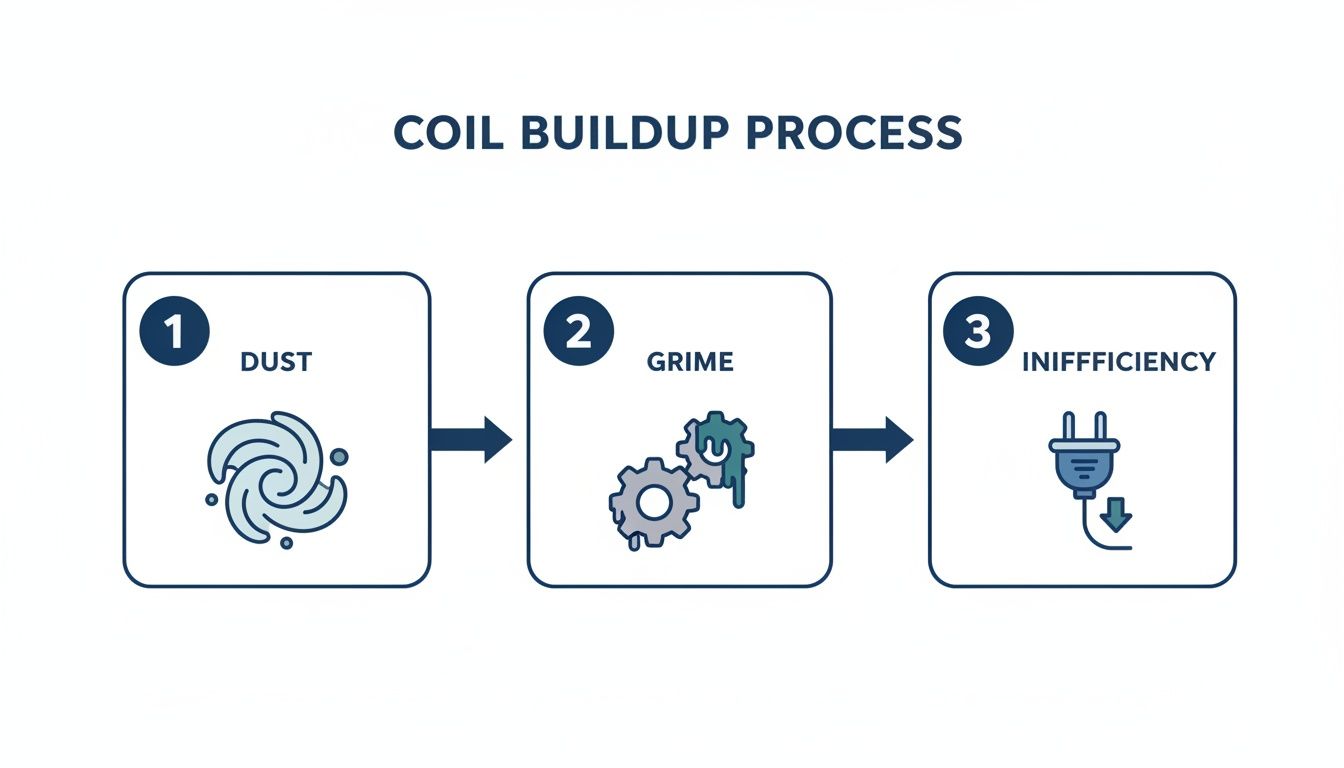
It starts with harmless-looking dust, cooks into a thick grime, and ends up costing you real money every month.
Safety First—This Isn't a Suggestion
Before you even grab a tool, let's talk about safety. Your air handler is full of high-voltage components, and mixing electricity with water and metal is a recipe for a very bad day.
This is your non-negotiable safety checklist. Do every single step.
- Turn the Thermostat Off: Go to your thermostat and switch the system to the "Off" position.
- Kill the Power at the Breaker: Head to your home's main electrical panel and find the circuit breaker labeled for your indoor air handler or furnace. Flip it all the way to "OFF."
- Find the Local Disconnect Switch: Most units also have a disconnect switch right next to the air handler itself. It might look like a regular light switch or a small metal box with a lever. Turn that off, too.
Gather Your Arsenal
Having the right stuff on hand makes this job go from a headache to a smooth process. Don't try to improvise here—using the wrong chemical or tool can permanently damage your equipment.
Here’s what you’ll need:
- A no-rinse, foaming evaporator coil cleaner: This is key. It's a special product made to foam up, dissolve the gunk, and then drain away with the AC's natural condensation. Never use acidic cleaners or bleach, as they will eat away at the delicate aluminum and copper.
- A soft-bristle brush: You need a brush with very soft bristles to gently knock off loose debris without bending the paper-thin metal fins.
- Protective gear: At a minimum, wear safety glasses and gloves. You don't want cleaning chemicals in your eyes or on your hands.
- A shop vacuum (optional but very helpful): A wet/dry vac with a brush attachment is perfect for sucking up all the loose dust before you even start spraying.
- A spray bottle with water: You’ll use this for a very light misting rinse if needed, not for soaking the coil.
Gaining Access and The Cleaning Process
Now for the main event. You'll need to remove the access panel on your indoor air handler to see the coil. The exact location can be tricky to find, but we cover the common spots in our guide on where to find your evaporator coils.
Once you get the panel off, you'll see the A-shaped or slab-style coil. If it's caked in loose dust, this is where the shop vac and soft brush come in. Gently vacuum or brush off as much of that surface debris as possible.
Next, grab that can of no-rinse foaming cleaner. Start at the top of the coil and spray evenly across the entire surface, working your way down. You'll see the foam immediately start to expand, pushing dirt out from between the fins.
Crucial Tip: Let the foam do the work. The instructions will tell you how long to let it sit, usually around 10-15 minutes. Don't rush it. The chemical reaction is what's breaking down the grime, which is far safer and more effective than trying to scrub it clean.
After the foam has had time to work its magic and settle, most of the dirt will be suspended and ready to wash away. Reassemble the access panel, restore power at the breaker and disconnect switch, and turn your AC back on. The condensation created by the running system will rinse the remaining cleaner and grime down the condensate drain line.
It's also worth remembering that the coils are just one part of your home's air system. Good airflow is a team effort, and following general cleaning practices for air-moving devices like ceiling fans helps reduce the amount of dust that gets sucked into your AC in the first place.
Keeping Your Coils Clean for the Long Haul
Okay, you’ve put in the work and your evaporator coils are finally sparkling clean. Great job. But the big question is, how do you keep them that way and avoid doing this all over again in a few months? This is where we shift from a one-time cleaning job to a smart, proactive strategy.
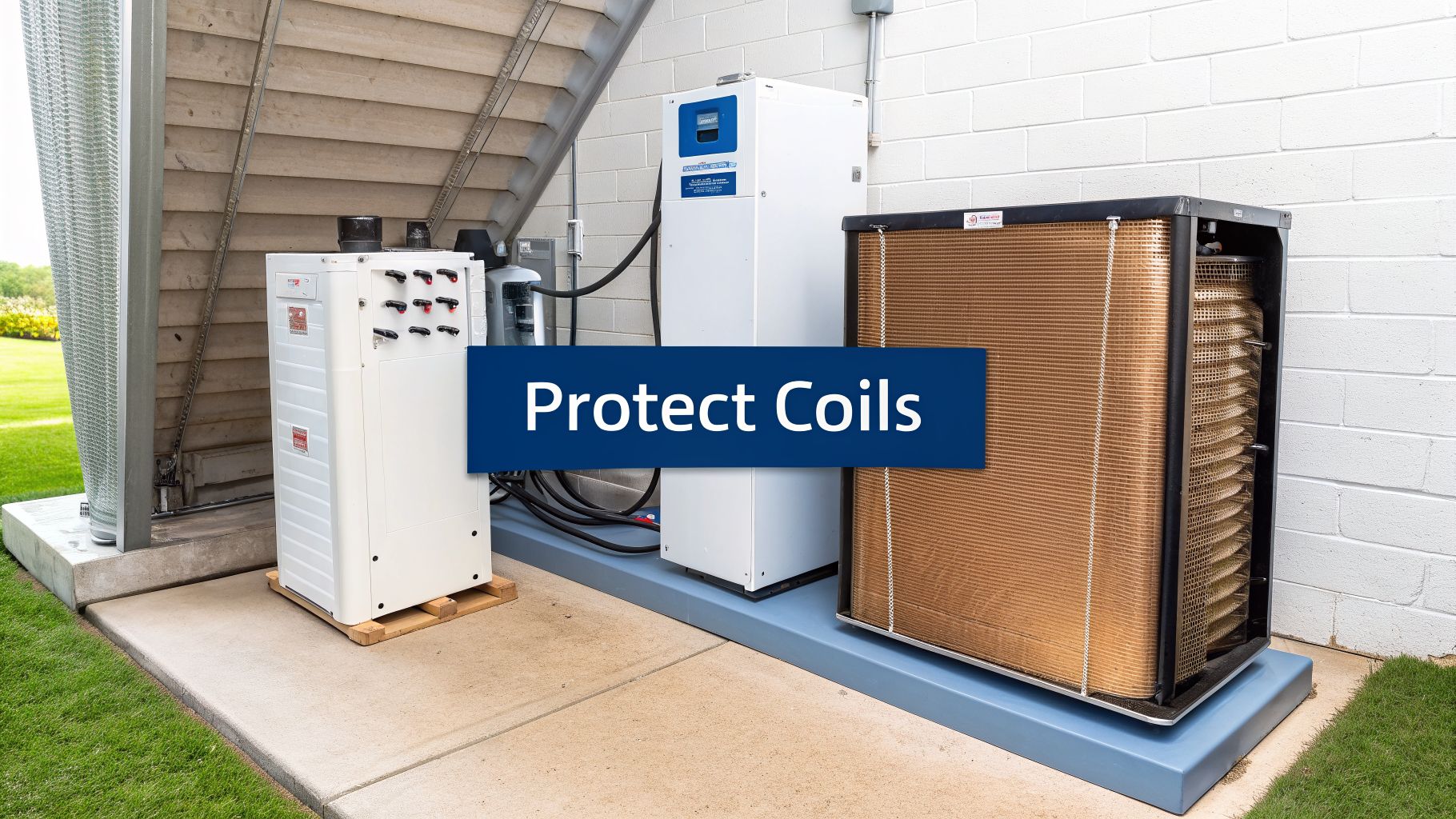
You know what? Your air filter is the single most important gatekeeper for your entire HVAC system. A cheap, flimsy filter is like trying to stop desert dust with a screen door—it catches the big stuff but lets all the fine particles sail right through, where they eventually cake onto your pristine coils. Upgrading to a quality, high-MERV air filter is one of the best moves you can make.
Beyond Just Swapping a Filter
Getting on a consistent filter-changing schedule is non-negotiable, especially here in dusty Arizona. For most homes, swapping it out every 90 days is a solid baseline. But if you've got pets or someone with allergies, you’ll probably need to step that up to every 30 days to keep things running clean.
If you’re serious about protecting your equipment and improving your home’s air, there are a couple of professional-grade upgrades that work around the clock. Here's the thing: these aren't your standard one-inch filters. We’re talking about high-capacity media filters installed right into the ductwork that have way more surface area and a much higher MERV rating, catching an incredible amount of dust and allergens before they ever have a chance to reach your coils. Another option is a UV light purifier, a cool piece of tech installed inside your air handler so its ultraviolet light shines directly on the damp evaporator coil, actively killing and preventing mold, bacteria, and other nasty microbes from ever growing.
| Upgrade Type | How It Works | Key Benefit |
|---|---|---|
| Whole-Home Filter | High-capacity media filter installed in ductwork. | Traps a much higher percentage of dust, pollen, and dander. |
| UV Light Purifier | UV-C light shines directly on the evaporator coil. | Kills and prevents mold and bacteria growth at the source. |
| High-MERV Filter | Tighter weave captures smaller airborne particles. | Significantly improves indoor air quality for allergy sufferers. |
Clean air handler coils are your frontline defense against poor indoor air quality, with the global air conditioner cleaner market—fueled by coil maintenance needs—valued at $1.45 billion in 2025 and racing to $2.75 billion by 2034. In the Phoenix Valley, where allergies plague 25% of residents, dirty coils can harbor mold and bacteria—cleaning them can slash this risk by 90% when combined with UV purifiers and advanced filters. Discover more about the growth of this market in this detailed industry report.
When you combine these proactive steps, you’re not just cleaning a part—you’re building a complete system for a healthier home. For families in our area dealing with asthma or allergies, that kind of peace of mind is invaluable.
If you want to dive deeper into choosing the right filter, our guide on the best HVAC filters for allergies is a great place to start.
When to Call the Professionals for Your AC Coils
Look, I’m all for homeowners rolling up their sleeves and tackling a bit of maintenance. A DIY coil cleaning can absolutely handle light, routine dust. But knowing when to close the panel and call for backup isn't admitting defeat—it's smart. It’s how you protect your very expensive HVAC system from a simple mistake that can turn into a thousand-dollar repair.
If you open your air handler and the situation inside looks more like a science experiment than a simple cleaning job, it's time to pick up the phone. Here are the red flags we see in the field that tell us a job has moved beyond DIY territory.
Heavily Impacted Grime
You might pop open the panel expecting a little dust and instead find a thick, felt-like blanket of grime caked onto the coils. If your foaming cleaner isn't cutting through that kind of heavy buildup, it’s not your fault—that stuff is basically baked on.
This is where professionals come in with commercial-grade cleaning agents and specialized tools. Trying to scrape that gunk off yourself is one of the fastest ways to bend the delicate aluminum fins, which chokes off airflow and makes your AC work even harder.
Visible Mold Growth
If you see splotches of black or green on the coils, in the drain pan, or on the surrounding insulation, stop what you’re doing. That’s not just dirt—it’s a potential microbial problem.
Simply spraying it with a household cleaner won't cut it. Mold requires specific antimicrobial treatments to be safely and completely eliminated. Our technicians use sanitizers that kill the growth at its source so it doesn't get blown into the air you breathe.
A professional cleaning isn't just about making things look shiny; it’s an investment in your system’s health. Ignoring deep-seated issues can lead to a 20-30% spike in energy bills and a 25% higher chance of a breakdown right in the middle of a July heatwave.
Signs of a Refrigerant Leak
While you're inspecting the coils, keep an eye out for any oily or greasy residue. This is the classic sign of a refrigerant leak.
Refrigerant is a chemical that should only ever be handled by a licensed and certified technician. A leak doesn't just kill your AC's cooling ability; it's an environmental and safety issue. Cleaning around a leak is pointless—the real problem needs to be diagnosed and repaired by a pro.
The commercial HVAC coil cleaning market is projected to surpass $1,005.38 million by 2033, which tells you how valuable professional service is. In Arizona’s tough climate, working with a licensed local expert like Comfort Experts (ROC #275914) is your best bet. You can read more about the financial impact of professional coil cleaning and its growing market. Our technicians are trained to spot these deeper problems that are easy for a DIYer to miss, saving you from a much bigger headache down the road.
Your Air Handler Coil Cleaning Questions Answered
Even with a step-by-step guide in hand, you're bound to have a few questions pop up. It’s completely normal. Let’s run through some of the most common ones we hear from homeowners around Phoenix so you can tackle this job with confidence.
How Often Should I Clean My Air Handler Coils in Arizona?
This is probably the single most important question for anyone living in the Valley. Our fine desert dust and windy monsoon seasons mean coils here get dirty a lot faster than in less dusty climates. It's just a fact of life in Arizona.
For most homes, we recommend a professional check and cleaning at least once a year, usually as part of an annual AC tune-up. But if you have a few pets, live near a new construction zone, or have anyone with serious allergies at home, you’ll probably want them checked every six months. The goal is to stay ahead of the buildup before it becomes a real headache in the middle of a brutal summer.
Can I Use Bleach on My Coils?
Please, whatever you do, don't use bleach on your evaporator coils. It might seem like a great disinfectant, but bleach is extremely corrosive and will absolutely destroy the soft metals—like aluminum and copper—that make up your HVAC system.
Using bleach is a recipe for disaster. Here’s why:
- Corrosion: It can literally eat holes in the delicate aluminum fins and thin copper tubing, which almost always leads to refrigerant leaks. That’s a very expensive repair.
- Toxic Fumes: The moment your AC kicks on, it’s going to blast those harsh bleach fumes all through your house. It’s not something you want your family breathing.
- Collateral Damage: The runoff can easily damage the condensate pan, drain lines, and other internal parts of your air handler.
Just stick to a dedicated, no-rinse foaming coil cleaner. They are specifically made to be safe and effective on these materials.
Expert Insight: People often mix up the evaporator and condenser coils. Here’s the simple difference: The evaporator coil is inside your house in the air handler, and its job is to absorb heat from your indoor air. The condenser coil is in the big metal box outside, and its job is to release all that captured heat. This guide is all about cleaning that indoor evaporator coil.
Will Cleaning My Coils Fix a Frozen AC Unit?
It’s a strong possibility, but it’s no guarantee. A thick blanket of dirt on the evaporator coil is one of the top reasons we see for frozen AC units. That grime acts like an insulator, stopping warm air from moving across the coil. When that happens, the coil's temperature drops below freezing, and any condensation on it turns straight to ice.
In many cases, cleaning the coil solves the problem if dirt was the only issue. But a frozen coil can also be a symptom of a bigger problem, like:
- Low Refrigerant: A leak in the system causes a pressure drop that can make the coil freeze up, even if it's perfectly clean.
- Blocked Airflow: Besides a dirty coil, a totally clogged air filter or a failing blower motor can also choke off the airflow and cause a freeze-up.
If you clean your coils and the unit ices over again a few days later, that’s a sure sign something else is wrong. That’s when it’s time to call in a pro to find the real root cause before it turns into a more expensive breakdown.
When It’s Time to Trust the Experts
Tackling this job yourself is a fantastic way to keep your AC in top shape and save a few bucks. Seriously, hats off to you.
But sometimes, you open that access panel and find a mess that’s beyond what a can of foam cleaner can handle. If you’re staring at years of caked-on gunk, fins that are badly bent, or anything that looks suspiciously like stubborn mold, it might be time to call for backup. The same goes if you just don't have the time or simply want the peace of mind knowing the job was done by a pro.
That’s what we’re here for. Our licensed technicians at Comfort Experts have seen it all and have the tools and experience to get your system back to peak performance, safely and efficiently. When you're ready for a cooler, more efficient home without the hassle, give us a call at 480-207-1239 or schedule service with our team online.